Tag: Silent Luxury

Silent Luxury describes the philosophy of value shaped by craftsmanship, provenance, trust, hospitality and life quality. Articles in this archive follow the cultural shift toward long-term relevance, material understanding and a more conscious relationship with products, places and everyday life. The tag gathers reporting, essays and interviews on independent makers, considered places, regenerative practice and the four-term framework that situates the philosophy alongside Quiet Luxury, New Luxury and Well Living.

The Water Keeps Flowing: A Journey Through the Architecture of Well Living

From a 1,300-year-old ryokan in Japan to Matteo Thun’s Hospi-tecture philosophy: what Slow Hospitality, Silent Luxury and Regenerative Luxury have to do with the places that make you feel alive.

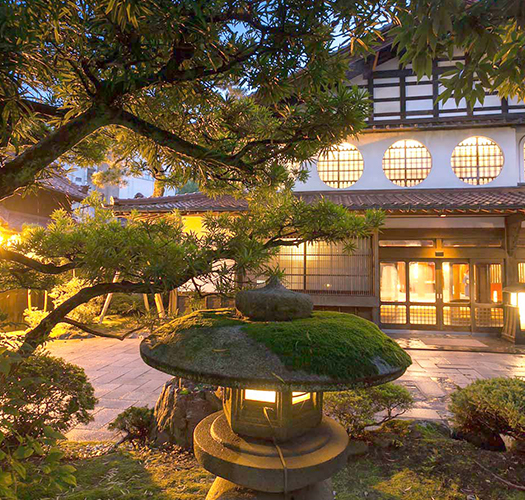
According to legend, in the year 718, a Buddhist monk named Taicho Daishi climbed the sacred mountain Hakusan in the Japanese province of Kaga. A mountain deity appeared to him in a dream and told him to travel twenty kilometres to the village of Awazu, where a hot spring with healing powers lay waiting to be uncovered. Taicho Daishi followed the instruction, unearthed the spring, and commissioned his disciple Garyo Hoshi to build an inn around it. Garyo Hoshi built it, and his family has been running it ever since — through forty-seven generations, for over thirteen hundred years, without interruption. The Hōshi Ryokan in Awazu Onsen holds the Guinness World Record as the oldest continuously operated family business in the world.

What draws people there today is not fundamentally different from what drew them in the eighth century. You come for the water, for the quiet, for the feeling of stepping out of your ordinary rhythm for a while.

Slow Hospitality is not a modern concept. It is a very old experience that is only now acquiring a name — because a growing number of travellers are deliberately looking for it, and the industry has understood that this desire is measurable and economically significant. Virtuoso surveyed travel advisors in fourteen countries in 2026: 55 percent said their clients would spend more per trip this year and visit fewer destinations, choosing instead to go deeper into a single place. Between 37 and 41 percent of all new luxury hotel projects worldwide were planned as extended-stay formats in 2024. The Hōshi Ryokan has never done it any other way.

Hospitecture — From Baja California to Bhutan, The Silent Luxury

Spaces · Hospitecture

From Baja California to Bhutan: Hospitecture and the Stays That Treat Arrival as a Health Decision

The stay where arriving is a health decision. From Mexico and Japan to the Gulf, Africa and Bhutan.

Read the full editorial →

The Genius Loci: The Place as Starting Point

Matteo Thun, architect, begins every project the same way. He travels to the site with watercolours, paper and brushes. Before the first conversation takes place, before the first plan emerges, before anything is decided, comes seeing. “I capture the surroundings and sketch how the building will fit into them,” he said in conversation with The Silent Luxury. “The watercolours are the expression of my emotional perception.”

This approach has shaped Thun’s practice from the beginning. He was one of Oskar Kokoschka’s students, who trained his students to draw from moving models using watercolour specifically because the medium allows no corrections. What you perceive in the moment is what you commit to. Thun has applied that discipline to landscapes and buildings for more than forty years.

“As with all our projects, we start from the Genius Loci,” he says. “The soul of the place plays a central role. Architecture must submit to the surrounding nature. It determines which form and which materials dominate.” At the Vigilius Mountain Resort in South Tyrol, it was larch wood. At the Waldhotel at Bürgenstock, limestone. At the Waldhotel, 500 metres above Lake Lucerne, surrounded by forest, Thun described it simply: “The surrounding nature brings everything needed for healing. You just have to let it in.”

Hospi-tecture: The Guest as Patient

From his experience in hotel construction, Thun developed a concept he calls Hospi-tecture. The term fuses hospital and architecture, and describes a philosophy in which the person inside a building — whether patient or guest — is understood through the same Latin word. Hospes. Guest. “Hospi-tecture connects the aesthetics of hospitality projects with those in healthcare,” he told The Silent Luxury. “Clinics can learn from the hospitality concept how to place the guest at the center. This isn’t a question of luxury, but of attitude.”

In practice, this means concrete decisions. A patient room receives large windows with views of the landscape. Wood goes underfoot, clay on the walls. Daylight falls deep into the room and changes throughout the day — cooler in the morning, warmer in the evening. At the Waldkliniken Eisenberg in Thuringia, a municipal clinic, Thun put a fine-dining restaurant in the building, because healthy, varied cuisine is a prerequisite for the healing process. The brief for a clinic was the same as the one he uses for five-star hotels.

“Materials are not neutral,” he says. “For me, wood is the cement of the 21st century. Wood is high-tech and high-touch. It has a technical and aesthetic sustainability that is unmatched. And it ages beautifully.” The patina that forms over time is not a problem for Thun. It is proof: the building grows together with its surroundings. It becomes more itself the longer it stands.

Zero-Kilometer Design follows the same logic. At the Vigilius Mountain Resort, Thun worked with South Tyrolean carpenters. At the Longen Resort, with Moselle stonemasons. “We believe in the power that traditional know-how brings and the quality associated with it,” he says. When a carpenter who has worked with local larch for decades joins a project, they carry knowledge that industrial production cannot replicate.


What More and More Travellers Are Looking For

The Global Wellness Institute estimates the global wellness travel market at close to one trillion US dollars for 2025. The number is large. What lies behind it is simpler: people are looking for places where their life regains weight.

Virtuoso’s 2026 survey of travel advisors in fourteen countries found that 55 percent of their clients planned to spend more per trip while visiting fewer destinations. Between 37 and 41 percent of all new luxury hotel projects worldwide were planned as extended-stay formats in 2024. The Bain-Altagamma study of 2025 shows why: the number of active luxury travellers has fallen from 60 percent of the addressable market in 2022 to 40 to 45 percent. Those who remain are choosing with more conviction, researching longer, and looking for depth over breadth.

The Springer publication Architectural Therapeutics, published in 2025, confirms what Thun has been building for decades: natural light, air quality and the integration of nature into spaces measurably improve how people recover. The Global Wellness Summit documents for 2026 a growing demand for stays that are medically grounded and genuinely beautiful — from shinrin-yoku in Japan to mineral water circuits in the Alps. And the Royal Danish Academy has been researching since January 2026 the history of healing architecture as an independent field. What began as hospital design has developed into a discipline that understands architecture as part of what makes a stay effective.

A house built on the principles of Slow Hospitality and Hospi-tecture strengthens the people, the craftspeople of the region, the local agriculture and the community in which it stands. It works with local craftsmanship because Thun’s Zero-Kilometer Design imports no stone that can be found on site. It integrates the landscape because the Genius Loci determines the material and the form. And it gives its guests something that cannot be found in the programme.

“The future of construction lies in sustainable resource use and the circular economy,” says Thun. “The goal is to design the entire lifecycle of a building ecologically — from design to dismantling.”

The Family Motto

“Study the water running down a small current.” Observe how it flows and moves every stone out of its path, not through force, but through persistence. That is the Hoshi family motto, passed down from generation to generation. Hisae Hoshi, daughter of the forty-sixth Zengoro, will become the first woman in thirteen hundred years to lead the ryokan. She will keep the springs open, receive the guests and bring to the house what she herself carries. The stream keeps flowing.

Regenerative Luxury — The Silent Luxury

Essence · Regenerative Luxury

Regenerative Luxury: What Value Renews

The philosophy behind places, products and experiences that leave what they touch in better condition than they found it.

Read the full analysis →

The Philosophy Behind the Practice

Silent Luxury describes the philosophy of value that accumulates through knowledge, provenance, trust and the quality of daily life. Eva Winterer, founder of The Silent Luxury, defines it as a form of recognition: making visible what endures and giving dignity to a person, a product or a place. Quiet Luxury gives this philosophy its aesthetic language, through atmosphere, material refinement and sensory restraint. Regenerative Luxury asks whether the conditions that make quality possible are left stronger for having been used. Well Living is where all three arrive, in how someone travels, what they choose, where they stay and what they carry forward.

The Silent Luxury · Philosophy

The Silent Luxury Ecosystem

Silent Luxury is the source, the philosophy from which everything flows. Like water finding its way, it moves through aesthetic expression and ethical practice, and arrives as a way of living.

The Philosophy Silent Luxury

Value shaped by craftsmanship, provenance, trust, time and life quality. The origin from which everything else flows.

The Aesthetic Expression Quiet Luxury

Atmosphere, material refinement, proportion and sensory restraint. How Silent Luxury looks and feels.

The Ethical Practice Regenerative Luxury

Leaving places, materials and communities better than you found them. How Silent Luxury acts.

The Lived Result Well Living

The point at which the philosophy becomes daily reality, in how we travel, choose, stay and carry forward.

Editorial framework: The Silent Luxury / Eva Winterer, 2026

Infographic © The Silent Luxury / Silent Communications GmbH, Vienna, 2026. All rights reserved. Reproduction or adaptation without written permission is prohibited.


Slow Hospitality, Hospi-tecture and Well Living: What It Means and How It Feels

From a Japanese ryokan founded in 718 to the Hospi-tecture philosophy of Matteo Thun: Slow Hospitality, Silent Luxury and Well Living describe a shift in how people relate to the places they stay, the values they hold and the lives they want to live. These are the most searched questions on all three concepts.

  • What is Slow Hospitality?

    Slow Hospitality describes an approach to the stay in which depth of experience takes precedence over the volume of programmed activity. The guest arrives with the intention to inhabit a place — to understand it, to feel it change across days — rather than to process a sequence of curated moments. The value of the stay is measured by what remains after it: attention recalibrated, physical state altered, a relationship to a landscape or a community established rather than photographed. Slow Hospitality is not a modern invention. The Hōshi Ryokan in Awazu Onsen, Japan, has been practising it since 718.

  • What is Silent Luxury?

    Silent Luxury is the philosophy of value shaped by craftsmanship, provenance, trust, time and life quality. It describes a shift in how value is recognised: away from visibility and price, toward knowledge, cultural depth and a more conscious relationship with products, places and everyday life. As Eva Winterer, founder and publisher of The Silent Luxury, defines it: “Luxury is not about objects but a relationship. A form of engagement with things, places, and people.” Silent Luxury gives editorial language to this shift — and Well Living gives it its lived form.

  • What is Well Living?

    Well Living is the lived expression of the Silent Luxury philosophy. It describes how value becomes habit, preference and choice in everyday life: in the way people travel, eat, restore, inhabit space, care for the body and choose quality over time. Well Living is not a wellness concept. It is the point at which a philosophy becomes a way of living — the result, as Eva Winterer describes it, of the relationship between Silent Luxury, Quiet Luxury and Regenerative Luxury working together.

  • What is Regenerative Luxury?

    Regenerative Luxury describes products, places and experiences that leave the systems they touch in better condition than they found them — materially, ecologically and culturally. A regenerative stay strengthens the local community, works with regional craftsmanship, integrates the landscape and gives its guests something measurable back. It goes beyond sustainability as a communication category: Regenerative Luxury is a structural condition, verifiable through material sourcing, production conditions and the long-term relationship a house builds with its place. The Couture Régénérative concept, developed through The Silent Luxury’s research framework, applies this logic to fashion and design.

  • What is Hospi-tecture?

    Hospi-tecture is a concept developed by architect Matteo Thun to describe the fusion of hospital and hospitality design. As Thun explained in conversation with The Silent Luxury, the term is built on the Latin word hospes — guest — and describes spaces where patients are treated with the same attention to comfort, materiality, light and natural environment that luxury hospitality applies to its guests. In practice, this means large windows onto landscape, natural materials, daylight-sensitive lighting and architecture that submits to the Genius Loci of its site. Thun’s Waldkliniken Eisenberg and Waldhotel Bürgenstock are among the best-known realised examples.

  • How do Silent Luxury, Quiet Luxury, Regenerative Luxury and Well Living relate to each other?

    Silent Luxury is the philosophy — the origin and the foundation. From it, everything else flows. Quiet Luxury is its aesthetic expression: atmosphere, material refinement, proportion and sensory restraint. Regenerative Luxury is its ethical practice: the commitment to leaving places, materials and communities better than you found them. And Well Living is the lived result — the point at which the philosophy becomes a daily reality, in the choices people make about how they travel, what they buy, where they stay and what they carry forward. The relationship between the four is not a hierarchy. It is a current, like the water in the Hoshi family motto: always moving, always finding its way.

Continue reading

From Baja California to Bhutan: Hospitecture and the Stays That Treat Arrival as a Health Decision

Across Japan, India, the Gulf, Latin America, and Italy, a specific kind of stay has been taking shape for decades. The guest arrives for a health decision. The building, the landscape, and the kitchen are the treatment. The word for it is Hospitecture.

Rancho La Puerta opened in 1940 in the mountains outside Tecate, in Baja California, Mexico. Edmond Szekely, a Hungarian philosopher with a theory about the relationship between diet, movement, and longevity, charged his first guests seventeen dollars a week for a tent, a vegetable garden, and a daily exercise programme. He called it a health and fitness ranch. His guests called it extraordinary, came back the following year, and brought their friends. Eighty-five years later, programmes at Rancho La Puerta are still booked months ahead, the average stay has grown longer with each decade, and the word that now describes what Szekely built before anyone had named it is Hospitecture.

The concept is straightforward, even if the experience rarely is. You choose a place to stay, and that choice is also a decision about your health — not a spa afternoon, not a detox week, but a stay with a structure, a diagnosis at the beginning and a protocol at the end, and somewhere in between, a landscape and a kitchen and a bed that are doing some of the work. Hospitecture is the word for it. And it has been built — under different names and through different cultural traditions — across Japan, India, the Gulf, Latin America, Bhutan, Africa, and the Alpine medical wellness corridor for decades, long before a shared name existed for any of it.

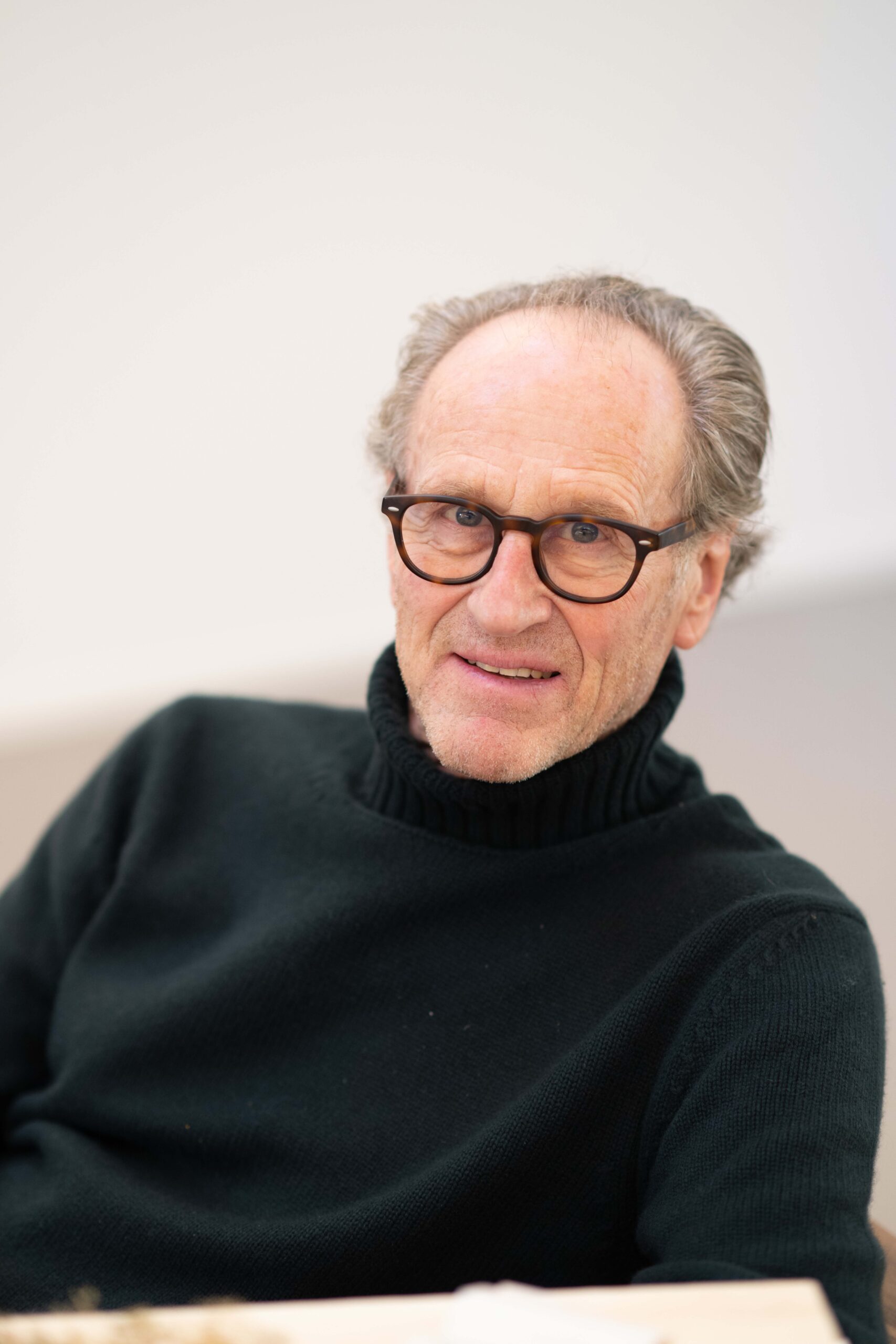
Matteo Thun, architect — portrait by Catherina Hess

In Conversation · Spaces

Hospi-tecture: When Architecture Becomes Medicine

Matteo Thun on Genius Loci, Material Intelligence, and the design philosophy that turns a stay into a health decision.

Read the full conversation →

Alpine: The Architecture of the Stay

When Matteo Thun was designing the Waldkliniken Eisenberg in Thuringia, a municipal clinic, he put a fine-dining restaurant in it, because healthy, varied cuisine is a prerequisite for the healing process. The corridor widths, the wood on the floor, the windows and their orientation toward the forest outside — the brief was the same one he uses for five-star hotels. He explained the underlying principle to The Silent Luxury with a single Latin word. Hospes. It means guest, and it is the root of both hospital and hospitality. “Clinics can learn from the hospitality concept how to place the guest at the center,” he said. “This isn’t a question of luxury, but of attitude.”

In Austria, MAYRLIFE in Altaussee and Park Igls near Innsbruck have been practising this convergence for decades, grounding it in FX Mayr medicine and Modern Mayr diagnostics respectively. The Waldhotel at Bürgenstock in Switzerland, which Thun also designed, sits 500 metres above Lake Lucerne and holds an accredited medical centre on its ground floor, with the spa directly above it. The transition between the two is architecturally seamless. That seamlessness is the point.

Hospitecture · Well Living

A Geography of the Health Stay

The concept has been built — under different names and through different cultural traditions — across Japan, India, the Gulf, Latin America, Bhutan, Africa, and the Alpine medical wellness corridor for decades, long before a shared name existed for any of it.

Region Core Tradition Key Destinations
Alpine CorridorAustria & Switzerland Clinical architecture where medical centre and spa share the same floor plan. Nature — forest, lake, altitude — integrated as therapeutic environment. The stay begins with diagnostics and ends with a protocol. MAYRLIFE Altaussee · Park Igls Innsbruck · Waldhotel Bürgenstock
Japan Thermal bathing, shinrin-yoku forest immersion, biomarker research, ryokan multi-night tradition Kii mountain peninsula · Hakone volcanic region · Ryokan culture
Thailand Integrative medicine, clinical and hospitality programmes since 1995 Chiva-Som, Hua Hin
India Ayurvedic diagnostics, individualised programmes of two to four weeks, booked a year ahead Ananda in the Himalayas · Kairali Ayurvedic Healing Village, Kerala
The GulfUAE · Saudi Arabia · Singapore Genomic diagnostics, longevity protocols, wearable health tracking, state-level investment in health tourism infrastructure Dubai longevity clinics · Abu Dhabi health tourism · AlUla · Singapore preventive medicine
Latin AmericaMexico · Costa Rica · Colombia Blue Zone longevity research, health and movement programmes, biodiversity medicine Rancho La Puerta, Baja California (since 1940) · Costa Rica Blue Zone
AfricaKenya · Tanzania · South Africa Indigenous plant medicine, ethnopharmacology under formal clinical study, landscape immersion Premium wellness lodges combining traditional knowledge with high-end hospitality infrastructure
ItalyAbruzzo Albergo Diffuso: recovery through community immersion, duration, and the quality of place over time Sextantio Albergo Diffuso, Santo Stefano di Sessanio
Bhutan High-value low-volume policy: landscape, altitude, and enforced slowness as the programme itself National high-value tourism framework · Himalayan immersion stays

Editorial research: The Silent Luxury, 2026

Asia: Centuries Before the Word Existed

Japan’s ryokan tradition organises multi-night stays around thermal bathing, seasonal kaiseki cuisine, and a host relationship built carefully over the full length of the visit. What Japanese culture developed alongside this — and what Western medicine is now measuring in clinical studies at universities in Tokyo and Chiba — is shinrin-yoku, the practice of extended time in woodland environments whose effects on cortisol, blood pressure, and immune markers are documented and quantified. Retreats in the Kii mountain peninsula and around the Hakone volcanic region now frame multi-day forest immersion programmes as preventive medicine, with before-and-after biomarker testing included in the stay.

Thailand arrived at Hospitecture through integrative medicine. Chiva-Som in Hua Hin has been running combined clinical and hospitality programmes since 1995, predating the global wellness tourism conversation by a decade and building the evidence base that the industry has been drawing on ever since. India contributes the longest continuously documented medical tradition in the category. Ananda in the Himalayas, set in forested foothills above Rishikesh, and Kairali Ayurvedic Healing Village in Kerala offer programmes of two to four weeks built around Ayurvedic diagnostics calibrated to the individual. Both are booked a year ahead by guests arriving from across Asia, Europe, and the Gulf. In South Korea, where a 2025 academic study found that social norms and environmental self-efficacy are stronger drivers of health-related purchasing decisions than in most Western markets, a new generation of medical wellness houses is developing around sleep medicine, immune diagnostics, and nature immersion in the country’s coastal and mountain regions.

Bhutan has taken the most explicit position. The country’s high-value, low-volume tourism policy, which limits annual visitor numbers and sets a mandatory daily fee, produces a Hospitecture logic by design: the visit is an investment in an experience of depth and rarity, and the landscape — the Himalayan altitude, the intact forest cover, the silence — is inseparable from the value of the stay.

Gulf: Where Health Tourism Became Policy

Dubai has been building preventive medicine and longevity diagnostics into its tourism infrastructure with government backing, international clinical partnerships, and a visa framework that explicitly targets health travellers. Abu Dhabi recorded a 26 percent increase in international arrivals in 2024. Singapore is developing the technology layer — genomic diagnostics, wearable health tracking integrated into the stay, longevity protocols built on real-time data — that positions it as the Hospitecture reference point for the Indo-Pacific. In Saudi Arabia, the AlUla project is combining desert environment exposure, traditional herbal medicine traditions, and contemporary clinical diagnostics in a setting where distance from ordinary life is built into the geography.

Africa: The Pharmacopoeia and the Lodge

Africa holds approximately 45,000 vascular plant species. An estimated 5,000 of them are documented in traditional medicine across East and Southern Africa, identified and transmitted by healers across generations, rooted in specific landscapes, specific soils, specific seasons. A pharmacopoeia, in its original sense, is precisely this: a living archive of plants, their properties and their preparation. In Africa, it has never been written down in a single volume. It lives in the communities, in the land, and in the knowledge of those who work with both.

In East Africa, Hospitecture finds its material in the ground itself. At Segera Retreat on the Laikipia Plateau, every ingredient used in the spa is sourced from within the 50,000-acre conservancy, formulated from plants that the surrounding communities have identified and worked with medicinally for centuries. The stay connects to a pharmacopoeia that grows in the ground outside the window. The guests who seek it out are part of a shift that the numbers reflect: 55 percent of luxury travellers plan to spend more per trip while visiting fewer destinations, according to the Virtuoso Luxe Report 2026. Wellness safaris recorded a 41 percent surge in demand in the same period, according to Global Growth Insights Luxury Safari Tourism Market 2025.

The Village as Protocol

Italy arrived at its version of Hospitecture from a completely different direction. After the 1976 Friuli earthquake, architects and local administrators began converting abandoned stone buildings in mountain villages into dispersed hospitality — guests distributed across the borgo rather than concentrated in a single hotel, inhabiting the place and its community over stays measured in days and weeks. The Sextantio Albergo Diffuso in Santo Stefano di Sessanio, a medieval village in the Abruzzo Apennines, became one of the most studied examples of what this model produces: a form of recovery that happens through proximity, duration, and the specific unhurriedness of a place that has been there for eight hundred years. The streets are the corridors, as The Silent Luxury noted in its feature on the project. That observation contains an entire philosophy of what hospitality can be when it stops competing with medicine and simply becomes part of it.

The guests who seek Hospitecture experiences tend to return. In Mexico, Costa Rica — one of five Blue Zone regions in the world where populations measurably live longer than the global average — and Colombia, which recorded a 6.6 percent increase in international health tourism arrivals in 2024, the infrastructure for long stays built around health is growing faster than any other segment of the travel market. In every region on this list, the pattern is the same: the guests who came for a week come back for two, and the ones who came for two come back for three. Szekely charged seventeen dollars a week for a tent in the Baja mountains. He had no marketing at all.

Sources:

Virtuoso Luxe Report 2026 · virtuoso.com

Global Growth Insights, Luxury Safari Tourism Market 2025 · globalgrowthinsights.com/market-reports/luxury-safari-tourism-market-100146

Mordor Intelligence, Africa Wellness Tourism Market 2025 · mordorintelligence.com/industry-reports/africa-wellness-tourism-market

Lighthouse Global Hotel Rates Q4 2025 · mylighthouse.com/resources/insights/hotel-pricing-trends-q4-2025

Frontiers in Pharmacology, Medicinal Plants South Africa 2021 · ncbi.nlm.nih.gov/pmc/articles/PMC8569556/

Springer Nature, Ethnobotany East Africa 2024 · link.springer.com/article/10.1007/s42452-024-05970-7

Travel and Tour World, Colombia Tourism 2025 · travelandtourworld.com/news/article/tourism-keeps-growing-in-colombia-with-record-number-of-international-visitors/

Continue reading

THE DEFIANT VALUE: Inside the Bifurcation of the US Luxury Market

How a Trust Collapse, $24 Trillion in Concentrated Wealth, and a Broken Consumer Contract Are Restructuring American Luxury in 2026

Today, Nicolas Ghesquière, Artistic Director of women’s collections at Louis Vuitton, presents his Cruise 2027 collection inside the historic first-floor galleries of The Frick Collection on Fifth Avenue, the first fashion presentation the museum has ever staged in those rooms. Dior had already opened its Cruise season in Los Angeles the week before, and Gucci transformed Times Square into a runway on 16 May. The industry’s most strategically weighted seasonal presentations of 2026 have all converged on the United States within a span of three weeks, and that convergence has a precise economic explanation.

Concurrently, on 19 and 20 May, some thirty companies and more than two hundred institutional investors convene at the Morgan Stanley European Luxury Conference in Paris. Morgan Stanley Research cut its growth forecast for the global personal luxury goods market to 2.5 percent, having projected 4 to 5 percent as recently as autumn 2025. The revision reflects a structural split the bank identifies as the defining market condition of 2026: consumer confidence fell to its lowest point in 74 years of continuous measurement, while buyers whose wealth is held in equities and real estate have continued to spend with relative consistency. The two movements describe a market that has separated into two distinct economic realities, and the brands that understand which reality they are selling into are the ones currently choosing the United States as the stage for their most important seasonal presentations.

The Magic Is Spent

What the first-quarter results of 2026 make measurable is the precise depth of that split. Consumer confidence in the United States fell in April to its lowest point in 74 years of continuous measurement, lower than the reading recorded after the collapse of Lehman Brothers in 2008, lower than the panic reading of March 2020. The magic is spent. And yet, in the same month, Hermès reported a 17.2 percent revenue increase across the Americas. Brunello Cucinelli posted 14 percent organic growth. Watches of Switzerland raised its full-year profit guidance after US sales surged 24 percent.


The Price Miscalculation and Its Consequences

Between 2021 and 2025, the global luxury industry generated an estimated 80 percent of its market growth through price increases rather than volume expansion or quality investment, according to analysis by McKinsey and Business of Fashion’s State of Fashion 2026. The average luxury price across major houses rose approximately 54 percent from 2019 levels. Entry-level handbags at flagship European brands moved from aspirationally accessible to categorically inaccessible for the income tier that had historically sustained them.

The results are now visible in the industry’s own figures. The global active luxury customer base contracted from 400 million consumers in 2022 to approximately 330 million in early 2026, according to Bain and Altagamma. Roughly 70 million people, predominantly American aspirational buyers in the $100,000 to $300,000 household income bracket, have exited the market. Mintel’s US Luxury Consumer 2025 study found that more than 60 percent of American luxury consumers report purchasing less as a direct consequence of price increases, and more than half believe that quality no longer justifies the prices being asked.

The consumer response was not indifference. It was, more precisely, offence.

The Bifurcation of American Wealth

The paradox of simultaneous confidence collapse and luxury resilience is only a paradox if one assumes that luxury consumption tracks consumer sentiment broadly. In the United States of 2026, it does not. What it tracks, with increasing precision, is the behaviour of the 41 percent of global ultra-high-net-worth individuals who happen to live in North America, a group holding collective assets of approximately $24 trillion, according to Altrata’s World Ultra Wealth Report 2025.

The United States is home to roughly 6 million high-net-worth individuals, representing 37 percent of the world’s millionaire population, alongside 10,800 centimillionaires and more than 850 billionaires, according to Capgemini’s World Wealth Report 2025. This stratum expanded by 7.3 percent in 2024, adding 562,000 new members, while Europe’s equivalent population contracted by 2.1 percent in the same period. That divergence, more than any macroeconomic reading, explains why major European luxury groups have come to regard the United States as their most reliable geographic anchor.


The Data Behind the Split: Key Figures at a Glance

The following two data visualisations map the structural forces reshaping the luxury market in 2026 — separating global metrics from US-specific performance. The first covers worldwide personal luxury goods forecasts, the contraction of the global active consumer base, the trust deficit, and Swiss watch export data. The second focuses exclusively on the United States: consumer sentiment, the bifurcation of purchasing power by wealth tier, Q1 corporate performance across the Americas, and the physical retail expansion tracking where concentrated wealth is moving.

US Luxury Market 2026 – The Silent Luxury
United States · Market Analysis · May 2026
The American Luxury Market — Bifurcated, Concentrated, Selective
US-specific data only: consumer sentiment, wealth distribution, corporate performance in the Americas, and retail expansion.
US Consumer Sentiment — April 2026
49.8
University of Michigan Consumer Sentiment Index
The lowest reading in 74 years of continuous measurement — lower than after the collapse of Lehman Brothers in 2008, lower than the panic reading of March 2020. The broad American consumer is navigating historic uncertainty, while the top tier of the wealth distribution continues to spend with relative consistency.
The American Hourglass — Luxury Spend by Tier
Top Tier · HNWI
Asset-Insulated Apex
Wealthy buyers now hold 47% of all US luxury spend, up from 30% in 2019. Portfolio and real estate gains sustain demand independent of broad sentiment.
47% of spend
Aspirational · HENRYs
The Hollowed Middle
30% of aspirational US consumers have reduced or paused luxury spending, squeezed by 54% cumulative price increases since 2019, inflation, and housing costs.
−30% of segment
Broad Base
Structurally Decoupled
The bottom 80% by income have moved into circular, value, and experience economies. The luxury industry has structurally priced them out.
+54% avg. price since 2019
The US Trust Deficit — Price vs. Perceived Value
US luxury growth 2021–2025 from price increases
~80%
Average luxury price increase since 2019
+54%
US consumers buying less due to price increases
60%+
Feel quality no longer justifies the prices asked
50%+
Sources: Mintel US Luxury Consumer 2025 · BoF/McKinsey State of Fashion 2026
Americas / North America — Q1 2026 Performance by House
House Market / Segment Growth
Hermès Americas Q1 2026 +17.2%
Brunello Cucinelli Organic Q1 2026, Americas led +14.0%
Prada Group Americas retail Q1 2026 +15.0%
Watches of Switzerland US revenue FY2026 +24.0%
Moncler Americas Q1 2026 +7.0%
LVMH USA Q1 2026 (W&J +7%) +3.0%
Gucci / Kering North America Q1 2026 (global −8%) +8.0%
US Wealth Base — The Structural Demand Floor
6M
HNWIs in the US (assets $1M+) — 37% of world’s millionaire population
$29.9T
HNWI wealth in North America, up 8.9% in 2024 alone
+7.3%
North America HNWI growth 2024, while Europe contracted 2.1%
$84T
Great Wealth Transfer to younger generations by 2045 (Cerulli Associates)
US Retail Expansion — Physical Commitments 2024–2026
42 stores
New luxury openings in New York, July 2024–July 2025 — more than any other city globally
JLL Luxury Retail Report 2025
$200M+
LVMH investment in Rodeo Drive properties for Tiffany and Louis Vuitton flagships
JLL Luxury Retail Report 2025
47,900 sqft
Dior flagship Beverly Hills, opened November 2025 — largest single-brand luxury opening in the US that year
JLL Luxury Retail Report 2025
15 locations
New US Chanel openings since 2020, including Nashville and Las Vegas, following wealth migration south and west
JLL Luxury Retail Report 2025

What the Q1 Numbers Actually Show

The first quarter of 2026 produced a set of corporate results that appear contradictory until the bifurcation logic is applied. Brands with genuine product scarcity, documented provenance, and multi-decade pricing discipline performed strongly in the Americas. Brands that had expanded aggressively into aspirational price points during the post-pandemic years showed continuing deterioration.

Hermès delivered 4.1 billion euros in Q1 2026 revenue, with 6 percent growth at constant exchange rates. The Americas division grew 17.2 percent. Brunello Cucinelli posted 14 percent growth to constant currencies, with demand for its highest-priced products leading the performance. Prada Group reported 15 percent retail sales growth in the Americas, driven by the full-price discipline the group has maintained since abandoning its outlet strategy several years earlier.

Kering's results illustrate the opposite dynamic with equal clarity. Gucci recorded a comparable decline of 8 percent globally in Q1 2026, while North America posted growth of 8 percent, a divergence that captures, in a single data point, the different responses of American market segments to the same brand. LVMH's quarterly breakdown carries a structural signal that extends beyond the group's own performance. Watches and Jewelry grew 7 percent organically in Q1 2026, while Fashion and Leather Goods declined 2 percent. The category divergence is consistent with a broader finding across the industry: hard luxury, goods with intrinsic material value, low production volumes, and documented craft origin, is outperforming fashion categories where the pricing logic has become detached from any objective quality justification.

Swiss Watches and the Geometry of Trust

No data series illustrates the tension inside the American luxury market more vividly than Swiss watch export statistics from the Federation of the Swiss Watch Industry. The United States holds 17 percent of global Swiss watch export volume, the largest single-market share in the world. What happened to that market in 2025 reads less like a demand story than a political economy case study.

The arithmetic of the full year, a 0.5 percent decline despite a month at minus 55 percent and another at minus 52 percent, confirms what the quarterly luxury results also suggest: the underlying demand from wealthy American buyers for certified Swiss watches held through extreme conditions. What collapsed in September and November was not consumer appetite. What collapsed was the logistics channel's ability to serve it profitably at a 39 percent tariff rate. When the rate settled at 15 percent in November 2025, demand re-emerged immediately. The Watches of Switzerland result adds a retail-level confirmation to the export data. The group reported a 24 percent increase in US revenue for the fiscal year ending May 2026, with the American market generating more than half of its total group turnover.


Global Luxury Market 2026 – The Silent Luxury
Global Market · May 2026
The Global Luxury Market in Numbers
Personal luxury goods worldwide: growth forecasts, active consumer base, trust metrics, and Swiss watch exports — global data only.
Morgan Stanley Growth Forecast — Personal Luxury Goods 2026
2.5%
Morgan Stanley Research · Paris, May 19–20, 2026
Expected growth in global personal luxury goods in 2026, revised down significantly ahead of the Morgan Stanley European Luxury Conference. Recovery is sequential but structurally uneven, shaped by the K-shaped divide between top-tier and aspirational consumers.
Previous forecast autumn 2025: 4–5%
Global Active Luxury Customer Base
400M
2022
330M
Early 2026
−70 million active luxury consumers in four years
Source: Bain & Company / Altagamma 2025/2026
The Global Trust Deficit
70%
of luxury consumers globally are dissatisfied with the current in-store experience
90%
find the customer experience identical across all luxury brands
Source: Bain & Company / Altagamma Luxury Study 2025/2026
Swiss Watch Exports — Key Data Points
CHF 25.55 bn
Global Swiss watch exports full year 2025, down 1.7% vs 2024
CHF 6.2 bn
Global Swiss watch exports Q1 2026, up 1.4% vs Q1 2025
17%
USA share of global Swiss watch exports — the single largest market worldwide
−0.5%
US full year 2025 result, despite a month at −55.6% during peak tariff pressure
Source: Federation of the Swiss Watch Industry (FHS)
The Price Escalation — Global Impact
Global luxury growth 2021–2025 from price increases
~80%
Average luxury price increase since 2019
+54%
Wealthy buyers' share of luxury spend 2026
46–47%
Wealthy buyers' share of luxury spend 2019
30%
Global HNWI Landscape 2024
23.4M
High-Net-Worth Individuals globally with investable assets of $1M+
Capgemini World Wealth Report 2025
$90.5T
Total global HNWI wealth, increasingly concentrated and mobile
Capgemini World Wealth Report 2025
+4.5%
Bain/Altagamma projected luxury growth for North America in 2026
Bain/Altagamma 2026

Retail Architecture and the Retreat From the Middle

The industry's physical response to the bifurcated market is visible in the data on store openings and capital investment. New York recorded 42 new luxury retail openings between July 2024 and July 2025, more than any other city globally, according to JLL's Luxury Retail Report 2025. Southern California added 19 openings in the same period. LVMH committed more than $200 million to Rodeo Drive properties for Tiffany and Louis Vuitton flagships. Dior opened a 47,900 square foot flagship in Beverly Hills in November 2025.

The investment in physical retail is the industry's operational response to the trust deficit. When 90 percent of luxury consumers report that the experience across brands is indistinguishable, the correct response for brands capable of genuine differentiation is to create spaces where distinction is architecturally and experientially obvious. The private salon model, invitation-only, inventory-light, focused on relationship rather than transaction, is expanding across primary and secondary US markets, from Palm Beach to Nashville.

The geographic spread of the investment is itself a data point. Chanel has opened 15 American locations since 2020, including in Nashville and Las Vegas. Hermès established its presence in Austin. Cartier has concentrated capital on secondary and tertiary cities with growing private wealth concentrations. The migration of high-net-worth households away from legacy coastal centres, accelerated by pandemic-era relocations to Sun Belt and Mountain West markets, has produced a geographic redistribution of luxury purchasing power that brands are now physically following.

The Generational Dimension

The structural argument for US luxury's resilience over the medium term rests on a specific demographic arithmetic. According to Cerulli Associates, approximately $84 trillion will transfer from Baby Boomers to younger generations in the United States by 2045. Gen X, currently responsible for roughly 33 percent of American luxury spending, holds purchasing power of $15.2 trillion today, projected to reach $23 trillion by 2035. Bain estimates that Millennials and Gen Z will account for more than 70 percent of global luxury spending by 2030.

The conditions of that transfer matter as much as its scale. The generations inheriting American wealth are not the generations that built brand loyalty to logos on canvas bags. BCG and Altagamma's True-Luxury Global Consumer Insights research shows the incoming wealth cohort prioritising craft documentation, supply chain transparency, and long-term repairability over brand visibility. The same research confirms that 66.9 percent of luxury executives now anticipate stable or growing revenues in the near term, a projection grounded precisely on the assumption that they can serve this transitioning demand structure rather than the one that sustained the industry through the post-pandemic price cycle.


The Selective Resilience

The American luxury market is not experiencing a recovery in the conventional sense of the word. What Deloitte's Global Powers of Luxury 2026 report describes as value over volume is visible in every major data series: the industry's HNWI wealth base is expanding, Swiss watch demand is resilient at the retail level despite export volatility, Bain projects 4.5 percent growth for North America in 2026, and 70.7 percent of executives in Deloitte's survey anticipate stable or improving margins.

The resilience, however, is architecturally narrow. It sits almost entirely within the top tier of the wealth distribution, at the intersection of documented provenance, genuine craft investment, and relationship-driven retail. The aspirational segment that expanded the market between 2004 and 2022 is not coming back at current price points. BCG estimates that approximately 30 percent of aspirational US consumers have reduced or abandoned luxury spending, with many redirecting toward the secondary market, which reached an estimated 48 billion euros globally in 2023 according to KPMG, and which is structurally growing faster than the primary segment.

The houses that priced for volume while cutting craft investment face a US market that is, in effect, holding a bill of damages. The houses that maintained pricing discipline, production scarcity, and genuine material integrity are collecting the loyalty of a concentrated but historically wealthy consumer base. The divergence in Q1 results, between Hermès at plus 17 percent in the Americas and a category-average that tells a far more complicated story, is the market rendering its verdict.

What the University of Michigan's historic low reading captures is the mood of the broad American economy. What the luxury performance data captures is something different: the behaviour of a class of buyers for whom the economy's mood is a condition they observe rather than one they share.


The Magic Is Spent — The Silent Luxury

Continue Reading

The Magic Is Spent

On the structural forces behind the contraction of the global luxury market and what they mean for brands that built their growth on aspiration alone.

Read the full analysis on The Silent Luxury →

What readers ask: The US Luxury Market in 2026

The United States remains the most structurally important luxury market in the world in 2026 — not because it is growing broadly, but because it is where the bifurcation between top-tier and aspirational luxury demand is most clearly visible. The following questions address the key structural forces shaping American luxury consumption, corporate performance, and the outlook for brands operating in this market.

  • Why is the US luxury market considered bifurcated in 2026?

    The US luxury market in 2026 is bifurcated because demand has split into two structurally distinct realities. Wealthy buyers — whose assets are tied to equities and real estate — have continued to spend, with their share of total US luxury expenditure rising from 30 percent in 2019 to 47 percent in 2026. Aspirational buyers, by contrast, have exited in significant numbers: approximately 30 percent of this segment has reduced or paused luxury spending entirely, squeezed by cumulative price increases of 54 percent since 2019, persistent inflation, and rising housing costs. The global active luxury customer base shrank from 400 million in 2022 to 330 million by early 2026, according to Bain and Altagamma, with American aspirational consumers representing a disproportionate share of that contraction.

  • What does the Morgan Stanley European Luxury Conference 2026 reveal about the market?

    Ahead of its European Luxury Conference on 19 and 20 May 2026 in Paris, Morgan Stanley Research cut its growth forecast for the global personal luxury goods market to 2.5 percent — down from a projection of 4 to 5 percent made as recently as autumn 2025. The revision reflects what the bank identifies as the defining structural condition of 2026: a K-shaped market split in which high-income consumers continue to spend while broader consumer confidence has collapsed to its lowest point in 74 years. The bank notes that brands focused on high-income consumers continue to deliver strong results, while those with significant exposure to aspirational buyers face continued pressure.

  • Which luxury brands are performing strongly in the US in 2026?

    The brands performing most strongly in the Americas in Q1 2026 are those with multi-decade pricing discipline, documented provenance, and genuine product scarcity. Hermès reported 17.2 percent revenue growth across the Americas, Brunello Cucinelli posted 14 percent organic growth, and Prada Group reported 15 percent retail sales growth in the region. Watches of Switzerland raised its full-year guidance after US sales rose 24 percent. By contrast, brands with greater exposure to aspirational price points have continued to deteriorate. The divergence confirms that the US market rewards craft integrity and punishes industrialized exclusivity.

  • What is the trust deficit in the US luxury market?

    The trust deficit refers to the breakdown of the implicit contract between luxury brands and their customers. Between 2021 and 2025, the industry generated an estimated 80 percent of its market growth through price increases rather than quality improvements or volume gains. According to Mintel's US Luxury Consumer 2025 study, more than 60 percent of American luxury consumers are now purchasing less as a direct result of those increases, and more than half believe that quality no longer justifies the prices being asked. Bain and Altagamma research confirms that 70 percent of luxury consumers are dissatisfied with the current in-store experience, and 90 percent find the experience identical across all brands.

  • Why are major luxury houses staging their Cruise 2027 shows in the United States?

    In May 2026, Dior presented its Cruise 2027 collection in Los Angeles, Gucci transformed Times Square into a runway on 16 May, and Louis Vuitton presented at The Frick Collection in New York on 20 May — the first fashion show ever staged in the museum's historic first-floor galleries. The convergence of the industry's most strategically weighted seasonal presentations in the United States reflects the market's structural importance: North America is projected to grow 4.5 percent in luxury spending in 2026, according to Altagamma's consensus forecast, while other major regions face greater headwinds.

  • What is the outlook for the US luxury market through 2030?

    Bain projects 4.5 percent growth for North America in 2026. Cerulli Associates estimates that approximately $84 trillion will transfer from Baby Boomers to younger generations in the United States by 2045, representing a historic concentration of purchasing power in the hands of cohorts that prioritise craft documentation, supply chain transparency, and material integrity over brand visibility. Bain estimates that Millennials and Gen Z will account for more than 70 percent of global luxury spending by 2030 — generations for whom the post-pandemic pricing model holds no legacy loyalty.

Continue reading

The Hourglass Snaps Shut: What the US Luxury Market Reveals in 2026

In April 2026, US consumer sentiment fell to its lowest reading in seventy-four years. In the same quarter, wealthy buyers held 47 percent of all American luxury spending, up from 30 percent in 2019, while Hermès grew the Americas by 17 percent. The hourglass economy is no longer a forecast. It is the result. And in the space the volume model is vacating, something new is taking shape: independent labels built for the long term.

On the first day of January 2026, Rama Duwaji stood at her husband’s inauguration as the 111th mayor of New York City in a vintage Balenciaga coat sourced from the Albright Fashion Library, tailored shorts from The Frankie Shop, and boots borrowed from British independent label Miista. For the midday ceremony at City Hall, she wore a reworked piece by Palestinian-Lebanese designer Cynthia Merhej of Renaissance Renaissance, a third-generation couturier whose atelier operates between Beirut and Paris, with collections made in Lebanon using local artisans and family-owned factories. Her stylist, Gabriella Karefa-Johnson, framed the choice plainly on Substack: “On her first official day as First Lady of New York, Rama is wearing a small, independent woman designer from the Middle East.”

The image circulated widely. It was also a precise signal about the American market: on the most public stage New York offers in January, the first lady chose provenance over brand, a maker with a face over a conglomerate with a logo. That choice was not incidental to the moment. It was the moment.

Three months later, the April 2026 Consumer Sentiment Index landed at 49.8 — the lowest reading in seventy-four years, down from 52.2 in April 2025 and from 74.0 in April 2024. Within two years, American households had lost nearly a third of their economic confidence on an index where 100 represents full confidence and the long-run historical average sits at 86.

The Deloitte Financial Well-Being Index confirmed the same direction: tracking how Americans feel about paying their bills, their savings, and their financial expectations for the year ahead, it fell to 101.1 in March, down from above 105 through most of 2025. Housing costs, healthcare, debt service, and stagnant wages had been growing faster than incomes for years, and the economic shock of the Iran conflict landed on top of that accumulated pressure. At the lowest sentiment reading in seventy-four years, a broad stratum of American households had stopped absorbing it quietly. With inflation expectations for the year ahead at 6.7 percent, the highest reading in four decades, there was little in the data to suggest the pressure would ease.


The Hourglass Economy: Wealth Up, Middle Out

The hourglass economy describes the structural polarisation of consumer spending into two growing segments with a contracting middle: wealth concentrating upward among high-net-worth individuals, the aspirational middle tier eroding under the compounding pressure of inflation, housing costs, and debt, and a broadening base of households the category has moved beyond reach entirely.

For two decades, the growth engine of American luxury was the aspirational middle tier: corporate managers, dual-income suburban households, high-earning-not-rich-yet professionals earning between 150,000 and 300,000 dollars a year. These buyers stretched for entry-level purchases, drove volume across the category, and kept brands growing without having to compete for the very top of the wealth pyramid. By early 2026, a compounding mix of persistent core inflation, soaring housing costs, stagnant real wages, and heavy consumer and student debt had stripped this tier of its discretionary capital. The income was still there. The fixed costs had grown to absorb it.

Bain, BCG, and Deloitte track the consequence consistently across their 2025 and 2026 reports. Between 2022 and early 2026, the global luxury customer base contracted from approximately 400 million people to around 330 million, according to Bain & Company, with the departure concentrated in exactly this aspirational stratum across every major Western market. BCG and Altagamma tracked where the spending went: approximately 35 percent of these consumers redirected their budgets toward savings, debt reduction, and the resale market.

In 2026, wealthy buyers hold 47 percent of all US personal luxury spending, according to Bain and eMarketer. In 2019, that share stood at 30 percent. The sixty to seventy million who exited the global luxury market between 2022 and 2026 did not stop spending; they redistributed downward, into the mass market, the resale economy, and categories where their budgets still had reach. At the upper end of the income spectrum, the dynamic ran in the opposite direction. North America added 7.3 percent to its population of high-net-worth individuals in 2024, reaching 8.4 million people with aggregate wealth of approximately 29.9 trillion dollars, according to Capgemini’s World Wealth Report 2025. By 2026, 47 percent of US luxury spending sits with buyers who represent a small fraction of the total consumer base.

The Q1 2026 earnings results showed precisely which brands had built for that buyer and which had not.

The Hourglass Economy — The Silent Luxury

Continued Reading

The Hourglass Economy: What the Luxury Market Data Shows

Wealth concentrating upward, the middle hollowing out, and the structural pattern behind the Q1 2026 divergence.

Read the analysis →

Seventeen Points

Hermès grew the Americas by 17.2 percent in Q1 2026. Brunello Cucinelli added 14 percent to constant exchange rates, with a rising proportion of special and unique pieces in each transaction. Prada’s Americas retail sales advanced 15 percent. LVMH’s Watches and Jewelry division gained 7 percent organically, with Tiffany a particular driver. Even Kering, whose flagship Gucci brand fell 8 percent in comparable terms across the group, recorded a North American gain of 8 percent.

Between 2023 and 2025, approximately 80 percent of global luxury market growth had come from price increases rather than genuine volume expansion or investment in craft, according to the BoF-McKinsey State of Fashion 2026. Some houses used that period to extract revenue from a loyal base. Others invested in the quality of the object and the depth of the client relationship. J.P. Morgan’s head of European Luxury and Sporting Goods, Chiara Battistini, described North America as “the bright spot of the season, supported by wealth creation and equity market strength.” Hermès and LVMH’s US performance diverged by 17 percentage points in the same quarter, in the same market, serving the same high-net-worth consumer. The difference is not macroeconomic. It is structural.

Permanence as Currency

The Federation of the Swiss Watch Industry reported that Q1 2026 reached 6.2 billion Swiss francs in total export value, a 1.4 percent increase over the prior year, with the United States holding its position as the single largest destination market. The number of units exported fell faster than the value of what was shipped. For 2025 as a full year, export value fell 1.7 percent while unit volume dropped 4.8 percent. Fewer watches left Switzerland, and each one was worth more on average.

In May 2026, Watches of Switzerland raised its full-year earnings guidance on the basis that American consumers had spent 24 percent more on fine watches and jewellery over the previous twelve months, with US revenues reaching 1.24 billion dollars, more than half of the group’s global income. That same week, Reuters reported US consumer sentiment at a seventy-four-year low. Concentrated wealth spending more on durable, appreciating objects at the top of the market; broad consumer anxiety at its most acute since before the oil crisis. Both readings describe the United States in the same moment.

KPMG’s luxury report documented that the global pre-owned luxury market reached an estimated 48 billion euros in 2023. Within the Swiss watch industry specifically, the proportion of consumers willing to purchase a pre-owned piece doubled between 2020 and 2024. American collectors increasingly ask, before any acquisition, whether a piece will hold or grow its value over twenty years. That question points them toward categories with documented provenance, established secondary markets, and material integrity that seasonal fashion cannot credibly promise. Karefa-Johnson asked an equivalent question when she dressed Rama Duwaji: not which brand is most visible, but which maker has a name, a place, and a record.


Luxury Recalibration Blueprint 2026

Continued Reading

The Luxury Recalibration Blueprint 2026

The structural forces reshaping the global luxury market and what they mean for brands, buyers, and the decade ahead.

Read the Blueprint →

The Other Growth Story: Independent and Gaining

While European conglomerates spent the opening months of 2026 staging Cruise presentations in Los Angeles and Aspen, a generation of American independent labels posted growth through a different mechanism entirely.

Rachel Scott’s Diotima launched in 2021. Approximately 60 percent of each collection is built on crochet techniques rooted in Jamaica, executed by women across the island who have been working with these methods across generations. Named CFDA Womenswear Designer of the Year in 2024 and subsequently appointed creative director of Proenza Schouler, Scott described the distinction between the two in a February 2026 interview with W Magazine: “Diotima is a personal, political brand. It’s rooted in the Caribbean and it’s anti-imperialist. Plus, the craft foregrounds everything. About 60 percent of the collection is made by hand. Proenza comes from the part of me that studied philosophy and French and is obsessed with film.” The Fall 2026 collection, built around a collaboration with the estate of Cuban artist Wifredo Lam, made Scott’s position explicit: the Caribbean craft traditions Diotima draws on are actively developed and transmitted, not preserved as reference.

Frances Howie’s Fforme has, over four New York Fashion Week seasons, built a following among editors and buyers without advertising spend or institutional backing. The collections are argued through construction: how a garment is cut, how it holds its shape, where the weight falls. Maria McManus works from a parallel premise. Fast Company has described her label as carrying “a fully traceable collection made from sustainable fabrics,” with all materials certified to Global Recycled Standard or GOTS. The longevity of the garment is the design brief, not a secondary consideration.

Regenerative luxury describes an approach to value that measures what an object, place, or production system actively sustains and carries forward, rather than what it minimises or reduces. Where conventional sustainability asks how much harm is avoided, regenerative luxury asks how much value is returned: to the landscape, the craft tradition, the community, and the buyer’s own sense of what endures. The labels growing in the American upper market in 2026 are operating within this logic, whether or not they use the term.

The buyer who finds these labels arrives through research. According to The RealReal’s 2025 Luxury Resale Report, Diotima recorded a 152 percent increase in searches on the platform, a buyer actively seeking out the brand, not encountering it through a recommendation feed. Karefa-Johnson made a version of the same search when she dressed Rama Duwaji: she looked for makers with a specific location, a specific skill set, and a specific politics of production. She found them outside the conglomerate system.


Local Soul: The Quiet Rise of Independent Luxury

Continued Reading

Local Soul: The Quiet Rise of Independent Luxury

Why small independent luxury brands are gaining relevance in 2026 and what this signals for the market.

Read the analysis →

The Local Soul

Local Soul is the material intelligence of a place when food systems, craft traditions, architecture, and hospitality remain connected to their specific territory of origin, producing value that is simultaneously specific, situated, and forward-facing.

Nashville, the Pacific Northwest, Montana, and the American Southwest have their own material cultures and their own relationship to provenance, developed independently of luxury retail.

Nashville’s affluent buyer is formed by proximity to producers: to regional grain, heritage meat breeds, and the specific agriculture the Smoky Mountains terrain supports. Blackberry Farm in Walland is a functioning agricultural estate with its own brewery, cheese operation, and smokehouse, holding a Relais and Châteaux designation. It draws the same upper-market buyer that Diotima reaches through cloth, someone who tracks origin as a purchasing criterion, in food as in fashion.

The Pacific Northwest has run on provenance and minimal intervention for decades, in wine, in food, in outdoor manufacture. Filson, the Seattle outfitter founded in 1897, offers a lifetime guarantee on every product and opens its manufacturing facility to public tours. The upper-market buyer who travels to watch an object being made is applying the same purchasing logic as the collector who asks for the movement history of a Swiss watch before acquiring it.

The Tariff That Changed the Arithmetic

The tariff regime extended into 2026, with China at 145 percent, Vietnam at 46 percent, Bangladesh at 37 percent, and the European Union at 20 percent. For independent labels producing across multiple international manufacturing geographies, the cost increase is existential. American independent designers have publicly described the regime as potentially catastrophic for small-scale production, where margins cannot absorb sudden cost spikes of this magnitude. Swiss watch exports face a 20 percent EU tariff, which the Federation of the Swiss Watch Industry has flagged as a meaningful headwind for a category where American demand had been growing at 24 percent annually.

For labels already producing domestically, the arithmetic has shifted. The cost differential that made American manufacturing prohibitive for a decade has narrowed sharply. In 2026, producing in the United States is increasingly a competitive calculation, not only a values one. Handwork 2026, a national craft initiative organised by more than two hundred American craft institutions to mark the country’s 250th anniversary, is consolidating a conversation that had previously been fragmented across regional communities. Its centrepiece exhibition at the Renwick Gallery in Washington DC in November, and a Monacelli Press publication, signal institutional investment in American making that aligns, for the first time in decades, with an economic incentive to produce domestically.

30. 47. Seven Years.

In 2019, wealthy buyers held 30 percent of US personal luxury spending. In 2026, they hold 47 percent.

The University of Michigan’s April 2026 sentiment reading of 49.8 and Watches of Switzerland’s 24 percent American revenue growth sit in the same quarter, in the same country. Rama Duwaji stood on the steps of City Hall in a coat with a documented history, boots with a named maker, and a dress from a specific atelier with a specific address. The buyer who applies the same criteria through a different budget, tracking provenance, choosing the named maker, asking who built the thing and where, is the buyer the American luxury market now organises itself around.

The seventeen points between 30 and 47 percent show how long that process has been underway.


What readers ask about the US luxury market in 2026

The following questions address the structural shift in the American luxury market in 2026: the hourglass economy, the retreat of the aspirational middle, the concentration of spending among high-net-worth buyers, the role of Swiss watches and pre-owned luxury, and why independent labels built around provenance, craft and long-term value are becoming more relevant.

  • What is the hourglass economy in the US luxury market?

    The hourglass economy describes the structural polarisation of consumer spending into two growing segments with a contracting middle. In the US luxury market, wealth is concentrating upward among high-net-worth individuals, while the aspirational middle tier is eroding under the pressure of inflation, housing costs, healthcare, debt and weaker discretionary income. At the lower end, a broader base of households has moved beyond the reach of luxury entirely. In 2026, this structure has become visible through collapsing consumer sentiment, shrinking aspirational demand and a rising share of luxury spending held by a small high-net-worth group.


  • Why is the middle pulling back from luxury spending?

    The middle is pulling back because the old aspirational luxury model depended on buyers who could stretch into entry-level purchases while still maintaining discretionary spending power. For years, this included corporate managers, dual-income households and high-earning-not-rich-yet professionals. By early 2026, higher housing costs, healthcare costs, debt service, inflation and stagnant real wages had absorbed much of that discretionary capital. The income may still be there, but the flexibility around it has changed. Luxury’s old price model is therefore harder for the aspirational middle to justify or sustain.


  • Why do high-net-worth buyers hold 47 percent of US luxury spending?

    High-net-worth buyers hold 47 percent of US luxury spending because the American luxury market has become increasingly concentrated at the top. In 2019, wealthy buyers accounted for 30 percent of US personal luxury spending. By 2026, that share had risen to 47 percent. The shift reflects the wider hourglass structure: the aspirational middle is pulling back, while affluent and high-net-worth buyers remain active in categories where price can still be defended by rarity, quality, service, provenance, jewellery, watches, private clienteling and long-term value.

  • What did Q1 2026 reveal about luxury brands in the United States?

    Q1 2026 showed that the US luxury market remains resilient, but highly selective. Hermès grew the Americas by 17.2 percent, Brunello Cucinelli added 14 percent at constant exchange rates, and Prada’s Americas retail sales advanced 15 percent. LVMH’s Watches and Jewelry division gained 7 percent organically, with Tiffany as a driver. Even Kering, while Gucci declined across the group, recorded a North American gain for Gucci. The results suggest that the US market rewards houses with strong client relationships, product credibility and high-value categories, while the broader volume model is losing force.

  • What do Swiss watch exports reveal about US luxury demand in 2026?

    Swiss watch exports show that US luxury demand is shifting toward value categories where provenance, scarcity, repairability and secondary-market confidence matter. The Federation of the Swiss Watch Industry reported Q1 2026 exports of 6.2 billion Swiss francs, up 1.4 percent year on year, with the United States remaining the largest destination market. In 2025, export value fell less sharply than unit volume, meaning fewer watches were exported at a higher average value. This supports the wider pattern: in a more selective market, value holds better than volume.

  • Why is the pre-owned luxury market important in the United States?

    The pre-owned luxury market matters because it reflects a more value-conscious buyer. According to KPMG, the global pre-owned luxury market reached an estimated 48 billion euros in 2023. In the Swiss watch category, the share of consumers willing to buy pre-owned doubled between 2020 and 2024. In the United States, resale platforms such as The RealReal, Rebag and specialist watch marketplaces have made authentication, provenance and long-term value part of the purchasing decision. The buyer is no longer only asking what a product costs today, but whether it will hold relevance and value over time.

  • Why do independents matter more in the US luxury market in 2026?

    Independents matter more because they answer a value question that large luxury groups often struggle to make credible at scale. Labels such as Diotima, Fforme and Maria McManus are built around specific makers, identifiable craft, traceable materials, cultural precision and garments designed for longer relevance. The article opens with Rama Duwaji choosing vintage Balenciaga, Miista and a reworked piece by Renaissance Renaissance because that image captures the shift: provenance over logo, a maker with a face over anonymous scale, and selection based on cultural and material specificity.

  • What does Rama Duwaji’s inauguration look reveal about the US luxury market?

    Rama Duwaji’s inauguration look matters because it turned a public political moment into a precise luxury signal. She wore a vintage Balenciaga coat, boots from British independent label Miista, and a reworked piece by Palestinian-Lebanese designer Cynthia Merhej of Renaissance Renaissance. Her stylist Gabriella Karefa-Johnson described the choice as the work of “a small, independent woman designer from the Middle East.” In the context of the US luxury market, the image pointed toward a different value logic: provenance, independent design, cultural specificity, vintage and named makers.

  • What is regenerative luxury in this article?

    Regenerative luxury describes an approach to value that asks what an object, place or production system actively sustains and carries forward. The article uses the term in relation to independent labels that are built around craft traditions, traceable materials, cultural continuity and long-term relevance. Unlike conventional sustainability, which often measures reduction or avoided harm, regenerative luxury looks at what is returned to the landscape, the craft tradition, the community and the buyer’s sense of what endures. In the US market, this becomes relevant as buyers look for more credible forms of value.


  • What is Local Soul in the context of American luxury?

    Local Soul describes the material intelligence of a place when food systems, craft traditions, architecture and hospitality remain connected to their territory of origin. In the American context, the article points to Nashville, the Pacific Northwest, Montana and the American Southwest as regions with their own relationship to provenance, making, food, agriculture, landscape and hospitality. These regional cultures did not originate as luxury retail strategies. Their relevance comes from specificity. They offer a way to understand American luxury beyond New York, Los Angeles and Miami, through place-based knowledge and long-term value creation.


Sources: Bain & Company / Altagamma; BCG / Altagamma; Deloitte Global Powers of Luxury 2026; KPMG Luxury Report; Capgemini World Wealth Report 2025; Federation of the Swiss Watch Industry Q1 2026; Watches of Switzerland FY2026 guidance; University of Michigan Consumer Sentiment Index April 2026; Deloitte Financial Well-Being Index March 2026; BoF-McKinsey State of Fashion 2026; Q1 2026 earnings: Hermès, LVMH, Kering, Prada Group, Brunello Cucinelli; J.P. Morgan European Luxury Research; Reuters, April–May 2026; McKinsey Consumer Pulse 2026; Accenture “Luxe Eternal: The Customer Edit”; eMarketer US Luxury Spending 2026; New World Wealth USA Wealth Report 2025; The RealReal Luxury Resale Report 2025; W Magazine, February 2026; Fast Company, February 2024.

Continue reading