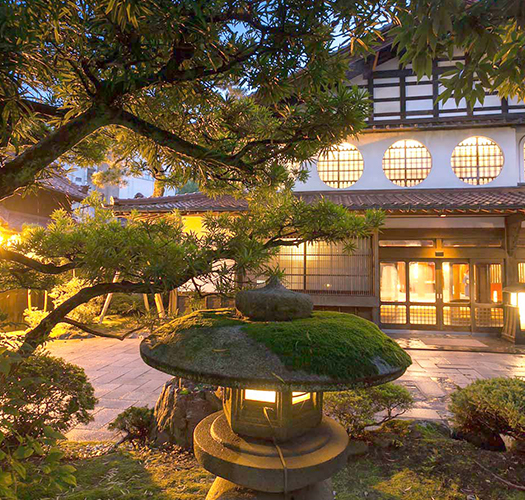
Albergo Diffuso: The Streets Are the Corridors
The Albergo Diffuso is an Italian hospitality model in which historic buildings distributed across a living community are managed as a single hotel, with unified reception, hotel-grade services, and guests who move through the village streets as temporary residents. The model was developed by Giancarlo Dall’Ara in 1982 in Carnia, Friuli-Venezia Giulia, following the 1976 earthquake, and is documented annually by the Associazione Nazionale Alberghi Diffusi in the Report Alberghi Diffusi. The 2026 edition records 10.6 months average annual opening, a 47% international guest share, and active expansion into Japan, Albania, northern Scandinavia and Germany.
A Walk Through the Hotel
Someone walks from her room to breakfast. The path takes her through a gate, along a cobblestone street, past a neighbour hanging laundry, through a piazza where two men are arguing about football. She arrives at the common room, sits down, and realises she has already experienced more of the place than most guests will in a week at a resort. What she walked through is the hotel — the streets, the neighbours, the argument about football and all.
This is the Albergo Diffuso. Giancarlo Dall’Ara, the Italian hospitality consultant who coined the term in 1982 and later founded the Associazione Nazionale Alberghi Diffusi, calls it “a hotel that is not built.” The rooms are distributed across multiple historic buildings within a living community. The reception is a central hub. The corridors, as Dall’Ara puts it, are “the narrow streets of the village.” The guests are “temporary residents rather than tourists.”
The Report Alberghi Diffusi 2026 — the most comprehensive current survey of the model — documents 10.6 months average annual opening per property, a 47% international guest share, and active expansion into Japan, Albania, Northern Europe and Germany. The USA ranks among the top four international source markets. These figures describe a hospitality concept that has been answering questions the broader industry is only beginning to ask.
How the model works
One Village, One Management
Reception
The central hub that holds the model together. All keys, all services, all local knowledge. →
Rooms A · B · C
Historic buildings distributed across the village. Average 7 buildings, 20 rooms, within 164 metres of reception. →
Restaurant
Serves guests and residents alike. Local producers, local employment — sustainability in the structure. →
Museum
Common spaces, archive, cultural heritage. At La Fiermontina: four suites, flashlight access by night. →
Piazza
The living community whose presence makes the product possible. The authenticity no designed interior can replicate. →
The origin · 1976
An earthquake emptied the villages of Carnia. The Albergo Diffuso was the answer. →
“The corridors of this hotel are the narrow streets of the village.” — Giancarlo Dall’Ara
The Albergo Diffuso operates as one hotel across several buildings. Reception, rooms, restaurant and common spaces are distributed through the village, while one management system holds the experience together.
Carnia, 1976
In May 1976, a 6.5-magnitude earthquake struck the Friuli-Venezia Giulia region of northeastern Italy. The Carnia valley suffered heavily. The years that followed brought thorough reconstruction: buildings repaired, streets repaved, infrastructure renewed. The populations, however, had dispersed, and the economic conditions that once sustained those communities returned more slowly than the stone walls. Restored houses stood largely empty through the late 1970s and into the 1980s.
It was in this condition that Dall’Ara began the work that would define his career. The restored buildings held architectural quality and no productive purpose. New construction would have required capital that the region lacked and would have altered the character of places whose character was the only remaining asset. The question he asked was how to make what already stood economically productive, on its own terms, through its own qualities.
The term “Albergo Diffuso” appeared for the first time in 1982, in the Progetto pilota Comeglians, a working group study for a village in Carnia. The first operational prototype followed in 1989 in San Leo, Emilia-Romagna. Sardinia enacted the world’s first regional law recognising the model in 1998. The Associazione Nazionale Alberghi Diffusi was founded in 2006 in Termoli. In 2010, an article in the New York Times brought the model to international attention; in the same year, Dall’Ara received recognition at the World Travel Market in London. In 2021, the model won the Global Human Settlements Outstanding Contribution Award in Beijing.
The origin matters because it defines every subsequent decision. The Albergo Diffuso was designed for places with architectural value and diminished economic vitality, and tourism becomes the monetisation of what the place already is.


Sextantio in Santo Stefano di Sessanio, Abruzzo, is one of Italy’s most established Alberghi Diffusi — a cluster of medieval stone houses in a hilltop village in the Apennines, managed as a single hotel since 2004. The stone walls were never plastered smooth. The wooden beams were never replaced. The towel rail has been in this room longer than the hotel has had a name. This is what the Albergo Diffuso model means by provenance: not a designed reference to history, but the thing itself. Photo: Courtesy Sextantio.
When the Street Is the Corridor
The rooms occupy historic buildings distributed across the village. The reception operates from a central hub. The restaurant may be in a third building; the common spaces may be a piazza, a courtyard, a garden that predates the project by three centuries. The management is unified. The services — daily cleaning, assistance, breakfast — are hotel-grade throughout. What holds it together is management; what gives it meaning is the place.
Dall’Ara’s phrase “temporary residents rather than tourists” carries the weight of an operational specification. A temporary resident walks through the same gate the neighbours do, encounters the same weather, hears the same sounds in the early morning that the people who live there hear. She is inside the community, moving through it on its own terms, and the authenticity she encounters belongs to a place that is genuinely inhabited rather than staged for her arrival.
Dall’Ara draws the boundary of the term precisely. “Not all forms of scattered hospitality are alberghi diffusi,” he writes. A cluster of holiday apartments with a shared booking platform meets none of the model’s conditions. The management must be unified, the services hotel-grade, and the community genuinely inhabited. Where these three conditions hold simultaneously, the model functions. Where any one of them falls away, the name survives but the substance does not.
The Logic of the Village
The hospitality industry has spent two decades attaching sustainability to its operations as an additional layer — the solar panel on the roof, the locally sourced line on the menu, the carbon offset programme at checkout. The Albergo Diffuso carries sustainability in its architecture.
The model requires an inhabited community, which means local employment is a condition of existence rather than a policy aspiration. The village must have residents; residents must have economic reasons to remain; the Albergo Diffuso creates those reasons by placing its guests inside the local economy rather than alongside it. The restaurant that serves the guests is the restaurant the neighbours also use. The craftspeople and producers who supply the property benefit from foot traffic that the presence of guests sustains. Regional products reach the breakfast table because the person at reception knows the person who made them. The circular logic arises from the structure, not from a sustainability strategy document.
The social dimension follows the same pattern. In villages where Alberghi Diffusi have taken root, the pace of depopulation has slowed. Young people have found work and reasons to stay. Buildings held together for another generation. The model addresses the structural economic vulnerability of rural Italy within its constraints, and in the places where it functions well it extends the timeline within which other solutions remain possible.
Ten Months Open
Italian tourism has struggled for decades to distribute demand beyond July and August, which account for roughly 54% of annual Albergo Diffuso stays even within a model specifically suited to multi-seasonal travel. The remaining 46% spreads across ten months in which the properties remain open and productive — a deseasoning performance that beach resorts and mountain stations rarely approach.
The Report Alberghi Diffusi 2026 records an average annual opening of 10.6 months. Only 12% of properties operate for fewer than nine months per year. These figures reflect a product structure built around a specific place rather than a specific type of weather. The Carnia valley in October, the Baroque quarter of Lecce in February, the sassi of Matera in November — each holds a distinct quality that functions as a hospitality argument independent of season. Guests who choose an Albergo Diffuso choose a place, and a place is available in all twelve months.
Associazione Nazionale Alberghi Diffusi
Italy in Numbers · 2026
Annual opening
10.6 months
International guests
47 %
Avg. buildings
7 per property
Renovated in 2025
72 %
Geographic distribution
Top international markets
~20
Avg. rooms
5 + 11
Perm. + seasonal staff
164 m
Max. room distance
Source: Report Alberghi Diffusi 2026 · Associazione Nazionale Alberghi Diffusi / Giancarlo Dall’Ara · © The Silent Luxury
One Hotel, Many Owners
The Report 2026 records that in two-thirds of Italian properties, the buildings are operated through rental agreements with private owners rather than direct ownership. This structure lowers the capital threshold for entry significantly; the Albergo Diffuso can be assembled incrementally, room by room, without a single large property acquisition. The same structure introduces the model’s principal management challenge.
A unified hotel requires unified decision-making. When the buildings belong to multiple private owners with different priorities, timelines and financial situations, the management’s capacity for renovation investment, standard maintenance and market responsiveness is negotiated rather than decided. The 72% of properties that made renovation investments in 2025 signals an industry in active development, and also one that must align multiple stakeholder interests on every capital decision.
Legal clarity matters in proportion to this complexity. Sardinia enacted the first regional legislation in 1998, creating a recognised category within which operators could structure their agreements and obtain appropriate permits. In regions without specific Albergo Diffuso legislation, the combination of hospitality regulations, property law and community planning requirements can make unified management administratively burdensome. The regions where the model has developed most consistently are generally those where the legal framework has kept pace with the operational reality
From Sardinia to Yakage
The Report 2026 places 50% of Italian Alberghi Diffusi in southern Italy and the islands, 31% in central Italy. Sardinia remains the legislative and conceptual anchor — first regional law, early prototypes, a concentration of established properties. Matera, as a UNESCO World Heritage Site, carries the model into international visibility with several properties operating within the sassi. Puglia, with its masserie, its Pietra Leccese Baroque cities and its growing profile among American and Northern European travellers, is an increasingly active zone of development.
Internationally, Japan has become the model’s most significant expansion frontier. The first Japanese Albergo Diffuso opened in Yakage in 2018, and the model has found a conceptually receptive environment in a country with deep traditions of authentic local experience, widespread rural depopulation, and a tourism culture that values place over product. Albania, Croatia, Switzerland, Germany and Lapland have active projects. Dall’Ara has described this internationalisation as having begun in earnest in 2009 with Swiss projects, accelerating after the 2010 recognition in London.
The common thread across every successful international transfer is the simultaneous presence of historic building stock, genuine community inhabitation, and a local authority willing to provide legal clarity.
The Human at the Reception
The Report 2026 marks the first significant penetration of artificial intelligence into Albergo Diffuso management. Almost one third of properties now use Revenue Management systems. Chatbot adoption for direct guest assistance stands at 6.3%, with a further 9.4% in active implementation.
Revenue Management translates well into the Albergo Diffuso context: it optimises pricing across a defined inventory and responds to demand signals that are as legible for a distributed property as for a conventional hotel. The open question is chatbot-mediated guest assistance, which supplements or replaces the human reception relationship at precisely the point where the Albergo Diffuso’s product is most distinct. The temporary resident model depends on a human mediator — someone who knows the village, who can tell the guest which bakery opens earliest, which trail is most rewarding in November, which table at the restaurant the regulars prefer. Whether a language model can carry that function, or whether it can support the reception staff who do, is among the more consequential questions the model will work through in the next five years.
The Market, Forty Years Later
The USA ranks among the top four international source markets for Italian Alberghi Diffusi, alongside Germany, France and Northern Europe. A growing cohort of travellers — from North America, from Northern Europe, from Japan — seeks something that the standardised product has never been able to supply: genuine uncontrolled presence. A community that has its own reasons for existing and has agreed to share its daily life with a guest for a few days. A neighbour hanging laundry whose presence requires no hospitality training and is, for that reason, the most convincing thing in the experience.
The traveller who researches a destination for forty hours before booking, who asks where the olive oil on the breakfast table was pressed and who returns to the same village three years running because she knows the person at reception by name, is the traveller the Albergo Diffuso was built for — even if it was built in 1982 and she had not yet begun to travel. Five-star hotels have responded to this shift with local sourcing programmes, cultural programming teams and carefully curated regional references. The Albergo Diffuso responds with a different architecture entirely: the guest is placed inside the community, and the community provides the experience on its own terms, at its own pace, in its own language. Slow Hospitality as a framework rests on this premise — that depth accumulates through time and place, and that the guest who is given a genuine relationship with a specific location returns to it in ways that no amount of amenity programming achieves.
The Albergo Diffuso has held this position since 1982. The market has taken forty years to reach the same address.
Three Houses in Lecce
La Fiermontina in Lecce operates outside the Associazione Nazionale Alberghi Diffusi membership, and its structure embodies the model’s logic with unusual clarity. Three historic properties in the Baroque quarter — a 17th-century Masseria, Palazzo Bozzi Corso from 1775, and the Fiermonte Museum — share a management, a pool, a restaurant and a family biography that runs from a boxing ring in New York to the IMAGINE memorial in Central Park’s Strawberry Fields.
The Filali family assembled a collection of places that already existed and gave them a shared logic. The guest who moves between the Masseria and Palazzo Bozzi Corso moves through Lecce — through Pietra Leccese, through a Baroque quarter that is still genuinely inhabited, through a family story the city has been keeping for a century. The street between the properties belongs to the stay. It is where the place speaks at its own pace, without intermediary.
The Conditions
The Albergo Diffuso demands conditions: a historic built environment of sufficient density and quality, a community genuinely inhabited, a legal framework that recognises the model as a distinct category, and an operator capable of managing distributed complexity across multiple property relationships simultaneously. In the places where these conditions coincide, the model produces a hospitality experience whose core value is generated by the place itself and whose economic logic returns value to the place rather than extracting it.
The places still carrying Dall’Ara’s original question — how to make what already stands economically productive without altering the qualities that give it worth — are numerous, and growing. The rebuilt valley in Carnia, the depopulated borgo in Umbria, the historic quarter of a southern city, the Japanese village whose traditional architecture is outliving its original inhabitants: each holds the building stock, the atmospheric quality and the community character that the model requires. Each is waiting for the management capacity, the legal framework and the editorial attention that would make the argument visible to the travellers already looking for it.
Dall’Ara walked into that question in 1982 in a village that an earthquake had emptied. The answer he built is still being built.