Tag: Silent Luxury

Silent Luxury describes the philosophy of value shaped by craftsmanship, provenance, trust, hospitality and life quality. Articles in this archive follow the cultural shift toward long-term relevance, material understanding and a more conscious relationship with products, places and everyday life. The tag gathers reporting, essays and interviews on independent makers, considered places, regenerative practice and the four-term framework that situates the philosophy alongside Quiet Luxury, New Luxury and Well Living.

Albergo Diffuso: The Streets Are the Corridors

How an earthquake in northeastern Italy produced the most consequential hospitality idea of the last forty years and what the Report Alberghi Diffusi 2026 reveals about where it stands today.

The Albergo Diffuso is an Italian hospitality model in which historic buildings distributed across a living community are managed as a single hotel, with unified reception, hotel-grade services, and guests who move through the village streets as temporary residents. The model was developed by Giancarlo Dall’Ara in 1982 in Carnia, Friuli-Venezia Giulia, following the 1976 earthquake, and is documented annually by the Associazione Nazionale Alberghi Diffusi in the Report Alberghi Diffusi. The 2026 edition records 10.6 months average annual opening, a 47% international guest share, and active expansion into Japan, Albania, northern Scandinavia and Germany.

A Walk Through the Hotel

Someone walks from her room to breakfast. The path takes her through a gate, along a cobblestone street, past a neighbour hanging laundry, through a piazza where two men are arguing about football. She arrives at the common room, sits down, and realises she has already experienced more of the place than most guests will in a week at a resort. What she walked through is the hotel — the streets, the neighbours, the argument about football and all.

This is the Albergo Diffuso. Giancarlo Dall’Ara, the Italian hospitality consultant who coined the term in 1982 and later founded the Associazione Nazionale Alberghi Diffusi, calls it “a hotel that is not built.” The rooms are distributed across multiple historic buildings within a living community. The reception is a central hub. The corridors, as Dall’Ara puts it, are “the narrow streets of the village.” The guests are “temporary residents rather than tourists.”

The Report Alberghi Diffusi 2026 — the most comprehensive current survey of the model — documents 10.6 months average annual opening per property, a 47% international guest share, and active expansion into Japan, Albania, Northern Europe and Germany. The USA ranks among the top four international source markets. These figures describe a hospitality concept that has been answering questions the broader industry is only beginning to ask.

How the model works

One Village, One Management

Rooms A Bldg. 1775 Rooms B Bldg. 17c. Restaurant Local producers Rooms C Bldg. 19c. Museum Common space Reception Central hub Piazza Residents · daily life BLDG. A BLDG. B BLDG. D BLDG. E BLDG. C ONE MANAGEMENT · ONE VILLAGE · ONE PRODUCT

“The corridors of this hotel are the narrow streets of the village.” — Giancarlo Dall’Ara

The Albergo Diffuso operates as one hotel across several buildings. Reception, rooms, restaurant and common spaces are distributed through the village, while one management system holds the experience together.


Carnia, 1976

In May 1976, a 6.5-magnitude earthquake struck the Friuli-Venezia Giulia region of northeastern Italy. The Carnia valley suffered heavily. The years that followed brought thorough reconstruction: buildings repaired, streets repaved, infrastructure renewed. The populations, however, had dispersed, and the economic conditions that once sustained those communities returned more slowly than the stone walls. Restored houses stood largely empty through the late 1970s and into the 1980s.

It was in this condition that Dall’Ara began the work that would define his career. The restored buildings held architectural quality and no productive purpose. New construction would have required capital that the region lacked and would have altered the character of places whose character was the only remaining asset. The question he asked was how to make what already stood economically productive, on its own terms, through its own qualities.

The term “Albergo Diffuso” appeared for the first time in 1982, in the Progetto pilota Comeglians, a working group study for a village in Carnia. The first operational prototype followed in 1989 in San Leo, Emilia-Romagna. Sardinia enacted the world’s first regional law recognising the model in 1998. The Associazione Nazionale Alberghi Diffusi was founded in 2006 in Termoli. In 2010, an article in the New York Times brought the model to international attention; in the same year, Dall’Ara received recognition at the World Travel Market in London. In 2021, the model won the Global Human Settlements Outstanding Contribution Award in Beijing.

The origin matters because it defines every subsequent decision. The Albergo Diffuso was designed for places with architectural value and diminished economic vitality, and tourism becomes the monetisation of what the place already is.

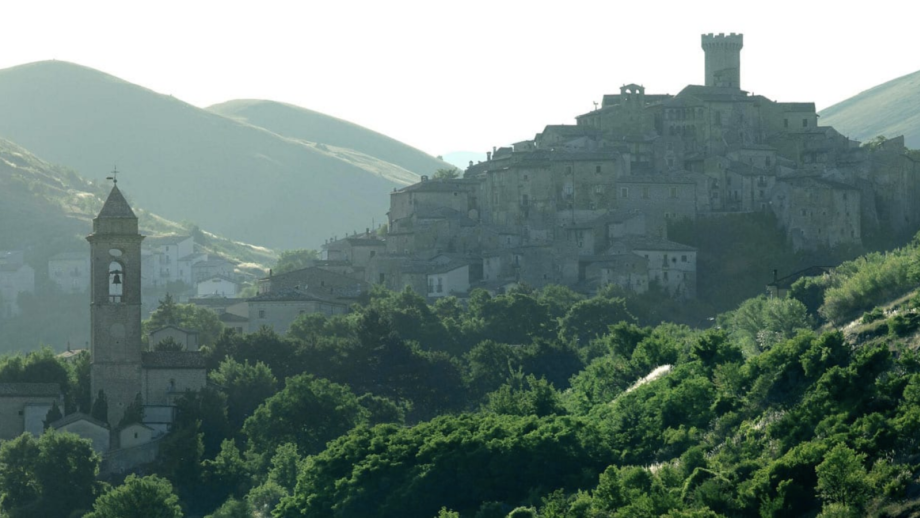
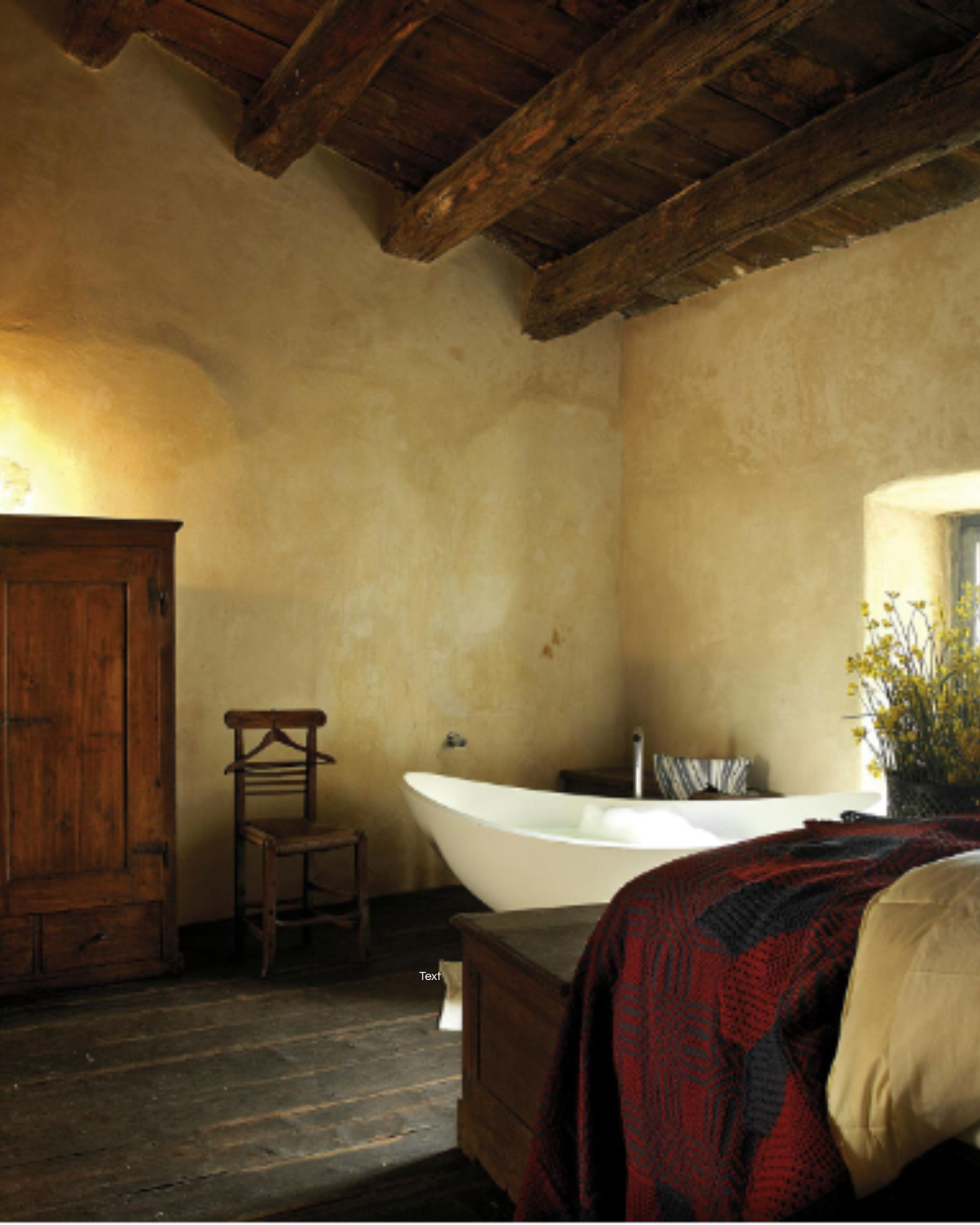
  • The Albergo Diffuso model preserves the character of historic village buildings rather than renovating them into a standard hospitality product. At Sextantio in Santo Stefano di Sessanio, Abruzzo, original stone walls, hand-hewn ceiling beams and period furniture define the guest experience — the building provides what no designed interior can replicate. Photo: Courtesy Sextantio.
  • The Albergo Diffuso approach to restoration preserves original materials and fittings as part of the hospitality experience. At Sextantio in Santo Stefano di Sessanio, a centuries-old wooden towel rail remains in place — the kind of provenance that cannot be sourced, only inherited. This is what Giancarlo Dall'Ara means when he describes the Albergo Diffuso as a place where guests become temporary residents rather than tourists. Photo: Courtesy Sextantio

Sextantio in Santo Stefano di Sessanio, Abruzzo, is one of Italy’s most established Alberghi Diffusi — a cluster of medieval stone houses in a hilltop village in the Apennines, managed as a single hotel since 2004. The stone walls were never plastered smooth. The wooden beams were never replaced. The towel rail has been in this room longer than the hotel has had a name. This is what the Albergo Diffuso model means by provenance: not a designed reference to history, but the thing itself. Photo: Courtesy Sextantio.


When the Street Is the Corridor

The rooms occupy historic buildings distributed across the village. The reception operates from a central hub. The restaurant may be in a third building; the common spaces may be a piazza, a courtyard, a garden that predates the project by three centuries. The management is unified. The services — daily cleaning, assistance, breakfast — are hotel-grade throughout. What holds it together is management; what gives it meaning is the place.

Dall’Ara’s phrase “temporary residents rather than tourists” carries the weight of an operational specification. A temporary resident walks through the same gate the neighbours do, encounters the same weather, hears the same sounds in the early morning that the people who live there hear. She is inside the community, moving through it on its own terms, and the authenticity she encounters belongs to a place that is genuinely inhabited rather than staged for her arrival.

Dall’Ara draws the boundary of the term precisely. “Not all forms of scattered hospitality are alberghi diffusi,” he writes. A cluster of holiday apartments with a shared booking platform meets none of the model’s conditions. The management must be unified, the services hotel-grade, and the community genuinely inhabited. Where these three conditions hold simultaneously, the model functions. Where any one of them falls away, the name survives but the substance does not.


The Logic of the Village

The hospitality industry has spent two decades attaching sustainability to its operations as an additional layer — the solar panel on the roof, the locally sourced line on the menu, the carbon offset programme at checkout. The Albergo Diffuso carries sustainability in its architecture.

The model requires an inhabited community, which means local employment is a condition of existence rather than a policy aspiration. The village must have residents; residents must have economic reasons to remain; the Albergo Diffuso creates those reasons by placing its guests inside the local economy rather than alongside it. The restaurant that serves the guests is the restaurant the neighbours also use. The craftspeople and producers who supply the property benefit from foot traffic that the presence of guests sustains. Regional products reach the breakfast table because the person at reception knows the person who made them. The circular logic arises from the structure, not from a sustainability strategy document.

The social dimension follows the same pattern. In villages where Alberghi Diffusi have taken root, the pace of depopulation has slowed. Young people have found work and reasons to stay. Buildings held together for another generation. The model addresses the structural economic vulnerability of rural Italy within its constraints, and in the places where it functions well it extends the timeline within which other solutions remain possible.

Ten Months Open

Italian tourism has struggled for decades to distribute demand beyond July and August, which account for roughly 54% of annual Albergo Diffuso stays even within a model specifically suited to multi-seasonal travel. The remaining 46% spreads across ten months in which the properties remain open and productive — a deseasoning performance that beach resorts and mountain stations rarely approach.

The Report Alberghi Diffusi 2026 records an average annual opening of 10.6 months. Only 12% of properties operate for fewer than nine months per year. These figures reflect a product structure built around a specific place rather than a specific type of weather. The Carnia valley in October, the Baroque quarter of Lecce in February, the sassi of Matera in November — each holds a distinct quality that functions as a hospitality argument independent of season. Guests who choose an Albergo Diffuso choose a place, and a place is available in all twelve months.

Associazione Nazionale Alberghi Diffusi

Italy in Numbers · 2026

Annual opening

10.6 months

International guests

47 %

Avg. buildings

7 per property

Renovated in 2025

72 %

Geographic distribution

Southern Italy & islands50%
Central Italy31%
Northern Italy19%

Top international markets

1 Germany
2 France
3 Northern Europe
4 USA

~20

Avg. rooms

5 + 11

Perm. + seasonal staff

164 m

Max. room distance

Source: Report Alberghi Diffusi 2026 · Associazione Nazionale Alberghi Diffusi / Giancarlo Dall’Ara · © The Silent Luxury

One Hotel, Many Owners

The Report 2026 records that in two-thirds of Italian properties, the buildings are operated through rental agreements with private owners rather than direct ownership. This structure lowers the capital threshold for entry significantly; the Albergo Diffuso can be assembled incrementally, room by room, without a single large property acquisition. The same structure introduces the model’s principal management challenge.

A unified hotel requires unified decision-making. When the buildings belong to multiple private owners with different priorities, timelines and financial situations, the management’s capacity for renovation investment, standard maintenance and market responsiveness is negotiated rather than decided. The 72% of properties that made renovation investments in 2025 signals an industry in active development, and also one that must align multiple stakeholder interests on every capital decision.

Legal clarity matters in proportion to this complexity. Sardinia enacted the first regional legislation in 1998, creating a recognised category within which operators could structure their agreements and obtain appropriate permits. In regions without specific Albergo Diffuso legislation, the combination of hospitality regulations, property law and community planning requirements can make unified management administratively burdensome. The regions where the model has developed most consistently are generally those where the legal framework has kept pace with the operational reality

From Sardinia to Yakage

The Report 2026 places 50% of Italian Alberghi Diffusi in southern Italy and the islands, 31% in central Italy. Sardinia remains the legislative and conceptual anchor — first regional law, early prototypes, a concentration of established properties. Matera, as a UNESCO World Heritage Site, carries the model into international visibility with several properties operating within the sassi. Puglia, with its masserie, its Pietra Leccese Baroque cities and its growing profile among American and Northern European travellers, is an increasingly active zone of development.

Internationally, Japan has become the model’s most significant expansion frontier. The first Japanese Albergo Diffuso opened in Yakage in 2018, and the model has found a conceptually receptive environment in a country with deep traditions of authentic local experience, widespread rural depopulation, and a tourism culture that values place over product. Albania, Croatia, Switzerland, Germany and Lapland have active projects. Dall’Ara has described this internationalisation as having begun in earnest in 2009 with Swiss projects, accelerating after the 2010 recognition in London.

The common thread across every successful international transfer is the simultaneous presence of historic building stock, genuine community inhabitation, and a local authority willing to provide legal clarity.


The Human at the Reception

The Report 2026 marks the first significant penetration of artificial intelligence into Albergo Diffuso management. Almost one third of properties now use Revenue Management systems. Chatbot adoption for direct guest assistance stands at 6.3%, with a further 9.4% in active implementation.

Revenue Management translates well into the Albergo Diffuso context: it optimises pricing across a defined inventory and responds to demand signals that are as legible for a distributed property as for a conventional hotel. The open question is chatbot-mediated guest assistance, which supplements or replaces the human reception relationship at precisely the point where the Albergo Diffuso’s product is most distinct. The temporary resident model depends on a human mediator — someone who knows the village, who can tell the guest which bakery opens earliest, which trail is most rewarding in November, which table at the restaurant the regulars prefer. Whether a language model can carry that function, or whether it can support the reception staff who do, is among the more consequential questions the model will work through in the next five years.

The Market, Forty Years Later

The USA ranks among the top four international source markets for Italian Alberghi Diffusi, alongside Germany, France and Northern Europe. A growing cohort of travellers — from North America, from Northern Europe, from Japan — seeks something that the standardised product has never been able to supply: genuine uncontrolled presence. A community that has its own reasons for existing and has agreed to share its daily life with a guest for a few days. A neighbour hanging laundry whose presence requires no hospitality training and is, for that reason, the most convincing thing in the experience.

The traveller who researches a destination for forty hours before booking, who asks where the olive oil on the breakfast table was pressed and who returns to the same village three years running because she knows the person at reception by name, is the traveller the Albergo Diffuso was built for — even if it was built in 1982 and she had not yet begun to travel. Five-star hotels have responded to this shift with local sourcing programmes, cultural programming teams and carefully curated regional references. The Albergo Diffuso responds with a different architecture entirely: the guest is placed inside the community, and the community provides the experience on its own terms, at its own pace, in its own language. Slow Hospitality as a framework rests on this premise — that depth accumulates through time and place, and that the guest who is given a genuine relationship with a specific location returns to it in ways that no amount of amenity programming achieves.

The Albergo Diffuso has held this position since 1982. The market has taken forty years to reach the same address.


Three Houses in Lecce

La Fiermontina in Lecce operates outside the Associazione Nazionale Alberghi Diffusi membership, and its structure embodies the model’s logic with unusual clarity. Three historic properties in the Baroque quarter — a 17th-century Masseria, Palazzo Bozzi Corso from 1775, and the Fiermonte Museum — share a management, a pool, a restaurant and a family biography that runs from a boxing ring in New York to the IMAGINE memorial in Central Park’s Strawberry Fields.

The Filali family assembled a collection of places that already existed and gave them a shared logic. The guest who moves between the Masseria and Palazzo Bozzi Corso moves through Lecce — through Pietra Leccese, through a Baroque quarter that is still genuinely inhabited, through a family story the city has been keeping for a century. The street between the properties belongs to the stay. It is where the place speaks at its own pace, without intermediary.

The Conditions

The Albergo Diffuso demands conditions: a historic built environment of sufficient density and quality, a community genuinely inhabited, a legal framework that recognises the model as a distinct category, and an operator capable of managing distributed complexity across multiple property relationships simultaneously. In the places where these conditions coincide, the model produces a hospitality experience whose core value is generated by the place itself and whose economic logic returns value to the place rather than extracting it.

The places still carrying Dall’Ara’s original question — how to make what already stands economically productive without altering the qualities that give it worth — are numerous, and growing. The rebuilt valley in Carnia, the depopulated borgo in Umbria, the historic quarter of a southern city, the Japanese village whose traditional architecture is outliving its original inhabitants: each holds the building stock, the atmospheric quality and the community character that the model requires. Each is waiting for the management capacity, the legal framework and the editorial attention that would make the argument visible to the travellers already looking for it.

Dall’Ara walked into that question in 1982 in a village that an earthquake had emptied. The answer he built is still being built.


Questions on the Albergo Diffuso

The Albergo Diffuso is an Italian hospitality model in which historic buildings distributed across a living community are managed as a single hotel, with unified reception, hotel-grade services, and guests who move through the village streets as temporary residents. The model was developed by Giancarlo Dall’Ara in 1982 in Carnia, Friuli-Venezia Giulia, and is documented annually by the Associazione Nazionale Alberghi Diffusi in the Report Alberghi Diffusi.

  • What is an Albergo Diffuso and how does it differ from other hotel models?

    An Albergo Diffuso is a hotel distributed across multiple historic buildings within a living community, managed as a single entity with full hotel services. Boutique hotels occupy a single building with a designed identity. Heritage resorts restore a property and operate it as a self-contained world. The Albergo Diffuso requires the genuine presence of residents — people who live in the place and whose presence is the product’s most authentic signal.

  • Where and why did the Albergo Diffuso originate?

    The concept originated in Carnia, Friuli-Venezia Giulia, following the 1976 earthquake. Restored village buildings were architecturally sound and economically dormant. Giancarlo Dall’Ara developed the model as a way to make existing buildings productive through tourism, without new construction or alteration of community character. The term first appeared in 1982 in the Progetto pilota Comeglians.

  • Why is the Albergo Diffuso considered a model of sustainable hospitality?

    Sustainability is embedded in the operating structure. The model requires an inhabited community, which means local employment, local supply chains and local economic activity are structural conditions. The circular economy logic arises from the model’s architecture: guests placed inside the local economy generate benefit for local producers, craftspeople and residents whose presence makes the product possible.

  • What does the Report Alberghi Diffusi 2026 show about the model’s scale?

    The average Albergo Diffuso in Italy involves 7 buildings, approximately 20 rooms and 45 beds, employs 5 permanent and 11 seasonal staff, opens 10.6 months per year, and receives 47% international guests. Germany, France, Northern Europe and the USA are the top international source markets. 72% of properties made renovation investments in 2025.

  • Is the Albergo Diffuso model transferable outside Italy?

    The model has active projects in Japan, Albania, Croatia, Switzerland, Germany and northern Scandinavia. Japan’s expansion, beginning with Yakage in 2018, is the most developed international case. Successful transfer requires historic building stock, genuine community inhabitation, appropriate legal frameworks and management capacity for distributed operations.

  • What are the economic conditions and limits of the Albergo Diffuso model?

    The distributed ownership of buildings — in two-thirds of Italian cases operated through rental agreements with private owners — creates management complexity around renovation investment and standard maintenance. Legal clarity, as Sardinia established with the world’s first regional law in 1998, significantly reduces this complexity. The model functions best where historic building quality, community inhabitation, legal recognition and operational management capacity coincide.

Continue reading

Padma Doree: Where Eri Silk Meets Chanderi

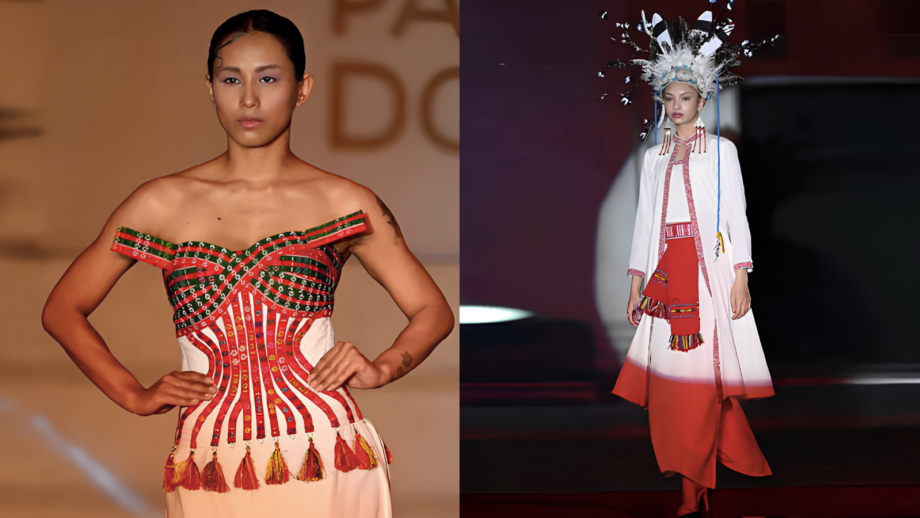
On 1 May 2026, NEHHDC launched Padma Doree in New Delhi, introducing India’s first Double GI textile brand. The initiative links Eri silk from Northeast India with Chanderi weaving from Madhya Pradesh, placing two protected textile traditions inside one provenance system at a moment when luxury sourcing is being asked to prove origin, process and participation with increasing precision.

The Samia ricini silkworm spins its cocoon with one end open. When the moth is ready, it leaves through that opening. The fibre is gathered after the insect has gone. This biological detail, specific to a domesticated species indigenous to India’s northeast, is the entire ethical argument: no certification needed, no process change required, no claim to verify. The material does it on its own.

A Geographical Indication Is a Legal Monopoly

Padma Doree is the first textile brand in India to carry two of them simultaneously. A Geographical Indication, or GI, is a government-registered legal designation that ties a product exclusively to its place of origin and its method of production, enforceable under WTO rules worldwide. Launched on 1 May 2026 at Travancore Palace in New Delhi by the North Eastern Handicrafts and Handlooms Development Corporation (NEHHDC), it combines Eri silk, the cruelty-free Ahimsa silk produced in Assam, Meghalaya and Nagaland and GI-protected since 2021, with Chanderi, the sheer silk-cotton handloom fabric from Madhya Pradesh’s Ashoknagar district, GI-protected since 2005.

Padma Doree layers two of these monopolies into one product category. The Eri fibre must come from the northeast, the Chanderi weave must come from Madhya Pradesh, and both conditions must hold simultaneously. What follows from that is structural scarcity of a kind that trademark law has never been able to create: a product whose geographic origin is its legal identity, registered with two separate governments, enforceable at every border.

The two textile traditions that Padma Doree brings together are separated by more than 1,500 kilometres of Indian geography and centuries of distinct craft lineage. Eri silk production is village-based and distributed across the northeast, with Assam accounting for 38.3 per cent of India’s output, Manipur 29.8 per cent, and Meghalaya 22.6 per cent. Chanderi, woven in the small Madhya Pradesh town of the same name, is a concentrated weaver-town economy with approximately 3,600 active handlooms, 11,000 weavers, and a production history reaching into the Mughal court. The formal foundation for the initiative is a Memorandum of Understanding between NEHHDC and the District Archaeology, Tourism and Culture Council in Chanderi, signed in March 2026 and published by the Press Information Bureau of the Government of India.

Speaking to Local Samosa at the launch, Shreelakshi Choudhry, Manager at NEHHDC, framed the initiative as a question the fabric itself would answer: “Can two of India’s most distinct textile traditions come together to create something entirely new, yet deeply rooted in heritage?”


The Weavers Met in the Middle

The two traditions arrive from opposing material logics, and that opposition is precisely where the argument begins. Eri silk is matte, warm and heavy, a staple fibre processed entirely within village ecosystems across some 1,812 sericulture villages and 14,000 producing families, where women constitute the primary workforce. Chanderi is sheer, luminous and featherweight, running between 35 and 150 grams per square metre, with interlaced zari gold and silver thread that Mughal courts once ordered in bamboo tubes rolled tight enough to conceal the full length of the cloth. These are fibres that pull in different directions — weight against lightness, opacity against transparency, matte against lustre.

The conceptual bridge between them emerged, according to Choudhry, through direct exchanges between the two artisan communities during the development phase: not from a design brief, but from the weavers working across the materials themselves. In the official government press release published by the Press Information Bureau on the day of the launch, Managing Director Mara Kocho described what resulted: “Padma Doree brings together the fibre traditions of the North East and the handloom heritage of Chanderi, creating an integrated and sustainable textile ecosystem. It places artisans at the centre, ensuring their skills are valued and fairly compensated. True sustainability lies in recognising the effort behind such textiles and supporting craft with dignity and long-term relevance.”

Sanjay Jaju Called It Innovation

Secretary Sanjay Jaju, speaking at the launch and quoted in the same press release, placed the initiative within Prime Minister Narendra Modi’s “Ek Bharat Shresth Bharat” policy vision for cross-regional integration. His framing was deliberate: “Padma Doree is distinct because it is coming from two different textile traditions — Chanderi from Madhya Pradesh and Eri Silk from the North East India. Padma Doree is not just bringing heritage, but also bringing innovation.” The initiative was also covered by the Times of India in its lifestyle section. The word innovation here carries weight. Government-backed handloom initiatives in India have historically been positioned within the register of cultural preservation, which is a way of saying that they belong to the past. Placing Padma Doree within the innovation register means something different: it means the initiative is being built for markets that do not yet exist.

FARUTA objects local soul independent luxury The Silent Luxury
Economy · Creation

Local Soul: The Quiet Rise of Independent Luxury

The structural shift in the luxury market in 2026 creates significant room for smaller, independent houses built on provenance, controlled scarcity and the depth of the relationship between maker and buyer.

Read the article

From 150 to 600 Rupees a Metre

The pricing signal at launch is worth reading carefully. Plain base fabric at the artisan level has historically traded at between 150 and 200 rupees per metre. Padma Doree commands 500 to 600 rupees. That multiplier was achieved through co-branding rather than through any additional processing step. The fabric is the same fabric. What changed is the architecture around it: two GI protections, a documented inter-regional collaboration, a brand name, and a market positioning that places the product within the global ethical luxury conversation. The project targets a 20 to 25 per cent increase in artisan income within twelve to twenty-four months.

The Majority Shareholders Are the People at the Loom

The governance structure announced alongside the launch goes considerably further than pricing. The planned successor company, NER-MP Handloom Fusion Private Limited, allocates 60 per cent equity to the artisan communities. The producers will hold majority ownership of the brand they make. Choudhry, speaking to Local Samosa, described this structure as the condition of the initiative’s credibility: “The vision of transitioning Padma Doree into a weaver-owned entity, with 60% equity held by artisans, is central to its long-term sustainability.”

The Week, in its coverage of the launch, observed the wider structural context directly: the pattern of Western brands acquiring Indian craft vocabularies and relabelling them as premium products is a recognisable feature of the current market. Padma Doree answers that pattern through corporate architecture. The artisan communities are the planned majority shareholders.

The EU Passport That Padma Doree Already Holds

The timing of the Padma Doree launch intersects with a regulatory shift that sourcing directors and luxury procurement teams in Europe are currently mapping. The EU’s Digital Product Passport for textiles enters phased implementation between 2026 and 2027, with full enforcement expected by 2028. The requirement is unambiguous: complete product-level data on fibre origin, manufacturing process, environmental footprint and supply chain actors, accessible via digital identifier at the point of sale. For most fashion supply chains, this will require substantial structural investment in tracing indirect suppliers, digitising production records, and establishing verifiable fibre-level provenance.

Padma Doree’s GI architecture already provides what the Digital Product Passport will demand. Both fibres carry documented geographic and methodological protection, registered with the Government of India. The production chain runs from village-based sericulture in the northeast to handloom clusters in Madhya Pradesh, with each step occurring within the GI-protected framework. The compliance infrastructure is the product structure.

The Green Claims Directive, expected to carry legal force across EU member states from 2028, adds a further dimension. Generic sustainability claims will be prohibited without third-party verification. A Geographical Indication, registered with a national government and enforceable under WTO rules, is precisely the kind of verifiable, legally grounded provenance the directive is designed to protect. Choudhry acknowledged the conditions that make this positioning durable, telling Local Samosa: “While the ethical luxury positioning resonates, it must translate into design, usability, and consistent quality. Encouragingly, consumers are increasingly drawn to authenticity, but adoption depends on how well the fabric fits into contemporary lifestyles through apparel, home, and design-led applications.” As The Silent Luxury has tracked in its coverage of India’s emerging position in the global luxury market, the country’s ascent as a producer of premium goods is moving faster than Western editorial discourse is acknowledging.


The Fibre That Cools in Summer and Warms in Winter

Beyond the IP architecture, Eri silk carries material properties that the European sourcing conversation has not yet fully registered. The fibre is isothermal, cooling in summer and retaining warmth in winter, a combination no other commercially available silk variety offers. Its production generates, by documented measures, the smallest carbon footprint in the global textile industry: rearing, spinning and weaving occur within a single village ecosystem with no industrial processing step in the chain. The castor plant on which Samia ricini feeds is drought-resistant and requires no irrigation infrastructure. Eri constitutes approximately 8 per cent of India’s total silk production — significant enough in volume to sustain commercial ambition, rare enough to carry a provenance premium.

Thirteen Designers Brought the Northeast to New Delhi

Thirteen designers from Northeast India and Madhya Pradesh presented across the three-day exhibition at Travancore Palace, among them Asenla Jamir of Otsü, the Nagaland-based label with the most legible international profile among the launch participants, as reported by the Morung Express. Live weaving demonstrations and fibre-to-fabric displays brought both artisan communities into the same space, across a geographic and cultural distance of over 1,500 kilometres. Distribution will run initially through NEHHDC’s existing channels and through Poorvi Stores, the government retail format designated for northeast Indian products. International markets are named as an explicit target.

A piece of Padma Doree fabric weighs around 550 rupees per metre at origin today. In the next regulatory cycle, that price carries documentation that most luxury textiles cannot yet provide: traceable, legally protected, fully attributable provenance, present in the fabric before any brand layer is added. The metre of cloth already holds what the market is still learning to ask for.

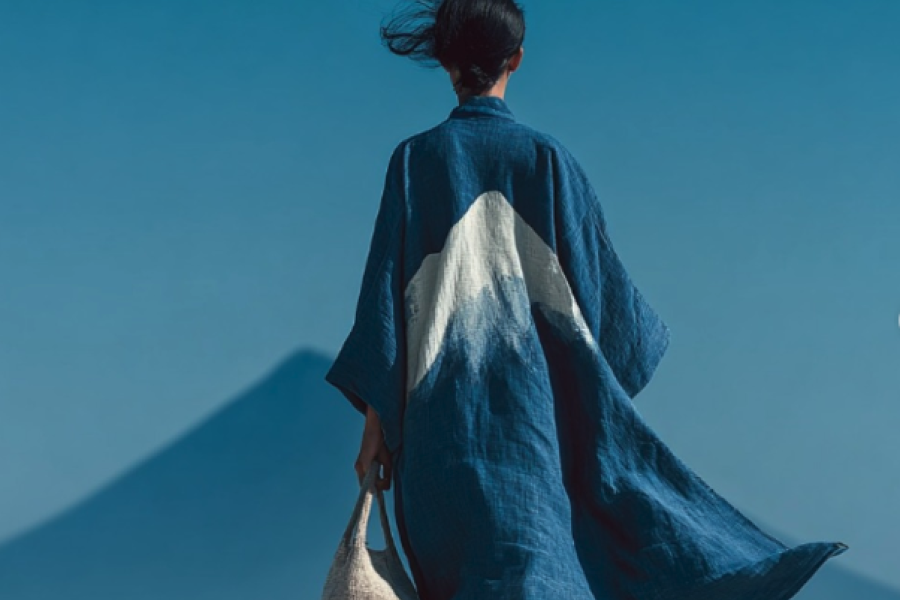
Natural fibres wool jacket conscious luxury The Silent Luxury
Creation

What Touches the Skin: Notes on Cloth and Origin

Natural fibres in luxury fashion shape origin, traceability and trust. A report on wool, cotton, milk fibre and the future of cloth.

Read the article

What readers ask about Padma Doree

Padma Doree is India’s first Double-GI textile brand, combining two Geographical Indication-protected traditions under a single co-branded product. The initiative was launched by NEHHDC on 1 May 2026. 

  • What is Padma Doree?

    Padma Doree is a cross-regional Indian textile brand combining Eri silk from Northeast India with Chanderi handloom fabric from Madhya Pradesh. Both traditions carry Geographical Indication (GI) protection under Indian law, making Padma Doree the first textile brand in India to hold two simultaneous GI protections. The brand was launched on 1 May 2026 by the North Eastern Handicrafts and Handlooms Development Corporation (NEHHDC) under India’s Ministry of Development of North Eastern Region, as confirmed by the official government press release.

  • What is a Double-GI textile brand?

    A Double-GI brand combines two independently Geographical Indication-protected products into a single co-branded output. A Geographical Indication is a legally protected designation, enforceable under WTO rules, that restricts the use of a product name to a specific geographic origin and production method. Padma Doree holds GI protections for both Eri silk (GI 2021) and Chanderi (GI 2005), meaning the product cannot be legally replicated outside its designated production geographies. MDoNER Secretary Sanjay Jaju at the launch: “Padma Doree is distinct because it is coming from two different textile traditions — Chanderi from Madhya Pradesh and Eri Silk from the North East India.”

  • Why is Eri silk cruelty-free?

    Eri silk is produced by the Samia ricini silkworm, which spins an open-ended cocoon through which it hatches naturally. The fibre is gathered only after the moth has left. Because the open-ended cocoon structure makes filament extraction technically impossible, no silkworm is harmed in the production process. The cruelty-free status is a consequence of the fibre’s biological architecture, present before any production decision is made.


  • What is Chanderi fabric?

    Chanderi is a sheer, lightweight handloom fabric woven in Chanderi town, Ashoknagar district, Madhya Pradesh. It combines silk, cotton and zari metallic thread, and has been GI-protected since 2005. Approximately 3,600 active handlooms operated by 11,000 weavers sustain the tradition, which accounts for the livelihoods of around 60 per cent of Chanderi’s 30,000 inhabitants. The fabric’s production history reaches into the Mughal court.

  • How does Padma Doree align with EU textile regulations?

    The EU’s Digital Product Passport for textiles, entering phased implementation in 2026 and 2027 with full enforcement in 2028, requires complete fibre-level provenance data for all textile products sold in the EU. Padma Doree’s Geographical Indication architecture already provides this documentation by design: both fibres carry legally registered geographic and methodological protection with the Government of India. The Green Claims Directive, expected to restrict unverified sustainability claims from 2028, further strengthens Padma Doree’s position, as GI status is a government-registered, WTO-enforceable provenance claim requiring no additional certification.

  • Who owns Padma Doree?

    The initiative is currently operated by NEHHDC. The planned successor company, NER-MP Handloom Fusion Private Limited, will allocate 60 per cent equity to the artisan communities from the two producing regions, making them the majority shareholders of the brand they produce. NEHHDC Manager Shreelakshi Choudhry at the launch: “The vision of transitioning Padma Doree into a weaver-owned entity, with 60% equity held by artisans, is central to its long-term sustainability.”

  • What is NEHHDC?

    The North Eastern Handicrafts and Handlooms Development Corporation (NEHHDC) is a Central Public Sector Enterprise under India’s Ministry of Development of North Eastern Region (MDoNER). NEHHDC supports the development, marketing and export of handicrafts and handloom products from India’s eight northeastern states. Managing Director Mara Kocho leads the corporation and spearheaded the Padma Doree initiative.

  • Where can Padma Doree products be purchased?

    At launch, Padma Doree products are distributed through NEHHDC’s existing retail channels and through Poorvi Stores, the government retail format designated for northeast Indian products. International distribution to European and North American markets is named as an explicit strategic target. Specific international retail partnerships have not yet been formally announced as of May 2026.

  • Why is Padma Doree important for luxury textiles?

    Padma Doree is important because it treats provenance as part of the product structure. The brand combines Eri silk and Chanderi, two protected Indian textile traditions, while introducing a model in which artisan communities are planned to hold majority equity. For luxury fashion and interiors, this makes Padma Doree relevant as a case study in traceability, origin based value and producer participation.


Continue reading

The SaloneSatellite Award 2026: Five Projects and the Future of Design

New Craftsmanship, New World. The 15th edition named five studios whose material knowledge points beyond this edition.

The 15th edition of the SaloneSatellite Award was presented on 24 April 2026 in Pavilion 7 at Fiera Milano Rho, under the theme “New Craftsmanship: A New World.” The award, the only international prize dedicated exclusively to designers under 35 at the world’s most important furniture and design fair, was founded in 2011 by Marva Griffin Wilshire, creator of SaloneSatellite, who has built the platform across 28 years into the most significant launchpad for emerging design talent in the world. The 2026 jury was chaired by Paola Antonelli, Senior Curator of Architecture and Design at MoMA New York. Five projects were selected from 700 participants representing 39 countries.

Paola Antonelli has described the award’s method across fifteen years in a single formulation: insight above market, research above industrial scale. A form of collective imagination that reveals what will be structural rather than ephemeral. The five projects selected in 2026 read as a precise index of where that thinking is going. In every winning project, the operating method was the same: sustained knowledge of a specific material, applied at the boundary between the hand and the machine.


THE AWARD: Five Projects, One Direction

The Award reads SaloneSatellite 2026 through the working methods and material intelligence of five studios. Under Paola Antonelli’s jury direction, each project brought a different material position to the prize: seashells and digital fabrication, computational ceramics, mechanical listening, ancestral weaving and fiberglass mesh. Together they form a precise index of where craft knowledge is going when it encounters the tools of the present.

Photography: Salone del Mobile.Milano 2026

  • Nippon, Ark Collection. Russo Betak, Denmark. First Prize, SaloneSatellite Award 2026.

    RUSSO BETAK

    First Prize

    Base: Copenhagen, Denmark

    Material Position: Biological material as 3D printing substrate, hand-sculpted into final form.

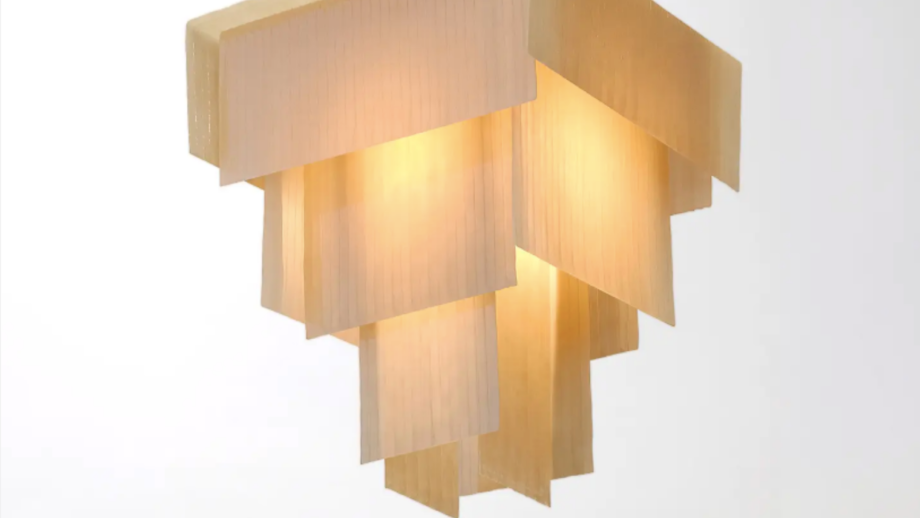
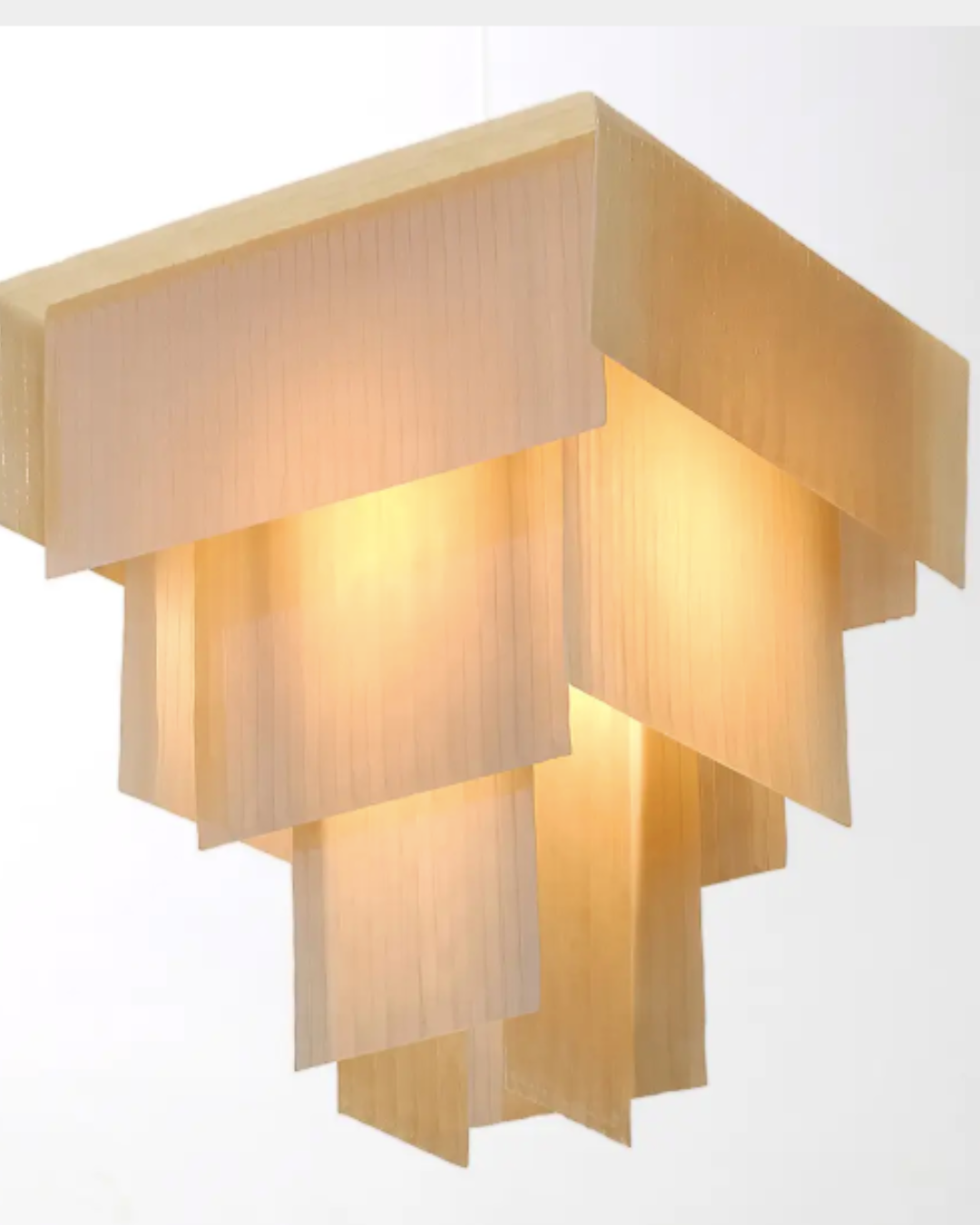
    Award Reading: Russo Betak took first prize at the SaloneSatellite Award 2026 for Nippon, from the Ark collection. The project begins with seashells: ground, mixed into a printable composite and 3D printed into a pendant lamp form, then hand-sculpted layer by layer until the surface reveals the grain of the material and the decisions of the hand that finished it. The result is a tiered pendant lamp in warm cream tones whose stacked horizontal panels read, at distance, as architecture — volumes that hold and diffuse light simultaneously. At close range, the texture tells the full story of its making: the origin in the shell, the pressure of the print, the mark of the hand. The jury recognised its material experimentation and its translation into a refined and luminous form, two things that are usually in tension and are here resolved.

    Why it matters: Nippon demonstrates what becomes possible when a designer treats a biological material not as surface finish but as structural argument. The shell is not decoration. It is the reason the lamp exists in this form and no other. In the SaloneSatellite reading, this is the operating logic of the most serious emerging design: the material sets the terms, and the maker’s knowledge is the capacity to follow them.

    Visit

  • 3DP Ceramic Tiles. IOUS Studio, Rotterdam. Second Prize, SaloneSatellite Award 2026.

    IOUS STUDIO

    Second Prize

    Base: Rotterdam, Netherlands

    Material Position: Computational design applied to ceramic extrusion, producing facade tiles in which no two pieces are identical.

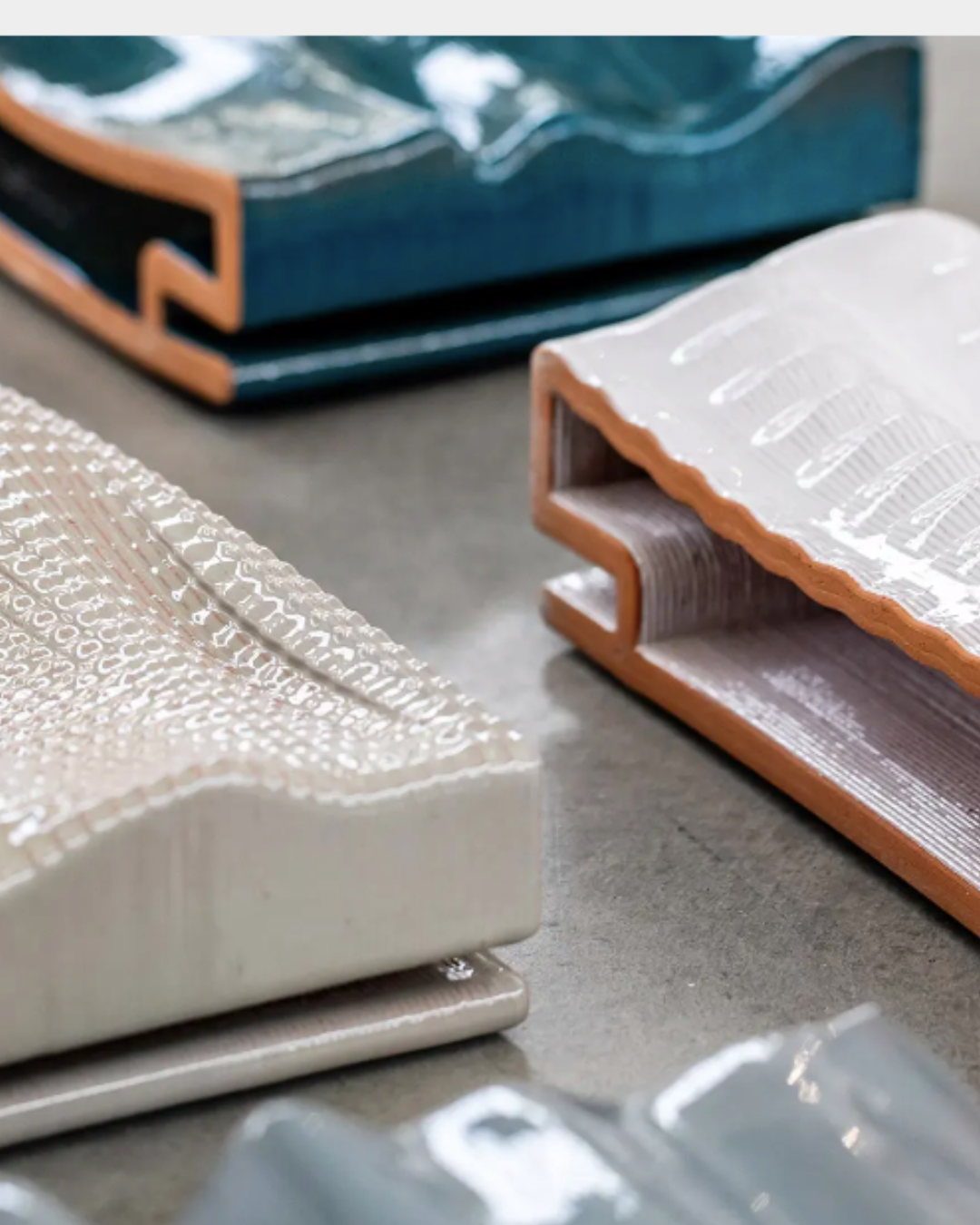
    Award Reading: IOUS Studio took second prize at the SaloneSatellite Award 2026 for 3DP Ceramic Tiles. The studio was founded in Rotterdam by Sol Sanchez Cimarelli and Agustin Ros, both Argentinian-born architects who graduated from Universidad Torcuato Di Tella in Buenos Aires before working across offices in Dubai, Rome, Berlin and Rotterdam. Their 3DP Ceramic Tiles system uses robotic clay extrusion to produce exterior facade tiles whose surface texture is determined by an algorithm responsive to structural requirements: the form that emerges is both functionally optimal and visually specific to its position in the facade. The tiles shown at SaloneSatellite 2026 demonstrate the system across three material registers — a dense white interlocking surface, a teal glaze with layered relief, a pale grey with fine horizontal striations — each produced from the same computational logic applied to different clay bodies. The terracotta edge left exposed on each tile is not a detail. It is a declaration: the clay knows what it is.

    Why it matters: What IOUS Studio proposes is a facade architecture in which no two tiles are identical and every tile is the direct output of its material conditions. The studio is currently establishing the first large-scale ceramic and 3D printing lab in Latin America in Buenos Aires, bringing this production logic to a new geography. In the SaloneSatellite reading, 3DP Ceramic Tiles holds both registers simultaneously: the precision of the algorithm and the irreducible variability of the clay. That combination is where the most interesting architecture of the coming decade is forming.

    VIsit

  • Soft Touch. Jüngerkühn, Germany. Third Prize, SaloneSatellite Award 2026.

    JÜNGERKÜHN

    Third Prize

    Base: Germany

    Material Position: A mechanical device that reads object surfaces and carves their topography back into ceramic.

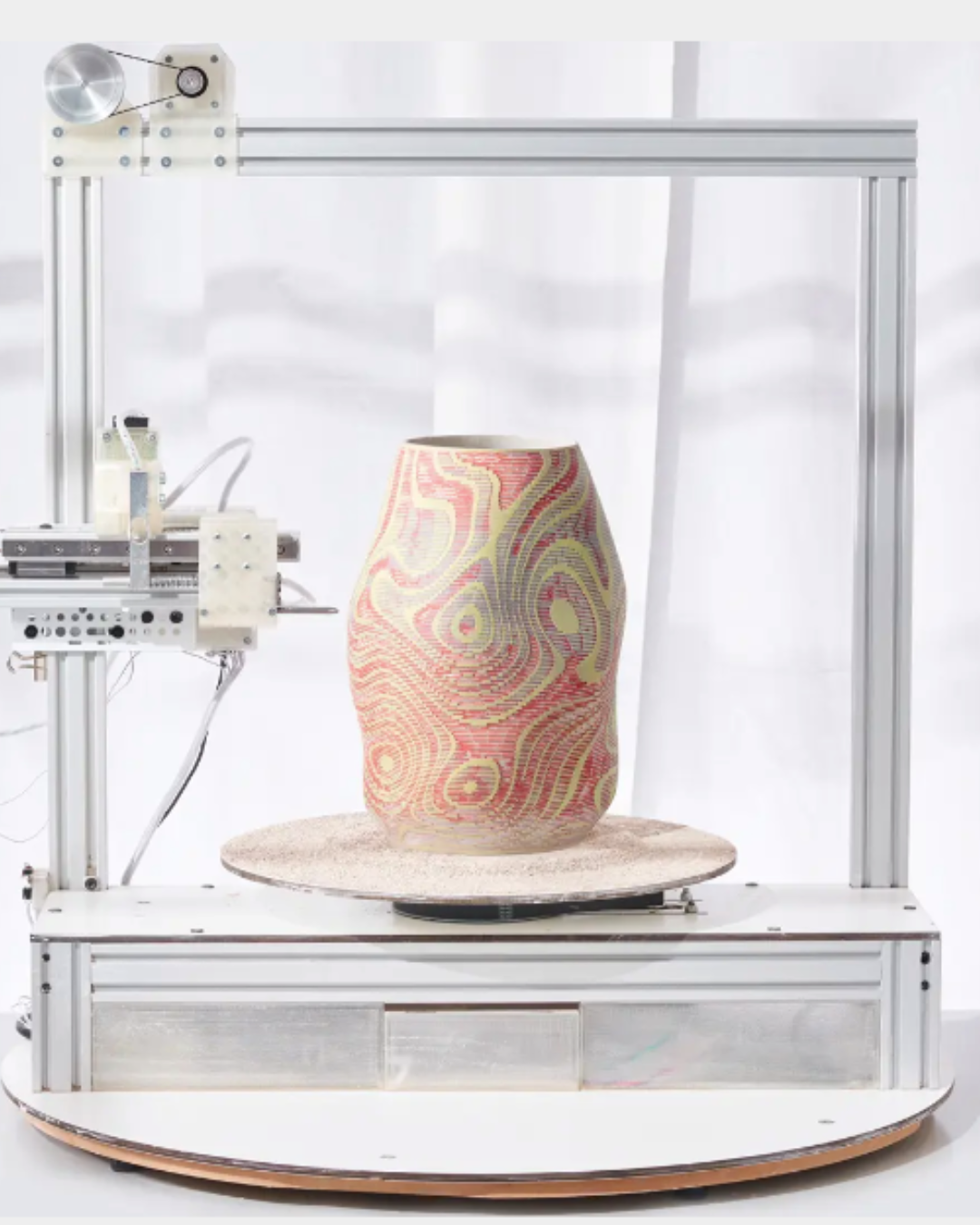
    Award Reading: Jüngerkühn took third prize at the SaloneSatellite Award 2026 for Soft Touch. The project is a device: a twin-axis mechanical arm mounted over a rotating turntable, fitted with a sensor that reads the surface of any object placed beneath it. The arm records the topography of the surface in real time and translates that recording into a cutting path applied to a second object on the same turntable. For the SaloneSatellite presentation, the studio placed hand-formed porcelain vases beneath the arm. The machine read their surfaces and carved the pattern it found back into the clay, each vase receiving a unique incised relief determined entirely by its own form. The result is a series of vessels in which pink, cream and terracotta glazes move in concentric topographic lines, every piece different, none of them possible without the machine listening to what the hand had made first.

    Why it matters: Soft Touch does not automate ceramics. It uses automation to listen to what a ceramic already is. Where most machine-assisted design imposes a form determined before the material is touched, Jüngerkühn’s device responds to the form the material has already taken. Every vase in the series is unique because every hand-formed vessel it read was unique. In the SaloneSatellite reading, this is a precise model for how computation and craft can operate in relation rather than in hierarchy.

    Visit

  • Números. Aiko Design, Santiago de Chile. Special Mention, SaloneSatellite Award 2026.

    AIKO DESIGN

    Special Mention

    Base: Santiago, Chile

    Material Position: Ancestral horsehair weaving from Rari combined with 3D-printed structural components.

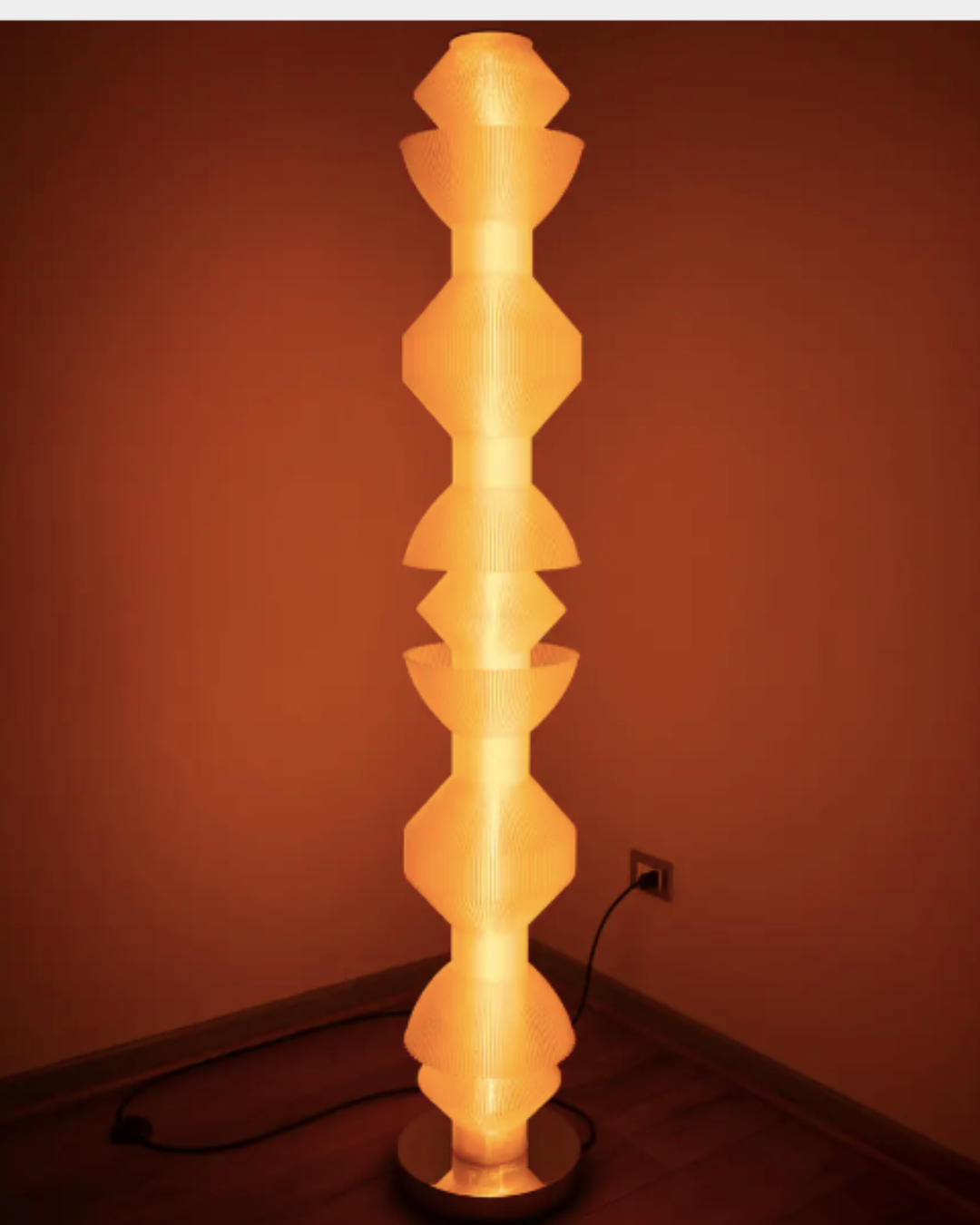
    Award Reading: Nicolás Romero of Aiko Design received a Special Mention at the SaloneSatellite Award 2026 for Números. The studio draws from the crin tradition of Rari, a village of around 600 people in the Maule region of Chile, in the foothills of the Andes, where horsehair weaving has been practiced for over 200 years and passed from mother to daughter across generations. The technique involves weaving horsehair strand by strand over a frame of ixtle, a plant fibre imported from Mexico, building three-dimensional forms without tools: only hands, scissors and a needle. Números is a floor lamp: a tall totem of stacked geometric wicker and crin modules, each one a different weave pattern from the Rari tradition, the whole column lit from within so that light passes through the interstices of the woven structure and turns the lamp into a luminous catalogue of the hand techniques it carries. The structural components connecting the modules are 3D printed, allowing the handmade forms to be assembled without adhesive.

    Why it matters: The jury recognised Números for the way its symbolic figure holds both industrial production and meticulous craft as simultaneous conditions rather than alternatives. The lamp stands as a record of what the hands in Rari know and what computation makes possible when it works in their service rather than in their place. In the SaloneSatellite reading, Aiko Design represents the Local Soul logic at its most precise: a production philosophy rooted in a specific geography, a specific material and a specific community of makers, brought into the global conversation without losing the specificity that gives it value. Aiko Design received a month-long design residency at the Róng Design Library in Hangzhou, China.

    VIsit

  • Foggy. Yixian Wang, China. Special Mention, SaloneSatellite Award 2026.

    YIXIAN WANG

    Special Mention

    Base: China

    Material Position: Fiberglass arranged in a lace-like mesh structure, fired without resin to preserve translucency and fragility.

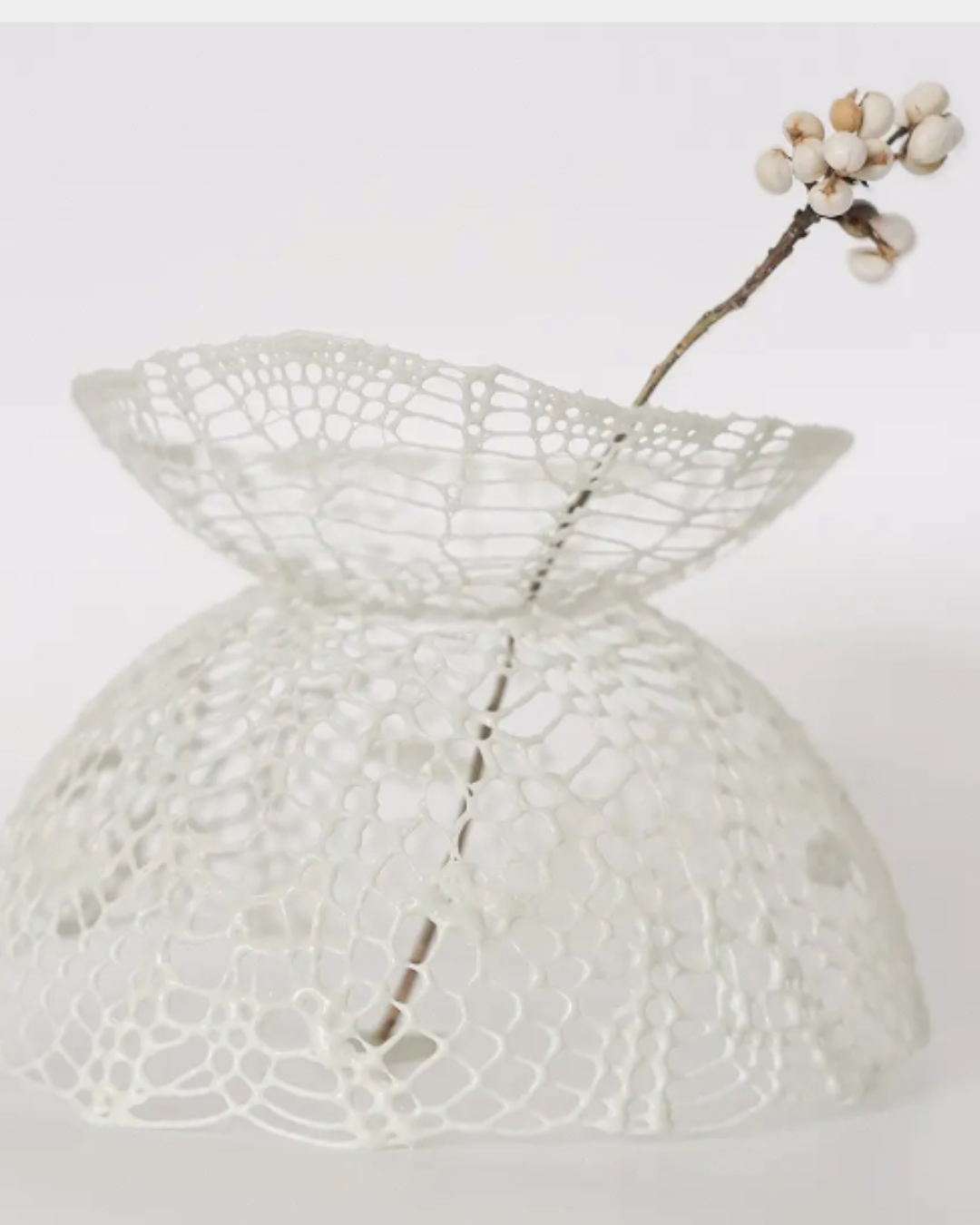
    Award Reading: Yixian Wang received a Special Mention at the SaloneSatellite Award 2026 for Foggy. The project investigates fiberglass at the boundary between industrial process and organic form. Wang arranges fiberglass strands into a lace-like mesh structure and fires the vessel without resin, so that the material retains its translucency and fragility rather than hardening into a composite. The result is a dome-shaped vessel that holds its form while remaining visually permeable: light passes through the mesh, the surface reads as fog or as the finest gauze, and the dried botanical placed inside becomes visible through the structure as though the vessel were made of air. The process treats fiberglass as a material with its own grain and behaviour, not as a substrate for other properties.

    Why it matters: The jury recognised Foggy for reinterpreting the visual properties of a material the medium had not previously expressed this way. Fiberglass is an industrial material designed for opacity and structural performance. Wang’s process finds in it a delicacy that its industrial context had never required it to produce. This is the argument that runs through all five winning projects: the knowledge of what a material can do when it is not asked to be something else. Yixian Wang received a month-long design residency at the Róng Design Library in Hangzhou, China.

    VIsit

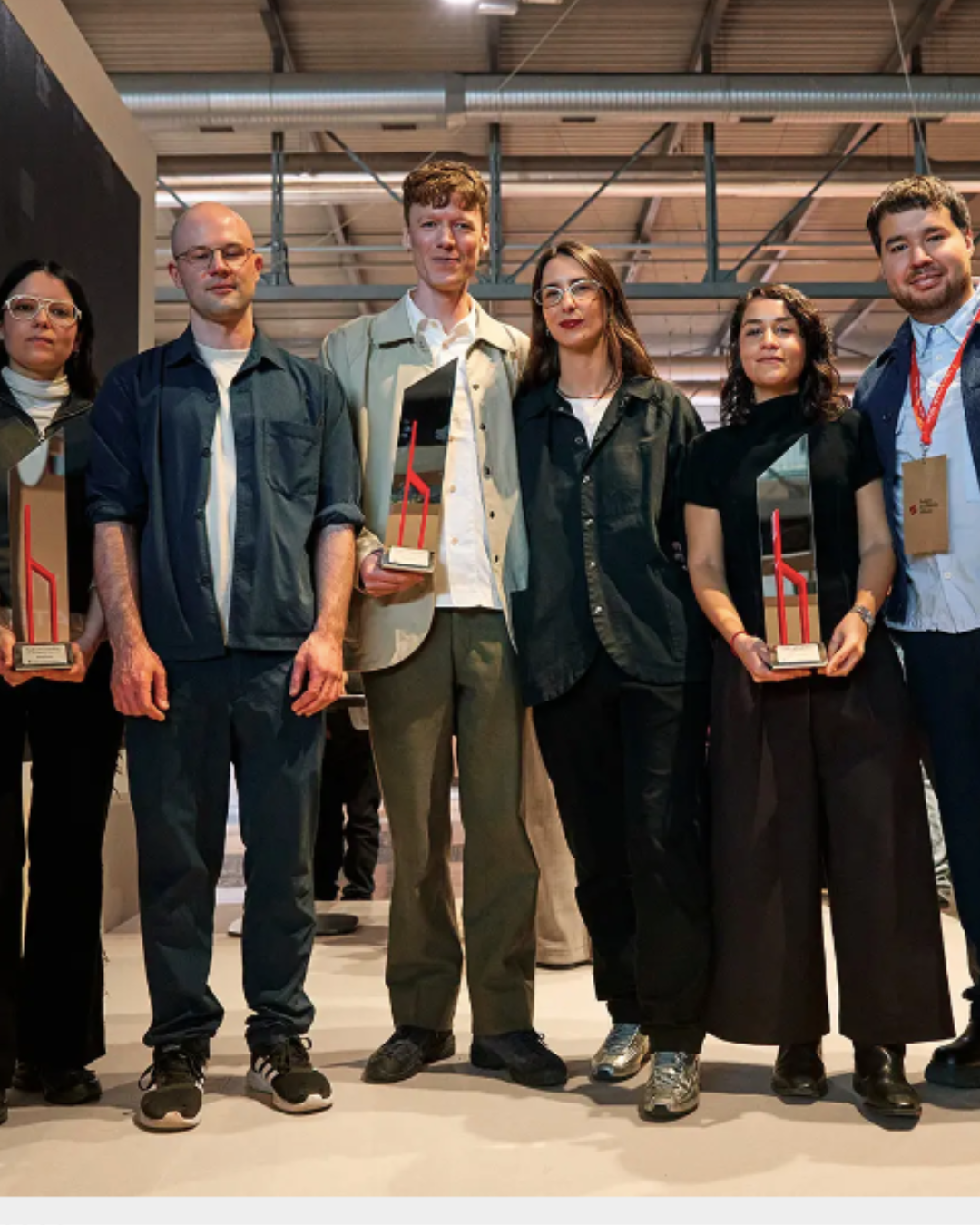
  • SaloneSatellite Award 2026. The winners, 15th edition, Salone del Mobile.Milano, April 2026.

    Award Winners

    Winners of the SaloneSatellite Award 2026, 15th edition, Pavilion 7, Salone del Mobile.Milano, April 2026. From left: Nicolás Romero / Aiko Design (Chile, Special Mention), Agustin Ros / IOUS Studio (Netherlands, 2nd Prize), Russo Betak (Denmark, 1st Prize), Jüngerkühn (Germany, 3rd Prize), Yixian Wang (China, Special Mention). Order to be verified against official Salone del Mobile.Milano press materials. 

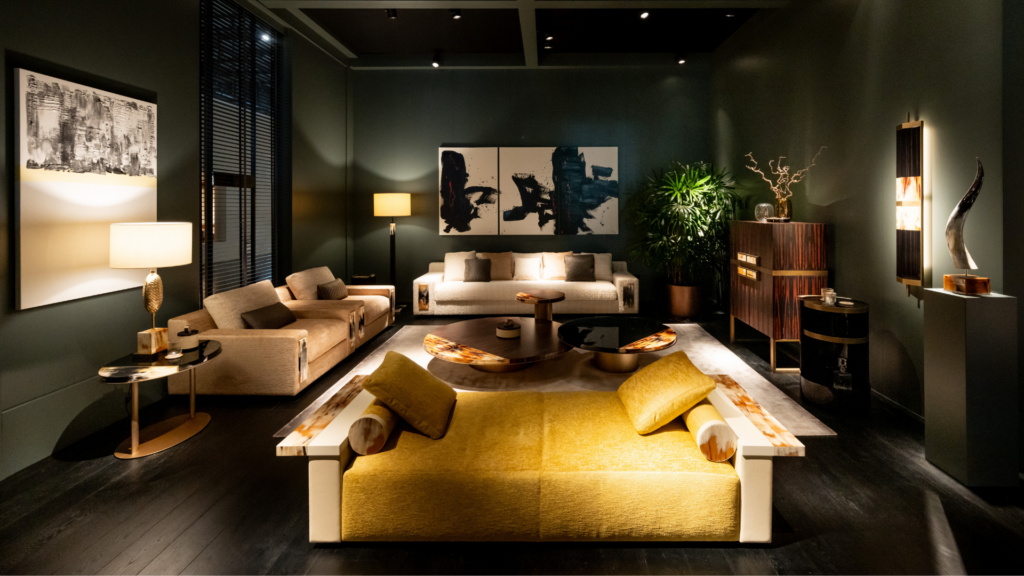
ARCAHORN stand at Salone del Mobile Milano 2026 — dark interior with golden yellow sofa and brass lamps

Continued Reading

New Latitudes. What Milan Design Week 2026 Said About the Future of Design.

Many new centres are emerging simultaneously. The 64th Salone del Mobile, read through the lens of Local Soul.

Read the full editorial →

Questions on the SaloneSatellite Award 2026

Five studios, five projects and the material intelligence shaping the future of design. The following questions address what the 15th edition of the SaloneSatellite Award revealed.

  • Who won the SaloneSatellite Award 2026?

    The SaloneSatellite Award 2026 was presented at the 15th edition of the award, part of the 64th Salone del Mobile.Milano, with a jury chaired by Paola Antonelli, Senior Curator of Architecture and Design at MoMA New York. First prize went to Russo Betak of Denmark for Nippon, a pendant lamp 3D printed from seashells and hand-sculpted. Second prize went to IOUS Studio of the Netherlands, founded by Sol Sanchez Cimarelli and Agustin Ros, for 3DP Ceramic Tiles, a computationally designed ceramic facade system. Third prize went to Jüngerkühn of Germany for Soft Touch, a mechanical device that reads and responds to ceramic surfaces. Special Mentions went to Nicolás Romero of Aiko Design of Chile for Números, combining ancestral horsehair weaving with 3D printing, and to Yixian Wang of China for Foggy, a fiberglass vessel fired without resin. Both Special Mention recipients received a month-long residency at the Róng Design Library in Hangzhou, China.

  • What is the SaloneSatellite Award?

    The SaloneSatellite Award is an international prize dedicated exclusively to designers under 35, presented annually as part of the Salone del Mobile.Milano. It was founded in 2011 by Marva Griffin Wilshire, creator of SaloneSatellite, the platform she established in 1998 to give emerging design talent access to the world’s most important furniture and design fair. The award’s jury, chaired since its founding by Paola Antonelli of MoMA New York, selects projects based on research depth and material intelligence rather than market readiness.

  • What was the theme of SaloneSatellite 2026?

    The theme of SaloneSatellite 2026 was “New Craftsmanship: A New World,” positioning craft knowledge as a technical competence for the coming design cycle rather than a heritage gesture. The five winning projects each demonstrated a specific form of material knowledge applied at the boundary between the hand and computational tools: seashells as 3D printing substrate, clay under robotic extrusion, ceramic surfaces read by a mechanical sensor, ancestral horsehair weaving combined with 3D-printed components, and fiberglass arranged as a lace-like mesh without resin.

  • What is Nippon by Russo Betak?

    Nippon is a pendant lamp from the Ark collection by Danish designer Russo Betak, winner of first prize at the SaloneSatellite Award 2026. The lamp is 3D printed using seashells ground into a printable composite, then hand-sculpted layer by layer to reveal the grain of the material. The result is a tiered pendant in warm cream tones whose stacked horizontal panels hold and diffuse light. The jury recognised its material experimentation and its translation into a refined and luminous form.

  • What is 3DP Ceramic Tiles by IOUS Studio?

    3DP Ceramic Tiles is a ceramic exterior facade system by IOUS Studio, a Rotterdam-based studio founded by Argentinian architects Sol Sanchez Cimarelli and Agustin Ros. The system uses robotic clay extrusion to produce facade tiles whose surface texture is determined by an algorithm responsive to structural requirements. No two tiles are identical. Each tile is the direct output of its material conditions, with the terracotta edge left exposed as a declaration of the clay’s origin. The project won second prize at the SaloneSatellite Award 2026.

  • What is Soft Touch by Jüngerkühn?

    Soft Touch is a mechanical device by German studio Jüngerkühn, winner of third prize at the SaloneSatellite Award 2026. A twin-axis arm mounted over a rotating turntable reads the surface topography of hand-formed porcelain vases and carves that topography back into a second vessel, producing a unique incised relief on every piece. The device uses automation to respond to what the hand has already made rather than to impose a predetermined form.

  • What is Números by Aiko Design?

    Números is a floor lamp by Nicolás Romero of Chilean studio Aiko Design, recognised with a Special Mention at the SaloneSatellite Award 2026. The lamp combines the crin tradition of Rari — a 200-year-old horsehair weaving practice from a village of 600 people in the Maule region of Chile — with 3D-printed structural components in PLA with chrome metal details. Stacked geometric wicker and crin modules, each a different weave pattern, are lit from within so that light passes through the interstices of the woven structure. The lamp is a luminous catalogue of the hand techniques it carries.

  • What is Foggy by Yixian Wang?

    Foggy is a vessel by Chinese designer Yixian Wang, recognised with a Special Mention at the SaloneSatellite Award 2026. Fiberglass strands are arranged in a lace-like mesh structure and fired without resin, so that the material retains its translucency rather than hardening into a composite. Light passes through the mesh and the surface reads as fog or as the finest gauze. The jury recognised Foggy for reinterpreting the visual properties of a material the medium had not previously expressed this way.

Continue reading

What Are Natural Fibres in Luxury Fashion?

From wool to milk fibre, from flax to cashmere: the fibres that carry origin, provenance and the memory of how they were made

Luxury natural fabrics are fibres of plant, animal or mineral origin whose value is shaped by provenance, cultivation method, processing quality and the knowledge embedded in their transformation. In the luxury register, they are never only raw materials. They are the beginning of a wider system — one that connects origin, craft and long-term use in ways that synthetic production cannot replicate.

The distinction matters more now than it did a decade ago. The global textile system produced 132 million tonnes of fibre in 2024, of which polyester alone accounted for 59 percent, according to the Textile Exchange Materials Market Report 2025 — the closest the industry has to an honest mirror of its own material reality. Wool, which has defined the language of tailoring and warmth across human civilisation for several millennia, contributed 0.9 percent of that volume. Linen at 0.3 percent. Hemp at 0.2 percent. Cashmere is measured in tens of thousands of tonnes against a market built on millions.

These figures do not make natural fibres exceptional by virtue of scarcity alone. They make the decision to work with them a specific one — a decision that carries consequences for origin, for the production system behind the cloth and for the body that wears it every day.


The Silent Luxury · Material Analysis · May 2026

The Global Fibre Market 2024

Annual production volume by fibre type · Total 132 million tonnes · Textile Exchange Materials Market Report 2025

Polyester

Synthetic · Petroleum-derived · ~77.9M tonnes

59%

Cotton

Plant fibre · Organic: 2.9% of total cotton · ~25.1M tonnes

~19%

Manmade Cellulosics

Viscose · Lyocell · Modal · Cupro · ~7.9M tonnes

~6%

Premium natural fibres

Wool

Animal fibre · Biodegrades in 3–4 months in soil · ~1.2M tonnes

0.9%

Linen / Flax

Plant fibre · Belgium, France, Ireland · ~0.4M tonnes

0.3%

Hemp

Plant fibre · Low-input cultivation · ~0.3M tonnes

0.2%

Cashmere · Silk · Alpaca

Specialist animal fibres · Combined volume

<0.1%

Source: Textile Exchange Materials Market Report 2025 · Volume figures involve modelling and estimation where direct measurement is unavailable.  © Silent Communications GmbH · the-silent-luxury.com

What defines a luxury natural fabric

A natural fibre grows or is produced by a living organism without petrochemical synthesis. Plant fibres draw their character from the soil, the climate and the cultivation method. Animal fibres carry the biology of the animal that produced them and the geography of the landscape it grazed. Mineral fibres — principally asbestos, now largely absent from textile use — complete the category technically, though they have no place in contemporary luxury application.

The distinction between natural and synthetic does not map cleanly onto quality. A poorly processed linen can feel harsh and wear badly. A well-engineered technical fabric can perform specific functions with precision. What natural fibres offer that synthetic production has not been able to replicate is a different order of properties: biodegradability, moisture management that works with body chemistry rather than against it, thermal responsiveness, and a handle — the way a fabric registers against the skin — that carries the history of how it was grown and processed.

Dalena White, Secretary General of the International Wool Textile Organisation, put the structural condition precisely in conversation with The Silent Luxury Magazine: “The science is catching up, and people are understanding that this is not a cheap fibre that should be used in hundreds and millions of garments every day. It is a very high quality fibre that should be used in high quality applications.”

Plant fibres: cotton, linen, hemp

Cotton is the most widely produced plant fibre in global apparel, at around 19 percent of total fibre production. In luxury, the fibre carries a specific logic: skin proximity, breathability and a handle that changes meaningfully with cultivation method, ginning pressure and spinning quality. Organic cotton — grown without synthetic pesticide application, with soil health and farmer welfare integrated into the production system — represents 2.9 percent of total cotton production. The gap between the market claim and the certified reality remains substantial.

Linen, produced from flax, is a fibre whose character is inseparable from where it grew. The way it creases, the way it softens over years of use, the temperature it holds against the body — these are properties the growing region leaves in the cloth. Belgium, France and Ireland remain the reference geographies for high-quality flax cultivation, where specific soil conditions, water access and retting traditions produce a fibre with a handle that cannot be fully transplanted to other climates.

Hemp follows a related agricultural logic: low inputs, regional rootedness, a coarser fibre that becomes progressively finer with skilled retting and spinning. Current luxury applications are limited but technically serious, with processing methods borrowed from linen traditions producing cloth with genuine handle and durability.


Animal fibres: wool, cashmere, silk, alpaca

Wool defines the material language of serious tailoring. It is biodegradable in three to four months in soil, moisture-regulating, thermally responsive and structurally resilient in ways that synthetic alternatives have not matched. The fibre is produced in small volume relative to the global market — 0.9 percent of all production — and carries a production chain from breed to pasture to spinning mill that makes origin traceable when the system is built to support it. The growing body of scientific research on wool’s performance properties, including NASA’s recent materials testing for astronaut sleep environments, confirms what tailors have known for centuries through accumulated observation.

Cashmere occupies the most exposed position in the natural fibre market: high symbolic weight, constrained supply and a certification gap that makes provenance claims difficult to verify independently. The Textile Exchange report notes strong fluctuations in certified market share, with low demand for certification reaching producers and insufficient price premiums creating systemic pressure on the supply chain. The softness that defines cashmere as a luxury fibre is real. The infrastructure that would make its origin consistently verifiable is still being built.

Silk carries centuries of craft knowledge concentrated in the rearing of Bombyx mori silkworms, the reeling of continuous filaments from cocoons, and the weaving traditions that have developed around those filaments across China, Japan, India and Italy. Production volumes are among the smallest of any fibre in global textile manufacturing. Cultural density is among the highest.

Marion Röttges, Co-CEO of Remei AG — the Swiss organic cotton company with operations across India and Tanzania and a network of around four thousand smallholder farmers — framed the direction of the whole conversation in conversation with The Silent Luxury Magazine: “Transparency is the beginning of everything. The end goal sits elsewhere.” Her point applies across fibres. The question that defines material quality in luxury is not which fibre was used, but whether the production system behind it is one that can be understood, verified and taken seriously.

Why origin and processing determine value

A natural fibre does not become a luxury material through fibre type alone. The breed of sheep, the altitude of the pasture, the retting method applied to flax, the ginning pressure on cotton seed, the reeling process for silk — each decision in the production sequence leaves a mark in the finished cloth. Luxury reads those marks. Material Intelligence, as The Silent Luxury defines it, is the capacity to read a fabric as a record of decisions made before it reached a design table: to understand what the cloth carries, where it came from and what it took to produce it.

The Textile Exchange data gives that capacity a structural frame. Natural fibres are a small part of what the global textile system produces. In luxury, they are the part that makes provenance legible — when the production chain behind them is built to support that legibility from the very beginning.

Continue reading