Tag: Silent Luxury

Silent Luxury describes the philosophy of value shaped by craftsmanship, provenance, trust, hospitality and life quality. Articles in this archive follow the cultural shift toward long-term relevance, material understanding and a more conscious relationship with products, places and everyday life. The tag gathers reporting, essays and interviews on independent makers, considered places, regenerative practice and the four-term framework that situates the philosophy alongside Quiet Luxury, New Luxury and Well Living.

The Hourglass Snaps Shut: What the US Luxury Market Reveals in 2026

In April 2026, US consumer sentiment fell to its lowest reading in seventy-four years. In the same quarter, wealthy buyers held 47 percent of all American luxury spending, up from 30 percent in 2019, while Hermès grew the Americas by 17 percent. The hourglass economy is no longer a forecast. It is the result. And in the space the volume model is vacating, something new is taking shape: independent labels built for the long term.

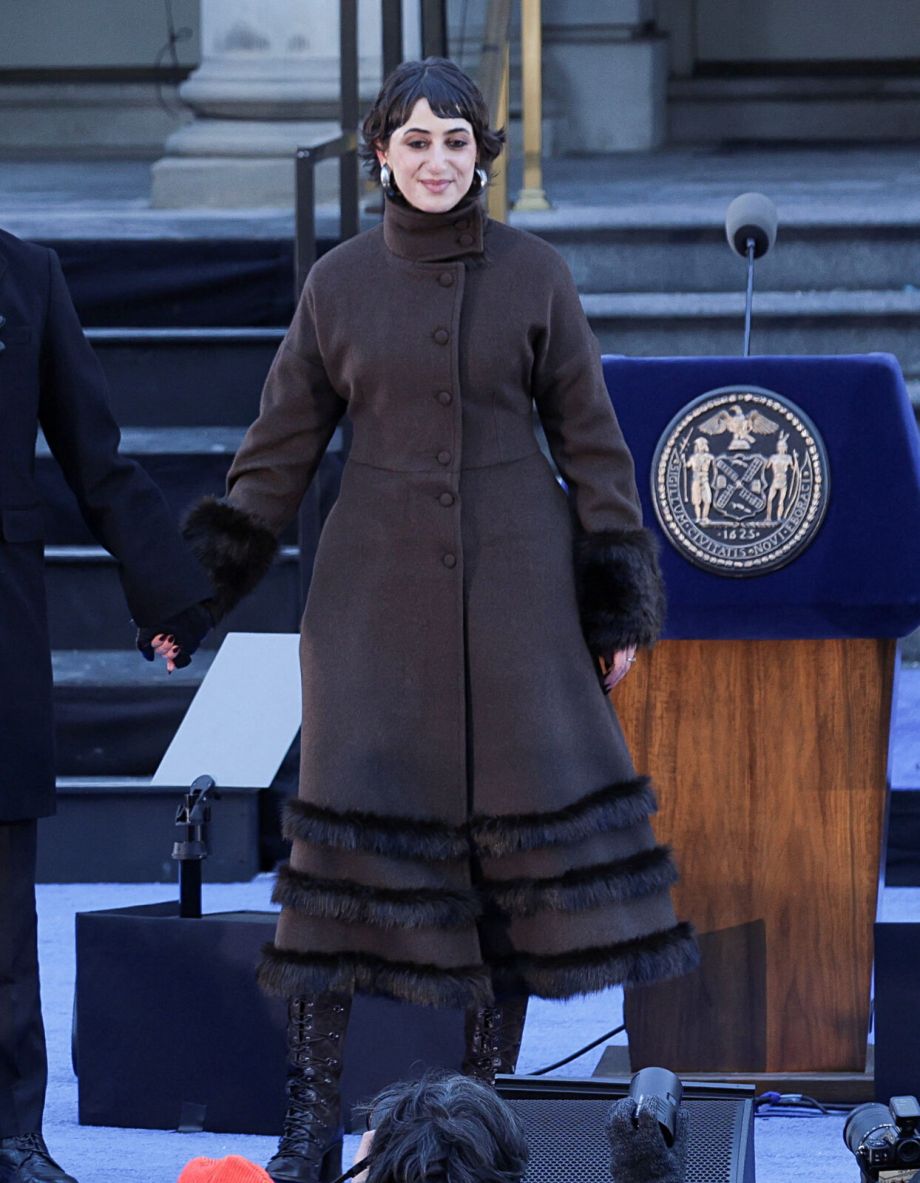
On the first day of January 2026, Rama Duwaji stood at her husband’s inauguration as the 111th mayor of New York City in a vintage Balenciaga coat sourced from the Albright Fashion Library, tailored shorts from The Frankie Shop, and boots borrowed from British independent label Miista. For the midday ceremony at City Hall, she wore a reworked piece by Palestinian-Lebanese designer Cynthia Merhej of Renaissance Renaissance, a third-generation couturier whose atelier operates between Beirut and Paris, with collections made in Lebanon using local artisans and family-owned factories. Her stylist, Gabriella Karefa-Johnson, framed the choice plainly on Substack: “On her first official day as First Lady of New York, Rama is wearing a small, independent woman designer from the Middle East.”

The image circulated widely. It was also a precise signal about the American market: on the most public stage New York offers in January, the first lady chose provenance over brand, a maker with a face over a conglomerate with a logo. That choice was not incidental to the moment. It was the moment.

Three months later, the April 2026 Consumer Sentiment Index landed at 49.8 — the lowest reading in seventy-four years, down from 52.2 in April 2025 and from 74.0 in April 2024. Within two years, American households had lost nearly a third of their economic confidence on an index where 100 represents full confidence and the long-run historical average sits at 86.

The Deloitte Financial Well-Being Index confirmed the same direction: tracking how Americans feel about paying their bills, their savings, and their financial expectations for the year ahead, it fell to 101.1 in March, down from above 105 through most of 2025. Housing costs, healthcare, debt service, and stagnant wages had been growing faster than incomes for years, and the economic shock of the Iran conflict landed on top of that accumulated pressure. At the lowest sentiment reading in seventy-four years, a broad stratum of American households had stopped absorbing it quietly. With inflation expectations for the year ahead at 6.7 percent, the highest reading in four decades, there was little in the data to suggest the pressure would ease.


The Hourglass Economy: Wealth Up, Middle Out

The hourglass economy describes the structural polarisation of consumer spending into two growing segments with a contracting middle: wealth concentrating upward among high-net-worth individuals, the aspirational middle tier eroding under the compounding pressure of inflation, housing costs, and debt, and a broadening base of households the category has moved beyond reach entirely.

For two decades, the growth engine of American luxury was the aspirational middle tier: corporate managers, dual-income suburban households, high-earning-not-rich-yet professionals earning between 150,000 and 300,000 dollars a year. These buyers stretched for entry-level purchases, drove volume across the category, and kept brands growing without having to compete for the very top of the wealth pyramid. By early 2026, a compounding mix of persistent core inflation, soaring housing costs, stagnant real wages, and heavy consumer and student debt had stripped this tier of its discretionary capital. The income was still there. The fixed costs had grown to absorb it.

Bain, BCG, and Deloitte track the consequence consistently across their 2025 and 2026 reports. Between 2022 and early 2026, the global luxury customer base contracted from approximately 400 million people to around 330 million, according to Bain & Company, with the departure concentrated in exactly this aspirational stratum across every major Western market. BCG and Altagamma tracked where the spending went: approximately 35 percent of these consumers redirected their budgets toward savings, debt reduction, and the resale market.

In 2026, wealthy buyers hold 47 percent of all US personal luxury spending, according to Bain and eMarketer. In 2019, that share stood at 30 percent. The sixty to seventy million who exited the global luxury market between 2022 and 2026 did not stop spending; they redistributed downward, into the mass market, the resale economy, and categories where their budgets still had reach. At the upper end of the income spectrum, the dynamic ran in the opposite direction. North America added 7.3 percent to its population of high-net-worth individuals in 2024, reaching 8.4 million people with aggregate wealth of approximately 29.9 trillion dollars, according to Capgemini’s World Wealth Report 2025. By 2026, 47 percent of US luxury spending sits with buyers who represent a small fraction of the total consumer base.

The Q1 2026 earnings results showed precisely which brands had built for that buyer and which had not.

The Hourglass Economy — The Silent Luxury

Continued Reading

The Hourglass Economy: What the Luxury Market Data Shows

Wealth concentrating upward, the middle hollowing out, and the structural pattern behind the Q1 2026 divergence.

Read the analysis →

Seventeen Points

Hermès grew the Americas by 17.2 percent in Q1 2026. Brunello Cucinelli added 14 percent to constant exchange rates, with a rising proportion of special and unique pieces in each transaction. Prada’s Americas retail sales advanced 15 percent. LVMH’s Watches and Jewelry division gained 7 percent organically, with Tiffany a particular driver. Even Kering, whose flagship Gucci brand fell 8 percent in comparable terms across the group, recorded a North American gain of 8 percent.

Between 2023 and 2025, approximately 80 percent of global luxury market growth had come from price increases rather than genuine volume expansion or investment in craft, according to the BoF-McKinsey State of Fashion 2026. Some houses used that period to extract revenue from a loyal base. Others invested in the quality of the object and the depth of the client relationship. J.P. Morgan’s head of European Luxury and Sporting Goods, Chiara Battistini, described North America as “the bright spot of the season, supported by wealth creation and equity market strength.” Hermès and LVMH’s US performance diverged by 17 percentage points in the same quarter, in the same market, serving the same high-net-worth consumer. The difference is not macroeconomic. It is structural.

Permanence as Currency

The Federation of the Swiss Watch Industry reported that Q1 2026 reached 6.2 billion Swiss francs in total export value, a 1.4 percent increase over the prior year, with the United States holding its position as the single largest destination market. The number of units exported fell faster than the value of what was shipped. For 2025 as a full year, export value fell 1.7 percent while unit volume dropped 4.8 percent. Fewer watches left Switzerland, and each one was worth more on average.

In May 2026, Watches of Switzerland raised its full-year earnings guidance on the basis that American consumers had spent 24 percent more on fine watches and jewellery over the previous twelve months, with US revenues reaching 1.24 billion dollars, more than half of the group’s global income. That same week, Reuters reported US consumer sentiment at a seventy-four-year low. Concentrated wealth spending more on durable, appreciating objects at the top of the market; broad consumer anxiety at its most acute since before the oil crisis. Both readings describe the United States in the same moment.

KPMG’s luxury report documented that the global pre-owned luxury market reached an estimated 48 billion euros in 2023. Within the Swiss watch industry specifically, the proportion of consumers willing to purchase a pre-owned piece doubled between 2020 and 2024. American collectors increasingly ask, before any acquisition, whether a piece will hold or grow its value over twenty years. That question points them toward categories with documented provenance, established secondary markets, and material integrity that seasonal fashion cannot credibly promise. Karefa-Johnson asked an equivalent question when she dressed Rama Duwaji: not which brand is most visible, but which maker has a name, a place, and a record.


Luxury Recalibration Blueprint 2026

Continued Reading

The Luxury Recalibration Blueprint 2026

The structural forces reshaping the global luxury market and what they mean for brands, buyers, and the decade ahead.

Read the Blueprint →

The Other Growth Story: Independent and Gaining

While European conglomerates spent the opening months of 2026 staging Cruise presentations in Los Angeles and Aspen, a generation of American independent labels posted growth through a different mechanism entirely.

Rachel Scott’s Diotima launched in 2021. Approximately 60 percent of each collection is built on crochet techniques rooted in Jamaica, executed by women across the island who have been working with these methods across generations. Named CFDA Womenswear Designer of the Year in 2024 and subsequently appointed creative director of Proenza Schouler, Scott described the distinction between the two in a February 2026 interview with W Magazine: “Diotima is a personal, political brand. It’s rooted in the Caribbean and it’s anti-imperialist. Plus, the craft foregrounds everything. About 60 percent of the collection is made by hand. Proenza comes from the part of me that studied philosophy and French and is obsessed with film.” The Fall 2026 collection, built around a collaboration with the estate of Cuban artist Wifredo Lam, made Scott’s position explicit: the Caribbean craft traditions Diotima draws on are actively developed and transmitted, not preserved as reference.

Frances Howie’s Fforme has, over four New York Fashion Week seasons, built a following among editors and buyers without advertising spend or institutional backing. The collections are argued through construction: how a garment is cut, how it holds its shape, where the weight falls. Maria McManus works from a parallel premise. Fast Company has described her label as carrying “a fully traceable collection made from sustainable fabrics,” with all materials certified to Global Recycled Standard or GOTS. The longevity of the garment is the design brief, not a secondary consideration.

Regenerative luxury describes an approach to value that measures what an object, place, or production system actively sustains and carries forward, rather than what it minimises or reduces. Where conventional sustainability asks how much harm is avoided, regenerative luxury asks how much value is returned: to the landscape, the craft tradition, the community, and the buyer’s own sense of what endures. The labels growing in the American upper market in 2026 are operating within this logic, whether or not they use the term.

The buyer who finds these labels arrives through research. According to The RealReal’s 2025 Luxury Resale Report, Diotima recorded a 152 percent increase in searches on the platform, a buyer actively seeking out the brand, not encountering it through a recommendation feed. Karefa-Johnson made a version of the same search when she dressed Rama Duwaji: she looked for makers with a specific location, a specific skill set, and a specific politics of production. She found them outside the conglomerate system.

Local Soul: The Quiet Rise of Independent Luxury

Continued Reading

Local Soul: The Quiet Rise of Independent Luxury

Why small independent luxury brands are gaining relevance in 2026 and what this signals for the market.

Read the analysis →

The Local Soul

Local Soul is the material intelligence of a place when food systems, craft traditions, architecture, and hospitality remain connected to their specific territory of origin, producing value that is simultaneously specific, situated, and forward-facing.

Nashville, the Pacific Northwest, Montana, and the American Southwest have their own material cultures and their own relationship to provenance, developed independently of luxury retail.

Nashville’s affluent buyer is formed by proximity to producers: to regional grain, heritage meat breeds, and the specific agriculture the Smoky Mountains terrain supports. Blackberry Farm in Walland is a functioning agricultural estate with its own brewery, cheese operation, and smokehouse, holding a Relais and Châteaux designation. It draws the same upper-market buyer that Diotima reaches through cloth, someone who tracks origin as a purchasing criterion, in food as in fashion.

The Pacific Northwest has run on provenance and minimal intervention for decades, in wine, in food, in outdoor manufacture. Filson, the Seattle outfitter founded in 1897, offers a lifetime guarantee on every product and opens its manufacturing facility to public tours. The upper-market buyer who travels to watch an object being made is applying the same purchasing logic as the collector who asks for the movement history of a Swiss watch before acquiring it.

The Tariff That Changed the Arithmetic

The tariff regime extended into 2026, with China at 145 percent, Vietnam at 46 percent, Bangladesh at 37 percent, and the European Union at 20 percent. For independent labels producing across multiple international manufacturing geographies, the cost increase is existential. American independent designers have publicly described the regime as potentially catastrophic for small-scale production, where margins cannot absorb sudden cost spikes of this magnitude. Swiss watch exports face a 20 percent EU tariff, which the Federation of the Swiss Watch Industry has flagged as a meaningful headwind for a category where American demand had been growing at 24 percent annually.

For labels already producing domestically, the arithmetic has shifted. The cost differential that made American manufacturing prohibitive for a decade has narrowed sharply. In 2026, producing in the United States is increasingly a competitive calculation, not only a values one. Handwork 2026, a national craft initiative organised by more than two hundred American craft institutions to mark the country’s 250th anniversary, is consolidating a conversation that had previously been fragmented across regional communities. Its centrepiece exhibition at the Renwick Gallery in Washington DC in November, and a Monacelli Press publication, signal institutional investment in American making that aligns, for the first time in decades, with an economic incentive to produce domestically.

30. 47. Seven Years.

In 2019, wealthy buyers held 30 percent of US personal luxury spending. In 2026, they hold 47 percent.

The University of Michigan’s April 2026 sentiment reading of 49.8 and Watches of Switzerland’s 24 percent American revenue growth sit in the same quarter, in the same country. Rama Duwaji stood on the steps of City Hall in a coat with a documented history, boots with a named maker, and a dress from a specific atelier with a specific address. The buyer who applies the same criteria through a different budget, tracking provenance, choosing the named maker, asking who built the thing and where, is the buyer the American luxury market now organises itself around.

The seventeen points between 30 and 47 percent show how long that process has been underway.


What readers ask about the US luxury market in 2026

The following questions address the structural shift in the American luxury market in 2026: the hourglass economy, the retreat of the aspirational middle, the concentration of spending among high-net-worth buyers, the role of Swiss watches and pre-owned luxury, and why independent labels built around provenance, craft and long-term value are becoming more relevant.

  • What is the hourglass economy in the US luxury market?

    The hourglass economy describes the structural polarisation of consumer spending into two growing segments with a contracting middle. In the US luxury market, wealth is concentrating upward among high-net-worth individuals, while the aspirational middle tier is eroding under the pressure of inflation, housing costs, healthcare, debt and weaker discretionary income. At the lower end, a broader base of households has moved beyond the reach of luxury entirely. In 2026, this structure has become visible through collapsing consumer sentiment, shrinking aspirational demand and a rising share of luxury spending held by a small high-net-worth group.


  • Why is the middle pulling back from luxury spending?

    The middle is pulling back because the old aspirational luxury model depended on buyers who could stretch into entry-level purchases while still maintaining discretionary spending power. For years, this included corporate managers, dual-income households and high-earning-not-rich-yet professionals. By early 2026, higher housing costs, healthcare costs, debt service, inflation and stagnant real wages had absorbed much of that discretionary capital. The income may still be there, but the flexibility around it has changed. Luxury’s old price model is therefore harder for the aspirational middle to justify or sustain.


  • Why do high-net-worth buyers hold 47 percent of US luxury spending?

    High-net-worth buyers hold 47 percent of US luxury spending because the American luxury market has become increasingly concentrated at the top. In 2019, wealthy buyers accounted for 30 percent of US personal luxury spending. By 2026, that share had risen to 47 percent. The shift reflects the wider hourglass structure: the aspirational middle is pulling back, while affluent and high-net-worth buyers remain active in categories where price can still be defended by rarity, quality, service, provenance, jewellery, watches, private clienteling and long-term value.

  • What did Q1 2026 reveal about luxury brands in the United States?

    Q1 2026 showed that the US luxury market remains resilient, but highly selective. Hermès grew the Americas by 17.2 percent, Brunello Cucinelli added 14 percent at constant exchange rates, and Prada’s Americas retail sales advanced 15 percent. LVMH’s Watches and Jewelry division gained 7 percent organically, with Tiffany as a driver. Even Kering, while Gucci declined across the group, recorded a North American gain for Gucci. The results suggest that the US market rewards houses with strong client relationships, product credibility and high-value categories, while the broader volume model is losing force.

  • What do Swiss watch exports reveal about US luxury demand in 2026?

    Swiss watch exports show that US luxury demand is shifting toward value categories where provenance, scarcity, repairability and secondary-market confidence matter. The Federation of the Swiss Watch Industry reported Q1 2026 exports of 6.2 billion Swiss francs, up 1.4 percent year on year, with the United States remaining the largest destination market. In 2025, export value fell less sharply than unit volume, meaning fewer watches were exported at a higher average value. This supports the wider pattern: in a more selective market, value holds better than volume.

  • Why is the pre-owned luxury market important in the United States?

    The pre-owned luxury market matters because it reflects a more value-conscious buyer. According to KPMG, the global pre-owned luxury market reached an estimated 48 billion euros in 2023. In the Swiss watch category, the share of consumers willing to buy pre-owned doubled between 2020 and 2024. In the United States, resale platforms such as The RealReal, Rebag and specialist watch marketplaces have made authentication, provenance and long-term value part of the purchasing decision. The buyer is no longer only asking what a product costs today, but whether it will hold relevance and value over time.

  • Why do independents matter more in the US luxury market in 2026?

    Independents matter more because they answer a value question that large luxury groups often struggle to make credible at scale. Labels such as Diotima, Fforme and Maria McManus are built around specific makers, identifiable craft, traceable materials, cultural precision and garments designed for longer relevance. The article opens with Rama Duwaji choosing vintage Balenciaga, Miista and a reworked piece by Renaissance Renaissance because that image captures the shift: provenance over logo, a maker with a face over anonymous scale, and selection based on cultural and material specificity.

  • What does Rama Duwaji’s inauguration look reveal about the US luxury market?

    Rama Duwaji’s inauguration look matters because it turned a public political moment into a precise luxury signal. She wore a vintage Balenciaga coat, boots from British independent label Miista, and a reworked piece by Palestinian-Lebanese designer Cynthia Merhej of Renaissance Renaissance. Her stylist Gabriella Karefa-Johnson described the choice as the work of “a small, independent woman designer from the Middle East.” In the context of the US luxury market, the image pointed toward a different value logic: provenance, independent design, cultural specificity, vintage and named makers.

  • What is regenerative luxury in this article?

    Regenerative luxury describes an approach to value that asks what an object, place or production system actively sustains and carries forward. The article uses the term in relation to independent labels that are built around craft traditions, traceable materials, cultural continuity and long-term relevance. Unlike conventional sustainability, which often measures reduction or avoided harm, regenerative luxury looks at what is returned to the landscape, the craft tradition, the community and the buyer’s sense of what endures. In the US market, this becomes relevant as buyers look for more credible forms of value.


  • What is Local Soul in the context of American luxury?

    Local Soul describes the material intelligence of a place when food systems, craft traditions, architecture and hospitality remain connected to their territory of origin. In the American context, the article points to Nashville, the Pacific Northwest, Montana and the American Southwest as regions with their own relationship to provenance, making, food, agriculture, landscape and hospitality. These regional cultures did not originate as luxury retail strategies. Their relevance comes from specificity. They offer a way to understand American luxury beyond New York, Los Angeles and Miami, through place-based knowledge and long-term value creation.


Sources: Bain & Company / Altagamma; BCG / Altagamma; Deloitte Global Powers of Luxury 2026; KPMG Luxury Report; Capgemini World Wealth Report 2025; Federation of the Swiss Watch Industry Q1 2026; Watches of Switzerland FY2026 guidance; University of Michigan Consumer Sentiment Index April 2026; Deloitte Financial Well-Being Index March 2026; BoF-McKinsey State of Fashion 2026; Q1 2026 earnings: Hermès, LVMH, Kering, Prada Group, Brunello Cucinelli; J.P. Morgan European Luxury Research; Reuters, April–May 2026; McKinsey Consumer Pulse 2026; Accenture “Luxe Eternal: The Customer Edit”; eMarketer US Luxury Spending 2026; New World Wealth USA Wealth Report 2025; The RealReal Luxury Resale Report 2025; W Magazine, February 2026; Fast Company, February 2024.


Continue reading

The Pyjama That Starts in the Field

Marion Röttges, Co-CEO of Remei AG, on Start of Life thinking, organic cotton, biodynamic farming and the textile traceability that begins with farmers in India and Tanzania.

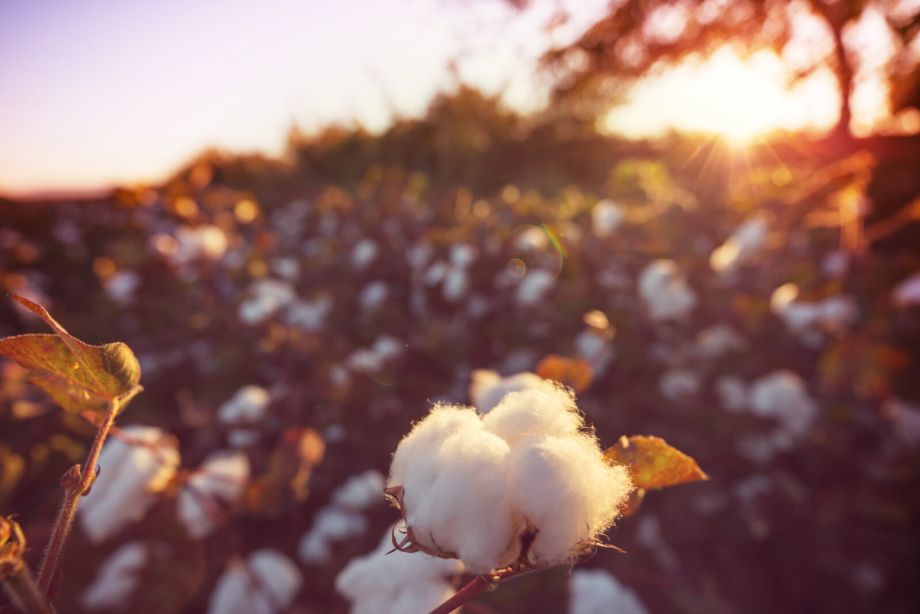
The work Marion Röttges, Co-CEO Remei AG from Swittzerland, describes begins in the cotton fields of central India and Tanzania, where around four thousand smallholder farmers grow organic cotton within a purchase-guarantee system that Remei has been building for thirty years. In conversation with The Silent Luxury, Röttges reframes textile traceability as something that begins before the finished garment exists: with the raw material, the farmers, the soil and the relationships that make a transparent supply chain possible.

“Transparency is the beginning of everything. Not the end goal.” The German word for traceability, Rückverfolgbarkeit, gives her pause. “Traceability only functions when you have built it from the very beginning, from the raw material onwards. Then it becomes the result, rather than the great goal.”

Her phrase for this is Start of Life. In India, Remei’s subsidiary is developing biodynamic cotton timed to the lunar calendar. The farming practices involved are ones the farmers have long followed; Remei is formalising them through biodynamic certification.

In Tanzania, the same network is moving towards landscape-level regeneration. The QR code on the finished shirt links the wearer back to farmers in the field. This visibility matters to Röttges because it changes how producers see their own position in the supply chain. “I always experience this pride,” she told The Silent Luxury. “The producers and farmers find it truly wonderful to be part of a transparent supply chain, to be seen.”

The next project she has in mind is biodynamic Indian cotton made into pyjamas for slow hotels and mountain retreats. “Places like South Tyrol,” she said.

Continued Reading

From Fibre to Skin: Inside Remei’s Start of Life Cotton

In India, cotton follows the moon. In Tanzania, regeneration changes the fields. In Switzerland, Remei turns fibre origin into textile traceability.

Read the full feature →

In Conversation: Marion Röttges on Cotton, Origin and the Start of Life

In this conversation with The Silent Luxury, Marion Röttges of Remei AG explains why textile traceability begins with the raw material, the farmers and the relationships that make organic cotton possible. Her answers connect Start of Life thinking, biodynamic cotton farming in India and Tanzania, the LUMA shirt and the future of textiles for slow hospitality.

The Silent Luxury (TSL) How do you reframe traceability?

Marion Röttges: “Transparency is the beginning of everything. Not the end goal. Traceability only functions when you have built it from the very beginning, from the raw material onwards. Then it becomes the result, rather than the great goal.”

TSL: What is Start of Life thinking?

Röttges: “I personally believe we have to also lead the discussion of Start of Life. Where does the textile come from, where does the raw material come from? Who are the people growing it?”

TSL: How small is organic cotton in the global picture?

Röttges: “Organic cotton is one to three percent of the global cotton fibre volume. We have been working in a mini-mini-niche for thirty years. We are now entering regenerative organic cotton in Tanzania as well as in India, and practice biodynamic farming in India.”

TSL: What does biodynamic cotton farming look like in practice?

Röttges: “The farmers follow organic farming practices, plan according to the lunar calendar and use biodynamic preparations as inputs for their fields. It is the cultural link. It is how they have always worked.”

A biodynamic certification formalises a practice that predates industrial agriculture by several centuries.

TSL: What does the next phase of this biodynamic cotton look like?

Röttges: “I would like to make pyjamas from this. We could address hotels with it, or retreats. Places like South Tyrol.”

Continued Reading

What Touches the Skin: Notes on Cloth and Origin

Natural fibres in luxury fashion shape origin, traceability and trust. A report on wool, cotton, milk fibre and the future of cloth.

Read the full article →

TSL: What does traceability mean for the people on the ground?

Röttges: “I always experience this pride. The producers and farmers find it truly wonderful to be part of a transparent supply chain, to be seen.”

TSL: How does Tanzania fit into the Remei network?

Röttges: “Eighty percent of our cotton comes from Tanzania. In Tanzania there is a real awakening, a real boost. The farmers are developing.”

The landscape-level regeneration looks beyond the individual farm, taking in water, soil, biodiversity and the way the farming community lives in the broader landscape.

TSL: What does the conversion from conventional to organic require?

Röttges: “Converting a field from conventional to organic takes three years. Remei commits to buying the cotton for five years. That commitment makes the conversion possible.”

TSL: What does the LUMA T-shirt demonstrate?

Röttges: “I was really impressed by how you called it the LUMA Principle. That’s exactly what it’s all about. It’s not just the product. It’s really the principle.”

The LUMA T-shirt by Lotta Ludwigson, developed in collaboration with Remei’s Start of Life cotton, carries the full logic of the conversation: origin, farmer visibility and textile traceability made visible in one garment.

Continued Reading

Lotta Ludwigson: The LUMA Principle

Bio-circular, yarn-dyed, fully traceable: with the LUMA T-Shirt, Charlotte Piller extends the principle of her collection to the most everyday garment — in cooperation with Remei.

Read the full article →

This interview was conducted by The Silent Luxury as part of its editorial research on Remei AG, Start of Life cotton, textile traceability and regenerative luxury systems. It serves as a supporting source for the main Cloth and Skin feature on Remei and the LUMA Principle.

Continue reading

At the Apex and Below It: A Structural Diagnosis of the US Luxury Market

The United States became the decisive demand centre of Q1 2026 luxury reporting. What the figures reveal about the hourglass economy, the quiet rise of independent luxury, and the three forces reshaping how value is found in America.

On the first day of January 2026, Rama Duwaji stood at her husband’s inauguration as the 111th mayor of New York City in a vintage Balenciaga coat sourced from the Albright Fashion Library, tailored shorts from The Frankie Shop, and boots borrowed from British independent label Miista. For the midday ceremony at City Hall, she wore a reworked piece by Palestinian-Lebanese designer Cynthia Merhej of Renaissance Renaissance — a third-generation couturier whose atelier operates between Beirut and Paris, collections made in Lebanon, with local artisans and family-owned factories. Her stylist, Gabriella Karefa-Johnson, framed the choice plainly on Substack: “On her first official day as First Lady of New York, Rama is wearing a small, independent woman designer from the Middle East.” No logo. No conglomerate. No red carpet call sheet. In a city that had spent the previous year watching European luxury houses expand their American retail footprint by sixty-five percent and stage Cruise shows on the West Coast, the first lady of New York arrived in vintage, independent, and borrowed. 

The Quarter That Confirmed the Shift

Three months later, the first-quarter earnings of the five leading luxury conglomerates put numbers to what that January morning had already made visible. Three months later, the first-quarter earnings of the five leading luxury conglomerates put numbers to what that January morning had already made visible.

In the third week of April 2026, the first-quarter results of the leading listed luxury groups produced a figure that American financial media treated as a headline and an explanation at once: the United States had become the decisive luxury demand centre of the quarter. Hermès reported seventeen percent growth for the Americas, a region in which the United States is the central demand market. Brunello Cucinelli reported 20.3 percent growth in the Americas. LVMH reported three percent organic growth in the United States. Against a backdrop of double-digit share price declines, geopolitical disruption in the Middle East, and a Chinese market recovering more slowly than investors had priced in, the American consumer was doing what American consumers have reliably done for the past eighteen months — spending. J.P. Morgan’s head of European Luxury and Sporting Goods, Chiara Battistini, described North America as the bright spot of the season, supported by wealth creation and equity market strength.

The financial press read this as continuity. The Silent Luxury reads it as a structural diagnosis.

Because what the Q1 figures show, read carefully through the United States, is three different markets operating under identical macroeconomic conditions, serving the same consumer base, and arriving at results that differ by seventeen percentage points. Hermès and Brunello Cucinelli are growing because they have not participated in the price-inflation logic that drove eighty percent of global luxury market growth between 2023 and 2025 without a corresponding increase in volume or genuine value delivery. LVMH grows at three percent because its largest fashion houses have. The divergence is not a story about the general health of the American market. It is a story about which model of luxury the American buyer has decided to reward — and which model they have quietly set aside.


Continued Reading

The Magic is Spent: Q1 2026 and the Structural Shift Reshaping the Luxury Market

Disenchantment, the hourglass economy, and why the Q1 divergence is a structural verdict — not a bright spot.

Read the global analysis

The Price Reckoning on American Terms

The context requires a brief reading of what preceded Q1 2026. Between 2023 and 2025, approximately eighty percent of global luxury market growth came from price increases rather than genuine volume expansion, according to the BoF-McKinsey State of Fashion 2026. The luxury market was growing because the same buyers were being charged significantly more for comparable products — and for a defined window, the post-pandemic recovery period, American consumers absorbed these increases with a patience that surprised several European houses.

That window has closed. The global luxury customer base contracted from approximately 400 million consumers in 2022 to 330 to 340 million by the end of 2025, according to Bain and Company — an estimated 60 to 70 million people who left the market or were priced out of it. “After the shopping spree era,” said Claudia D’Arpizio, leader of Bain’s global Fashion and Luxury practice, “experiences and emotions have become the true engine of luxury growth.” The phrase marks a shift in the axis around which the market organises itself, and its consequences are visible most clearly in the United States.

In the American market, this shift has produced what market analysis now describes as the hourglass economy: strength at the upper end, where ultra-high-net-worth buyers purchase with greater selectivity and higher per-transaction value; contraction in the aspirational middle, where buyers who had been invited closer through a decade of aspirational marketing found themselves facing prices that had risen thirty, forty, and in some categories fifty percent; and stabilisation at the entry level, where basic brand participation remains available. Consumer confidence in the United States reached its lowest point since May 2020 in April 2026, while equity wealth remained a powerful driver for the upper end of the market. The gap between those two indicators describes the American hourglass with precision: extraordinary conditions at the very top, and considerable uncertainty through the rest of the distribution. The stock market reached record highs in the same period. The gap between those two indicators describes the American hourglass with precision: extraordinary conditions at the very top, and considerable uncertainty through the rest of the distribution.

Continued Reading

The Italian Fashion Industry: Between the Hourglass and a New Renaissance

Who is growing, who is contracting, and why — with Emanuela Prandelli of Università Bocconi.

Read the structural analysis

What the American Buyer Has Learned

The buyer at the top of this market is working from changed criteria, and the research data on this point is consistent enough to read as a settled reorientation rather than a seasonal mood. Recent consumer intelligence points to a more intentional American luxury buyer: slower to accept premium pricing as self-evident, more willing to research before purchase, and increasingly attentive to provenance, material quality and production practice. The meaningful divide is no longer between brand awareness and anonymity. It is between brand-issued claims and independently legible proof. That gap defines the space that independent brands and independent editorial voices currently occupy.

The hospitality sector makes this reorientation quantifiable. In Q1 2026, the US hotel industry recorded 110 major transactions totalling 4.6 billion dollars, with luxury and upper-upscale properties continuing to outperform all other segments — driven by what LW Hospitality Advisors attributed to “steady group demand and wealthy consumers.” High-end hotel revenues have outpaced luxury retail across every American generational cohort. More than half of affluent American millennials plan to increase spending on travel, personal milestones and curated experiences in 2026, according to McKinsey. These are categories that carry no resale value and no external signal beyond the private quality of the experience itself.

The American buyer arrived at this orientation through accumulated experience: objects that promised permanence and delivered obsolescence, stays in places that sold silence and delivered noise, a decade of accumulation that produced, quietly, its own exhaustion. What market researchers and a growing body of consumer analysis now describe as Regenerative Luxury — the orientation toward what value sustains, restores, and carries forward, measuring continuity rather than reduction — finds its most direct material expression in American spending behaviour in 2026.. The buyer has arrived at this position through the logic of the market itself, one purchase at a time.

Continued Reading

Regenerative Luxury: What Value Renews

The framework that moves beyond sustainability into continuity — what value sustains, restores, and carries forward.

Read the framework

The Quiet Rise of Independent Voices

While European houses have spent the opening months of 2026 staging Cruise shows in Los Angeles and Aspen, a generation of American independent labels is consolidating something the show schedule does not track. These are brands built on material specificity, on documented production practice, on a relationship with the buyer that holds its ground on the strength of the work alone.

Rachel Scott’s Diotima is the most articulate example of where this movement stands in 2026. Launched in 2021, the label grounds approximately sixty percent of each collection in handcraft, drawing on Caribbean textile traditions and a political reading of what it means to produce by hand. Named CFDA Womenswear Designer of the Year in 2024 and later appointed creative director of Proenza Schouler — a position she holds alongside continued direction of her own label — Scott has described the two practices as occupying distinct territories:”Diotima is a personal, political brand. It’s rooted in the Caribbean and it’s anti-imperialist. Plus, the craft foregrounds everything. About sixty percent of the collection is made by hand.” The dual role places her at the intersection of the institutional American fashion structure and the independent label building its logic from materials outward.

The same quarter that brought Scott’s Proenza Schouler debut brought the new tariff environment into direct contact with the economics of independent production. Her account was precise: “I thought because I manufacture in so many places, including New York, I was going to be okay. Fashion is such an important industry for the States and this is going to completely cripple us.” The arithmetic of someone managing a real supply chain rather than a hypothetical one. For independent labels producing across Italy, Portugal, China and other specialised manufacturing geographies, the tariff environment is an existential question rather than a margin adjustment.

Fforme, launched by Frances Howie and now in its fourth year, built its most recent New York Fashion Week collection into one of the most closely followed presentations among editors without an advertising budget and without a Paris address. The argument is entirely formal: construction as the primary language, before colour, concept, or campaign enter. Maria McManus operates by an adjacent logic, with fully traceable materials and a production model built for longevity over volume. What these labels share is a position: the absence of the mechanisms the established industry uses to sustain visibility becomes, in the current market, the mark of a different kind of attention — one the buyer reaches through research, through reading, through the kind of sustained engagement that moves faster than any recommendation engine.

This is also the buyer finding design voices from outside the Western editorial axis. Nairobi Fashion Week’s eighth edition, held in January 2026 under the theme Decarbonize, brought designers from Kenya, Nigeria, Sri Lanka, and the United States together around a shared refusal to detach production ethics from aesthetic ambition. The event positioned itself, in the words of its founders, as a city “not being discovered, but decoded.” The American reader who follows this movement recognises in it the same argument that a Tennessee craft producer or a Pacific Northwest food system is making from different terrain: that the origin of a thing, and the integrity of how it was made, are part of what it is.

Continued Reading

Local Soul: The Quiet Rise of Independent Luxury

Why small independent luxury brands are gaining relevance in 2026 — and what this signals for the market.

Read the analysis

The Local Soul

One of the most consequential gaps in global luxury coverage is the geographic range of American luxury desire beyond its traditional centres. New York remains the commercial axis; Los Angeles has built a distinct design and hospitality culture of its own. The buyers who have built lives in Tennessee, in the Pacific Northwest, in the mineral-spring country of the American Southwest, represent a growing share of the affluent consumer base — and their purchasing behaviour runs on contexts that the coastal luxury press is still developing its reading of.

Nashville carries a buyer formed by a relationship to land and material culture that has little in common with the aspirational codes of coastal fashion. The food culture here is built on producers, on regional grain and heritage meat breeds, on the specific character of the Smoky Mountains terrain. Blackberry Farm, a functioning agricultural estate in Walland with its own brewery, cheese operation, and smokehouse, carrying a Relais and Châteaux designation, expresses in edible and habitable form the same logic of provenance and Local Soul that the American independent fashion label is articulating in cloth.

The Pacific Northwest has operated by the values of provenance and minimal intervention for decades — in wine, food, and outdoor manufacture — without the language of luxury attached to it. That language is now arriving because the buyer is arriving. Filson, the Seattle outfitter founded in 1897, carries a lifetime guarantee on every product and opens its manufacturing facility to public tours. In a market recalibrating around proof of value, the tour is the argument. “Fashion is already an emotional purchase, and consumers do care about the story behind a brand,” one industry analyst observed in this context. “It’s storytelling, not nationalism.”


The Tariff Recalibration

The tariff regime announced in 2025 and extended in early 2026 — China at 145 percent, Vietnam at 46 percent, Bangladesh at 37 percent, the European Union at 20 percent — has given an economic argument to a cultural preference that was already forming. American domestic manufacturing at the quality level was never fully extinguished. The tradition persists in Tennessee, North Carolina, Vermont, and Oregon, in leather goods, woven fabric, footwear, and watchmaking. Labels that already produced domestically found themselves in an unexpected position: the cost differential that had previously made domestic production prohibitive for independent labels has narrowed, and the direction of the argument has changed.

Simultaneously, Handwork 2026, the national programme marking America’s 250th anniversary, is giving cultural weight to a conversation that was previously fragmented. The programme involves more than 200 regional craft institutions, a centrepiece exhibition at the Renwick Gallery in Washington DC in November, a Monacelli Press publication, and a national school curriculum. America is beginning to treat its craft traditions as a national asset in a way that has not been true for decades — and the coincidence of this reorientation with the tariff environment is producing a convergence that independent labels are positioned to benefit from well before the large houses can respond.

What the Quarter Signals

Two forces are converging in the American luxury market in 2026, and their intersection is the territory this analysis has been mapping.

Two forces are converging in the American luxury market in 2026, and their intersection is the territory this analysis has been mapping.

The end point of the price-inflation model is now visible in the data. The American buyer has stopped accepting automatic elevation as a value argument and has started asking for evidence of material quality, of production integrity, of the specific decisions that justify what they are being charged. The recalibration runs across every cohort that carries meaningful luxury spending, driven by criteria that shifted through experience rather than through trend.

Beyond New York and Los Angeles, new centres of American luxury desire have formed. Nashville. The Pacific Northwest. The mineral-spring country of the American Southwest. Rooted in Local Soul, in regional food cultures, craft traditions and hospitality models that carry the specific character of their terrain.

What Rama Duwaji wore to City Hall on the first of January was already the answer. The quarter that followed supplied the data.


What readers ask about the American luxury market in 2026

The Silent Luxury analyses the structural shift in the American luxury market in Q1 2026 — drawing on earnings data from Hermès, LVMH and Brunello Cucinelli, consumer research from Bain and Company, the Luxury Institute and NIQ, and market analysis from J.P. Morgan and LW Hospitality Advisors.

  • What were the Q1 2026 luxury market results in the Americas? I

    In Q1 2026, Hermès recorded 17 percent organic growth in the Americas, Brunello Cucinelli 20 percent, and LVMH 3 percent organically. The 17-percentage-point gap reflects a structural difference in business model: Hermès and Brunello Cucinelli maintained craft provenance and controlled scarcity through the price-inflation cycle of 2023 to 2025, while LVMH’s largest fashion houses participated in it. J.P. Morgan described North America as the primary growth engine of global luxury in Q1 2026.

  • What is the hourglass economy in the luxury market?

    The hourglass economy in luxury describes the polarisation of consumer demand into two growing segments with a contracting middle. The upper tier — ultra-high-net-worth buyers representing 2 to 4 percent of the client base but 30 to 40 percent of total spend — grows through demand for rare, craft-led, and experience-oriented luxury. The aspirational middle contracts. Bain and Company documented the global luxury customer base shrinking from 400 million in 2022 to 330 to 340 million in 2025 — a loss of 60 to 70 million consumers.

  • What is Regenerative Luxury?

    Regenerative Luxury is a framework for reading value through what it sustains, restores, and carries forward — measuring continuity rather than reduction. Where sustainability measures what is reduced, Regenerative Luxury asks what a product, place, or experience maintains: craft knowledge, agricultural landscapes, repair systems, regional production networks, and the social relationships that make quality possible across time. The American buyer who shifted spending from accumulation toward longevity and experience is operating within this logic, reached through market experience rather than through concept.

  • What is Silent Luxury, and how does it differ from Quiet Luxury?

    Silent Luxury is a philosophy of value that reads luxury through craftsmanship, provenance, material intelligence, cultural depth, longevity, and life quality — asking what makes value legible, durable, and worthy of care across time. Quiet Luxury is the aesthetic and sensory language through which deeper value first becomes perceptible: proportion, weight, silence of construction, material confidence. Quiet Luxury is the entry layer — how value is perceived before it is explained. Silent Luxury is the philosophy that determines whether what lies beneath that perception holds.

  • What is Local Soul in luxury?

    Local Soul is the cultural intelligence of a place when material knowledge, social relationships, food systems, architecture, hospitality, and future-oriented creation remain connected to their specific territory of origin. Nashville’s producer-driven food culture, the Pacific Northwest’s decades-long practice of provenance-led wine and manufacture, the mineral-spring hospitality of the American Southwest: these represent Local Soul in the American luxury context — value that is specific, situated, and forward-facing simultaneously.

  • What is Well Living in the context of luxury?

    Well Living translates luxury value into lived experience — the architecture of arrival and rest, the quality of nourishment, movement, time, and emotional equilibrium that a place or product supports. The shift in American luxury spending toward high-end hospitality, which outpaced retail across every American generational cohort in 2026, reflects this directly: the buyer judges luxury by its capacity to support a better form of life.

  • Why are American affluent consumers spending more on hospitality than fashion in 2026?

    American affluent consumers shifted spending toward hospitality and experience for reasons rooted in accumulated market experience — a decade of accumulation that produced a recognition that objects do not hold what they initially promised. McKinsey data shows more than half of American millennials in affluent income brackets plan to increase spending on travel, personal milestones, and curated experience in 2026. LW Hospitality Advisors recorded 110 major US hotel transactions totalling $4.6 billion in Q1 2026, with luxury properties outperforming all other segments.

  • How do the 2026 tariffs affect independent American fashion labels?

    Trump’s 2026 tariff structure — China at 145 percent, Vietnam at 46 percent, Bangladesh at 37 percent, the European Union at 20 percent — affects independent American fashion labels disproportionately. Rachel Scott, founder of Diotima and CFDA Womenswear Designer of the Year 2024, stated the consequence directly: “Fashion is such an important industry for the States and this is going to completely cripple us.” Small labels producing across multiple international supply chains face cost increases that cannot be absorbed through margin adjustment.

Continue reading

From Fibre to Skin: Inside Remei’s Start of Life Cotton

In central India, cotton is planted according to the moon. In Tanzania, regeneration is changing the cotton landscapes Marion Röttges has followed for twenty years. In Switzerland, Remei builds the system that turns fibre origin into textile traceability.

The story of Remei begins before cotton becomes fabric. It begins with farmers, soil, seasonal knowledge, purchase guarantees and a form of traceability that is built from the raw material onwards. Marion Röttges in conversation with The Silent Luxury Magazine calls this Start of Life thinking. It reads textiles from the point where their value first takes shape.

A Field That Knows the Moon

The origin of Remei AG sits in a conversation that took place in India in the early 1990s. The farmers Röttges describes from those first years were already facing a structural absurdity: they were spending more money on agrochemicals than the cotton they grew with those chemicals was worth at market. The question that followed was operational. What if the chemicals were removed? What if the farmers returned to the knowledge they had used before industrial agriculture arrived? Nobody had a name for it yet. The word organic did not yet apply. The farmers went back to what they knew, and Remei gave them something they had not had before: a partner who promised to buy the cotton.

That promise has held for thirty years. Remei now works with around four thousand smallholder farmers across India and Tanzania, through two subsidiary companies it owns on the ground. The farmers receive purchase guarantees before the season begins. They receive a premium above local market price for the extra effort that certified organic production demands. Remei manages the entire supply chain from there, through a network of thirty-two industrial partners, from the spinning mill to the finished textile.

“I personally believe we have also to lead the discussion of Start of Life. Where does the textile come from, where does the raw material come from? Who are the people growing it?”

Marion Röttges, CO-CEO REMEI AG


What Start of Life Cotton Means

Start of Life cotton describes a textile system that begins with the raw material, the farmers, the soil and the relationships that make traceability possible from the field onwards. In Remei’s case, this means organic and biodynamic cultivation, long term purchase commitments and a supply chain documented before the fibre reaches the spinning mill.

What the Lunar Calendar Makes Visible

The biodynamic certification that Remei is now additionally pursuing in India formalises something that was already there. “The farmers plan according to the lunar calendar,” Röttges said in conversation with The Silent Luxury Magazine. “It is the cultural link. It is how they have always worked.” The cotton that grows this way looks identical at the spinning mill to cotton grown any other way. What the biodynamic certification documents is the knowledge underneath it: the timing, the soil care, the relationship between the crop and the conditions it grows in.

The conversion from conventional to organic farming takes three years, during which the soil rebuilds and the certification is earned. Remei commits to buying the cotton for five years. That commitment is not a marketing gesture. It is the condition that makes the conversion possible at all. A farmer who cannot be certain their cotton will be bought in three years cannot afford to stop using the inputs that conventional buyers require.

Continued Reading

Lotta Ludwigson: The LUMA Principle

Bio-circular, yarn-dyed, fully traceable: Charlotte Piller developed the LUMA T-Shirt with Remei’s organic cotton — sewn with cotton thread, traceable by QR code to the field where it began.

Read the full article →

Two Countries, Two Stories

Around eighty percent of Remei’s cotton today comes from Tanzania. The Tanzanian story, as Röttges tells it, carries a different energy from the Indian one. “In India it is very culturally rooted,” she said. “In Tanzania there is a real awakening, a real boost. The farmers are developing.” The landscape-level regeneration Remei is pursuing in Tanzania goes beyond the individual farm. It looks at the water, the soil, the biodiversity, the way the farming community lives in the broader landscape. A cotton-growing region, read this way, is not a collection of individual fields. It is a connected system that either recovers or degrades together.

Both stories share one moment that Röttges returned to during the conversation. She described scanning the QR code on a finished Remei garment while standing with the farmers in India and Tanzania. “I show them: this is how it works. You are in here too.” Her word for what she saw in response was precise. “I always experience this pride. The producers and farmers find it truly wonderful to be part of a transparent supply chain, to be seen.”

The Reframe of Language

In conversation with The Silent Luxury Magazine, Röttges turned the standard vocabulary of the industry inside out. “Transparency is the beginning of everything,” she said. “The end goal sits elsewhere.” The German word Rückverfolgbarkeit, which translates directly as back-traceability, troubles her. “Traceability only functions when you have built it from the very beginning, from the raw material onwards. Then it becomes the result, rather than the great goal.”

A few minutes later she said it more simply. “I personally believe we have also to lead the discussion of Start of Life. Where does the textile come from, where does the raw material come from? Who are the people growing it?” The shift in direction matters. Most of the industry begins at the finished garment and works backwards through documentation. Remei begins at the seed and lets the documentation accumulate forwards as the fibre travels.

A Mini-Mini-Niche, Held for Thirty Years

Röttges is direct about scale. Organic cotton stands at one to three percent of the global cotton fibre volume. “We have been working in a mini-mini-niche for thirty years,” she said. The story of the past year is that the niche is deepening. Biodynamic certification in India. Landscape-level regeneration in Tanzania. Living wages being implemented across the supply chain. Each step goes further into the ground rather than wider across the market.

“Naturfasern sind ein Geschenk,” she said at one point in the conversation: natural fibres are a gift. The figures in the industry make the word gift sound improbable. Ninety percent of global textile production is now synthetic. The share of natural fibres in the textile sector has never been smaller. What Remei has held for thirty years is the thread back to a different arrangement: one where the fibre comes from the earth, through the hands of specific people, documented every step of the way.


What the LUMA T-Shirt Makes Visible

The cooperation between Remei and Charlotte Piller of Lotta Ludwigson produced one specific object that makes the whole architecture visible. The LUMA T-shirt, developed together, is made from Remei’s organic cotton, sewn with cotton thread rather than polyester, and traceable via QR code to the origin of the fibre. The LUMA shirt by Lotta Ludwigson gave this system a visible form. Remei’s work shows where that form begins: with cotton, farmers, soil and a supply chain built from the field onwards.

When Röttges first encountered the LUMA Principle — the idea that luxury is the visible result of how something has been made, who has made it and what relationships have shaped it — her response was direct. “It really caught me, because I told myself, this is exactly the essence. It is not a product. It is really the principle.” Read the full article: https://the-silent-luxury.com/lotta-ludwigson-luma-organic-cotton-tshirt/

Start of Life, applied to a T-shirt, also opens a door Röttges is already thinking through. “I would like to make pyjamas from this. We could address hotels with it, or retreats. Places like South Tyrol.” In that setting, traceability would no longer remain inside a fashion object alone. It would enter the guest room, the bed and the intimate rituals of rest. A guest in a design hotel in the Dolomites, in a pyjama made from biodynamic Indian cotton, scans the QR code from the bed. The chain runs all the way back.

In Tanzania, where around eighty percent of Remei’s cotton grows, the farmers are, in Röttges’s own words, “in a real awakening, a real boost.” In India, the lunar calendar has guided the sowing for as long as anyone can remember. The cotton that travels from both places into a finished garment carries the ground it came from. The QR code on the label is the shortest possible distance between the two.

A textile touches the skin at the end of a long chain of decisions. In Remei’s system, that chain begins with the seed, the field, the farmer and the guarantee that makes organic cultivation possible. This is why Start of Life cotton matters for luxury. It shifts attention from the finished fabric to the relationships that allow quality to exist before it becomes touch.

Continued Reading

What Touches the Skin: Notes on Cloth and Origin

The opening of the series — on natural fibres, four voices from the trade and the question of what cloth does to the body that wears it.

Read the series →

Start of Life Cotton: How Remei Connects Organic Cotton, Traceability and Luxury

Start of Life cotton describes a way of understanding textiles from the point where their value first takes shape: the field, the fibre, the farmer, the soil and the relationships that make traceability possible. In Remei’s organic cotton system, textile traceability begins before the spinning mill, before the finished garment and before cloth touches the skin. The following questions explain how organic cotton, biodynamic farming, India, Tanzania and the LUMA shirt connect within this larger reading of luxury.

  • What is organic cotton?

    Organic cotton is cotton grown without synthetic pesticides or synthetic fertilisers and according to certified organic farming standards. In the context of Remei, organic cotton is also connected to long term farmer relationships, purchase guarantees, soil care and a supply chain that documents the fibre from cultivation to finished textile.

  • What is organic cotton?

    Organic cotton is cotton grown without synthetic pesticides or synthetic fertilisers and according to certified organic farming standards. In Remei’s context, organic cotton is also connected to long-term farmer relationships, purchase guarantees, soil care and a supply chain that documents the fibre from cultivation to finished textile.

  • Why does Remei work with farmers in India and Tanzania?

    India and Tanzania are central to Remei’s organic cotton system. In India, Remei is developing biodynamic cotton rooted in farming knowledge, the lunar calendar and soil care. In Tanzania, the work moves towards landscape level regeneration across water, soil, biodiversity and farming communities.

  • What is biodynamic cotton?

    Biodynamic cotton is cotton grown according to biodynamic agricultural principles. In Remei’s Indian context, this includes farming knowledge, soil care, biodynamic preparations and planning according to the lunar calendar. The certification formalises practices that are already culturally rooted in the way farmers work.

  • How does Start of Life cotton connect to the LUMA shirt?

    The LUMA shirt by Lotta Ludwigson was developed with Remei organic cotton, sewn with cotton thread rather than polyester and traceable by QR code to the fibre origin. It gave Start of Life cotton a visible form in a finished garment — a direct connection between the field in India or Tanzania and the textile that touches the skin.

  • Why does textile traceability matter for luxury?

    Textile traceability matters for luxury because it shows how quality is formed before the finished product exists. It connects organic cotton, farmers, soil, cultivation, supply chain decisions and long term relationships to the textile that finally touches the skin.

  • What does landscape-level regeneration mean in cotton farming?

    Landscape-level regeneration in cotton farming looks beyond the individual field to the connected system: the water, the soil, the biodiversity and the way farming communities live within a broader landscape. Remei is pursuing this approach in Tanzania, where around 80 percent of its cotton grows, treating a cotton-growing region as a system that either recovers or degrades together

  • What is a purchase guarantee in organic cotton farming?

    A purchase guarantee is a commitment by Remei to buy a farmer’s cotton before the growing season begins and at a premium above the local market price. This guarantee is the structural condition that makes conversion to organic farming financially possible: a farmer who cannot be certain their cotton will be bought in three years cannot afford to stop using conventional inputs.

Continue reading