The Horizon as an Invitation to Think Further
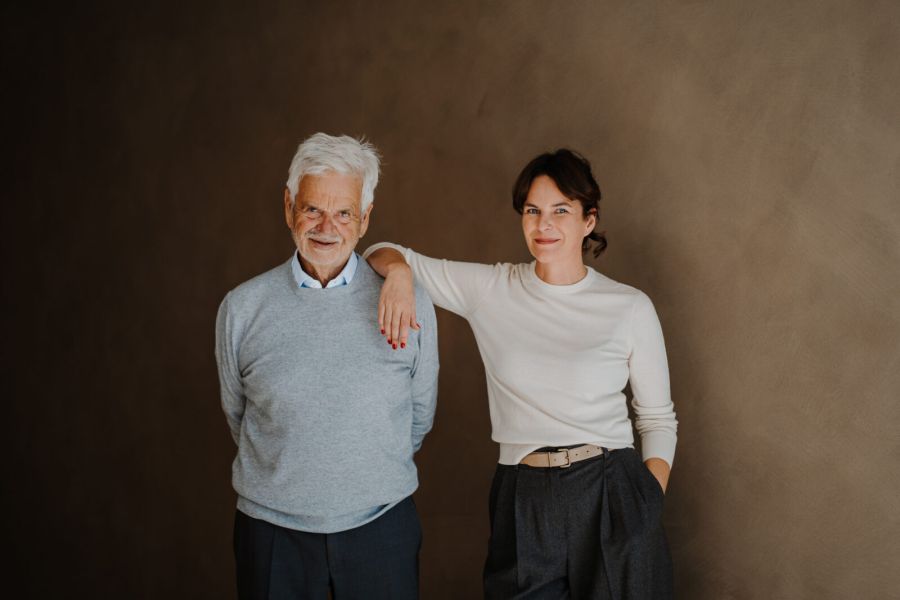
At 1,500 meters above sea level, where 14 healing springs emerge from the mountain and silence becomes a prerequisite for thought, Ulrich Ladurner and Matteo Thun created not just another resort. vigilius mountain resort embodies a philosophy where “eco not ego” dissolves the boundaries between architecture and nature, proving that true luxury lies in radical simplicity. This is the story of how two visionaries built a worldview from wood, glass, clay, and vision—and why it becomes more beautiful every year.
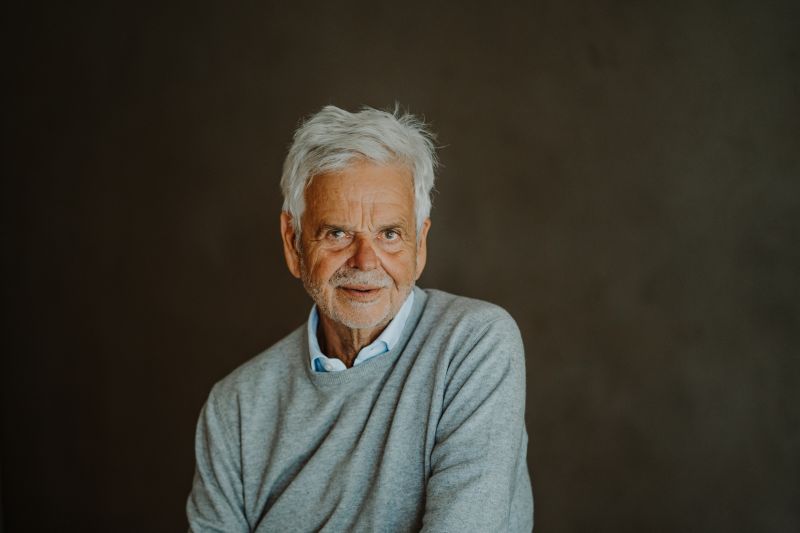
There are entrepreneurs who create products. And there are those who build worldviews. Ulrich Ladurner belongs to the second group. The man who revolutionized gluten-free food with Dr. Schär and gave people with celiac disease their quality of life back has created something with the vigilius mountain resort that reaches far beyond a hotel.
“You are important to me,” Ladurner says about his philosophy for gluten-free foods. “It’s about quality of life, it’s about tasting good, it’s about appetite.” This statement also applies to vigilius. Every guest should feel: You are not a consumer here. You are a person.
The Power of Vastness
“Silence is the prerequisite for thinking,” says Ladurner as he gazes across the Vigiljoch. “And vastness is a model for thinking.” It’s no coincidence that he speaks this sentence at 1,500 meters altitude, where 14 healing springs emerge from the mountain and have given people strength for centuries. Up here, where the world becomes quiet, one thinks differently. Bigger. Further.
“I must look beyond the horizon and sense what will or could be behind it,” he explains. “From this comes inspiration. Through thinking, the future emerges, and through conversation, quality develops.”
Ladurner is convinced that what’s needed is a culture of conversation that is open and positive. This creates closeness, which is a prerequisite for a livable future. It’s not enough to simply ask what one would like. “An intensive conversation is needed – just asking what one would like is far too little. From this emerges the demand one sets for oneself, and from this comes movement,” says Ladurner.
From Impulse to Vision
Back to the vigilius mountain resort and its creation. Only six months. That’s how long it took from the first viewing of the dilapidated hotel to signing the purchase contract. “But my feeling was different; the whole thing wouldn’t leave my mind,” Ladurner recalls. “Only six months later, I signed the purchase contract and thus became the owner of an old, dilapidated, somehow unappetizing but nevertheless utterly fascinating structure, located in a unique place.”
Then for a year: nothing happened. Deliberately. “I was aware that I was new to the tourism industry and that mistakes could happen due to my lack of experience in this area. But I saw precisely this as an opportunity to create something innovative.” Creating something unique, that was the idea. “I was convinced that this would only be possible in connection with this fascinating place at Vigiljoch.”
The place itself was the benchmark from the beginning.
The Meeting of Two Visionaries
“You won’t be able to create anything more beautiful than this place already is.” With these words, Ulrich Ladurner began his first conversation with Matteo Thun. It wasn’t a challenge. It was an invitation to humility.
“Matteo Thun didn’t interpret these words of mine as a challenge to contradict, but agreed from the beginning to approach this creative process with the necessary humility,” Ladurner recounts. According to Thun’s principle “eco not ego,” the boundaries between architecture and nature should blur. “To form an island that one believes one has only dreamed of,” as Thun put it then.
“In the numerous conversations, the focus wasn’t on what should be built,” Ladurner explains. “The central theme was the guest: what they should feel, experience, see… and perceive with all their senses.”
After opening in 2003, the work continued. Together with the team, Ladurner eventually defined the mission of vigilius: Arrive, let go, be happy, live. “These four ‘extremely simple words’ don’t come from me but from the vigilius team. I was thrilled because these words express the foundation for a positive attitude toward life, and they’re also timeless. They could have been formulated 100 years ago, and in 100 years they would still be current. This is also important because the vigilius mountain resort doesn’t want to follow trends or set them.”
Today, over 20 years later, Matteo Thun says: “Nature has done its part over time and given the entire resort a beautiful patina. It gets more beautiful every year!”
sensus – When the Mountain Becomes a Space for Thought
Once a year, vigilius transforms into a place of discourse. Under the title “sensus,” Ladurner invites scientists, writers, journalists, and notable figures. “Longing as a Perspective of Value Change” is the guiding theme. To provide impulses for societal development, Ladurner brings these people together at vigilius mountain resort. The events are each dedicated to a thematic focus. Most recently, the topic of “Belonging.”
These aren’t academic debates but conversations meant to move something. The mountain as a neutral space for thoughts that go beyond the conventional. “New horizons must always be viewed anew,” says Ladurner. “Yesterday’s success is not tomorrow’s.” The question he asks himself: “Is the innovation radical enough?”
Radical – the word derives from “radix,” the Latin term for roots. And precisely in this lies a deeper meaning: Those who deal with roots today are radical in the best sense. Because new things can only grow when a plant has healthy roots.
The “Island” on the Mountain and the Sea
The Vigiljoch is an island. Car-free, accessible only by cable car, a refuge of slowness at 1,500 meters. Here, 14 healing springs emerge, whose water has been used for drinking cures for 80 years. It feeds the hotel’s water pipes, flows through the three-story spa area, fills the pool. Water here isn’t taken for granted but is the most precious resource.
A water sommelier guards the stories of these springs, tells of their mineralizing power, of the myths that surround them. It’s the appreciation of life sources whose value should be consciously tasted again. Because this water flows, eventually, into the sea. Everything is connected. The purity of the water on the mountain, the health of the oceans – it’s the same cycle.
“Although we are far from the sea, as an ‘island’ on the mountain we feel deeply connected to the rhythms of nature – and equally to the responsibility to protect it,” they say at vigilius. That’s why the resort hosted the Oceanic Global Film Festival in May this year. An evening entirely dedicated to protecting the oceans. In the hotel’s library, five short films on the theme “Save the Oceans” were shown.
What elsewhere might be marketing is lived conviction here. “Eco not ego” means: responsibility knows no geographical boundaries. vigilius stands for Zero CO2, Zero Kilometer, Zero Waste – in the hotel as in the world.
“The cable car means that as you ascend, the view widens, meter by meter. The view from the smallness of things to vastness, the clouds, the scent – everything changes. And at the same time, it’s a return to oneself. With time.” — Ulrich Ladurner
The Critical Perspective
Ladurner isn’t one for soft tones when it comes to the future. “Basically, I believe: we have never been as controlled as we are today. Especially from commercial interests,” he says emphatically. “Through subtle communication, a mass effect is achieved that is not good, and especially not healthy.”
This path leads society away from the important things in life. “It harms our health and our well-being. This we-feeling that is created here is not voluntary but controlled. This creates a dangerous negative effect that is not far from a kind of fascism. The difference is: in the 1930s, fascism functioned politically; now it functions through the economy.”
These are clear words. But Ladurner is no cultural pessimist. He points to alternatives. “We must not generally exclude economic interests because they are the foundation for work and employment. If someone says they have the best spaghetti in the world, that’s legitimate. Then people might eat some spaghetti, and that’s a good effect for the company.” What he finds objectionable, however, is “when time is occupied and feelings of self-gratification are created.” The question is always: Whom does our action serve?
Simply: Being
“A key to a better future is: ‘Simply: being,'” says Ladurner. It’s also the credo of vigilius. “We all move in an environment today that’s difficult to oversee. Everything is covered by complexity. When I look at my phone and would have to spend an entire day just to understand it in the slightest, then I say: ‘No, I’m not participating.’ Either things function so that we all do better, or we should rather leave it be.”
Matteo Thun has translated this philosophy into architecture. “Botanical architecture,” he calls his approach. “This means building with nature and not against it. The South Tyrolean landscape should influence the architecture and not vice versa. If this isn’t the case, I advocate for a general building freeze in the Alps!” Green architecture isn’t a trend, says Thun. “It’s the return to normalcy.”
The Legacy for Tomorrow
What remains after 20 years? A hotel that becomes more beautiful with time. A team that formulated its own mission. An attitude that will outlast generations.
“Projects that are in harmony with the genius loci, that outlast generations,” says Ladurner. Guest demands increasingly move toward sustainability; one of the most important criteria when choosing hotels today.
“The hospitality industry must rethink after the changes to our society through the pandemic and rely on long-term concepts where reducing, reusing, and recycling are the keywords; thus energy efficiency for new, resilient, and low-emission buildings, inclusion of the life cycle of building materials, disposal and reuse of construction materials.”
vigilius was a pioneer. As early as 2003, it received Italy’s first CasaClima A certification. Countless awards followed: in 2005 the WWF’s Panda d’Oro, in 2016 the Lignius Award, from 2021 to 2023 the Earth Check Gold Award. But Ladurner isn’t interested in trophies. The question he asks himself is: Is the innovation radical enough? Are we really returning to the roots?
The View Widens
The cable car glides up to Vigiljoch. Five and a half minutes the journey takes. “Cable car means that as you ascend, the view widens, meter by meter,” says Ladurner. “The view from the smallness of things to vastness, the clouds, the scent – everything changes. And at the same time, it’s a return to oneself. With time.”
The vigilius mountain resort works like a lived promise. To nature. To its guests. To the next generations. It’s a place that teaches why true radicality means returning to the roots. That simplicity is the key to the future. And that the horizon is an invitation to think further.
Ulrich Ladurner has never stopped looking beyond the horizon. He senses what could be behind it. And from this comes inspiration. From this comes the future. vigilius is part of this future. Built from wood, glass, clay, and foresight. And it becomes more beautiful every year.
Similar Articles
The Future of Luxury: A New Architecture of Value Takes Hold
The Cultural Intelligence Dossier: How Africa Sets the Measure of Luxury Value
African Craft Knowledge as Luxury Value, 75,000 Years Deep