An Island Named Eudaimonia: A Conversation on Why True Luxury Is Unrepeatable
The deeper well-being that luxury produces takes shape after the purchase, and it appears most reliably in the small independent houses that the research has largely overlooked. This is the central finding of a conversation with Solon Magrizos, whose systematic review of 109 studies appeared in Psychology and Marketing in April 2026. Five points carry the argument.
Hedonic luxury fades, eudaimonic luxury lasts.
Traditional and masstige luxury reliably produces a short-term emotional lift. The deeper form of well-being, the kind that holds, comes from experiential, ethical and culturally embedded luxury, and it shows up across months while the lift settles within minutes.
Value consolidates after the invoice is settled.
The most meaningful effects appear six to twenty-four months later, visible when a consumer repairs and keeps an object, returns to the same place, and changes what they consider worth their time. The relationship after the transaction is where the value actually forms.
The encounter matters more than the category.
A two-day workshop with a watchmaker sits structurally closer to eudaimonia than a duty-free purchase, and a two-century-old house can still produce a hollow encounter. What the encounter asks of the consumer decides the outcome.
Cultural Specialists carry eudaimonia as a structural by-product.
Independent houses, family ateliers and regional producers meet the conditions almost automatically, because they stay close to their suppliers, their materials and their place. The 109 studies almost entirely overlooked them.
Hospitality holds the strongest conditions for transformation.
It combines material, relationship, time and a specific geography that stays unique to one place. Within a stay, the texture of human encounter carries the most transformative weight, ahead of place, food and, last, architecture.
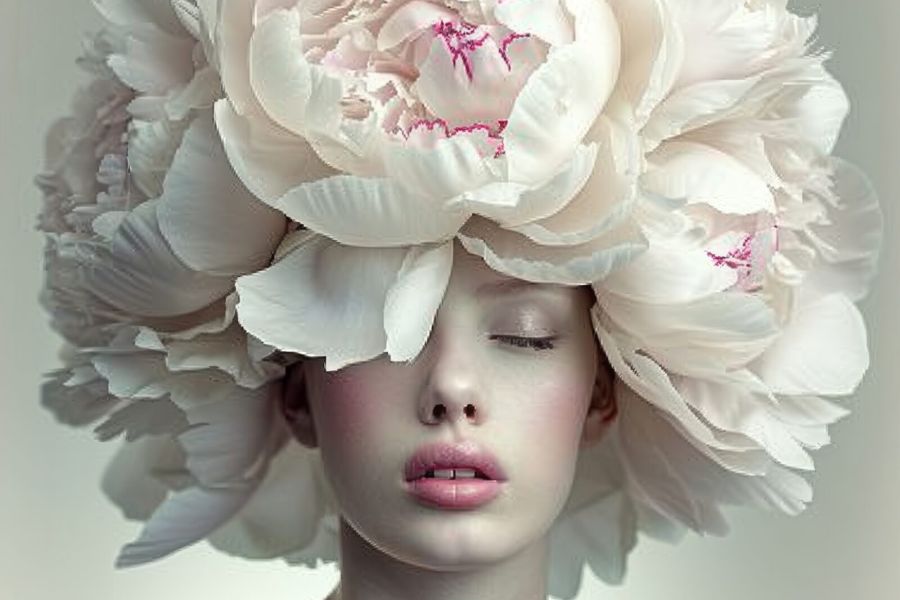
Eudaimonia. The word sounds like a place. Like a small island in the Aegean that appears on no tourist map. White walls, a harbour that smells of salt and oregano in the morning. You find it through someone who already knows it. You return because you understood something there that cannot be photographed.
Aristotle did not think of the word as a place, but as a state that resembles one. Εὐδαιμονία: the flourishing life. Eu means good, right, beautiful. Daimon is the inner spirit, the essence that inhabits a person. Eudaimonia is the thriving of that inner essence. Not a moment of pleasure. A state of having arrived at oneself: through meaning, through growth, through the sense that one’s own life aligns with what genuinely matters. Set against it stands hedonism: well-being as the sum of pleasures. Agreeable, measurable, temporary.
That this distinction had played almost no role in luxury research for decades is something Solon Magrizos once explained through a personal experience. He had flown between London and Greece for years, always with the cheapest option, without giving it much thought. The first time he was upgraded to business class, something happened that he could not fully undo afterwards. Two days later, sitting in the low-cost flight back, he found the seats too narrow, the queue too long, the food cold. The feeling stayed. As a shift in what he now experienced as comparable.
That sounds like an anecdote about consumer psychology. It is the beginning of a serious research question: under what conditions does luxury change not only a moment, but the way a person reads the world?
Magrizos, a member of the Birmingham Business Research Institute, pursued this question systematically together with Maria C. Voutsa and Minas N. Kastanakis of the Cyprus University of Technology. Their paper On the Transformative Nature of Luxury Consumption and Consumer Well-Being, published in Psychology and Marketing in April 2026, synthesises 109 academic articles and proposes a dual pathway framework: an intrapersonal path running through identity, memory and self-congruity, and a sociomoral path running through care, responsibility and shared meaning.
The conclusions are more uncomfortable for the luxury industry than any market forecast. Traditional and masstige luxury predominantly produces temporary hedonic gratification. What the authors call unconventional luxury — experiential, ethical, culturally embedded — carries the potential for eudaimonic well-being, for a form of happiness that extends beyond the purchase. And the houses that most reliably fulfil this potential are not the most visible names in the pyramid, but the ateliers, family hotels and regional producers that research has almost entirely ignored.
The Silent Luxury invited Solon Magrizos, Maria C. Voutsa and Minas N. Kastanakis to a conversation. Solon Magrizos answered on behalf of the research team. What follows goes further than the paper.

Solon Magrizos
Birmingham Business
Research Institute |
From the Interview · The Silent Luxury
“If active participation and co-creation genuinely produce more lasting eudaimonic effect than passive possession, and our reading of the qualitative evidence says they do, then the entire centre of gravity of luxury practice should shift from the object to the encounter, from the purchase to the participation. Every house would have to ask whether it is selling something the consumer takes home, or something the consumer is invited into.”
Magrizos, Voutsa, Kastanakis. On the Transformative Nature of Luxury Consumption and Consumer Well-Being. Psychology and Marketing, April 2026. DOI: 10.1002/mar.70139
Share this quote
|
Why Luxury and Well-Being Took So Long to Meet
Luxury has been studied as a status good, an identity signal, a source of pleasure, and almost never as a path to a flourishing life. Magrizos traces this silence to two roots: research tools built for what a survey can measure, and a century-old academic suspicion that treats beautiful objects as closer to vanity than to meaning. The interesting answer, he argues, lives exactly where the discipline stopped looking.
The Silent Luxury: Your paper names a conspicuous gap in the research. Luxury has been studied extensively as a status good, an identity signal, a hedonic object. It has received almost no systematic attention as a possible pathway to well-being. What explains this?
Solon Magrizos: Honestly, both reasons you might imagine — the methodological and the ideological. The methodological one comes first. The field built constructs that fit a survey instrument: purchase intention, willingness to pay, brand attitude, status signalling. These are tractable. Eudaimonic well-being does not behave like that. It shows up over time, it depends on context, it sometimes contradicts what the consumer says about it in the moment. The tooling was wrong for the question.
The ideological part is older than marketing as a discipline. Veblen left a long shadow. Once luxury gets framed as conspicuous, vain and derivative of social comparison, it becomes much easier to study it as something close to a pathology than as something that could matter to a human life. There is also a quieter academic discomfort: writing seriously about whether a beautifully made object can contribute to flourishing feels, to some colleagues, a bit too close to the brand’s own marketing copy. So people avoided it. The result is a literature where the dependent variable was almost always something the buyer confirmed within a week of purchase. That is not where the interesting answer lives.
What 109 Articles on Luxury Actually Tell Us
The existing literature maps the short-term emotional lift of luxury with real precision. Where it falls short is almost everywhere that matters: narrow samples, a Western lens, and studies that measure the consumer days after a purchase rather than across the years in which something might actually last. One paper on the bittersweet closure of a luxury chapter refused to fit the clean categories, which is what made it useful.
TSL: Your systematic review synthesises 109 academic articles. What does the existing literature do well, and where does it fundamentally fail?
Magrizos: What the literature does well is map the pro-ego mechanisms with real precision. The status work is clear, the masstige stream around brand happiness is well-replicated, and the service quality work in cruise, hospitality and airline contexts is detailed. If you ask the literature whether a luxury purchase produces a short-term affective lift, the answer is reliably yes.
Where it fails is almost everywhere else. Three things stand out. First, the sample base is embarrassingly narrow given what we are claiming to study. Many studies use MTurk or student panels, which is fine for testing a mechanism but odd when the empirical object is a Hermès handbag or a luxury cruise. Second, the literature is Western-dominated and almost entirely cross-sectional. Almost no study follows the same person across multiple consumption episodes, which means we have very little data on whether anything actually lasts. Third, eudaimonia is dramatically under-studied compared to hedonia.
The paper that surprised me most was von Wallpach et al. (2020), the Moments of Luxury piece. They have this idea of terminating luxury — the bittersweet closure of a chapter, like a final stay at a villa before it is sold. Freude and melancholy can sit inside the same encounter, and the encounter can still be transformative. That refused to fit any of the clean dependent variables I had been working with, which was the most useful thing it could have done.
The Two Pathways to Eudaimonia
The framework draws two routes through which luxury can contribute to well-being. The intrapersonal path runs inward through identity, memory and the quiet work of becoming someone you recognise. The sociomoral path runs outward through care, contribution and belonging. A long stay at a family hotel with a real relationship to its landscape activates both at once, which is why hospitality recurs throughout the conversation as the textbook case.
TSL: Your paper proposes two pathways through which luxury consumption may contribute to well-being — an intrapersonal path and a sociomoral path. How do they work, and where do they meet?
Magrizos: In the way we think about them, they are a continuum more than a binary. The intrapersonal pathway runs through identity, self-congruity, aspiration, autonomy, memory — the quiet psychological work of becoming someone you recognise. The sociomoral pathway runs outward: care for others, contribution, belonging, moral coherence. In the paper we draw them as two arrows for analytical clarity, but in real consumption episodes they flow into each other constantly.
A long stay at a small family hotel with a real relationship to its landscape is almost the textbook case where both pathways activate simultaneously. The intrapersonal pathway is doing its work through the slowing of time, the sleep, the absence of the constant low-grade pressures of ordinary life. The sociomoral pathway is doing its work through the awareness that what is on the plate came from a specific farm, that the staff have been there for years, that the place exists because a community has chosen to maintain it. Malone et al. (2023) call this kind of overlap bidirectional transformation — the practice changes the self and the self’s relation to others at the same time.
TSL: Is the distinction between hedonic and eudaimonic luxury a question of category, or of the quality of the encounter itself?
Magrizos: The encounter, mostly. Category is a useful first cut because certain categories are structurally more likely to host the right kind of encounter. A two-day workshop with a watchmaker is structurally closer to eudaimonia than a duty-free purchase at an airport. But the structural likelihood is not the same as the outcome.
A house with two centuries of continuity can still produce a transactional, hollow encounter if the visit is choreographed for Instagram and the craftsperson is performing rather than working. And a younger brand can occasionally produce something genuinely eudaimonic if the founder is in the room, the supply chain is short, and the consumer is being asked to understand something rather than to admire something. What does the encounter ask of the consumer? What does it reveal about how something was made or grown? What happens after the consumer leaves? If those three questions are answered well, the category becomes secondary.
When Transformation Is Real and When It Is Rationalisation
Eudaimonia Arrives After the Journey
Independent houses, family ateliers and regional producers meet the conditions for eudaimonic luxury almost as a by-product of how they survive. They stay close to their suppliers, their materials and their place because they have no other option, and the sociomoral pathway becomes their operating reality rather than a marketing layer. The research looked for evidence of eudaimonic luxury in precisely the place it was least likely to occur at full strength.
Self-transformation is a strong claim, and Magrizos is candid that the field is least equipped to prove it. The honest test is behavioural and slow: did the consumer repair rather than replace, return rather than chase the new, change what they explain to others about their own choices. Until research follows people across years rather than weeks, the word transformation deserves modesty.
TSL: Self-transformation is a strong claim. What exactly changes — and how do you distinguish genuine transformation from post-purchase rationalisation?
Magrizos: This is the question the field is least ready to answer, and I will not pretend otherwise. What transforms, in our framework, is the self in a sustained way: identity coherence, the relationship to time and to material objects, sometimes values, and at the deepest end, the understanding of what a good life looks like. Hemetsberger et al. (2012) frame it as a shift across having, doing, being and becoming — that vocabulary is still our best one.
The methodological problem is real. Most studies measure self-reported well-being within days or weeks of the consumption episode, which is exactly the window in which post-purchase rationalisation is loudest. A person who has just spent a non-trivial amount of money has strong cognitive incentive to tell you, and to tell themselves, that the experience was meaningful.
What I think would actually count as evidence: behavioural change visible six to twenty-four months later. Did the consumer repair the object rather than replace it? Did they return to the same place rather than chase a new one? Did they shift what they spend on, what they read, how they explain their own choices to others? Until we have that kind of data, we should be modest about the word transformation.
The Houses That Carry Eudaimonia Without Knowing It
TSL: The Silent Luxury observes a segment that the luxury research literature has almost entirely ignored — independent houses, family ateliers, regional producers, what we call Cultural Specialists. Are these structurally better positioned for eudaimonic outcomes?
Magrizos: Yes, and I would go further than the paper does in saying so. The conditions for eudaimonic luxury are conditions that Cultural Specialists tend to meet almost as a structural by-product of how they exist. They cannot scale away from their suppliers, because the suppliers are often family or neighbours. They cannot decouple from their materials, because the material relationship is what the work is. They cannot survive on brand recognition alone, because nobody outside their region recognises them at the level a logo does. So they have to deliver on the encounter every time, and the sociomoral pathway is not a marketing layer for them — it is the operating reality.
The 109 articles we synthesised are almost all studies of brands you would recognise. The Cultural Specialists are statistically absent from the corpus. The implication for future research: we have been looking for evidence of eudaimonic luxury in the place where it is least likely to occur at full strength.
TSL: Can an organisation built on growth and scale genuinely deliver eudaimonic luxury?
Magrizos: Sometimes, in pockets, but not as a default state. The tension is structural. A conglomerate is organised around quarterly performance, geographic expansion and the standardisation of quality so that a customer in Singapore gets the same experience as a customer in Milan. Standardisation is, by definition, the enemy of the kind of encounter we are describing as eudaimonic, because the eudaimonic encounter is specific, located and at least partly unrepeatable. If you can scale it perfectly, you have changed what it is.
My honest hypothesis is that there is a threshold of scale above which the eudaimonic pathway becomes structurally inaccessible — and that this threshold is lower than the industry would like to believe.

Wertschätzung: The Word That Was Missing
The Silent Luxury introduced a German word with no clean English equivalent: the active practice of recognising what something is worth before it can be measured. Magrizos accepts it as a genuine extension of the framework, naming the cognitive and ethical work a consumer must perform for value to become perceptible at all. He goes further, agreeing that the well-being of makers, landscapes and communities belongs inside the same logic, since no house can honestly claim care with the consumer while extracting from its makers.
TSL: We introduced the concept of Wertschätzung into our questions. The German word contains two roots: Wert, meaning worth or value, and Schätzung, meaning estimation, appreciation and careful recognition. Together they describe the active practice of perceiving what something is worth before it can be measured: recognising the years a craftsperson spent learning a technique, the specific quality of a landscape that took centuries to develop, the trust a family hotel has built through four generations of consistent care, or the relationship a guest brings back when they return because they genuinely understood something about the place. Does your framework have room for this?
Magrizos: This question is the most interesting one in your set, and I want to thank you for it before I answer.
The short version: yes, the framework has room for Wertschätzung, but it is currently a precondition for the sociomoral pathway rather than a fully named element within it. Your question makes me think it deserves to be named. What you describe is the active practice of recognising worth before it can be measured. Our sociomoral pathway gestures at this through ideas like authenticity and ethical alignment — but your word does something ours does not: it names the cognitive and ethical operation the consumer has to perform for the pathway to do its work at all. Without Wertschätzung, the luxury encounter collapses into the aesthetic consumption of heritage signs.
On your extension — the well-being of producers, craftspeople, landscapes and communities: I think you are right that this belongs in the framework. A house cannot honestly run a sociomoral well-being claim with the consumer while extracting from its makers. The two are coupled. What you are proposing is that this coupling needs to be visible, theorised and measured, not merely assumed. That would be a fair extension of our paper.
The deepest effects of a luxury encounter rarely appear during it. They surface in the months that follow, when the consumer returns, repairs, and begins describing a place in a way that is no longer about themselves. This relocates the value of luxury to the relationship after the transaction, and rewards the provider who follows up, remembers the conversation and repairs the object without ceremony.

TSL: Does transformation appear after the encounter rather than during it?
Magrizos: Most likely yes, and the literature mostly fails to look. The studies we reviewed almost all measure during or shortly after the experience. The signal in that window is dominated by affect and rationalisation. The slower signal shows up in the months after: the consumer returns, the consumer repairs rather than replaces, the consumer begins telling others about the place in a way that is no longer about themselves, the consumer adjusts what they consider worth their time and money.
The implication for providers is significant and not yet metabolised by the industry. If the most meaningful eudaimonic effects show up after the invoice is settled, then the relationship after the transaction is where the value actually consolidates. The provider who follows up six months later, who remembers the conversation, who repairs the object without ceremony, who writes a real letter rather than a CRM-triggered email, is doing the work that turns a hedonic episode into something closer to eudaimonia. The provider who treats the transaction as the end of the relationship is leaving most of the well-being effect on the table — and most of the loyalty along with it.
Why Hospitality Carries the Strongest Conditions for Transformation
Hospitality combines four ingredients that rarely meet elsewhere: material, relationship, time and a specific place that cannot be reproduced. When all four align, the framework activates from several directions at once. Ranked by transformative weight, the human encounter comes first, place second, what is served and where it came from third, and architecture last, which runs counter to where much of the industry invests
TSL: Is hospitality a privileged site for the kind of transformation your paper describes?
Magrizos: Yes, and probably more than any other category we looked at. Hospitality combines four ingredients that rarely come together elsewhere: material, relational, temporal and place. A specific geography that cannot be moved or reproduced. When all four are aligned, the framework activates from multiple directions simultaneously.
If I had to rank where the transformative potential is strongest within a stay, I would put the texture of human encounter first. The conversations with the staff, the awareness of who knows the place, the moments where service stops being service and becomes something more like a brief shared life. Place would be second. What is served and where it came from would be third — because food is one of the few moments where the supply chain becomes literally embodied by the consumer. Architecture and design would come last in this ranking, which is probably counterintuitive to much of the industry. A perfect room with indifferent staff and no relationship to its location is the most expensive way to produce an empty stay.
What Evidence of Transformation Actually Looks Like
A study capable of capturing transformation would run a minimum of twelve months, ideally two to three years, with a small and deliberate sample recruited around a single category. It would combine quarterly interviews, a light monthly diary and behavioural indicators that do not depend on self-report. The outcomes worth tracking are value shift, relational continuity and repair orientation, the three signals that separate eudaimonia from its shadow.
TSL: What would a research design capable of capturing transformation actually look like?
Magrizos: Time horizon: minimum twelve months, ideally twenty-four to thirty-six. Anything shorter and you are still inside the rationalisation window. Sample: small and deliberate. Forty to sixty consumers, recruited around a specific category. I would start with hospitality or bespoke craftsmanship, because the encounter is well-defined and specifically remembered.
Methods: three combined. Quarterly semi-structured interviews, coded for shifts in self-narrative. A monthly diary instrument, light enough to actually be completed. And behavioural indicators that do not depend on self-report: did the consumer return, repair, recommend, slow down their acquisition pace.
What I would prioritise as outcomes: not happiness scores — those are too mood-dependent. Value shift, measured through what the consumer says is worth their time and money, tracked across waves. Relational continuity, measured through return behaviour. And repair orientation — the disposition to maintain rather than replace. These are the three indicators that distinguish eudaimonia from its shadow.
TSL: What would change for a luxury house that took this research seriously?
Magrizos: Four things. First, the metrics. Sales figures and seasonal performance would become trailing indicators. The leading indicators would be relational: depth and duration of client relationships, repair-to-replacement ratios, return rates measured across years.
Second, the relationship to time. A house that took our framework seriously would invest more in continuity — the same craftsperson, the same supplier, the same staff at the same hotel year after year — and less in the rolling novelty of new collections.
Third, clienteling. Clienteling-as-sales is a soft form of pressure dressed as care. Clienteling-as-care is the opposite operation: attention is offered without immediate expectation, and revenue follows as a by-product of a relationship the house has genuinely invested in.
Fourth, the after-sale. The relationship after the transaction is where the eudaimonic effect consolidates. Hard to justify on a quarterly basis. The easiest thing in the world to justify across a decade.
What Changes When Luxury Measures Well-Being
If eudaimonia became the measure of value, the hierarchy would tilt. Small ateliers, regional producers and hospitality with a real sense of place would move up, while houses sustained largely by logo recognition would face an uncomfortable question about what they produce beyond the signal. The formats that gain are the ones built for relationship and time. The centre of gravity shifts from the object to the encounter, from the purchase to the participation.
TSL: If eudaimonia became the measure of value in the luxury industry — what would change?
Magrizos: A great deal, and some of it inconveniently for the existing hierarchy. The brands that would gain significance under this measure are not always the brands at the top of the price pyramid. Small ateliers, regional producers, places where the maker is in the room, hospitality with a real sense of place — these would move up. Houses whose value is largely sustained by logo recognition and downstream licensing would face an uncomfortable question about what they are actually producing beyond the signal.
The formats that would gain are the ones that allow for relationship and time: long stays, sustained bespoke commissions, repair programmes, year-after-year return arrangements, multi-generational client relationships. The formats that would become harder to justify depend on novelty and speed: the perpetual newness cycle, the limited edition logic, the influencer-mediated discovery model.
Of our seven research propositions, the one I would most want to see tested is Proposition 7 — on doing-based self-transformation and bidirectional transformation toward an integrated self. If active participation and co-creation genuinely produce more lasting eudaimonic effect than passive possession, and our reading of the qualitative evidence says they do, then the entire centre of gravity of luxury practice should shift from the object to the encounter, from the purchase to the participation. Every house would have to ask whether it is selling something the consumer takes home, or something the consumer is invited into. That is a different question than the one the industry is currently answering.
The Silent Luxury thanks Solon Magrizos for his time and the precision of his thinking.
Solon Magrizos is a member of the Birmingham Business Research Institute. Maria C. Voutsa and Minas N. Kastanakis are based at the Cyprus University of Technology, Department of Communication and Marketing. Their paper “On the Transformative Nature of Luxury Consumption and Consumer Well-Being” was published in Psychology and Marketing in April 2026. DOI: 10.1002/mar.70139
Add the-silent-luxury.com
Magrizos, Solon, Voutsa, Maria C. and Kastanakis, Minas N. “On the Transformative Nature of Luxury Consumption and Consumer Well-Being.” Psychology and Marketing, April 2026. DOI: 10.1002/mar.70139 Hemetsberger, A. et al. (2012). Having, Doing, Being and Becoming. Journal of Consumer Research. Malone, C. et al. (2023). Bidirectional Transformation in Luxury Consumption. Psychology and Marketing. von Wallpach, S. et al. (2020). Moments of Luxury. Journal of Business Research. Aristotle. Nicomachean Ethics. Stanford Encyclopedia of Philosophy. The Silent Luxury editorial research, May 2026.
Similar Articles

The Future of Luxury After Q3 2026: The Members’ Club Era
AI Billionaires Before the Midterms: The New Patrons of Luxury Pay in Shares