Slow Hospitality: Conscious Luxury Travel in 2026
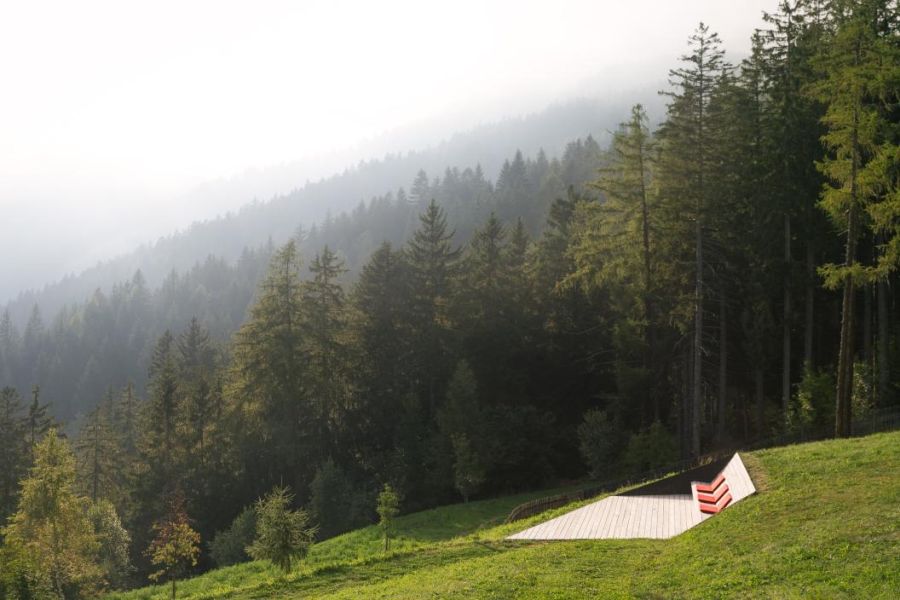
The cable car door closes, and with a gentle lurch the ascent begins. Five and a half minutes from Lana up to Vigiljoch, and with every metre the gondola climbs, something falls away — the tension, the lists in the head, the persistent sense of something still needing to be done. The valley floor becomes abstract. The Dolomites sharpen against the sky. By the time the doors open at 1,500 metres, the shoulders have dropped, the breath is slower, and the place has already begun its work, before any service interaction has taken place, before a room key has been handed over, before a single choice about how to spend the afternoon has been proposed.
Ulrich Ladurner, owner of Vigilius Mountain Resort, said that with every metre the view widens, from the smallness of things to the expanse and the clouds. What he was describing is the specific quality of a place that has built its hospitality from the ground up around the question of what arrival should feel like. The Vigiljoch has been valued as a retreat for over a century. The cable car, one of the world’s first passenger aerial tramways when it was built in 1912, has been the only mechanical access since the beginning. There is no road. That absence is a decision, sustained across more than a hundred years.
What Ladurner describes as a personal experience, the data from 2025 and 2026 confirms as a cultural one. The conscious luxury traveller who seeks exactly this quality of arrival — the gradual deceleration, the sense of a place that has kept its position across time — has become measurable in market research, visible in booking behaviour, and consequential enough to reshape the investment decisions of the global hospitality industry.
Conscious Luxury Travellers Now Choose Depth Over Distance
Bain and Altagamma called it tectonic in their 2025 research — a word that appears rarely in luxury market analysis, and was chosen deliberately. What they documented was a sustained movement away from visible consumption and toward what they described as experiential indulgence: the luxury consumer who measures quality through what is felt and remembered rather than what can be photographed and displayed. Experiential categories including travel and hospitality grew 8% to $103.4 billion in 2025, while personal luxury goods remained flat. The spending did not contract; it changed direction.
+8% experiential luxury categories including travel and hospitality in 2025 — personal luxury goods: flat — Deloitte Global Powers of Luxury 2026
Virtuoso’s travel advisers, surveying client behaviour across fourteen countries for the 2026 Luxe Report, found that 55% expected their clients to spend more per trip in the year ahead, while those same clients were asking, explicitly, for fewer crowds, slower itineraries, and deeper immersion in a single place rather than movement across many. The Enchanting Travels survey of over 10,000 high-net-worth travellers documented the same pattern in seasonal behaviour: peak-season travel to Europe dropped from 47% of trips in 2023 to 40% in 2025. Affluent travellers are migrating to shoulder seasons in search of places that still belong to themselves, where the quality of the experience has not been eroded by the volume of people seeking it.
Modern Currency PR’s 2026 Luxury Travel Forecast identifies privacy as the defining status signal among ultra-high-net-worth travellers, ahead of prestige, exclusivity, and every conventional luxury marker. Privacy, in this context, means the freedom to be unobserved, unscheduled, and present in a place without the ambient pressure of performing the experience for an audience. The traveller who books fourteen nights in Cilento and mentions it to almost no one is protecting the quality of something they have learned, through experience, to value. That shift in what constitutes status — from visible to felt — runs through every data point in the 2026 research, and it is the current that Slow Hospitality is built to serve.
Slow Hospitality, and Where It Parts from Wellness Tourism
The two concepts are frequently conflated, and the confusion costs both clarity and credibility. Wellness tourism is a market segment defined by services: spa treatments, longevity clinics, sleep protocols, biohacking programmes. It is a category of offering. Slow Hospitality is a design condition. A property can practice Slow Hospitality with no spa at all. A property can offer every wellness service currently available and still fail entirely to create the quality of time that conscious luxury travellers are seeking, because the architecture is working against the guest’s nervous system rather than with it.
Slow Food offers the clearest parallel. It transformed dining by returning the argument to the ingredient — what it was, where it came from, how long it needed to develop. The pace of the meal followed from that principle rather than being imposed upon it from outside. Slow Hospitality works the same way. The quality of time a guest experiences is the consequence of decisions about place, material, rhythm, and human presence that run through every aspect of a property’s design and operations. When those decisions stay consistent, something happens in the guest’s experience of a stay that cannot be replicated through programme design or amenity investment alone.
“The sophistication shift is from ‘I’ve been everywhere’ to ‘I’ve gone deep somewhere.”
That formulation, from Virtuoso’s 2026 Luxe Report, names what distinguishes the conscious luxury traveller from the status traveller with more precision than most market research manages. Depth is the operative word. A stay that goes deep into a place, its material culture, its seasonal rhythm, its particular quality of light and sound and food, produces a different kind of memory from one that moves efficiently through a set of experiences. It is that quality of memory — the kind that changes how a person thinks about what travel is for — that Slow Hospitality is designed to make possible.
What Is Driving the Shift Toward Slower, Longer Travel?
The velocity crisis in hospitality has been building for over a decade. The average hotel stay shortened from 3.2 to 2.4 nights across the past ten years, even as the premium placed on each stay increased. Guests were spending more and experiencing less — arriving for fewer nights, expecting more transformation, and leaving with neither. The post-pandemic correction did not address the underlying problem; it accelerated the demand on properties to deliver meaningful experience within ever-shorter windows.
What the 2025 and 2026 data documents is the beginning of a structural response to that pressure from the demand side. Conscious luxury travellers are restructuring how they allocate their travel time — fewer trips, longer stays, greater investment in a single place. The extended-stay sector now represents 37 to 41% of new luxury hotel construction globally, reflecting an industry that has read this signal and is building for it. Hyatt alone has 4,000 rooms in the extended-stay pipeline. This is the market responding to something its best guests have been expressing for several years: that duration is the condition under which a stay can actually change something.
37–41% of new luxury hotel construction in 2024 in extended-stay formats — PwC / STR Emerging Trends in Real Estate 2025
The shoulder-season migration documented by Enchanting Travels follows the same logic. The affluent traveller who chooses October in Puglia over August is choosing conditions over convenience — a place with more of itself intact, a landscape that has not been temporarily displaced by the demands of high-season tourism. The 7-point drop in peak-season travel to Europe between 2023 and 2025 is a meaningful shift in a market of this size, and it points toward a traveller who has learned to think about the quality of a destination’s presence as carefully as the quality of the property’s service.
The Market Confirms Slow Hospitality’s Commercial Momentum
PwC and STR reported 5.3% RevPAR growth for luxury hotels through August 2025, against a 1.8% decline for economy hotels — the widest performance gap the sector has recorded. The divergence was driven primarily by rate increases, with average daily rate up 5% year over year, which confirms that the premium is being placed on the specific character of what is being offered rather than on volume or accessibility. Higher-income travellers, whose spending propensity remained resilient across a period of broader macroeconomic uncertainty, continued to direct that spending toward the properties that could protect a different quality of experience.
The Virtuoso 2026 Luxe Report, drawing on 2,485 travel advisors across more than fifty countries, describes the movement as a turn from FOMO to slow-mo, where 55 percent of advisors expect their clients to spend more per trip while deliberately slowing the pace once they arrive.
5.3% RevPAR growth for luxury hotels YTD August 2025, versus −1.8% for economy — widest gap on record — PwC / STR 2025
Deloitte’s Global Powers of Luxury 2026, drawing on 420 C-suite executives across ten countries, frames the strategic direction of the coming period in terms that luxury market research rarely reaches for. The future, they write, will be won by being truer — clearer in purpose, sharper in execution, closer to the people you serve. That formulation describes, in the language of business strategy, exactly what the best Slow Hospitality properties have been practising from the material up. The market is arriving at the same conclusion from a different direction, and the convergence suggests that the properties positioned around depth, place intelligence, and conscious design are holding the most durable competitive advantage in the current landscape.
Is Slow Hospitality a Market Trend or a Cultural Shift?
The distinction matters because it determines the time horizon against which to evaluate the evidence. Market trends respond to conditions and correct when those conditions change. Cultural shifts redefine the baseline against which subsequent behaviour is measured, and they do not correct back. The post-materialist consumer — the 34% in developed markets who name alignment with personal values as their primary purchase driver, above quality, above heritage, above exclusivity — does not return to conspicuous consumption when economic conditions improve. The value framework has changed, and spending patterns follow the framework.
The evidence from 2025 and 2026 consistently points toward the latter. Bain and Altagamma’s description of a tectonic shift is supported by the Virtuoso data, the Enchanting Travels research, the PwC investment pipeline numbers, and the Deloitte executive survey. These are not the signals of a cyclical correction. They are the signals of a market that has internalised a different understanding of what luxury travel is for, and is restructuring its behaviour and its infrastructure accordingly.
“Luxury’s future will be won by being truer: clearer in purpose, sharper in execution, closer to the people you serve.” — Deloitte Global Powers of Luxury 2026
The Framework Behind Slow Hospitality
Understanding why certain properties deliver the quality of experience that conscious luxury travellers are seeking — and others, regardless of investment, do not — requires a more precise analytical lens than the concept of slowness alone provides. The Silent Luxury has developed a three-pillar framework for reading Slow Hospitality properties: Place Intelligence, Restoration Environments, and Integration and Continuity. Each pillar describes a specific set of design and operational decisions that, taken together, determine whether a stay produces the kind of lasting change that the most demanding travellers in this market are paying for.
The framework, its three components, and the European properties that demonstrate each pillar most coherently are the subject of Article 2 and Article 3 of this series. Article 2 maps the operational logic. Article 3 maps the places – out soon.
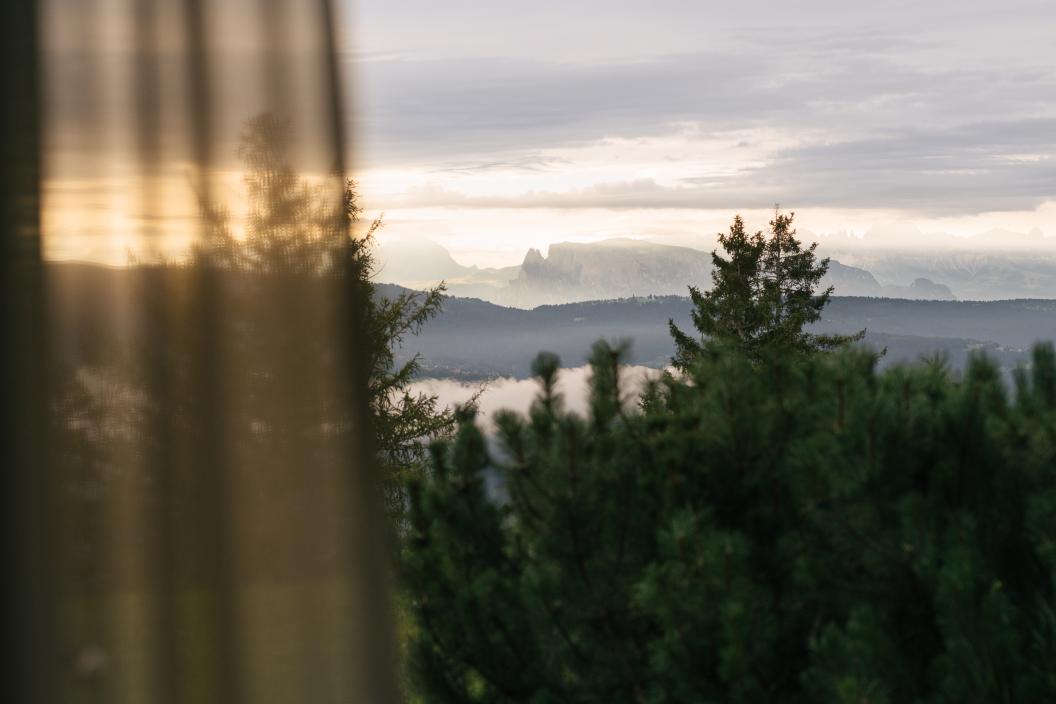
Back to the viglius mountain resort: Standing in the doorway at first light, between the warmth of the larch wood behind and the Dolomites sharpening against the morning sky ahead. The clay wall still keeps the heat of the night. A bergdohle calls somewhere below the ridge. The guest and the mountain, at this hour, simply belong to the same moment. | Photo: Tobias Kaiser
Further Readings:
- The Water Keeps Flowing: A Journey Through the Architecture of Well Living
- From Baja California to Bhutan: Hospitecture and the Stays That Treat Arrival as a Health Decision
- Albergo Diffuso: The Streets Are the Corridors
- La Fiermontina Lecce: Three Houses, One Family Story
- Cilento: Concentrates, Cycles, Continuity
- Borgo La Pietraia: A Hotel Built Like a Home
- Built to Stay: What the places you remember are made of
Similar Articles
Villa Nava: The Spaceship That Became a Home
The Yellow Oil: How Saudi Arabia Turns Its Landscape into Wealth
Casa all’Italiana: Gio Ponti’s Houses, Where the Soul Finds Peace