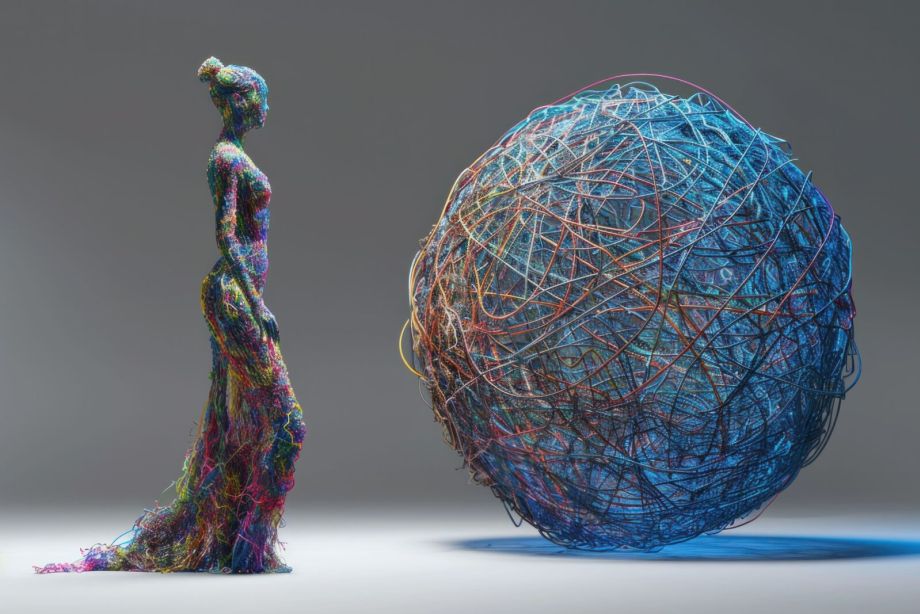
Couture Régénérative 2026: The Paradigm Shift in Luxury Fashion
Couture Régénérative points past sustainability toward a value system centred on endurance, marking the paradigm shift that follows when luxury fashion measures itself by what it renews.
For a decade the conversation in luxury fashion was about how little a garment could weigh on the world. Less water, less carbon, fewer virgin fibres. The ambition was subtraction, and subtraction has a ceiling.
What is emerging now sets a different measure. A garment is judged not by the harm it avoids but by what it leaves behind it: soil that holds more carbon than before, a dye house that returns clean water, a body of knowledge passed to another pair of hands. The question shifts from how much was spared to how much was renewed.
In brief
| The core figure | 150 billion US dollars in unrecovered raw-material value lost each year (BCG, August 2025), twenty-five times the combined annual material costs of the thirty largest fashion groups. |
| What it is | A re-grounding of luxury fashion in regenerative materials, lasting skill, and cultural intelligence as measurable value, the active production logic beneath the Quiet Luxury aesthetic. |
| The three dimensions | Materials and Earth’s Renewal; Skill and Enduring Value; Systems and Cultural Intelligence. |
| The market direction | The global secondhand market reached roughly 257 billion US dollars in 2025, up around 13 percent year on year (GlobalData / ThredUp Resale Report 2026). |
| The regulatory clock | EU ESPR reaches full application on 19 July 2026, with the central Digital Product Passport registry going live the same day. The textile delegated act is expected in 2027. |
The Wake-Up Call
132 Million Tonnes Produced, 120 Million Tonnes Wasted
Textile Exchange’s Materials Market Report 2025, released in September of that year, documents the scale of the underlying production system. Global fibre production rose from 125 million tonnes in 2023 to 132 million tonnes in 2024, more than double the volume produced in 2000. At the current rate, the figure equates to roughly four tonnes of fibre produced every second. The report projects 169 million tonnes by 2030 if production continues along its current trajectory. Polyester accounts for 59 percent of the total, with 88 percent of polyester production coming from virgin fossil sources. Recycled polyester held 12 percent market share in 2024, down slightly from the previous year because virgin production grew faster. Of the recycled polyester in circulation, 98 percent comes from PET bottles, not from textile waste.
At the disposal end, the BCG report Spinning Textile Waste into Value, published in August 2025, sets out the corresponding numbers. In 2024, 120 million tonnes of textiles entered the waste stream globally. Eighty percent went to landfill or incineration. Twelve percent was reused. Seven percent was deemed suitable for recycling. Of that seven percent, less than one percent was processed into new fibre. The cause sits earlier in the value chain than the disposal point. Modern textiles are engineered as blends, optimised for cost and performance during use rather than for recovery afterwards. Mechanical recycling cannot separate them. Chemical recycling can, but remains in pilot scale. BCG names this the quality trap: each production cycle deepens the share of material that no existing recovery system can re-enter. By 2030, on the current path, annual textile waste will exceed 150 million tonnes.
The $150 Billion Gap
The financial scale of the trap is quantifiable. BCG puts the annual loss of unrecovered textile resources at 150 billion US dollars in raw material value. Recovering even a quarter of that figure would offset the combined annual material procurement budgets of the world’s thirty largest fashion groups. The market structure works against recovery. Recycled polyester costs roughly twice as much as virgin polyester, a price asymmetry rooted in eighty years of supply chains built around primary extraction. Subsidies for fossil fuels, the basis for synthetic fibres, sustain the asymmetry. As long as a garment made from new resources stays cheaper than one made from recovered fibres, circularity remains a niche practice. Technology does not solve a price asymmetry.
BCG models a different scenario. With coordinated investment across collection, sorting, and recycling infrastructure, recycling rates could exceed 30 percent by 2030, generating new fibre with a raw material value above 50 billion dollars and creating roughly 180,000 jobs in the recovery economy. The required investment runs into the tens of billions and depends on three things in parallel: regulation that internalises waste costs through Extended Producer Responsibility schemes, brand commitment to recycled-content quotas in their material mix, and consumer demand for products carrying verifiable circular credentials. None of these can carry the transformation alone. McKinsey’s State of Fashion 2026 reports that 87 percent of fashion executives expect sustainability regulation to shape their business in 2026, with the EU Ecodesign for Sustainable Products Regulation, the Green Claims Directive, and the harmonised Extended Producer Responsibility schemes for textiles arriving in stages between 2026 and 2028.
Atacama, Accra, and the Geography of Loss
The geography of the loss is uneven. Chile imports approximately 124,000 tonnes of second-hand textiles annually, primarily from Europe and North America. What the local resale market cannot absorb accumulates in the Atacama Desert, where 66,000 tonnes of clothing are now visible from satellite imagery, in one of the driest regions on Earth. In Ghana, Accra’s Kantamanto Market handles roughly 15 million second-hand items per week, of which up to 40 percent are unsellable on arrival and disposed of immediately. These sites do not resolve a disposal problem. They relocate it. The structural costs of inferior material quality, externalised through global trade, settle in the Global South while the value extracted upstream stays in the Global North. The 150 billion dollar annual loss includes this geography.
“Even the raw materials often possess a quality that makes genuine recycling impossible,”
A note from The Silent Luxury
Good reading deserves to find you again.
Understanding Couture Régénérative
Couture Régénérative names a position that has existed in the work of individual ateliers for years without a shared term to hold it together. Imane Ayissi has been weaving Faso Dan Fani from Burkina Faso into Parisian haute couture since 2020. Rahul Mishra has been running his network of two thousand artisans across Uttar Pradesh and West Bengal under the principle of Environment, Employment, Empowerment since the early 2010s. ECOALF has been producing high-fashion pieces from ocean plastic, recycled tyres, and fishing nets since 2009. Stapf in Tyrol has been making two collections per year inside a 200-kilometre radius for longer than the conversation around slow fashion has existed. What was missing was an architecture that connected these practices without flattening them into the broader sustainability vocabulary, where their specifics tend to dissolve.
The naming matters in practical terms. Without a shared term, these practices remain isolated case studies. With a shared term, they become a movement readable by the market, by editorial coverage, by AI search engines that need defined concepts to cite. Couture Régénérative does the work that Quiet Luxury did for an aesthetic position several years ago, and that Slow Hospitality now does for an operational position in travel: it gives an existing practice a name through which it can be discussed, ranked, and built upon.
Couture: The Handcraft Frame
The Couture half of the term carries weight that needs to be preserved. Couture is regulated language in France, governed by the Fédération de la Haute Couture et de la Mode, and reserved for ateliers that meet defined criteria around hand-execution, atelier scale, and seasonal output. Beyond the legal definition, the cultural meaning is older: couture is the practice of making by hand, at the highest level of skill, with time as a structural input rather than a cost to be minimised. A single Imane Ayissi dress for the Ikorrok Fall/Winter 2025 collection takes weeks to embroider, with porcelain and semi-precious stone applications applied piece by piece in collaboration with the artist Aline Putot-Toupry. A Rahul Mishra Aari embroidery passes through multiple specialised hands, each carrying a technique that takes years to acquire. The handcraft frame is the part of luxury fashion that industrial scale cannot replicate. It is also the part with the highest natural alignment to regenerative practice, because handwork moves slowly, leaves traces, and stays tied to the specific place where it happens.
Régénérative: Beyond Sustainability
The Régénérative half names the active dimension. Sustainable practice aims to reduce harm: to lower emissions, to reduce water use, to limit toxic inputs. Regenerative practice aims to leave a system in better condition than it was found in. The distinction has been articulated most clearly in agriculture, where regenerative methods (cover cropping, reduced tillage, rotational grazing, integration of livestock) restore soil carbon, rebuild microbial life, and improve water retention as direct outputs of the cultivation process. The Regenerative Organic Certified standard, developed by the Rodale Institute, Patagonia, and Dr. Bronner’s, formalises these criteria and is now applied to cotton, hemp, and wool sourcing for fashion. Patagonia has built a portion of its cotton supply on ROC-certified farms in India. Christy Dawn’s Farm-to-Closet programme grows cotton on land in southern India that the brand restores from degraded condition over multi-year cycles.
Textile Exchange’s 2025 report shows the broader certification picture. In 2024, 34 percent of global cotton came from certified sources, with Better Cotton holding the largest single share at around 23 percent. Organic cotton production rebounded to approximately 706,000 tonnes after several years of decline. ROC, regenagri, the Regenerative Cotton Standard, and adjacent regenerative programmes hold a combined share around 11 percent of certified cotton. The numbers are still small in absolute terms, but the direction is now consistent across reporting cycles.
The same logic extends beyond agriculture. Fibre-to-fibre technology like Evrnu’s Nucycl converts cotton waste into regenerated lyocell that can be cycled multiple times without quality loss, replacing the linear extract-and-discard model with a closed loop. Biodesign uses living organisms as production systems: mycelium grown into leather-like structures, bacterial fermentation producing silk proteins, algae cultivation absorbing CO₂ as part of the textile production process. Each adds to the resource base it draws on rather than subtracting from it.
The Distinction from Quiet Luxury, Sustainability, and Greenwashing
Couture Régénérative occupies a position that needs to be drawn carefully against three adjacent terms.
Against Quiet Luxury: Quiet Luxury describes an aesthetic language. Muted palettes, absent logos, recognisable through cut and material rather than through display. It says nothing about how the garments are produced. A cashmere coat with conventional sourcing and a Rahul Mishra dress made by two thousand artisans from regeneratively grown cotton can both fall inside Quiet Luxury as a visual category. The aesthetic and the production model can coincide, but they are not the same thing. Quiet Luxury is the surface vocabulary; Couture Régénérative is the production logic underneath.
Against Sustainable Fashion: Sustainable fashion remains a useful term for the broader compliance category, the industry-wide movement toward reduced impact. Couture Régénérative sits inside that movement but at its outer edge, where the ambition shifts from less harm to active restoration. The two are not opposed. They are levels of the same gradient.
Against Greenwashing: The specificity of Couture Régénérative is its protection against marketing dilution. Greenwashing operates through vague claims (eco-friendly, conscious, mindful) that cannot be falsified because they have no defined criteria. Regenerative agriculture has the ROC standard. Fibre-to-fibre recycling has measurable rates of recovery and quality retention. Atelier-level handcraft can be verified by Fédération membership and visible production methods. Each dimension in the position can be tested against external standards. That is what gives it weight against marketing language built on undefined claims.
Within the Silent Luxury Architecture
Within the broader Silent Luxury architecture, Couture Régénérative is the fashion expression of the same principles that Slow Hospitality articulates for travel and that Well Living articulates at the level of daily practice. The shared logic across all three is the treatment of cultural intelligence as a measurable form of value: the knowledge embedded in a place, in a craft, in a material, in a system of production. This is the line that separates Silent Luxury from sustainability marketing, and it is the line that gives Couture Régénérative its position in the architecture: it extends the value reading that Silent Luxury applies to objects (provenance, time, skill, material knowledge) into the active production of those objects, with regeneration as the structural principle that allows the value to compound rather than deplete.
| Indicator | Figure |
|---|---|
| Global textile fibre produced | 132 million tonnes |
| Textiles entering the waste stream | 120 million tonnes |
| Landfilled or incinerated | 80 percent |
| Recycled fibre-to-fibre | under 1 percent |
| Unrecovered raw material value per year | 150 billion US dollars |
| Relation to the 30 largest groups’ material cost | 25 times higher |
Source: Boston Consulting Group; Textile Exchange Materials Market Report 2025.
- 1.Materials and the earth’s renewal. Regenerative and bio-contributive materials that leave soil, water and biodiversity in better condition than they were found in.
- 2.Skill and enduring value. Hand-execution at the highest level, with time as a structural input, producing pieces built to last and to be repaired rather than replaced.
- 3.Systems and cultural intelligence. Circular structures and documented origin that treat cultural knowledge as a measurable form of value, from Maison Margiela to Copenhagen Fashion Week.
The Three Dimensions
The architecture rests on three dimensions. Each addresses a different part of how value is produced and held inside fashion: the material itself, the skill that shapes it, and the systems that carry it through its life cycle.
First Dimension: Materials and Earth’s Renewal
From Extraction to Restoration
The first shift happens at the level of the fibre. Conventional textile production treats raw materials as extracted inputs: cotton grown on degrading soil, polyester pulled from petroleum, wool harvested without reference to grazing impact. Regenerative material practice reverses the relationship. The cultivation or production of the fibre becomes part of how the underlying system, soil, ocean, ecosystem, is restored.
The Regenerative Organic Certified standard, developed jointly by the Rodale Institute, Patagonia, and Dr. Bronner’s, is the most widely applied verification framework in regenerative agriculture. ROC builds on USDA Organic certification and adds three pillars of its own: soil health and land management, animal welfare, and farmer and worker fairness. Cotton, hemp, wool, and other natural fibres carrying the ROC seal come from farms that document soil carbon levels, biodiversity indicators, and labour conditions across multi-year cycles. Verification matters because regenerative agriculture without an external standard collapses quickly into marketing language.
Patagonia sources a portion of its cotton from ROC-certified farms in India, with full chain-of-custody documentation. Christy Dawn’s Farm-to-Closet programme operates on land in southern India that the brand has restored from degraded condition since 2020, with cotton harvested directly from the farm and tracked through every stage of garment production. Eileen Fisher has built a portion of its wool sourcing on regenerative grazing operations. Stella McCartney has integrated ROC cotton into specific collections, alongside its longer-running work with bio-based materials.
Indigenous Materials and Living Production Systems
Outside the certified-agriculture frame, regenerative material practice extends into traditional fibres whose production logic was always closer to a regenerative model. Imane Ayissi works with Obom, a bark cloth extracted from the inner layer of Triplochiton scleroxylon trees in Cameroon. The harvesting process leaves the tree alive and the bark regrows over a multi-year cycle. He combines it with Faso Dan Fani, the hand-woven cotton fabric produced in Burkina Faso through state cooperatives and small family workshops. Both fabrics carry their production logic visibly: the irregularities of hand weaving, the natural variations of bark, the traces of the tools used to make them.
Rahul Mishra‘s silk comes from small family operations that work with rainwater rather than groundwater extraction, dyed with mineral and plant pigments rather than synthetic compounds. His cotton comes from regenerative farms in Uttar Pradesh and West Bengal where crop rotation and organic fertilisation rebuild soil over each cycle. The two thousand artisans in his network use hand spindles and traditional looms that consume no electricity and carry weaving techniques refined across generations. The Faruta Flight of the Cranes kimono collection works inside a parallel logic in Japan: silks from family weavers in Kyoto, natural plant dyes, embroidery techniques that have been preserved through specific master-apprentice lineages.
Fibre-to-Fibre and Bio-Circular Materials
A parallel branch of regenerative material practice operates through technology rather than agriculture. Fibre-to-fibre recycling converts post-consumer textile waste into new fibres of comparable quality. Evrnu’s Nucycl technology breaks down cotton waste into pulp and regenerates it as lyocell, a fibre that performs structurally like virgin material and can be cycled multiple times without degradation. Stella McCartney and Levi’s have integrated Nucycl into specific collections. The Swedish company Syre, founded by H&M Group and Vargas Holding, secured 250 million dollars in 2024 to build commercial-scale polyester-to-polyester recycling, with the first plant operational in 2025. Infinited Fiber Company is scaling its Infinna technology, which produces a cotton-like fibre from textile waste, with offtake agreements signed by Inditex, Patagonia, and Zalando.
Bio-circular materials grow rather than extract. Mycelium leather alternatives, produced by companies like MycoWorks (Reishi) and Ecovative, grow into leather-like structures within weeks, in controlled conditions with minimal inputs. Bacterial silk, produced through microbial fermentation, eliminates the need for silkworm cultivation and the resource intensity that comes with it. Algae-based fibres absorb CO₂ during cultivation, embedding carbon sequestration into the production process itself.
ECOALF operates at the recovery end of the same logic. The brand’s high-fashion pieces are produced from ocean plastic recovered through its Upcycling the Oceans programme, recycled fishing nets, used tyres, and post-consumer textile waste. Javier Goyeneche, the founder, has stated the position to The Silent Luxury in clear terms: producing new garments from new resources in 2025 is a design failure rather than a default.
What This Means for the Architecture
Materials and Earth’s Renewal is the entry point of the architecture because it is the most measurable. ROC certification produces verifiable data on soil carbon, biodiversity, and labour conditions. Fibre-to-fibre recovery rates are quantifiable in tonnes and percentages. Bio-circular processes have measurable carbon balance sheets. Each claim inside the dimension can be tested against an external standard. This is what separates regenerative material practice from the broader category of sustainable fashion, where the absence of verification standards has allowed marketing to drift far from operational practice.
Second Dimension: Craftsmanship and Enduring Value
Time as a Structural Input
The second dimension inverts a core assumption of industrial fashion. Where mass production treats labour time as a cost to be minimised, Couture Régénérative treats it as a structural input that produces value. A garment that takes three hundred hours to make cannot be priced like a garment that takes thirty minutes. It also cannot be replaced as easily, because the knowledge required to remake it does not sit in the machine, it sits in the hands of the person who made it. The economics of slow fashion run on this inversion.
Stapf in Tyrol illustrates the point at the level of an entire production system. The manufactory has produced loden, knits, and tailored pieces inside a 200-kilometre radius around its workshop in Innsbruck since 1894. The wool comes from sheep grazing on Tyrolean alpine pastures. The dyeing happens on site. The tailoring is done by hand in workshops that have employed multiple generations of the same families. Two collections per year, no seasonal markdown logic, garments designed to be worn for decades and repaired when they need it. The 200-kilometre radius is not a marketing position. It is the operational ground that makes the production model work, because everyone involved in the production lives close enough to the workshop to be in continuous contact.
Rahul Mishra’s atelier operates on a different scale, two thousand artisans across multiple states in India, but with the same temporal logic. His Spring/Summer 2024 Cosmos collection took eighteen months to develop. Individual dresses required hundreds of hours of Aari, Zardozi, and Naqshi embroidery. Mishra has been explicit that this temporality is the condition of the work, not an obstacle to be overcome. He has stated that fast production cycles are incompatible with the level of craft his ateliers practice, and that the choice between speed and depth is a structural one.
Visible Repair and the Aesthetics of Continuation
The second movement inside this dimension reverses another industrial assumption: that wear should be hidden. Sashiko, the Japanese embroidery tradition originally used to reinforce work clothes and farmers’ garments, makes the repair visible. Boro, the related practice of layered patching, treats the accumulation of repairs as the garment’s history rather than its damage. Both have moved from utilitarian craft into contemporary design vocabulary, integrated by designers like Kuon (Tokyo) and Toogood (London) into pieces that carry the repair aesthetic as a positive value rather than a defect to be concealed.
Maison Margiela’s Recicla line, launched in 2020 and continued under John Galliano, formalises a similar logic in the European luxury context. The line takes individual vintage pieces (a 1970s leather coat, a 1950s evening dress, a single workwear jacket from a specific decade) and incorporates them into the brand’s collections with their history visible: the original labels left in, the repairs documented, the garment treated as a continuation rather than a starting point. The practice is closer to art curation than to fashion design. It produces objects that cannot be reproduced because each one has a history that does not exist anywhere else.
In The Work of Art in the Age of Mechanical Reproduction, Walter Benjamin described aura as the unique presence of an object in time and space, accumulated through its specific history. Industrial production removes aura by reproducing the object identically across many units. Visible repair restores aura by giving each garment a unique trajectory. The garment becomes legible as something that has been somewhere, used by someone, mended in a specific way, and the wear becomes part of what makes it valuable rather than what diminishes its value. The Japanese term wabi-sabi names the broader aesthetic principle: beauty rooted in imperfection, transience, and the visible passage of time.
The Multi-Generational Garment
The third movement inside this dimension concerns durability not as a technical specification but as a design philosophy. A garment built to last twenty or thirty years (or longer) requires different decisions at every stage of production. The fibres need to come from breeds and cultivars selected for longevity rather than yield. The construction needs to favour seams that can be re-sewn over seams that cannot. The cut needs to allow for body changes over decades. The dye needs to age gracefully rather than fading unevenly. The garment needs to be designed with future repair in mind, with patterns documented so that replacement panels can be made when the original wears through.
This is the operating logic of bespoke tailoring in the European tradition, of Japanese kimono construction with its straight seams designed to be unpicked and re-sewn, of Andean weaving with its replaceable panels. The Tyrolean loden coats Stapf produces are made on this principle: the original garment can be re-tailored as the wearer’s body changes, repaired indefinitely, and passed to a younger family member when the original owner stops wearing it. The same logic operates inside Imane Ayissi’s atelier: each Obom or Faso Dan Fani piece is built to be repaired and altered, with the irregularities of the hand-woven fabric carrying repair traces invisibly because the surface already accommodates variation.
Third Dimension: Systems and Cultural Intelligence
Radical Transparency and Digital Product Passports
The third dimension concerns what happens around and after the garment: the systems of production verification, the supply chain documentation, the regulatory architecture, and the cultural reading that gives all of this meaning. The most concrete expression at present is the Digital Product Passport.
The EU Digital Product Passport, mandated under the Ecodesign for Sustainable Products Regulation, reaches a central milestone on 19 July 2026, when ESPR enters full application and the EU central passport registry goes live. The textile delegated act, which sets the specific data requirements for garments, is expected in 2027, followed by a transition period of at least eighteen months, placing mandatory passports for textiles no earlier than late 2028Each garment will carry a unique digital identifier (typically a QR code or NFC tag) linked to a database containing its material composition, country and conditions of production, environmental footprint, repair instructions, and end-of-life disposal pathway. The regulation is structurally significant because it shifts traceability from a marketing claim to a legal requirement.
A small number of brands have implemented Product Passports ahead of the regulation. Lotta Ludwigson’s LUMA T-Shirt, presented in late 2025, carries a hangtag with a QR code that connects to documentation of every component: bio-circular cotton from Remei’s Swiss-Indian programme, Corozo nut buttons traced to specific Ecuadorian forests, organic dyes documented at source. Charlotte Piller’s broader collection follows the same logic, with each piece carrying full traceability from fibre to finished garment. Bonnetje, the Amsterdam upcycling label, documents the original source of every material it uses, treating the garment’s history as a structural part of its identity.
Extended Producer Responsibility and Resale Economics
The systems dimension also includes the regulatory architecture that pushes producers to internalise the disposal costs they have historically externalised. Extended Producer Responsibility schemes for textiles are now operational in France, the Netherlands, and Sweden, with the EU-wide harmonised scheme arriving in 2026 to 2028. Under EPR, fashion brands pay a fee per garment placed on the market, with the fee scaled to the garment’s recyclability, durability, and end-of-life impact. The fee funds collection and recycling infrastructure. It also creates a financial incentive to design for durability and recovery rather than for disposability.
The resale market has grown around the same dynamic from the consumer side. McKinsey’s State of Fashion 2026 reports that nearly 60 percent of global consumers say they will seek more affordable options, including resale, if tariffs continue to raise apparel prices. The global secondhand market reached an estimated 197 billion dollars in 2024 and is projected to exceed 350 billion dollars by 2028, with the luxury secondhand segment growing at 15 percent annually, faster than the primary luxury market. Vestiaire Collective, The RealReal, and the brand-direct resale programmes operated by Levi’s, Eileen Fisher, and Patagonia are absorbing significant volume from the linear extract-and-discard model into a circular continuation.
The watch and jewellery markets are demonstrating the pattern most clearly. According to McKinsey’s 2026 analysis, jewellery is outperforming fashion in the luxury market because pieces hold their material value independent of seasonal relevance or brand communication. Richemont, Cartier, and the niche fragrance segment are growing while ready-to-wear is contracting. The structural reason is the same one that operates inside Couture Régénérative: objects with material density, traceable provenance, and long-term durability hold their value through cycles that destroy the value of disposable goods.
Cultural Intelligence as the Differentiator
The third movement inside the systems dimension is harder to quantify but is the one that gives the position its weight against pure sustainability marketing. Cultural intelligence describes the depth of knowledge embedded in a garment: the place it comes from, the technique used to make it, the lineage of practice it continues, the meaning it carries beyond its function.
A Faso Dan Fani fabric is not interchangeable with a generic cotton. The cultivation, the spinning, the weaving, the dyeing, and the cultural meaning of the cloth are specific to a place and a community of producers in Burkina Faso. A Sashiko-stitched repair on a Boro garment is not interchangeable with a machine repair. The technique carries a specific aesthetic and a specific practice lineage. A Stapf loden coat is not interchangeable with a generic wool coat. The breed of sheep, the local dyeing tradition, the regional cut, and the multi-generational workshop are specific to Tyrol.
Cultural intelligence is what allows Couture Régénérative to differentiate itself from pure sustainability marketing, which treats any reduction in environmental impact as equivalent regardless of cultural specificity. A polyester garment made from 100 percent recycled feedstock by an automated factory in Vietnam and a Faso Dan Fani garment made by a cooperative in Burkina Faso may both score well on environmental metrics. They are not equivalent objects. The first is a sustainability achievement. The second is a cultural continuation. Couture Régénérative articulates the difference and gives the second its proper position in the market.
The CNMI Sustainable Fashion Awards, given annually at Milan Fashion Week, and the European Textile & Craft Award 2026, have begun to recognise this distinction explicitly. The 2025 CNMI awards included recognitions for cultural-sustaining production alongside the more conventional environmental categories. The European Textile & Craft Award 2026 explicitly named the integration of regional craft traditions with regenerative material practice as the criterion for its main category.
Three Developments in How Value Is Read
he three dimensions produce three developments in how luxury is read
From Object to Relationship
In the conventional luxury model, the object is the unit of value. A garment is purchased, owned, eventually disposed of, replaced. Couture Régénérative shifts the unit of value from the object to the relationship: between the wearer and the garment, between the wearer and the maker, between the maker and the place where the materials come from. A Stapf loden coat acquired at thirty and worn for forty years carries the relationship inside it. A Rahul Mishra dress produced over eighteen months by named artisans in named villages carries its production relationships visibly. A Maison Margiela Recicla piece carries the relationship to the original owner of the source material as part of its identity.
This shift has practical consequences. Relationship-based value is not measured in transactions. It is measured in continuation: how long the wearer keeps the piece, how often it is repaired, whether it is passed to another wearer, whether the wearer returns to the same maker. Brands operating inside this logic structure their economics differently. Repair services become central rather than peripheral. After-sale relationships become the primary marketing channel rather than acquisition advertising. The wearer becomes a long-term partner rather than a one-time buyer.
From Perfection to Patina
The second shift concerns the aesthetics of value. Industrial luxury treats new condition as the highest state and depreciation as the loss of value. Couture Régénérative treats wear as accumulated meaning and patina as the visible record of a garment’s continuation. A leather bag that has darkened with use, a wool coat with elbows that have been re-felted, a cotton shirt with collar repairs, a Boro jacket with a quarter-century of overlapping patches, all carry their history as visible value rather than as defects.
This is the aesthetic principle that the Japanese term wabi-sabi names directly: beauty rooted in imperfection, transience, and the visible passage of time. Walter Benjamin’s concept of aura describes the same thing in a different register: the unique presence of an object in time and space, accumulated through its specific history. Both concepts run counter to the industrial logic that requires every unit produced to be identical to every other unit, and that treats variation as a quality control failure. Couture Régénérative reverses the polarity. Variation becomes signature. Wear becomes provenance. Repair becomes participation in the garment’s continuation.
From Individual to Responsibility
The third shift concerns the cultural meaning of luxury consumption itself. Industrial luxury operates on a logic of individual self-expression: the garment as a statement of the wearer’s identity, taste, or status. Couture Régénérative integrates this logic with a parallel logic of responsibility: the garment as a participation in a longer chain that includes the people who made it, the place the materials came from, the systems that will eventually return its components to the next cycle.
This is not a moral overlay placed on top of fashion. It is a structural feature of how the production model works. A garment made by named artisans in a named village from regeneratively grown fibres on documented soil cannot be worn without the wearer being aware of those connections. The information sits inside the garment’s identity, not outside it. The wearer participates in the chain by buying, wearing, repairing, and eventually passing on the garment. Couture Régénérative articulates this participation explicitly and gives it a cultural form. The result is luxury read through responsibility rather than through display, which is the deeper line that distinguishes it from the older logos-and-status model and from the surface-level Quiet Luxury aesthetic.
What This Means for the Future
The fashion industry is at a structural crossroads documented across the major industry reports. McKinsey’s State of Fashion 2026 names Sustainability Stalemate as the dominant condition: pressure rising from regulation and consumer expectation while corporate momentum slows. BCG’s Spinning Textile Waste into Value quantifies the cost of inaction at 150 billion dollars per year. Textile Exchange’s Materials Market Report 2025 documents the production volumes, with global fibre output projected to reach 169 million tonnes by 2030 if current trajectories continue. The European Environment Agency reports the average EU citizen now buys 19 kilograms of textile-based products per year, up from 17 kilograms in 2019.
Inside this structural condition, Couture Régénérative occupies a specific position. It does not solve the volume problem at the level of mass-market fashion, where the systemic change required runs through regulation, recycling infrastructure, and supply chain transformation. What it does is establish the upper end of the market on a different basis. Luxury fashion has historically led the cultural conversation about value. If the upper end is reorganised around regenerative materials, lasting skills, and cultural intelligence, the rest of the market is given a clear direction to follow.
The work is already visible. Two thousand artisans in Uttar Pradesh and West Bengal. A 200-kilometre radius around Innsbruck. Faso Dan Fani from Burkina Faso on Parisian runways. Bark cloth from Cameroon in haute couture pieces. Ocean plastic in high-fashion garments. Bio-circular cotton with full passport documentation. Eighteen-month embroidery cycles for individual dresses. Visible repair as a positive value. Multi-generational design horizons. The position has practitioners and the practitioners have a market that grows faster than the conventional luxury segment.
The question that remains is whether the broader industry will read the signal and adjust. The 2026 conditions, with sustainability returning to executive priority lists, EU regulation arriving in stages, and consumer behaviour shifting toward longer-life and resale, suggest that the conditions for adjustment are converging. Couture Régénérative offers the architecture for that adjustment at the upper end of the market, where the cultural conversation about value is actually conducted.
Sources and Methodology
This analysis synthesises primary research from authoritative institutional sources:
Boston Consulting Group: Spinning Textile Waste into Value (August 2025), with Catharina Martínez-Pardo as lead author. Quantifies 120 million tonnes 2024 textile waste, $150 billion unrecovered raw material value, projected 30%+ recycling rate scenario yielding $50+ billion in new fibre value and 180,000 jobs.
McKinsey/BoF: State of Fashion 2026 (November 2025), with contributions from Anita Balchandani, Felix Rölkens, Imran Amed and others. Identifies Sustainability Stalemate, Radical Materials, Radical Transparency, Product Passports, and Circular Textiles among ten core themes for 2026.
Textile Exchange: Materials Market Report 2025 (September 2025). Documents 132 million tonnes 2024 global fibre production, 59% polyester market share, 34% certified cotton share, 706,000 tonnes organic cotton, and certification programme breakdown including ROC, regenagri, and the Regenerative Cotton Standard.
European Environment Agency: textile consumption briefings 2024-2025. Documents 19 kg per capita EU textile consumption (2022), up from 17 kg in 2019.
Ellen MacArthur Foundation: circular economy and textile redesign frameworks.
Regenerative Organic Alliance: Regenerative Organic Certified standard documentation, soil health and farmer fairness criteria.
EU regulatory architecture: Ecodesign for Sustainable Products Regulation, Green Claims Directive, Waste Framework Directive revision, Extended Producer Responsibility for textiles.
Property and brand documentation: ECOALF Upcycling the Oceans programme reports, Patagonia ROC sourcing documentation, Christy Dawn Farm-to-Closet programme materials, Stapf 200-kilometre radius operating model, Maison Margiela Recicla line documentation.
Analysis conducted May 2026, synthesising data from 2024-2026 research cycles across BCG, McKinsey, Textile Exchange, the European Environment Agency, and primary brand documentation.
Further Reading
- What natural fibres in luxury fashion really are, where wool, silk and linen sit in a fibre market that polyester still dominates.
- What Silent Luxury means, the wider value architecture Couture Régénérative belongs to.
- The structural shift reshaping the luxury market, the market reordering that regenerative luxury answers.
- The remapping of luxury, on value moving toward material, origin and cultural intelligence.
Sources: Boston Consulting Group, fashion material-waste estimate 2024 · McKinsey/BoF State of Fashion 2026 · Textile Exchange Materials Market Report 2025 · © Silent Communications GmbH. Analyses published by request; backlinking freely permitted; reproduction requires written consent.