

The Flight of the Cranes
Cranes are the symbol of longevity and fidelity in Japan—in Marina Furuta’s hands, they continue their flight. With her label FARUTA, she transforms vintage kimonos into wearable artworks with soul. In the spirit of Couture Régénérative, masterpieces of upcycling emerge that transform wedding garments into modern design icons.
Working from her London atelier, Furuta selects kimonos from the Taishō and early Shōwa periods whose silk retains its original lustre, and reinterprets them using traditional Japanese sewing techniques that preserve the original structure. Each piece carries centuries of craft knowledge — the Yūzen dyeing, the Shibori pleating, the eight-panel Tan construction — into the wardrobes of collectors in New York, London and Vienna. FARUTA is Couture Régénérative in its most precise form: the regeneration of existing craftsmanship for a new era.
Local Soul to land
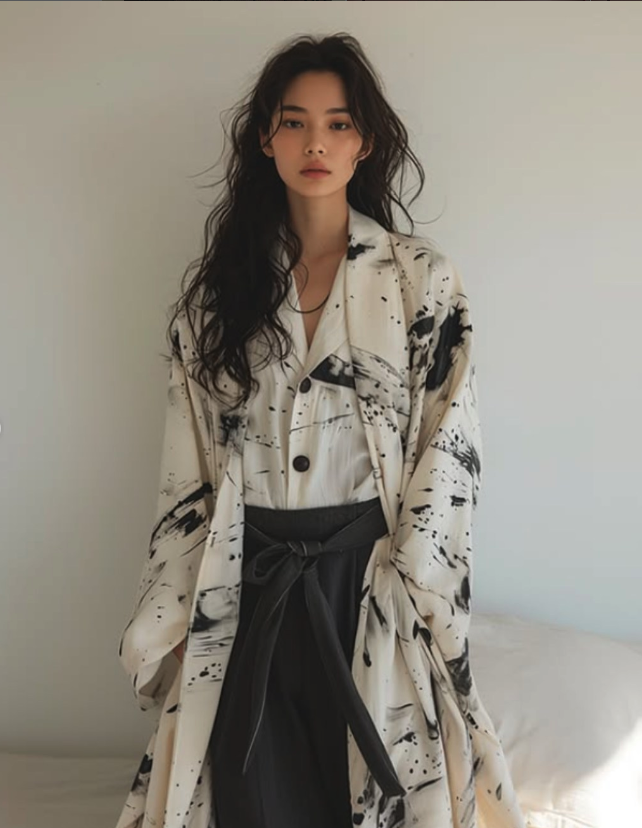
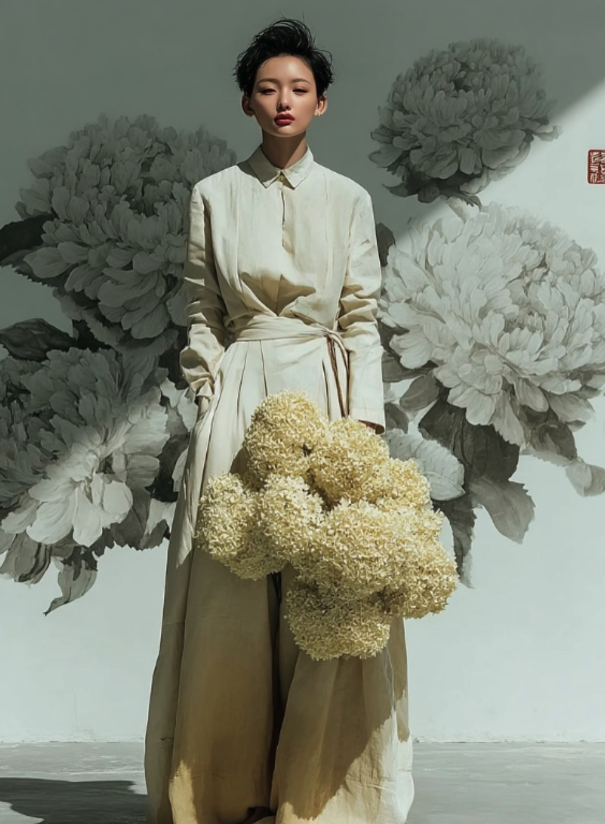
An art collector in New York wears cherry blossoms to a vernissage. In the streets of London, cranes wander across contemporary silhouettes on a kimono coat. A chrysanthemum pattern adorns the coat of a gallery visitor in Vienna. What connects these women are centuries-old silk threads that once graced weddings in Kyoto and accompanied tea ceremonies in Japan.
The symbols have remained the same: cherry blossoms for the transience of beauty, cranes for eternal love, chrysanthemums for imperial perfection and purity, waves as symbols of calm. Only their stage has changed: from the quiet tatami mats of Japanese houses to the pulsating world of the international art scene.
Behind this poetic transformation stands a woman who practices a centuries-old philosophy in her London atelier: Marina Furuta. In her hands, traditional, already-worn vintage kimonos become modern coats and jackets that carry centuries-old craftsmanship into the present. Her work exemplifies a new generation of couture, that of “Couture Régénérative.” It is a form of couture that respectfully transforms existing resources instead of consuming new ones and continues to tell the stories of the products.
As a Japanese woman with many years of international experience, Furuta recognized the growing Western interest in Japanese aesthetics and the simultaneous challenge of integrating traditional kimonos into modern wardrobes. Her design approach has been on the market since 2019, signed under the name FARUTA. The applied methodology stores a social, cultural, and historical archive within itself and guides a respectful transformation of vintage kimonos into contemporary, design-oriented fashion.
Mottainai – The Japanese Art of Never Throwing Away
Furuta’s work is deeply rooted in the Japanese concept of Mottainai (もったいない). This concept goes far beyond the Western understanding of sustainability and encompasses deep appreciation for all resources and living beings that contributed to the creation of an object: the time of the silkworm spinning its cocoon, the decades-long mastery of the weaver, the creative vision of the designer, and the loving care of a family heirloom over generations.
Thus, this philosophy recognizes in every kimono a complex cosmos of stories, skills, and emotional connections. To waste a garment would mean disregarding all these precious contributions. One can say that Furuta, in accordance with this life attitude, appreciates every aspect of a kimono’s cultural heritage and respectfully guides it into a new life phase.
FARUTA thus practices “Couture Régénérative” in its purest sense: the regeneration of existing craftsmanship for a new era. Instead of consuming new resources, existing textile treasures are reinterpreted with contemporary cutting and wearing techniques.
What Cranes, Koi, Chrysanthemums, and Cherry Blossoms Tell
The visual language of kimonos developed over a thousand years of Japanese textile history. During the Edo period (1603-1868), craftsmen refined their dyeing and weaving techniques to extraordinary perfection. Beginning with the 20th century and especially in the last two decades, traditional kimono production has been shrinking. At the same time, countless of these textile treasures lie stored in Japanese households. And this is exactly where Furuta’s mission begins.
Every kimono carries a coded message within it. These visual codes transform each kimono into wearable philosophy, a textile meditation on life, time, and beauty, representing its wearers.
The symbolism follows a sophisticated system that has developed over centuries. Koi carp (鯉) stand for perseverance and overcoming obstacles. It is a metaphor borrowed from a Chinese legend, according to which a koi that swims up a waterfall becomes a dragon.
Cranes (鶴, Tsuru) symbolize longevity and marital fidelity, as they enter lifelong partnerships. The Seigaiha wave pattern (青海波) represents calm, the eternal cycles of life, and hope for a peaceful future.
Chrysanthemum motifs (菊, Kiku) are the symbol of the imperial family. Chrysanthemums are closely associated with the Japanese imperial family, as they are its heraldic flower and the imperial seal of Japan shows a stylized chrysanthemum with 16 petals. The Japanese imperial throne is therefore also called the “Chrysanthemum Throne.” They stand for perfection and purity while also indicating autumn.
Cherry blossoms (桜, Sakura) embody the transience of beauty and recall the Buddhist teaching of Mono no Aware, the bittersweet awareness of the fleetingness of all things.


Eight Fabric Panels on the Way to a New Life
Respectful Modification
In contrast to mass production, each kimono is treated as a unique piece. Adjustments are made using traditional Japanese sewing techniques that allow the original structure and characteristic hem to be preserved. The length is typically shortened by 20-30 centimeters, the cut adapted for Western wearing habits.
Design Through Material
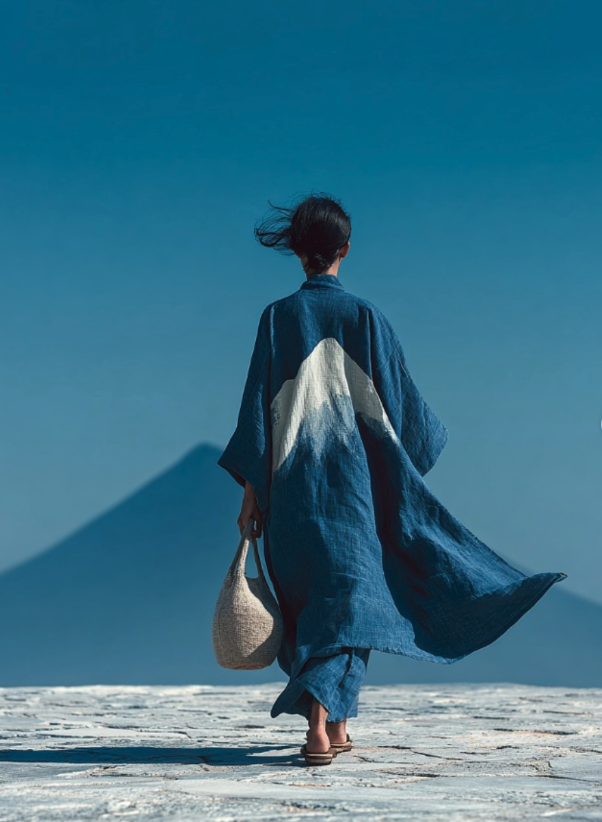
A fundamental difference from conventional fashion production: at FARUTA, the available material determines the design, not vice versa. A striking floral pattern on the back of a kimono becomes the central element of the new piece. The constraints of available material lead to minimalist designs that emphasize the natural beauty of the historical silk.
Zero-Waste Principle
After modifications, fabric remnants remain that are completely reused. These become functional bags, the so-called “Furoshiki bags” (風呂敷バッグ), which serve for storage while simultaneously creating an emotional connection between the new garment and its original form.
From Wedding Dress in Kyoto to Gallery Visit in Manhattan
The kimonos that Furuta uses were once sewn for special occasions—for weddings, tea ceremonies, or New Year’s celebrations. Through her transformation, they receive a new function in a different time, for different people, in different cities. The silk threads that perhaps once adorned a ceremony in Kyoto are today worn by an art lover in London or a collector in New York.
This geographic and temporal migration gives each piece an additional dimension with special meaning. For this innovative and almost philosophical concept in the form of a FARUTA kimono weaves the original symbolism of its existence with the story of its journey through different hands, different cultures, and across continents.
Thus, the kimonos transformed by the designer become enriched with additional symbolism beyond their speaking designs. Her work shows how contemporary fashion can preserve history while simultaneously writing new stories.
The story of each FARUTA coat is the story of continuous metamorphosis: silk threads that have taken different forms over centuries, dressed different people, and accompanied different moments. In Furuta’s hands, they continue their journey as living witnesses of a culture carried into modernity through respectful innovation. With this philosophy as a basis, garments emerge in her London atelier that continue a new chapter in the millennia-old history of Japanese textile art.
Each upcycled and newly composed piece carries the DNA of its original purpose while simultaneously gaining new relevance in the globalized world. The cherry blossoms on a coat still speak of transience and beauty, cranes of longevity, chrysanthemums of perfection and purity, waves of calm. The places where they do so have changed: Furuta’s designer kimonos tell these stories in the streets of London, the galleries of New York, or the cafés of Vienna. Each kimono in its second or third life phase is proof that beauty is timeless. It sometimes just needs a new form to unfold its zeitgeist-appropriate effect in the new epoch.
Similar Articles
Savile Row: One Block of Mayfair, Two Centuries of Bespoke Tailoring

The Caliber of the Deep: Blancpain and the Ocean Photographer of the Year 2026

German Jewellery Market: Jörg Gellner Sells His Pearl House to the Dettinger Group
