Nairobi Fashion Week 2026: Decarbonize and the Material Future of African Fashion
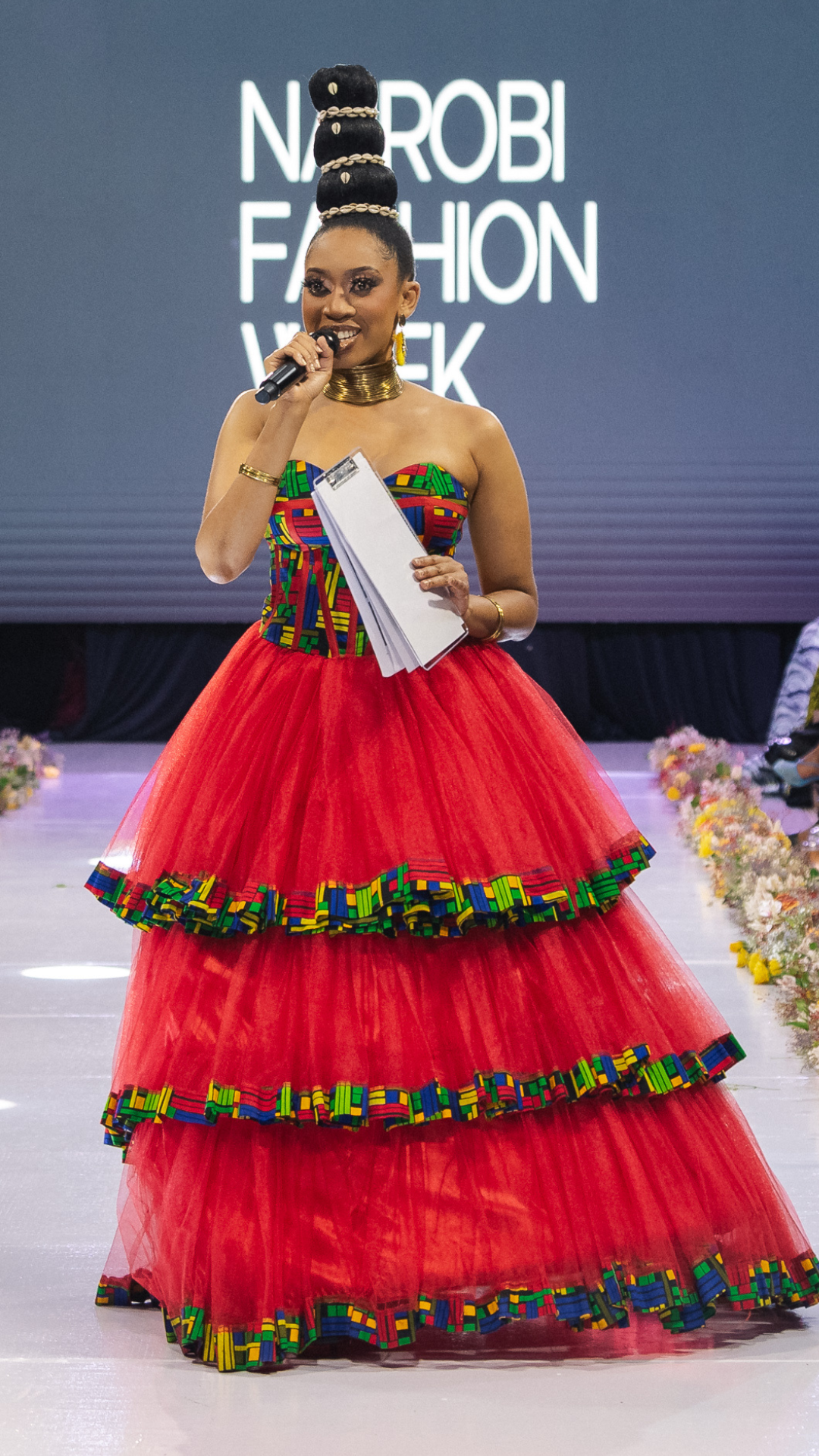
Nairobi Fashion Week Season 8 was held from 28 to 31 January 2026 at Sarit Expo Centre in Westlands under the editorial title Decarbonize. Founder and Creative Director Brian Kihindas, who opened Nairobi Fashion Week in 2013 inside the Hilton Nairobi, used the eighth season to name the continental position that established Kenyan and East African studios already operate. Angela Wambui carried the season as MC across four nights of runway, two days of editorial conversation under the Thread Talks programme, and a curated launch at Matteo’s Restaurant in Karen.
In Nairobi, Decarbonize read less as a seasonal theme than as a description of an operating system. The strongest studios did not present sustainability as a surface language. They showed how textile waste, organic cotton, handwork, small batch production and social enterprise structures already shape the way fashion is made, trained, sourced and finished across parts of the East African design economy.
The eighth season produced three structural signals for the future of African fashion.
The first signal: regenerative practice in Nairobi was visible as the working condition of established social enterprises and supply-chain organisations, with the editorial title naming what already operates across Kenyan and East African studios. The second signal: upcycled material crossed from salvage narrative into primary material for couture-level finishing, with Rialto’s upcycled denim and Maisha by Nisria’s ASILI collection treating waste streams as the legitimate basis of architectural construction. The third signal: the runway gathered designers from Kenya, Nigeria, Sri Lanka, France, Mali, Germany and the United States in a convergence that registered as continental gravity at scale, with Nairobi positioned as the destination.
Kihindas put the editorial argument to the press in two registers. To TTYBrand Africa ahead of the season, he framed the title in measured language: “Decarbonize challenges designers and audiences to think about how fashion impacts the planet. We want to promote creativity that respects communities, resources, and the future.” Speaking to Africanews on the runway, he sharpened the case in the African register: “When you come down here to Africa, we are very sustainable. We use sustainable fabrics in developing our collections and pieces, but the message that comes out of here, out of home, out of the home of the unit, is for us to decarbonise.” A second sentence to Africanews placed the title inside global accounting: “Fashion is the second emitter of global carbon emissions. We have to think about it critically.”
Decarbonize as Working Condition
The studios on the Westlands runway operate as continuing social-enterprise and supply-chain organisations, and their daily method produces the regenerative position the title named. Maisha by Nisria, founded by Nur M’Nasria and based in Gilgil, runs as a social enterprise that trains and employs young women from vulnerable communities in the Rift Valley, sourcing discarded textiles from flea markets, wholesalers and recycling factories and finishing them into one-of-a-kind clothing. The studio has been recognised by The Guardian, Vogue Business and Al Jazeera. Tausi Conde, the studio’s Head of Design, summarised the working method to The Guardian in a single sentence: “You can use anything and everything to make something interesting.” The sentence describes how the studio operates from Monday morning through Friday afternoon. The runway version made the operation legible.
Lucy Rao runs the same kind of organisation at industrial scale. She founded Rialto Fashions in 1988, sits as Co-Director of the Kenya Fashion Council and runs the Pamba Mali Organic Cotton Collective, which produces certified organic cotton for Kenyan and East African manufacturers. Her runway position was settled before the lights came up. Speaking to Africanews on the floor, she placed her work inside the wider continental argument: “Fashion is one of the biggest polluters of the planet. What better way to pass the message than using a platform like Nairobi Fashion Week.” A cotton supply collective and a couture house under one principal: that is the structure Decarbonize made visible. The title named what was already operating across three decades of Rao’s working life.
THE LOOKBOOK: Twelve Studios, One Editorial Title
The Lookbook reads Nairobi Fashion Week Season 8 through the working methods of twelve studios. Under Brian Kihindas’s editorial title Decarbonize, each label brought a different material position to the runway: upcycled cotton, organic supply, denim reconstruction, Bogolan textile, linen, leather, beadwork, hand embroidery, streetwear, small batch tailoring and social enterprise practice.
Together, the collections described a fashion system in which material is no longer treated as surface. It becomes evidence of origin, labour, community, reuse and technical discipline.
Photography by Jenkins Kuyoh.


Rialto Fashions / Lucy Rao
Base: Nairobi, Kenya
Material Position: Couture level denim reconstruction, organic cotton supply, long term Kenyan fashion infrastructure
Season 8 Reading: Lucy Rao’s Rialto Fashions brought thirty eight years of Kenyan couture practice into the Decarbonize frame. Her Season 8 contribution worked with upcycled denim and sharp architectural tailoring, while her wider role through the Pamba Mali Organic Cotton Collective connects the runway to certified organic cotton supply.
Why it matters: Rialto is structurally central to the article. Lucy Rao embodies the link between couture house, supply chain work and fashion governance. Her contribution shows that Decarbonize is already operating inside Kenyan fashion infrastructure: in material sourcing, in cotton systems, in pattern cutting and in long term institutional work.


What the Lookbook makes visible is a system rather than a sequence of shows. Nairobi Fashion Week Season 8 brought together designers working across couture, streetwear, craft, organic cotton, upcycling, leather, beadwork, linen and handwoven cloth. The shared signal was clear: decarbonization in fashion begins where material, labour and origin become part of the garment’s visible intelligence.
Upcycled Material as Couture Primary
Across the four nights, the strongest collections treated waste-stream textile as legitimate primary material for skilled finishing. Maisha by Nisria walked the ASILI collection, with structured upcycled-cotton garments cut from textile remnants the studio sources continuously through its Gilgil supply chain. Bellafricana’s coverage described the collection as exploring “texture and materiality, weaving together denim and unexpected fabrics into cohesive storytelling.” The cotton itself entered the studio carrying the marks of its prior life and left the runway as garments whose pattern discipline read as primary couture. Rialto’s contribution sharpened the same argument. Lucy Rao’s Season 8 collection took upcycled denim through couture-level finishing built up over thirty-eight years of pattern-cutting, with sharp cuts and architectural tailoring resolving familiar material into new construction. This is what Couture Régénérative reads like at industrial scale on the African continent.
Molivian, founded in 2021, walked patchwork constructions assembled from textile waste streams, with the studio’s working process organised around what arrives at the studio door. Studio Lola brought minimalist knitwear made by fair-trade cooperatives across Kenya. VAST Made by Africa walked architectural silhouettes anchored in West African handwoven cloth and produced in short runs. The MOYO Store added garments cut from African prints, upcycled fabrics and organic linens, finished in Nairobi artisan workshops. Each studio carried its own version of one operating principle: that finishing discipline now travels with material whose history is part of the construction.
The lineage runs deeper than upcycling. Kitukizo opened the question of coastal Suaheli memory through fluid linen silhouettes in soft yellow, brown and white drawing on Kilifi’s textile inheritance. John Kaveke, who launched his menswear label in 1999 and has shown at New York and London Fashion Week, presented what FAB L’Style described as “a dialogue between Maasai heritage and Japanese precision.” The continental textile economy that walked across these collections is one in which heritage and waste-stream material both arrive at the studio as primary, with the discipline of cut applied equally.
Similar Articles
The Return on Repair: What Circular Fashion Pays Back to LVMH, Gucci and Patagonia

What Touches the Skin: Where Luxury Fibres Come From
Lotta Ludwigson: The LUMA Principle