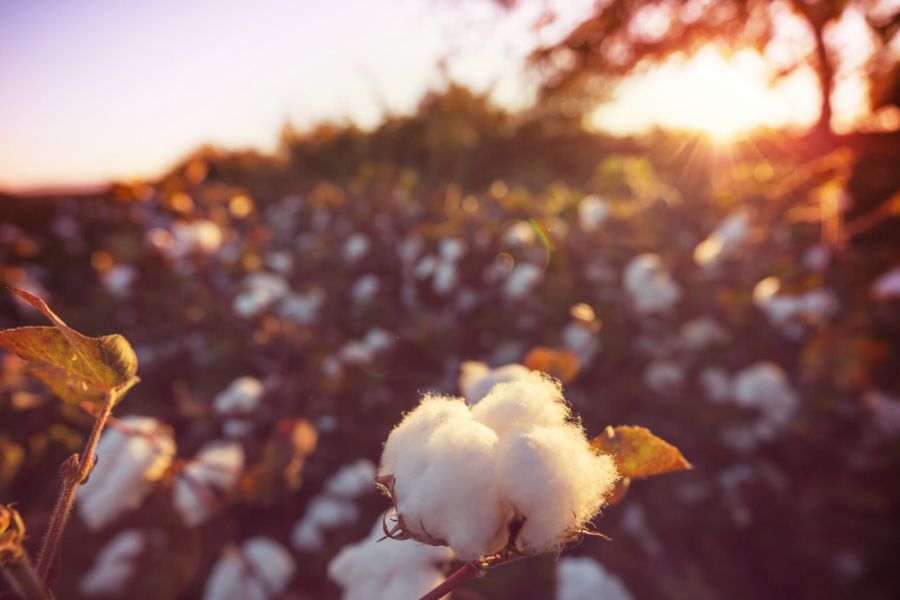
From Fibre to Skin: Inside Remei’s Start of Life Cotton
The story of Remei begins before cotton becomes fabric. It begins with farmers, soil, seasonal knowledge, purchase guarantees and a form of traceability that is built from the raw material onwards. Marion Röttges in conversation with The Silent Luxury Magazine calls this Start of Life thinking. It reads textiles from the point where their value first takes shape.
A Field That Knows the Moon
The origin of Remei AG sits in a conversation that took place in India in the early 1990s. The farmers Röttges describes from those first years were already facing a structural absurdity: they were spending more money on agrochemicals than the cotton they grew with those chemicals was worth at market. The question that followed was operational. What if the chemicals were removed? What if the farmers returned to the knowledge they had used before industrial agriculture arrived? Nobody had a name for it yet. The word organic did not yet apply. The farmers went back to what they knew, and Remei gave them something they had not had before: a partner who promised to buy the cotton.
That promise has held for thirty years. Remei now works with around four thousand smallholder farmers across India and Tanzania, through two subsidiary companies it owns on the ground. The farmers receive purchase guarantees before the season begins. They receive a premium above local market price for the extra effort that certified organic production demands. Remei manages the entire supply chain from there, through a network of thirty-two industrial partners, from the spinning mill to the finished textile.

What Start of Life Cotton Means
Start of Life cotton describes a textile system that begins with the raw material, the farmers, the soil and the relationships that make traceability possible from the field onwards. In Remei’s case, this means organic and biodynamic cultivation, long term purchase commitments and a supply chain documented before the fibre reaches the spinning mill.
What the Lunar Calendar Makes Visible
The biodynamic certification that Remei is now additionally pursuing in India formalises something that was already there. “The farmers plan according to the lunar calendar,” Röttges said in conversation with The Silent Luxury Magazine. “It is the cultural link. It is how they have always worked.” The cotton that grows this way looks identical at the spinning mill to cotton grown any other way. What the biodynamic certification documents is the knowledge underneath it: the timing, the soil care, the relationship between the crop and the conditions it grows in.
The conversion from conventional to organic farming takes three years, during which the soil rebuilds and the certification is earned. Remei commits to buying the cotton for five years. That commitment is not a marketing gesture. It is the condition that makes the conversion possible at all. A farmer who cannot be certain their cotton will be bought in three years cannot afford to stop using the inputs that conventional buyers require.
Two Countries, Two Stories
Around eighty percent of Remei’s cotton today comes from Tanzania. The Tanzanian story, as Röttges tells it, carries a different energy from the Indian one. “In India it is very culturally rooted,” she said. “In Tanzania there is a real awakening, a real boost. The farmers are developing.” The landscape-level regeneration Remei is pursuing in Tanzania goes beyond the individual farm. It looks at the water, the soil, the biodiversity, the way the farming community lives in the broader landscape. A cotton-growing region, read this way, is not a collection of individual fields. It is a connected system that either recovers or degrades together.
Both stories share one moment that Röttges returned to during the conversation. She described scanning the QR code on a finished Remei garment while standing with the farmers in India and Tanzania. “I show them: this is how it works. You are in here too.” Her word for what she saw in response was precise. “I always experience this pride. The producers and farmers find it truly wonderful to be part of a transparent supply chain, to be seen.”
The Reframe of Language
In conversation with The Silent Luxury Magazine, Röttges turned the standard vocabulary of the industry inside out. “Transparency is the beginning of everything,” she said. “The end goal sits elsewhere.” The German word Rückverfolgbarkeit, which translates directly as back-traceability, troubles her. “Traceability only functions when you have built it from the very beginning, from the raw material onwards. Then it becomes the result, rather than the great goal.”
A few minutes later she said it more simply. “I personally believe we have also to lead the discussion of Start of Life. Where does the textile come from, where does the raw material come from? Who are the people growing it?” The shift in direction matters. Most of the industry begins at the finished garment and works backwards through documentation. Remei begins at the seed and lets the documentation accumulate forwards as the fibre travels.
A Mini-Mini-Niche, Held for Thirty Years
Röttges is direct about scale. Organic cotton stands at one to three percent of the global cotton fibre volume. “We have been working in a mini-mini-niche for thirty years,” she said. The story of the past year is that the niche is deepening. Biodynamic certification in India. Landscape-level regeneration in Tanzania. Living wages being implemented across the supply chain. Each step goes further into the ground rather than wider across the market.
“Naturfasern sind ein Geschenk,” she said at one point in the conversation: natural fibres are a gift. The figures in the industry make the word gift sound improbable. Ninety percent of global textile production is now synthetic. The share of natural fibres in the textile sector has never been smaller. What Remei has held for thirty years is the thread back to a different arrangement: one where the fibre comes from the earth, through the hands of specific people, documented every step of the way.
What the LUMA T-Shirt Makes Visible
The cooperation between Remei and Charlotte Piller of Lotta Ludwigson produced one specific object that makes the whole architecture visible. The LUMA T-shirt, developed together, is made from Remei’s organic cotton, sewn with cotton thread rather than polyester, and traceable via QR code to the origin of the fibre. The LUMA shirt by Lotta Ludwigson gave this system a visible form. Remei’s work shows where that form begins: with cotton, farmers, soil and a supply chain built from the field onwards.
When Röttges first encountered the LUMA Principle — the idea that luxury is the visible result of how something has been made, who has made it and what relationships have shaped it — her response was direct. “It really caught me, because I told myself, this is exactly the essence. It is not a product. It is really the principle.” Read the full article: https://the-silent-luxury.com/lotta-ludwigson-luma-organic-cotton-tshirt/
Start of Life, applied to a T-shirt, also opens a door Röttges is already thinking through. “I would like to make pyjamas from this. We could address hotels with it, or retreats. Places like South Tyrol.” In that setting, traceability would no longer remain inside a fashion object alone. It would enter the guest room, the bed and the intimate rituals of rest. A guest in a design hotel in the Dolomites, in a pyjama made from biodynamic Indian cotton, scans the QR code from the bed. The chain runs all the way back.
In Tanzania, where around eighty percent of Remei’s cotton grows, the farmers are, in Röttges’s own words, “in a real awakening, a real boost.” In India, the lunar calendar has guided the sowing for as long as anyone can remember. The cotton that travels from both places into a finished garment carries the ground it came from. The QR code on the label is the shortest possible distance between the two.
A textile touches the skin at the end of a long chain of decisions. In Remei’s system, that chain begins with the seed, the field, the farmer and the guarantee that makes organic cultivation possible. This is why Start of Life cotton matters for luxury. It shifts attention from the finished fabric to the relationships that allow quality to exist before it becomes touch.
In conversation, Remei’s Marion Röttges traces the same cotton from field to skin. Read the full interview, The Pyjama That Starts in the Field.
Similar Articles
Global Fibre Production Hits a Record 139 Million Tonnes, and the Growth Is Fossil

The Four Seasons and the Crown: Rolex Takes Its Daytonas to Auction

2.4 Billion Swiss Francs and a Narrower Truth: The Swiss Watch Rebound