Tag: economy

Is Luxury Losing Its Aura? The Disenchantment of Desire

Luxury brands are losing relevance in 2026 because they dismantled the conditions under which desire can exist. Three structural mechanisms drove this process: the outlet-isation of perception, elevated frequency and the loss of creative distance.

When luxury objects become available everywhere, when new collections arrive before previous ones have been absorbed, and when brand identities are negotiated in public rather than protected behind closed doors, the mystery that historically generated desire dissolves. The brands losing relevance in Q1 2026 are those that made these decisions systematically during the boom years of 2021 to 2023.

Why Luxury Brands Are Losing Relevance in 2026

There is a quality that certain objects possess which cannot be manufactured directly. It can only be cultivated, protected and allowed to accumulate over time. Walter Benjamin called it aura — the singular quality of presence that belongs to an original rather than a reproduction, to something that exists once, in a specific place, under specific conditions. Luxury borrowed this concept without naming it. The closed ateliers, the controlled releases, the deliberate distance between the making and the market — all of this was aura management.

The question that Q1 2026 forces into focus is whether the major luxury conglomerates have spent the past decade systematically dismantling the conditions under which aura can exist — and whether the financial consequences of that dismantling are now visible in the earnings reports that sent markets into double-digit losses.


How Over-Distribution Eroded the Relevance of Luxury Brands

The mechanics of relevance erosion are precise. An object carries distinction when it is genuinely difficult to obtain. The difficulty may be financial, geographic, temporal or social — but some form of genuine resistance between the buyer and the object is necessary to sustain desire. When LVMH and Kering expanded their distribution networks aggressively during the boom years of 2021 to 2023, they reduced this resistance at every point. Gucci became available at every international airport. Louis Vuitton opened flagships in every major city on every continent. The airport store, the duty-free counter, the global e-commerce platform — each of these is a mechanism for removing the friction that generates desire.

Federica Levato of Bain & Company described the result with precision: the customer feels deceived. The object they purchased for its distinction became, through the brand’s own distribution decisions, indistinct. The price remained. The relevance did not.

The outlet-isation of perception is the structural process by which this happens: a symbol loses its charge through overexposure, and the aspirational middle that depended on that charge loses its reason to exist. For the full context of how this distribution dynamic contributed to the collapse of the aspirational middle, the analysis of why the luxury middle is collapsing maps the sequence in detail.

Why Elevated Frequency Is Destroying Luxury Desire

The second mechanism of relevance erosion is frequency. Desire requires time — the time of making, and the time between appearances. An object that arrives every few weeks in a new iteration cannot accumulate the temporal weight that makes it matter. The permanent drop, the capsule release, the collaborative edition that arrives before the previous collaboration has been fully absorbed — all of these are mechanisms for replacing depth with novelty.

As Eva Winterer, Publisher of The Silent Luxury, observed: the houses with a future replace the concept of the collection with the concept of the wardrobe. They are selling time. The wardrobe concept restores the temporal dimension that elevated frequency removes. An object designed to remain relevant across decades carries more inherent desire than one designed to generate conversation for a fortnight.

The Q1 2026 results confirm this structurally. Brunello Cucinelli, whose creative philosophy is built around enduring relevance rather than seasonal novelty, grew fourteen percent organically. Gucci, whose creative direction has shifted multiple times in recent years in search of a new cultural register, declined eight percent. The categories benefiting most from this temporal logic — jewellery and niche fragrance, where value is material and independent of the seasonal cycle — are the strongest performers in Q1 2026. Givaudan’s Fine Fragrances segment grew 9.6 percent at constant exchange rates in the same period.


How the Loss of Creative Distance Dissolved Luxury’s Mystery

The third mechanism is the most subtle and the most consequential. Luxury historically derived its power from what remained unseen: the process of creation, the decisions of the atelier, the criteria by which objects were accepted or rejected before they reached the market. The mystique was not a communication strategy applied on top of the product. It was a structural property of how the product came into existence.

Digital transparency has systematically dissolved this structure. The departure and arrival of creative directors is now a public event, commented upon in real time across every platform simultaneously. The repositioning of a brand’s aesthetic is negotiated openly, with the market watching and the critics responding before the first collection has been shown. The search for a new identity — which every living brand occasionally needs to undertake — becomes, under these conditions, a public failure of confidence.

As Eva Winterer observed: it seems almost like a desperate search for the truth of one’s own identity, for a brand core whose momentum has been lost and cannot be recovered. A luxury brand that stages its process of self-discovery in public, without a clear strategy, has in her view already lost. Visible desperation is the opposite of spell.

The brands at the upper end of the hourglass have maintained this discipline precisely. Hermès does not explain its creative decisions. Brunello Cucinelli does not engage in public repositioning. The silence is the strategy. For the full analysis of how the three causes of disenchantment have expressed themselves in the Q1 2026 results, the structural diagnosis of the luxury market provides the complete framework.


What Losing Relevance Means for Luxury Brand Communication

The loss of relevance has direct consequences for how luxury brands communicate. A brand that has eroded its own distinction through over-distribution and elevated frequency cannot restore it through communication alone. The communication of desire is not desire. Campaigns that announce exclusivity in widely distributed media are structurally contradictory. Collaborations designed to generate cultural relevance through association with artists or celebrities accelerate the very frequency dynamic that erodes desire.

The restoration of relevance requires structural decisions: controlled distribution, longer creative cycles, deliberate silence at moments when the instinct is to communicate. These decisions are expensive in the short term and invisible in the quarterly report. They are precisely the decisions that the Luxury Recalibration Blueprint 2026 examines in the context of what brands can practically change in their production, distribution and communication architecture.

The houses that retained their relevance through the boom years did so by making decisions that appeared conservative at the time. In Q1 2026, those decisions are expressing themselves as growth.

Frequently Asked Questions: Why Are Luxury Brands Losing Relevance?

The following questions address the structural loss of relevance in the luxury market in 2026, drawing on Q1 2026 market data, The Silent Luxury’s structural analysis and the production philosophies of the houses growing in the current market.

  • Why are luxury brands losing relevance in 2026?

    Luxury brands are losing relevance in 2026 because they dismantled the conditions under which desire can exist. Three structural mechanisms drove this process: the outlet-isation of perception, elevated frequency and the loss of creative distance. When luxury objects become available everywhere, when new collections arrive before previous ones have been absorbed, and when brand identities are negotiated in public, the mystery that historically generated desire dissolves.

  • Why do some luxury brands still hold their relevance in 2026?

    The luxury brands that retain their relevance in 2026 are those that maintained the structural conditions under which desire can exist: controlled distribution, long creative cycles and deliberate silence at moments when the instinct is to communicate. Hermès does not explain its creative decisions. Brunello Cucinelli does not engage in public repositioning. The silence is the strategy — and in Q1 2026, it is expressing itself as growth.

  • What is the outlet-isation of luxury perception?

    The outlet-isation of luxury perception describes the process by which a symbol loses its charge through overexposure. When Louis Vuitton is available at every airport and Gucci appears on every social media feed, the objects lose their function as marks of distinction. The buyer who purchased for distinction finds the object indistinct. The price remains. The desire does not. Federica Levato of Bain & Company described the result: the customer feels deceived.

  • How does elevated frequency erode luxury desire?

    Elevated frequency erodes luxury desire by removing the temporal dimension from the object. Desire requires time — the time of making, and the time between appearances. A permanent drop, a capsule release, a new collaboration before the previous one has been absorbed — each of these replaces depth with novelty. An object designed to remain relevant across decades carries more inherent desire than one designed to generate conversation for a fortnight.

  • Can luxury brands rebuild their relevance?

    Luxury brands can rebuild their relevance, but the process requires structural decisions rather than communication strategies. The communication of desire is not desire itself. Restoration requires controlled distribution, longer creative cycles and deliberate silence. These decisions are expensive in the short term and invisible in the quarterly report. They are precisely the decisions that distinguished the growing houses from the declining ones in Q1 2026.

Continue reading

Economy of Togetherness

An editorial by Eva Winterer, Publisher of The Silent Luxury, on craft, provenance, and a different idea of the future shaped by collaboration.

2026 began with many question marks, and those question marks are growing at a nearly exponential rate. The geopolitical disruptions of recent months, the trade conflicts, the pitting of markets and values against each other, mistrust as the new common language between countries and people who actually need each other: none of this can be set aside when thinking about business, industry, the future of markets.

And yet. Or perhaps precisely because of it.

In Bolzano, as a juror of the European Textile & Craft Award and as media partner with The Silent Luxury, I had the privilege of meeting entrepreneurs who ask these questions differently. Not: how do we protect ourselves? But: what are we building together? From Zetel in Lower Saxony, from Frankfurt, from South Tyrol, from Bisaccia in the heart of Campania, from Allariz in Galicia, from Vittorio Veneto in Veneto: entrepreneurs who have built their entire production logic on trust, on long-term partnerships with raw material suppliers, on craft that cannot be accelerated. What I take from these days is not only new perspectives on material and production, but above all the encounter with people whose work formulates an answer to the present without being driven by it.

Roberto Bottoli developed the coffee-ground dyeing process together with a local coffee producer, over years, until a dyeing technique emerged that works without synthetic chemistry and keeps the fibre fully recyclable. Heinz-Jürgen Gerdes purchased the machinery of an insolvent weaving mill in 2021 because he understood that what disappears cannot simply be rebuilt. Jessica Tartaglia limits her collection to six unique pieces per season, reading that limitation as the foundation of quality. All of them were honoured this year with the European Textile & Craft Award, a prize built since its founding on the principle these entrepreneurs have long been putting into practice: Better instead of more.

Maria Sebregondi, co-founder of Moleskine, expressed it in an interview with Chapeau: “The time of individuals is over. Of prevailing over others, of emerging at any cost. You either are open to collaboration and to an idea of a collective future, or you are not. Placing creativity at the center, and by creativity I mean curiosity, exploration, meaningful cognitive experiences, this attitude is fundamentally an attitude of openness and collaboration.” The thought touches precisely what the most resilient value architectures have always known: that building well means building with others.

That understanding has its own rhythm. It does not move in straight lines.

A river meanders. It finds its path through the landscape not in a straight line but through resistance. It deepens where stone gives way, widens where banks soften. This movement describes a form of intelligence that shows itself through adaptation. Markets meander the same way, and the Relationship Economy follows the same logic: it deepens where people are willing to stay longer, where trust develops, where the relationship extends beyond the moment of purchase.

This deepening is measurable. 78 percent of post-materialist consumers pay a premium of 30 to 50 percent for products that demonstrably last longer and can be repaired. The repair market is growing at 17.9 percent annually while the primary market holds at 2.4 percent. People increasingly understand themselves as custodians of objects that will be passed on. Patina, the visible marks of time, shifts from apparent flaw to proof: the material holds. The original decision was right.

Behind this lies a question the fashion industry has long avoided. BCG puts the annual loss of unused textile fibres at 150 billion dollars, 25 times the combined annual material procurement costs of the thirty largest fashion groups worldwide. Less than one percent of these fibres is actually recycled fibre-to-fibre, because decades of blended fabrics optimised for short consumption cycles cannot be separated or recovered at the end of their life.

The entrepreneurs honoured this year by the European Textile & Craft Award give a very concrete answer to this question: they work with a single fibre, in its natural state, across the entire production chain, Merino wool spun, dyed and woven in Vittorio Veneto; casein fibre from surplus milk in Galicia; silk from Como, unmixed, without elastane. What connects these materials is the capacity to meander: to take time, to build quality through patience, and to return fully to the cycle at the end. Luxury in this understanding becomes visible through the depth of the relationship with material, origin and craft knowledge, and through the ability to make an object that sits, falls and holds in twenty years exactly as it does today.

There is so much that is positive in this world, invisible in the noise of the narratives built around conflict and rivalry. The answers to the questions the present is asking usually begin small. In a collaboration between a coffee producer and a wool mill in Veneto. In the moment when a fellow juror from a different discipline asks a question that shifts the entire frame. In the decision to inscribe the rhythm of a machine into the quality of a thread.

What if we focused more often on what connects us rather than on what divides us? The river meanders, and in doing so, it deepens.

Eva Winterer is Publisher of The Silent Luxury and writes on craft, provenance, material intelligence and long term value creation. She serves as media partner and juror for the European Textile & Craft Award.

Further reading on craft, provenance and value creation

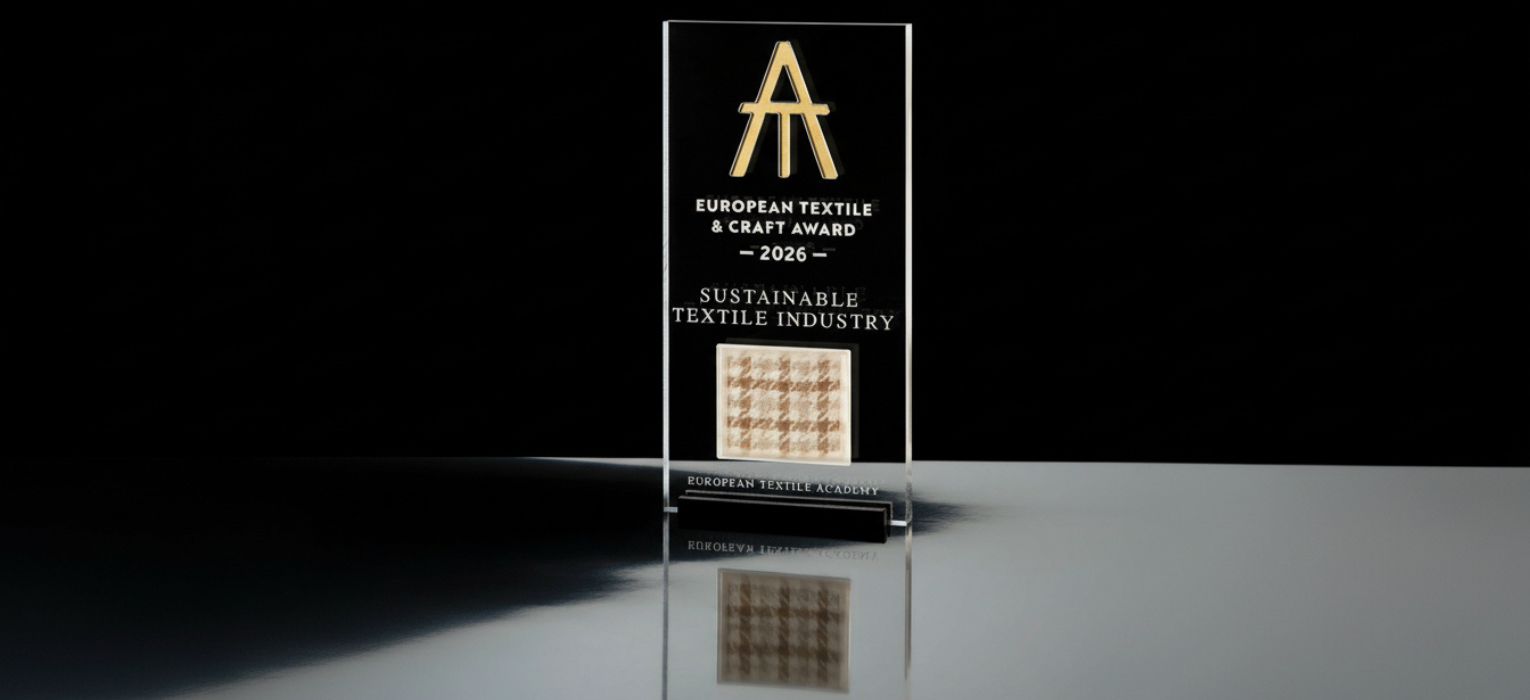
  • The European Textile & Craft Award 2026 trophy features a Lanificio Bottoli fabric sample dyed with coffee grounds, marking the material focus of this year’s Sustainable Textile Industry award.

    Inside the Trophy: Better instead of more

    From coffee grounds to trophy: What the European Textile & Craft Award 2026 says about the future of European textile expertise.

    Read more

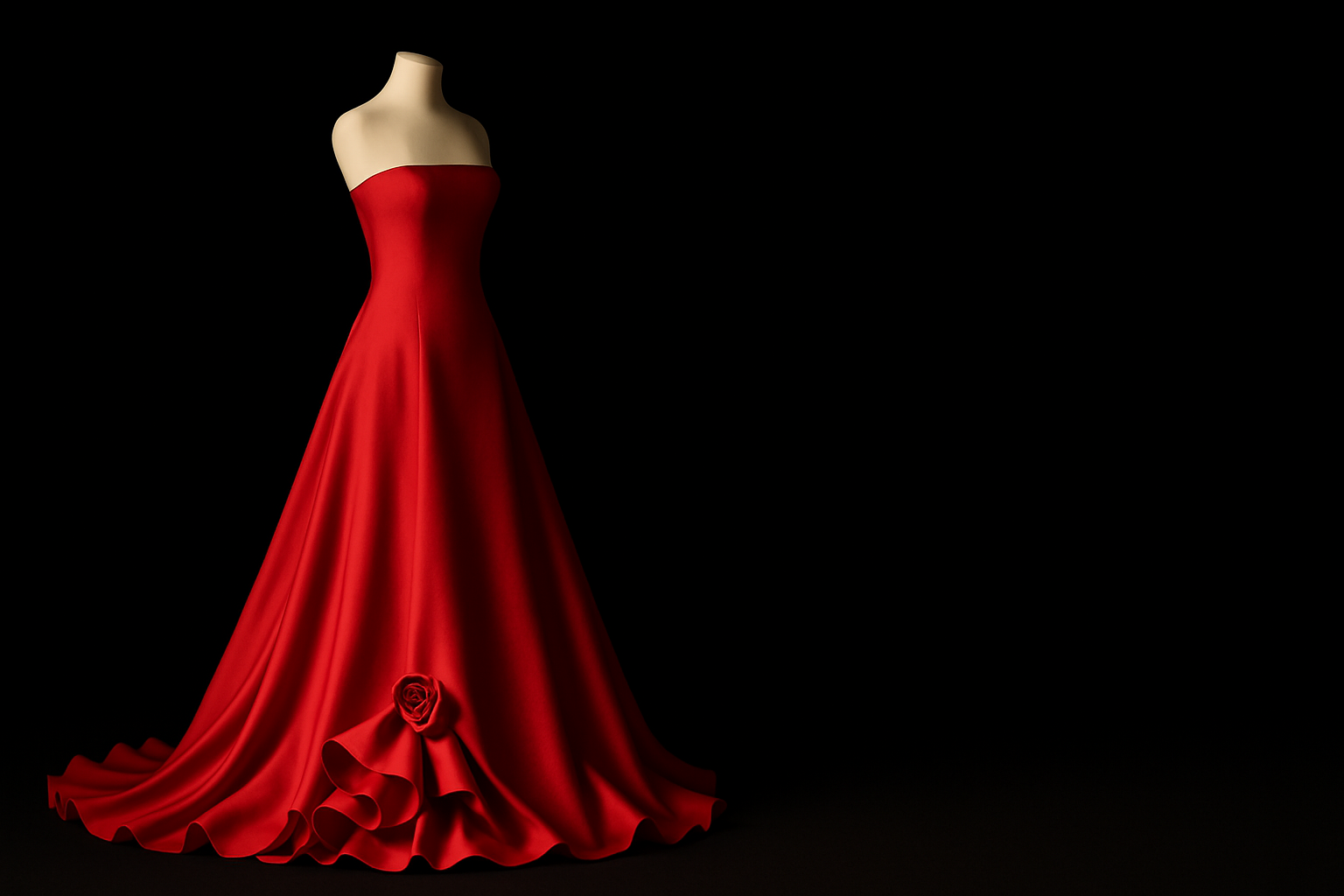
  • The poetry of red: An Italian Alta Moda masterpiece symbolizing a new Renaissance, standing as a testament to cultural soul and value-driven quiet luxury amidst the shifting hourglass economy.

    The Italian Fashion Industry: Between the Hourglass and a New Renaissance

    Six centuries after the first Renaissance, Italy stands at a crossroads once again. In an era where the middle market is fading and luxury is being redefined, the industry must choose: stay trapped in globalized strategies or embrace a new era of cultural substance and value-driven soul. It is time for a second awakening.

    Read more

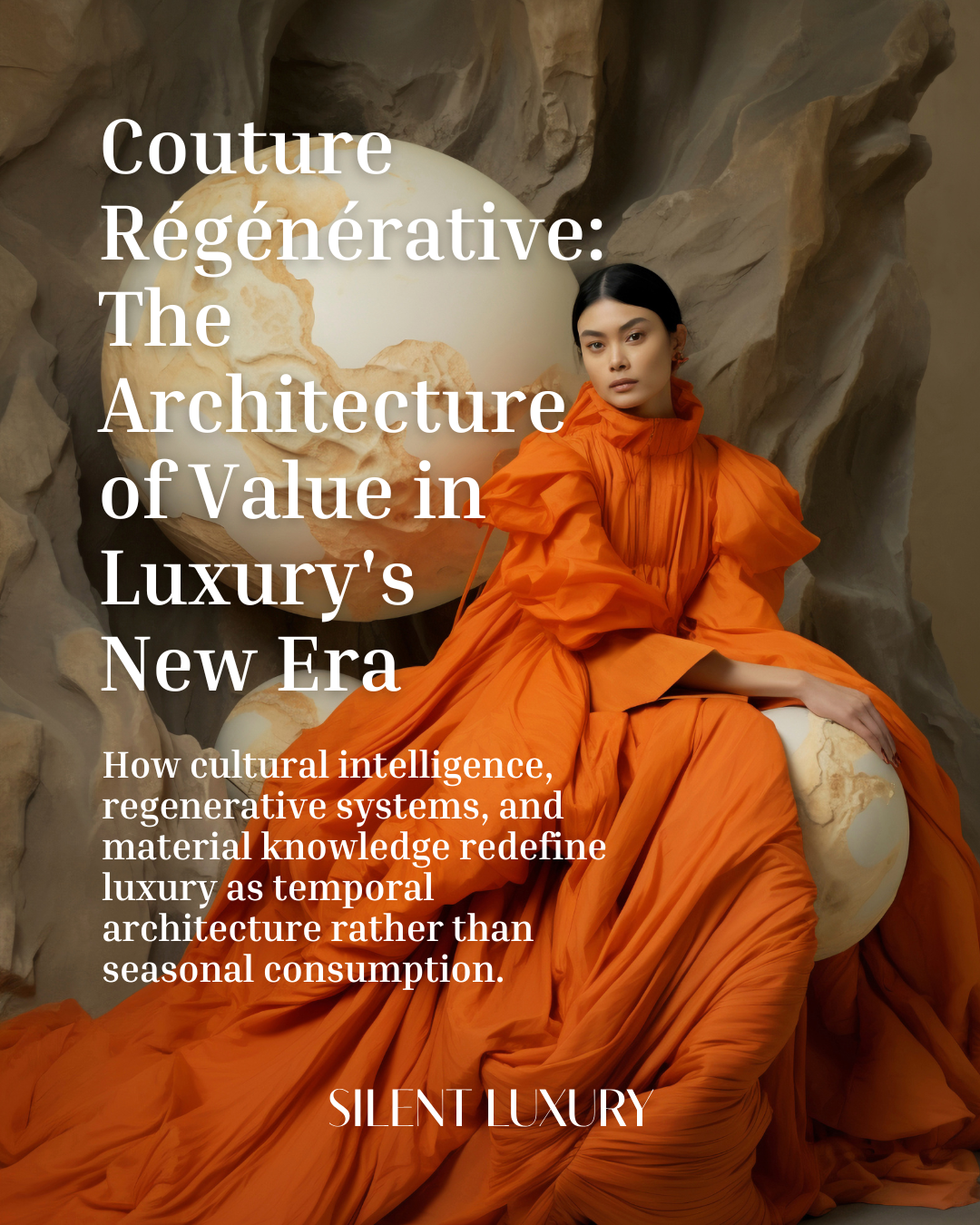
  • Couture Régénérative: The Architecture of Value in Luxury

    How cultural intelligence, regenerative systems, and material knowledge redefine luxury as temporal architecture rather than seasonal consumption.

    Read more

Questions shaping a different future

The ideas behind the economy of togetherness become clearer when read through the questions shaping craft, provenance, collaboration and long term value creation today. These answers bring together the themes at the centre of this editorial and the production logics visible in the European Textile & Craft Award 2026.

  • What is the economy of togetherness?

    The economy of togetherness describes a way of thinking about value creation through collaboration, trust, craft knowledge and long term relationships across the production chain.

  • Why does collaboration matter in craft and textile production?

    Collaboration matters because material quality, resilient sourcing and long term production knowledge rarely emerge in isolation. They grow through continuity, shared expertise and trust.

  • What does the European Textile & Craft Award reveal about the future of value creation?

    The award highlights makers who work with patience, provenance, natural fibres and repairable structures. It points to a different idea of the future, shaped by depth, cooperation and lasting quality.

Continue reading

The Strategy of Control: Swiss Watchmaking’s Resilience in Crisis

The future is muted growth: How verticalization and geographic diversification become the keys to stability.

Looking into 2026, the Swiss watch industry has prepared itself for a future defined by Muted Growth and a radically Diversified Geographic Architecture. The era of relying on singular, dominant markets is over. This strategic outlook is the direct consequence of the year 2025, a period of hard-headed pragmatism where brands traded external expansion for internal sovereignty. The full extent of the “Strategy of Control”—the verticalization of supply chains, the stringent cost discipline, and the shedding of complexity—explains precisely why the industry is now structurally prepared to navigate a multipolar world. The following analysis details the crucial decisions that led to this fundamental reordering, using the pressures of 2025 (weakened demand, swelled inventories, new trade barriers) as a necessary explanation for the new 2026 reality.


Keep Calm and Carry On: The New Mood of Pragmatism

The mood in the industry? Pragmatic. No euphoria, no despair—simply realism. The pressure to constantly deliver novelties remains. But the mantra of “being present everywhere” has been retired. Instead: control costs, focus resources, hold the line.

The days when independent labels were celebrated as “the next big thing” are over. Since 2023, few new players have entered the market—aside from micro-brands and revived heritage names. The exceptions prove the rule: Purnell, an independent Geneva-based manufacturer in the high-end segment, went into liquidation in 2024. Various media outlets reported in February 2025 that Rolex had allegedly decided to discontinue the Carl F. Bucherer brand after 137 years.

Nevertheless, independent watchmakers show resilience. According to the Independent Watchmaking Report 2025, 60% of surveyed companies (mostly producing fewer than 10,000 watches annually) expect to sell more in 2025 than in 2024. The motto: Keep calm and carry on.


Pressure on the Ecosystem: The End of Expansion

To remain visible, fresh releases are essential. 82% of brand executives cite the introduction of new products as their top priority for the next twelve months. The brands’ answer: creativity. Colour, form, playfulness.


  • The Gelato Principle

    Norqain launched its “Ice Cream” watch this summer—pastel-coloured dials inspired by gelato. “We feel the need of our clients for some joy and carefreeness,” explains Ben Kuffer, Founder and CEO of Norqain. “We clearly see a trend for watches that are fun and different, some of which remind them of their childhood.”


    Oris presented the New Big Crown with colourful dials, Blancpain a Fifty Fathoms in pink. Even Chanel, traditionally fixed on black and white, ventured a limited J12 edition in blue.


    Yet the question remains: Is the Gelato Principle an economically viable answer to the crisis—or merely a tactical manoeuvre in an overheated innovation cycle? Can playfulness and colour actually rescue sales when purchasing power is under pressure and consumers are becoming more selective? Or will this aesthetic offensive be overtaken by the next trend wave in twelve months, while the industry’s structural problems remain unsolved? Innovation here means less technical precision than the attempt to purchase attention through visual signals—in a market that increasingly distinguishes between genuine substance and short-lived marketing.


    Form is also evolving. Patek Philippe introduced the Cubitus in 2024—a square design that stands out in a landscape still dominated by round cases. TAG Heuer revived the iconic Monaco.


    Simultaneously, heritage pulls: Panerai honoured a 1993 model with the Luminar Marina Militare PAM05218. Cartier brought back the Tank à Guichet, originally launched in 1928. Vacheron Constantin reactivated the 222 from 1977. Tiffany & Co. paid tribute to Jean Schlumberger’s Bird on a Rock brooch from 1965 in January 2025.


  • AI as Creative Partner

    The technological frontier now extends into the design atelier itself. Nearly one-third of executives (29%) plan to deploy artificial intelligence to support the creative product development process—a significant increase from 20% in 2023.


    AI is no longer used solely for content creation or efficiency gains. Brands are beginning to experiment: with algorithmic form-finding, with generative design processes, with AI-supported material simulation. The precision of the future is digital—even in the creative realm. Despite the cautious mood, more than half of brands target organic growth or expansion into new markets. M&A activity is dormant—growth must be cultivated, not bought.


    But the harsher reality also shows: 46% of brand executives cite cost reduction as a strong priority. In 2023, it was only 10%.


Consolidation and Verticalization: Strategic Retreat Inward

Retailers are fighting too. In 2023, all surveyed retail executives focused on e-commerce and digital channels, two-thirds on omnichannel. 2025? Different priorities.

Organic growth (60%) and optimisation of sales channels (53%) now top the list. Omnichannel is only relevant for 47%, e-commerce has dropped out of the top 5 entirely. Cost reduction climbed to 40% (2023: 11%). The shift is explained by market changes: consumers are returning to physical stores. The sweet spot for digital sales has been found—now other things matter.

This is visible on the streets. In March 2025, Les Ambassadeurs, a Geneva retail flagship since 1964, closed its boutique in Geneva. Zurich followed. Lucerne is expected to close by year-end. At the same time, O. Zbinden, another Geneva institution, announced restructuring into mono-brand stores. But not every closure signals retreat. Often it’s restructuring, consolidation. Watches of Switzerland Group closed several showrooms in the UK—but simultaneously opened the largest Rolex mono-brand store in London.


  • The Mono-Brand Push

    Brands increasingly prefer their own boutiques. Control over layout, training, customer experience, data. Audemars Piguet pioneered in 2017 and has since sold exclusively through its own boutiques. Others followed. In 2023, Rolex acquired Bucherer—one of the largest distribution networks brought directly under control.


    This structural shift hits independent retailers hard. Less foot traffic, fewer points of sale, tougher market conditions.


  • The Tourism Factor

    Adding to this: tourists are missing. Overall visitor numbers to Switzerland grew—Mexico increased by +114% in 2024 compared to 2019. But Asian tourists, particularly Chinese, are staying away. Overnight stays from China: -48%. From Japan: -38%. From Hong Kong: -32%.


    These customers were crucial for Swiss watch retailers. The strong franc exacerbates the problem. Less foot traffic, lower revenues, tougher competition.


The Rebirth of Independence: Resilience of the Small Players

The suppliers, the invisible backbone of the Swiss watch industry, are fighting hardest. They carry the Swiss Made label, preserve centuries-old know-how—and feel the downturn first.

Their priorities reflect the crisis: Cost reduction (74%) and new product development (61%) top the list. Nearly one-third cite cashflow improvement as an important goal.

How Have Suppliers Responded?

70%
Slowed investments
63%
Introduced short-time work (RHT)
57%
Cut permanent positions
43%
Eliminated temporary positions
27%
Diversified into other industries
3%
Stopped investments
3%
Not affected
Data visualization | The Silent Luxury

Accordion


Continue reading