
Tag: Luxury Market 2026

Local Soul: The Quiet Rise of Independent Luxury

The structural shift in the luxury market in 2026 creates significant room for smaller, independent luxury and premium brands. As the major conglomerates over-distributed, elevated frequency and lost creative distance, the conditions they had long held became precisely the conditions smaller houses had always built on: provenance, controlled scarcity, genuine craft and the depth of the relationship between maker and buyer.

From Guochao 3.0 in China to emerging local luxury in Africa and India, the same structural logic is taking shape across markets that the western luxury industry has long treated as secondary. Local Soul, defined as value rooted in a specific place, a specific knowledge and specific people, is what the buyers who have moved on from the conglomerates are now seeking. The demand was always there. The space to answer it is growing.

The Space That Opens When Magic Is Spent

The Q1 2026 results of the major luxury conglomerates tell one part of the story. The fuller part is found in the ateliers, the small houses and the independent brands that built their value proposition on something the conglomerates spent during their decade of growth: provenance, controlled distribution, genuine craft and the relationship with the buyer that makes an object matter across time.

As documented in The Silent Luxury’s structural analysis of the luxury market in 2026, sixty to seventy million luxury consumers have left the market since 2022. They left because the silent contract at the heart of luxury, built on superior materials, genuine craft, controlled scarcity and lasting worth, had been broken by the very houses that defined the category. When eighty percent of luxury market growth between 2023 and 2025 came from price increases rather than genuine value gains, the buyers who understood the difference between luxury as perception and luxury as discipline registered the gap and moved elsewhere.

Where they moved is precisely where smaller and independent luxury brands have been building all along. The structural disenchantment of the major conglomerates creates room for authentic alternatives: for brands that prove their value through daily decisions about material, production and the quality of the relationship they maintain with their buyers. As Eva Winterer, Publisher of The Silent Luxury, puts it: “The Q1 results are a starting point. Industrial over-extension creates room for brands whose value is real.”

This development reaches well beyond a European or western phenomenon. The same structural logic is taking shape simultaneously in China, India, Africa and the Middle East, in markets and cultural contexts that have each arrived at the same conclusion through entirely different histories.

The Silent Luxury Local Soul · Global Market Scale

Local Soul Geographies — Where Demand Is Growing

Market scale and growth rates across the new geographies of luxury value · 2025/2026

Market Growth Rates — Local Soul Geographies

South Africa LuxuryFastest growing MEA geography
+11.03% CAGR
MEA Luxury Overall2026–2031 projection
+10.6% CAGR
Wellness Real EstateGlobal · 2019–2024
+19.5% p.a.
Wellness Economy Globalvs. GDP growth rate
2× GDP
Guochao Market 2028Projected volume
¥3 Trillion

New Geographies Combined

€45Billion

MEA, India, LatAm, SEA — matching mainland China in scale. 2025.

Wellness Economy 2024

$6.8Trillion

Global Wellness Institute. Doubling since 2013. Projected $9.8T by 2029.

Chinese Consumers

70% prefer local

Domestic brand preference citing quality and innovation. Daxue Consulting 2025.

Sources: GWI Economy Monitor 2025 · Mordor Intelligence 2026 · Daxue Consulting · Research and Markets · © Silent Communications GmbH


What Small Brands Carry Into the Shift

The brands gaining ground in 2026 and beyond share a set of structural characteristics that are embedded in the architecture of how a house makes decisions, and that accumulate over years rather than being acquired through a rebranding strategy.

The first is provenance. Small luxury brands know where their materials come from, who worked on them and how. This traceable origin is an operational reality: a house working at limited scale makes visible decisions that a supply chain of industrial size obscures. In a market where buyers are actively applying what analysts call the investment check to every purchase, asking whether an object carries genuine value across time, traceable provenance has become the most credible answer a brand can give.

The second is frequency. A small house releasing two collections a year, building objects on order or producing in quantities dictated by the time the work actually requires, is structurally aligned with the desire economy that the major conglomerates spent years contradicting. “The houses with a future replace the concept of the collection with the concept of the wardrobe,” says Winterer. “They are selling time.” Objects whose meaning accumulates across years of use, repair and continuation.

The third is creative distance. The process behind closed doors. The finished piece that arrives without explanation or justification. A small house with deep conviction about what it stands for carries its identity in its production philosophy, its material choices and its pace. This is the creative distance that generates desire, and it is structurally available to every independent brand that stays true to its founding logic. As Winterer has observed: “Visible desperation is the opposite of spell.”

The fourth is the relationship. The ongoing connection between a house and the people who carry its objects through their lives. Small luxury brands, by definition, work at a scale where this relationship is real. The buyer who returns for a repair, who commissions a continuation of an earlier piece, who recommends the house to someone they trust: this is the Relationship Economy operating at the scale where it creates compounding value.
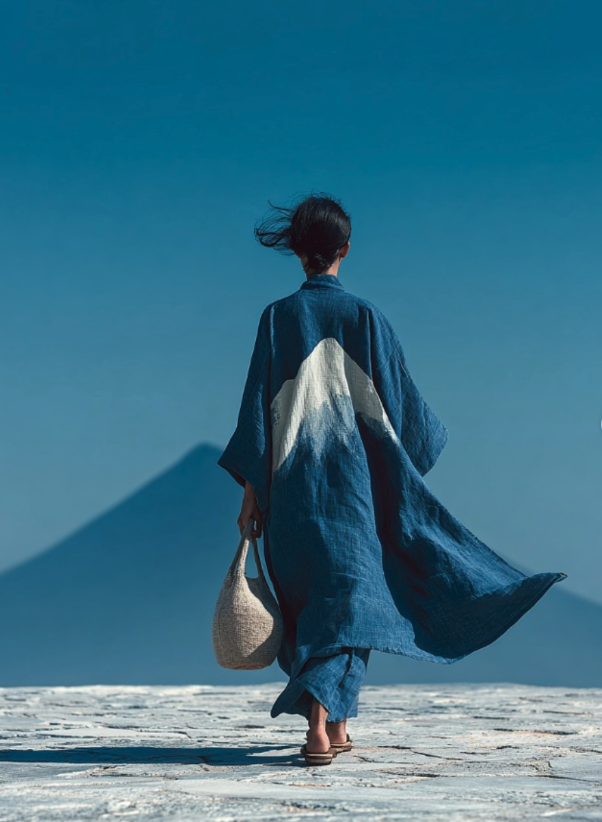
Where Landscape becomes the object: Objects that outlast the season they were made in — carrying landscape, knowledge and the specific hands that made them. FARUTA. This is what Local Soul looks like in practice. | Photo: Courtesy of Faruta

The Flight of the Cranes

FARUTA

Read more


China: Guochao 3.0 and the Cultural Confidence of Local Soul

China in 2026 illustrates the structural logic of Local Soul with particular clarity. What is happening there is a generational reorientation toward value rooted in cultural identity, and it is reshaping the luxury category from within.

Guochao (国潮), literally “national wave,” has evolved through three distinct phases that trace a deepening of cultural confidence in Chinese consumer culture. Guochao 1.0, emerging around 2011, focused on Made in China as a quality signal, a direct response to decades in which Chinese manufacturing had been associated primarily with export volume production. Guochao 2.0, taking shape around 2018, brought Chinese streetwear and brand collaborations to the centre of youth culture, with the Forbidden City’s consumer products becoming an unlikely symbol of the shift. Guochao 3.0, the phase now defining China’s luxury conversation in 2025 and 2026, goes deeper: it integrates traditional Chinese culture, history, aesthetics and high craft into contemporary consumer goods, with traditional knowledge forming the structural logic of the product rather than serving as surface decoration.

The numbers reflect the scale of this shift. Forecasts project the Guochao market to reach over three trillion yuan by 2028. Daxue Consulting research indicates that approximately 70 percent of Chinese consumers now prefer domestic brands, citing quality and innovation gains. Hub of China’s 2026 research identifies what analysts call the “Identity Filter” as the dominant psychological force in Chinese retail: consumers are buying to signal alignment with their values. This shift in consumer psychology maps precisely onto the structural movement The Silent Luxury has been documenting in western markets, the transition from aspiration-based consumption to value-based engagement.

The Silent Luxury Guochao 3.0 · China Local Soul

Guochao 3.0 — China’s Local Soul in Numbers

Brand performance and consumer confidence data · 2024/2025 · Sources: AlixPartners, Daxue Consulting, Hub of China

Laopu GoldFine Jewellery · 2022–2024
×7
SongmontLeather Goods · Online 2025
+90%
Li-NingFashion · Revenue Growth
+65%
FlorasisBeauty · Craft Premium
+55%
Anta SportsSportswear · Market Share
+40%

Domestic Brand Preference

70%

of Chinese consumers prefer domestic brands, citing quality and innovation gains. Daxue Consulting 2025.

Guochao Market 2028

¥3Tprojected

Over three trillion yuan. The Identity Filter drives purchasing decisions toward cultural alignment over status signalling.

Sources: AlixPartners China Luxury Report 2025 · Daxue Consulting · Hub of China 2026 · © Silent Communications GmbH

The brands carrying this shift span every category relevant to the Well Living framework. In fashion and sportswear, Li-Ning pioneered the Guochao aesthetic by fusing traditional Chinese motifs with contemporary design at international fashion weeks, creating a cultural proposition built on knowledge that western luxury houses operating in China cannot import. Anta Sports has applied the same logic, combining technological performance with cultural relevance to reclaim market share from international competitors. In beauty, Florasis (花西子) integrates traditional Chinese craftsmanship, including relief carving and ancient cosmetic formulations, into products that carry cultural memory as a material quality. In wellness and lifestyle, TCM-based skincare formulations, Song Dynasty colour palettes in home décor and the integration of traditional health philosophies into contemporary wellness brands all express the same structural conviction.

In fine jewellery, Laopu Gold has built a practice that reinterprets traditional Chinese iconography, from gourds and dragons to Taoist motifs, as the foundation of a contemporary luxury proposition. Its pricing structure, which describes its premium as a processing fee above gold by weight, offers transparency in place of mystification. The brand was on track to surpass Richemont’s jewellery sales in China in 2025. As Howard H. Yu and Jialu Shan observed in their February 2026 analysis for IMD: “Laopu operates in a space where it mixes traditional Chinese craftsmanship and contemporary modernity, with high product versatility, and stays away from livestreaming. Its positioning is for the urban middle classes.”

What unites these developments across categories is what The Silent Luxury calls Local Soul: value that can only be made in a specific place, at a specific time, by specific people. “Luxury in 2026 and beyond is no longer a global player. It is a local soul,” says Winterer. “What What survives is what can only be made in a specific place, at a specific time, by specific people.”
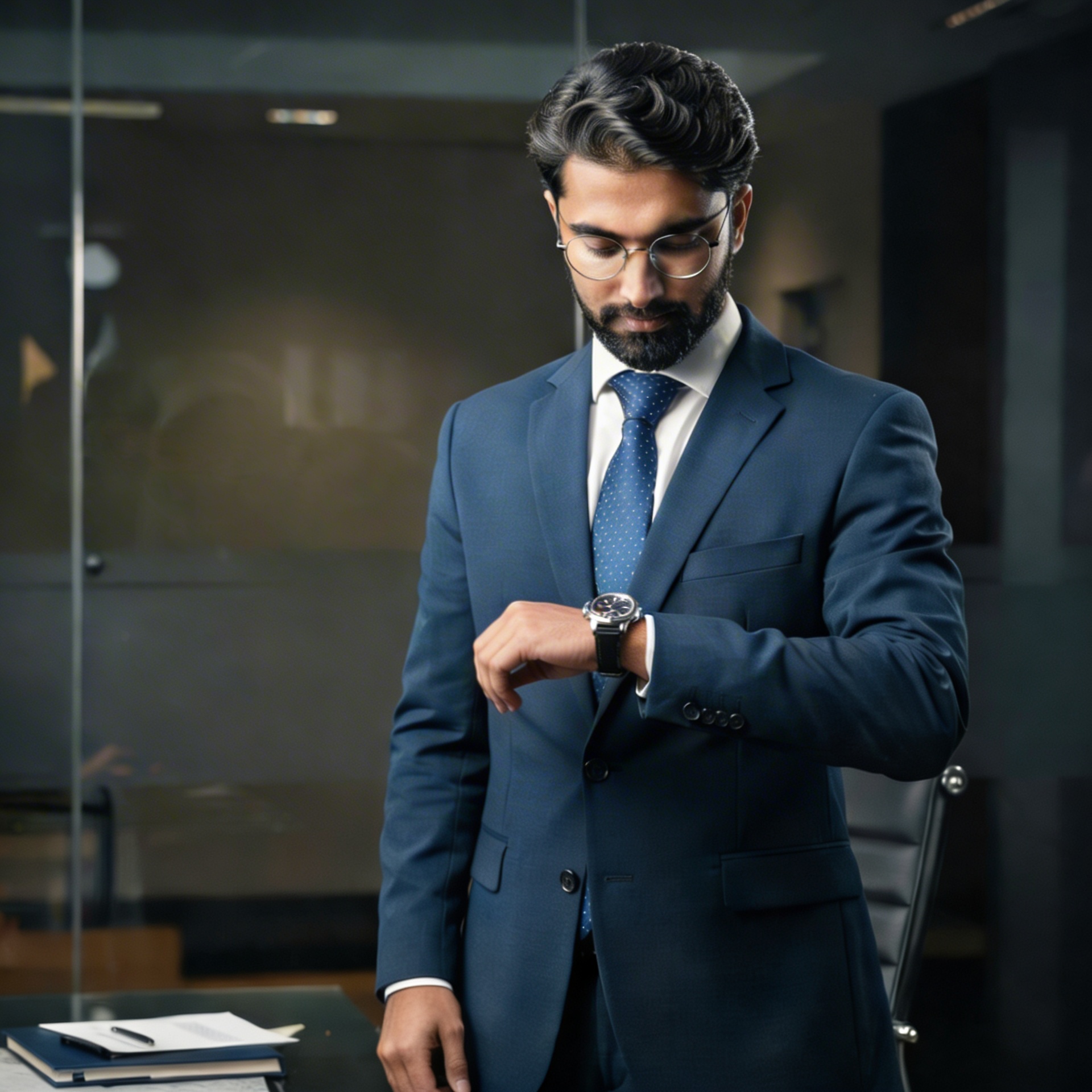
Time is being read differently. As India gains weight in the global watch market, the wrist becomes a point where economic power, personal knowledge, and cultural codes meet.

The Codes of a New World Order on the Wrist

WATCH MARKET | INDIA

Read more

India: Craft, Wellness and the Relational Consumer

India’s position in the global luxury shift carries its own structural logic. According to a Deloitte India consumer study reported in Luxebook India in March 2026, discretionary spending among affluent urban Indians has shifted toward experiences, wellness, travel and personalised services. The same study identifies Indian luxury consumers as highly relational and community-driven, a consumer profile that aligns structurally with the Well Living framework and the five movements The Silent Luxury tracks as the defining forces of luxury value creation through 2028 and beyond.

Indian independent luxury brands are gaining relevance because they carry what global conglomerates operating in India build with difficulty: genuine cultural provenance. Sabyasachi has built an international reputation by rooting his practice in Indian textile traditions, craft knowledge and aesthetic vocabulary, creating objects that carry cultural memory as their primary material value. Forest Essentials and Kama Ayurveda have done the same in wellness, building product propositions on Ayurvedic formulations, traceable Indian botanical sources and craft production methods that generate genuine scarcity through the time they require.

The McKinsey State of Fashion 2026 report confirms that Gen Z and millennial luxury consumers in India now prioritise brand values, storytelling and community over overt status signalling. Jessica Singh, Founder of Stanley Communications, told Luxebook India: “One insight that fundamentally changed how we approach luxury storytelling is that Indian consumers are highly relational and community-driven.” The shift from transaction to relationship, from global reach to Local Soul, is happening in India with a cultural specificity that gives it structural depth.


The Silent Luxury Africa · Luxury Market 2025/2026

Africa — The Rational Collector

South Africa luxury search trends and MEA market growth · Sources: Luxity 2025, Research and Markets, Mordor Intelligence 2026

South Africa — Category Search Growth 2025

JewelleryHighest growth category
+43.8%
BagsGrowing craft demand
+14.6%
South Africa Luxury MarketOverall growth 2025
+15%

LV + Gucci Combined Search Share — South Africa

2023Before the shift
30%
2025Buyers moved toward craft
21%

MEA Market 2026

$21.85Billion

Growing to $36.15bn by 2031. CAGR 10.6%. South Africa fastest growing at 11.03% CAGR. Mordor Intelligence 2026.

MEA + India + LatAm + SEA

€45Billion

Combined market value in 2025, matching mainland China in scale. The new geographies of luxury value.

Sources: Luxity State of the Luxury Market Africa 2025 · Mordor Intelligence MEA Luxury 2026 · Research and Markets · © Silent Communications GmbH

Africa: The Emergence of a Creative Luxury Geography

Africa represents the most structurally significant and systematically underestimated geography in global luxury for the decade ahead. The Middle East, Latin America, Southeast Asia, India and Africa together reached a combined market value of approximately 45 billion euros in 2025, matching mainland China in scale. The luxury goods market in the Middle East and Africa is projected to grow from 21.85 billion dollars in 2026 to 36.15 billion by 2031, at a compound annual growth rate of 10.6 percent, according to Research and Markets.

The structural story carries more weight than the market size figures alone. A 2025 analysis by Luxity, South Africa’s leading luxury resale platform, found that luxury consumers in South Africa evolved into what the report describes as rational collectors: buyers who curate luxury assets for their combination of emotional connection and long-term value retention. Jewellery searches rose 43.8 percent, bag searches grew 14.6 percent. Louis Vuitton and Gucci saw their combined search share fall from 30 to 21 percent, as buyers shifted toward brands carrying deeper craft credentials. This is the investment check operating in an African luxury market: the same structural dynamic visible in every market where the major conglomerates over-extended.

African designers and brands are building a luxury proposition from the conditions that Local Soul requires. Made in Africa is experiencing a cultural renaissance: local fabrics interpreted in contemporary design, accessories that fuse minimalist aesthetics with ancestral craftsmanship, hospitality that embeds African cultural knowledge into the structure of the guest experience. The work of designers like Thebe Magugu, whose collaboration with Cape Town’s Mount Nelson Belmond Hotel exemplifies the fusion of luxury and African cultural relevance, signals an industry building from genuine cultural depth outward.

Cities including Lagos, Nairobi, Casablanca and Cape Town are emerging as luxury hubs carrying their own cultural logic. As a 2026 analysis in the Times Live put it, luxury houses that fail to recognise the shift from viewing these regions as markets to seeing them as partners do so at their own peril. The brands succeeding here are those that localise their product architecture, working with local artisans, sourcing regional materials and building community relationships that generate compounding loyalty.


You are currently viewing a placeholder content from YouTube. To access the actual content, click the button below. Please note that doing so will share data with third-party providers.

More Information

Well Living: What Buyers Are Actually Looking For

The numbers confirm the direction. The Global Wellness Institute puts the wellness economy at 6.8 trillion dollars in 2024, growing at twice the rate of global GDP. Deloitte’s Global Powers of Luxury 2026 report identifies luxury travel as the segment with the highest growth potential, cited by 36.2 percent of 420 senior executives surveyed. Behind every data point is a person making a decision, and understanding that decision requires a perspective closer to the ground.

The buyer choosing a small independent brand in 2026 is making a quality judgement. She has looked at the object in front of her and asked: who made this, where, with what, and how long will it carry meaning in my life? She has weighed that answer against what the major houses are offering, and found it more convincing in the smaller room.

She travels differently too. Extended stays rather than four cities in five days. Places where the experience is structured around her rhythm. Wellness understood as something the environment delivers through its quality, its silence, its rootedness in a specific landscape. The growth in luxury wellness real estate, at 19.5 percent annually between 2019 and 2024, reflects the same orientation: the environment itself as a carrier of value.

What connects the buyer in Shanghai choosing a Guochao jewellery brand, the buyer in Mumbai choosing Sabyasachi, the buyer in Cape Town curating objects with genuine craft provenance, and the buyer in Vienna building a wardrobe of pieces that will carry across a decade, is the same underlying question: does this connect me to something that can only exist in this form, in this place, made by these people?

The small and independent brands that answer this question with the full weight of their production philosophy, their material sourcing and their relationship with the people who carry their objects have been building for exactly these structural conditions.

Frequently Asked Questions: Why Are Small Luxury Brands Gaining Relevance?

  • Why are small and independent luxury brands growing in 2026 and beyond?

    Small and independent luxury brands are gaining ground in 2026 and beyond because the structural conditions that define their operating logic are precisely the conditions the market is correcting toward: controlled distribution, traceable provenance, genuine craft, creative distance and the depth of the buyer relationship. As the major conglomerates over-distributed, elevated collection frequency and lost the creative distance that sustains desire, they created space for the brands that stayed true to these conditions. The structural disenchantment documented in Q1 2026 is the quantitative expression of a shift that has been building for years.

  • What is Local Soul in luxury?

    Local Soul is the concept developed by The Silent Luxury to describe value rooted in a specific place, a specific knowledge and specific people. An object carries Local Soul when it can only be made in the way it is made, because the materials come from a particular geography, the craft knowledge belongs to a particular tradition and the time invested reflects a production philosophy that loses its meaning at scale. Local Soul is the quality that makes an object genuinely irreplaceable: the structural answer to the over-distribution that dissolved the major conglomerates’ aura.

  • What is Guochao 3.0 and how does it connect to the global luxury shift?

    Guochao 3.0 is the third phase of China’s national cultural confidence movement in consumer goods. Guochao 1.0, around 2011, established Made in China as a quality claim. Guochao 2.0, around 2018, brought Chinese cultural references into streetwear and brand collaborations. Guochao 3.0, defining the Chinese luxury conversation in 2025 and 2026, integrates traditional Chinese culture, craft knowledge and aesthetic vocabulary into contemporary luxury products, with traditional knowledge forming the structural logic of the product itself. Forecasts project the Guochao market to exceed three trillion yuan by 2028. The connection to the global luxury shift is direct: Guochao 3.0 is Local Soul operating within Chinese cultural territory.

  • What role does Africa play in the future of luxury?

    Africa is the most structurally significant and systematically underestimated geography in global luxury for the decade ahead. The Middle East, Latin America, Southeast Asia, India and Africa together reached a combined market value of approximately 45 billion euros in 2025, matching mainland China in scale. African luxury consumers are evolving as rational collectors, curating objects for their combination of emotional connection and long-term value retention. African designers and independent brands are building from genuine cultural depth, with local craft knowledge, regional materials and community relationships forming the foundation of their value propositions. Lagos, Nairobi, Cape Town and Casablanca are emerging as luxury hubs carrying their own cultural logic.

  • How does Well Living connect to the growth of independent luxury brands?

    Well Living is the framework The Silent Luxury uses to map the buyer orientation driving the luxury shift across geographies. The buyers reshaping the market in 2026 and beyond, in China, India, Africa and Europe, are asking the same questions: where does this come from, who made it, will it carry value across the years I live with it. This orientation aligns structurally with what independent luxury brands offer: traceable provenance, genuine craft, controlled production and the quality of the relationship between maker and buyer. The wellness economy reaching 6.8 trillion dollars in 2024 is the quantitative expression of the same structural movement: value shifting from ownership to experience, from transaction to relationship.


Continue reading

Luca de Meo Named True Luxury: The Conversation Has Just Begun.

When Luca de Meo declared True Luxury the strategic mission of Kering’s ReconKering plan in April 2026, he introduced a term that the luxury market has been circling for years without naming precisely.

The ReconKering strategy names the concept and opens the conversation, what de Meo means precisely by True Luxury is the most interesting open point in the strategy, and the question the luxury market now needs to answer together. The silent luxury movement has been building one answer since its emergence: value built through time, provenance, responsibility and the quality of the relationship between maker and buyer.

A Term That Opens a Conversation

When Luca de Meo stood before investors in Florence on April 16, 2026 and placed True Luxury at the centre of the ReconKering strategy, the phrase landed in the financial and luxury press as a headline. It also landed as an invitation — one that the presentation, across three strategic phases, multiple financial targets and brand-specific roadmaps, began but did not complete.

De Meo is not a man who avoids precision. “In a nutshell,” he told investors, “a model that worked for a decade is no longer effective.” Later, he made a distinction that was perhaps the sharpest observation of the entire three-and-a-half-hour address: “Everyone in our industry talks about luxury. For me, beyond the word desirability, the word that truly matters is excellence. Luxury is a perception; excellence is a discipline. Luxury can be claimed. Excellence must be earned every day, in every detail, across the entire value chain.”

The distinction between luxury as perception and excellence as discipline is precisely the territory that the silent luxury movement has been charting for years. De Meo has named the terrain. The conversation about what True Luxury actually demands — in production decisions, in distribution architecture, in the relationship between a house and its buyers — is the one that follows from this naming. ReconKering identifies four pillars: creativity, savoir-faire, cultural relevance and product excellence. Each is a direction rather than a definition. Each opens a question rather than closing one. That is, in its own way, the most honest thing a strategy document can do.


The Silent Luxury Kering · Q1 2026 Revenue

Kering Q1 2026 — Brand Performance

Organic revenue growth by brand · January to March 2026 · Source: Kering Earnings Release April 14, 2026

Growth
Stagnation
Decline
Kering JewelryBoucheron · Pomellato · Qeelin
+22%
Kering EyewearGroup Eyewear division
+6%
Saint LaurentSequential improvement
+3%
Bottega VenetaStrongest improvement
+2%
Kering Group€3.57bn · organic
flat
Fashion & LeatherGroup division · organic
−3%
Kering GroupReported incl. currency
−6.2%
Gucci~60% of group profit · organic
−8%
GucciReported terms
−14.3%

Source: Kering Q1 2026 Earnings Release, April 14, 2026 · © Silent Communications GmbH

The Numbers That Frame the Conversation

The Q1 2026 results provide the context from which the True Luxury conversation emerges. Kering’s group revenue stabilised at €3.57 billion — down 6.2 percent in reported terms but flat organically, marking the first sequential stabilisation after several quarters of decline. The divergence within the portfolio tells the more precise story. Gucci, which still accounts for approximately 60 percent of the group’s operating profit, recorded a decline of 14.3 percent in reported terms and 8 percent organically. Kering Jewelry, led by Boucheron — the fastest-growing brand in the group this quarter — grew 22 percent organically.

The arithmetic is precise: the categories that embody the structural conditions closest to true luxury — intrinsic material value, craftsmanship, controlled production — are growing. The categories that drifted furthest from those conditions during the boom years are contracting. As Armelle Poulou, Kering’s CFO, noted: “While the recovery will be gradual, the fundamentals are being rebuilt in the right order.”

De Meo responded with a commitment: “Gucci remains our top priority. A comprehensive turnaround is underway, with decisive actions across client, distribution and, above all, the offer.” The word “offer” carries weight here. It signals a return to the object itself — its quality, its relevance, its reason to exist — as the primary instrument of recovery. This is where the True Luxury conversation becomes most concrete.

JPMorgan analysts described the ReconKering plan as “back-end loaded” — the heavy lifting of a structural reset taking time to manifest in the bottom line. The observation applies with equal force to the cultural reset that True Luxury demands. Rebuilding the conditions under which desire can accumulate is, by definition, a slow project. De Meo understands this: “Gucci’s recovery will be real, because it will be structured.”


The Structural Tension Worth Examining

De Meo came to Kering from automotive — from Renault, where he applied the tools of industrial restructuring with precision. The vocabulary of ReconKering carries that background. “Leaders tend to protect what they’ve already built,” he said in Florence. “Challengers, on the other hand, focus on what has yet to be invented. They question habits, act faster and remain uncompromising on execution.”

The challenger mindset is a coherent framework for a turnaround, and it may well deliver the financial reset that Kering needs. The structural question worth examining openly is whether the vocabulary of acceleration — faster, more agile, more innovative — is compatible with the conditions under which true luxury value accumulates. The luxury object that carries genuine value takes longer to make than the market expects. The relationship between a house and its buyers develops across years rather than quarters. The mystery that generates desire grows from silence and consistency.

This is the conversation that ReconKering has opened — and that the luxury market now needs to pursue with depth. De Meo himself drew the line that makes the conversation necessary: luxury is a perception. Excellence is a discipline. The gap between the two is precisely where True Luxury lives.

The Silent Luxury ReconKering · Strategy Roadmap

ReconKering: Three Phases to 2030

The strategic roadmap Luca de Meo presented at Kering’s Capital Markets Day, Florence, April 16, 2026

2026

Phase 01 · Reset

Structural Reset

Financial discipline restored across all Maisons

Gucci product architecture reset

Distribution rationalised — outlets reduced by one third

Desirability and creative relevance rebuilt

2028

Phase 02 · Rebuild

Renewed Growth

Accelerating momentum across portfolio

Clearer brand identities, stronger client engagement

Jewellery growing contribution to group revenue

Structural improvements in profitability

2030

Phase 03 · Reclaim

Leadership in Next Luxury

Reference player in Next Luxury

Desirability-led across all Maisons

Longevity and wellness as new growth territory

Operating margin target exceeded

11% → 22%+

Operating margin — more than doubling from 2025 baseline to mid-term ambition by 2030.

ROCE 20%+

Return on capital employed. Mid-term financial ambition under ReconKering strategy.

Source: Kering ReconKering Capital Markets Day, Florence, April 16, 2026 · © Silent Communications GmbH


What the Silent Luxury Movement Has Been Building

The silent luxury movement emerged as a structural reading of the luxury market well before de Meo placed the term in public discourse. Silent luxury is a mindset — a form of engagement with value that asks different questions than the aspiration-based model that defined luxury growth for three decades.

Where the industrial luxury model asked how many people can be brought into contact with a brand, silent luxury asks about the quality of the relationship between an object and the person who carries it. Where the industrial model measured success through volume and visibility, silent luxury measures it through the depth of what remains when the season has passed.

As Eva Winterer, Publisher of The Silent Luxury, has articulated it: luxury is a relationship. A form of engagement with things, places and people. Georg Simmel recognised as early as 1900 that luxury manifests in relationships rather than in objects. What he described then applies with greater precision today: luxury arises through the way we relate to things, through the care we invest in them and through the time we allow them to accumulate meaning.

This relational understanding is what the Remapping of Luxury has been charting since the founding of The Silent Luxury. De Meo’s own formulation — “luxury is a perception; excellence is a discipline” — arrives at the edge of this understanding. Silent luxury is the step beyond it: the discipline of building the conditions under which the perception becomes real.


Five Conditions That True Luxury Demands

True luxury, understood as a set of structural conditions, requires five things — each of which the ReconKering strategy points toward without yet fully defining.

Time is the first condition. True luxury is built in time and for time. The repair economy is growing at 17.9 percent annually because a significant segment of buyers understands that the object returning to the craftsman for the fourth time carries more value than the one replaced after two years. Time is the primary material from which lasting value is made.

Provenance is the second condition. True luxury knows where it comes from. The material has a traceable origin. The maker has a name and a place. The knowledge embedded in the object belongs to a specific geography, a specific tradition, a specific sequence of decisions. This is the structural foundation of what The Silent Luxury describes as Local Soul — the rootedness of value in a place, a knowledge and a human skill.

The relationship is the third condition. Luxury was understood for decades as a purchasing act: buy, wear, replace, buy. The buyers shaping the market in 2026 understand themselves as custodians of objects that will be passed on. Patina is proof that the original decision was right. This is the Relationship Economy that The Silent Luxury has been mapping since its founding.

Silence is the fourth condition. True luxury allows the process of creation to happen behind closed doors. The finished object arrives without announcement or justification. The brand that stages its creative decisions in public, that negotiates its identity with the market in real time, dissolves the very mystery that makes desire possible. As Eva Winterer has observed: visible desperation is the opposite of spell.

Responsibility is the fifth condition — understood as an operational reality rather than a communications position. Couture Régénérative is the framework The Silent Luxury developed to address this: the integration of material origin, production transparency and lasting relevance into a single design and business conviction. True luxury generates objects that outlast the season in which they were made.


The Conversation the Market Needs to Have

De Meo has done something significant by placing True Luxury at the centre of Kering’s strategic direction. He has named the terrain on which the next phase of the luxury market will be contested — and invited the market to think with him about what it demands. What de Meo means precisely by True Luxury is the most interesting open point in the ReconKering strategy, and the question that deserves a deeper answer than a strategy document can provide.

The hourglass economy is the structural expression of a market correcting toward genuine value. The upper end rewards the five conditions described above. The brands building their operational architecture around those conditions — in production, distribution and the quality of the relationship they cultivate with their buyers — are the brands the market is moving toward.

De Meo said it himself in Florence: luxury can be claimed. Excellence must be earned. True luxury is the discipline of earning it — every day, in every detail, across the entire value chain. The conversation about what that discipline demands from a house the size of Kering, with a portfolio as complex as Kering’s, is one that The Silent Luxury would very much like to continue — directly, and with the depth it deserves.

For a deeper reading of what this shift demands from brands communicating in the premium segment, the Luxury Recalibration Blueprint 2026 maps the structural and communicative implications in full. For the complete structural diagnosis of where the luxury market stands in Q1 2026, the analysis of the tectonic shift reshaping the market provides the full framework.

Frequently Asked Questions: What Is True Luxury?

The following questions address the concept of True Luxury as introduced by Luca de Meo in the ReconKering strategy of April 2026 and as developed by the silent luxury movement and The Silent Luxury’s editorial framework.

  • What did Luca de Meo mean by True Luxury in ReconKering?

    Luca de Meo introduced True Luxury as the strategic mission of Kering’s ReconKering plan, presented at the Capital Markets Day in Florence on April 16, 2026. He identified four pillars — creativity, savoir-faire, cultural relevance and product excellence — and made one formulation that points toward the heart of the concept: “Luxury is a perception; excellence is a discipline. Luxury can be claimed. Excellence must be earned every day, in every detail, across the entire value chain.” What he means precisely by True Luxury is the most important open point in the strategy.

  • What is the silent luxury movement?

    Silent luxury is a mindset — a form of engagement with objects, places and people that prioritises depth over speed, relationship over transaction and permanence over rotation. It describes a structural shift in how a growing segment of buyers, makers and independent houses understand value: as something built through time, provenance, responsibility and the quality of the relationship between maker and buyer.

  • What are the five conditions of true luxury?

    True luxury requires five structural conditions: time as the primary material of value, traceable provenance, a genuine relationship between the house and the buyer that extends beyond the moment of purchase, the silence that protects the mystery of the making, and responsibility understood as an operational reality embedded in the entire production and distribution architecture.

  • What is the relationship between true luxury and silent luxury?

    True luxury and silent luxury describe the same structural reality from different angles. True luxury asks what an object must carry to justify the relationship it builds with its owner. Silent luxury asks what a house must do to allow that value to accumulate and be perceived. Both require time, provenance, silence and rootedness.

  • Is ReconKering a True Luxury strategy?

    ReconKering places True Luxury at the centre of its mission and builds its operational strategy around a structural reset, a rebuild phase and a return to leadership by 2030. Whether the five structural conditions that true luxury demands — time, provenance, relationship, silence and responsibility — will shape the operational decisions of that journey is the conversation the luxury market is now invited to follow.


Continue reading

The System Shift: How Luxury Consumption Is Being Rebuilt From the Ground Up

Traditional luxury consumption is being replaced by a structural system shift across three dimensions: from product to experience, from transaction to relationship, and from global availability to local rootedness.

The buyers shaping the luxury market in 2026 understand themselves as custodians rather than consumers. They seek encounters rather than objects, continuity rather than novelty, and the specific rather than the universal. Silent luxury is the mindset that connects all three dimensions — a form of engagement with value that the market has been moving toward for years and that the Q1 2026 results have confirmed in arithmetic terms.

What Is Replacing Traditional Luxury Consumption?

The traditional luxury consumption model rested on a single logic: desire manufactured through visibility, aspiration maintained through controlled scarcity, and value communicated through price. For three decades, this logic produced results that the industry treated as structural constants. They were, in retrospect, a historical window — one that the Q1 2026 results have now closed.

What replaces it is a system that has been assembling itself quietly across the same three decades, in the independent houses, the owner-led ateliers, the slow hospitality properties and the post-materialist buyers who never fully accepted the industrial luxury narrative. The system shift is visible in three structural dimensions, each of which represents a fundamental reordering of what luxury means, how it is acquired and where it is found. Together, they define the terrain on which the next era of the luxury market will be built.


The Silent Luxury System Shift · Data 2026

The Numbers Behind the System Shift

What the data reveals about the structural reordering of luxury in 2026

Wellness Economy 2024

$6.8

Trillion

Global Wellness Institute. Doubled since 2013. Growing twice as fast as global GDP. Projected $9.8T by 2029.

Luxury Travel Spend Intent

+59

% net spend

HNWIs expecting to increase travel spending. Hospitality and dining: +56%. Experiences outpace every product category.

Repair Economy Annual Growth

+17.9

% annually

While the primary luxury market grows at +2.4%. Buyers become custodians of objects to be passed on.

Pre-Owned Luxury Market

€48

Billion

KPMG 2026. Growing at +7% annually. The secondary market as the natural extension of a primary relationship.

Wellness Real Estate Growth

+19.5

% annually

Fastest-growing wellness segment 2019–2024. The environment as a luxury product.

Consumers increasing wellness spend

60

% of luxury buyers

Karla Otto 2026. Gen Z 84% more likely than other demographics to increase wellness spending.

Sources: Global Wellness Institute · Bain & Company · KPMG · Karla Otto · The Silent Luxury 2026 © Silent Communications GmbH

Why Is Luxury Shifting from Product to Experience?

The first dimension of the system shift addresses the most fundamental question in the market: what is the buyer actually purchasing?

For most of the industrial luxury era, the answer was an object. A bag. A watch. A garment. The object carried the brand identity, communicated the premium and served as the primary vehicle for the desire the house had cultivated. According to Bain & Company’s most recent luxury market research, the net share of high-net-worth individuals expecting to spend more on travel stands at plus 59 percent, and on hospitality and dining at plus 56 percent — figures that dwarf the net spend projections for product categories including watches, jewellery and leather goods.

The experiential luxury segment is among the strongest performers in the current market precisely because the experience that cannot be reproduced has become the rarest form of luxury in a market saturated with reproducible objects. Wellness is the clearest expression of this. According to the Global Wellness Institute’s 2025 Monitor, the global wellness economy reached $6.8 trillion in 2024 — growing at 7.9 percent annually, twice the rate of global GDP growth. The GWI projects this figure will reach $7.4 trillion in 2025 and approach $9.8 trillion by 2029. Wellness real estate, the fastest-growing segment, expanded at 19.5 percent annually between 2019 and 2024 — driven, the GWI notes, by a fundamental shift in how buyers understand the relationship between their environment and their health.

This shift explains the structural outperformance of well living as a luxury category. The properties growing in the luxury hospitality market are those that understand the stay as a restorative encounter rather than a service transaction. The Slow Hospitality framework — built around place intelligence, restoration environments and the cultivation of continuity between the guest and the place across time — is the editorial architecture through which The Silent Luxury has been mapping this dimension of the shift.

As Eva Winterer, Publisher of The Silent Luxury, has articulated it: a property is luxurious because it embodies an attitude. The materials come from the region, the architecture respects the environment, the hosts know their guests’ names. This cannot be scaled, replicated or industrialised. That is precisely what makes it valuable. According to Deloitte’s Global Powers of Luxury 2026, 36.2 percent of luxury executives now identify luxury travel as the segment with the highest growth potential — and customer experience and loyalty as the strongest growth opportunities across the entire sector.

The shift from product to experience also reframes what Couture Régénérative demands of fashion. The garment purchased for the experience of wearing it over decades — for the relationship it builds with the body that carries it, for the patina it accumulates, for the repair it invites — is a fundamentally different proposition than the garment purchased for its seasonal relevance. The object remains. But it has become the vessel for an experience that extends far beyond the moment of purchase.


From Transaction to Relationship: What the New Luxury Logic Actually Looks Like

The second dimension of the system shift addresses how luxury is acquired — and more precisely, what the acquisition means within the longer arc of a buyer’s relationship with a house.

The transactional model understood luxury as a sequence of discrete purchasing acts. Each purchase was complete in itself. The relationship between the buyer and the house was, in structural terms, a commercial relationship — maintained through marketing, renewed through new collections and measured through repeat purchase frequency.

The relational model that is replacing it understands luxury as an ongoing connection that extends across the entire lifecycle of an object — and often across multiple objects and multiple generations. The buyers growing in market share understand themselves as custodians: people who understand themselves as temporary stewards of objects that will be passed on. Patina is proof that the original decision was right. According to KPMG’s Luxury Equation 2026, the global market for pre-owned luxury goods reached approximately €48 billion in 2023 and continues to expand at seven percent year-on-year — a figure that describes buyers who have already made the shift from ownership as accumulation to ownership as stewardship.

This is the Relationship Economy that The Silent Luxury has been mapping since its founding — and the Q1 2026 results confirm its structural weight. The repair economy is growing at 17.9 percent annually, while the primary luxury market holds at 2.4 percent. The growth of platforms such as Vestiaire Collective reflects the same logic: the secondary market as the natural extension of a primary relationship with an object.

The KPMG data also highlights a structural polarisation within the buyer base that the relational model clarifies: Very Important Customers — fewer than two percent of all luxury consumers — now account for almost 40 percent of total sales. This concentration reflects the depth of relationship that the upper segment of the market has built with its buyers. The houses growing in Q1 2026 have built their models around exactly this logic. Brunello Cucinelli grows twenty percent in directly operated retail, without wholesale, without seasonal discount programmes. The relationship is between the house and the specific buyer — direct, sustained and built on the mutual understanding that the object is worth caring for.

The relational model also transforms what brand communication can and should do. A house communicating within the relational model addresses the buyer it already has — deepening the relationship, extending the connection, creating the conditions under which the buyer returns for repair, for a second piece, for the conversation that continues where the last one ended. For a deeper reading of what this relational logic demands from brand strategy, what value means in luxury 2026 provides the structural context.

Frequently Asked Questions: The System Shift in Luxury Consumption

  • What is replacing traditional luxury consumption in 2026?

    Traditional luxury consumption is being replaced across three structural dimensions: from product to experience, from transaction to relationship and from global availability to local rootedness. The buyers shaping the market in 2026 seek encounters rather than objects, continuity rather than novelty and the specific rather than the universal. Silent luxury is the mindset that connects all three dimensions — a form of engagement with value built on depth, permanence and the quality of the relationship between buyer and maker.

  • Why is luxury shifting from product to experience?

    Luxury is shifting from product to experience because the object has lost its position as the primary carrier of luxury value. According to Bain & Company, net spend intentions on travel are plus 59 percent among high-net-worth individuals, and on hospitality and dining plus 56 percent — figures that dwarf projections for product categories. The Global Wellness Institute reports the wellness economy reached $6.8 trillion in 2024, growing at twice the rate of global GDP. The experience that cannot be reproduced has become the rarest and most sought-after form of luxury in a market saturated with reproducible objects.

  • What does the shift from transaction to relationship mean for luxury brands?

    The shift from transaction to relationship means that luxury brands are measured by the quality of the ongoing connection they maintain with their buyers across the entire lifecycle of an object. According to KPMG, the pre-owned luxury goods market reached €48 billion in 2023 and grows at seven percent annually. The repair economy grows at 17.9 percent annually. The houses building long-term relationships with specific buyers — through direct retail, repair programmes and sustained communication — are the houses growing in Q1 2026.

  • Why is the shift from global to local happening in luxury?

    The shift from global to local is happening because global availability has been demonstrated to erode rather than sustain the distinction that luxury commands. The Q1 2026 results show that growth came from local loyalty — from buyers purchasing in their own cities because they want a specific object made in a specific way. The houses dependent on tourist flows lost. The houses with local relationships won. Local Soul — value rooted in a specific place, knowledge and human skill — is the structural replacement for global reach as a value signal.

  • What is silent luxury and how does it connect to the system shift?

    Silent luxury is a mindset — a form of engagement with objects, places and people that prioritises depth over speed and permanence over rotation. It connects the three dimensions of the system shift because it describes the underlying orientation that makes all three coherent: the preference for the encounter over the object, the relationship over the transaction and the rooted over the global. The silent luxury movement has been developing and documenting this orientation since before the system shift became visible in the earnings reports of the major conglomerates.

Continue reading

Is Luxury Losing Its Aura? The Disenchantment of Desire

Luxury brands are losing relevance in 2026 because they dismantled the conditions under which desire can exist. Three structural mechanisms drove this process: the outlet-isation of perception, elevated frequency and the loss of creative distance.

When luxury objects become available everywhere, when new collections arrive before previous ones have been absorbed, and when brand identities are negotiated in public rather than protected behind closed doors, the mystery that historically generated desire dissolves. The brands losing relevance in Q1 2026 are those that made these decisions systematically during the boom years of 2021 to 2023.

Why Luxury Brands Are Losing Relevance in 2026

There is a quality that certain objects possess which cannot be manufactured directly. It can only be cultivated, protected and allowed to accumulate over time. Walter Benjamin called it aura — the singular quality of presence that belongs to an original rather than a reproduction, to something that exists once, in a specific place, under specific conditions. Luxury borrowed this concept without naming it. The closed ateliers, the controlled releases, the deliberate distance between the making and the market — all of this was aura management.

The question that Q1 2026 forces into focus is whether the major luxury conglomerates have spent the past decade systematically dismantling the conditions under which aura can exist — and whether the financial consequences of that dismantling are now visible in the earnings reports that sent markets into double-digit losses.


How Over-Distribution Eroded the Relevance of Luxury Brands

The mechanics of relevance erosion are precise. An object carries distinction when it is genuinely difficult to obtain. The difficulty may be financial, geographic, temporal or social — but some form of genuine resistance between the buyer and the object is necessary to sustain desire. When LVMH and Kering expanded their distribution networks aggressively during the boom years of 2021 to 2023, they reduced this resistance at every point. Gucci became available at every international airport. Louis Vuitton opened flagships in every major city on every continent. The airport store, the duty-free counter, the global e-commerce platform — each of these is a mechanism for removing the friction that generates desire.

Federica Levato of Bain & Company described the result with precision: the customer feels deceived. The object they purchased for its distinction became, through the brand’s own distribution decisions, indistinct. The price remained. The relevance did not.

The outlet-isation of perception is the structural process by which this happens: a symbol loses its charge through overexposure, and the aspirational middle that depended on that charge loses its reason to exist. For the full context of how this distribution dynamic contributed to the collapse of the aspirational middle, the analysis of why the luxury middle is collapsing maps the sequence in detail.

Why Elevated Frequency Is Destroying Luxury Desire

The second mechanism of relevance erosion is frequency. Desire requires time — the time of making, and the time between appearances. An object that arrives every few weeks in a new iteration cannot accumulate the temporal weight that makes it matter. The permanent drop, the capsule release, the collaborative edition that arrives before the previous collaboration has been fully absorbed — all of these are mechanisms for replacing depth with novelty.

As Eva Winterer, Publisher of The Silent Luxury, observed: the houses with a future replace the concept of the collection with the concept of the wardrobe. They are selling time. The wardrobe concept restores the temporal dimension that elevated frequency removes. An object designed to remain relevant across decades carries more inherent desire than one designed to generate conversation for a fortnight.

The Q1 2026 results confirm this structurally. Brunello Cucinelli, whose creative philosophy is built around enduring relevance rather than seasonal novelty, grew fourteen percent organically. Gucci, whose creative direction has shifted multiple times in recent years in search of a new cultural register, declined eight percent. The categories benefiting most from this temporal logic — jewellery and niche fragrance, where value is material and independent of the seasonal cycle — are the strongest performers in Q1 2026. Givaudan’s Fine Fragrances segment grew 9.6 percent at constant exchange rates in the same period.


How the Loss of Creative Distance Dissolved Luxury’s Mystery

The third mechanism is the most subtle and the most consequential. Luxury historically derived its power from what remained unseen: the process of creation, the decisions of the atelier, the criteria by which objects were accepted or rejected before they reached the market. The mystique was not a communication strategy applied on top of the product. It was a structural property of how the product came into existence.

Digital transparency has systematically dissolved this structure. The departure and arrival of creative directors is now a public event, commented upon in real time across every platform simultaneously. The repositioning of a brand’s aesthetic is negotiated openly, with the market watching and the critics responding before the first collection has been shown. The search for a new identity — which every living brand occasionally needs to undertake — becomes, under these conditions, a public failure of confidence.

As Eva Winterer observed: it seems almost like a desperate search for the truth of one’s own identity, for a brand core whose momentum has been lost and cannot be recovered. A luxury brand that stages its process of self-discovery in public, without a clear strategy, has in her view already lost. Visible desperation is the opposite of spell.

The brands at the upper end of the hourglass have maintained this discipline precisely. Hermès does not explain its creative decisions. Brunello Cucinelli does not engage in public repositioning. The silence is the strategy. For the full analysis of how the three causes of disenchantment have expressed themselves in the Q1 2026 results, the structural diagnosis of the luxury market provides the complete framework.


What Losing Relevance Means for Luxury Brand Communication

The loss of relevance has direct consequences for how luxury brands communicate. A brand that has eroded its own distinction through over-distribution and elevated frequency cannot restore it through communication alone. The communication of desire is not desire. Campaigns that announce exclusivity in widely distributed media are structurally contradictory. Collaborations designed to generate cultural relevance through association with artists or celebrities accelerate the very frequency dynamic that erodes desire.

The restoration of relevance requires structural decisions: controlled distribution, longer creative cycles, deliberate silence at moments when the instinct is to communicate. These decisions are expensive in the short term and invisible in the quarterly report. They are precisely the decisions that the Luxury Recalibration Blueprint 2026 examines in the context of what brands can practically change in their production, distribution and communication architecture.

The houses that retained their relevance through the boom years did so by making decisions that appeared conservative at the time. In Q1 2026, those decisions are expressing themselves as growth.

Frequently Asked Questions: Why Are Luxury Brands Losing Relevance?

The following questions address the structural loss of relevance in the luxury market in 2026, drawing on Q1 2026 market data, The Silent Luxury’s structural analysis and the production philosophies of the houses growing in the current market.

  • Why are luxury brands losing relevance in 2026?

    Luxury brands are losing relevance in 2026 because they dismantled the conditions under which desire can exist. Three structural mechanisms drove this process: the outlet-isation of perception, elevated frequency and the loss of creative distance. When luxury objects become available everywhere, when new collections arrive before previous ones have been absorbed, and when brand identities are negotiated in public, the mystery that historically generated desire dissolves.

  • Why do some luxury brands still hold their relevance in 2026?

    The luxury brands that retain their relevance in 2026 are those that maintained the structural conditions under which desire can exist: controlled distribution, long creative cycles and deliberate silence at moments when the instinct is to communicate. Hermès does not explain its creative decisions. Brunello Cucinelli does not engage in public repositioning. The silence is the strategy — and in Q1 2026, it is expressing itself as growth.

  • What is the outlet-isation of luxury perception?

    The outlet-isation of luxury perception describes the process by which a symbol loses its charge through overexposure. When Louis Vuitton is available at every airport and Gucci appears on every social media feed, the objects lose their function as marks of distinction. The buyer who purchased for distinction finds the object indistinct. The price remains. The desire does not. Federica Levato of Bain & Company described the result: the customer feels deceived.

  • How does elevated frequency erode luxury desire?

    Elevated frequency erodes luxury desire by removing the temporal dimension from the object. Desire requires time — the time of making, and the time between appearances. A permanent drop, a capsule release, a new collaboration before the previous one has been absorbed — each of these replaces depth with novelty. An object designed to remain relevant across decades carries more inherent desire than one designed to generate conversation for a fortnight.

  • Can luxury brands rebuild their relevance?

    Luxury brands can rebuild their relevance, but the process requires structural decisions rather than communication strategies. The communication of desire is not desire itself. Restoration requires controlled distribution, longer creative cycles and deliberate silence. These decisions are expensive in the short term and invisible in the quarterly report. They are precisely the decisions that distinguished the growing houses from the declining ones in Q1 2026.


Continue reading