Tag: Independent Luxury

A golden tree with spreading branches and a crown of gold and blue against a night-blue ground A golden tree grows from its roots into a wide crown of gold and blue, the image for The Future of Luxury: value that grows over time and is handed on to the next generations.

The Future of Luxury: Made for the Next Generations

Everyone remembers a first piece that felt like arriving. With average luxury prices now 54 per cent above 2019, the question behind that feeling returns: what is value? Time, responsibility, consciousness and independent, owner-led houses describe the future of luxury and a better life for the generations ahead.

For a long time, a first piece from a great house marked a moment in a life. A silk scarf bought with the first salary, a watch for a graduation, a handbag saved for over a year. These objects carried a promise larger than their price. Whoever worked could climb, step by step, and one day the climb would become visible. Society moved like an escalator, sometimes faster, sometimes slower, and it carried everyone upward.

That escalator has come to a halt. Average prices across the major houses have risen by around 54 per cent since 2019, and roughly 80 per cent of the industry’s growth between 2021 and 2025 came from price increases. For fifteen years, the industry grew by scaling. It delivered revenue, and it eroded the one thing luxury cannot rebuild quickly: trust. Behind this lies a larger picture of the future, one in which growth is the single measure and everything else counts as friction, from the care for people to the care for soil to the time that good things need. Luxury shows where this picture leads more clearly than almost any other field, because luxury has always been the place where a society puts on display what it holds valuable.

The question of how to live well is being asked more seriously, and more widely, than at any point in recent decades. In luxury, it condenses into a single question. What is value?

Value takes shape in how people relate to what they own, choose and carry forward. It grows where time, responsibility and consciousness come together, and it is created by independent houses that keep their knowledge close and think in generations. Together they form an Economy of Relations. Its measure is a better life for those who come after us, and in it lies the future of luxury.

Future of Luxury

The Arithmetic of Scale

Three developments show what the growth model counts: more fibre, higher prices and a growing appetite for electricity.

Fibre

The world made 139 million tonnes of fibre in 2025.

58139 200020252030

More than twice as much as in 2000. 59 per cent of it is polyester, about one per cent comes from recycled textiles.

Textile Exchange, Materials Market Report 2026

Price

Luxury prices have risen by 54 per cent since 2019.

100 154 20192025

Roughly 80 per cent of the industry’s growth between 2021 and 2025 came from price increases.

McKinsey and The Business of Fashion, State of Fashion 2026

Electricity

Even the weightless future has a weight.

415950 202420252030

Data centres are set to use around 950 terawatt-hours of electricity in 2030, close to what Japan consumes in a year.

International Energy Agency, Key Questions on Energy and AI

Future of Luxury

Send
this

to someone
who wonders
what luxury will be worth
for the next generations.

Ideas for a
conscious tomorrow

Swipe through →

Time Is Luxury: Duration Turns Into Worth

Time is the first measure of value: what lasts, what is cared for and what is handed on gains worth with every year.

Speed has become the measure of almost everything luxury touches. Collections follow one another within weeks, and journeys are planned as a sequence of destinations. In the whirl of quarterly figures, duration was systematically devalued, and heritage was reduced to a marketing narrative, a backdrop meant to suggest an authenticity long since lost in automated production.

A place reveals its depth only to those who give it time. Sleep, attention and the nervous system need days to come to rest, and a place needs the same days to unfold its climate, its light and its taste. Travellers are choosing fewer destinations and longer stays: the average length of stay at premium boutique hotels has risen by 38 per cent, and in South Tyrol spend per guest is 23 per cent higher, with 8 per cent fewer arrivals and 12 per cent more revenue. The houses that understand this welcome fewer guests and keep them longer. The architect Matteo Thun, who has designed more than 80 hotels, described the principle in conversation with The Silent Luxury: “We are part of nature. When architecture reflects nature and brings it inside, it brings us back into proper balance.”

“We are part of nature. When architecture reflects nature and brings it inside, it brings us back into proper balance.”

Matteo Thun, in conversation with The Silent Luxury

Objects follow the same logic. Ownership ends with a single owner, while stewardship thinks across generations: owning, caring, passing on. Vegetable-tanned leather darkens over the years, wool softens with every winter it is worn, and the patina becomes the proof that the material holds. Luxury goods that can age in this way are owned for an average of 12.7 years, against 3.2 years for trend-oriented products.

Knowledge deepens in the same way. Culture moves slowly, and in an age of permanent acceleration this slowness has almost the quality of a subversive act. 76 per cent of buyers see craftsmanship as essential, 62 per cent feel an emotional bond with the brands they return to, and 63.6 per cent of intangible cultural heritage is transmitted through families across generations. Mastery of this kind grows with every generation that questions it and renews it. It preserves no ashes and passes on the fire.

Time is becoming the most precious good of the decade and the measure by which worth proves itself. What endures for years shows its quality, and the experience that changes a person arrives only in the longer stay. Wealth is measured by how much time we can give to the things and people that matter to us. Time becomes the true luxury here.

★

A note from The Silent Luxury

Good reading deserves to find you again.

Add us as a Preferred Source in Google.

Responsible Luxury: Value Begins at the Source

Responsible luxury makes the origin of a thing part of its value, from the soil and the material to the people whose knowledge shaped it.

Every object carries a price that appears on no label. It is paid by the material taken faster than it grows back, by the people whose hands and knowledge stand at the start of the chain and whose share of the value shrinks with every step towards the shop. It is paid by the livelihoods of whole regions, by the environment, and by the relationships and communities that hold a place together. Adjusted for inflation, brands now buy a cotton T-shirt for half of what it cost them 25 years ago, at an average EU import price of 2.67 dollars. The scaling model counted all of this as cost, and costs are there to be lowered.

The material shows the same pattern. Polyester accounted for 59 per cent of the 139 million tonnes of fibre produced worldwide in 2025, and about one per cent of all fibre came from recycled textiles. Recycling is offered as the answer, a promise whose loop stays open for most of what is made, and its price appears later, in a landfill, in a river, in a field. Materials grown under regenerative-organic cultivation take the opposite course, in soils that hold up to 133 per cent more microbial life than conventional ground and give back more than they take.

The ground itself now shows how fragile this calculation is. The El Niño of 2026 and 2027 shifts rain and heat across the southern hemisphere, and vineyards in Mendoza, the Western Cape and South Australia feel it first. NOAA puts the chance of a very strong event this winter above 90 per cent, with three in four odds that it becomes the strongest recorded since 1950. Soil turns out to be the real supply chain, and it answers to its own laws.

Even the future that presents itself as weightless rests on the same ground. The computing power behind every model needs electricity, water and land, in quantities that grow year by year. The International Energy Agency expects the electricity used by data centres to roughly double from 485 terawatt-hours in 2025 to around 950 in 2030, close to what Japan consumes in a year.

Responsibility begins where an economy measures itself by what it leaves the world rather than only by what it takes from it. It follows a material back to its origin and to the people whose knowledge shaped it, from the field to the atelier. The worth of a thing is settled at its source, in the choice of material and in the question of what its making returns. Trust follows disclosure. Between 2020 and 2024, the share of consumers who believe a brand says what it means fell from 52 to 31 per cent, while 63 per cent of buyers in the high-end segment pay a significant premium when value creation is fully disclosed.

Knowledge has an origin too. The models that write, design and draw today have learned from what people created over generations, from patterns, images, texts and the knowledge of whole crafts. Every entrepreneur understands the question this raises, because it is the oldest question of property. Whoever creates something is its author, and authorship belongs to the origin of value as much as the soil does.

Conscious Luxury: Value Lives in How Carefully We Use What We Have

Conscious luxury shows in how carefully we use what we have and in the ability to tell value from price.

The luxury brand pyramid once had a wide base. Fragrance, a lipstick, a small leather good opened the door to a house, and the step from there to the next level was a matter of years and savings. In recent years the houses have raised their prices far faster than incomes grew, and the entrance at the bottom has moved out of reach for many. When HSBC checked 19 iconic luxury products in France, several had doubled in price since October 2019. Dalena White of the International Wool Textile Organisation named the consequence in conversation with The Silent Luxury: “Consumers are reacting because the prices in that very top market have been rising exponentially since Covid, and the value has not really increased that much.” The top of the pyramid holds, the middle loses its door, and price becomes the only signal that still counts. Whoever can pay belongs, and what is paid for says little about what it is worth.

“Consumers are reacting because the prices in that very top market have been rising exponentially since Covid, and the value has not really increased that much.”

Dalena White, International Wool Textile Organisation, in conversation with The Silent Luxury

Consciousness draws the line between the two. It belongs to the buyer who purchases less, researches origin and craft, keeps what is bought and prefers to be known by how they live. Searches for logos fell by 30 per cent in 2025, and 70 per cent of affluent buyers now prioritise material quality and longevity over brand visibility. For this buyer, a price is information, and value is the story a thing can tell about where it comes from, who made it and how long it will last.

Artificial intelligence sharpens this distinction from an unexpected side. It can generate a great deal, and it gives people time for what matters when they use it well. The overreaching begins where the generated is meant to replace the grown, where a flawless image stands in for a real place and a fluent text for a lived experience. When perfection becomes a mass product, the imperfect becomes valuable: the trace of a hand, the time invested, the provenance that can be proven, the relationship to the people behind a thing. The more ordinary digital contact becomes, the more precious the real encounter grows. Artificial intelligence shows what value is, precisely because it can do so much.

Independent Luxury Brands: A Market of Many Carries the Future

Independent, owner-led houses carry the future of luxury, because they keep their knowledge and their tools in their own hands.

Independence is under pressure from several sides. In Italy, 1,035 companies in textiles, clothing and leather closed in the second quarter of 2025 alone, eleven a day, most of them artisan workshops. At the same time, the newest tools of the trade, from design software to booking platforms and models, are rented from a handful of technology companies, on terms the smaller houses cannot negotiate. What looks like a technical question is an old economic one. A market works best when many compete in it, each with its own knowledge, its own judgement and its own answer to the question of what a good thing is.

This market of many already exists. It consists of owner-led houses, workshops, weaving mills, vineyards and ateliers, most of them small or medium-sized, many of them in their second, third or fifth generation. In Italy, where two thirds of the luxury houses have their goods made, 79 per cent of fashion production comes from micro, small and medium-sized companies. They share a way of working that rarely makes headlines. They choose their materials themselves, train their own people and know their suppliers by name. The knowledge that carries them lives in hands and in judgement, and it stays where it was learned. The relationship this builds is measurable: brands built on relationships retain 84 per cent of their customers, against 38 per cent in transactional commerce.

Independent houses keep their knowledge and their tools within their own walls. It makes them slower to grow and more enduring across generations. Seen together, they describe a different economic structure, one in which value is spread across many places. Many smaller streams form a single broad river, and its width comes from the number of its sources.

Two Ways of Counting

The Silent Luxury · 2026
Left · what the growth model countsRight · what the economy of value counts
ITime
3.2years

Ownership of trend-oriented products

12.7years

Ownership of luxury goods that can age well

IIResponsibility
31%

Still believe a brand says what it means, down from 52 % in 2020

63%

Pay a significant premium when value creation is fully disclosed

IIIConsciousness
+54%

Rise in average luxury prices since 2019

70%

Of affluent buyers put material quality and longevity before brand visibility

IVIndependence
11a day

Textile, clothing and leather companies closing in Italy, Q2 2025

84%

Of customers retained by brands built on relationships, against 38 %

Sources: The RealReal, Patina Premium Study 2024; Altagamma-BCG Luxury Market Monitor 2024; Corrado Manenti 2026; Affluent Consumer Research; First Page Sage 2026, all as cited in The Silent Luxury Atlas 2026; McKinsey and The Business of Fashion, State of Fashion 2026; Confartigianato, Unioncamere-InfoCamere data, 2025. © Silent Communications GmbH. Analyses published by request; backlinking freely permitted; reproduction requires written consent.

The Future of Luxury: The Steps Are Already Being Taken

The future of luxury is already taking shape in four steps: at the source, in the way things are kept, with the buyers, and in the independent houses and regions.

The way there begins at the source. Houses that decide on a material decide on a landscape, and some of them now sign contracts with farmers that run for years, paying ahead so that a field can change its cultivation. What grows in this field arrives later and costs more, and it carries a story that becomes truer with every owner.

The next step lies in keeping. Repair moves from the back room into the shop, and handing on becomes part of how a thing is designed from the start. Since 31 July 2026, EU member states apply rules that oblige manufacturers to repair many consumer goods beyond the warranty period. A coat, a tool, a piece of land passes through many hands and gains meaning with each one.

The third step belongs to the buyers. They ask where a thing comes from and who made it, and they spend their money with the houses that can answer. The industry still has a long way to go here: among the 384 brands and retailers reporting to Textile Exchange, 79 per cent of the materials used in 2025 came from an unknown country of origin.

The fourth step lies with the independent houses and the regions they belong to. Owner-led workshops, weaving mills and vineyards keep their knowledge and their tools in their own hands, and regions develop their own language of quality, from the fashion houses of Lagos to the craft heritage of Southeast Asia, because what belongs to a place carries an authority that only that place can give. Each of these steps is small. Taken together, they shift what an economy counts as wealth.

From Having to Handing On: Wealth Is What We Pass On

In the future of luxury, wealth is measured by what we hand on to the next generations.

In the years ahead, the measure of wealth shifts. Our relationship to things opens from having towards handing on. Whoever uses a thing today already thinks of those who will use it tomorrow, and the worth of a thing shows in how well it can be passed on. A society that thinks this way grows beyond its own moment. It takes responsibility for those who come after it, and Well Living becomes something one generation leaves to the next.

Much of what reads here as an idea is already practice. It is lived in workshops and on fields, in houses that think in generations and among buyers who ask where things come from.

So the question returns. What is value? The answer lies in the relationships that hold a world together, between people and things, between makers and places, between this generation and the next. The wealth that arises from them is of its own kind. It grows when it is shared. The highest luxury lies in being needed and in needing, and a world that finds its riches in the fabric between people is the only one in which life can be lived well.

Ideas for a conscious tomorrow.
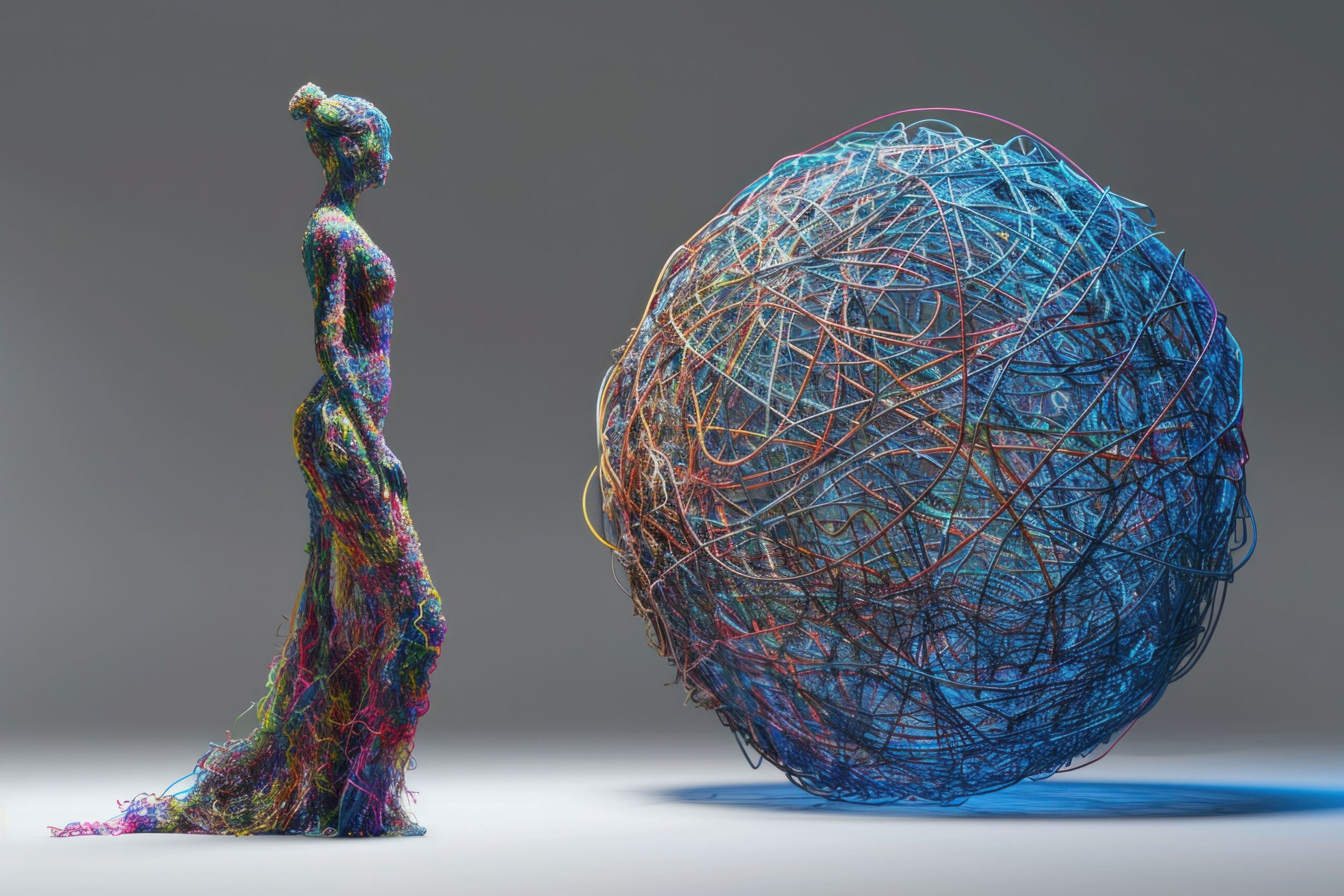
Send this to someone who wonders what luxury will be worth for the next generations.

Every share helps an independent magazine find the readers it is written for.

Continue

Couture Régénérative: the paradigm shift in luxury fashion Go deeper · Dossier Couture Régénérative How luxury fashion turns from extraction to regeneration, from soil and fibre to the houses that make it. Open the dossier →

Sources: McKinsey and The Business of Fashion, State of Fashion 2026; HSBC, Goodbye Stellar Growth; Textile Exchange, Materials Market Reports 2022 to 2026 and Materials Benchmark 2026; International Energy Agency, Key Questions on Energy and AI; Public Eye and Clean Clothes Campaign, 2026; NOAA Climate Prediction Center, 10 September 2026; Confartigianato, Unioncamere-InfoCamere data, 2025; Cassa Depositi e Prestiti, Fashion Sector Brief; Directive (EU) 2024/1799 on the repair of goods; PRISMA review, ScienceDirect 2025; Bain & Company, Luxury Hospitality 2025; The RealReal, Patina Premium Study 2024; IDHL 2026; Aura Blockchain Consortium 2026; Altagamma-BCG Luxury Market Monitor 2024; Corrado Manenti 2026; Source Fashion 2026; Affluent Consumer Research; First Page Sage 2026, the last ten as cited in The Silent Luxury Atlas 2026. © Silent Communications GmbH. Analyses published by request; backlinking freely permitted; reproduction requires written consent.

Continue reading

Where Landscape becomes the object: Objects that outlast the season they were made in — carrying landscape, knowledge and the specific hands that made them. FARUTA. This is what Local Soul looks like in practice. | Photo: Courtesy of Faruta

Local Soul: The Quiet Rise of Independent Luxury

Small and independent luxury houses gain ground across the world in 2026, carrying the rootedness, authorship and restraint that the conglomerates spent in pursuit of scale.

From Guochao 3.0 in China to emerging local luxury in Africa and India, the same structural logic is taking shape across markets that the western luxury industry has long treated as secondary. Local Soul, defined as value rooted in a specific place, a specific knowledge and specific people, is what the buyers who have moved on from the conglomerates are now seeking. The demand was always there. The space to answer it is growing.

The Space That Opens When Magic Is Spent

The Q1 2026 results of the major luxury conglomerates tell one part of the story. The fuller part is found in the ateliers, the small houses and the independent brands that built their value proposition on something the conglomerates spent during their decade of growth: provenance, controlled distribution, genuine craft and the relationship with the buyer that makes an object matter across time.

As documented in The Silent Luxury’s structural analysis of the luxury market in 2026, sixty to seventy million luxury consumers have left the market since 2022. They left because the silent contract at the heart of luxury, built on superior materials, genuine craft, controlled scarcity and lasting worth, had been broken by the very houses that defined the category. When eighty percent of luxury market growth between 2023 and 2025 came from price increases rather than genuine value gains, the buyers who understood the difference between luxury as perception and luxury as discipline registered the gap and moved elsewhere.

Where they moved is precisely where smaller and independent luxury brands have been building all along. The structural disenchantment of the major conglomerates creates room for authentic alternatives: for brands that prove their value through daily decisions about material, production and the quality of the relationship they maintain with their buyers. As Eva Winterer, Publisher of The Silent Luxury, puts it: “The Q1 results are a starting point. Industrial over-extension creates room for brands whose value is real.”

This development reaches well beyond a European or western phenomenon. The same structural logic is taking shape simultaneously in China, India, Africa and the Middle East, in markets and cultural contexts that have each arrived at the same conclusion through entirely different histories.

The Silent Luxury Local Soul · Global Market Scale

Local Soul Geographies — Where Demand Is Growing

Market scale and growth rates across the new geographies of luxury value · 2025/2026

Market Growth Rates — Local Soul Geographies

South Africa LuxuryFastest growing MEA geography
+11.03% CAGR
MEA Luxury Overall2026–2031 projection
+10.6% CAGR
Wellness Real EstateGlobal · 2019–2024
+19.5% p.a.
Wellness Economy Globalvs. GDP growth rate
2× GDP
Guochao Market 2028Projected volume
¥3 Trillion

New Geographies Combined

€45Billion

MEA, India, LatAm, SEA — matching mainland China in scale. 2025.

Wellness Economy 2024

$6.8Trillion

Global Wellness Institute. Doubling since 2013. Projected $9.8T by 2029.

Chinese Consumers

70% prefer local

Domestic brand preference citing quality and innovation. Daxue Consulting 2025.

Sources: GWI Economy Monitor 2025 · Mordor Intelligence 2026 · Daxue Consulting · Research and Markets · © Silent Communications GmbH


What Small Brands Carry Into the Shift

The brands gaining ground in 2026 and beyond share a set of structural characteristics that are embedded in the architecture of how a house makes decisions, and that accumulate over years rather than being acquired through a rebranding strategy.

The first is provenance. Small luxury brands know where their materials come from, who worked on them and how. This traceable origin is an operational reality: a house working at limited scale makes visible decisions that a supply chain of industrial size obscures. In a market where buyers are actively applying what analysts call the investment check to every purchase, asking whether an object carries genuine value across time, traceable provenance has become the most credible answer a brand can give.

The second is frequency. A small house releasing two collections a year, building objects on order or producing in quantities dictated by the time the work actually requires, is structurally aligned with the desire economy that the major conglomerates spent years contradicting. “The houses with a future replace the concept of the collection with the concept of the wardrobe,” says Winterer. “They are selling time.” Objects whose meaning accumulates across years of use, repair and continuation.

The third is creative distance. The process behind closed doors. The finished piece that arrives without explanation or justification. A small house with deep conviction about what it stands for carries its identity in its production philosophy, its material choices and its pace. This is the creative distance that generates desire, and it is structurally available to every independent brand that stays true to its founding logic. As Winterer has observed: “Visible desperation is the opposite of spell.”

The fourth is the relationship. The ongoing connection between a house and the people who carry its objects through their lives. Small luxury brands, by definition, work at a scale where this relationship is real. The buyer who returns for a repair, who commissions a continuation of an earlier piece, who recommends the house to someone they trust: this is the Relationship Economy operating at the scale where it creates compounding value.

Where Landscape becomes the object: Objects that outlast the season they were made in — carrying landscape, knowledge and the specific hands that made them. FARUTA. This is what Local Soul looks like in practice. | Photo: Courtesy of Faruta

The Flight of the Cranes

FARUTA

Read more


China: Guochao 3.0 and the Cultural Confidence of Local Soul

China in 2026 illustrates the structural logic of Local Soul with particular clarity. What is happening there is a generational reorientation toward value rooted in cultural identity, and it is reshaping the luxury category from within.

Guochao (国潮), literally “national wave,” has evolved through three distinct phases that trace a deepening of cultural confidence in Chinese consumer culture. Guochao 1.0, emerging around 2011, focused on Made in China as a quality signal, a direct response to decades in which Chinese manufacturing had been associated primarily with export volume production. Guochao 2.0, taking shape around 2018, brought Chinese streetwear and brand collaborations to the centre of youth culture, with the Forbidden City’s consumer products becoming an unlikely symbol of the shift. Guochao 3.0, the phase now defining China’s luxury conversation in 2025 and 2026, goes deeper: it integrates traditional Chinese culture, history, aesthetics and high craft into contemporary consumer goods, with traditional knowledge forming the structural logic of the product rather than serving as surface decoration.

The numbers reflect the scale of this shift. Forecasts project the Guochao market to reach over three trillion yuan by 2028. Daxue Consulting research indicates that approximately 70 percent of Chinese consumers now prefer domestic brands, citing quality and innovation gains. Hub of China’s 2026 research identifies what analysts call the “Identity Filter” as the dominant psychological force in Chinese retail: consumers are buying to signal alignment with their values. This shift in consumer psychology maps precisely onto the structural movement The Silent Luxury has been documenting in western markets, the transition from aspiration-based consumption to value-based engagement.

The Silent Luxury Guochao 3.0 · China Local Soul

Guochao 3.0 — China’s Local Soul in Numbers

Brand performance and consumer confidence data · 2024/2025 · Sources: AlixPartners, Daxue Consulting, Hub of China

Laopu GoldFine Jewellery · 2022–2024
×7
SongmontLeather Goods · Online 2025
+90%
Li-NingFashion · Revenue Growth
+65%
FlorasisBeauty · Craft Premium
+55%
Anta SportsSportswear · Market Share
+40%

Domestic Brand Preference

70%

of Chinese consumers prefer domestic brands, citing quality and innovation gains. Daxue Consulting 2025.

Guochao Market 2028

¥3Tprojected

Over three trillion yuan. The Identity Filter drives purchasing decisions toward cultural alignment over status signalling.

Sources: AlixPartners China Luxury Report 2025 · Daxue Consulting · Hub of China 2026 · © Silent Communications GmbH

The brands carrying this shift span every category relevant to the Well Living framework. In fashion and sportswear, Li-Ning pioneered the Guochao aesthetic by fusing traditional Chinese motifs with contemporary design at international fashion weeks, creating a cultural proposition built on knowledge that western luxury houses operating in China cannot import. Anta Sports has applied the same logic, combining technological performance with cultural relevance to reclaim market share from international competitors. In beauty, Florasis (花西子) integrates traditional Chinese craftsmanship, including relief carving and ancient cosmetic formulations, into products that carry cultural memory as a material quality. In wellness and lifestyle, TCM-based skincare formulations, Song Dynasty colour palettes in home décor and the integration of traditional health philosophies into contemporary wellness brands all express the same structural conviction.

In fine jewellery, Laopu Gold has built a practice that reinterprets traditional Chinese iconography, from gourds and dragons to Taoist motifs, as the foundation of a contemporary luxury proposition. Its pricing structure, which describes its premium as a processing fee above gold by weight, offers transparency in place of mystification. The brand was on track to surpass Richemont’s jewellery sales in China in 2025. As Howard H. Yu and Jialu Shan observed in their February 2026 analysis for IMD: “Laopu operates in a space where it mixes traditional Chinese craftsmanship and contemporary modernity, with high product versatility, and stays away from livestreaming. Its positioning is for the urban middle classes.”

What unites these developments across categories is what The Silent Luxury calls Local Soul: value that can only be made in a specific place, at a specific time, by specific people. “Luxury in 2026 and beyond is no longer a global player. It is a local soul,” says Winterer. “What What survives is what can only be made in a specific place, at a specific time, by specific people.”

Time is being read differently. As India gains weight in the global watch market, the wrist becomes a point where economic power, personal knowledge, and cultural codes meet. Indian luxury watch consumer in Mumbai office, January 2026, illustrating the structural growth of India's watch market under TEPA.

The Codes of a New World Order on the Wrist

WATCH MARKET | INDIA

Read more

India: Craft, Wellness and the Relational Consumer

India’s position in the global luxury shift carries its own structural logic. According to a Deloitte India consumer study reported in Luxebook India in March 2026, discretionary spending among affluent urban Indians has shifted toward experiences, wellness, travel and personalised services. The same study identifies Indian luxury consumers as highly relational and community-driven, a consumer profile that aligns structurally with the Well Living framework and the five movements The Silent Luxury tracks as the defining forces of luxury value creation through 2028 and beyond.

Indian independent luxury brands are gaining relevance because they carry what global conglomerates operating in India build with difficulty: genuine cultural provenance. Sabyasachi has built an international reputation by rooting his practice in Indian textile traditions, craft knowledge and aesthetic vocabulary, creating objects that carry cultural memory as their primary material value. Forest Essentials and Kama Ayurveda have done the same in wellness, building product propositions on Ayurvedic formulations, traceable Indian botanical sources and craft production methods that generate genuine scarcity through the time they require.

The McKinsey State of Fashion 2026 report confirms that Gen Z and millennial luxury consumers in India now prioritise brand values, storytelling and community over overt status signalling. Jessica Singh, Founder of Stanley Communications, told Luxebook India: “One insight that fundamentally changed how we approach luxury storytelling is that Indian consumers are highly relational and community-driven.” The shift from transaction to relationship, from global reach to Local Soul, is happening in India with a cultural specificity that gives it structural depth.


The Silent Luxury Africa · Luxury Market 2025/2026

Africa — The Rational Collector

South Africa luxury search trends and MEA market growth · Sources: Luxity 2025, Research and Markets, Mordor Intelligence 2026

South Africa — Category Search Growth 2025

JewelleryHighest growth category
+43.8%
BagsGrowing craft demand
+14.6%
South Africa Luxury MarketOverall growth 2025
+15%

LV + Gucci Combined Search Share — South Africa

2023Before the shift
30%
2025Buyers moved toward craft
21%

MEA Market 2026

$21.85Billion

Growing to $36.15bn by 2031. CAGR 10.6%. South Africa fastest growing at 11.03% CAGR. Mordor Intelligence 2026.

MEA + India + LatAm + SEA

€45Billion

Combined market value in 2025, matching mainland China in scale. The new geographies of luxury value.

Sources: Luxity State of the Luxury Market Africa 2025 · Mordor Intelligence MEA Luxury 2026 · Research and Markets · © Silent Communications GmbH

Africa: The Emergence of a Creative Luxury Geography

Africa represents the most structurally significant and systematically underestimated geography in global luxury for the decade ahead. The Middle East, Latin America, Southeast Asia, India and Africa together reached a combined market value of approximately 45 billion euros in 2025, matching mainland China in scale. The luxury goods market in the Middle East and Africa is projected to grow from 21.85 billion dollars in 2026 to 36.15 billion by 2031, at a compound annual growth rate of 10.6 percent, according to Research and Markets.

The structural story carries more weight than the market size figures alone. A 2025 analysis by Luxity, South Africa’s leading luxury resale platform, found that luxury consumers in South Africa evolved into what the report describes as rational collectors: buyers who curate luxury assets for their combination of emotional connection and long-term value retention. Jewellery searches rose 43.8 percent, bag searches grew 14.6 percent. Louis Vuitton and Gucci saw their combined search share fall from 30 to 21 percent, as buyers shifted toward brands carrying deeper craft credentials. This is the investment check operating in an African luxury market: the same structural dynamic visible in every market where the major conglomerates over-extended.

African designers and brands are building a luxury proposition from the conditions that Local Soul requires. Made in Africa is experiencing a cultural renaissance: local fabrics interpreted in contemporary design, accessories that fuse minimalist aesthetics with ancestral craftsmanship, hospitality that embeds African cultural knowledge into the structure of the guest experience. The work of designers like Thebe Magugu, whose collaboration with Cape Town’s Mount Nelson Belmond Hotel exemplifies the fusion of luxury and African cultural relevance, signals an industry building from genuine cultural depth outward.

Cities including Lagos, Nairobi, Casablanca and Cape Town are emerging as luxury hubs carrying their own cultural logic. As a 2026 analysis in the Times Live put it, luxury houses that fail to recognise the shift from viewing these regions as markets to seeing them as partners do so at their own peril. The brands succeeding here are those that localise their product architecture, working with local artisans, sourcing regional materials and building community relationships that generate compounding loyalty.


Well Living: What Buyers Are Actually Looking For

The numbers confirm the direction. The Global Wellness Institute puts the wellness economy at 6.8 trillion dollars in 2024, growing at twice the rate of global GDP. Deloitte’s Global Powers of Luxury 2026 report identifies luxury travel as the segment with the highest growth potential, cited by 36.2 percent of 420 senior executives surveyed. Behind every data point is a person making a decision, and understanding that decision requires a perspective closer to the ground.

The buyer choosing a small independent brand in 2026 is making a quality judgement. She has looked at the object in front of her and asked: who made this, where, with what, and how long will it carry meaning in my life? She has weighed that answer against what the major houses are offering, and found it more convincing in the smaller room.

She travels differently too. Extended stays rather than four cities in five days. Places where the experience is structured around her rhythm. Wellness understood as something the environment delivers through its quality, its silence, its rootedness in a specific landscape. The growth in luxury wellness real estate, at 19.5 percent annually between 2019 and 2024, reflects the same orientation: the environment itself as a carrier of value.

What connects the buyer in Shanghai choosing a Guochao jewellery brand, the buyer in Mumbai choosing Sabyasachi, the buyer in Cape Town curating objects with genuine craft provenance, and the buyer in Vienna building a wardrobe of pieces that will carry across a decade, is the same underlying question: does this connect me to something that can only exist in this form, in this place, made by these people?

The small and independent brands that answer this question with the full weight of their production philosophy, their material sourcing and their relationship with the people who carry their objects have been building for exactly these structural conditions.


Continue reading

Centuries-old silk, a new silhouette. Wave patterns that have accompanied tea ceremonies in Kyoto now walk the streets of London and New York. FARUTA carries the journey forward. | Photos: in Courtesy of FARUTA

The Flight of the Cranes

Marina Furuta’s label FARUTA transforms vintage Japanese kimonos into contemporary coats and jackets through a philosophy rooted in the Japanese concept of Mottainai, the deep appreciation for every resource and living being that contributed to an object’s creation.

Cranes are the symbol of longevity and fidelity in Japan—in Marina Furuta’s hands, they continue their flight. With her label FARUTA, she transforms vintage kimonos into wearable artworks with soul. In the spirit of Couture Régénérative, masterpieces of upcycling emerge that transform wedding garments into modern design icons.

Working from her London atelier, Furuta selects kimonos from the Taishō and early Shōwa periods whose silk retains its original lustre, and reinterprets them using traditional Japanese sewing techniques that preserve the original structure. Each piece carries centuries of craft knowledge — the Yūzen dyeing, the Shibori pleating, the eight-panel Tan construction — into the wardrobes of collectors in New York, London and Vienna. FARUTA is Couture Régénérative in its most precise form: the regeneration of existing craftsmanship for a new era.

Local Soul to land

An art collector in New York wears cherry blossoms to a vernissage. In the streets of London, cranes wander across contemporary silhouettes on a kimono coat. A chrysanthemum pattern adorns the coat of a gallery visitor in Vienna. What connects these women are centuries-old silk threads that once graced weddings in Kyoto and accompanied tea ceremonies in Japan.

The symbols have remained the same: cherry blossoms for the transience of beauty, cranes for eternal love, chrysanthemums for imperial perfection and purity, waves as symbols of calm. Only their stage has changed: from the quiet tatami mats of Japanese houses to the pulsating world of the international art scene.

Behind this poetic transformation stands a woman who practices a centuries-old philosophy in her London atelier: Marina Furuta. In her hands, traditional, already-worn vintage kimonos become modern coats and jackets that carry centuries-old craftsmanship into the present. Her work exemplifies a new generation of couture, that of “Couture Régénérative.” It is a form of couture that respectfully transforms existing resources instead of consuming new ones and continues to tell the stories of the products.

As a Japanese woman with many years of international experience, Furuta recognized the growing Western interest in Japanese aesthetics and the simultaneous challenge of integrating traditional kimonos into modern wardrobes. Her design approach has been on the market since 2019, signed under the name FARUTA. The applied methodology stores a social, cultural, and historical archive within itself and guides a respectful transformation of vintage kimonos into contemporary, design-oriented fashion.


Mottainai – The Japanese Art of Never Throwing Away

Furuta’s work is deeply rooted in the Japanese concept of Mottainai (もったいない). This concept goes far beyond the Western understanding of sustainability and encompasses deep appreciation for all resources and living beings that contributed to the creation of an object: the time of the silkworm spinning its cocoon, the decades-long mastery of the weaver, the creative vision of the designer, and the loving care of a family heirloom over generations.

Thus, this philosophy recognizes in every kimono a complex cosmos of stories, skills, and emotional connections. To waste a garment would mean disregarding all these precious contributions. One can say that Furuta, in accordance with this life attitude, appreciates every aspect of a kimono’s cultural heritage and respectfully guides it into a new life phase.

FARUTA thus practices “Couture Régénérative” in its purest sense: the regeneration of existing craftsmanship for a new era. Instead of consuming new resources, existing textile treasures are reinterpreted with contemporary cutting and wearing techniques.

What Cranes, Koi, Chrysanthemums, and Cherry Blossoms Tell

The visual language of kimonos developed over a thousand years of Japanese textile history. During the Edo period (1603-1868), craftsmen refined their dyeing and weaving techniques to extraordinary perfection. Beginning with the 20th century and especially in the last two decades, traditional kimono production has been shrinking. At the same time, countless of these textile treasures lie stored in Japanese households. And this is exactly where Furuta’s mission begins.

Every kimono carries a coded message within it. These visual codes transform each kimono into wearable philosophy, a textile meditation on life, time, and beauty, representing its wearers.

The symbolism follows a sophisticated system that has developed over centuries. Koi carp (鯉) stand for perseverance and overcoming obstacles. It is a metaphor borrowed from a Chinese legend, according to which a koi that swims up a waterfall becomes a dragon.

Cranes (鶴, Tsuru) symbolize longevity and marital fidelity, as they enter lifelong partnerships. The Seigaiha wave pattern (青海波) represents calm, the eternal cycles of life, and hope for a peaceful future.

Chrysanthemum motifs (菊, Kiku) are the symbol of the imperial family. Chrysanthemums are closely associated with the Japanese imperial family, as they are its heraldic flower and the imperial seal of Japan shows a stylized chrysanthemum with 16 petals. The Japanese imperial throne is therefore also called the “Chrysanthemum Throne.” They stand for perfection and purity while also indicating autumn.

Cherry blossoms (桜, Sakura) embody the transience of beauty and recall the Buddhist teaching of Mono no Aware, the bittersweet awareness of the fleetingness of all things.

Bildschirmfoto 2026-01-11 um 10.59.55

Marina Furuta works with the ‘Tanmono’—the traditional rolls of Japanese silk that have never been cut. In her London studio, she treats these unplayed instruments of craftsmanship with the utmost respect. The weight of the heavy silk and the vibrancy of the Yūzen dyeing techniques are not just preserved; they are given a new, international silhouette.

This is a tactile dialogue between a thousand-year-old heritage and a modern lifestyle. Touching a FARUTA coat means feeling the labor of the silkworm and the mastery of the Kyoto weaver in its purest form. It is an honest approach to design where the material dictates the form, ensuring that the original soul of the silk remains unviolated while it walks the streets of the world’s fashion capitals.


  • Bildschirmfoto 2026-01-11 um 10.59.04
  • Where Landscape becomes the object: Objects that outlast the season they were made in — carrying landscape, knowledge and the specific hands that made them. FARUTA. This is what Local Soul looks like in practice. | Photo: Courtesy of Faruta
  • Bildschirmfoto 2026-01-11 um 10.59.42
  • Bildschirmfoto 2026-01-11 um 10.58.52

Eight Fabric Panels on the Way to a New Life

  • Respectful Modification

    In contrast to mass production, each kimono is treated as a unique piece. Adjustments are made using traditional Japanese sewing techniques that allow the original structure and characteristic hem to be preserved. The length is typically shortened by 20-30 centimeters, the cut adapted for Western wearing habits.

  • Design Through Material

    A fundamental difference from conventional fashion production: at FARUTA, the available material determines the design, not vice versa. A striking floral pattern on the back of a kimono becomes the central element of the new piece. The constraints of available material lead to minimalist designs that emphasize the natural beauty of the historical silk.

  • Zero-Waste Principle

    After modifications, fabric remnants remain that are completely reused. These become functional bags, the so-called “Furoshiki bags” (風呂敷バッグ), which serve for storage while simultaneously creating an emotional connection between the new garment and its original form.


Where Landscape becomes the object: Objects that outlast the season they were made in — carrying landscape, knowledge and the specific hands that made them. FARUTA. This is what Local Soul looks like in practice. | Photo: Courtesy of Faruta Where Landscape becomes the object: Objects that outlast the season they were made in — carrying landscape, knowledge and the specific hands that made them. FARUTA. This is what Local Soul looks like in practice. | Photo: Courtesy of Faruta

The Quiet Rise of Independent Luxury

Local Soul

Read more

From Wedding Dress in Kyoto to Gallery Visit in Manhattan

The kimonos that Furuta uses were once sewn for special occasions—for weddings, tea ceremonies, or New Year’s celebrations. Through her transformation, they receive a new function in a different time, for different people, in different cities. The silk threads that perhaps once adorned a ceremony in Kyoto are today worn by an art lover in London or a collector in New York.

This geographic and temporal migration gives each piece an additional dimension with special meaning. For this innovative and almost philosophical concept in the form of a FARUTA kimono weaves the original symbolism of its existence with the story of its journey through different hands, different cultures, and across continents.

Thus, the kimonos transformed by the designer become enriched with additional symbolism beyond their speaking designs. Her work shows how contemporary fashion can preserve history while simultaneously writing new stories.

The story of each FARUTA coat is the story of continuous metamorphosis: silk threads that have taken different forms over centuries, dressed different people, and accompanied different moments. In Furuta’s hands, they continue their journey as living witnesses of a culture carried into modernity through respectful innovation. With this philosophy as a basis, garments emerge in her London atelier that continue a new chapter in the millennia-old history of Japanese textile art.

Each upcycled and newly composed piece carries the DNA of its original purpose while simultaneously gaining new relevance in the globalized world. The cherry blossoms on a coat still speak of transience and beauty, cranes of longevity, chrysanthemums of perfection and purity, waves of calm. The places where they do so have changed: Furuta’s designer kimonos tell these stories in the streets of London, the galleries of New York, or the cafés of Vienna. Each kimono in its second or third life phase is proof that beauty is timeless. It sometimes just needs a new form to unfold its zeitgeist-appropriate effect in the new epoch.

Continue reading