Salone Raritas 2026: Inside Salone del Mobile’s First Collectible Design Section
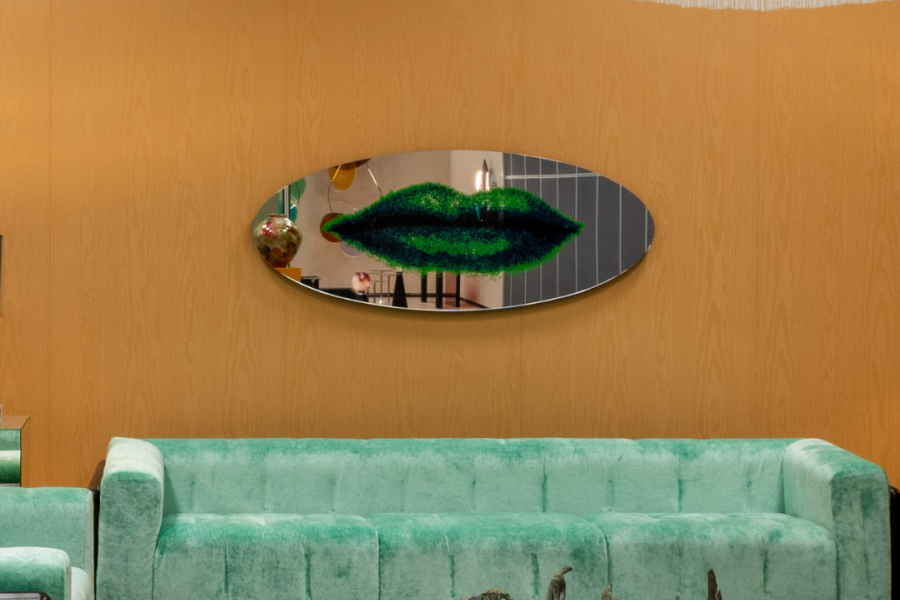
Salone Raritas is the new section of Salone del Mobile Milano dedicated to collectible design, limited editions, antiques and high-end craftsmanship. It debuted at the 64th edition of the fair, held from 21 to 26 April 2026 at Fiera Milano Rho, occupied Pavilions 9 through 11 and gathered 28 galleries from 12 countries across roughly 12,900 square feet. The section was curated by Annalisa Rosso, Editorial Director and Cultural Events Advisor of Salone del Mobile, with exhibition design by Formafantasma, who conceived the space as a large architectural lantern.
The launch was the institutional response to a movement that had been building for years outside the fair’s gates. Where collectible design used to live in the city, scattered across Fuorisalone exhibitions and gallery shows in Brera, 5VIE and Tortona, it now had a home inside the fair itself — a shift that reflected how the boundaries between industrial design, collectible design and high craftsmanship have become increasingly porous.
What is Salone Raritas?
Salone Raritas is a curatorial platform designed for an audience of architects, interior designers, hospitality developers and investors who recognise limited edition and rare design as strategic assets. The name derives from Latin and evokes rarity, uniqueness and sought-after exceptionality. The 2026 selection of exhibitors was deliberately restricted: 28 entities including international galleries, antique dealers, excellence manufacturers and companies with custom-made productions.
The brief was specific. As Annalisa Rosso put it: “Salone Raritas builds open channels of communication between realities that until very recently seemed far apart, allowing many of them a chance to meet for the first time. The Salone is thus confirming its status as an institution capable of generating relationships, perspectives and new forms of shared growth.”
The exhibition design spoke the same language as the curatorial brief. Formafantasma’s modular wooden dividers, separating each gallery’s space, were engineered for three years of reuse and required no drilling. The booths sat at three-quarter height, arranged along quiet aisles, walls painted in subtle mineral tones — an antidote to the sprawling acres of contract, office and lighting design that filled the rest of the fair.
Who exhibited at Salone Raritas 2026?
The 28 exhibitors at Salone Raritas 2026 spanned 12 countries and the full spectrum of collectible design — from twentieth-century icons to studios making their first appearance at the fair.
Galleries with established collectible design programmes
Nilufar — the Milanese gallery founded by Nina Yashar, with a programme that has shaped collectible design as a category. Mitterrand Gallery from Paris showed work by Claude and François-Xavier Lalanne, the bipartite practice that bridged sculpture and functional design. Galerie Philia presented How High the Moon, an installation curated by founder Ygaël Attali combining stainless steel, aluminium and silver-toned materials in a register both industrial and ethereal. Side Gallery brought iconic figures of modern Japanese design. Max Radford Gallery showed a solo presentation by Lewis Kemmenoe.
Studios entering through new geographies
Mercado Moderno brought Brazilian tropical modernism. Zaza Maizon by A1Architects showed sculptural pieces for hospitality spaces, including Gem of the Peninsula, a metallic sculpture whose forms drew from the mountains and valleys of the Arabian peninsula. “We are the first Saudi company since the beginning of Salone to participate in the fair,” said architect and designer Abdulaziz Khalid Al Tayyash. The pieces were shown in runs of under six per year.
Designers extending design into art
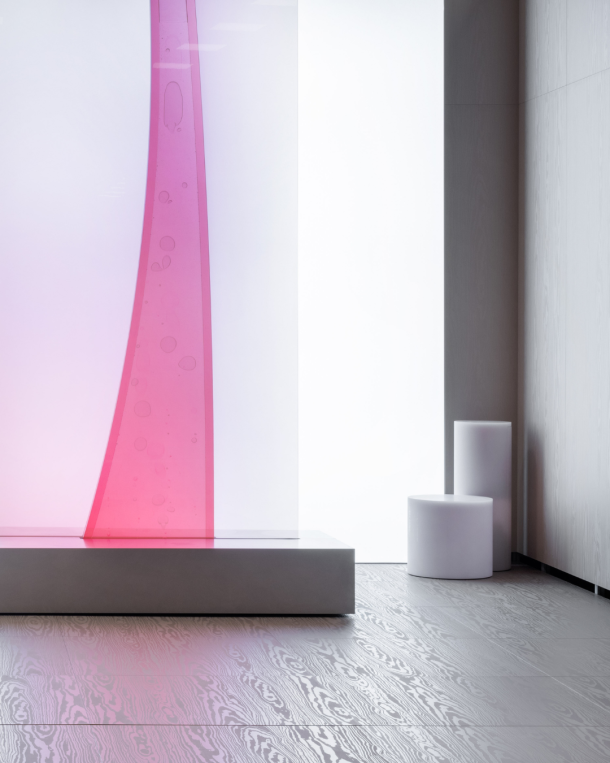
Sabine Marcelis presented Plume, a nearly ten-foot sculpture in pale-pink polymer resin and silicon oil exploring how air moved through liquid to create soothing, ever-changing shapes. “It’s about collectible design that lives outside of marketing briefs,” Marcelis told Dezeen. Studio Francesco Faccin con Fonderia Artistica Battaglia showed tables and chairs that appeared to be planks of wood and were bronze casts.
Manufacturers and editions
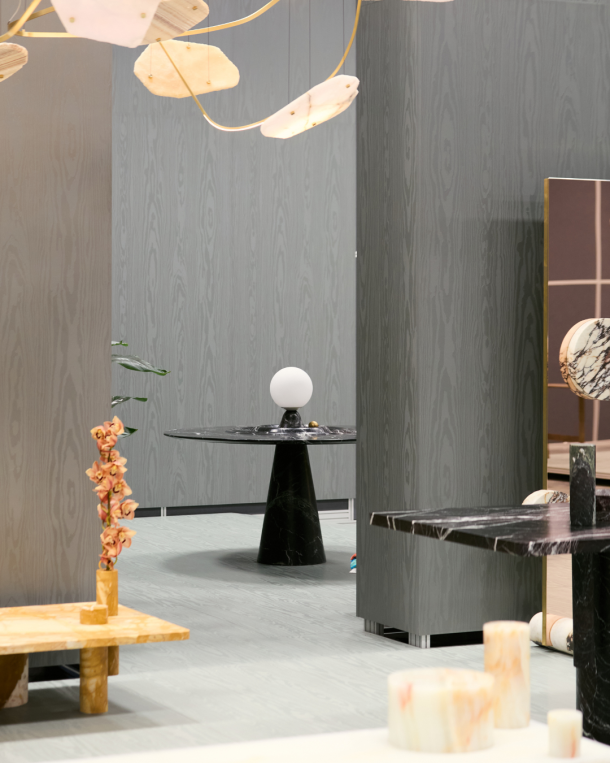
Salviati x Draga & Aurel paired the historic Murano glassmaker with the design-forward duo. Marta Sala Éditions presented work with Herzog & de Meuron. Neutra showed the Erosion collection by Zaha Hadid Architects — undulating, curved marble seats and tables whose amorphous shapes evoked the studio’s buildings. Paradisoterrestre, Hering Berlin, Brun Fine Art, Officine Saffi Lab, Mouromtsev Design Editions, Serafini, Botticelli Antichità & Alessandra Di Castro, Consorzio La Permanente Mobili Cantù, Galerie Zippenfenig, Massimo Lunardon Edizioni, Matera, Parasite 2.0 x Bianco67, 13Desserts, 1182 Ltd., ABI and Xavier Lust completed the line-up.
Why Salone Raritas matters: collectible design enters the institutional centre
The launch of Salone Raritas reflected a structural shift in the design market. Until 2026, collectible design lived outside Salone del Mobile — in Fuorisalone gallery shows, in independent platforms like Alcova, in cross-pollinating events such as Design Miami, Matter and Shape, and Collectible. By bringing 28 galleries and 12 countries into the fair itself, Salone del Mobile signalled that collectible design has moved from outsider category to mainstream venture.
The shift carries economic logic. International hospitality, residential development and experiential retail increasingly incorporate limited edition works as levers of identity and positioning. A hotel commissioning a one-off piece by a Lalanne, an Eames-edition lounge in a private residence, a marble seat by Zaha Hadid Architects in a flagship store — these are not decorative choices, they are positioning decisions. Salone Raritas brought that buyer audience inside the fair gates and gave the galleries serving them a platform with the same institutional weight as the industrial design halls.
This is also where the philosophy of Local Soul — the principle that value derives from a specific place, a specific knowledge and specific people — operates with particular force. A Brazilian studio cannot replicate Saudi material traditions. A Lalanne cannot be made in Murano. The collectible design segment is structurally aligned with what The Silent Luxury has documented as the buyer movement away from over-distributed luxury towards traceable provenance and material specificity.
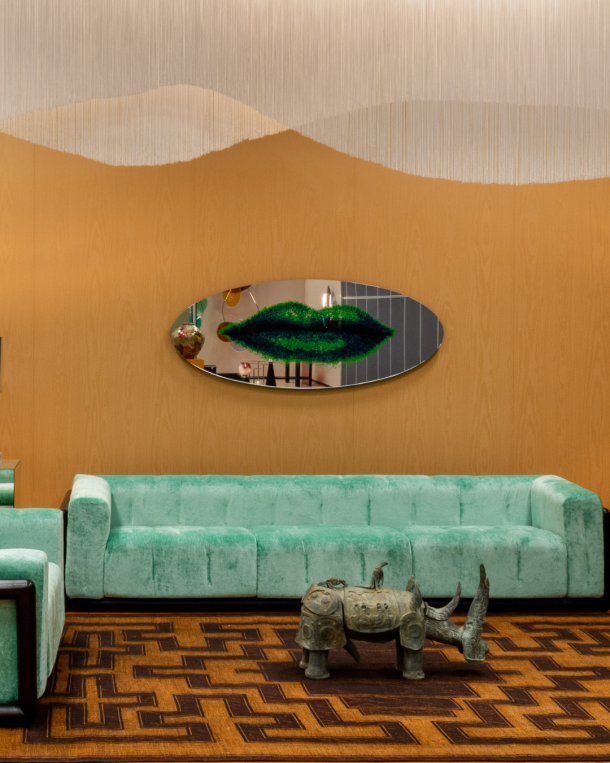
Three installations that defined the inaugural edition
Similar Articles

Armani Without Giorgio: The House Opens a New Chapter
Savile Row: One Block of Mayfair, Two Centuries of Bespoke Tailoring

The Caliber of the Deep: Blancpain and the Ocean Photographer of the Year 2026