Chad Oppenheim at Desert Rock: The Architect Who Wants You to Forget the Building
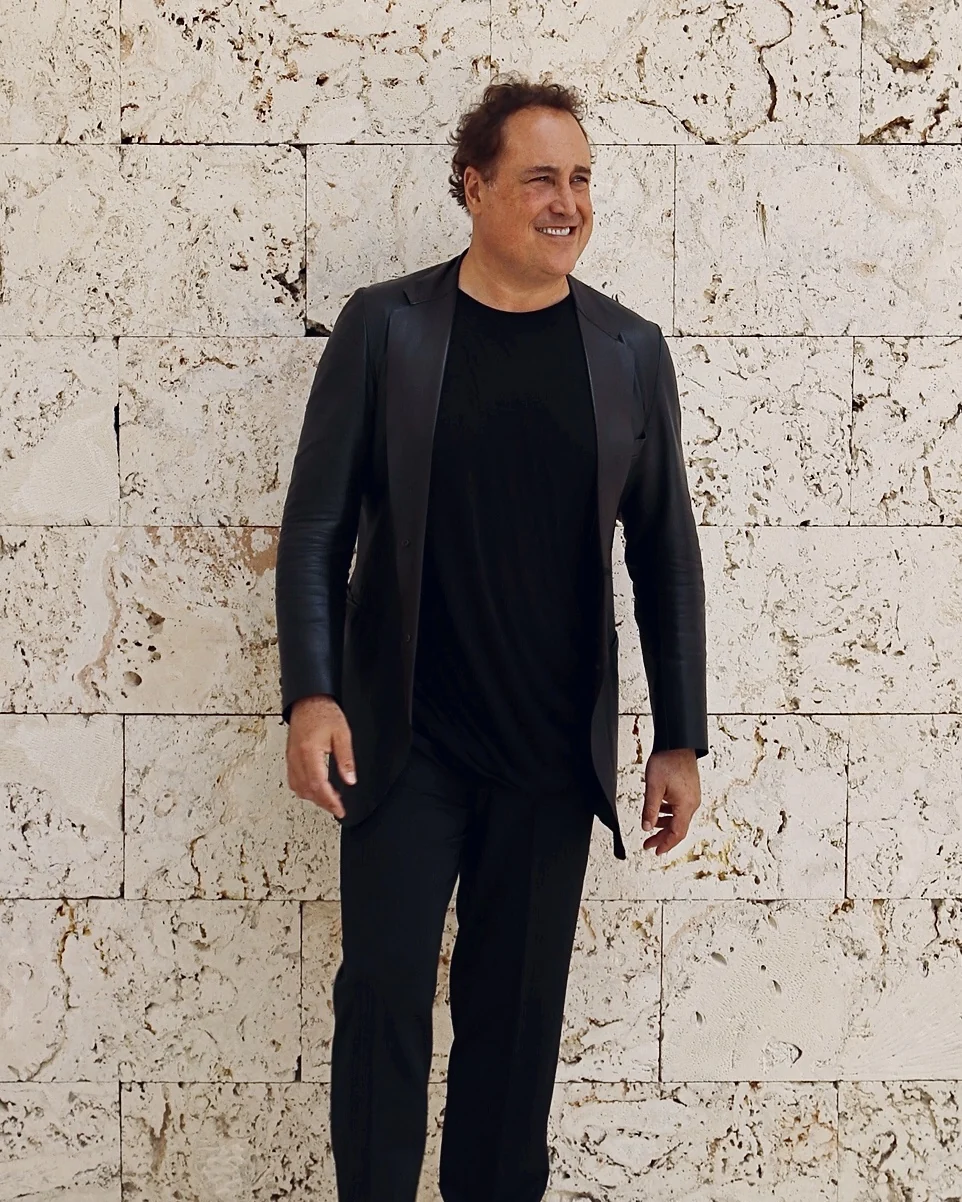
Chad Oppenheim judges a building by how completely its guests forget it. The architect founded Oppenheim Architecture in 1999 and works from studios in Miami, Aspen, Basel and Tirana. He designed Desert Rock, a resort set into the granite of Saudi Arabia’s Hejaz mountains. On 18 September 2026 Desert Rock won the Michelin Architecture and Design Award. “Ultimately, if I’ve done my job well, people won’t remember the building,” Oppenheim said in conversation with The Silent Luxury. “They’ll remember the place, how it made them feel, and the connection they had with nature.”
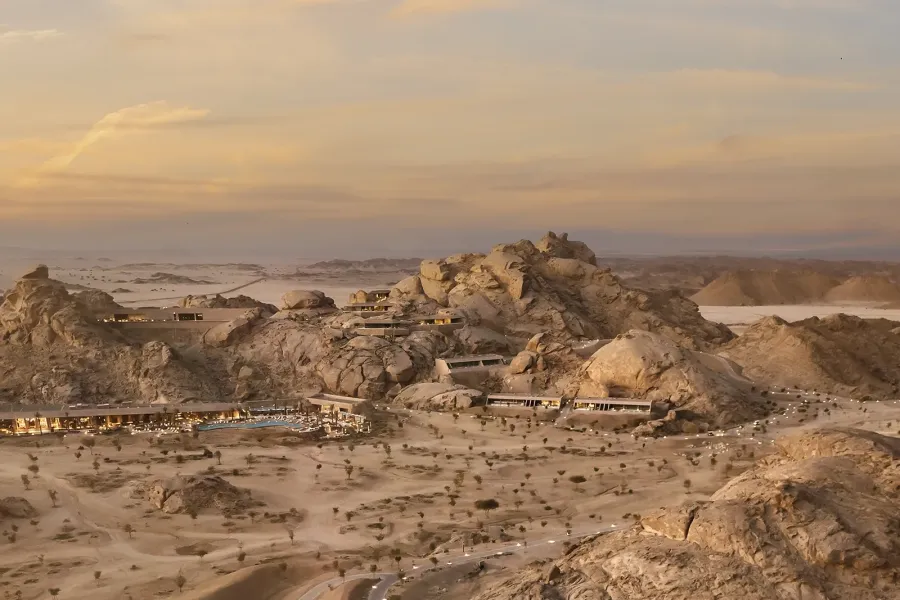
The Desert Rock resort makes the case in stone. It opened in December 2024 near Umluj, in Red Sea Global’s The Red Sea destination on Saudi Arabia’s Red Sea coast. Its 54 villas and 10 suites spread across 30,000 square metres of canyon. Guests arrive through a hidden valley about 20 minutes by road from Red Sea International Airport. Some villas stand at ground level in the wadi and others hang from the cliffs. The Mountain Cave Suites and Crevice Villas sit in hollows and clefts of the rock itself. Michelin’s inspectors, who travel anonymously, called Desert Rock a striking property “carved into the landscape” and chose it from five nominees that stretched from Beijing to Sedona. The award is only in its second year. The first went to Atlantis The Royal in Dubai in 2025.
For Oppenheim, the award confirms a direction he has followed for years. In his view, a building should keep its voice low and belong to one valley alone. It should leave the land in better shape than it found it. The full interview appears in Chad Oppenheim: “People Won’t Remember the Building. They’ll Remember the Place”.
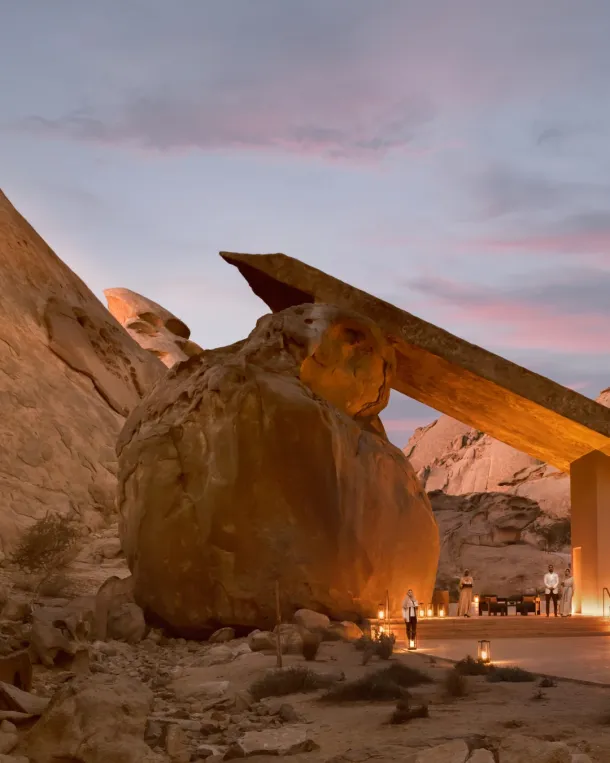
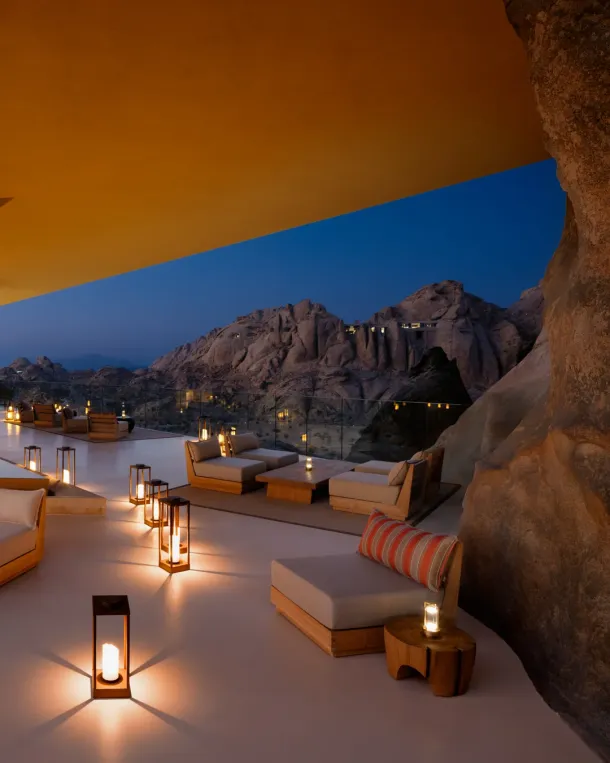
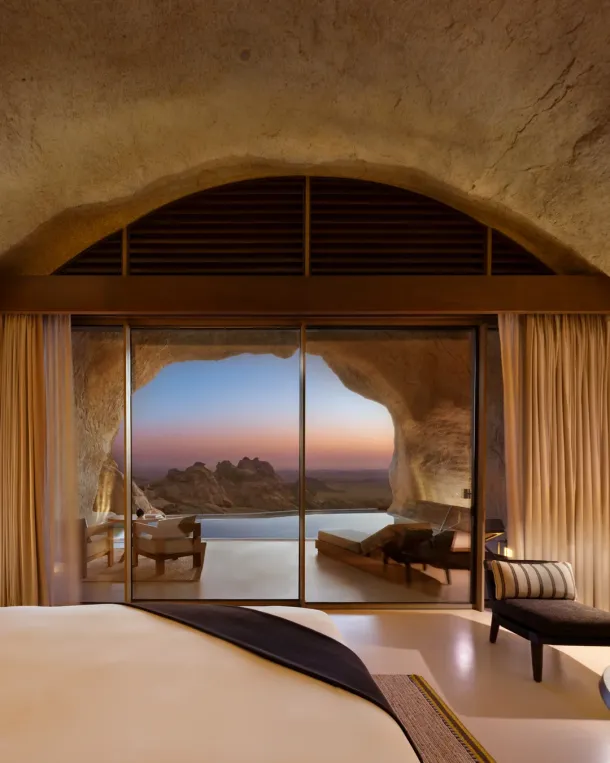
Desert Rock in the Hejaz mountains, Saudi Arabia. Architecture by Oppenheim Architecture. Courtesy of Red Sea Global and Oppenheim Architecture
Silent Monumentality: Chad Oppenheim at Desert Rock
Silent monumentality is Chad Oppenheim’s term for architecture that feels immense to experience and stays quiet to look at. “I love the idea of silent monumentality,” he said. “Architecture that is monumental in its experience but silent in its expression. It doesn’t need to shout or demand attention to be powerful.” The quality he values most in an architect is sensitivity. He describes it as the ability to understand a place, to listen to it and to know when to do less. For his studio, he said, the aim is always “making nature the star of the show and allowing architecture to play a supporting role”.
Oppenheim separates quiet from invisible with care. “And silent doesn’t necessarily mean invisible,” he said. “It’s about creating something that feels so completely connected to its setting that it seems inevitable, as though it has always belonged there.” He has been circling the idea for years. His 2019 monograph is titled Spirit of Place. When Desert Rock opened, he said the resort “embodies our philosophy of connecting architecture to the spirit of place”. In the Hejaz he took the idea literally and put the suites inside the rock.
Two Words for Restraint: Chad Oppenheim and Paolo Ferrari
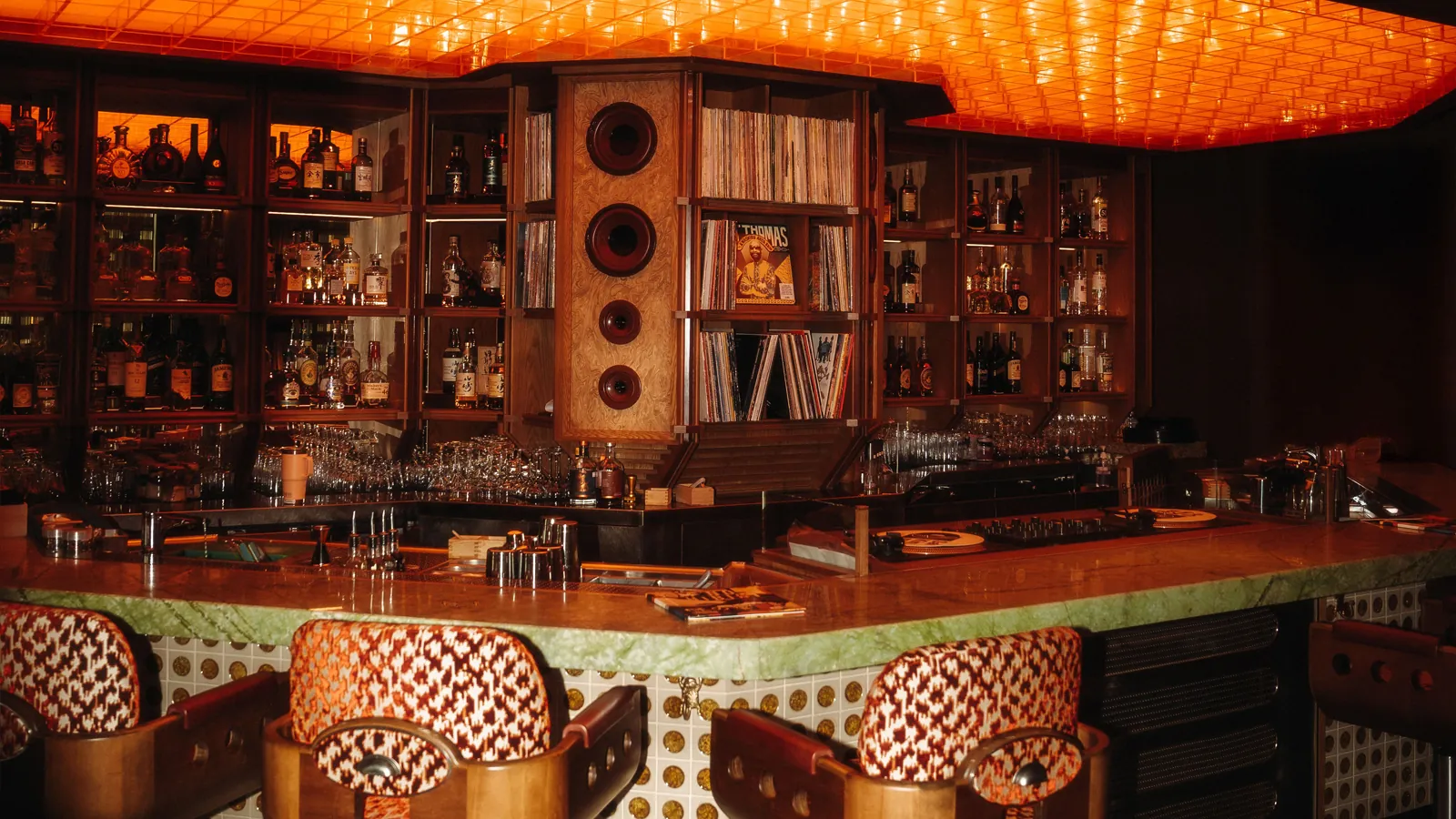
Inside the same rock, the designer Paolo Ferrari arrived at a neighbouring idea. His studio created every interior at Desert Rock, including some 200 pieces of furniture and lighting, and he calls his approach quiet monumentality. “Sometimes the most powerful gesture is restraint,” Ferrari said in his conversation with The Silent Luxury. Oppenheim set the resort into the mountain and Ferrari decided how it feels to sit inside it. They describe the same discipline, one from the outside and one from within.
The real test of silent monumentality comes later, once a building has had decades to settle into its site. Oppenheim wants his work to improve with age. “I’m not interested in creating something that’s fashionable today and irrelevant tomorrow,” he said. “I want our buildings to become more beautiful, more meaningful, and more connected to their environments as they age.” Timelessness, in his account, grows out of what has always moved people: light, space, proportion, materials and the relationship with nature, principles he traces back to Vitruvius. “It’s not about creating something that never changes,” he said. “It’s about creating something that continues to matter.”
A note from The Silent Luxury
Good reading deserves to find you again.
A Place You Cannot Copy: Desert Architecture in the Hejaz
Desert architecture, for Chad Oppenheim, means learning from how earlier builders answered sun, wind, climate and local materials. He studies their reasons and keeps his distance from imitation. “I think there’s so much wisdom in the way people built in the past,” he said. “But it’s not about copying what they did. It’s about understanding why they did it.” For thousands of years, he said, architecture was fundamentally connected to nature, until technology allowed builders to ignore it.
At Desert Rock, that inquiry led to the rock-cut architecture of the Nabataeans, and Oppenheim turned the principle into suites set in caves and crevices. In Aqaba, Jordan, his Ayla Golf Academy and Clubhouse takes its form partly from traditional Bedouin stretch tents and partly from the surrounding scenery. Both buildings borrow a logic from the region and give it a contemporary form. Oppenheim calls the method “solving for the truth”. It means stripping away preconceived ideas about style and about “what will photograph well” until only the essence of a site is left. “I believe the most powerful architecture is something that could only ever exist in that particular place,” he said.
The Michelin award, in Oppenheim’s view, shows that travellers now want exactly this. “For so long, luxury hospitality was about creating a certain standard that could be replicated anywhere in the world,” he said. “I think we’re seeing the opposite now. A kind of de-homogenization, where what makes a place special is precisely what makes it different.” The greatest luxury, he said, is “experiencing something you couldn’t experience anywhere else”. It can be as small as the way light enters a room or the sound of the wind.
Saudi Hospitality on Its Own Terms: Red Sea Global
Red Sea Global, the developer owned by Saudi Arabia’s Public Investment Fund, built Desert Rock and runs it itself. At AMAALA, another of its destinations, international brands including Four Seasons, Six Senses and Rosewood run the resorts. Sébastien Carré, group head of hospitality at Red Sea Global Hospitality, said Desert Rock and Shebara “were created to represent Saudi Arabian hospitality on a global stage”. Desert Rock also belongs to a Saudi typology of resorts carved into the rock that includes Jean Nouvel’s Sharaan project in AlUla. A resort that could only exist in the Hejaz gives the kingdom a standard of its own, one that lives in a single valley.
From Object to Place: Regenerative Architecture at Desert Rock
Regenerative architecture, in Chad Oppenheim’s definition, asks a building to improve the place where it stands. “I love the idea that our role as architects is shifting from creating objects to looking after places,” he said. He sets that against a long history of extraction. “We’ve conquered landscapes, redirected rivers, flattened mountains, and created cities that separate us from the very environment that sustains us,” he said. Keeping things as they are no longer satisfies him. “We should be thinking about regeneration, about how we can actually improve the places where we build.”
His brief extends well beyond the walls. Oppenheim wants to design “the whole ecosystem, not just the building”, from landscape, water and vegetation to wildlife, climate and the human experience. At Desert Rock the mountain itself became building material. Stone excavated during construction went back into the resort as stairs, bridges and paths. The reuse was part of the plan as early as 2021, when rock from the mountain was meant to become walls and, ground down, aggregate for concrete. The buildings rely on passive cooling, and native plants grow in the wadi. John Pagano, group chief executive of Red Sea Global, said at the opening that the resort is powered entirely by sunlight.
A Protected Night Sky: DarkSky at Desert Rock
Desert Rock and Nujuma, a Ritz-Carlton Reserve, became the first resorts certified as DarkSky Approved Resorts. DarkSky International developed the new tier together with Red Sea Global. “Together, we developed resort-specific lighting best practices,” said Ruskin Hartley, DarkSky’s chief executive. Desert Rock runs an astronomy centre with telescopes and leads night walks along its Luna Trail. The darkness over the Hejaz has become part of what the resort protects and part of what it offers its guests.
Oppenheim’s most radical suggestion is also his simplest. “And sometimes the most important thing we can do is nothing at all,” he said. “To recognize that nature has already created something extraordinary and our responsibility is to protect it.” He proposes a new measure for his profession, one that counts what stays untouched. “I think we should measure success not only by what we create, but also by what we preserve.”
Doing Less: The Future of Saudi Arabia’s Luxury Resorts
The future of Saudi Arabia’s luxury resorts lies in the landscapes Chad Oppenheim expects to define the next 20 years. He wants architects to build less in them. He named “deserts, mountains, forests, coastlines, even extreme climates” as the settings that will matter more, because people “are going to seek experiences that move them, that reconnect them with nature”. The question he puts to his own profession is how to do more with less. “How can we create extraordinary experiences while intervening as little as possible?” he asked. “How can we regenerate rather than consume?”
Saudi Arabia will test those questions at scale. For The Red Sea destination alone, Red Sea Global plans 50 resorts and hotels with up to 8,000 rooms on 22 islands and six inland sites by 2030. It also plans its first project outside the kingdom, in Italy. Every one of those sites faces the decision Desert Rock made in granite: how much building a landscape can carry before guests start to remember the building. Oppenheim’s answer puts the place first. In his version of the future of luxury, architecture grows “increasingly silent in its setting” and places that move people become the destination.
“Ultimately, I think the greatest opportunity for the future isn’t to create more extraordinary buildings,” Oppenheim said. “It’s to create more extraordinary relationships between people and the natural world.”
After dark at Desert Rock, the lighting follows the rules Red Sea Global wrote with DarkSky International, and the stars over the Hejaz take over from the architecture.
Send this ↗ to someone who remembers places long after the buildings in them.
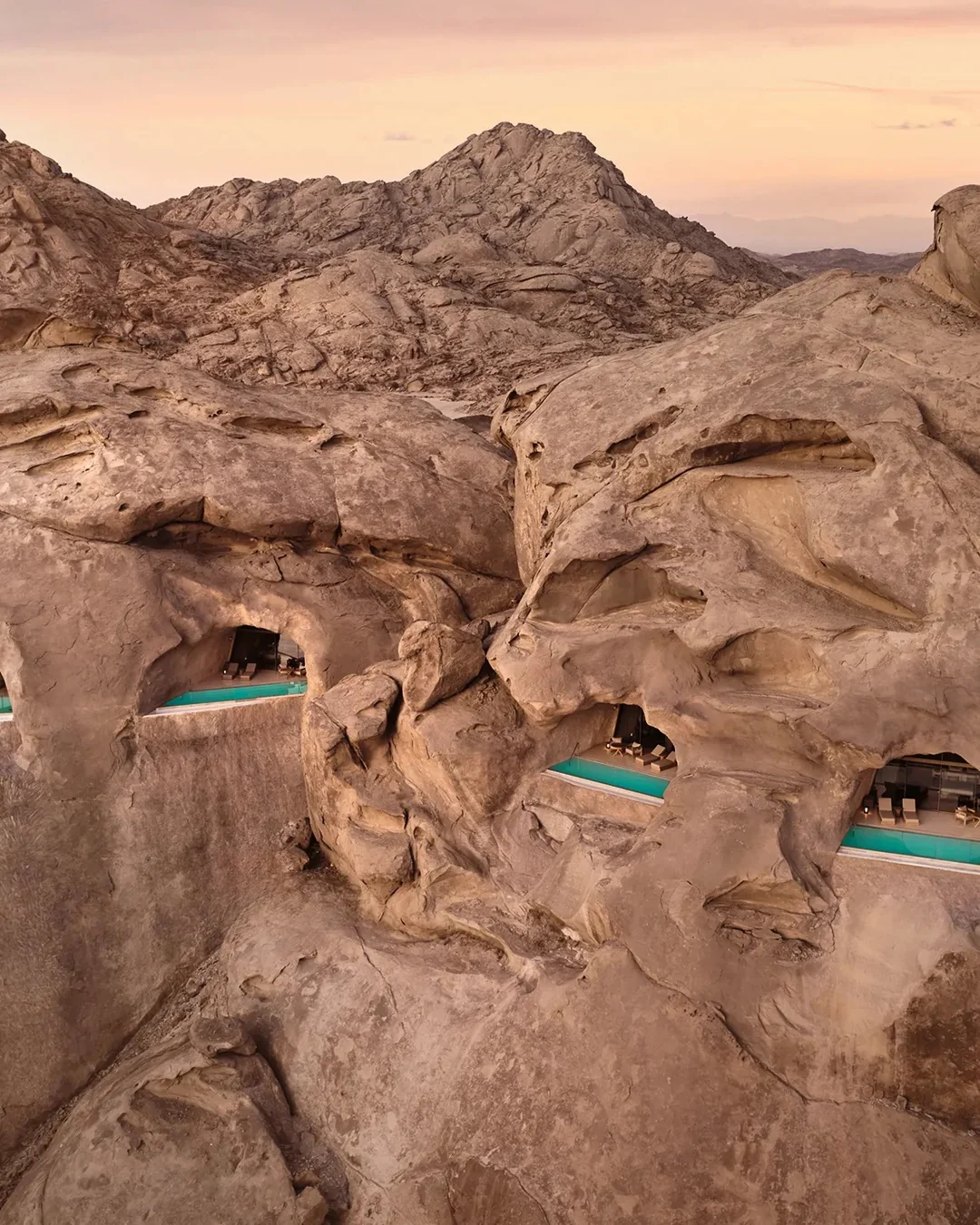 Read next · The ConversationChad Oppenheim: “People Won’t Remember the Building. They’ll Remember the Place”The full interview on silent monumentality, the wisdom of earlier builders and the architect as caretaker of a place.
Further Reading
-
Built to Stay: What the Places You Remember Are Made Of
Slow hospitality hotels are places designed to change how you feel, sleep and move through a day. From Borgo La Pietraia in the Cilento to Vigilius Mountain Resort in South Tyrol, place intelligence decides whether a hotel simply sits in a location or truly belongs to it.
-
Hospi-tecture: When Architecture Becomes Medicine
Matteo Thun connects hotel and hospital into places of regeneration. His Milan studio has designed more than 80 hotels since 1984, and each project begins with a watercolour of the site.
-
Luxury Hotel Pipeline Reaches Records in India and Latin America
Developers have more luxury hotels in the pipeline than ever in Latin America and in Asia-Pacific outside China. Lodging Econometrics counts 148 luxury hotels with 24,584 rooms in Latin America alone.
Sources
- Chad Oppenheim, founder of Oppenheim Architecture, in conversation with The Silent Luxury (Eva Winterer), November 2026
- Michelin, MICHELIN Guide 2026 selection and Special Awards, 18 September 2026
- Masters Expo, the five nominees for the Architecture and Design Award, 27 August 2026
- KPF, Atlantis The Royal wins the inaugural Michelin hotel architecture award, 10 October 2025
- Arab News, Desert Rock, 22 September 2026
- GDN Online, statement by Sébastien Carré, Red Sea Global Hospitality, 21 September 2026
- Hotel Designs, Desert Rock opens its doors, 23 December 2024
- designboom, Desert Rock resort by Oppenheim Architecture, 17 January 2025
- Hospitality Design, Desert Rock, January 2025
- The National, an eco-friendly resort carved into the mountains, 27 September 2021
- Saudi Press Agency via OGN, Red Sea Global opens Desert Rock, 10 December 2024
- DarkSky International, the first DarkSky Approved Resort certification
- Euronews, two resorts in Saudi Arabia receive DarkSky certification, 2 September 2026
- Zawya, Red Sea Global press release on Desert Rock
- Argaam, Red Sea Global development targets, 23 October 2025
- Dezeen Awards 2019, Ayla Golf Academy and Clubhouse
- The PR Net, Oppenheim Architecture on Desert Rock, January 2025
- Oppenheim Architecture, people
Similar Articles
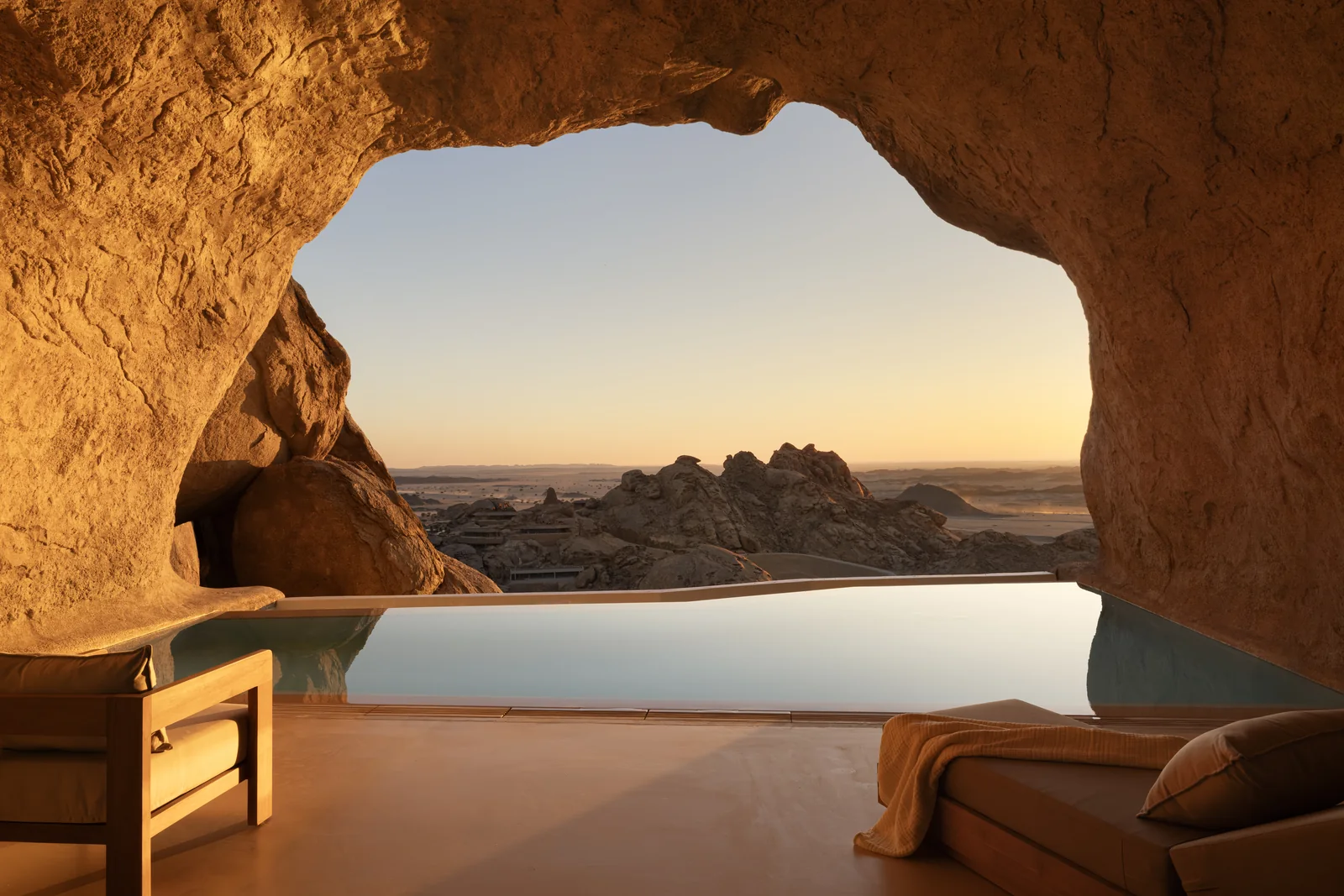
Paolo Ferrari: The Next Chapter of Luxury Is Transformation
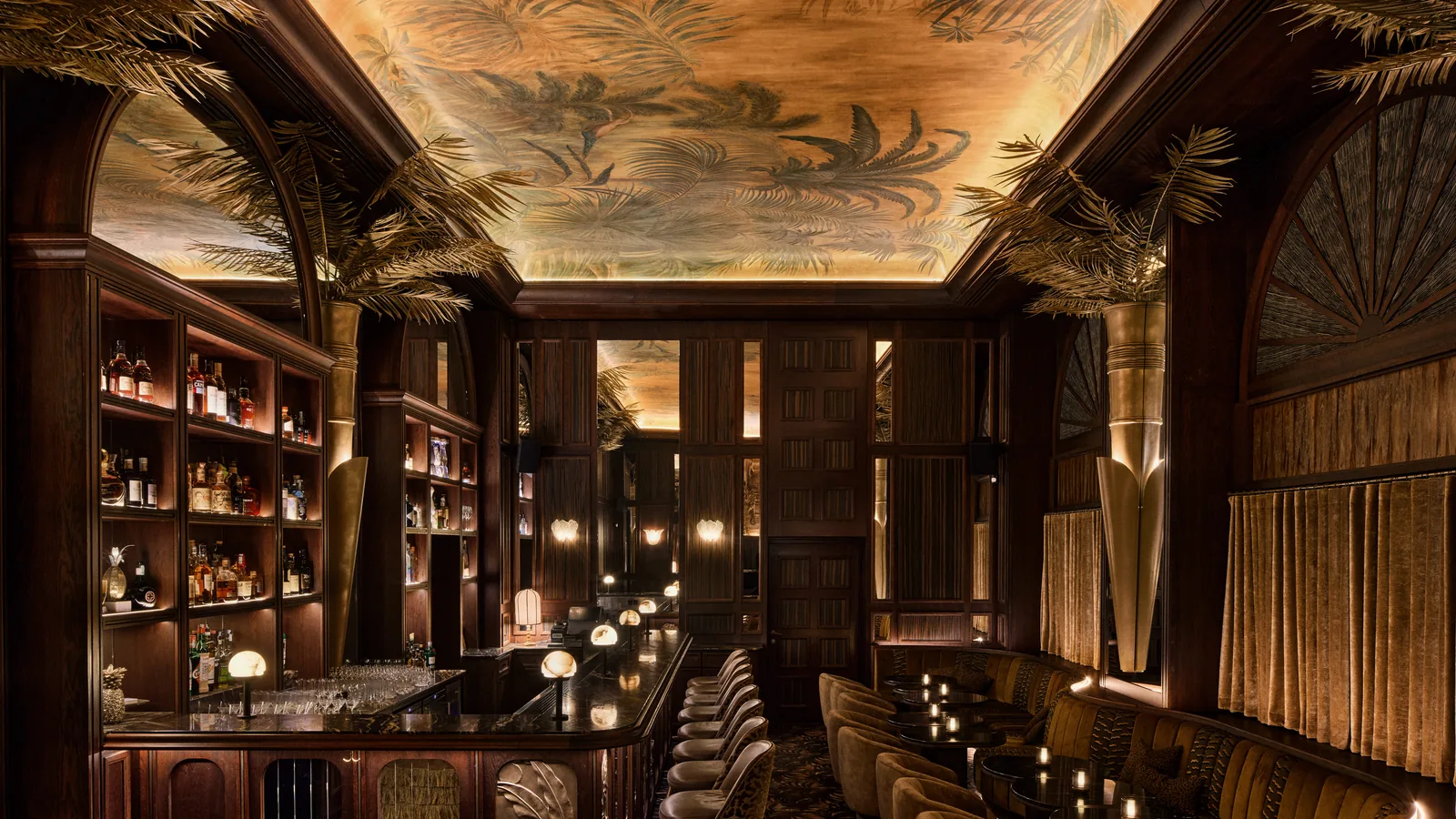
Lazy Lion: How a Budapest Shipping Palace Went Wild
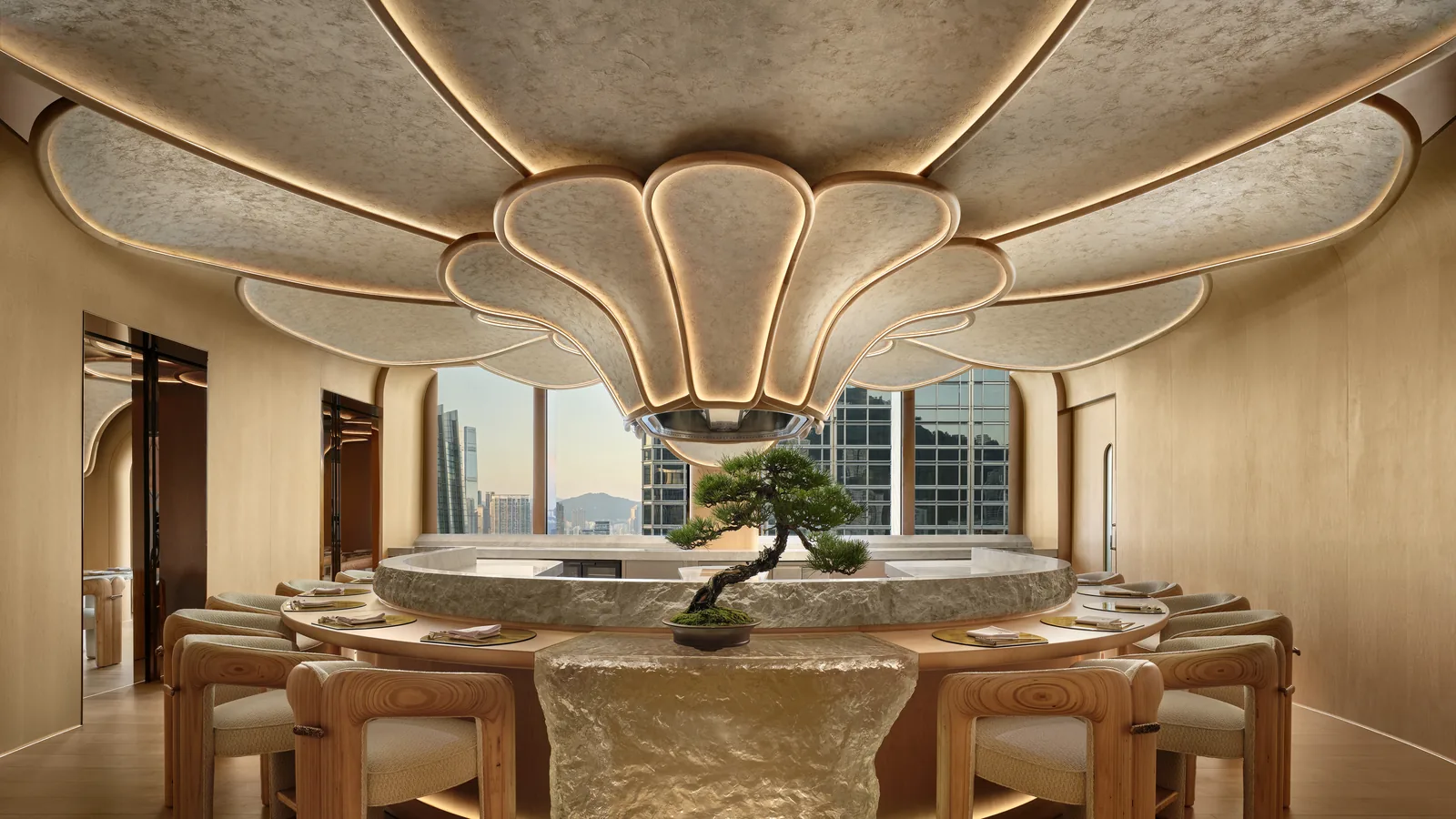
Hana no Kumo: A Cloud of Blossoms Above Hong Kong