
Lazy Lion: How a Budapest Shipping Palace Went Wild
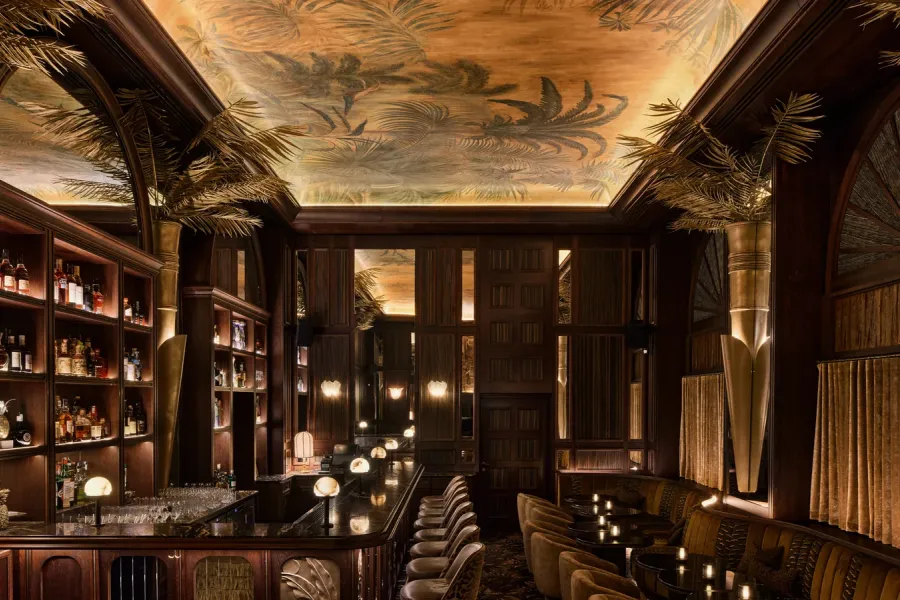
BUDAPEST — Lazy Lion, a cocktail bar in the Adria Palace, has been named Best Europe Restaurant/Bar at the 2026 Restaurant & Bar Design Awards. The palace stands on Szabadság tér, Budapest’s Liberty Square. It was built between 1900 and 1902 for a shipping company with its seat in Budapest. The company’s steamers sailed from the Adriatic port of Fiume to Liverpool and Glasgow, and on to New York. The rooms the bar now occupies had been silent for years. Astet, the Barcelona design studio behind Lazy Lion, chose not to recreate that past. It set a wild room inside a formal house. In conversation with The Silent Luxury, the studio and Tamás Langó, the bar’s general manager, explain the idea behind it. Both say an old building stays alive only if people keep coming back to it.
The awards, now in their 18th edition, drew 1,155 entries from 73 countries this year. Lazy Lion, which opened in December 2025, was named the overall regional winner for Europe. It is one of three winners The Silent Luxury is following this autumn. The others are a listening bar in Abu Dhabi and a kappo restaurant in Hong Kong.
In conversation
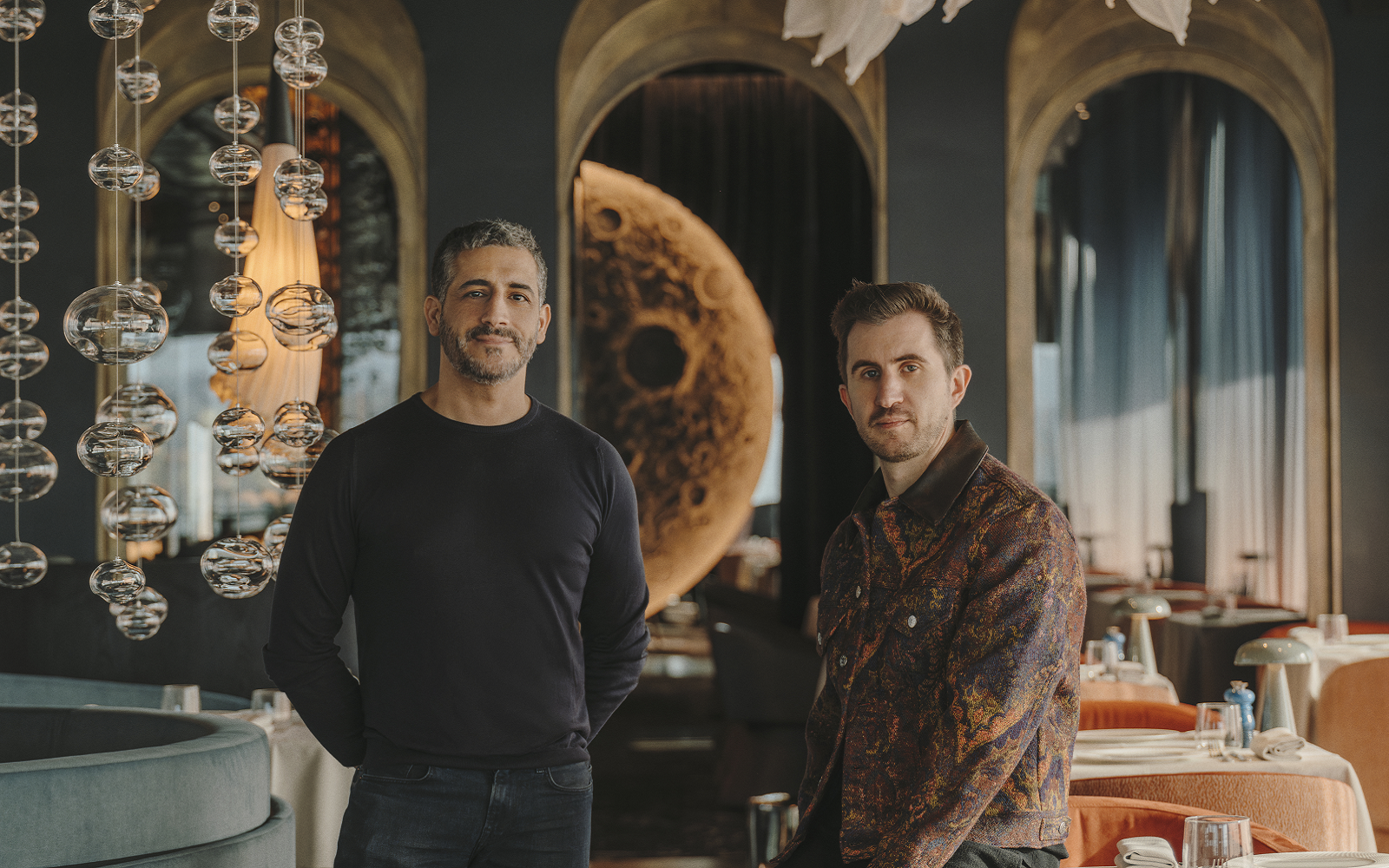
Astet
Interior design, Barcelona
The studio founded by Ala Zreigat and Óscar Engroba, which designed Lazy Lion inside the Adria Palace.
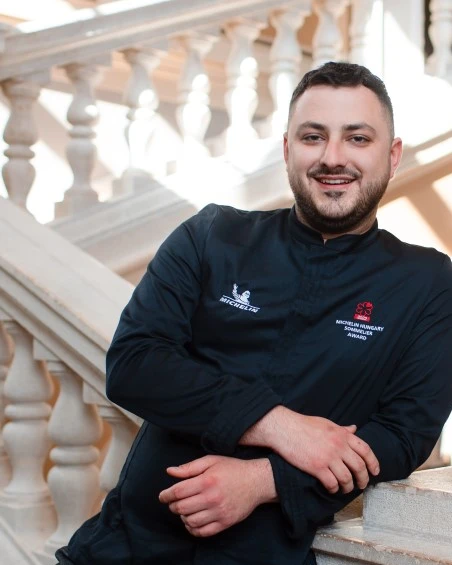
Tamás Langó
General manager, Lazy Lion
Head of wine and beverage at BOTANIQ Collection and, in 2023, the first recipient of the MICHELIN Guide Hungary Sommelier Award.
Portraits: courtesy of Astet Studio; MICHELIN Guide
Lazy Lion Budapest and the Adria Palace
The Adria Palace was built for a company that looked outward. The Adria Royal Hungarian Sea Navigation Company was founded in 1880. Its business centre was the port of Fiume, now Rijeka, but its seat was in Budapest. Its early lines ran from Fiume to Liverpool and Glasgow, and via Liverpool on to New York. Between 1900 and 1902 the architect Artúr Meinig built the company a neo-Baroque headquarters on Szabadság tér.
The bar’s name comes from the same era. According to a Budapest story, a traveller sailed on the Adria steamers under the alias Lazy Lion and later shared his accounts of the voyages with audiences in the city. Whether he really existed is unknown.
Langó starts the bar’s story there too. The building also housed an épicerie selling coffee, cocoa, tea and far-away spices, he noted. For the team, the link was obvious. “We felt there was a natural connection between that history and the kind of cocktail bar we wanted to create as cocktail culture has always been closely connected to discovery and cultural exchange,” he said.
The address had long since fallen quiet. For Astet, the empty rooms were the brief. “An empty historic building offers an opportunity to create a new chapter in its story,” the studio said. “For us, the challenge is not to recreate what once existed, but to understand the character of the place and imagine what it can become.”
A note from The Silent Luxury
Good reading deserves to find you again.
How Astet Designed Lazy Lion Budapest
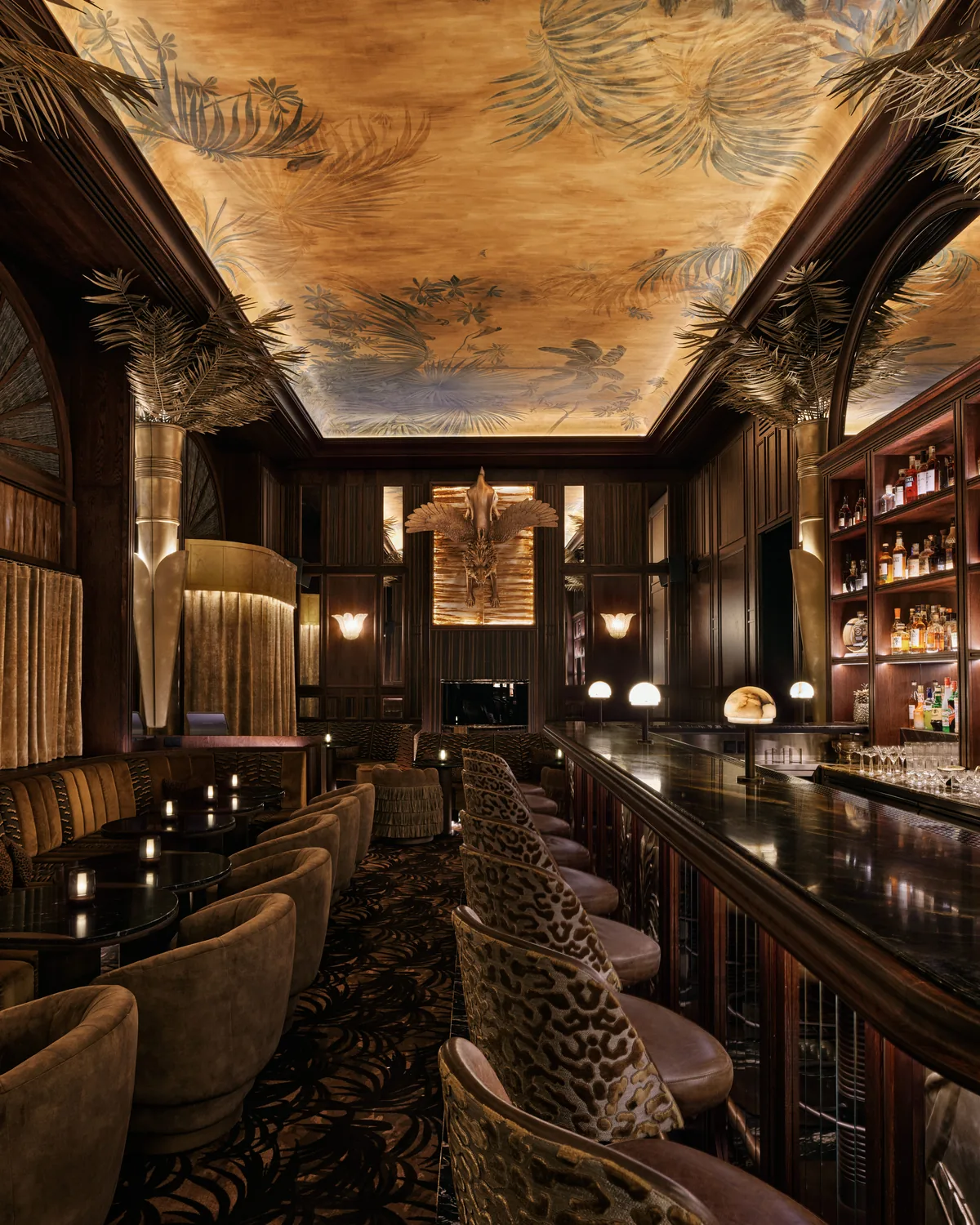
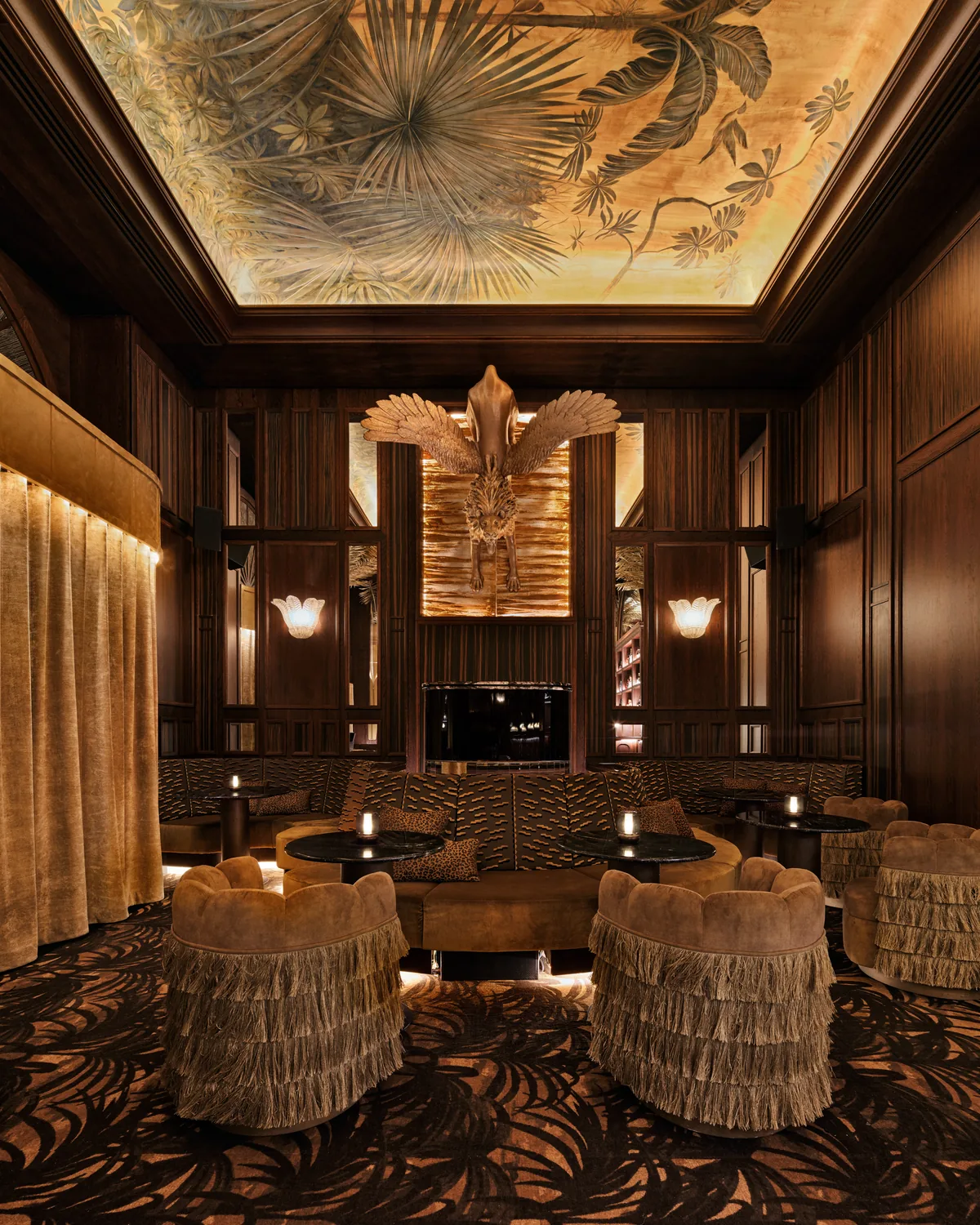
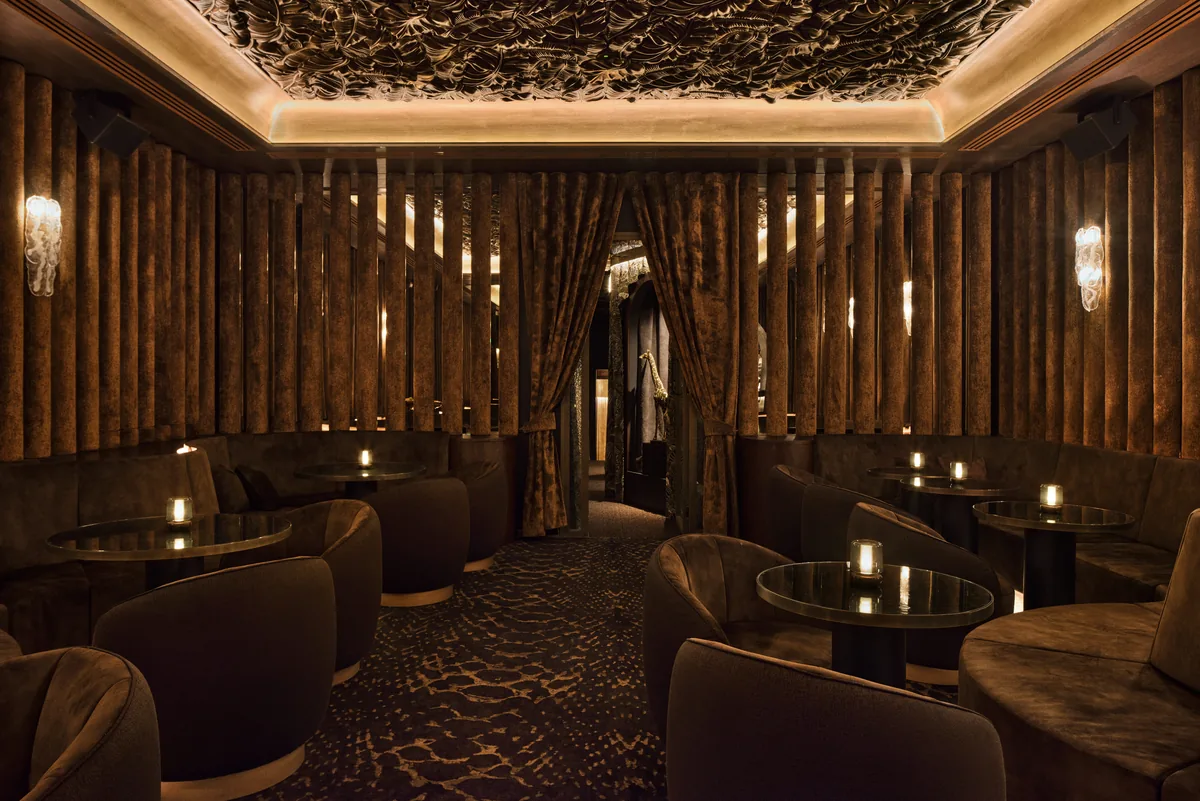
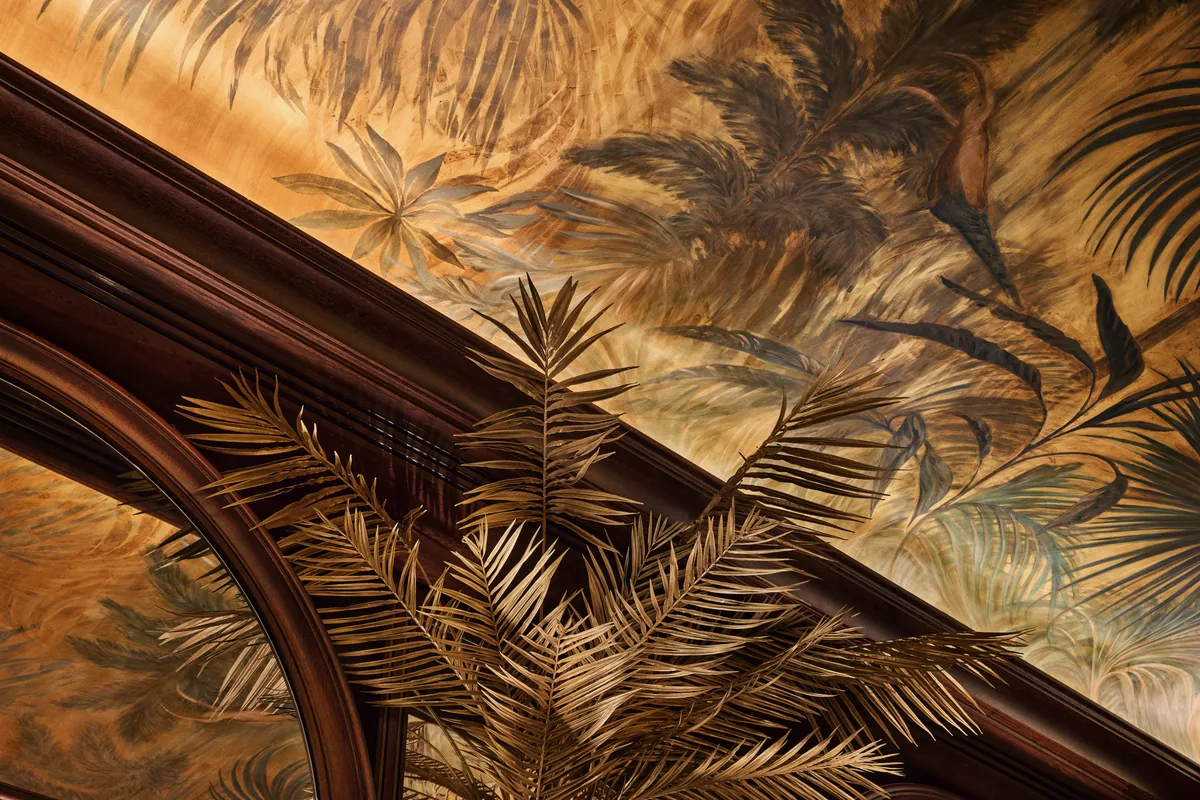
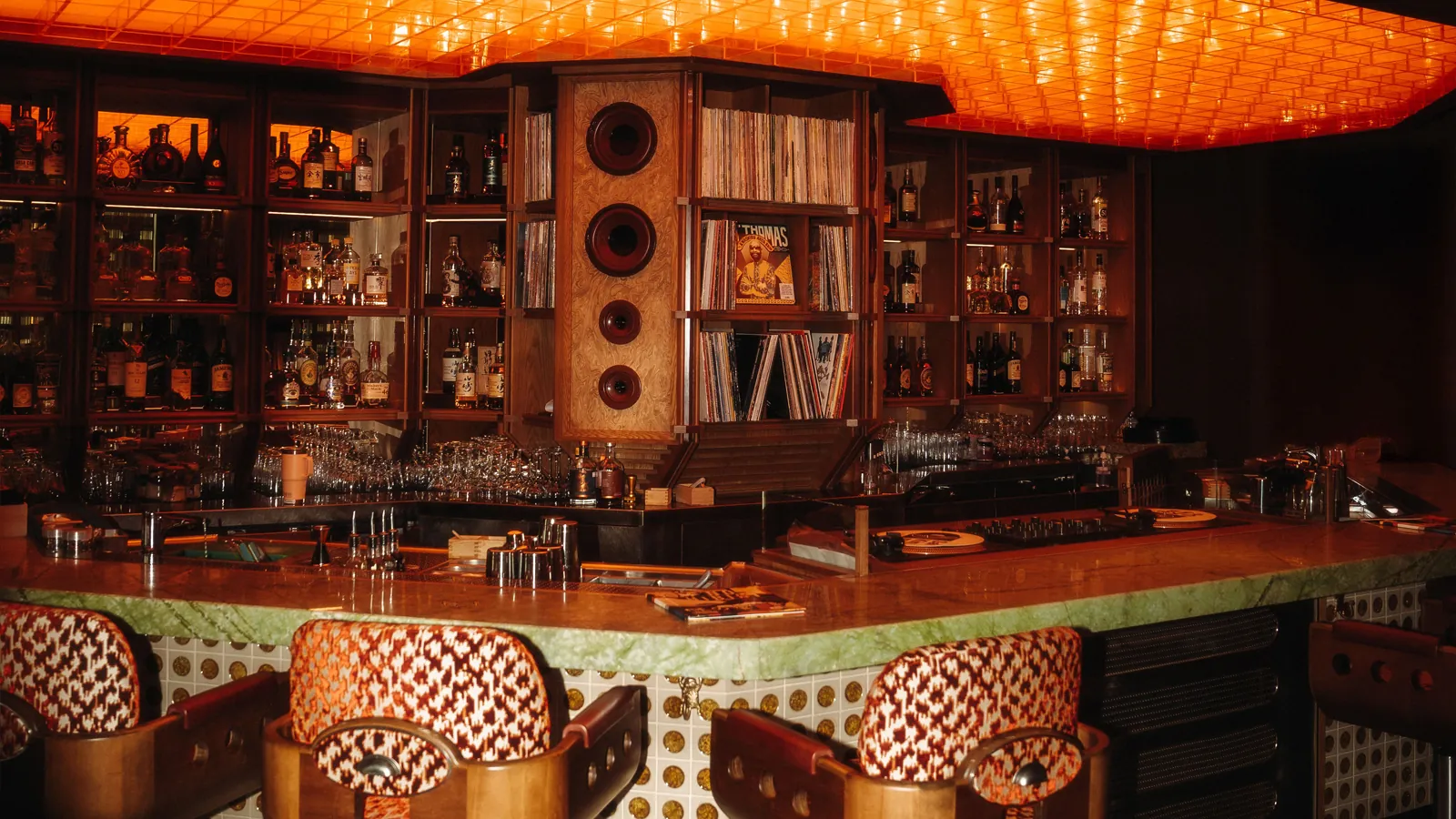
Astet answered a formal palace with a wilder room. Dark wood and natural stone sit under amber light. Some of the upholstery carries a feline pattern. A lion presides over the DJ booth, and ornamental animals keep it company in the reliefs. Overhead, the restorer and painter Zsuzsanna Herling painted a ceiling of exotic plants. A passage lined with heavily patterned fabric leads into the vaulted main room. Its ceiling is a canopy of metallic palm leaves, and a single continuous bench curves through it.
None of it imitates the building. “At Astet, we are interested in creating a dialogue between different periods rather than allowing one to dominate the other,” the studio said. “We don’t believe that contemporary design needs to imitate history to belong within a historic setting. In fact, the contrast between old and new can create something much more interesting.”
The question matters in Budapest, where many turn-of-the-century palaces now house hotels, bars and restaurants. Where does reviving a building end and staging its past for visitors begin? Astet draws the line at nostalgia. “We believe heritage should be experienced rather than simply observed,” the studio said. “A building remains relevant when people continue to inhabit it, interact with it and create new memories within it.” Or, more briefly: “For us, respecting heritage means allowing it to evolve, not freezing it in time.”
A Cocktail Bar for Budapest and Its Visitors
Both voices arrive at the same test: whether people come back. Astet refuses to choose between residents and travellers. “We never approach hospitality design by separating locals from visitors,” the studio said. “We design for people, for how they feel, how they interact and the experiences they take away.” The goal followed from that. “With Lazy Lion, our ambition was to create a destination that feels special without being intimidating. A place with a strong identity, but also warmth and intimacy.”
Langó puts it more plainly. “The surroundings may bring people through the door for the first time, but what matters to me is what happens once they sit down,” he said. “Are the drinks good? Do they want to stay for another round?” Soma Feke runs the bar. Of its six signature cocktails, The Golden Stash recalls the seafaring era. It pairs a lighter cognac with a white chocolate meringue topping.
The bar’s entrance is on Zoltán utca, at number 18. BDPST Group bought a large part of the Adria Palace and renovated it, as reported in 2019. BOTANIQ Collection, where Langó heads wine and beverage, belongs to the same group. His standard is the guest’s comfort. “Guests should be able to appreciate the surroundings, but they should also feel not intimidated, but at ease, comfortable, enjoy a really good drink and have a great evening with their friends.”
Budapest’s New Chapter in Hospitality
Langó sees Lazy Lion as part of a change in how people travel. “There are guests today who plan entire trips around restaurants, wine regions or cocktail bars they want to discover,” he said. “And I can understand that, because food and drinks tell you a great deal about a place and the people who live there.” Budapest, he argues, has caught up. “The city was known for its party culture 20 years ago, but in the past decades a growing number of hospitality professionals who have worked internationally brought that knowledge home.”
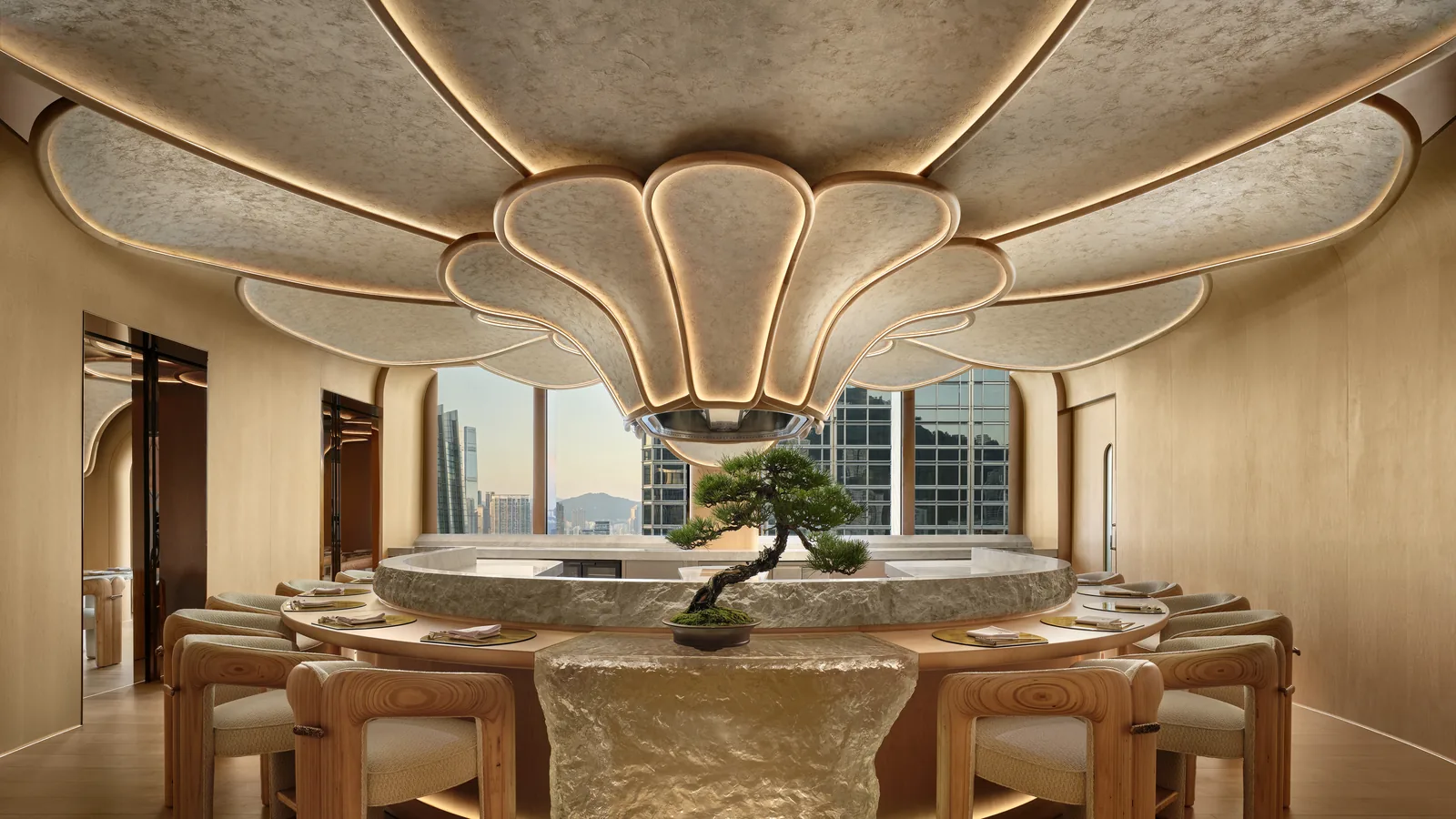
Old buildings carry much of that change, in Budapest and elsewhere in Central Europe. In Vienna, the architect Stephan Ferenczy of BEHF Architects rebuilt Das LOFT. He spoke to The Silent Luxury about what happens when banks become hotels, and about the life of old buildings. This year’s other winners make a related point. At Saikindō in Abu Dhabi, a fashion atelier becomes the door to a bar at night. At Hana no Kumo in Hong Kong, a chef’s memory of Kyoto shapes a room 38 floors above the city.
The company that built the Adria Palace once sent ships from Fiume to New York. Lazy Lion measures itself against the far end of that route. “Our ambition is to offer the same quality of cocktail experience you would expect in a good cocktail bar in London, Barcelona or New York,” Langó said. Astet’s hope is broader. “We believe the most successful hospitality spaces are those that become part of people’s lives, rather than simply places to visit.”
Send this to someone who plans a trip around one good bar.
Sources
- Astet, written interview with The Silent Luxury, October 2026
- Tamás Langó, general manager, Lazy Lion, written interview with The Silent Luxury, October 2026
- Restaurant & Bar Design Awards 2026
- Time Out Budapest: Lazy Lion named Europe’s best restaurant and bar design
- Hospitality Design: Untamed Elegance Defines Lazy Lion in Budapest
- Trademagazin: The Lazy Lion bar has opened in Adria Palace
- Tőzsdemúzeum: Adria Royal Hungarian Sea Navigation Company
- 444: Renovation of the Adria Palace on Szabadság tér
Similar Articles
Hana no Kumo: A Cloud of Blossoms Above Hong Kong
Saikindō: The Abu Dhabi Listening Bar Built to Change Through the Day

Quality Over Quantity: Lech Zürs Answers Climate Change With Quiet Seasons
