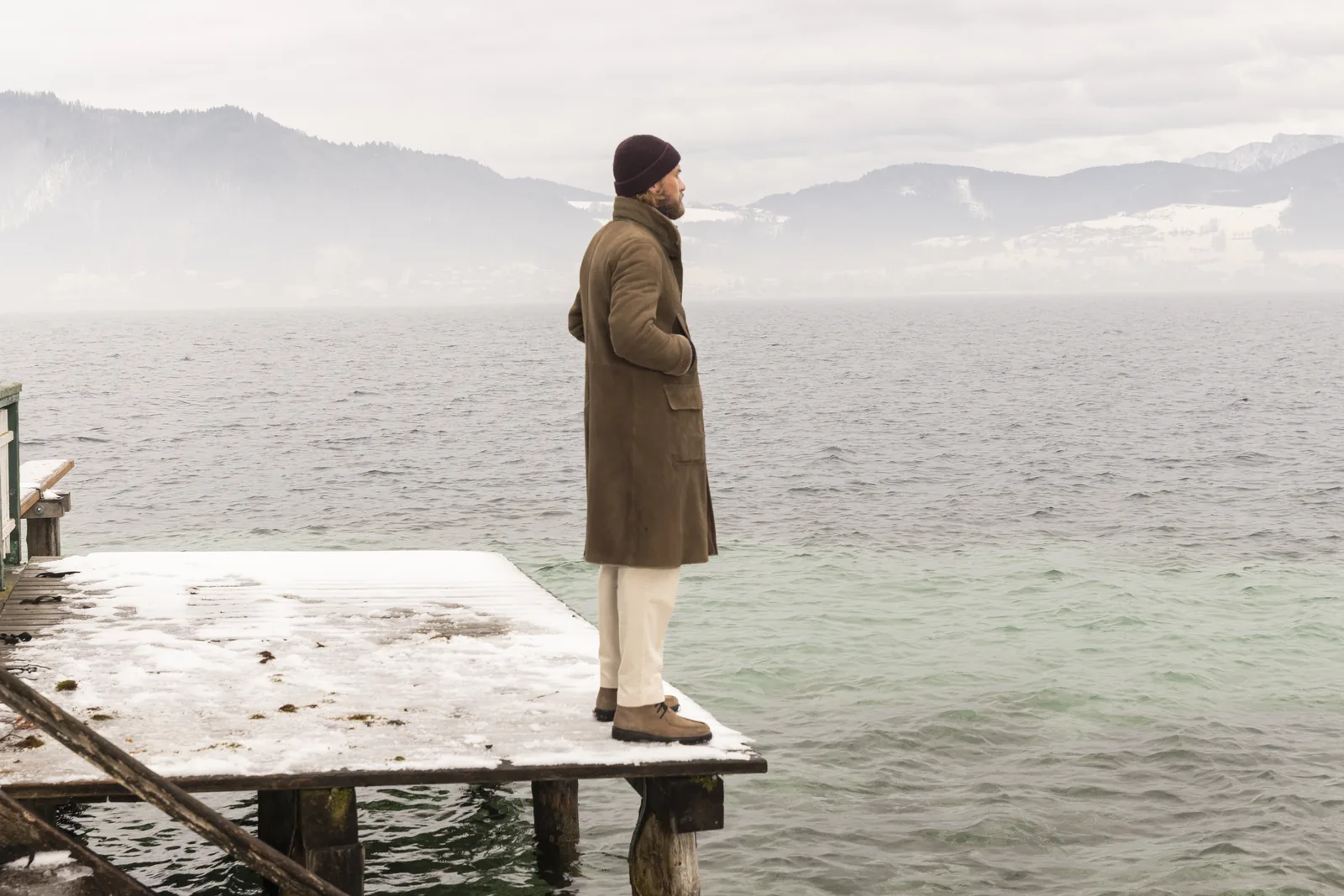
Paolo Ferrari: “Sometimes the Most Powerful Gesture Is Restraint”
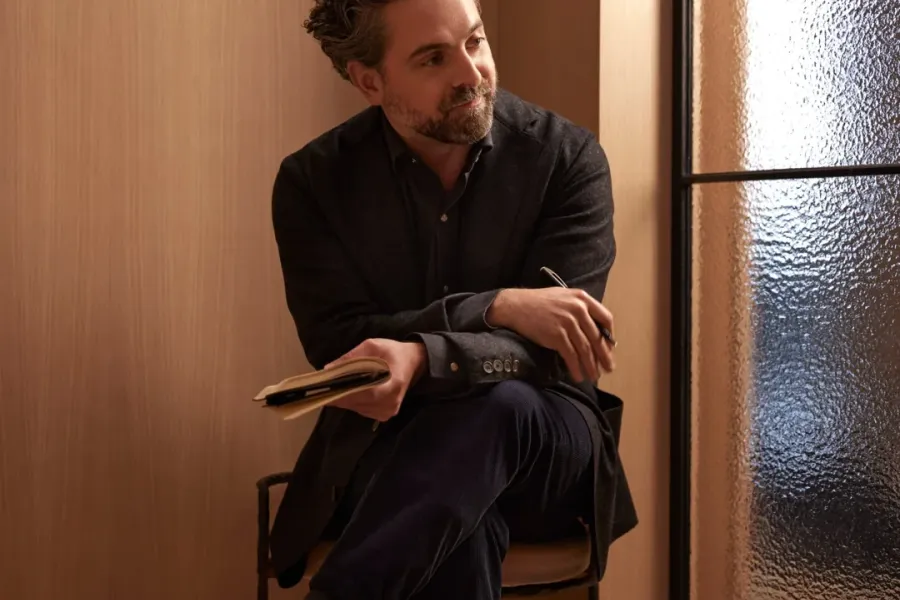
Desert Rock, the Red Sea Global resort set into the granite of the Hejaz mountains in Saudi Arabia, became the first Saudi resort to receive three Michelin Keys in 2026. The designer Paolo Ferrari created every one of its interiors, from the cave villas to some 200 pieces of furniture and lighting made for the site. His studio, Studio Paolo Ferrari, works between Toronto and Milan and also designed the guest villas of Shebara on the Red Sea.
Our reading on his work is Paolo Ferrari: The Next Chapter of Luxury Is Transformation.
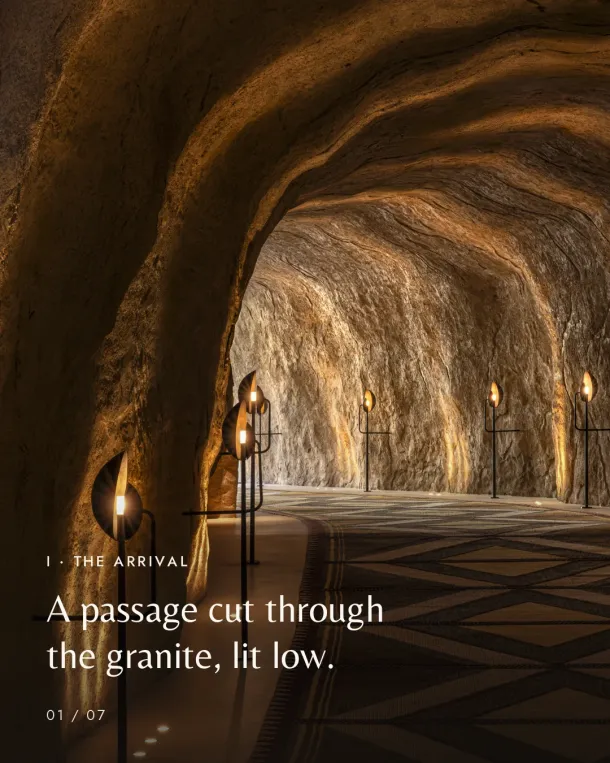
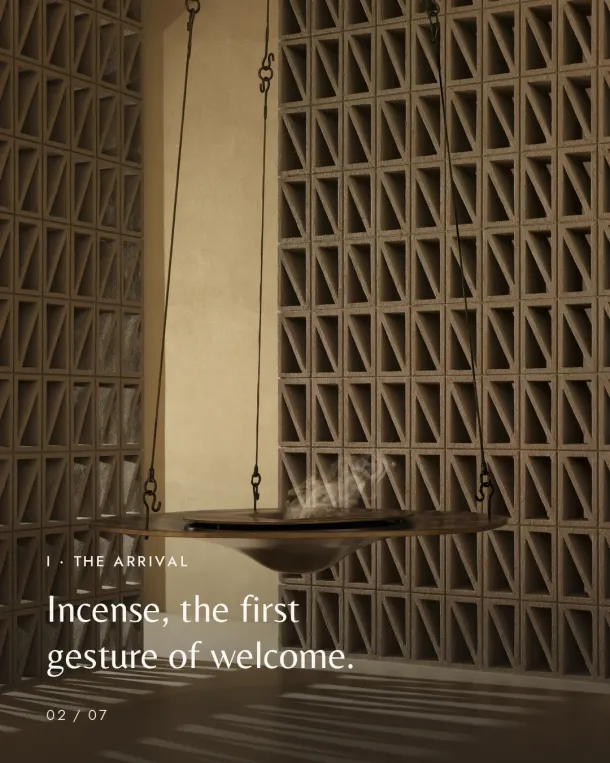
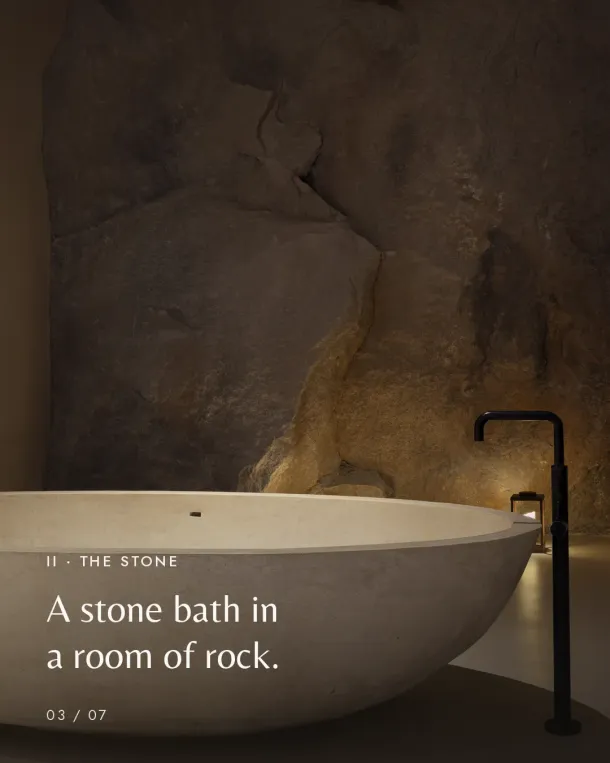
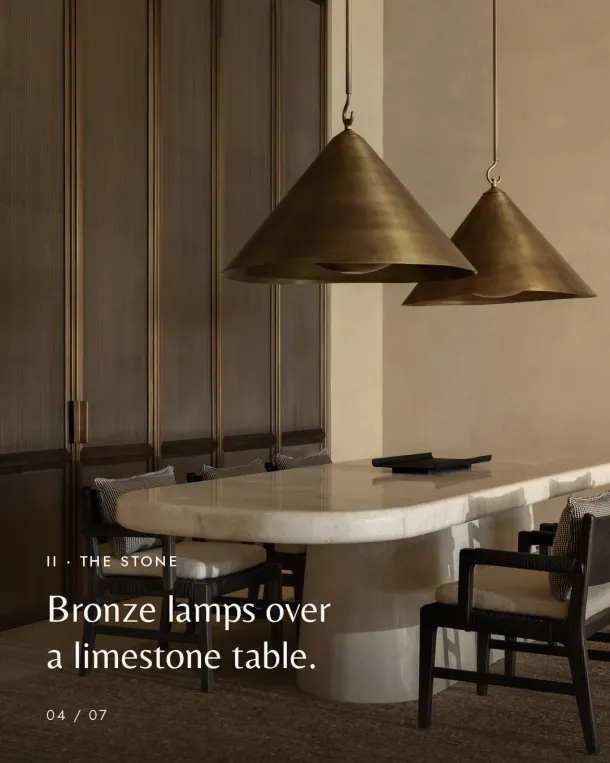
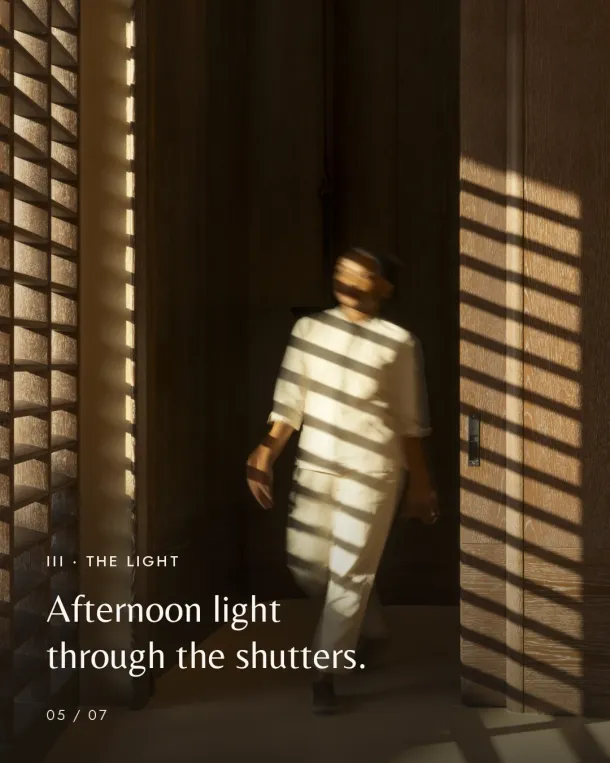
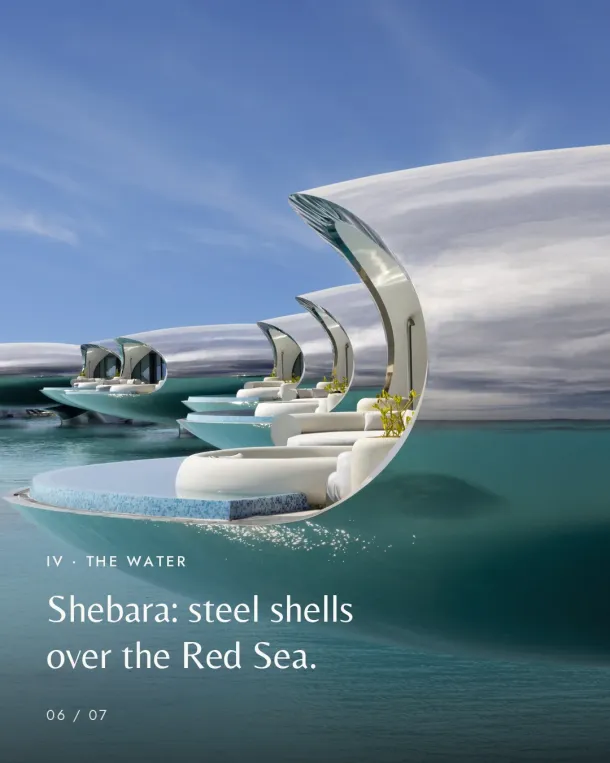
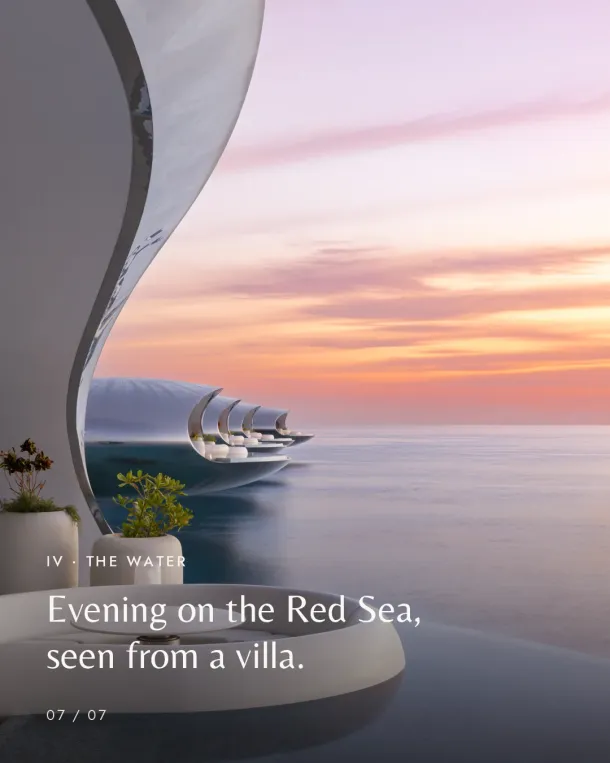
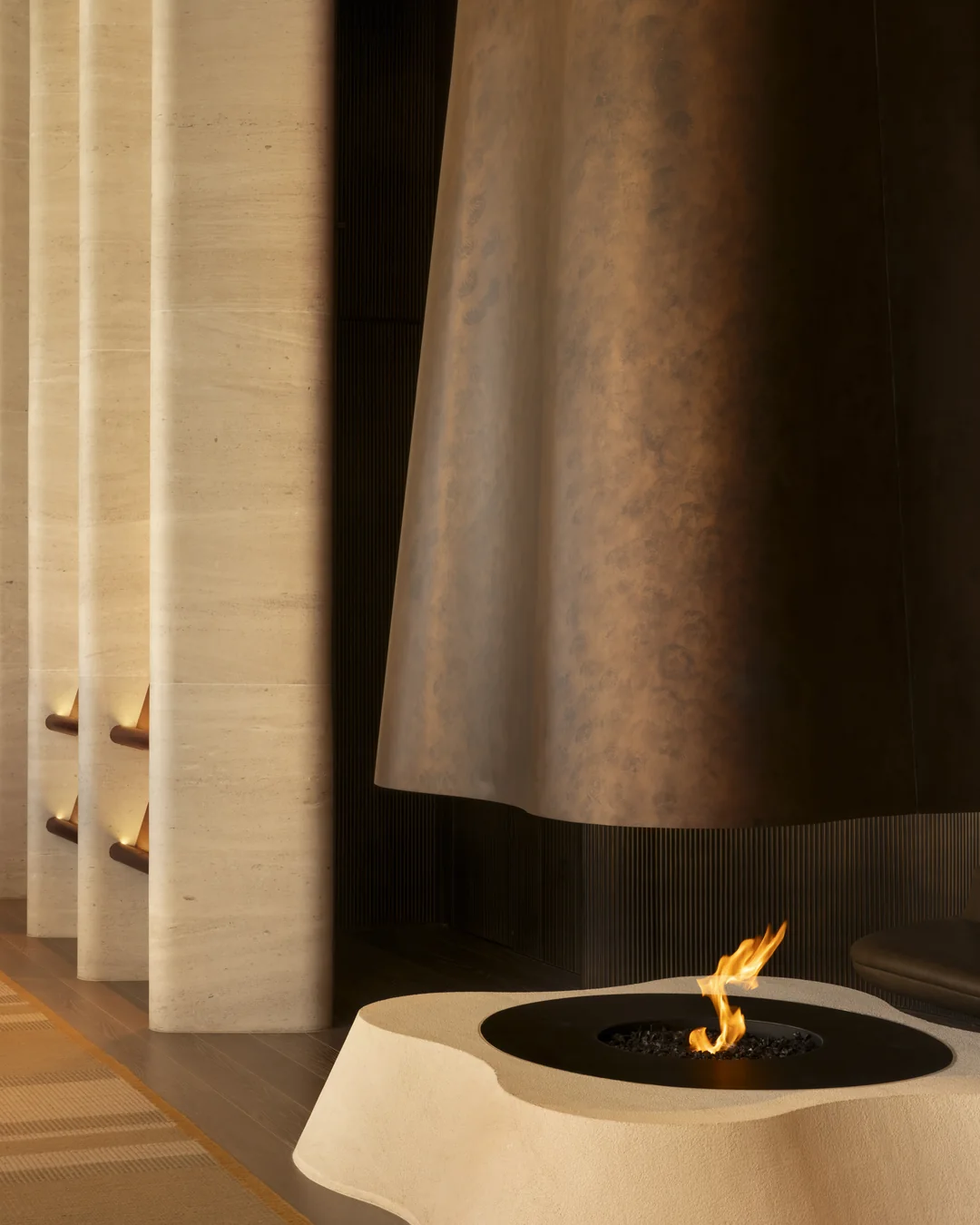
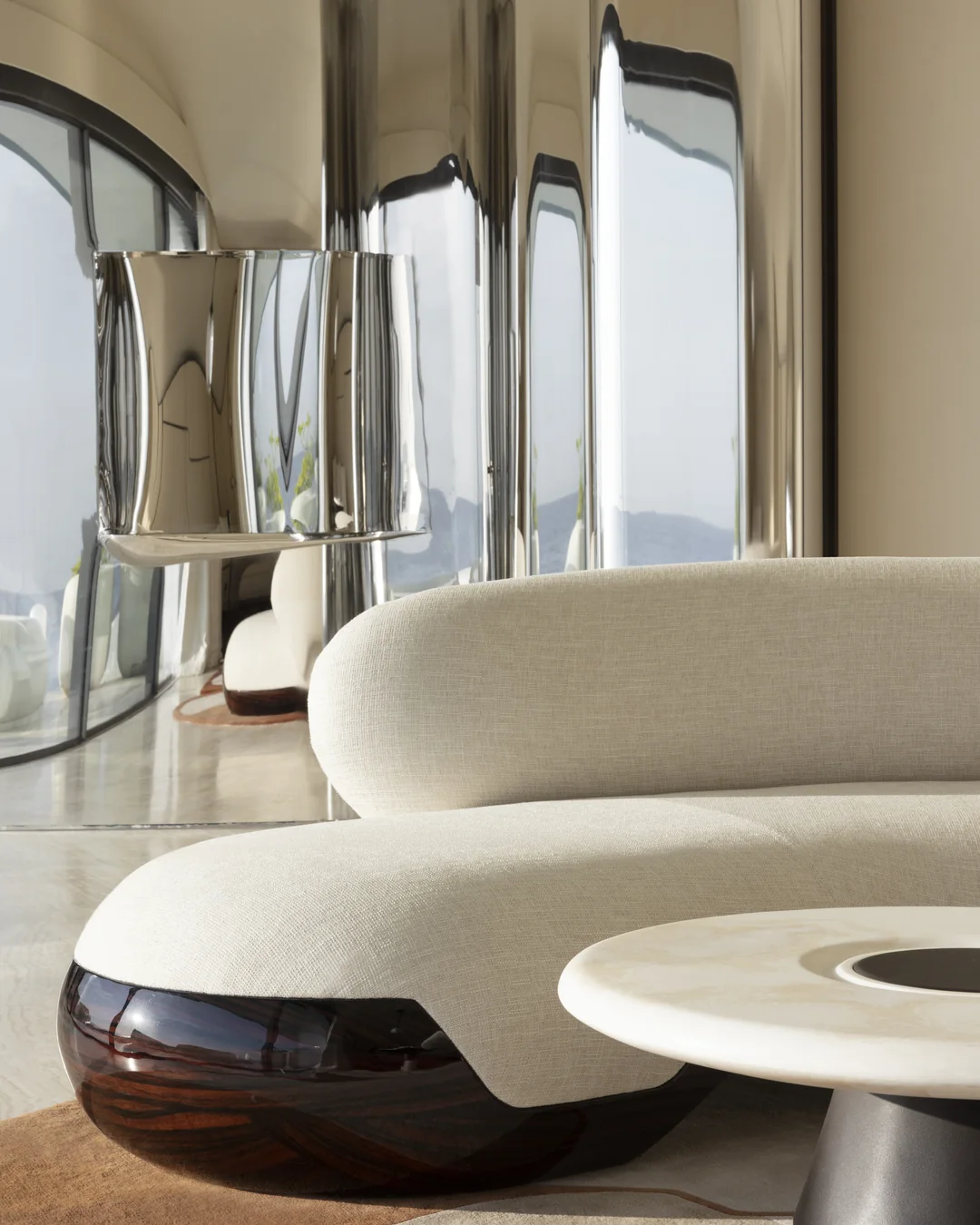
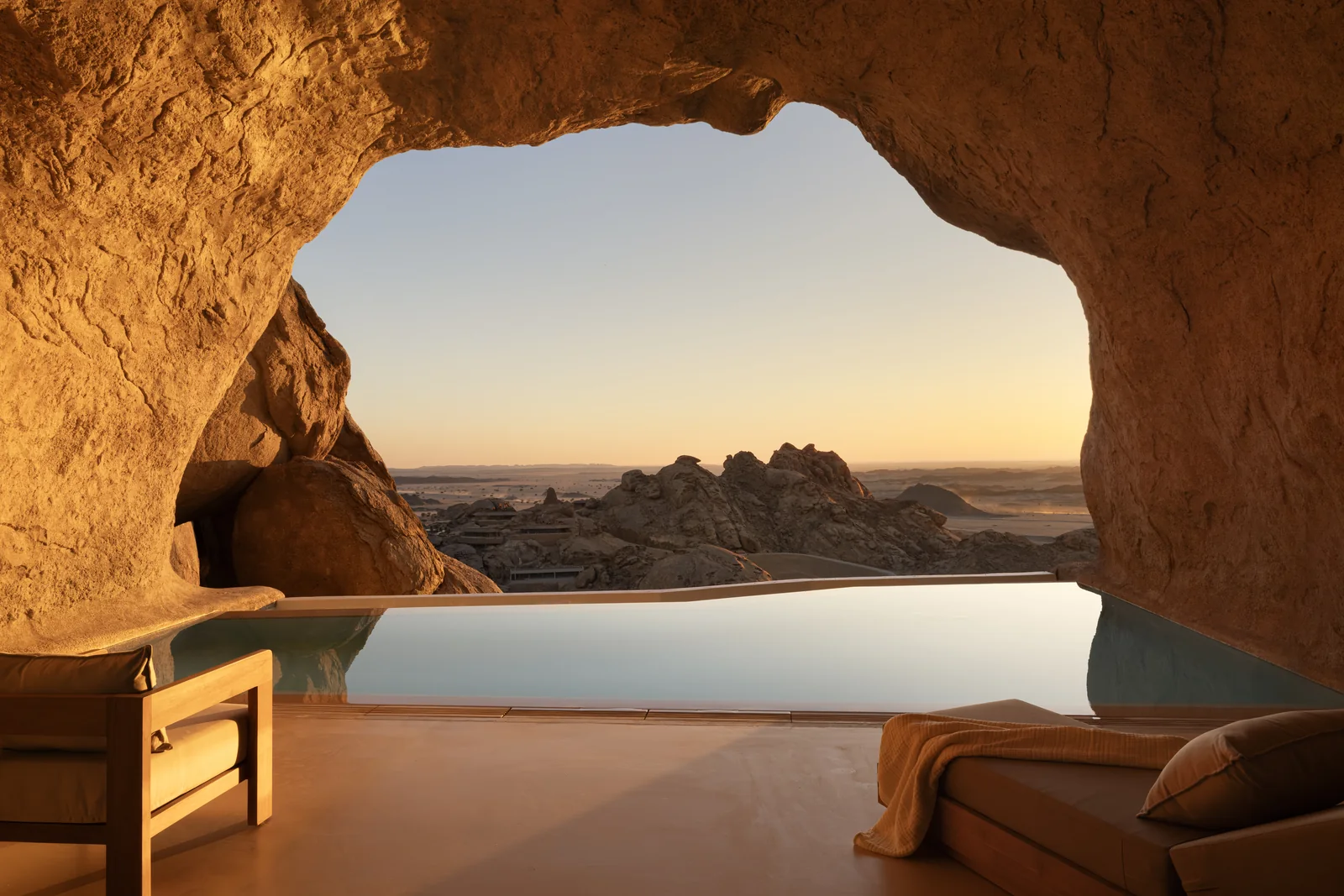
Desert Rock and Shebara by Studio Paolo Ferrari: the arrival, the stone, the light and the water. Photos: Ema Peter. Courtesy of Studio Paolo Ferrari
Luxury as Transformation: Paolo Ferrari on Desert Rock
Paolo Ferrari designed Desert Rock as a place that changes how its guests see the world, and he calls that transformation the next chapter of luxury.
You describe Desert Rock as a project about cocooning, meditation and reconnecting with the earth. Why does luxury need this return to the elemental now?
Paolo Ferrari: We live in an incredibly stimulated world, where everything is accessible, immediate and increasingly digital so there is a real value in creating an environment that allows you to step away from that and reconnect with something more fundamentally human.
At Desert Rock, the landscape does much of the work. The scale of the mountains, the silence of the valley, the changing light and the extraordinary night sky all create a very particular emotional condition. Our responsibility was to design interiors that support that experience rather than compete with it. Cocooning is not about withdrawal in a purely physical sense. It is about creating a sense of intimacy and protection while remaining deeply connected to the natural world. There is something very powerful about being sheltered by a space and, at the same time, feeling the presence of the earth around you. It delivers the sense of awe that we are constantly searching for in our studio.
I believe that the next chapter of luxury is about transformation. It is about creating places that allow you to step outside the rhythm of your everyday life, shift your perspective and experience the world, and yourself, differently. What stays with you, what you begin to see differently, and what you carry back into your life long after you have left. That, to me, is the most meaningful form of luxury.
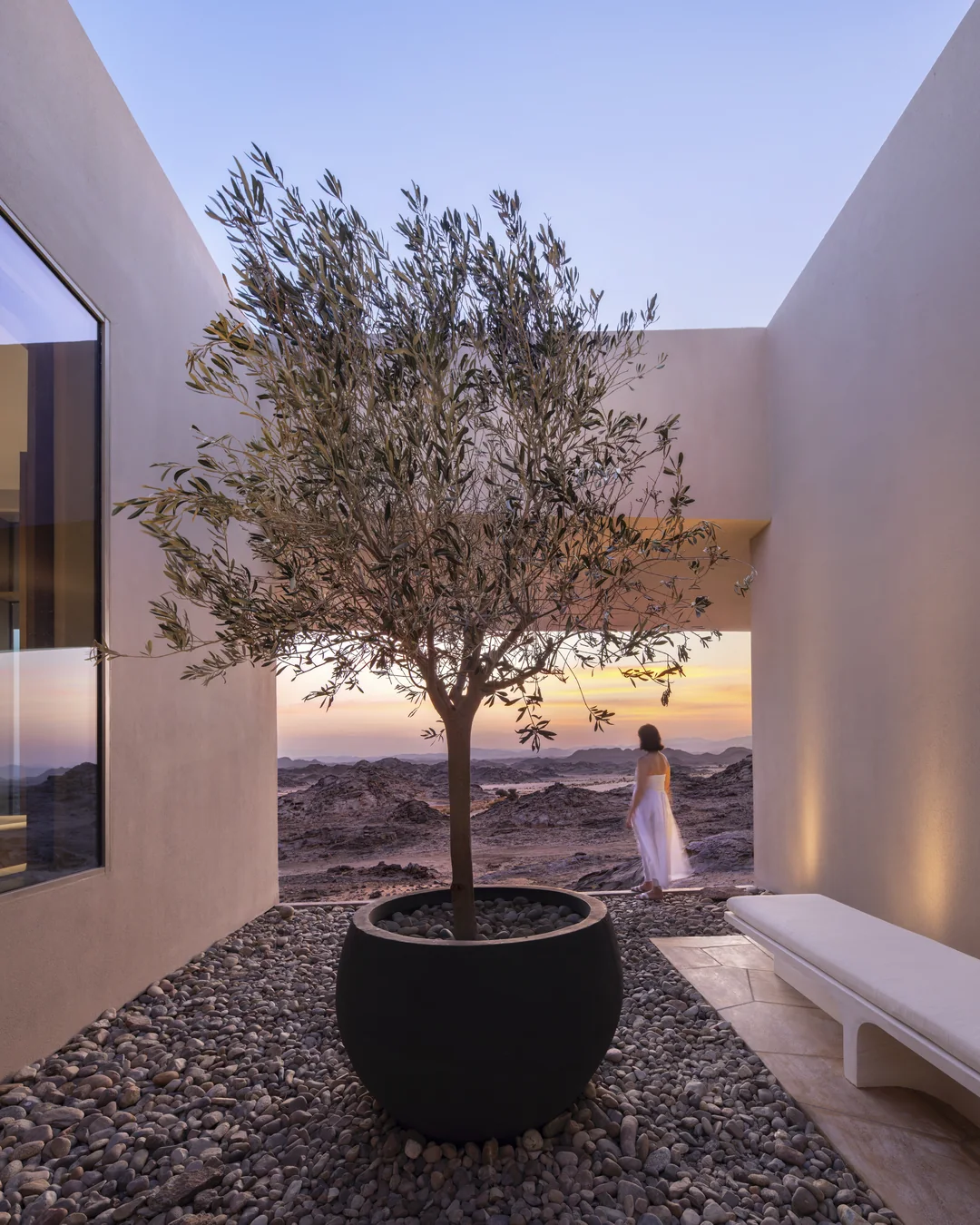
Quiet Monumentality: How Paolo Ferrari Lets a Space Reveal Itself
Quiet monumentality is Paolo Ferrari’s term for impact that comes from restraint, in rooms that reveal their richness over time.
What does quiet monumentality mean to you, and how can a space be monumental without raising its voice?
Paolo Ferrari: Quiet monumentality is about understanding that impact doesn’t necessarily come from scale, decoration or visual intensity. Sometimes the most powerful gesture is restraint.
I am interested in spaces that reveal themselves gradually. They don’t need to announce everything immediately. There is a certain confidence in allowing materials and volumes to speak quietly, and in trusting that the guest will discover their richness over time.
“Sometimes the most powerful gesture is restraint.”
Stone, Sand and Bronze: The Materials of Desert Rock
Desert Rock’s interiors use concrete, plaster, limestone, bronze and wood, and their hardware and lighting details were sand cast.
How do you translate a landscape into materials, such as minerality, sand and stone, without simply imitating it?
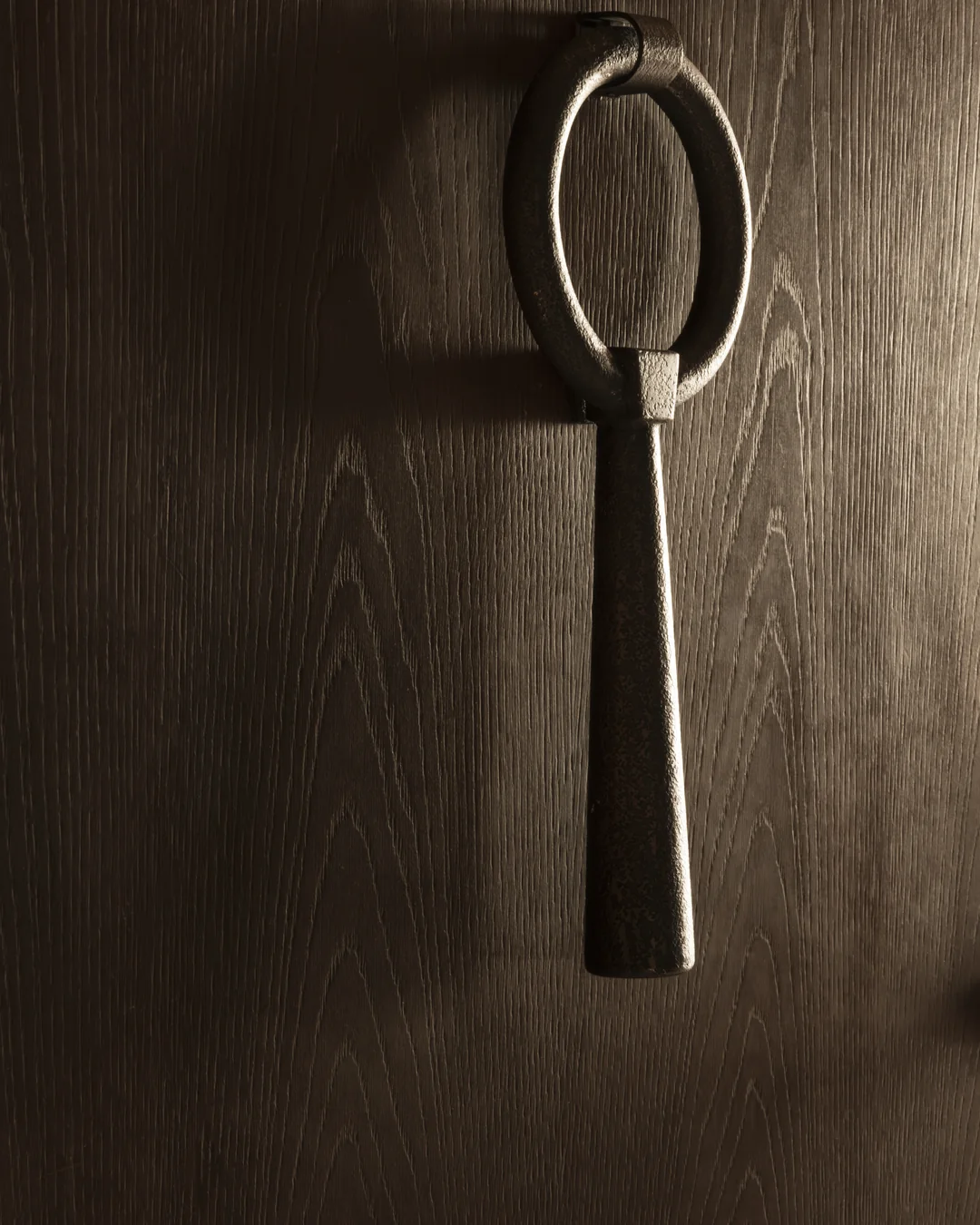
Paolo Ferrari: We developed a palette of concrete, plaster, limestone, bronze and wood, including charred and sandblasted finishes. Each material has its own character, but together they establish a relationship with the geology and atmosphere of the site. We also explored sand casting for the hardware and lighting details.
There is something beautiful about allowing the process of making to leave its own trace. You get an irregularity and a tactile quality that feels connected to the environment without becoming a literal representation of it. The intention was to create interiors that felt as though they had emerged organically from the landscape, deeply rooted in the character and spirit of the place.
Made for One Place: Paolo Ferrari’s 200 Bespoke Pieces for Desert Rock
Studio Paolo Ferrari designed approximately 200 pieces of furniture and lighting for Desert Rock alone, while it also develops collections for several brands.
You designed some 200 pieces of furniture and lighting for one place. Will the future of luxury belong to objects made for a single site rather than to global collections?
Paolo Ferrari: There is an important distinction between designing objects and designing a complete experience. At Desert Rock, the approximately 200 bespoke pieces of furniture and lighting were not conceived as an independent collection. They were part of a much larger design language, and each piece had a relationship with its environment.
When you approach a project this way, the furniture becomes an extension of the architecture. Its proportions, materials, textures and details respond to the specific conditions of the site. An object might be informed by the geology, the local craft traditions or simply the way a guest inhabits a particular space.
That doesn’t mean we believe global collections will disappear. On the contrary, our studio is currently working with several brands in developing future collections. There is tremendous value in developing a design language that can evolve across different contexts. Our own Editions work, for example, explores that relationship between sculpture, utility and a coherent family of objects.
Perhaps the future is not an either-or proposition. It is about understanding when an object should have a life of its own and when it should exist exclusively in service of a larger experience. At Desert Rock, the latter was particularly important.
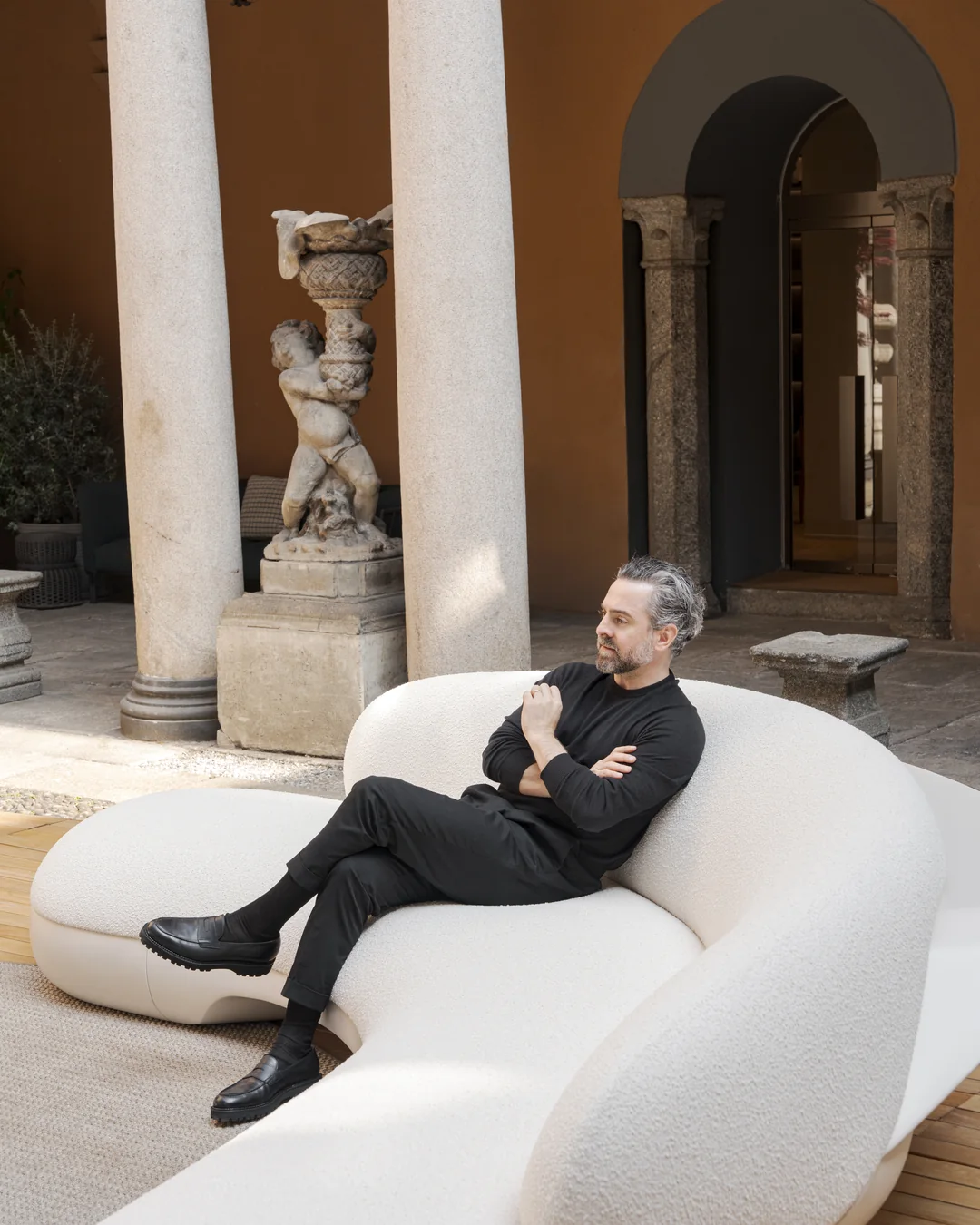
The Ritual of Arrival: Incense and Awe at Desert Rock
Guests arrive at Desert Rock to the lighting of incense, a local tradition of welcome that Paolo Ferrari built into the start of their stay.
Ritual runs through your work, from the arrival at Desert Rock to the way guests move through a room. In an increasingly digital world, why do rituals and the feeling of awe matter more than ever?
Paolo Ferrari: Rituals give meaning to the experience. It creates moments of transition, anticipation and connection that we don’t necessarily get in our everyday lives.
At Desert Rock, even the arrival experience was considered in this way. The lighting of incense, for example, draws on longstanding local traditions of welcoming guests, establishing an immediate sensory connection to the place. It is a relatively small gesture, but it signals that something is changing. You are entering a different environment and, hopefully, a different state of mind.
We are very interested in the idea of designing a journey rather than simply designing a collection of rooms. How does someone arrive? What do they encounter first? Where does the atmosphere become more intimate? Where is the moment of discovery? These are almost cinematic questions.
Desert Rock and Shebara: What the Hejaz Taught Paolo Ferrari
Paolo Ferrari’s studio designed the interiors of Desert Rock in the Hejaz mountains and the guest villas of Shebara on the Red Sea, two resorts he describes as completely different worlds.
Your two projects in Saudi Arabia have been described as career-defining. What did working in the Hejaz teach you that changed your practice?
Paolo Ferrari: Desert Rock Resort and Shebara Resort are particularly unique projects in my portfolio because they are geographically close, yet they are completely different worlds. Desert Rock is about the permanence and physical presence of the mountains, whereas Shebara is about the relationship between architecture, water, light and reflection. They required very different design responses.
These projects also challenged us operationally and creatively. We were working with extraordinary architectural teams and collaborators, coordinating complex projects across distances and navigating very different technical and environmental conditions.
Ultimately, the projects reinforced my belief that the most interesting work happens when you allow a place to change you. You arrive with your own ideas, but the project should leave you thinking differently about design than you did before.
Toronto, Milan and the Future of Luxury: Paolo Ferrari on Place
Paolo Ferrari runs his studio between Toronto and Milan and believes the future of luxury belongs to places with something meaningful to communicate.
Your studio works between Toronto and Milan, and you recently spoke in Sicily. Which places do you see shaping the next idea of luxury?
Paolo Ferrari: Toronto and Milan provide two very different perspectives for our studio. Toronto has an incredible sense of openness, experimentation and cultural diversity. Milan has a deep relationship with design, craftsmanship, history and the evolution of material culture. Moving between these two environments creates a productive tension in the way we approach our work.
Geography is no longer the premium. The future belongs to places that have something meaningful to communicate, places that can make you feel something, challenge your perspective and stay with you long after you have left.
“Geography is no longer the premium.”
Send this ↗ to someone who is planning a journey to the Red Sea.
 Read next · The ReadingPaolo Ferrari: The Next Chapter of Luxury Is TransformationHow the designer of Desert Rock and Shebara turned granite, incense and restraint into a new idea of luxury on the Red Sea.
Further Reading
Carved into the Rock: Saudi Arabia’s New Desert Resorts
Jean Nouvel’s Sharaan and Oppenheim Architecture’s Desert Rock draw on Nabataean principles to shape hospitality that endures.The Yellow Oil: How Saudi Arabia Turns Its Landscape into Wealth
Why AlUla is called the kingdom’s yellow oil, and how a new form of hospitality grows from a landscape kept intact.Luxury Trends 2027: From Hermès to Zegna, the Second Purchase Decides
Fewer people walk into the stores, those who do spend more, and enduring objects outsell seasonal fashion.
Sources
- Paolo Ferrari, founder of Studio Paolo Ferrari, in conversation with The Silent Luxury, hosted by Eva Winterer, November 2026
- Arab News, Desert Rock, the first Saudi resort to obtain three Michelin Keys
- Hospitality Design, Saudi Arabia’s Desert Rock Immerses Guests in the Land, 28 May 2025
- Dezeen, Shebara Resort features shiny cantilevered pods and transcendent interiors, 11 June 2025
- Studio Paolo Ferrari and Poltrona Frau, MC72 Collection, press information, April 2026
- The Silent Luxury, Carved into the Rock: Saudi Arabia’s New Desert Resorts
Similar Articles
Konstantin Chaykin: “The Person Becomes Part of the Mechanism”

Marie Droll of Kearney: Beauty Buyers Now Pay for Proof

Yves Bugmann: In China, Swiss Watches Have Moved Further Upmarket