Inside Habsburg Kleidermanufaktur: Markus Meindl and Michael Rumerstorfer on the Name, the Johann Karl and Clothes Made for Generations
Habsburg Kleidermanufaktur, a Salzburg house founded in 1992, makes loden and cashmere jackets for men and women and never writes its name large on any of them. Its signature jacket, the Johann Karl, has ten buttonholes sewn by hand, seventeen minutes each.
A Language of Its Own: The Johann Karl Habsburg Jacket
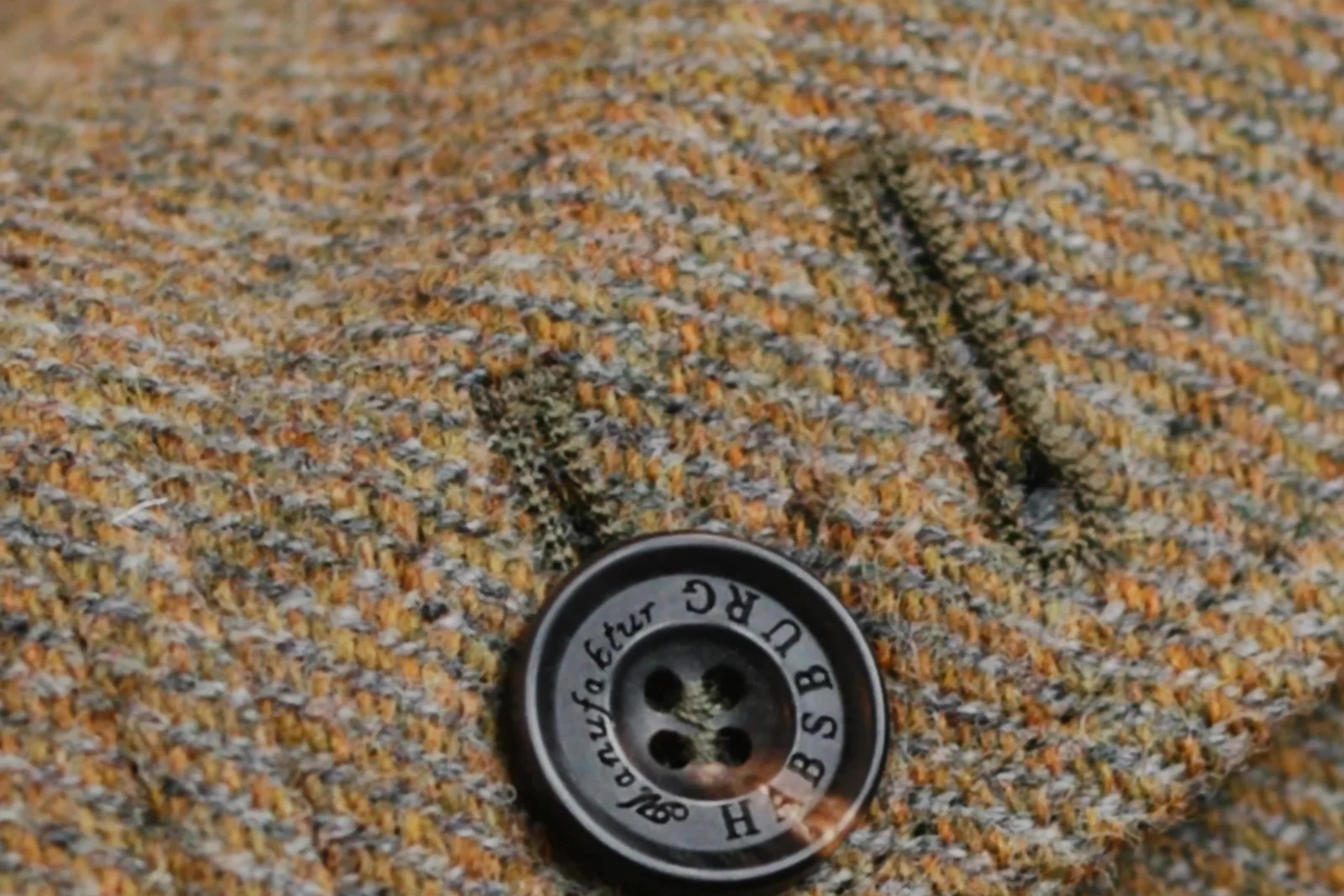
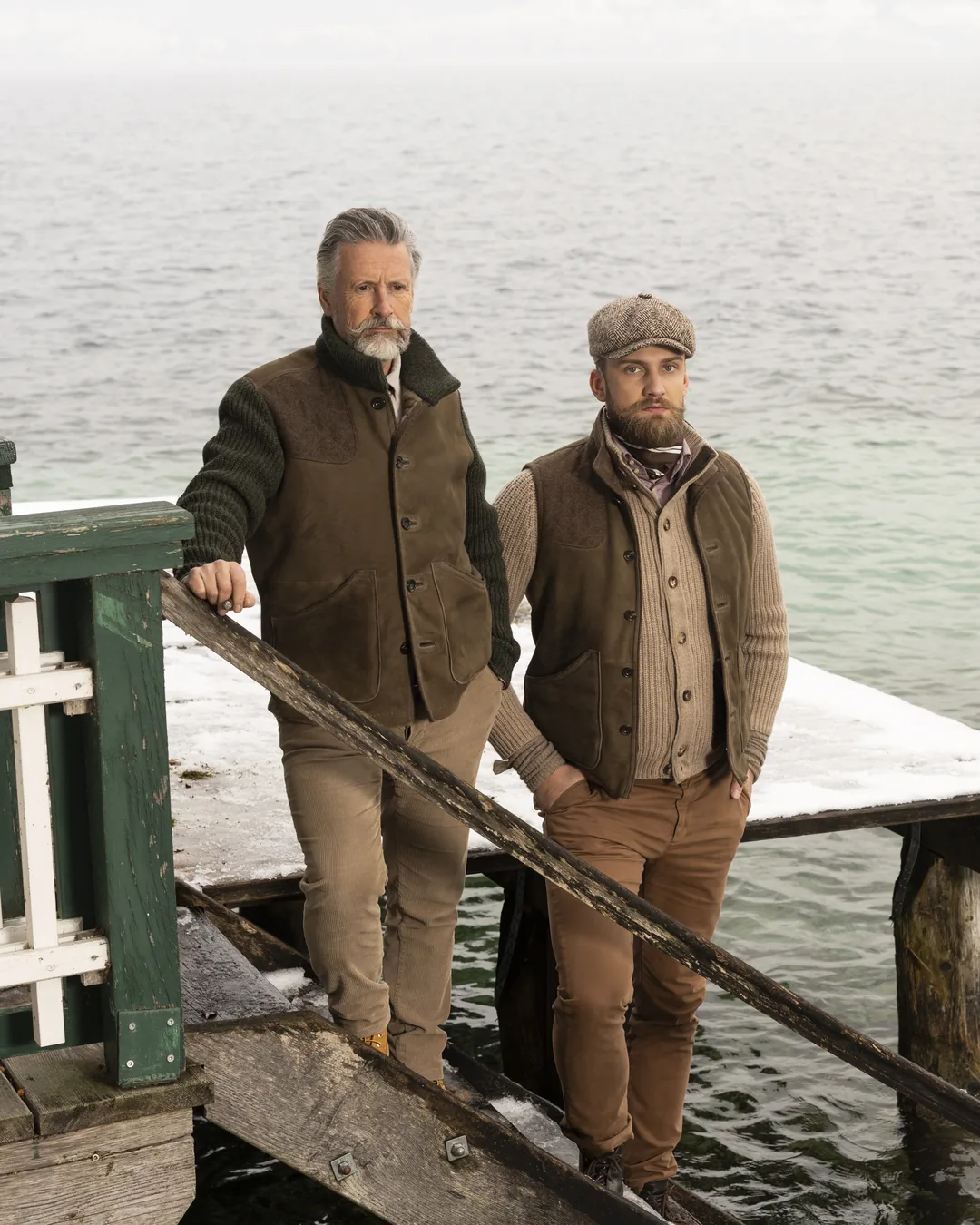
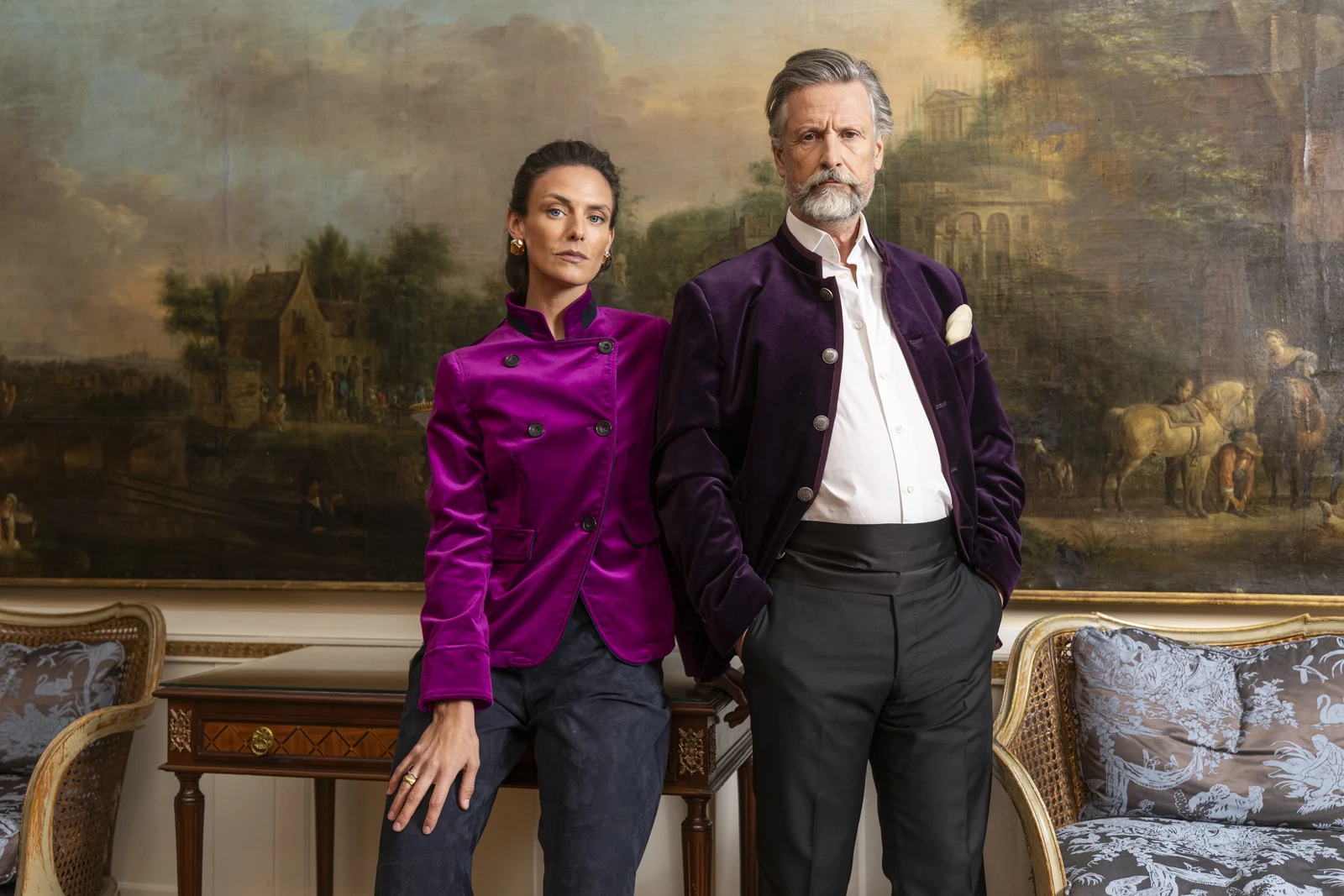
Habsburg’s Johann Karl is recognised by its collar, its hand-matched staghorn buttons and ten buttonholes sewn by hand.
My magazine is called The Silent Luxury for exactly this reason: you see the workmanship, and you know. Is that how Habsburg works?
Markus Meindl: The piece has to speak its own language. That takes years, decades really, of consistent work, until the informed customer recognises it. I only ever talk about the informed customer. And it must always stay quiet. That is why, in my Meindl world and in the Habsburg world, you will never see our name written large on anything.
So the connoisseur recognises it, because the connoisseur knows what quality is?
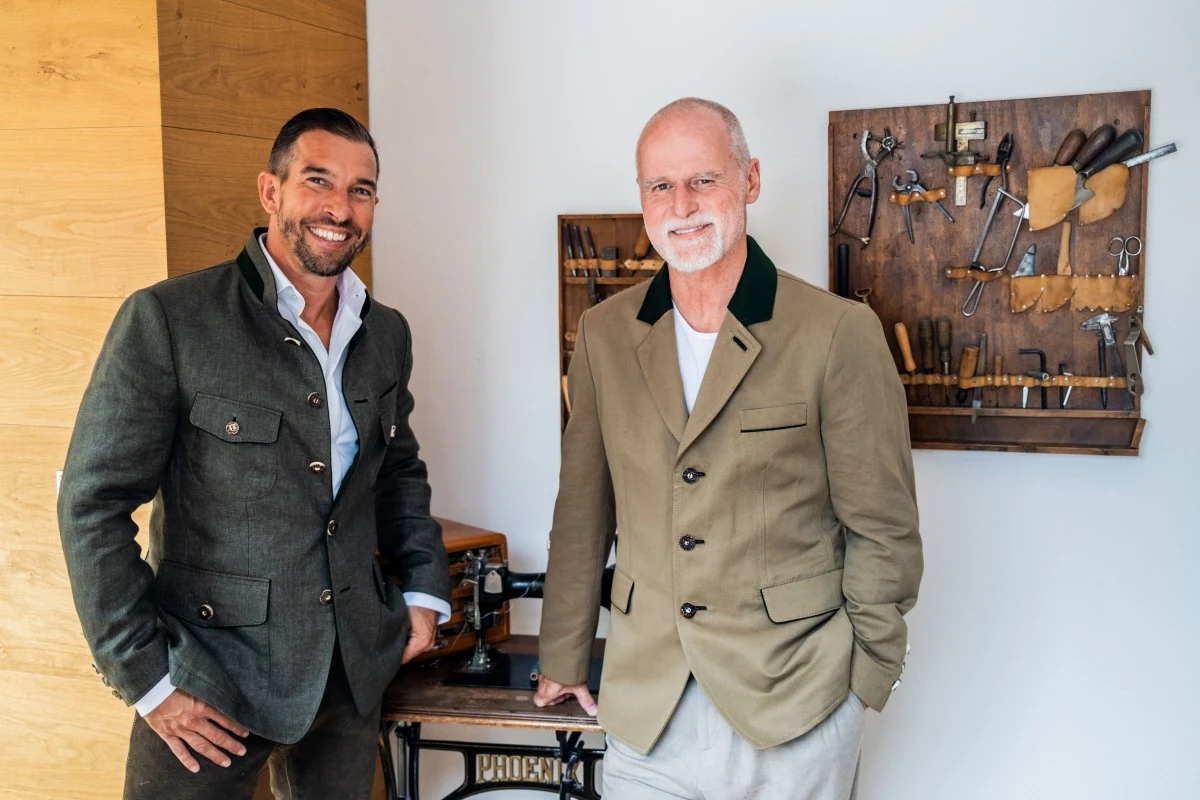
Michael Rumerstorfer: Take a signature piece like the Johann Karl. Even from a distance, the connoisseur can tell how the collar has been sewn. The staghorn buttons are selected by hand so that the colour matches. They come only from the lower part of the antler, because that is where the colour is beautiful. Every buttonhole is sewn by hand. Seventeen minutes per buttonhole, times ten. You can roughly imagine the effort. And everyone who sees the jacket hanging and tries it on is convinced. We don’t need a logo or a name across the front for that. It speaks for itself.
Beyond the Hunt: A Habsburg Jacket for Country Luxury
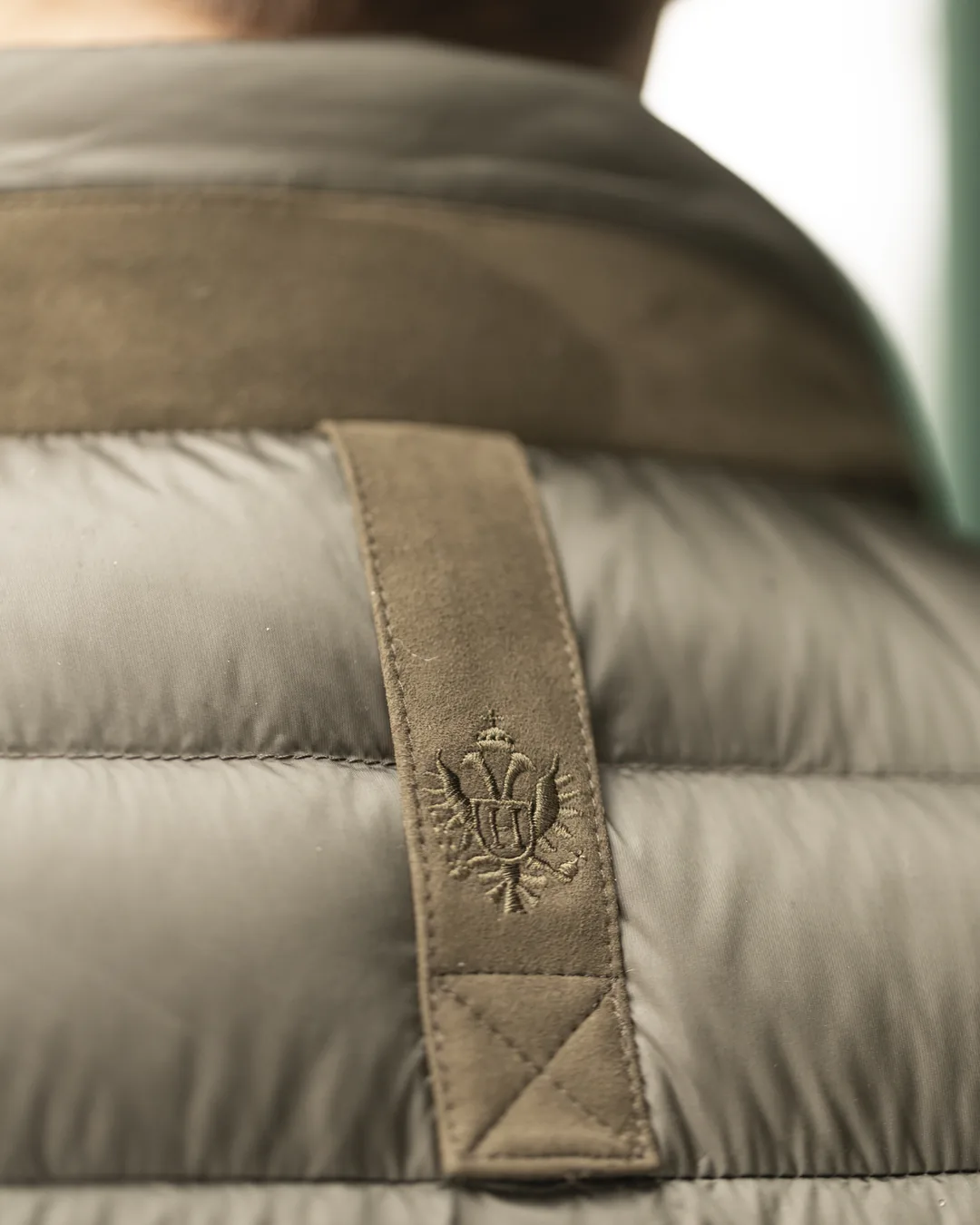
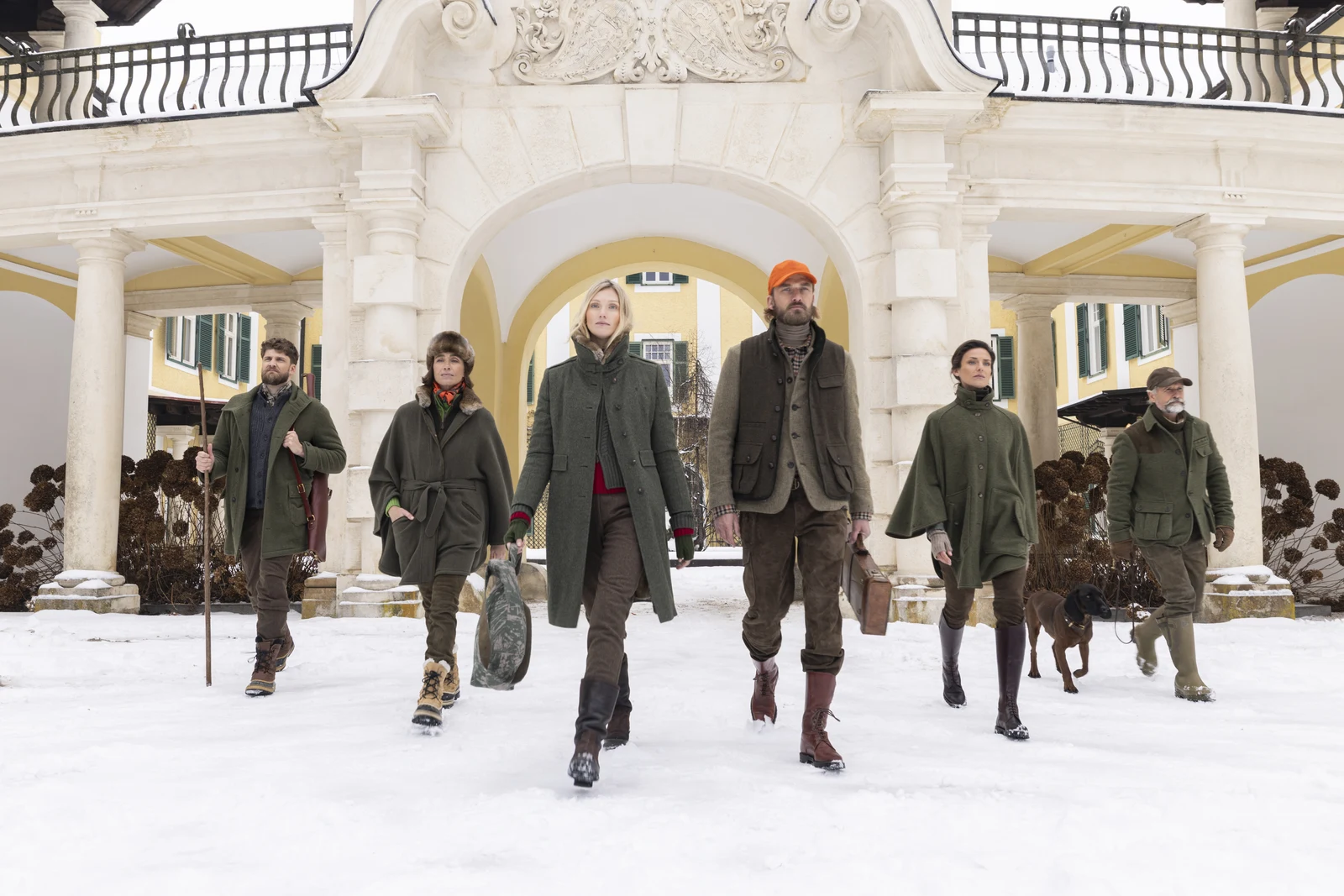
Habsburg grew up around the hunt, and today its collections for women and men reach well beyond it, in loden, cashmere and lighter cloths for travel.
When I go hunting, I need the highest quality too. Does Habsburg’s thinking come from there?
Michael Rumerstorfer: It runs through every product, for men and for women, whatever the occasion. There are many parallels with the hunt. You wear Habsburg before the hunt, when you arrive, during the hunt and afterwards, when people come together in a fine setting. But Habsburg is much more than a small hunting company. The country-luxury way of life matters enormously to us, and so do our women customers. People are quick to pigeonhole us as a hunting brand for men, and that is not who we are or how we see ourselves. We love our partnerships with very cool women who have nothing to do with hunting and who live this very particular country-luxury life.
Tradition in the Present: Habsburg’s Luxury Country
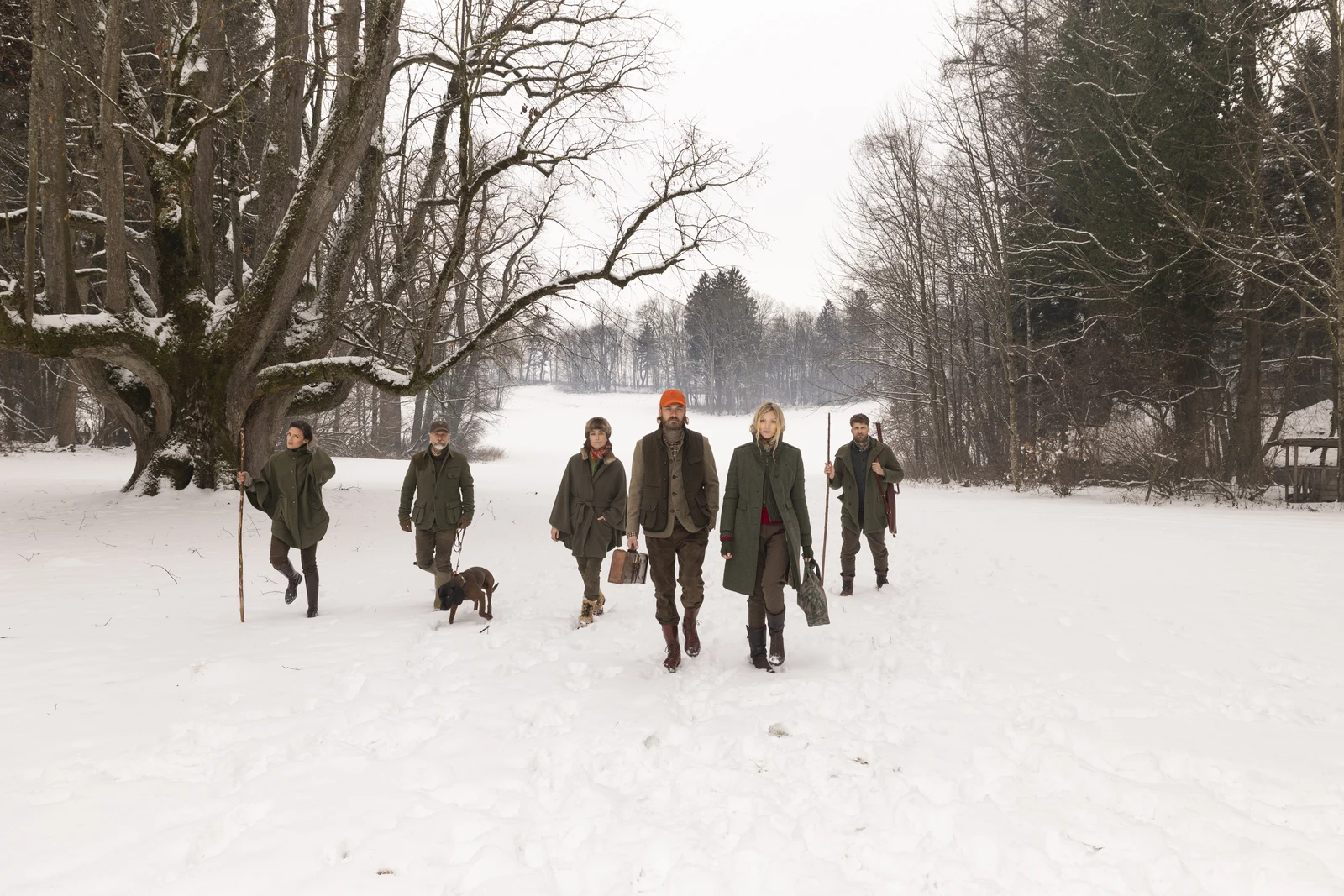
Fashion is turning strongly towards tradition again, and tradition is often treated as a negative word, as if you were living in the past. I see it a little differently. If a tree has no roots, it cannot have green leaves either, and it cannot keep growing.
Markus Meindl: We do not live in the past, we just value it very much, and we try to carry those values into the present day. I think that is the right approach, even if one person or another puts us in a certain box. That is a question of perspective. We know that internationally we are tremendously successful with our products today and receive an incredible amount of recognition. Our thinking keeps modernising the product. We give an enormous amount of thought to fits, to proportions and to finishing, so that we can easily hold our own against all these international brands. That is why we call what we do Luxury Country. It describes the world we move in far better.
Where a Habsburg Jacket Is Made: Austria, Hungary and Slovakia
Michael Rumerstorfer: If I may add something. In fast-moving fashion especially, everyone wants to claim sustainability for themselves. Habsburg has had it in its DNA from the very first second, in the way we think, the way we work by hand and the materials we source from our neighbouring countries. Take loden: it is made close to where we are based in Salzburg. The distances are tremendously short. The jackets are all made up in Hungary and Slovakia, so everything happens in neighbouring countries. Habsburg has always been the epitome of sustainability, without ever wanting to wave the green-marketing flag.
Loden and Lightness: The Italian Side of Habsburg
When I stand in your store in Vienna, how will I recognise the Italian side of Habsburg, the lightness, next to the weight of Austrian loden?
Michael Rumerstorfer: It is very important that we offer variety. On a hunt, when it is storming and snowing, you are tremendously grateful for loden. When we talk about travel, where everything should be lighter, none of us would want to wear a heavy loden hunting coat. We worked hard on the new Fustagno collection, which is extremely light and still unmistakably Habsburg. In summer there is linen, for warmer countries further south. We like to let the customer decide what he needs today, and we want to offer the perfect piece for every occasion.
Markus Meindl: That lightness comes from the cloths we work with, combined with the very fine finishing we are able to do. You can take any cloth, however light, and turn it into a board with the wrong interlinings and the wrong finishing, and then the tailoring is lost.
AI and the Atelier: How a Habsburg Jacket Is Designed
Habsburg keeps AI out of pattern-cutting and design and uses it in sales, where the customer gains from it.
Artificial intelligence now designs whole collections in a very short time. Looking ahead, will the hand, the skill behind a piece, become what makes it unique?
Markus Meindl: I am firmly convinced that only by working something out by hand do you arrive at what makes a piece special. I stand at the dress form myself, I trained as a tailor, I design myself. The more intensely and the longer you work on a product, the better it becomes. And AI cannot do that. AI can handle many tasks and many jobs. But I am convinced that a product, at Meindl as at Habsburg, gains energy when it is made by people.
Where Habsburg Uses AI: The Online Store and the Virtual Dressing Room
So the real luxury will be the time it takes to make a product? Leaving aside the romance of the little workshop, which I have never liked, where do you use technology deliberately?
Markus Meindl: There are few areas where we can use AI. Honestly, in the pattern and the cut it is impossible, and in design we do not want it at the moment. We want to keep developing our designs, and yes, there is a little romance in it, in a small workshop, by hand. Karl Lagerfeld did not develop his designs in a large industrial plant either. He developed them in small ateliers. That is exactly how we work.
Michael Rumerstorfer: At the product level, Markus is absolutely right. For us it is about neither scale nor speed. This is not fast fashion, and there is a clear set of values. In sales and marketing, though, we are very happy to use AI. Our online store works very well and reaches customers internationally whom we could not otherwise reach. There we have installed a virtual dressing room. You upload a photo and get a rough sense of how a Habsburg coat sits on you and whether you like it. We use things like that, always for a real benefit to the customer, and never to fake something or simply to scale.
“A product gains energy when it is made by people.”
Style With a Pedigree: Who Wears Habsburg Jackets Today
Habsburg jackets now sell to customers in their twenties as well as their eighties, to women through a line of their own beyond the hunt, and to Americans in New York and Aspen.
Habsburg calls its look “style with a pedigree” and says the name is something to live up to. It is a big name, and it carries stability, tradition and a way of life. How do you carry that into the brand, into Habsburg as clothing and as tradition?
Markus Meindl: There are several parts to it. We spend a great deal of time on the cloths we use and on the fits, and above all on the finishing. Together, all of that has to produce a product with an elegance that lasts, one that works internationally and still has a signature you recognise. That is what makes the Habsburg brand and the Habsburg product: it holds its value, it earns recognition, and at the end of the day it gives a great deal of pleasure and works across generations.
Young Doctors in Salzburg: Habsburg’s New Customers
Markus Meindl: A short example. I like to spend my lunch hour in the shop in Salzburg. Five young men come in, around 28 to 32 years old. They did not know who I was, and we simply served them. It was wonderful to see. Young doctors, young entrepreneurs, people for whom money matters, and they simply say: that is beautiful, I want that. And then they egged each other on. You think to yourself, we are on the right path. People in their twenties come to us, people in their eighties come to us, and it makes no difference. The product, the brand and the quality speak for themselves.
Then there are stories like that of a young man who told us he had inherited five Habsburg jackets from his grandfather. He only had to have them lengthened a little, and otherwise they are terrific. That is part of what makes a brand, the history behind it. And it only works through quality.
Habsburg in the United States: New York, Dallas and Aspen
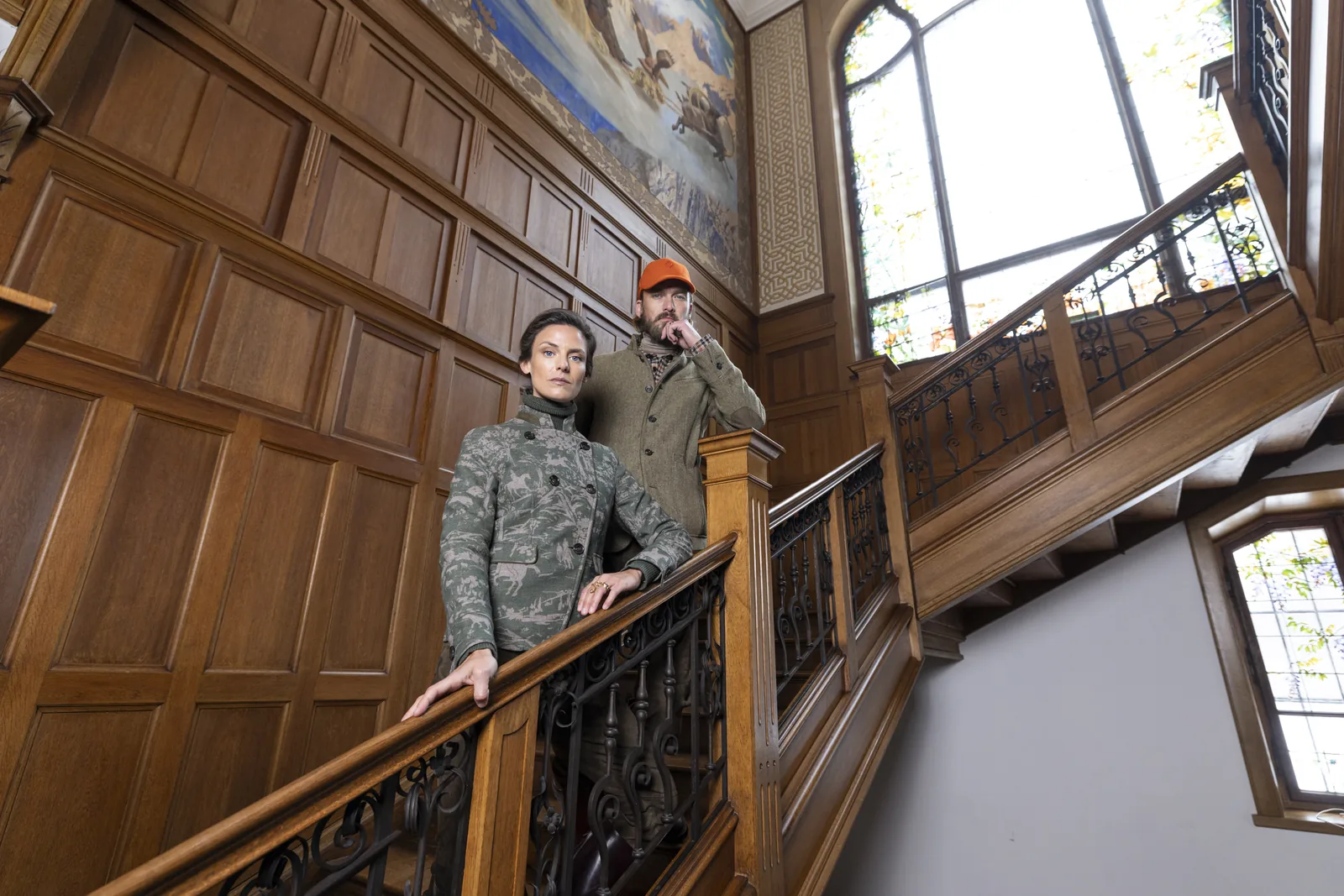
Michael, Habsburg now sells directly to customers in the United States, where Moncler, Gucci and others are building very large stores. How do you go about it there? What does the name Habsburg carry in America?
Michael Rumerstorfer: I should say first that we have been represented in the United States for many years by very good retail partners, in New York and Dallas, for example. People there have a strong affinity, and there is a community that has existed for decades. And we notice that our customers in New York, born in the States, love to spend time in Aspen, in St. Moritz, in Kitzbühel, in Vienna. That way of living is a very particular one, and we can meet them there again and again.
Finite by Nature: Why Habsburg Will Never Make Ten Collections a Year
Habsburg works with finite, hand-made materials and with very few people who can still do the work, so it makes pieces meant to outlast many seasons.
In the United States, Ralph Lauren invented an aristocracy that, in a sense, never existed. Habsburg has a real history. Is that what drives the idea of exclusivity?
Michael Rumerstorfer: Our resources are finite. The loden, the cashmere and the other cloths we buy are limited and produced by hand, and our lead times are long. Very few people are left who can still do the kind of work our production depends on. Ten collections a year are out of the question for us, and so is red, yellow, green and purple tomorrow, changing direction left and right. We are tremendously steady in our timelessness and our quality.
I still have my first Habsburg jacket in front of me. It hangs in my office. I bought it in 1998, when I was 18, and I really had to scrimp and save for it. It still fits me, thank God, and it still looks incredibly good, as if it had been made today, with a little patina, of course. What I mean is that we create pieces for generations, for far longer than a season. I think that is the great difference from many of the fast-fashion brands out there.
“We create pieces for generations, for far longer than a season.”
The Second Johann Karl: Price and Value of a Habsburg Jacket
Habsburg makes money from customers who return for another version of a piece they already own, and from the recognition a long-worn jacket earns.
These pieces are passed down, and Michael still has the jacket he bought in 1998. So let me come back to the economics. Everyone talks about scaling, growth and a new collection every year, and people around me keep asking the same thing. If a product lasts for generations, what does a house like Habsburg actually make its money from?
Michael Rumerstorfer: There are two levels. On one, we want to create products for generations, and we mean that literally. On the other, we are creative enough by now to keep showing something new so that the economics still work. We have a new knitwear collection, a new travel collection and accessories, alongside the classic signature pieces: Adrian and Johann Karl for men, Mariella for women. You can keep two or three Johann Karls in different colours and qualities for more than ten years. And you can still be delighted by the new down jacket, or the new shearling paired with knitwear. These are new themes, and every one of them is firmly anchored in our DNA.
Recognition: Why Long Wear Is Habsburg’s Best Marketing
Markus Meindl: We clearly also make money from the fact that things are worn for a long time, because that is how we earn recognition. It is the best marketing you can have. Someone is convinced by a product, wears it for many, many years and wins other people over with it. It is a long-term effect that is very hard to measure. At the end of the day it accounts for a great deal of the success. When two people wear the same thing, nobody says, I won’t buy that any more. Quite the opposite. It gives you certainty that you chose the right product.
That only works with a philosophy like Habsburg’s. You work on a design for a very long time and keep refining it a tiny bit, so that the customer never notices and it always stays contemporary. A millimetre at the shoulder, a millimetre at the neckline, the height of the collar, the length of the sleeve. That is what keeps a product current for years without really changing it.
Designed to Stand Above Time: Habsburg’s Design Principle
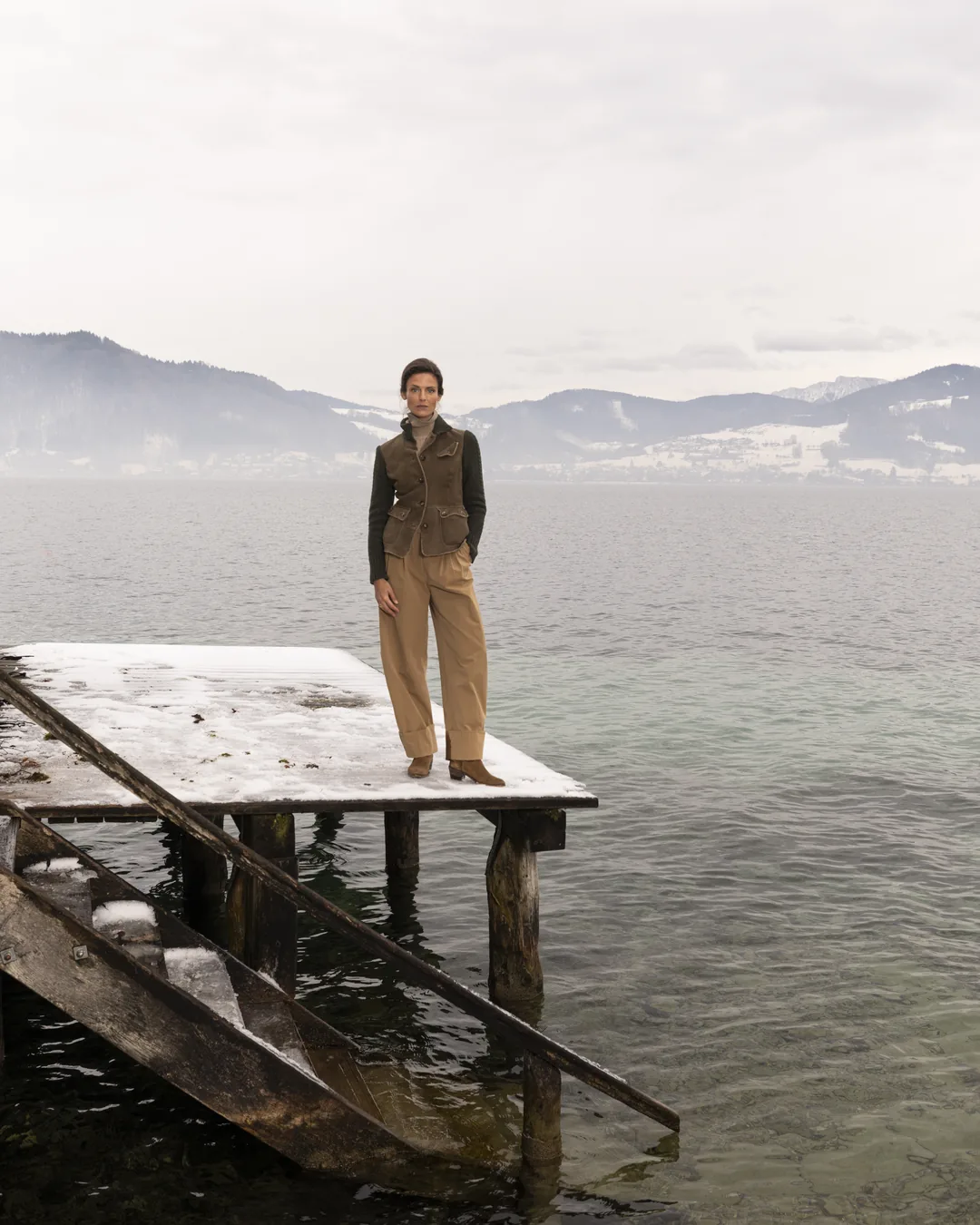
There is a danger, too, that something you keep for a long time starts to feel like a museum piece. I know it from my own wardrobe. I buy one really good piece and combine it with other things, a wonderful skirt with blouses whose cut is current. Ten years later people still ask: wow, where did you get that? Is that your philosophy?
Markus Meindl: Definitely, yes. That is the principle behind our idea of design: to design something that stands above time. It is very difficult, and you have to work on it a tremendous amount. Every detail has its value and its meaning. To develop a product so that it really lasts, you need a great deal of experience, and we have it. We have worked on this for many years ourselves. So have the people who have spent a very long time on these products: our pattern cutters, our designers, our product managers. Their task is clear. They keep developing these pieces.
Price and Value: What Goes Into a Habsburg Jacket
Luxury prices have climbed steeply, and many women now ask what they get in return. Where is the value when I, as a woman, choose a Habsburg piece?
Michael Rumerstorfer: I do believe some luxury brands are overdoing it with high prices right now. Say the same bag costs 40 per cent more a year later, in the same quality. Then I understand, from a woman’s point of view too, that people ask whether it is still value for money. You have to be careful that prices do not simply keep ratcheting up. We would never want to take our customers for fools. With us, you get very good value for money. If you come from the trade, you know what cashmere costs and what finishing means, with buttonholes sewn by hand in a European country. Measured against that, we are actually too cheap for what we deliver.
So it is also about touching it, seeing it on myself, and understanding the brand through the piece itself?
Markus Meindl: The brand has to take responsibility for what hangs in the shop at the end of the day, and we do. I can say with complete certainty what makes up the value in the end. It is the materials we use, the money we put into them, the work a product like this takes and how we pay for it. It is a price built on the material and on the work behind it. Of course you have to make money, but that is the smallest part of the whole thing.
A Stage in Vienna: The Habsburg Store on Weihburggasse
Habsburg built its first Vienna store, at Weihburggasse 7, for advice, coffee and time, because any jacket can now be bought on a phone.
I see large companies such as Kering closing a great deal of selling space around the world. At the same time they are building stores that are about experience, about something very specific. There is no longer a Louis Vuitton on every corner, the way you see it in Paris. But when I do walk into one, I am offered something wonderful that matches the brand. Is that what you are aiming for with your sales and your stores?
Markus Meindl: Yes, I see it that way too. The online and offline business must match one hundred per cent in quality, and you must not treat them differently. If you do it properly and exclusively, I am convinced that the informed customer will find the product. He will take the time, first to learn about it and then to immerse himself in the experience of buying it.
Sales per Square Metre: Why the Vienna Store Is a Stage
And how do you do that? I am curious. Is the brand alone enough to bring customers in and keep them, or is there a very particular atmosphere when I walk into the shop, including your new one in Vienna?
Michael Rumerstorfer: Absolutely right, it is about the experience. People used to talk about sales per square metre, and I think that is obsolete. Customers expect to experience something special when they walk into a Habsburg store.
And Vienna is now our newest baby. There has to be a certain atmosphere, the best service and advice, and that is very, very important. We all know you can buy any item in the world with a mobile phone. It is about wanting to feel something, wanting to be advised, lingering because you simply feel at ease, having a coffee, philosophising about materials and learning more about how our hand work and our workshops actually operate. We are not talking about a litre of milk from the supermarket. We are talking about products that have to be explained, experienced and felt, and that, I think, is the great difference. That is why we are working to get the perfect stage.
It really is about how a piece hangs. I know that from experience. You can slip into some things that are made almost the same, and one hangs perfectly while the other, well, less so.
Michael Rumerstorfer: So here is the invitation. When you come to our store on Weihburggasse, please slip something on. We are very much looking forward to honest feedback.
Quality Before Growth: Markus Meindl on Habsburg Kleidermanufaktur
Markus Meindl lets Habsburg Kleidermanufaktur grow only as fast as its hand skills allow.
In Italy, Ettore Bottoli of the family weaving mill Lanificio Bottoli told me about an interview. The journalist could not believe he had no growth targets. The mill wants to deliver the highest quality, he said. Luís Onofre, president of Portugal’s footwear association, put it as skill over scale. Does that match what you see?
Markus Meindl: I have always had a clear philosophy: pull, and never push. Only organic growth, never artificial growth, never bought growth. We have always lived by that philosophy: quality over quantity. That is why you must always be able to afford to say no to certain things.
Hand skills cannot simply be doubled or tripled overnight. You can only build them up slowly and steadily. Quality is something you lose when you grow too fast, and then the whole thing backfires. You have to work seriously at organic growth and make sure the quality stays the same.
Send this ↗ to someone who has inherited a jacket and still wears it.
 Read next · The ReadingHabsburg Kleidermanufaktur: Markus Meindl and Michael Rumerstorfer on a Great Name That Never Raises Its VoiceWhy a house with one of Europe’s grandest names never writes it large on its clothes, from a cut refined by the millimetre to a store in Vienna built as a stage.
Further Reading
-
Hackett on Savile Row: Graham Simpkins and the Suit That Outlives Its Owner
Hackett’s Head of Tailoring on why suit cloth got lighter, what bespoke still guarantees and what a jacket keeps from the man who wears it.
-
Luxury Trends 2027: From Hermès to Zegna, the Second Purchase Decides
Hermès, Kering and Zegna earn more from fewer shoppers. The figure that now decides which luxury houses grow next year is the second purchase.
-
Wool, Silk and Linen: How the Three Natural Luxury Fabrics Differ
How the three natural luxury fabrics differ in feel, durability, drape and origin.
Sources
- Markus Meindl and Michael Rumerstorfer, owners of Habsburg Kleidermanufaktur, in conversation with The Silent Luxury, hosted by Eva Winterer
- medianet, Habsburg Kleidermanufaktur opens its first store of its own in Vienna, 5 November 2026
- Habsburg Kleidermanufaktur, direct-to-consumer launch in the United States, GlobeNewswire, 3 July 2025
- Lanificio Bottoli: Ettore Bottoli on Natural Colour and the Recipe Behind Every Cloth
- Luís Onofre: Portugal’s Family Shoemakers Are Betting on Skill Over Scale
Similar Articles
Konstantin Chaykin: “The Person Becomes Part of the Mechanism”

Marie Droll of Kearney: Beauty Buyers Now Pay for Proof
Yves Bugmann: In China, Swiss Watches Have Moved Further Upmarket