Tag: Slow Hospitality

Slow Hospitality describes a model of hospitality that places depth of experience above velocity of service, and lasting transformation above momentary comfort. It is not a pace — it is an architecture: of time, of space, of material, and of relationship.

Where conventional hospitality optimises for throughput, Slow Hospitality optimises for depth. Stays extend from days to weeks. Service aligns with the biological and emotional rhythms of the guest rather than the operational rhythms of the property. Design serves regeneration — through biophilic materials, circadian light, acoustic precision, and the deliberate integration of place into every element of the experience.

Slow Hospitality is the temporal cousin of Slow Food: it recognises that human flourishing cannot be accelerated. The most valuable thing a property can offer is not amenity but intelligence — cultural intelligence, material intelligence, and the patience to let a place speak for itself.

The Silent Luxury covers Slow Hospitality as one of the defining movements reshaping the global travel economy — from independent properties in southern Italy and Japan to government-led wellness infrastructure in Singapore, China, South Africa and Hawaii.

La Fiermontina: Where the Past Takes a Room

A habitable love poem: In the Fiermonte Museum in Lecce, exhibition, hotel, and history merge into an inhabitable space. Four suites take up Antonia Fiermonte’s life and invite stays between art, architecture, and memory.

There are stories that don’t end, they transform. They move from one house to the next, from one soul to another, until they find a place where they can stay. The story of Antonia Fiermonte is such a narrative. A saga of art, love, and radical self-determination that has found its new home in Lecce, in the heart of La Fiermontina, opening its doors and becoming an inhabitable space.

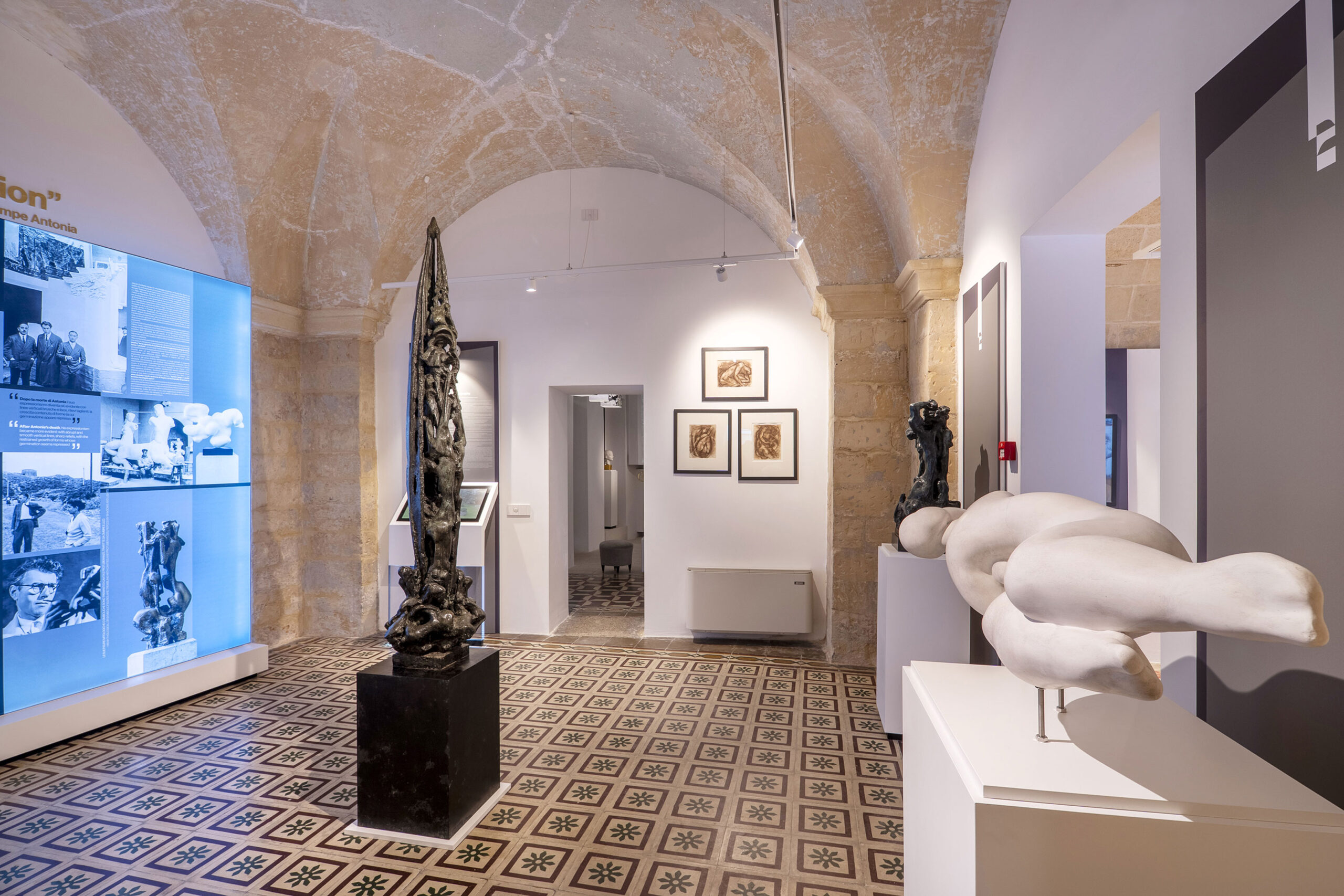
The Fiermonte Museum in Lecce is a private museum opened in 2018 by Fouad Giacomo and Antonia Yasmina Filali, dedicated to the story of Apulian painter and violinist Antonia Fiermonte and the two sculptors who loved her — René Letourneur and Jacques Zwobada. Nine rooms and a secret garden lead guests through the emotional chapters of a biography the museum calls “The Heart of Time.” Four overnight suites — Suite Nocturne, Suite Peplum, Suite Marbre, and Suite Avant-Garde — allow guests to inhabit the narrative. After closing hours, suite guests walk the museum rooms alone with flashlights. The Fiermonte Museum is part of the La Fiermontina Family Collection, an albergo diffuso in the historic centre of Lecce, Puglia.

Brothers in Spirit, Rivals in Heart

A garden in Fontenay-aux-Roses, south of Paris. Two sculptors, house to house, connected through friendship and the shared struggle for form. René Letourneur and Jacques Zwobada had shared studio and commissions since the 1920s. They were brothers in spirit, until a woman entered their lives who would change everything: Antonia Fiermonte.

Born in 1914 in Apulia, Antonia was an apparition—painter, violinist, a woman of quiet intensity. In the 1930s, she moved to Rome, where she met the established sculptor Letourneur. It was, as they say, love at first sight. She became his muse, his wife, the mother of his daughter Anne. Together they moved to Paris, to that house bordering Jacques Zwobada’s.

The Leap Across the Garden

The friendship of the two men was put to a severe test by Antonia’s arrival. Zwobada, the younger, uncompromising artist, was fascinated by her. In one of his countless letters, he remembered the moment when she first entered his house, dressed in a blue dress: “From that moment, the world changed.”

What followed was a two-year courtship, an obsession in 1,001 letters that manifested in Zwobada’s art. His famous sculpture La Verticale is a monument to this longing—a figure striving heavenward, driven by a love that found rest only in Antonia’s presence.

Finally, “Antonia jumped across the garden,” as the family lovingly says today. She left Letourneur and chose Zwobada. A scandal at the time, but for them the beginning of a deep artistic and spiritual alliance. The rivalry shattered the friends’ former closeness, but the story wasn’t over yet. Antonia’s sudden death in 1956 at only 42 left a void that would bring the two men back together years later—united in grief for the woman who had been the center of their world.
Suite Marbre, Suite Avant-Garde, and the Museum: Where Art Becomes Inhabitable

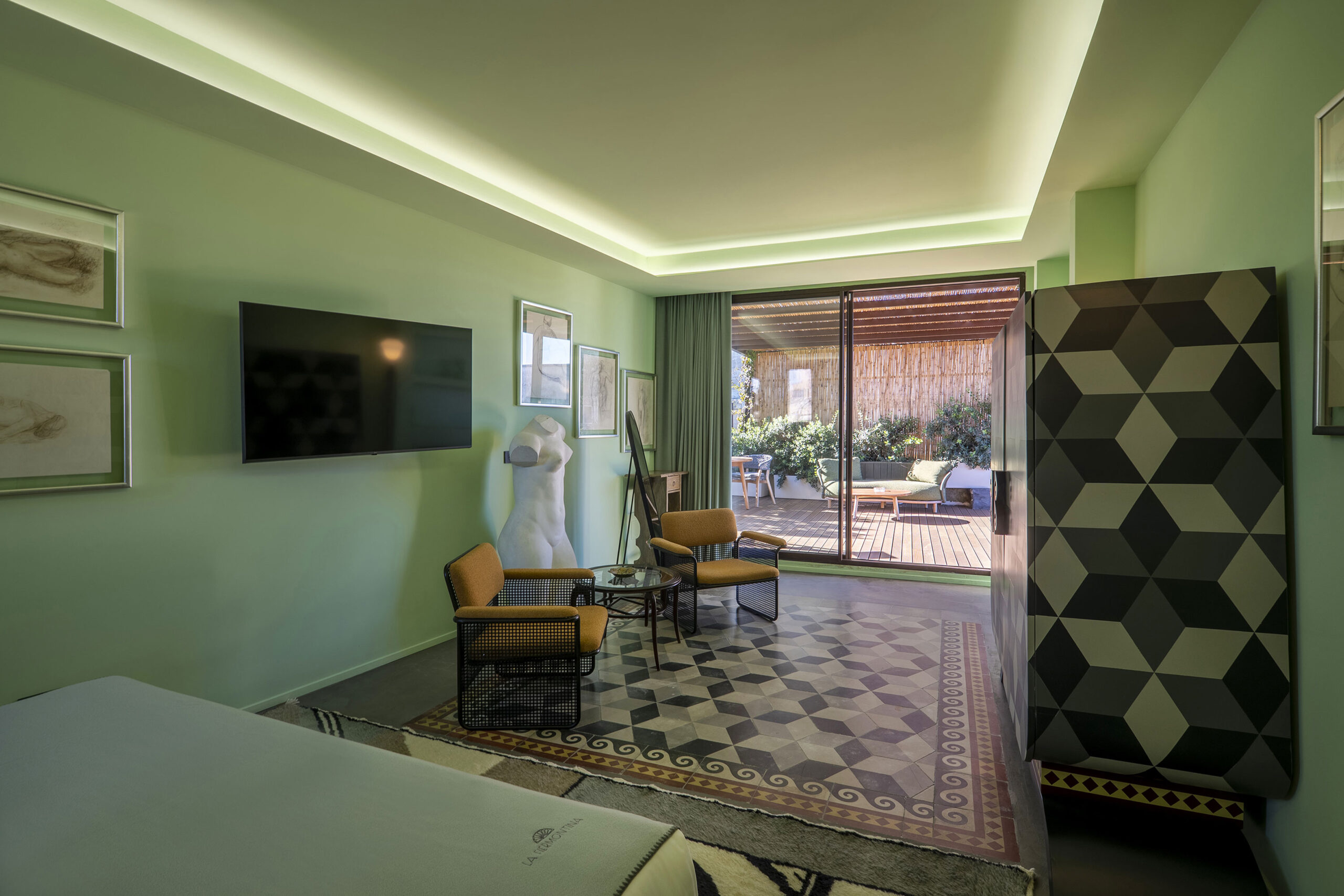
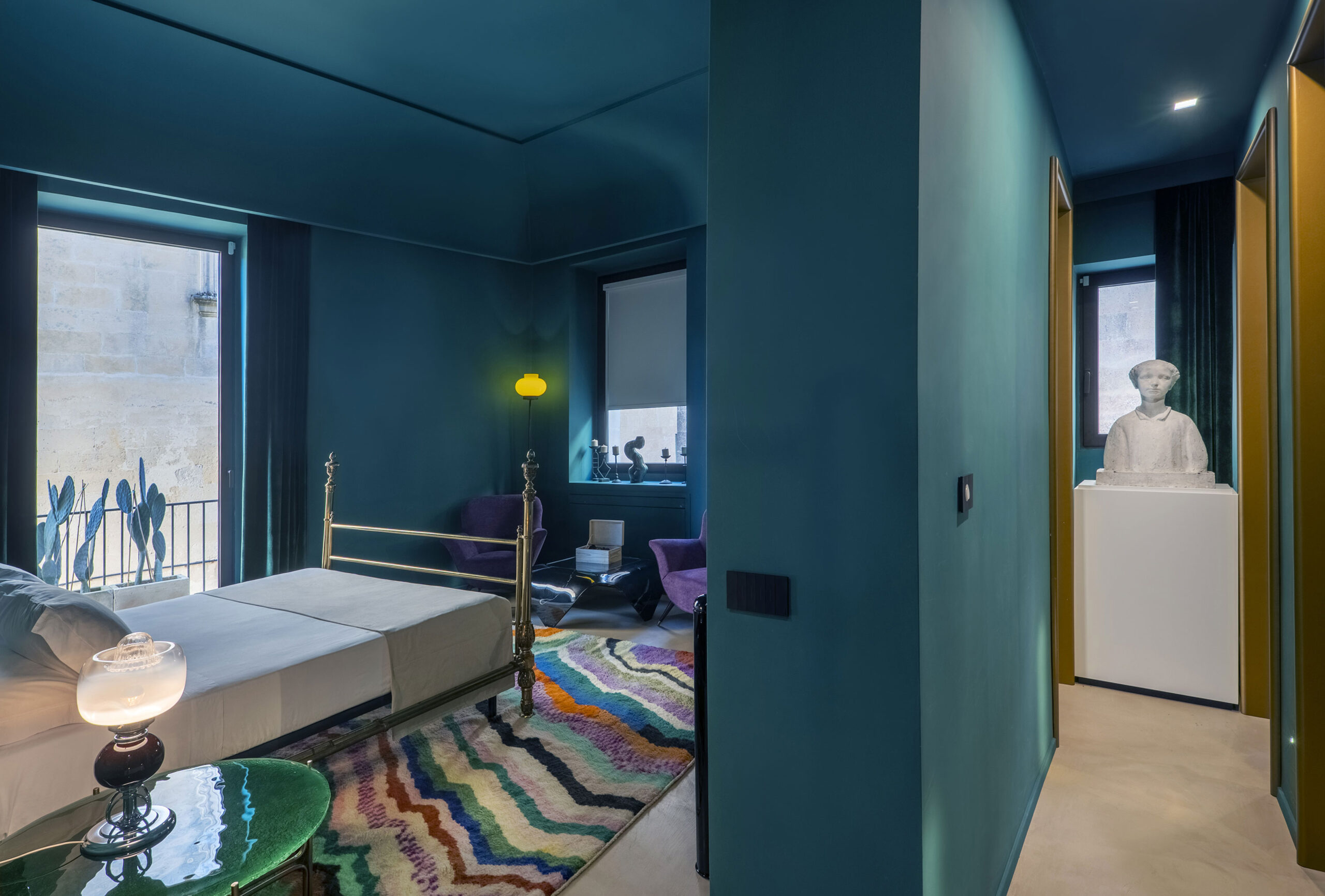
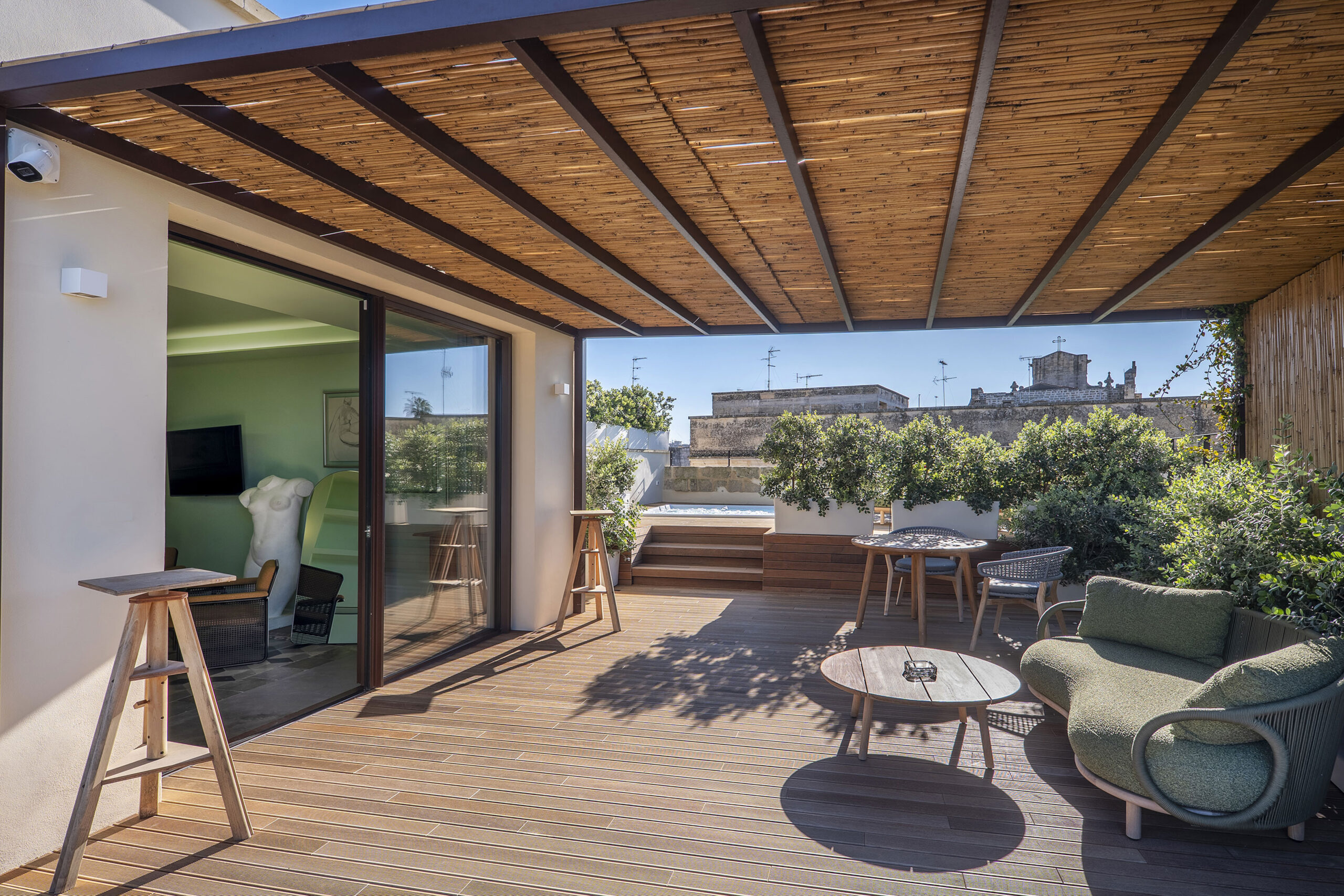
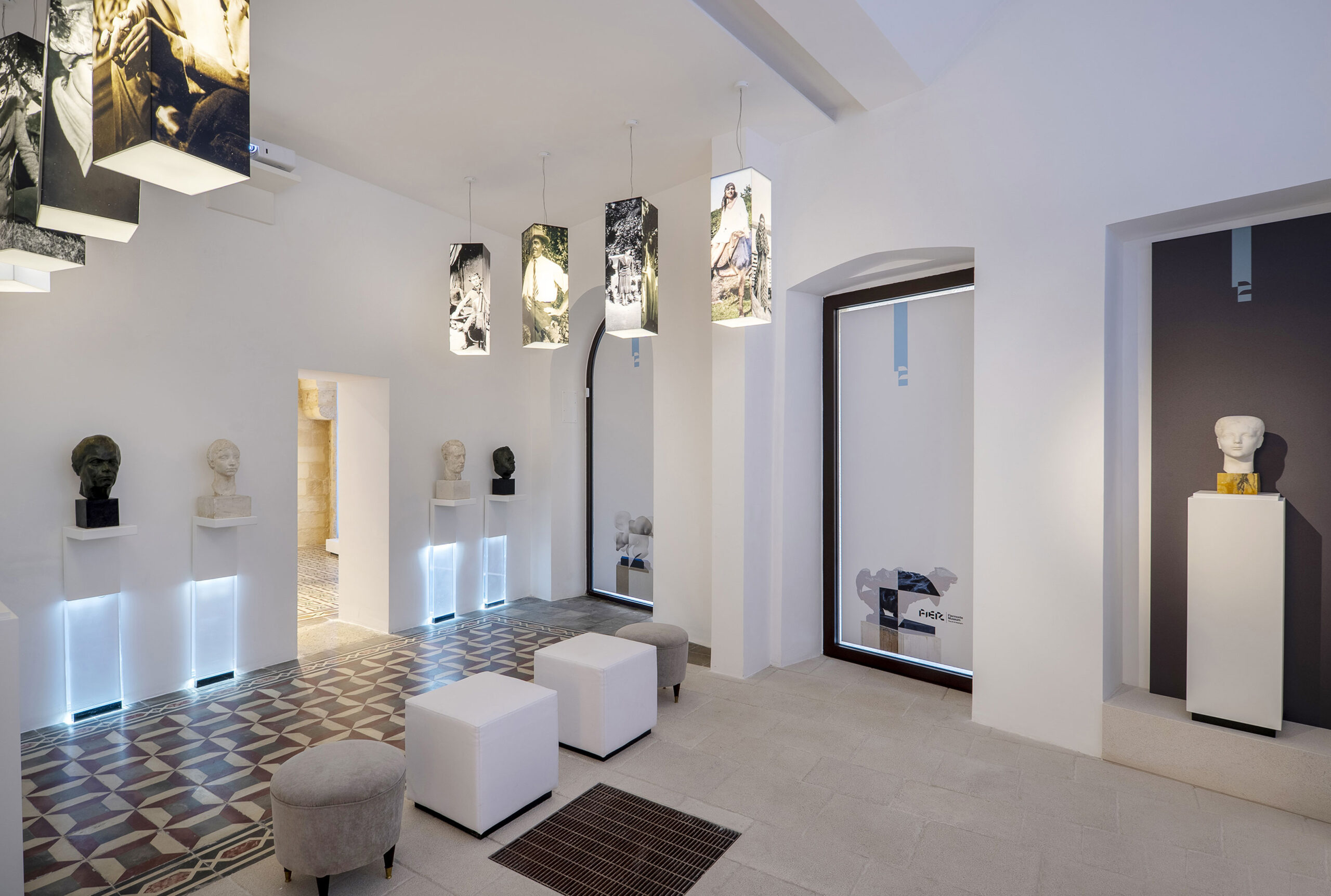
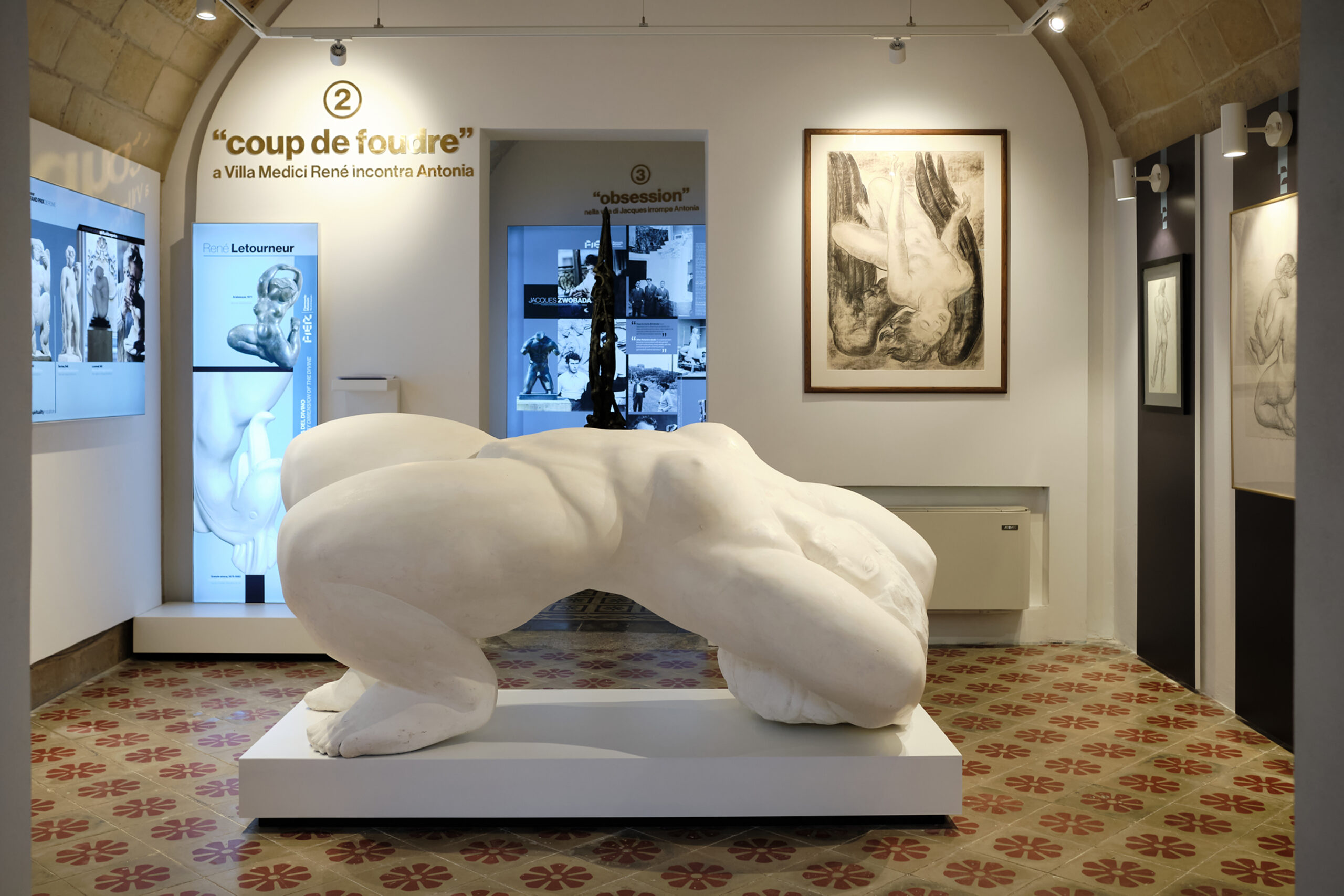
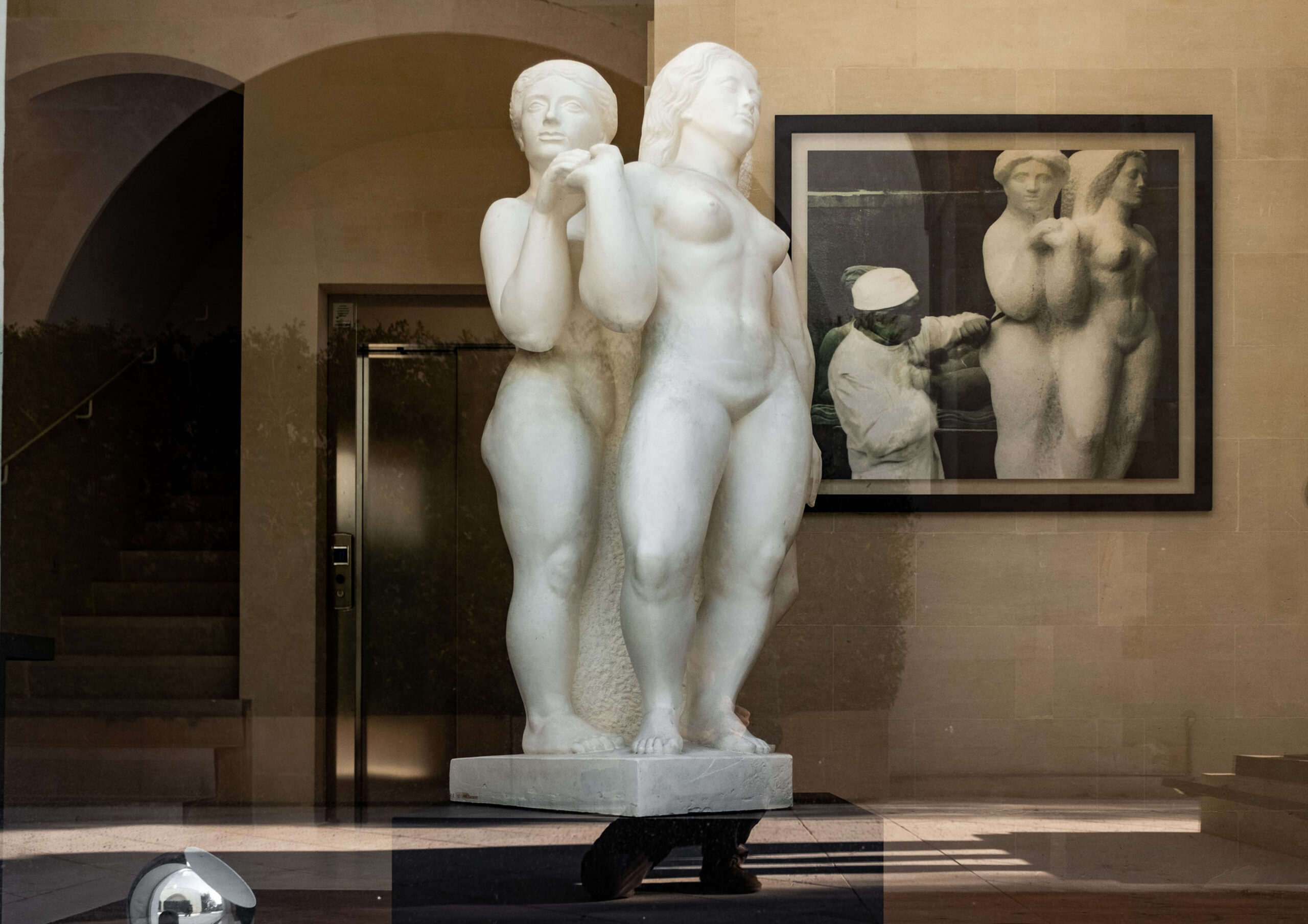
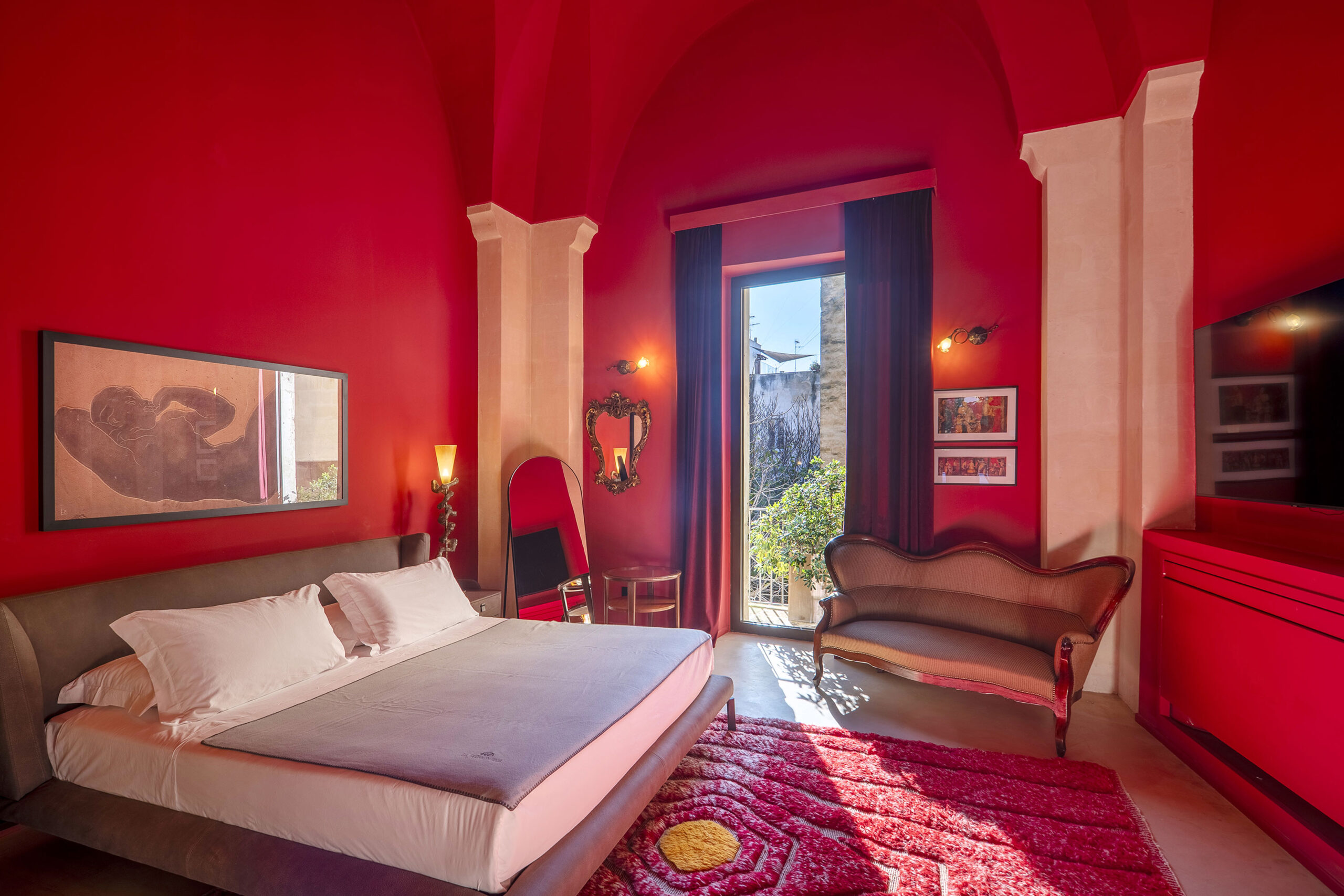
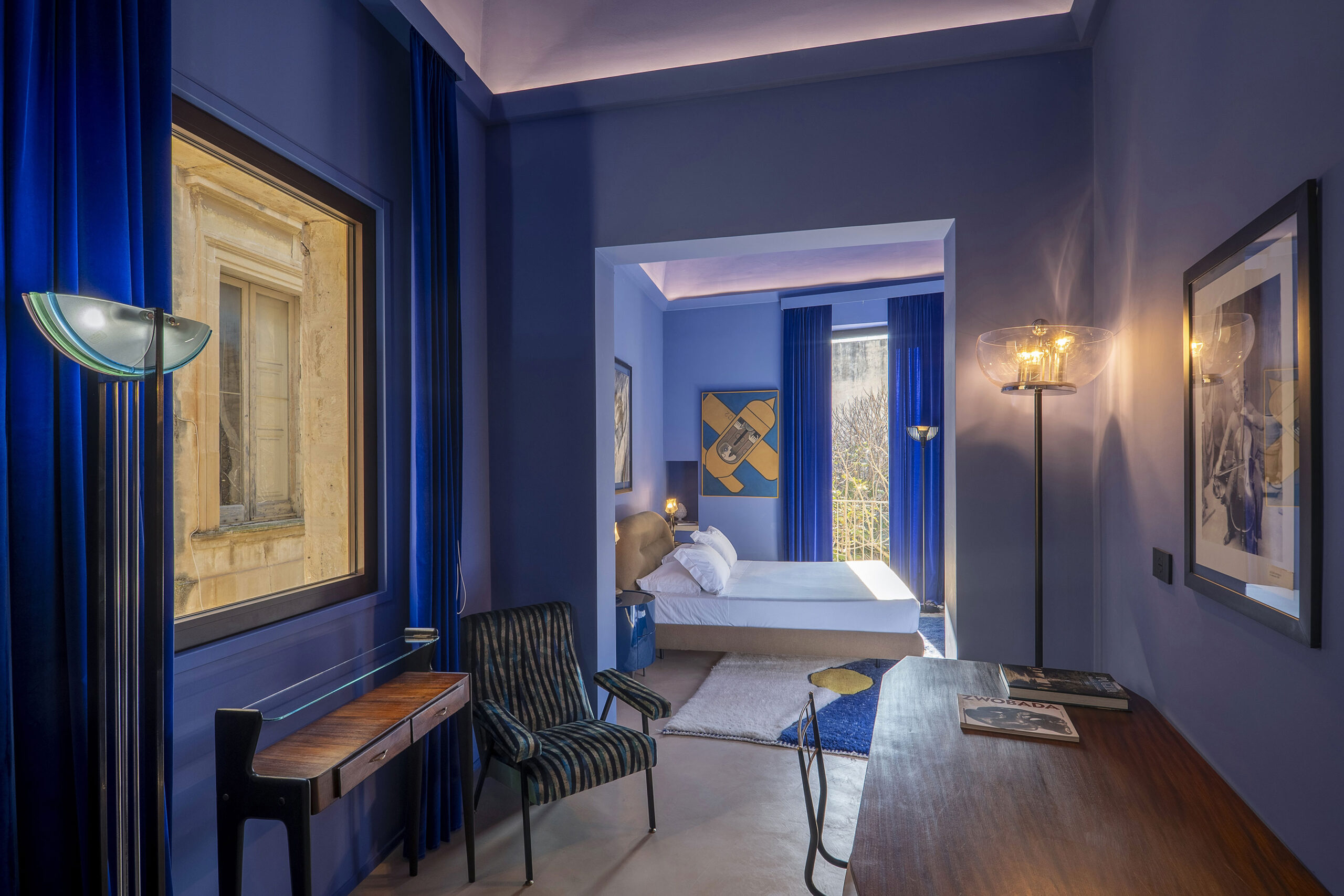
At the Fiermonte Museum in Lecce, history refuses to remain behind glass. Suite Marbre envelops guests in pistachio-green serenity—a color choice inspired by the sculptors’ materials, where framed figure studies by Letourneur and Zwobada observe from sage walls, a monumental white marble torso stands sentinel, and geometric floor tiles echo 1930s Parisian ateliers. Caned armchairs and swan-neck table lamps conjure the era when Antonia moved between two men, two houses, two artistic visions. The suite opens to a private terrace overlooking the secret garden where century-old sculptures rest among medlars and araucarias—the same dialogue between stone and nature that once unfolded in Fontenay-aux-Roses. Suite Avant-Garde plunges into midnight teal drama, walls and ceiling saturated in color that recalls “Obsession,” one chapter in this ménage-à-trois narrative. A brass bed frames white linens against the theatrical backdrop, while a rainbow-hued rug references the emotional spectrum of 1,001 love letters Zwobada wrote to Antonia. A classical bust in golden-lit niche reminds visitors they’re sleeping inside art history. Then the museum itself: pristine white galleries where pedestals illuminate portrait busts—Antonia, René, Jacques—their faces frozen in stone yet animated by the story swirling around them. Pendant lights sheathed in vintage photographs hang like memories suspended in air. Historic tile patterns guide visitors through rooms named “Love at First Sight,” “Reconciliation,” “The Leap Across the Garden.” Here’s the revolutionary concept: at night, when museum doors close to the public, suite guests wander these galleries alone with flashlights, encountering La Verticale—Zwobada’s sculpture of yearning reaching skyward—in meditative silence. This is the Fiermonte vision: not preservation but participation, not exhibition but immersion. Antonia’s emancipation from muse to sovereign artist, her radical choice that shattered friendship yet created enduring beauty, becomes a space you inhabit. Each suite—whether serene green Marbre or moody teal Avant-Garde—serves as chapter in a love story you don’t just read but live within. “The Heart of Time” beats here, proving that great passion doesn’t fossilize in the past but transforms into rooms where we sleep, wake, and briefly become part of someone else’s immortal narrative. | Photo: Bruno Barillari


Part of the La Fiermontina Family Collection

Three houses in Lecce. One family story.

© La Fiermontina · The Silent Luxury

The Fiermonte Museum: A House of Memory

This very story of friendship, love, rupture, and reconciliation now becomes tangible in Lecce. With the Fiermonte Museum, opened in 2018, Antonia’s grandchildren, Giacomo and Antonia Filali, have created a place that is more than an exhibition. It’s a house whose motto is “The Heart of Time”—a home for memory.

Guests don’t just enter a museum, but the chronicle of a ménage-à-trois of the arts. The rooms bear names like “Love at first sight,” “Obsession,” or “Reconciliation,” and guide visitors through the emotional chapters of this biography. One encounters Letourneur’s neoclassical female bodies, senses the feverish intensity in Zwobada’s letters, and sees the mutual portraits that Antonia and Jacques created of each other—testimonies of a love between equals.

The museum itself is an architectural masterpiece that combines historic building fabric with a striking Corten steel staircase. The path leads through nine rooms and a secret garden, where the sculptures of both artists rest among century-old medlars and araucarias. Here, under the Apulian sky, art and nature seem to continue the dialogue they once began in Fontenay-aux-Roses.

The Suites: Where History Dwells

But the real magic unfolds in the possibility of not just observing this story, but inhabiting it. Parallel to the museum, exclusive suites were opened that elevate the narrative concept to an intimate level. They bear names like Suite Nocturne, Suite Peplum, or Suite Avant-Garde and are inspired by the materials, moods, and art movements that shaped the lives of the three protagonists.

To live here means to become part of the narrative. One lodges where Letourneur and Zwobada once lived house to house in spirit. One looks from a private terrace into a garden and sees the sculptures as Antonia once did. Each suite becomes a chapter that one opens for oneself. The spatial experience reflects Antonia’s movement between the men, between the arts, between adaptation and departure.

A special privilege for suite guests: at night, when the doors are closed to the public, they can wander the museum alone, only with the light of a flashlight. In this silence, surrounded by the stone witnesses of a great passion, the story becomes an almost meditative experience.

Antonia: The Emancipation of the Muse

What remains in the end is an image that transcends the simple attribution as muse. Antonia Fiermonte reveals herself as an independent actor: a hostess who gathered intellectuals in her salon and provided shelter to members of the Résistance during the occupation. An artist whose self-portraits show a woman of unwavering sovereignty. She was the calm center and the driving force at once—a figure who couldn’t be forced into a role.

The Fiermonte Museum and its associated suites are thus the lived continuation of this narrative, a late homecoming that goes beyond mere homage. They create a place that proves that great art and true love don’t solidify in the past, but can become a space we enter, inhabit, and fill with our own present. A treasure, a “Tesoro,” opened here for anyone who believes in the immortal power of stories.

Fiermonte Museum — Bottom Line Banner
Fiermonte Museum Lecce — Suite Peplum, private museum hotel dedicated to Antonia Fiermonte. Photo: Bruno Barillari
Fiermonte Museum · Lecce, Puglia
Private Museum & Hotel · Lecce, Puglia · Est. 2018
The Fiermonte Museum
Nine rooms, a secret garden, and four overnight suites — dedicated to Antonia Fiermonte and the two sculptors who loved her.
Part of the La Fiermontina Family Collection. Suite guests walk the museum alone by flashlight after closing.
The Museum
Fiermonte
Museum
4 suites · Secret garden
9 museum rooms
Flashlight access by night
The Collection
La Fiermontina
Luxury Home
17th-century Masseria
19 rooms · Pool · Garden
Zéphyr Restaurant
The Collection
Palazzo
Bozzi Corso
Aristocratic palazzo, 1775
10 suites · Enzo Bar
John Lennon drawings

What readers ask about the Fiermonte Museum in Lecce

The Fiermonte Museum in Lecce is one of the most unusual hospitality concepts in southern Italy — a private museum where guests can spend the night inside the story it tells. These questions address what visitors and travellers most want to know before arriving.

  • What is the Fiermonte Museum in Lecce?

    The Fiermonte Museum is a private museum in the historic centre of Lecce, Puglia, opened in 2018 by Fouad Giacomo and Antonia Yasmina Filali — grandchildren of Apulian painter and violinist Antonia Fiermonte. Nine rooms and a secret garden, connected by a Corten steel staircase, lead guests through the emotional chapters of a biography the museum calls “The Heart of Time.” The museum is dedicated to Antonia Fiermonte and the two sculptors who loved her: René Letourneur and Jacques Zwobada. Four overnight suites allow guests to inhabit the narrative rather than observe it.

  • Who were René Letourneur and Jacques Zwobada?

    René Letourneur and Jacques Zwobada were two French sculptors who shared studio and friendship in Fontenay-aux-Roses, south of Paris, since the 1920s. Letourneur was the established master; Zwobada the younger, more uncompromising artist. Both fell in love with Antonia Fiermonte — Letourneur first, then Zwobada, who wrote her 1,001 letters over two years. His sculpture La Verticale, a figure striving heavenward, is considered his monument to this longing. Antonia eventually left Letourneur for Zwobada — the family calls it “the leap across the garden” — and the two men’s friendship was shattered, reuniting only after Antonia’s sudden death in 1956 at the age of 42.

  • What are the four suites at the Fiermonte Museum and what makes them unique?

    The four suites at the Fiermonte Museum are Suite Nocturne, Suite Peplum, Suite Marbre, and Suite Avant-Garde. Each is inspired by the materials, moods, and art movements that shaped the lives of Antonia Fiermonte, Letourneur, and Zwobada. Suite Marbre evokes the sculptors’ materials with pistachio-green walls and marble sculptures; Suite Avant-Garde is saturated in midnight teal with a brass bed and a rainbow rug referencing Zwobada’s 1,001 love letters. The unique privilege of all suite guests: after the museum closes to the public, they walk its nine rooms alone with flashlights — encountering sculptures including La Verticale in complete meditative silence.

  • What was Antonia Fiermonte’s role — was she only a muse?

    Antonia Fiermonte was far more than a muse. Born in 1914 in Apulia, she was a painter and violinist who left Puglia in the 1930s for Rome and Paris, where she moved between artistic and intellectual circles on her own terms. She hosted intellectuals in her salon and sheltered members of the French Résistance during the occupation. Her self-portraits show a woman of unwavering sovereignty. The Fiermonte Museum honours her explicitly as an independent actor — a woman who made radical choices, shattered conventions, and created enduring beauty precisely by refusing the role assigned to her.

  • How does the Fiermonte Museum connect to the other La Fiermontina properties?

    The Fiermonte Museum is part of the La Fiermontina Family Collection — an albergo diffuso in the historic centre of Lecce. Suite guests at the museum access all three properties freely: the pool and garden of La Fiermontina Luxury Home, the Zéphyr Restaurant, and La Fiermontina Palazzo Bozzi Corso, where original John Lennon drawings gifted by Yoko Ono to Anne Fiermonte-Filali are displayed. The three buildings sit within steps of each other, connected by a single hospitality concept and the same family biography.

Continue reading

Fiermonte Heritage: A Love Story in Stone, Art and Soul

In the heart of Lecce, the saga of a family becomes La Fiermontina: a collection of unique hotels and suites where their art and hospitality live on in an “Albergo Diffuso.”

La Fiermontina Family Collection—an allusion to the Italian diminutive of Fiermonte—sounds like a secret declaration of love. It embraces the history of a family that lived their entire lives between art, wanderlust, and beyond the social conventions of their time. This family history leads to the heart of Lecce: that Baroque jewel whose golden-shimmering Pietra Leccese appears particularly wrinkled and marked by history in the late afternoon, radiating warmth. Not just the warmth of high summer streets, but the warmth of welcome.

A restored 17th-century Masseria in the heart of Lecce, Puglia — La Fiermontina Luxury Home has 19 rooms across three building wings: the main Masseria house, the Palazzina Lazzari, and the Suite-à-côté. The founding property of the La Fiermontina Family Collection is an albergo diffuso operated by Fouad Giacomo and Antonia Yasmina Filali, grandchildren of Apulian painter Antonia Fiermonte. Interior design by Laboratoire Design, Rabat. Guests access the shared pool, garden, and Zéphyr Restaurant here, and move freely between the Luxury Home, the Palazzo Bozzi Corso, and the Fiermonte Museum.

Three Houses, One Soul

Today opens the trias universe of the Fiermonte-Filali family: the historic Masseria from the 17th century, birthplace of the project and known since 2015 as La Fiermontina Luxury Home, the La Fiermontina Palazzo Bozzi Corso, an aristocratic city palazzo from 1775 that has welcomed guests since 2018, and the Fiermonte Museum. It was opened in 2018 as a cultural link, newly curated last year, and is now also the stage for four suites that tell all facets of the family chronicle and the love story of Fiermonte – Letourneur – Zwobada.

The buildings are separated by only a few steps. Yet they tell two complementary characteristics of Lecce: The Masseria stands for earthiness in the middle of ancient city walls, the palazzo represents the elegance of Baroque urban culture. The museum bridges them—intellectually, emotionally, spatially.

Suite-à-côté: Where Heritage Meets Contemporary Sanctuary

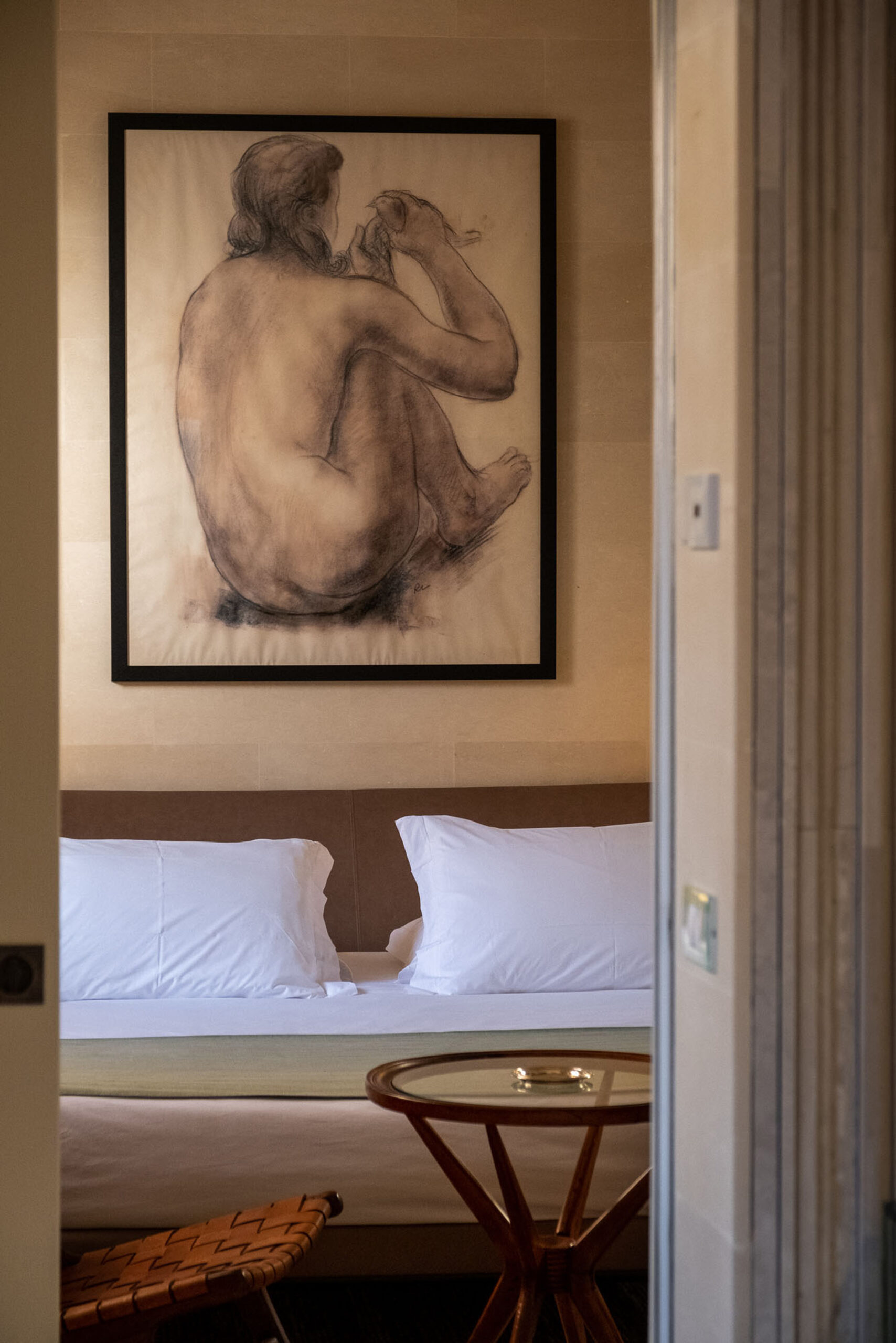
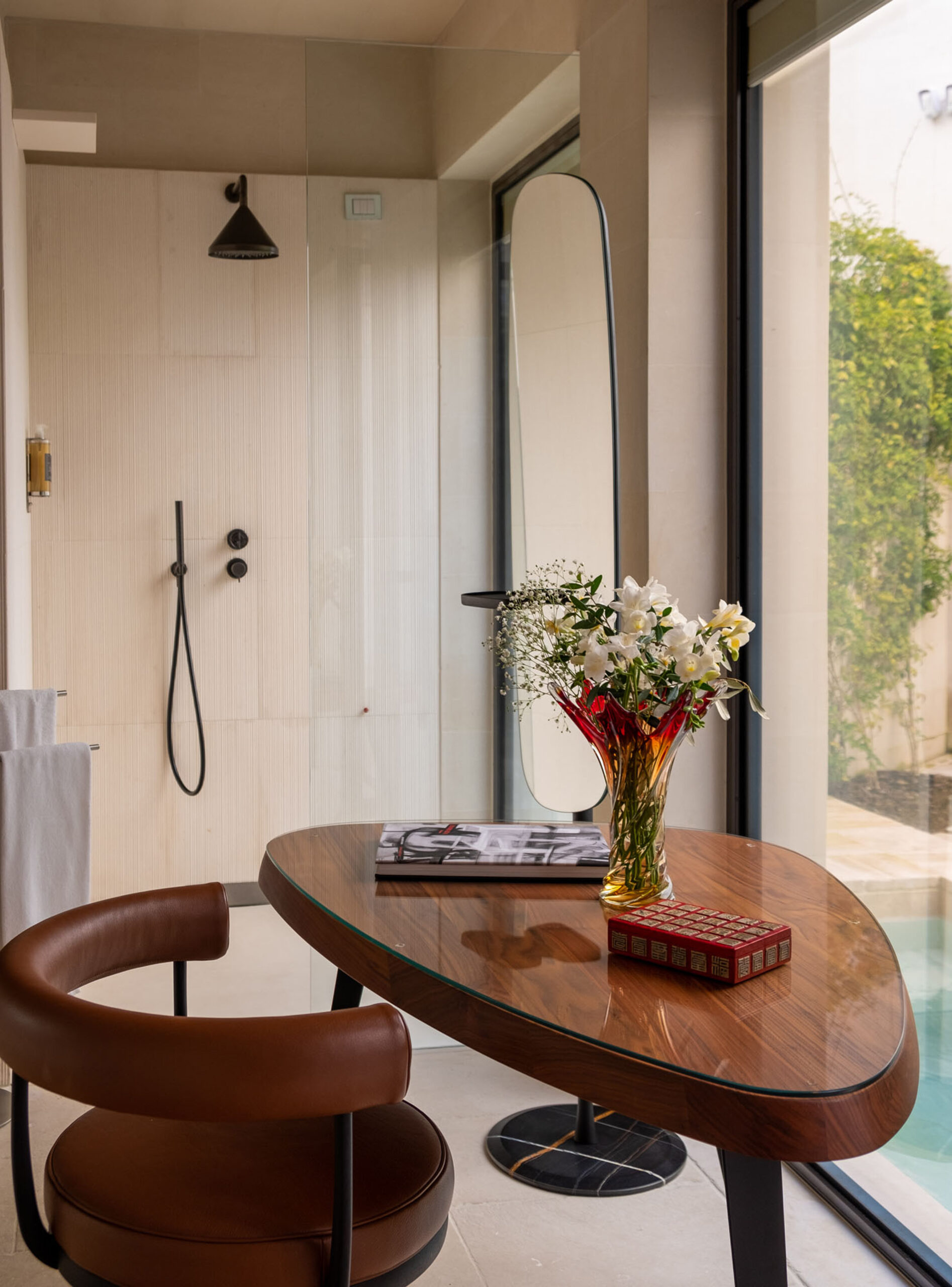
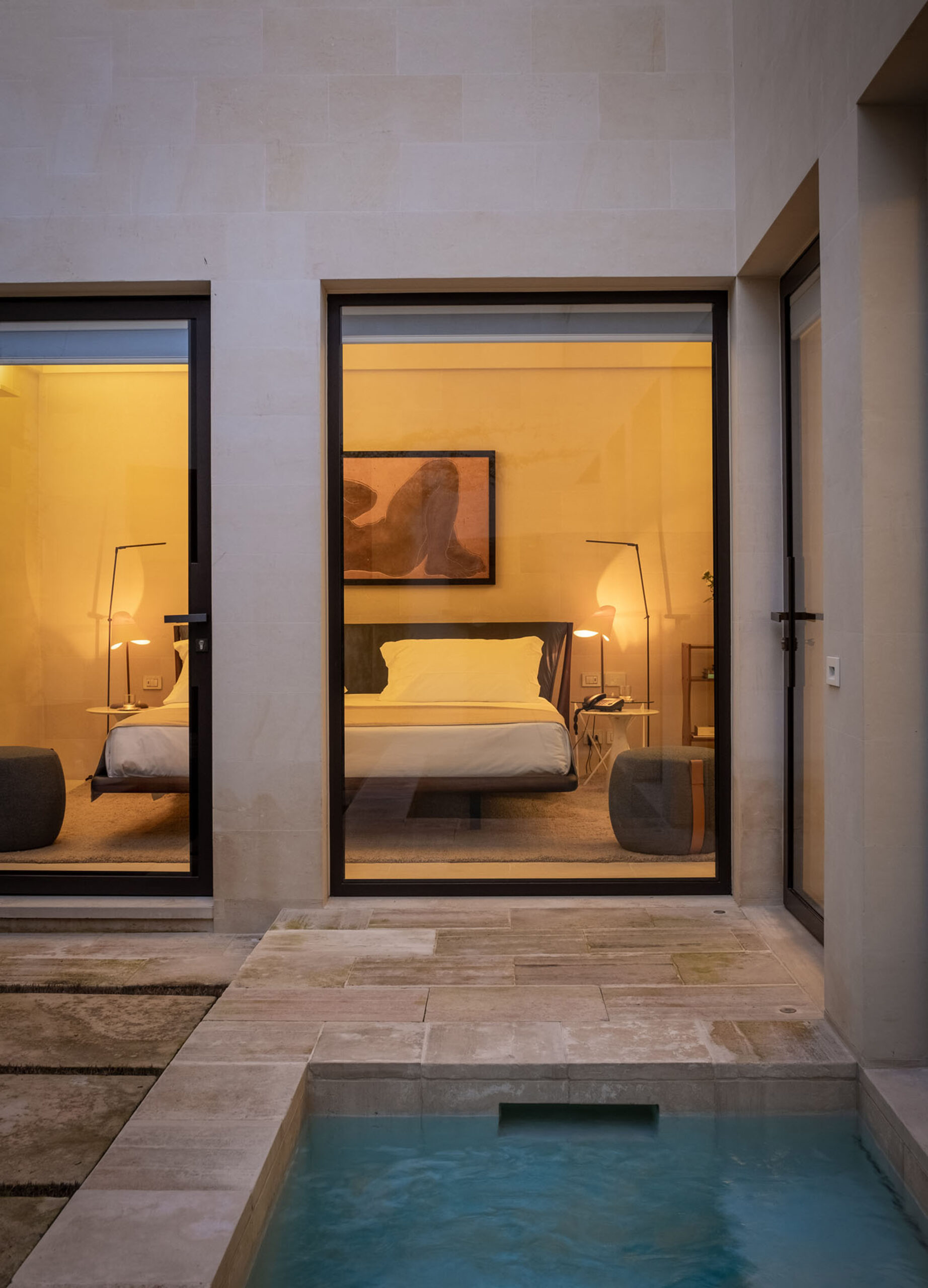
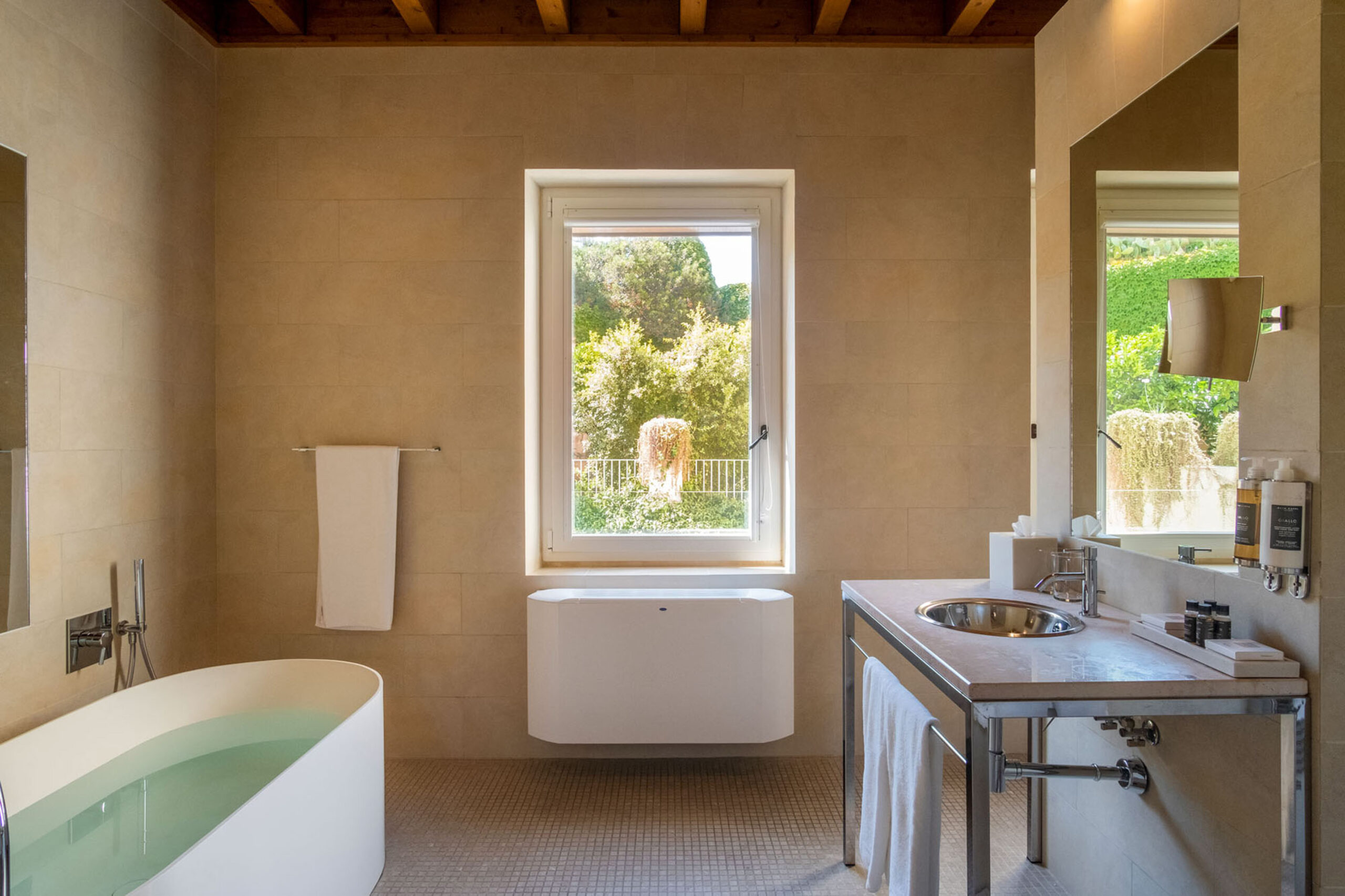
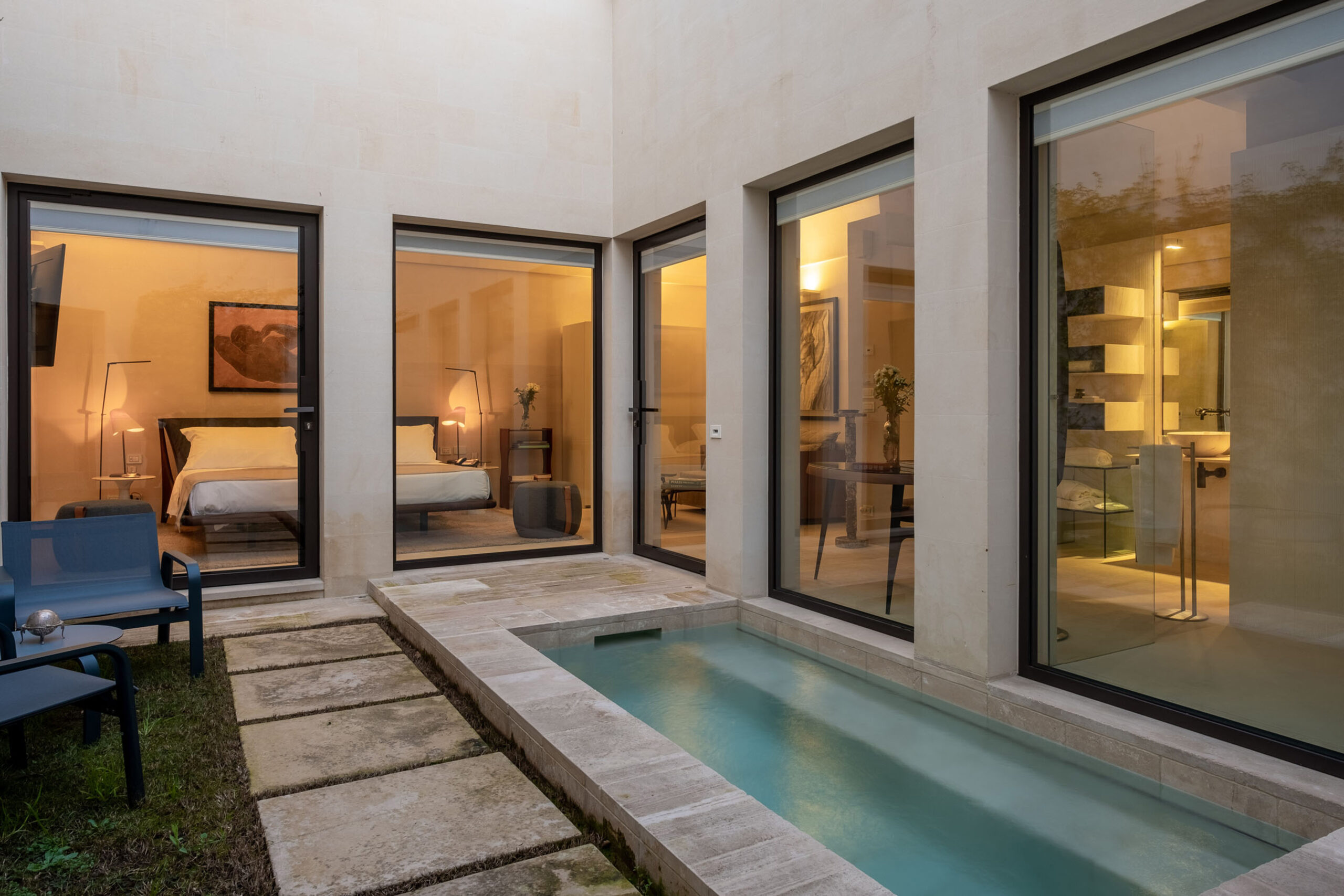
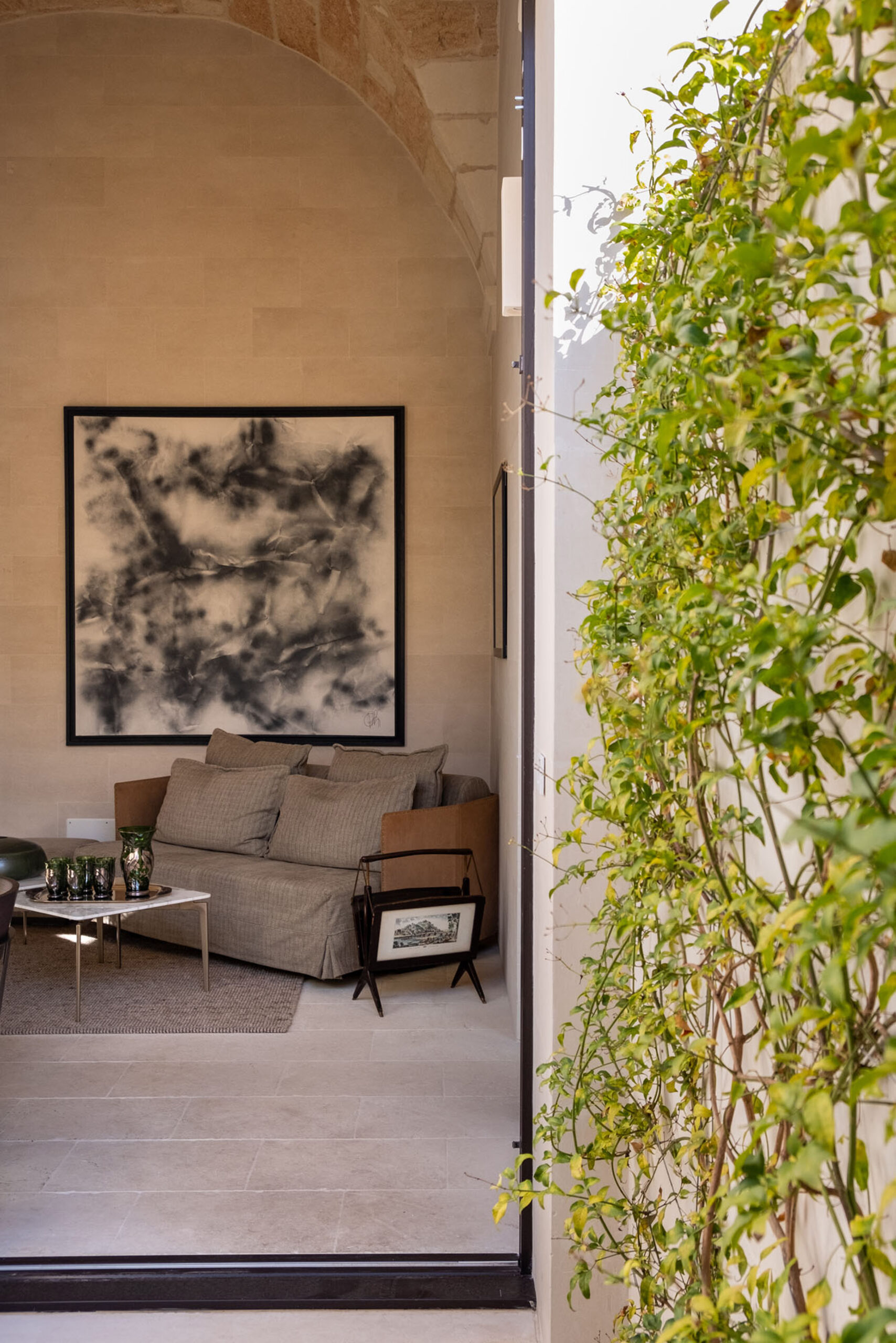
La Fiermontina Luxury Home’s Suite-à-côté embodies the Filali family’s philosophy of restoration as conversation between centuries. Honey-toned Pietra Leccese frames a vaulted entrance where abstract charcoal studies hang above linen sofas—the artistic legacy of Letourneur and Zwobada quietly present even in these private retreats. A masterful figure drawing dominates the bedroom: curved feminine form rendered in sepia washes, testimony to the sculptors’ obsession with capturing Antonia’s essence in every medium. The bathroom reveals Jacques-Philippe and Christophe’s signature from Laboratoire Design à Rabat—that vertical oval mirror, the blonde wood outdoor shower, curved dining table with fresh white blooms suggesting mornings spent planning adventures through Lecce’s Baroque alleys. Terrazzo floors echo forgotten mixtures discovered during decade-long restoration, while Marmo di Trani meets local stone in thoughtful progression. The private plunge pool at twilight crystallizes La Fiermontina’s essence: warm golden light spilling from glass doors, that same sepia nude visible from outside, Chianche stones from the original terrace now paving the garden where Saint Francis’s legendary orange tree once grew. This is the “albergo diffuso” made intimate—guests swim here yet dine in the Palazzo Bozzi Corso, wander the museum at midnight with flashlights, always moving between the three houses that together tell one family’s story. The suite doesn’t merely accommodate; it continues writing the Fiermonte chronicle, where every guest becomes temporary custodian of a space born from unexpected discoveries—rooms revealed layer by layer under Sopraintendenza supervision, dimensions larger than official plans showed, history insisting on being shared rather than hoarded. Ten years of restoration culminated not in private estate but in this: the profound pleasure of arrival like among friends, espresso in hand, bookshelves instead of reception desks, international staff offering literature tips, and the unmistakable feeling that you’ve entered not a hotel but a living room where the pulse of southern Italy beats beneath stars awakening over Apulia. | Photo: S. De Riccardis


A Family History in the Prism of the 20th Century

At the center of all narratives stands Antonia Fiermonte. In an old portrait, she sits beside her mother Lucrezia and her brother Enzo, the future boxing champion and Hollywood actor. Antonia left her Apulian homeland in the 1920s to seek artistic freedom in Rome and Paris and to love. Her equally passionate and tragic ménage-à-trois with the two artists and friends René Letourneur and Jacques Zwobada became emblematic of her life concept. Her courage to casually push aside conventions shaped the inner compass of her grandchildren Fouad Giacomo and Antonia Yasmina Filali.

Both grew up as children of Antonia Fiermonte’s daughter and their father, a Moroccan diplomat, between cultures and around the world. When Fouad Giacomo set out in 2003 to trace his ancestors in Apulia, specifically in Casamassima near Bari, he came to Lecce one day and stayed. The city had enchanted him. He found an enchanted-looking urban farmhouse, a Masseria, as a vacation residence for the family.

Ten Years of Restoration with Sensitivity

With the beginning of renovation work, it became clear that the Masseria was larger than shown in the official plans. Step by step, layer by layer, the Masseria opened and released its history.

Under the supervision of the Sopraintendenza—the state monument protection authority—a restoration project grew that preserved the old while breathing contemporary lightness. For the floors, the designers chose long-forgotten terrazzo mixtures. Marmo di Trani meets Pietra Leccese, honey-colored in the evening sun. Jacques-Philippe and Christophe from Laboratoire Design in Rabat supervised and continue to oversee every detail of the project to this day.

What was conceived as a private domicile took on, with each new discovery, the dimensions of a house that wanted to be shared. In retrospect, it was precisely these unexpected finds that enriched the project and became an opportunity to continue writing the history of the Masseria.

From Private Retreat to Shared Joy

By 2013, the substance was saved. One evening, after the departure of private guests, Antonia Yasmina and Fouad Giacomo sat in the garden. It was a moment of reflection. “What are we actually doing here?” she asked, half amused, half serious. Already at that time there was a lively coming and going, so the decision was not difficult.

In 2015, La Fiermontina Luxury Home opened with 19 rooms, distributed across three building wings: the main Masseria house, the opposite Palazzina Lazzari, and the discreet Suite-à-coté.

The signature of the design duo is clearly recognizable. In reinterpreting it as a place of welcome and hospitality, they respected its original soul and structure. They found a balanced interplay of historic substance, local traditions and materials, and modern interior. In some rooms, the original vaulted ceilings were restored and show their special character. For example, the Chianche stones from the old terrace were reused as garden flooring and old stair stones were repurposed into garden benches.

A Garden as Symbol of Hospitality

Bounded by the building and the old city wall, there is a small, ancient grove of lemon trees connected with a legend. According to this, Saint Francis, on his journey through Apulia to Lecce, planted an orange tree as thanks for the city’s hospitality. As a gesture of veneration, the residents of Lecce have since planted citrus trees in their gardens in his honor.

SUITES: Where 17th-Century Vaults Meet Contemporary Serenity

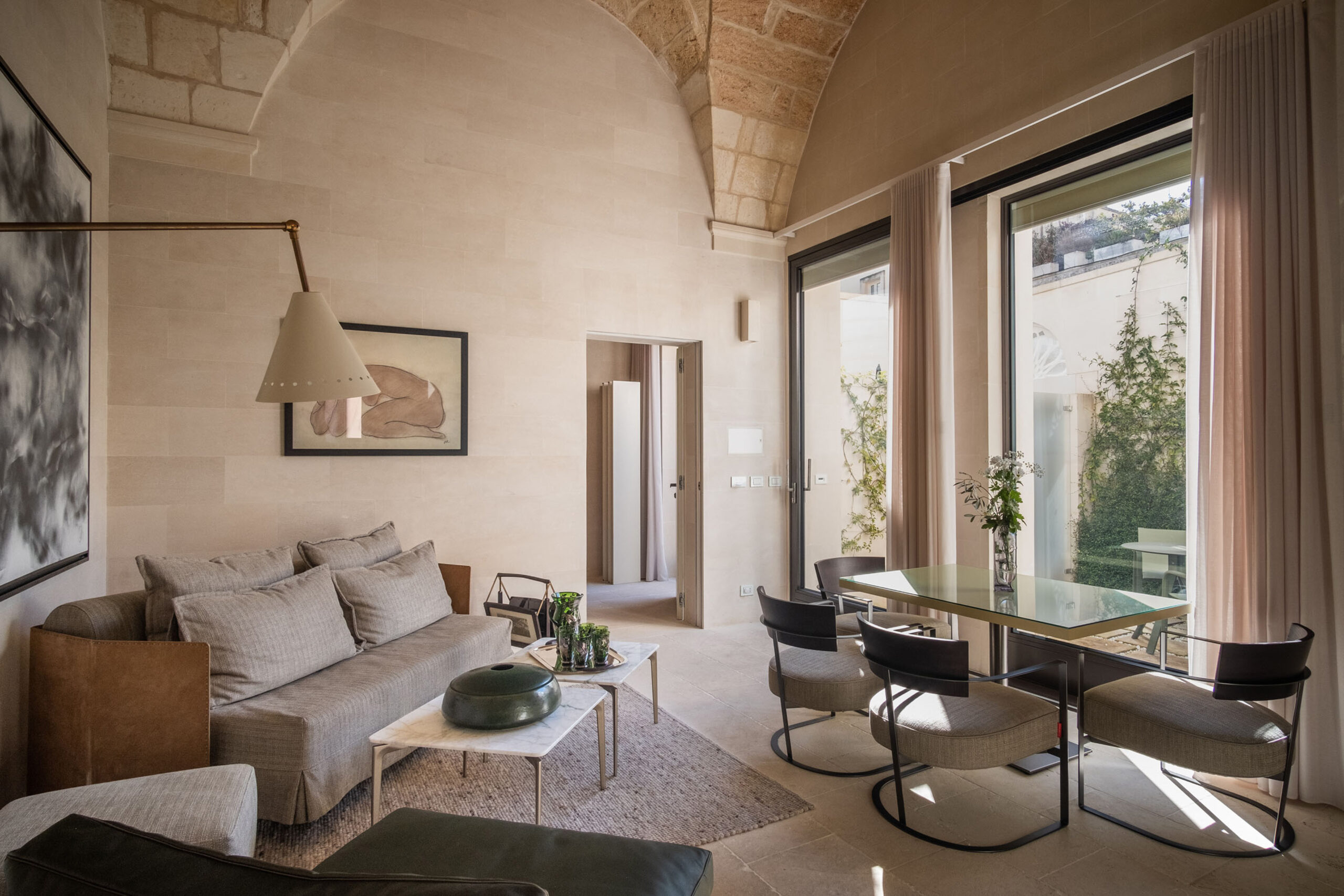
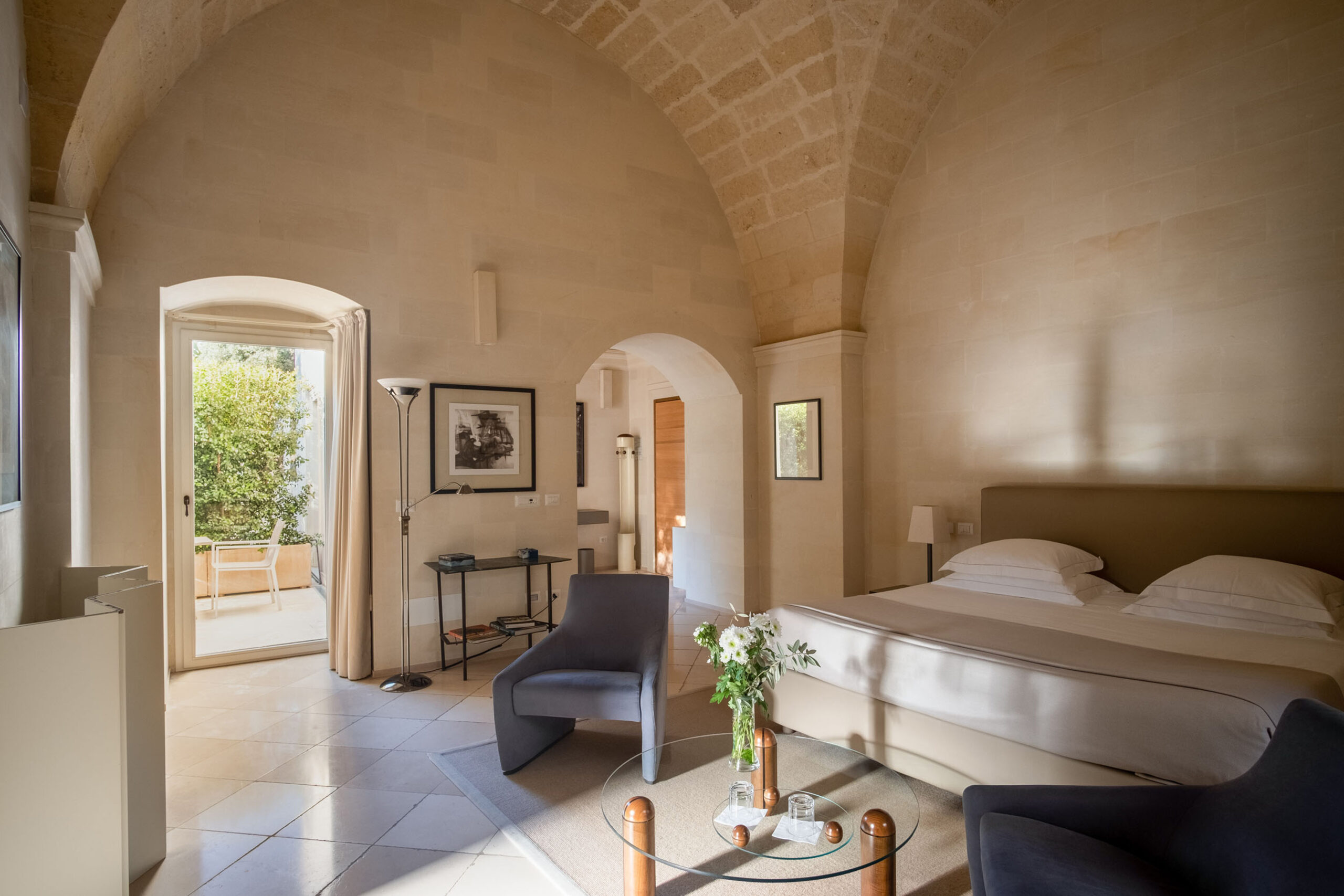
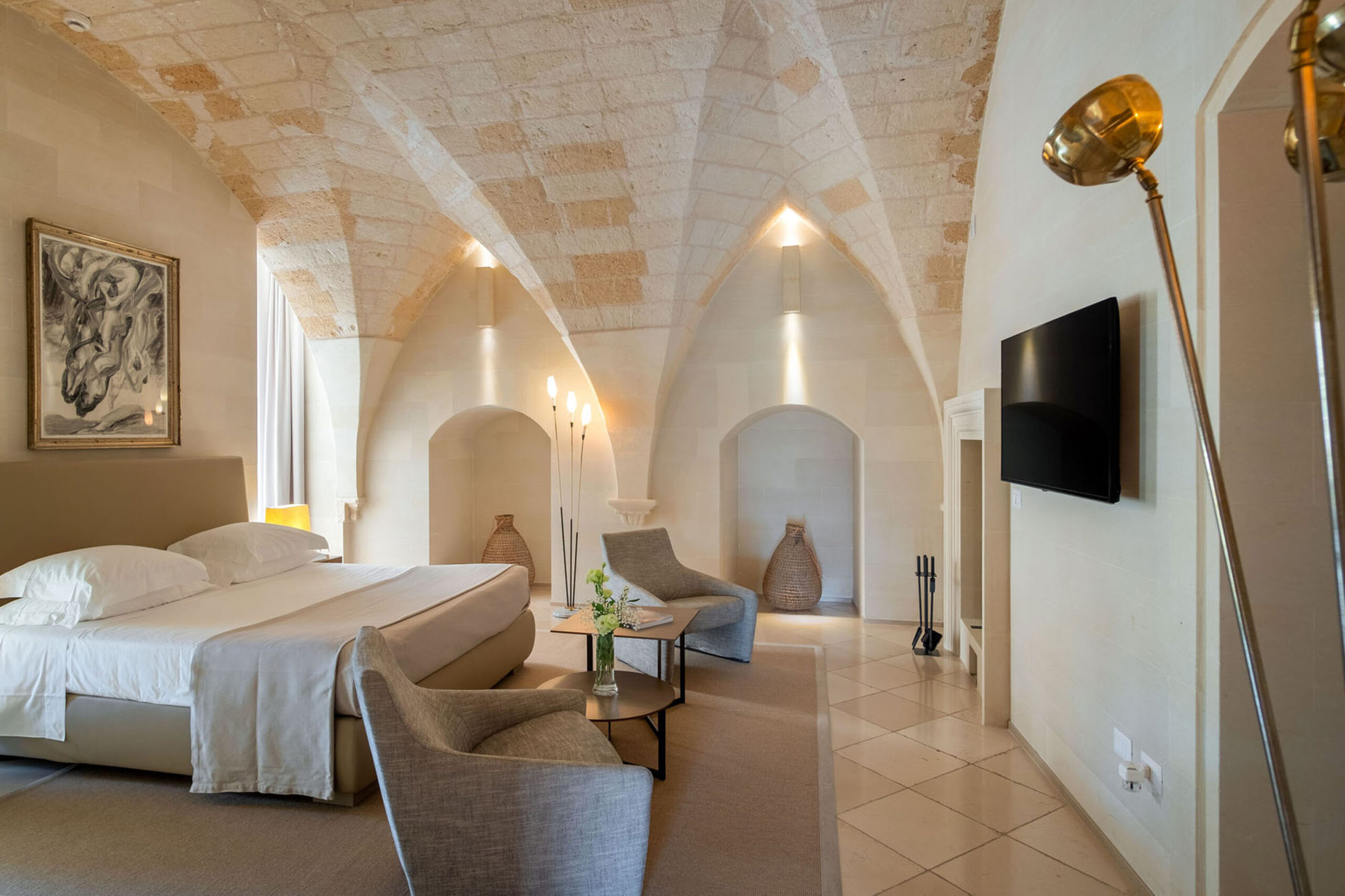
La Fiermontina Luxury Home’s suites reveal the triumph of ten-year restoration: Pietra Leccese vaulted ceilings weathered into honeyed patterns arch over beds flanked by golden lampshades and charcoal figure studies—Letourneur and Zwobada’s obsession with form quietly present. Private plunge pools glow at twilight, Chianche stones from original terraces repurposed underfoot, turquoise water reflecting interiors where forgotten terrazzo mixtures and Marmo di Trani meet local stone. Arched doorways frame enfilades leading to private terraces where Saint Francis’s legendary citrus legacy continues. Each suite—whether displaying pristine white vaults or celebrating weathered stone’s character—embodies Jacques-Philippe and Christophe’s vision from Laboratoire Design à Rabat: history breathing contemporary lightness, old stair stones transformed into garden benches, structure larger than official plans ever showed. This is the Masseria Fouad Giacomo discovered in 2003, enchanted by Lecce, intending only family retreat yet uncovering dimensions that insisted on being shared. | Photo: S. De Riccardis / V. Rosati


Part of the La Fiermontina Family Collection

Three houses in Lecce. One family story.

© La Fiermontina · The Silent Luxury

The Principle of “Albergo Diffuso”

As a sign of lived hospitality, the Filalis weave the three houses into an “albergo diffuso”—a hotel whose parts are distributed throughout the city yet connected to each other. Guests who lodge in the museum dive into the pool of the Masseria, residents of La Fiermontina Palazzo Bozzi Corso dine in the olive grove of the Zéphyr Restaurant in the Luxury Home, and every guest is invited to a private tour through the museum exhibition.

Arriving Like Among Friends

Guests feel a pleasantly private atmosphere from the first minute: a friendly pick-up at the threshold, an espresso in the salon, bookshelves instead of monitors. The staff present themselves as cultivated hosts who give literature tips. They are as international as the host family itself. It’s the pleasant feeling of arriving in a living room and not sensing the sober distance of a reception desk.

Future with Roots

La Fiermontina stands exemplarily for a new form of southern Italian hospitality: familiar and cosmopolitan, deeply rooted and clearly forward-looking. Those who are here can feel the history and careful restoration up close—a harmonious balance between past and future.

La Fiermontina captures this feeling and translates it into spaces: the echo of steps in Lecce’s honey-colored alleys, the smell of sun-warmed stones, and the pulse of southern Italy. Perhaps you’ll soon find yourself—just as I did—under one of the lemon trees in the garden, a glass of Primitivo in hand, while above you the stars of Apulia awaken. The doors stand open, because the story writes its next chapter with every guest who enters.

ALBERGO DIFFUSO: Art, Books, and the Philosophy of Shared Beauty

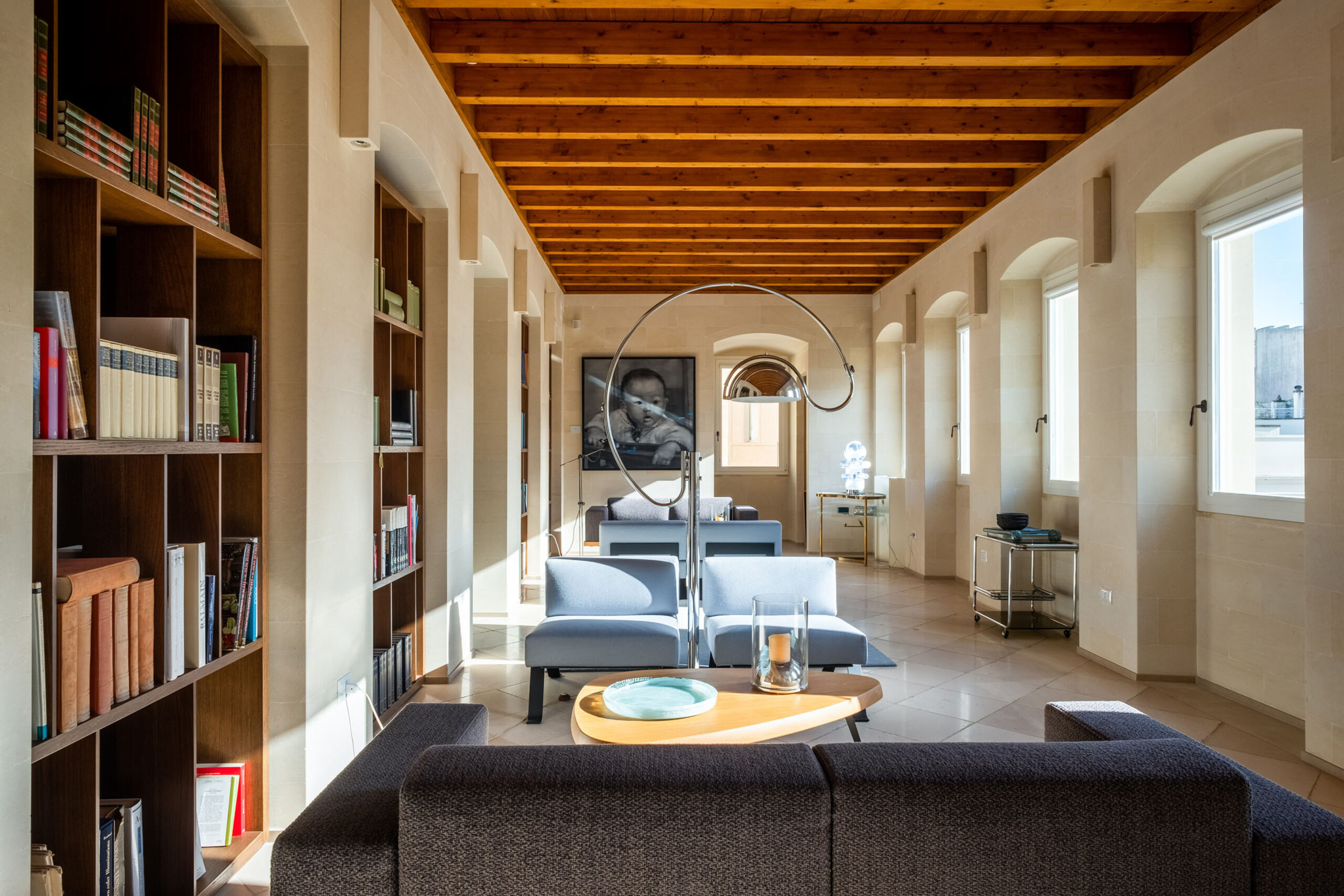
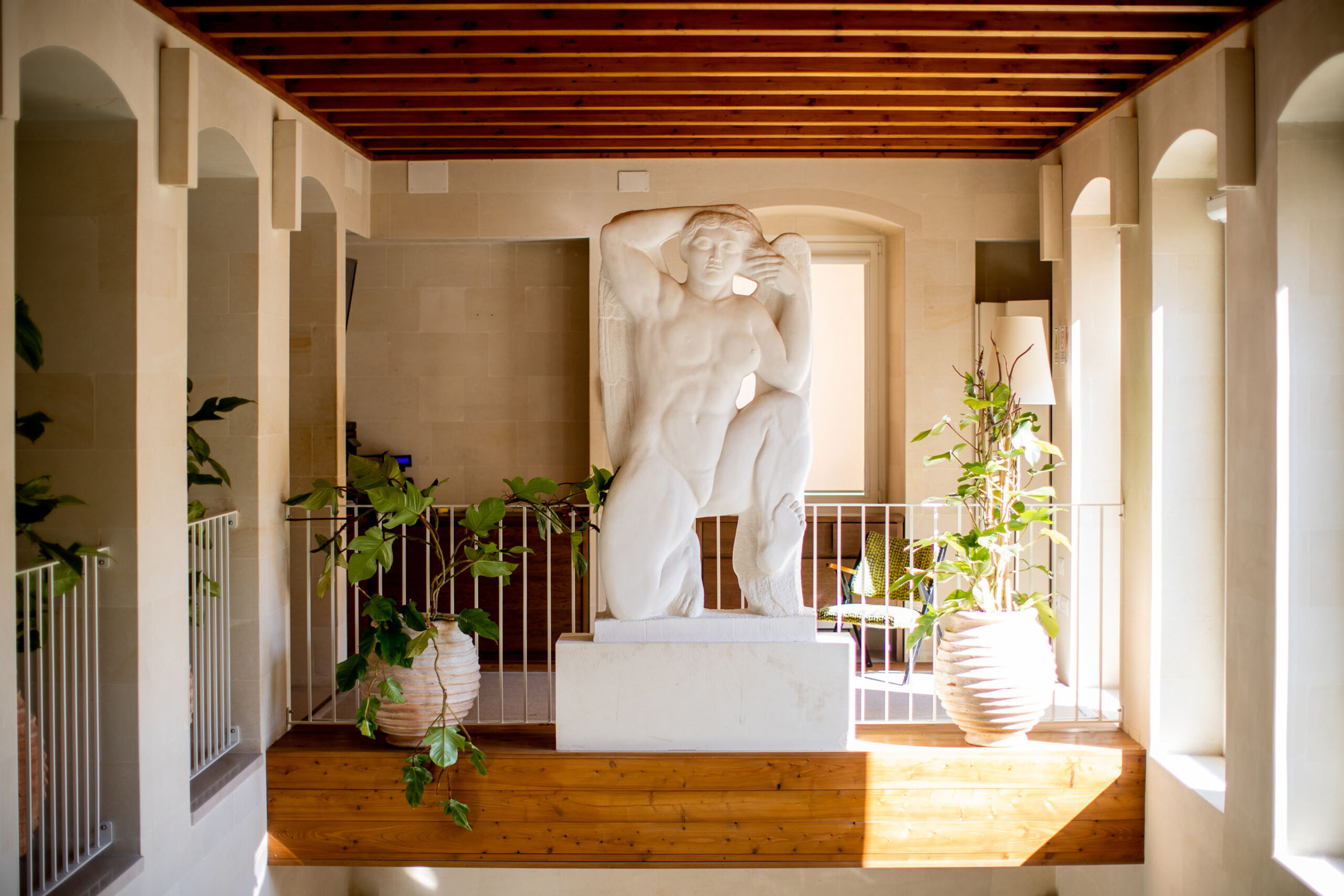
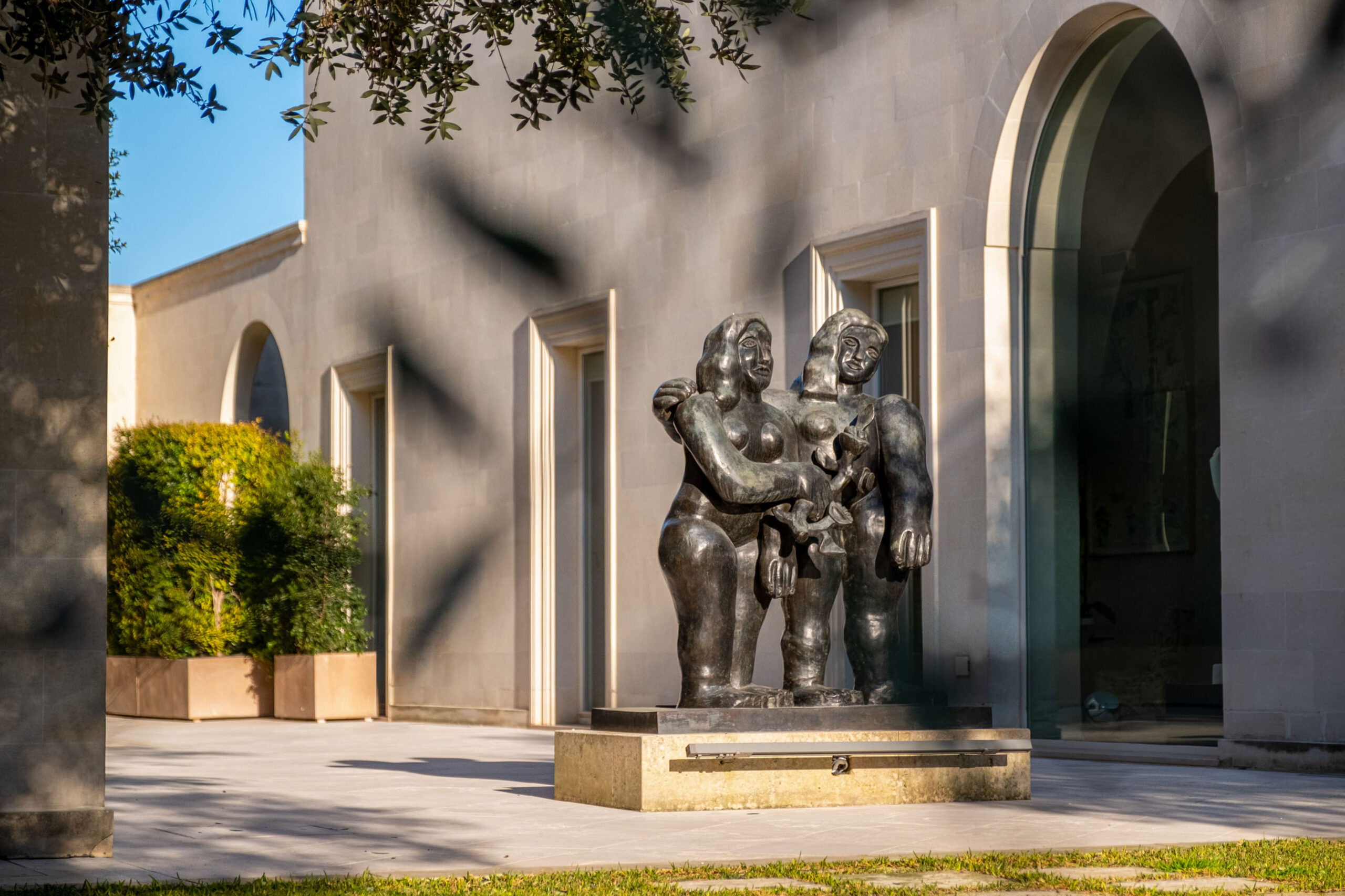
Under Apulian sun, bronze figures entwine in La Fiermontina’s courtyard—sculptural guardians marking the threshold between street and sanctuary, between three houses woven into one living narrative. The library-lounge crystallizes the albergo diffuso concept: exposed timber beams crown white arches where a monumental marble figure reclines in backlit wooden alcove, plants spilling from ceramic vessels, bookshelves suggesting literature tips from cultivated international staff rather than reception desk transactions. This is arriving like among friends—espresso in salon, the profound pleasure of shared rather than hoarded privilege. Guests flow seamlessly between Masseria, Palazzo Bozzi Corso, and Museum: swimming here, dining in the Zéphyr Restaurant’s olive grove there, wandering nine museum rooms with flashlights after dark. What Fouad Giacomo and Antonia Yasmina decided that 2013 evening in the garden—”What are we actually doing here?”—transformed by 2015 into 19 rooms across three buildings united by single philosophy: hospitality as continuation of the Fiermonte chronicle, where every guest becomes temporary custodian of a family saga spanning Hollywood glamour, Parisian ménage-à-trois, and Yoko Ono’s peace dreams. | Photo: S. De Riccardis / V. Rosati

La Fiermontina Luxury Home — Bottom Line Banner
La Fiermontina Luxury Home Lecce — library lounge with vaulted ceilings and sculptural collection
La Fiermontina Luxury Home · Lecce, Puglia
17th-Century Masseria · Lecce, Puglia
La Fiermontina Luxury Home
The founding property of the La Fiermontina Family Collection — a restored Masseria in the heart of Lecce,
operated by the Filali family. Interior design by Laboratoire Design, Rabat.
The Property
Luxury Home
17th-century Masseria
19 rooms · 3 wings
Pool · Garden · Zéphyr Restaurant
The Collection
Palazzo
Bozzi Corso
Aristocratic palazzo, 1775
10 suites · Olive grove
Est. 2018
The Collection
Fiermonte
Museum
Private museum · 4 suites
Secret garden
Flashlight access by night

What readers ask about La Fiermontina Luxury Home in Lecce

La Fiermontina Luxury Home is the original property of the La Fiermontina Family Collection — the Masseria where a ten-year restoration gave back more than it was asked. These questions address what guests and travellers most want to know before arriving in Lecce.

  • What is La Fiermontina Luxury Home and how many rooms does it have?

    La Fiermontina Luxury Home is a restored 17th-century Masseria in the historic centre of Lecce, Puglia, with 19 rooms across three building wings: the main Masseria house, the Palazzina Lazzari, and the Suite-à-côté. It is the founding property of the La Fiermontina Family Collection, an albergo diffuso operated by siblings Fouad Giacomo and Antonia Yasmina Filali. The property features a shared pool, private garden, and the Zéphyr Restaurant.

  • What makes a stay at La Fiermontina Luxury Home different from a conventional hotel?

    La Fiermontina Luxury Home operates as part of an albergo diffuso — guests arrive at the Masseria but move freely across all three properties: swimming at the Luxury Home, dining in the Zéphyr Restaurant’s olive grove, and accessing the Fiermonte Museum privately after closing hours. The atmosphere is deliberately domestic: bookshelves replace reception desks, staff offer literature recommendations, and arrival feels less like check-in and more like coming home to a family whose history runs through every room.

  • What is the story behind the restoration of the Masseria?

    Fouad Giacomo Filali came to Lecce in 2003 following his family’s Apulian roots and found the Masseria as a private retreat. Restoration began under the supervision of the Sopraintendenza, the Italian state monument protection authority. As work progressed, the building revealed dimensions larger than the official plans had shown — rooms hidden beneath later constructions, floors covered by decades of material. The terrazzo mixtures used for the final floors had been forgotten for generations; the designers researched and revived them. By 2013 the structure was secured; La Fiermontina Luxury Home opened in 2015.

  • Who designed the interiors of La Fiermontina Luxury Home?

    The interior design is by Laboratoire Design, a studio based in Rabat, Morocco, overseen by Jacques-Philippe and Christophe. They have been involved since the original restoration and continue to oversee every detail across all three La Fiermontina properties. Their approach integrates restored historic material — Pietra Leccese vaulted ceilings, Chianche stones repurposed as garden paving, old stair stones transformed into garden benches — with contemporary design pieces and the sculptural legacy of René Letourneur and Jacques Zwobada.

  • What is the significance of the garden at La Fiermontina Luxury Home?

    The garden of La Fiermontina Luxury Home sits between the Masseria and the old city wall of Lecce, sheltering a grove of lemon trees connected to a local legend. According to Lecce tradition, Saint Francis planted an orange tree in the city as thanks for its hospitality during his journey through Apulia; residents have since planted citrus trees in his honour. The garden also holds sculptures from the Fiermonte family collection, making it part of the living archive that runs through all three properties.

Continue reading