La Fiermontina Museo: Where the Past Takes a Room
There are stories that don’t end, they transform. They move from one house to the next, from one soul to another, until they find a place where they can stay. The story of Antonia Fiermonte is such a narrative. A saga of art, love, and radical self-determination that has found its new home in Lecce, in the heart of La Fiermontina, opening its doors and becoming an inhabitable space.
The Fiermonte Museum in Lecce is a private museum opened in 2018 by Fouad Giacomo and Antonia Yasmina Filali, dedicated to the story of Apulian painter and violinist Antonia Fiermonte and the two sculptors who loved her — René Letourneur and Jacques Zwobada. Nine rooms and a secret garden lead guests through the emotional chapters of a biography the museum calls “The Heart of Time.” Four overnight suites — Suite Nocturne, Suite Peplum, Suite Marbre, and Suite Avant-Garde — allow guests to inhabit the narrative. After closing hours, suite guests walk the museum rooms alone with flashlights. The Fiermonte Museum is part of the La Fiermontina Family Collection, an albergo diffuso in the historic centre of Lecce, Puglia.
Letourneur and Zwobada: Brothers in Spirit, Rivals in Heart
A garden in Fontenay-aux-Roses, south of Paris. Two sculptors, house to house, connected through friendship and the shared struggle for form. René Letourneur and Jacques Zwobada had shared studio and commissions since the 1920s. They were brothers in spirit, until a woman entered their lives who would change everything: Antonia Fiermonte.
Born in 1914 in Apulia, Antonia was an apparition—painter, violinist, a woman of quiet intensity. In the 1930s, she moved to Rome, where she met the established sculptor Letourneur. It was, as they say, love at first sight. She became his muse, his wife, the mother of his daughter Anne. Together they moved to Paris, to that house bordering Jacques Zwobada’s.
Antonia Fiermonte: The Leap Across the Garden
The friendship of the two men was put to a severe test by Antonia’s arrival. Zwobada, the younger, uncompromising artist, was fascinated by her. In one of his countless letters, he remembered the moment when she first entered his house, dressed in a blue dress: “From that moment, the world changed.”
What followed was a two-year courtship, an obsession in 1,001 letters that manifested in Zwobada’s art. His famous sculpture La Verticale is a monument to this longing—a figure striving heavenward, driven by a love that found rest only in Antonia’s presence.
Finally, “Antonia jumped across the garden,” as the family lovingly says today. She left Letourneur and chose Zwobada. A scandal at the time, but for them the beginning of a deep artistic and spiritual alliance. The rivalry shattered the friends’ former closeness, but the story wasn’t over yet. Antonia’s sudden death in 1956 at only 42 left a void that would bring the two men back together years later—united in grief for the woman who had been the center of their world.
Suite Marbre, Suite Avant-Garde, and the Museum: Where Art Becomes Inhabitable
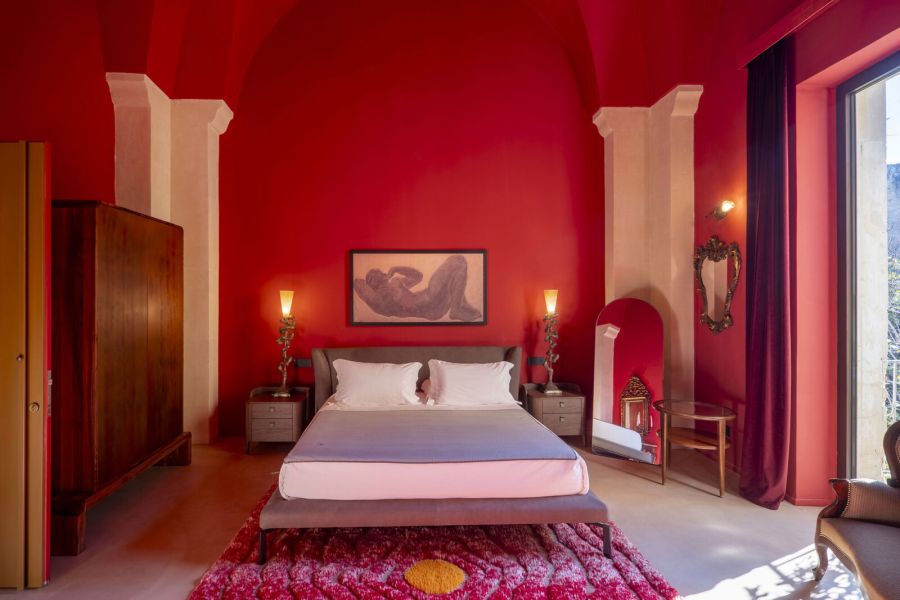
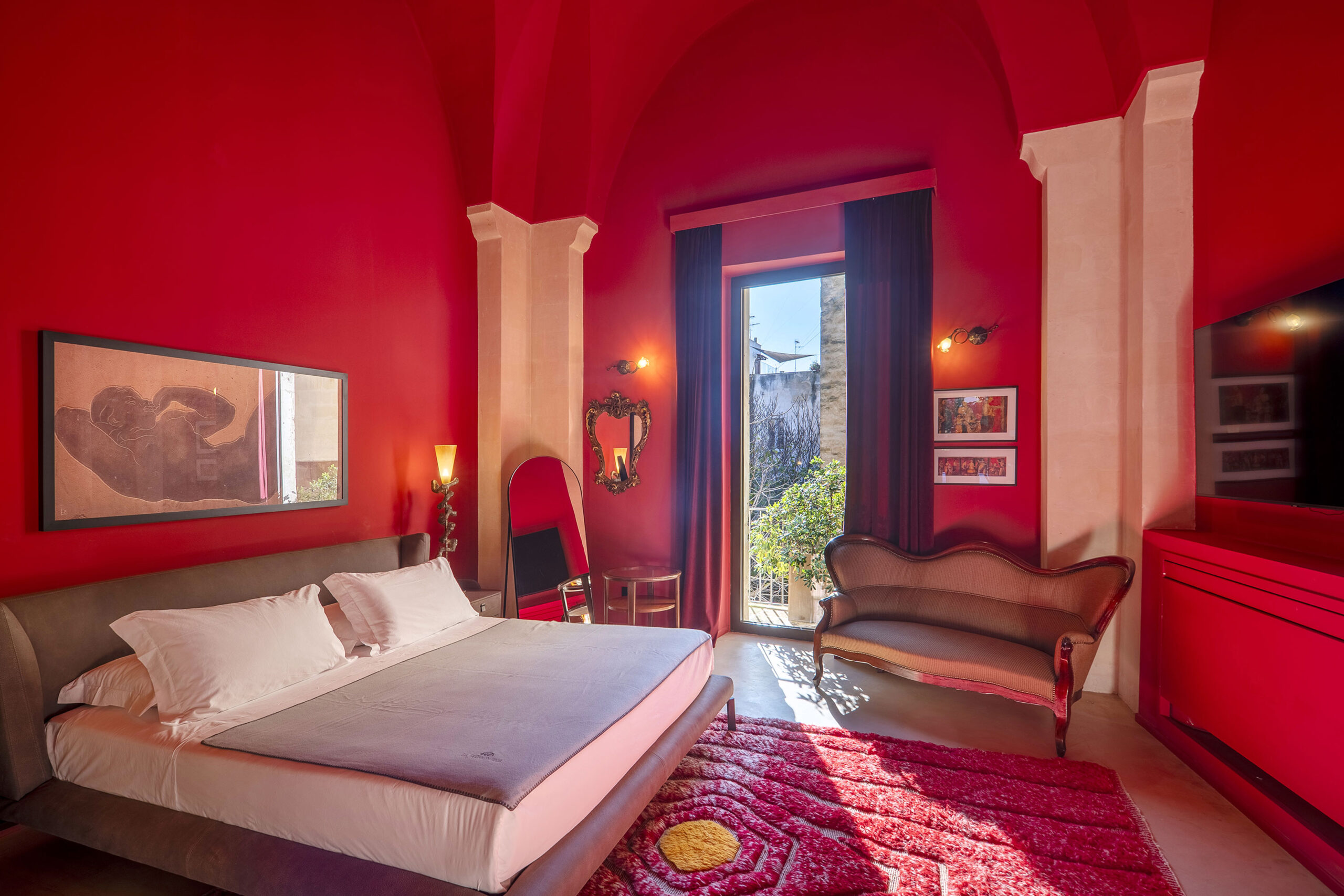
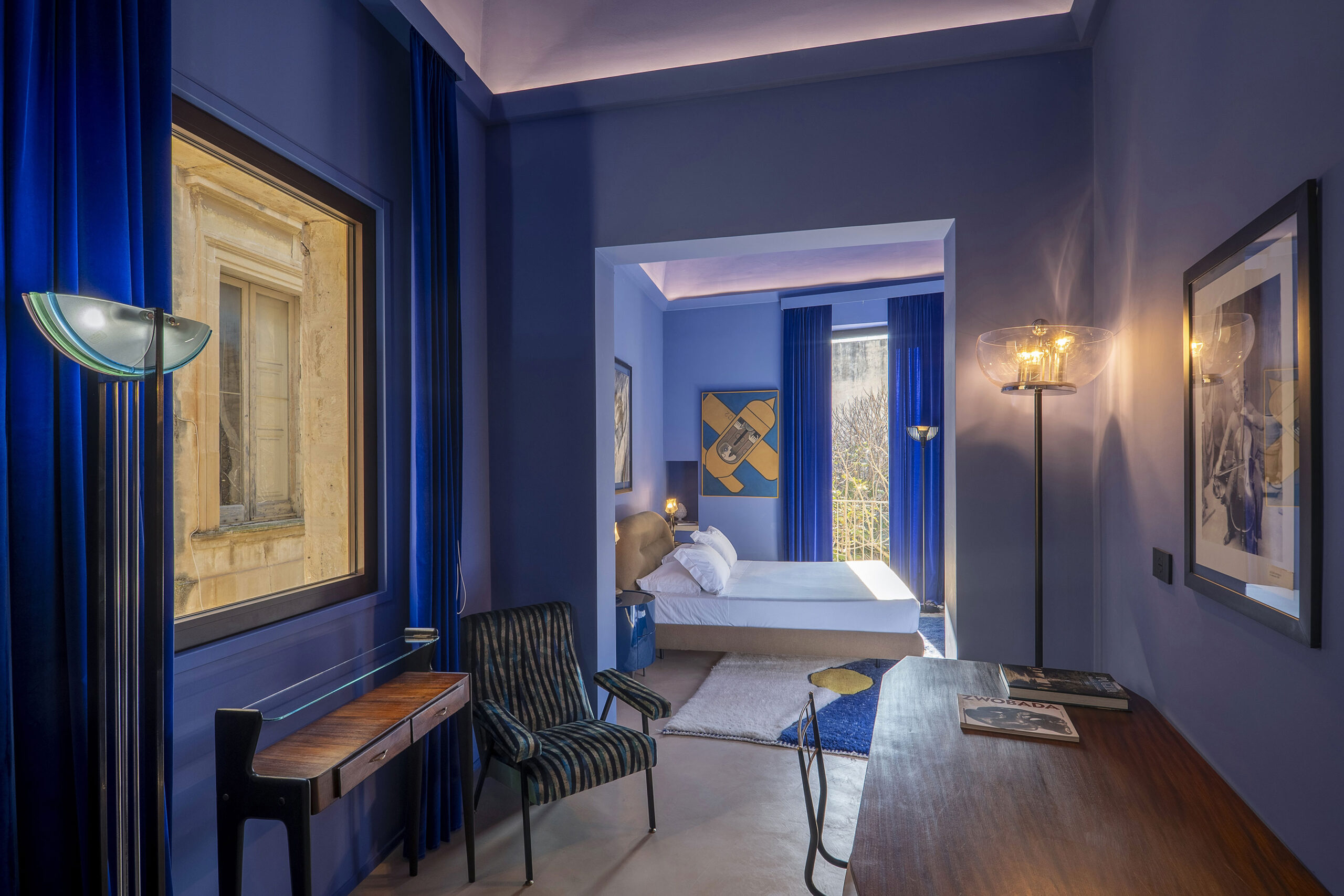
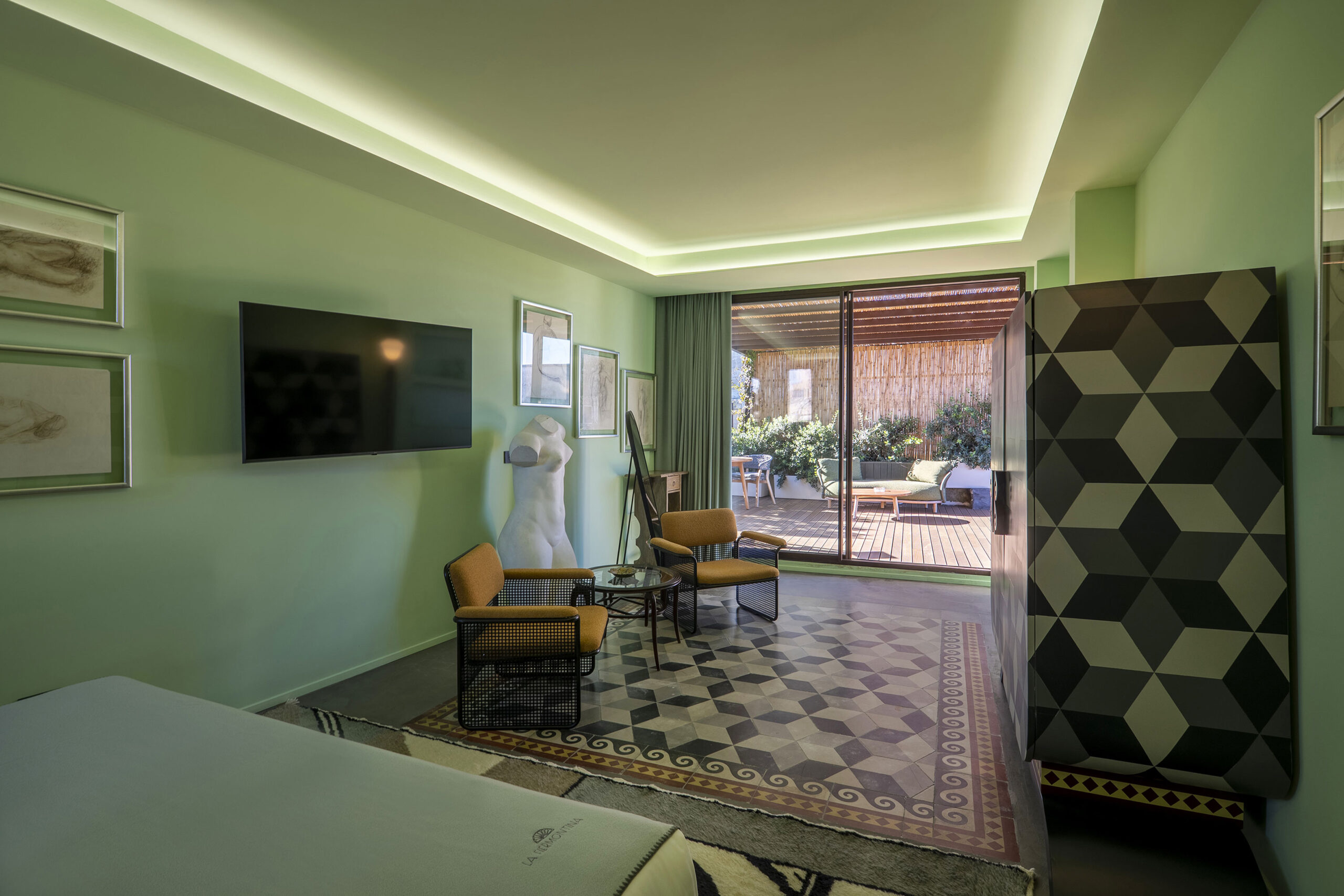
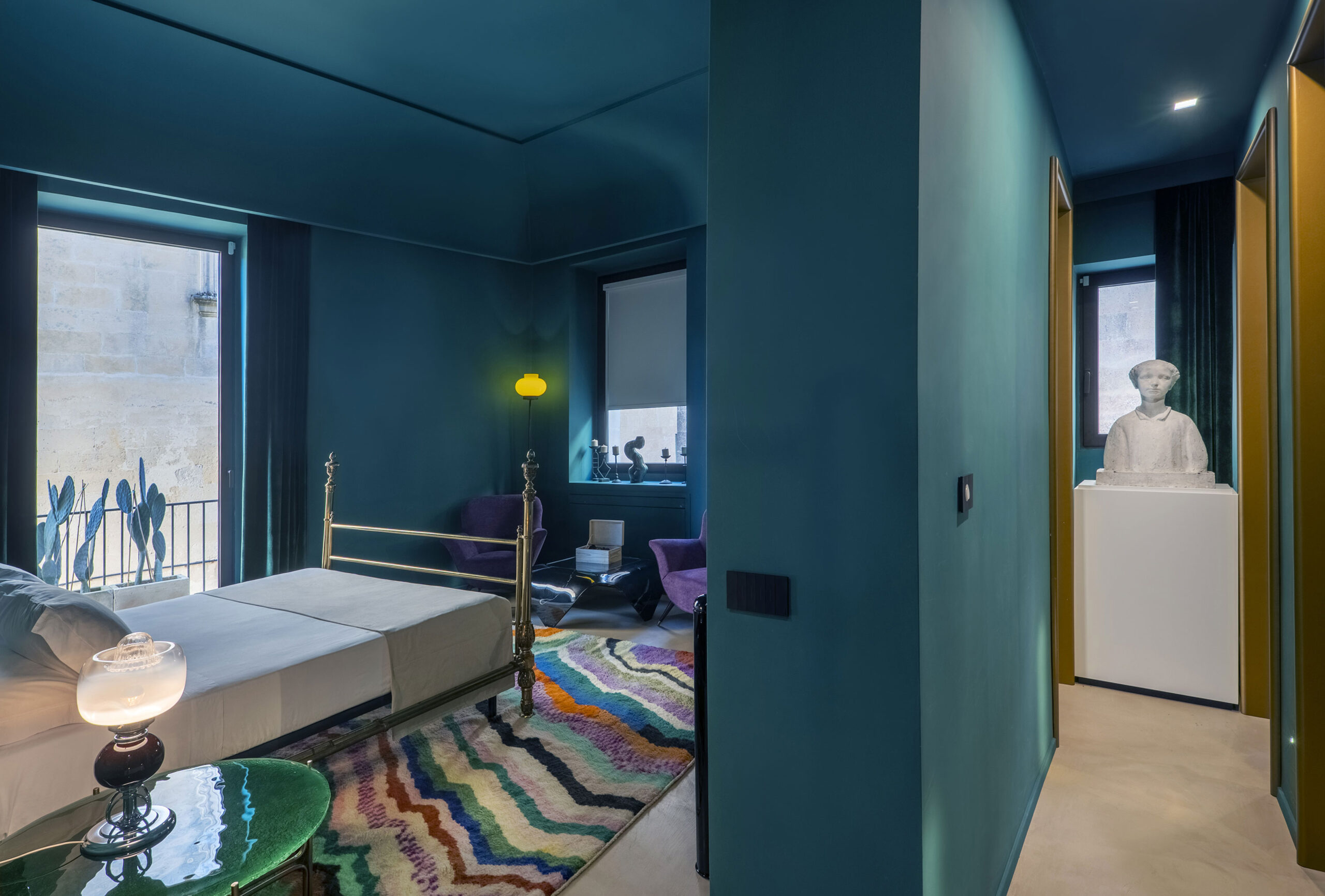
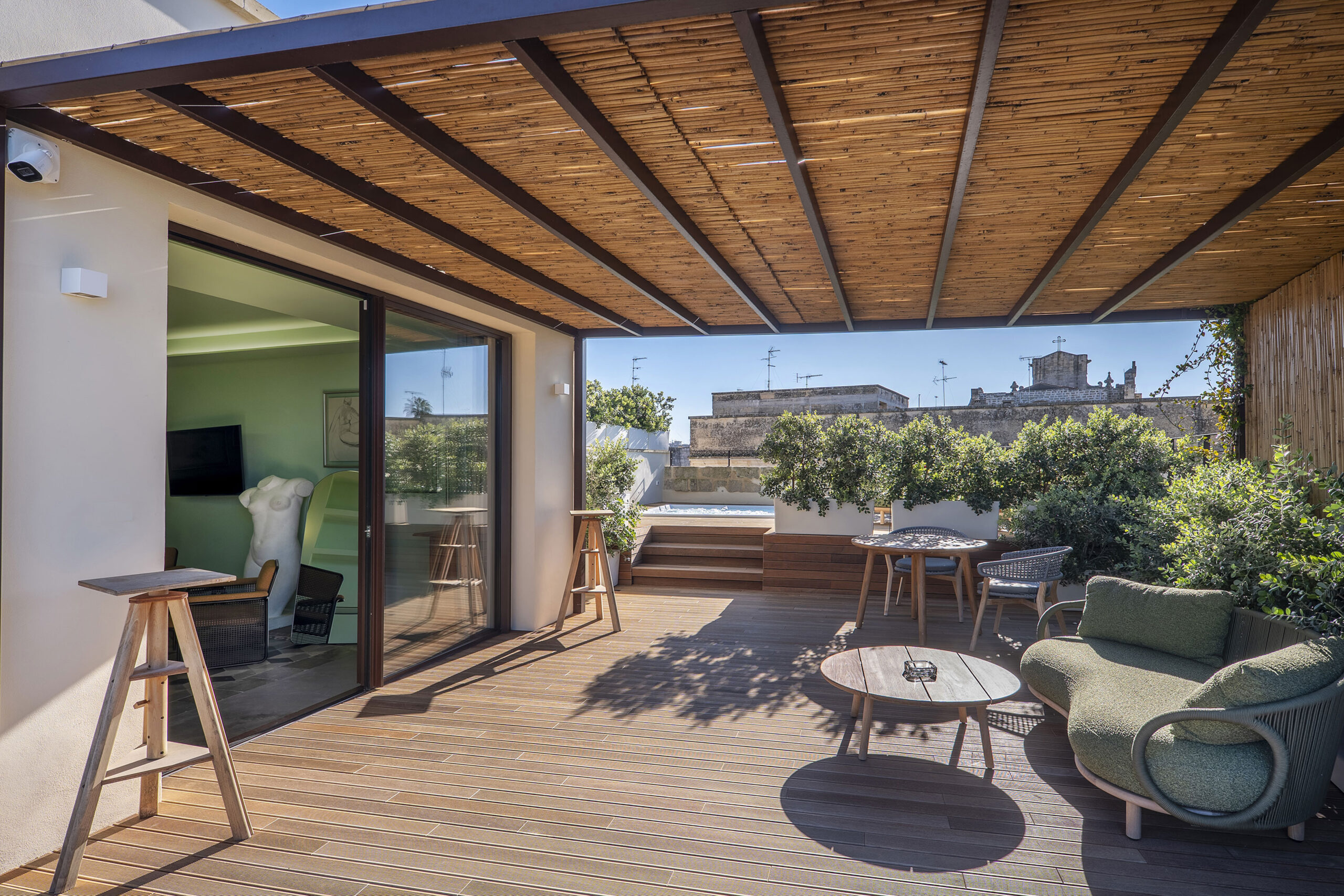
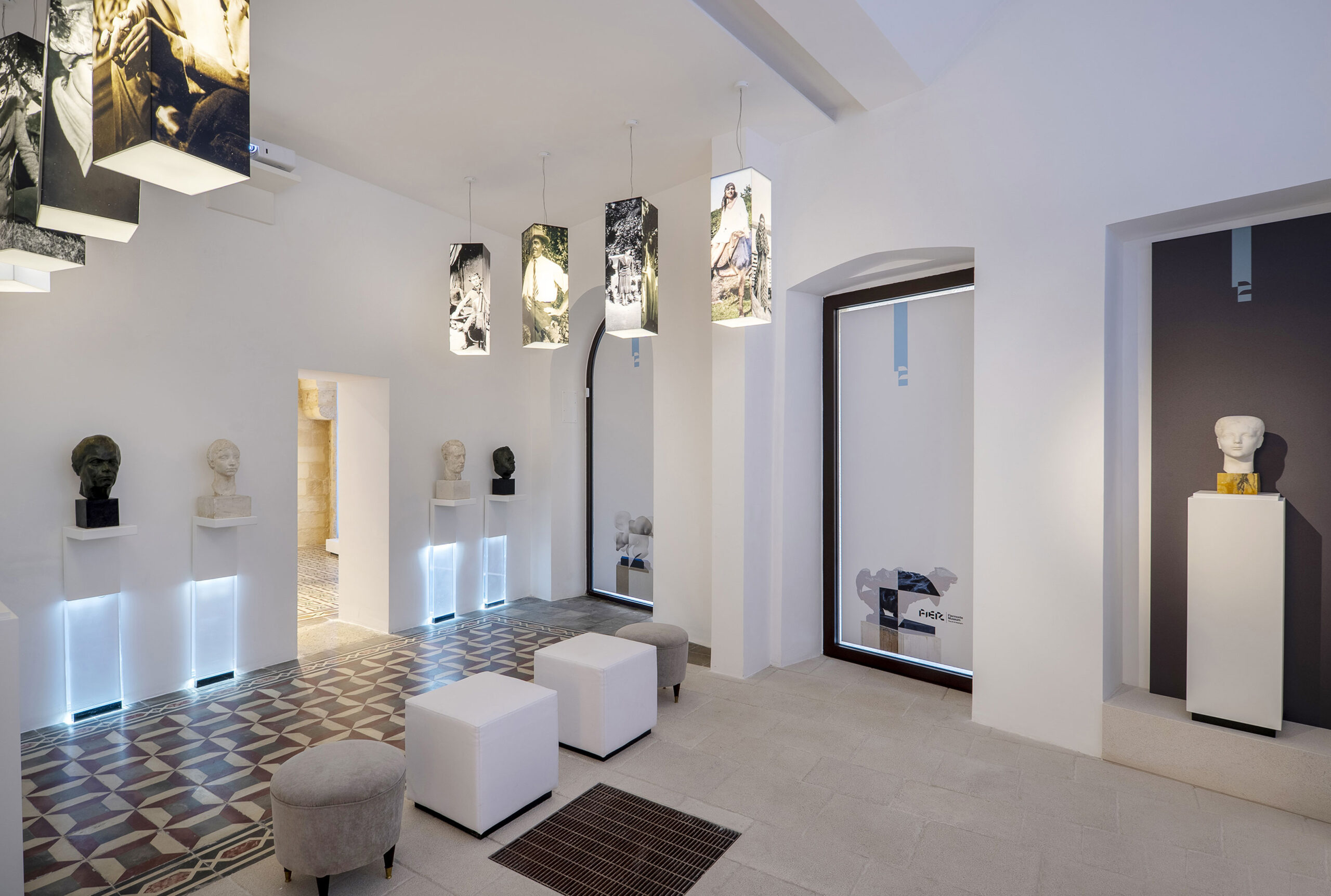
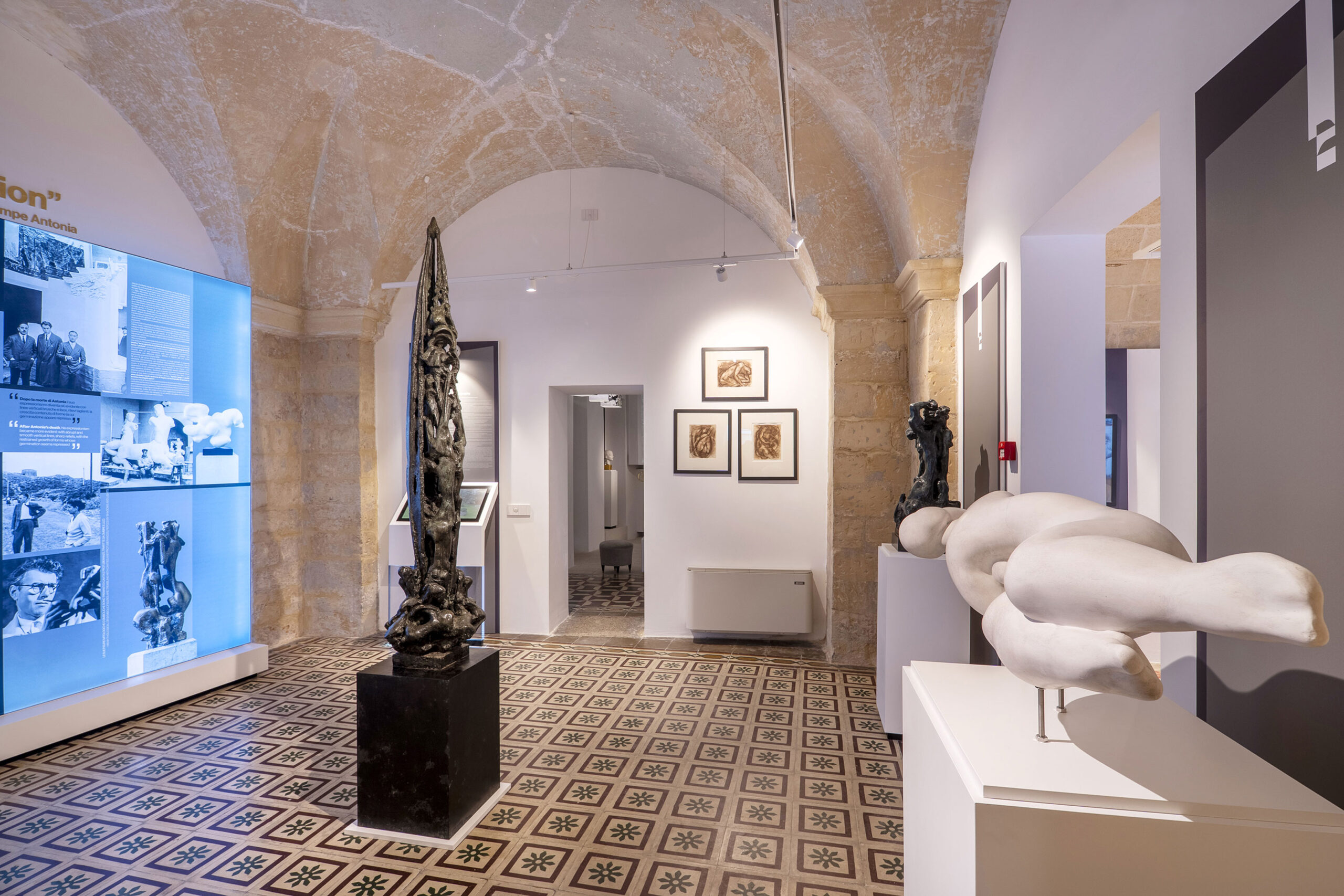
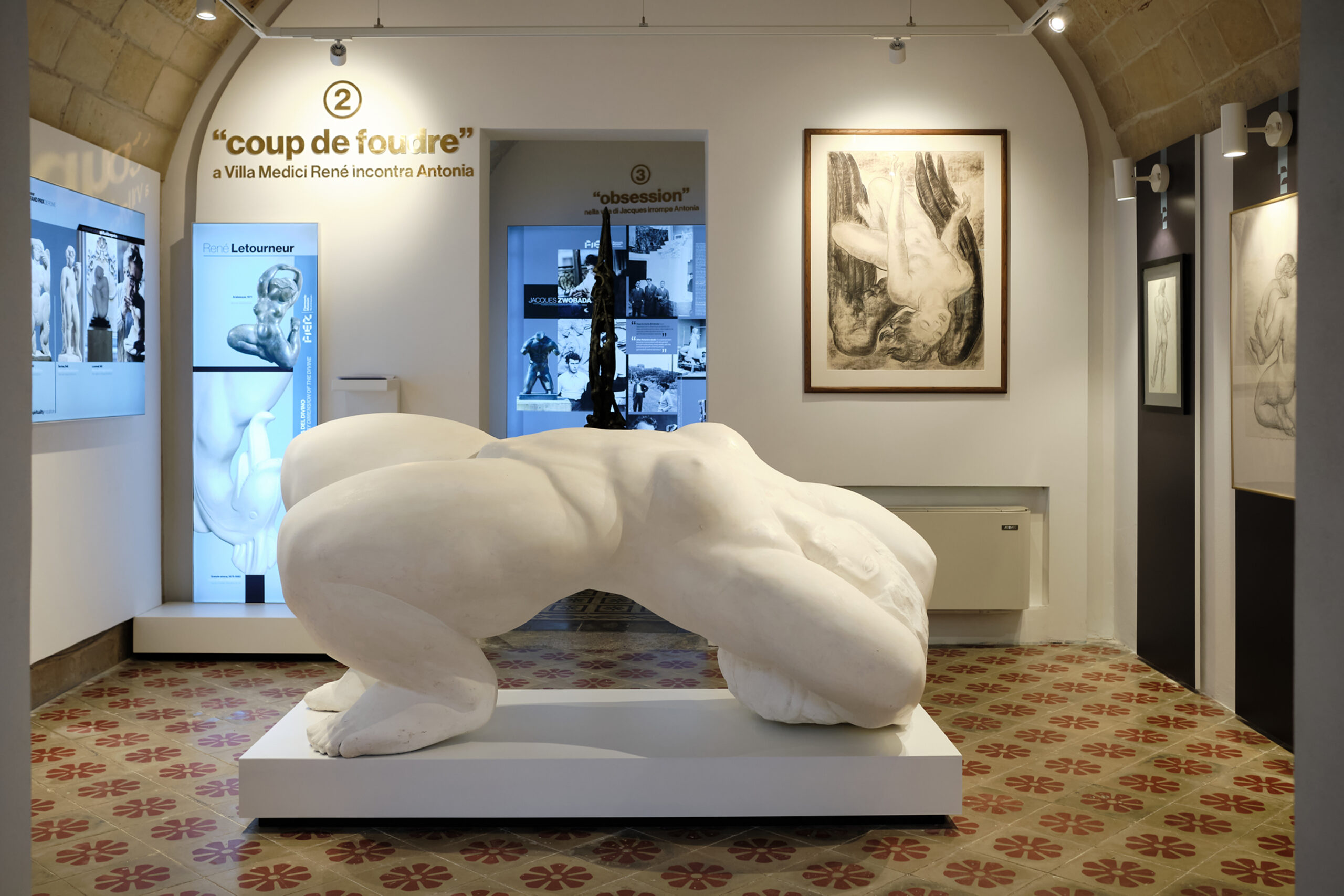
At the Fiermonte Museum in Lecce, history refuses to remain behind glass. Suite Marbre envelops guests in pistachio-green serenity—a color choice inspired by the sculptors’ materials, where framed figure studies by Letourneur and Zwobada observe from sage walls, a monumental white marble torso stands sentinel, and geometric floor tiles echo 1930s Parisian ateliers. Caned armchairs and swan-neck table lamps conjure the era when Antonia moved between two men, two houses, two artistic visions. The suite opens to a private terrace overlooking the secret garden where century-old sculptures rest among medlars and araucarias—the same dialogue between stone and nature that once unfolded in Fontenay-aux-Roses. Suite Avant-Garde plunges into midnight teal drama, walls and ceiling saturated in color that recalls “Obsession,” one chapter in this ménage-à-trois narrative. A brass bed frames white linens against the theatrical backdrop, while a rainbow-hued rug references the emotional spectrum of 1,001 love letters Zwobada wrote to Antonia. A classical bust in golden-lit niche reminds visitors they’re sleeping inside art history. Then the museum itself: pristine white galleries where pedestals illuminate portrait busts—Antonia, René, Jacques—their faces frozen in stone yet animated by the story swirling around them. Pendant lights sheathed in vintage photographs hang like memories suspended in air. Historic tile patterns guide visitors through rooms named “Love at First Sight,” “Reconciliation,” “The Leap Across the Garden.” Here’s the revolutionary concept: at night, when museum doors close to the public, suite guests wander these galleries alone with flashlights, encountering La Verticale—Zwobada’s sculpture of yearning reaching skyward—in meditative silence. This is the Fiermonte vision: not preservation but participation, not exhibition but immersion. Antonia’s emancipation from muse to sovereign artist, her radical choice that shattered friendship yet created enduring beauty, becomes a space you inhabit. Each suite—whether serene green Marbre or moody teal Avant-Garde—serves as chapter in a love story you don’t just read but live within. “The Heart of Time” beats here, proving that great passion doesn’t fossilize in the past but transforms into rooms where we sleep, wake, and briefly become part of someone else’s immortal narrative. | Photo: Bruno Barillari
Part of the La Fiermontina Family Collection
Three houses in Lecce. One family story.
The complete guide
La Fiermontina Lecce: Three Houses, One Family Story →Luxury Home
A 17th-Century Masseria in Lecce →Fiermonte Museum
When the Past Takes a Room →© La Fiermontina · The Silent Luxury
The Fiermonte Museum: A House of Memory
This very story of friendship, love, rupture, and reconciliation now becomes tangible in Lecce. With the Fiermonte Museum, opened in 2018, Antonia’s grandchildren, Giacomo and Antonia Filali, have created a place that is more than an exhibition. It’s a house whose motto is “The Heart of Time”—a home for memory.
Guests don’t just enter a museum, but the chronicle of a ménage-à-trois of the arts. The rooms bear names like “Love at first sight,” “Obsession,” or “Reconciliation,” and guide visitors through the emotional chapters of this biography. One encounters Letourneur’s neoclassical female bodies, senses the feverish intensity in Zwobada’s letters, and sees the mutual portraits that Antonia and Jacques created of each other—testimonies of a love between equals.
The museum itself is an architectural masterpiece that combines historic building fabric with a striking Corten steel staircase. The path leads through nine rooms and a secret garden, where the sculptures of both artists rest among century-old medlars and araucarias. Here, under the Apulian sky, art and nature seem to continue the dialogue they once began in Fontenay-aux-Roses.
Sleeping in the Museum: Where History Dwells
But the real magic unfolds in the possibility of not just observing this story, but inhabiting it. Parallel to the museum, exclusive suites were opened that elevate the narrative concept to an intimate level. They bear names like Suite Nocturne, Suite Peplum, or Suite Avant-Garde and are inspired by the materials, moods, and art movements that shaped the lives of the three protagonists.
To live here means to become part of the narrative. One lodges where Letourneur and Zwobada once lived house to house in spirit. One looks from a private terrace into a garden and sees the sculptures as Antonia once did. Each suite becomes a chapter that one opens for oneself. The spatial experience reflects Antonia’s movement between the men, between the arts, between adaptation and departure.
A special privilege for suite guests: at night, when the doors are closed to the public, they can wander the museum alone, only with the light of a flashlight. In this silence, surrounded by the stone witnesses of a great passion, the story becomes an almost meditative experience.
Antonia: The Emancipation of the Muse
What remains in the end is an image that transcends the simple attribution as muse. Antonia Fiermonte reveals herself as an independent actor: a hostess who gathered intellectuals in her salon and provided shelter to members of the Résistance during the occupation. An artist whose self-portraits show a woman of unwavering sovereignty. She was the calm center and the driving force at once—a figure who couldn’t be forced into a role.
The Fiermonte Museum and its associated suites are thus the lived continuation of this narrative, a late homecoming that goes beyond mere homage. They create a place that proves that great art and true love don’t solidify in the past, but can become a space we enter, inhabit, and fill with our own present. A treasure, a “Tesoro,” opened here for anyone who believes in the immortal power of stories.
Similar Articles
Villa Nava: The Spaceship That Became a Home
The Yellow Oil: How Saudi Arabia Turns Its Landscape into Wealth
Casa all’Italiana: Gio Ponti’s Houses, Where the Soul Finds Peace