Tag: Local Soul

Local Soul is the analytical framework The Silent Luxury uses to describe luxury, design, hospitality and craft value rooted in a specific geography, a specific material tradition and specific makers. Where global distribution models built value through scale and ubiquity, Local Soul practices build it through the irreducible specificity of place: what a particular landscape provides, what a particular craft community knows, what a particular economy of time makes possible. This logic is visible in the simultaneous rise of studios, houses and makers from emerging creative geographies entering the global conversation on their own terms. Local Soul is the answer to the Hourglass Economy’s upper end: the objects, experiences and places that hold their ground are those whose making can be traced back to a specific decision, a specific maker, a specific origin. The Silent Luxury documents Local Soul across luxury, design, fashion, hospitality and craft — tracking the studios, the fairs, the collections and the cultural moments that signal where this value is being built next.

The SaloneSatellite Award 2026: Five Projects and the Future of Design

New Craftsmanship, New World. The 15th edition named five studios whose material knowledge points beyond this edition.

The 15th edition of the SaloneSatellite Award was presented on 24 April 2026 in Pavilion 7 at Fiera Milano Rho, under the theme “New Craftsmanship: A New World.” The award, the only international prize dedicated exclusively to designers under 35 at the world’s most important furniture and design fair, was founded in 2011 by Marva Griffin Wilshire, creator of SaloneSatellite, who has built the platform across 28 years into the most significant launchpad for emerging design talent in the world. The 2026 jury was chaired by Paola Antonelli, Senior Curator of Architecture and Design at MoMA New York. Five projects were selected from 700 participants representing 39 countries.

Paola Antonelli has described the award’s method across fifteen years in a single formulation: insight above market, research above industrial scale. A form of collective imagination that reveals what will be structural rather than ephemeral. The five projects selected in 2026 read as a precise index of where that thinking is going. In every winning project, the operating method was the same: sustained knowledge of a specific material, applied at the boundary between the hand and the machine.


THE AWARD: Five Projects, One Direction

The Award reads SaloneSatellite 2026 through the working methods and material intelligence of five studios. Under Paola Antonelli’s jury direction, each project brought a different material position to the prize: seashells and digital fabrication, computational ceramics, mechanical listening, ancestral weaving and fiberglass mesh. Together they form a precise index of where craft knowledge is going when it encounters the tools of the present.

Photography: Salone del Mobile.Milano 2026

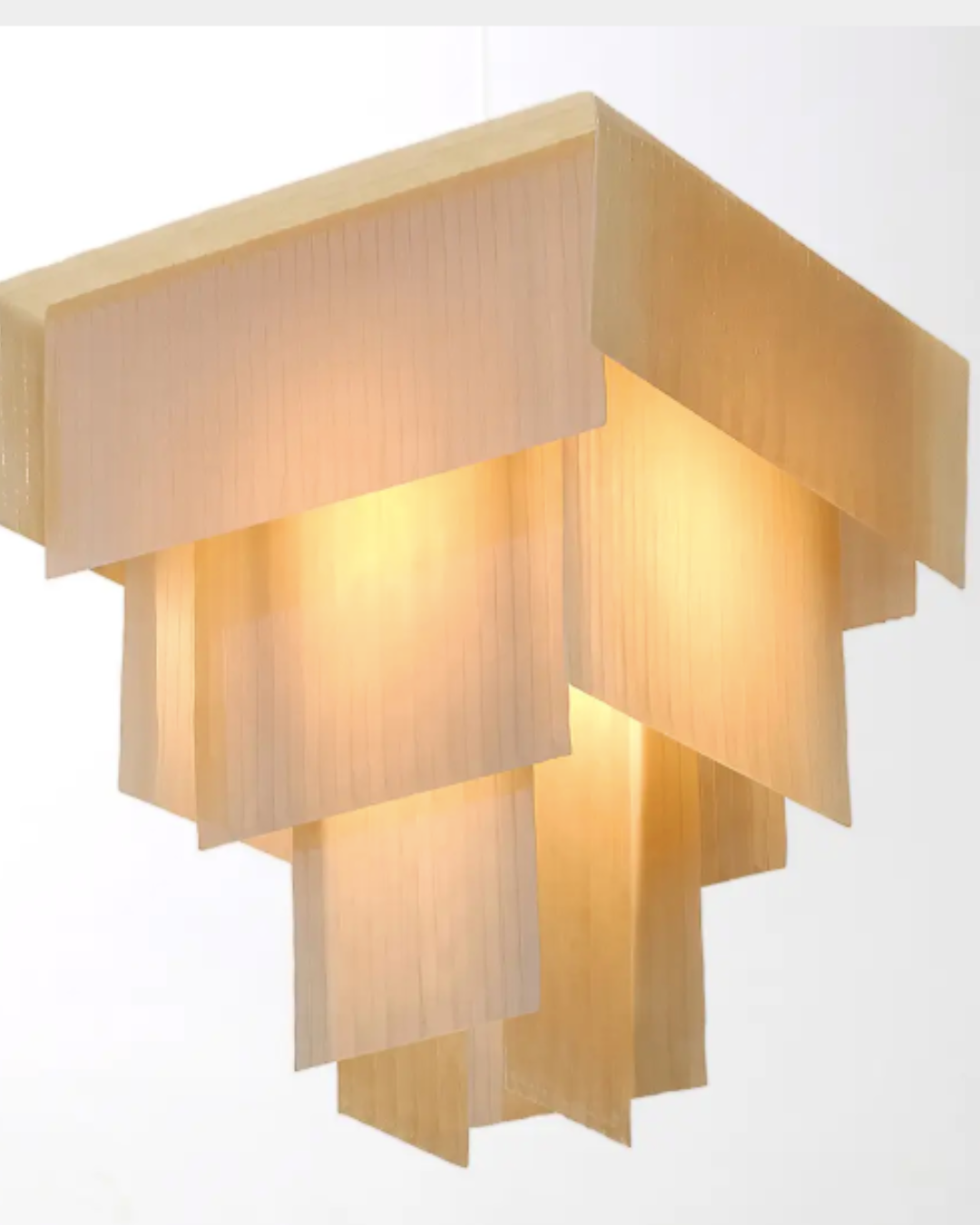
  • Nippon, Ark Collection. Russo Betak, Denmark. First Prize, SaloneSatellite Award 2026.

    RUSSO BETAK

    First Prize

    Base: Copenhagen, Denmark

    Material Position: Biological material as 3D printing substrate, hand-sculpted into final form.

    Award Reading: Russo Betak took first prize at the SaloneSatellite Award 2026 for Nippon, from the Ark collection. The project begins with seashells: ground, mixed into a printable composite and 3D printed into a pendant lamp form, then hand-sculpted layer by layer until the surface reveals the grain of the material and the decisions of the hand that finished it. The result is a tiered pendant lamp in warm cream tones whose stacked horizontal panels read, at distance, as architecture — volumes that hold and diffuse light simultaneously. At close range, the texture tells the full story of its making: the origin in the shell, the pressure of the print, the mark of the hand. The jury recognised its material experimentation and its translation into a refined and luminous form, two things that are usually in tension and are here resolved.

    Why it matters: Nippon demonstrates what becomes possible when a designer treats a biological material not as surface finish but as structural argument. The shell is not decoration. It is the reason the lamp exists in this form and no other. In the SaloneSatellite reading, this is the operating logic of the most serious emerging design: the material sets the terms, and the maker’s knowledge is the capacity to follow them.

    Visit

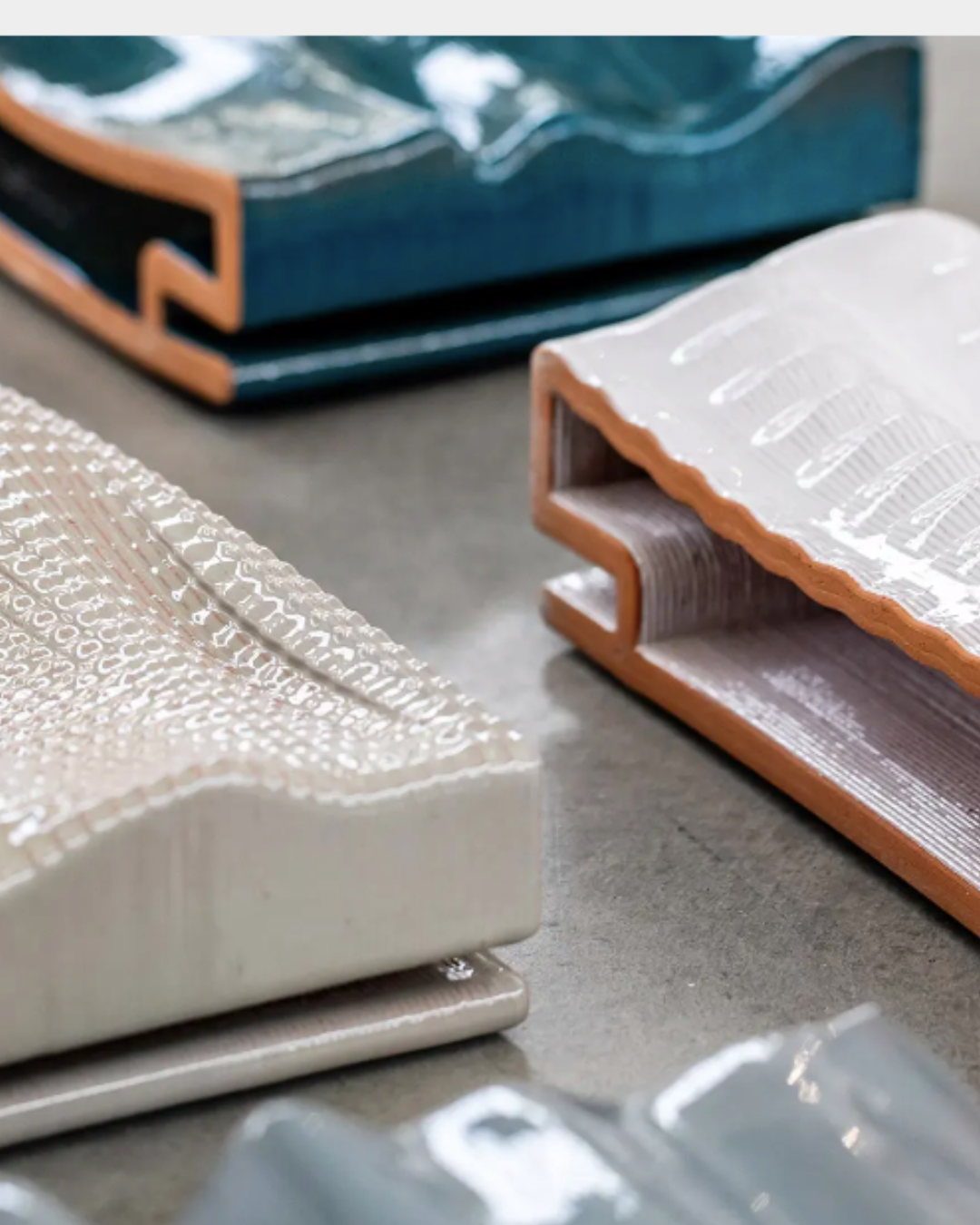
  • 3DP Ceramic Tiles. IOUS Studio, Rotterdam. Second Prize, SaloneSatellite Award 2026.

    IOUS STUDIO

    Second Prize

    Base: Rotterdam, Netherlands

    Material Position: Computational design applied to ceramic extrusion, producing facade tiles in which no two pieces are identical.

    Award Reading: IOUS Studio took second prize at the SaloneSatellite Award 2026 for 3DP Ceramic Tiles. The studio was founded in Rotterdam by Sol Sanchez Cimarelli and Agustin Ros, both Argentinian-born architects who graduated from Universidad Torcuato Di Tella in Buenos Aires before working across offices in Dubai, Rome, Berlin and Rotterdam. Their 3DP Ceramic Tiles system uses robotic clay extrusion to produce exterior facade tiles whose surface texture is determined by an algorithm responsive to structural requirements: the form that emerges is both functionally optimal and visually specific to its position in the facade. The tiles shown at SaloneSatellite 2026 demonstrate the system across three material registers — a dense white interlocking surface, a teal glaze with layered relief, a pale grey with fine horizontal striations — each produced from the same computational logic applied to different clay bodies. The terracotta edge left exposed on each tile is not a detail. It is a declaration: the clay knows what it is.

    Why it matters: What IOUS Studio proposes is a facade architecture in which no two tiles are identical and every tile is the direct output of its material conditions. The studio is currently establishing the first large-scale ceramic and 3D printing lab in Latin America in Buenos Aires, bringing this production logic to a new geography. In the SaloneSatellite reading, 3DP Ceramic Tiles holds both registers simultaneously: the precision of the algorithm and the irreducible variability of the clay. That combination is where the most interesting architecture of the coming decade is forming.

    VIsit

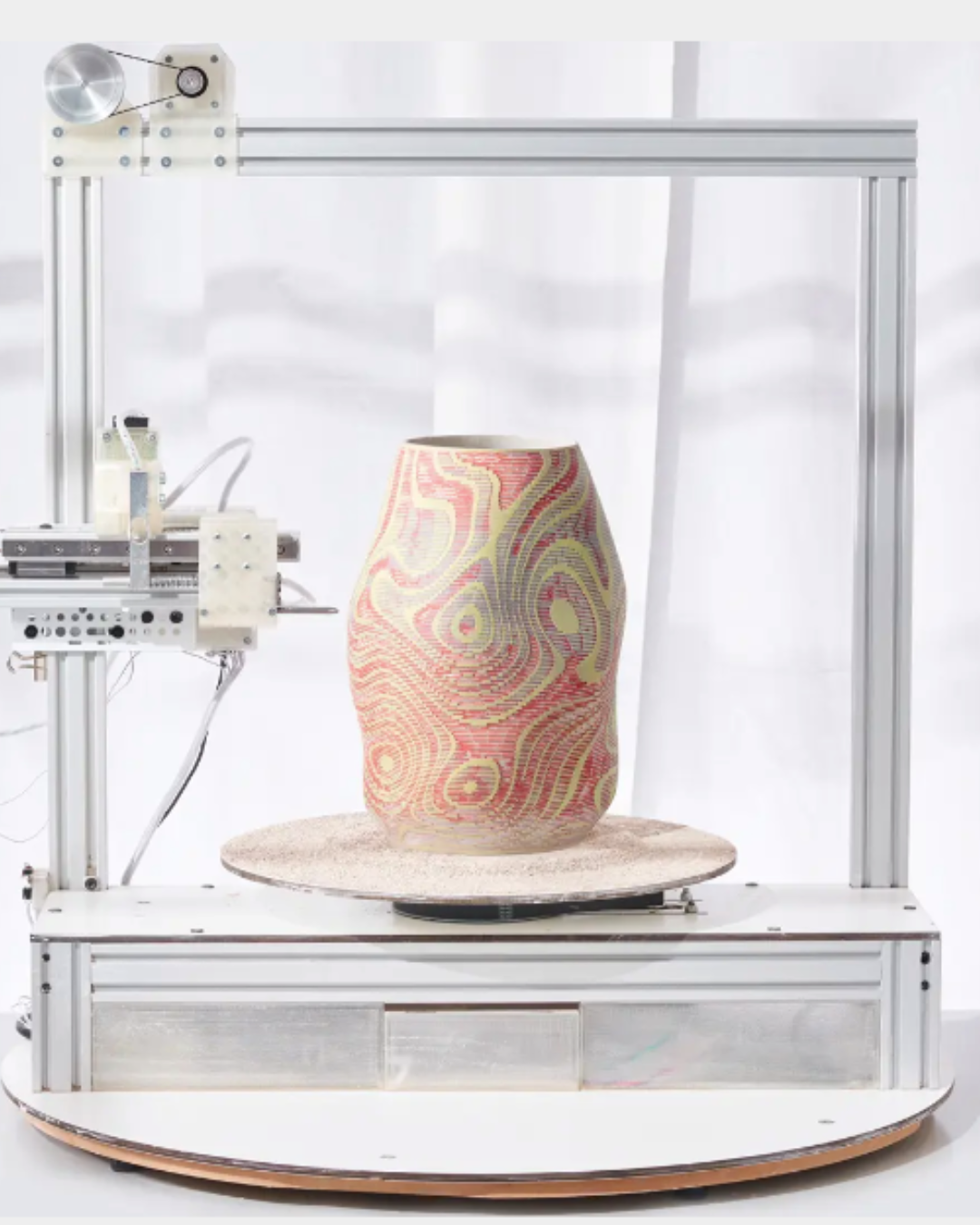
  • Soft Touch. Jüngerkühn, Germany. Third Prize, SaloneSatellite Award 2026.

    JÜNGERKÜHN

    Third Prize

    Base: Germany

    Material Position: A mechanical device that reads object surfaces and carves their topography back into ceramic.

    Award Reading: Jüngerkühn took third prize at the SaloneSatellite Award 2026 for Soft Touch. The project is a device: a twin-axis mechanical arm mounted over a rotating turntable, fitted with a sensor that reads the surface of any object placed beneath it. The arm records the topography of the surface in real time and translates that recording into a cutting path applied to a second object on the same turntable. For the SaloneSatellite presentation, the studio placed hand-formed porcelain vases beneath the arm. The machine read their surfaces and carved the pattern it found back into the clay, each vase receiving a unique incised relief determined entirely by its own form. The result is a series of vessels in which pink, cream and terracotta glazes move in concentric topographic lines, every piece different, none of them possible without the machine listening to what the hand had made first.

    Why it matters: Soft Touch does not automate ceramics. It uses automation to listen to what a ceramic already is. Where most machine-assisted design imposes a form determined before the material is touched, Jüngerkühn’s device responds to the form the material has already taken. Every vase in the series is unique because every hand-formed vessel it read was unique. In the SaloneSatellite reading, this is a precise model for how computation and craft can operate in relation rather than in hierarchy.

    Visit

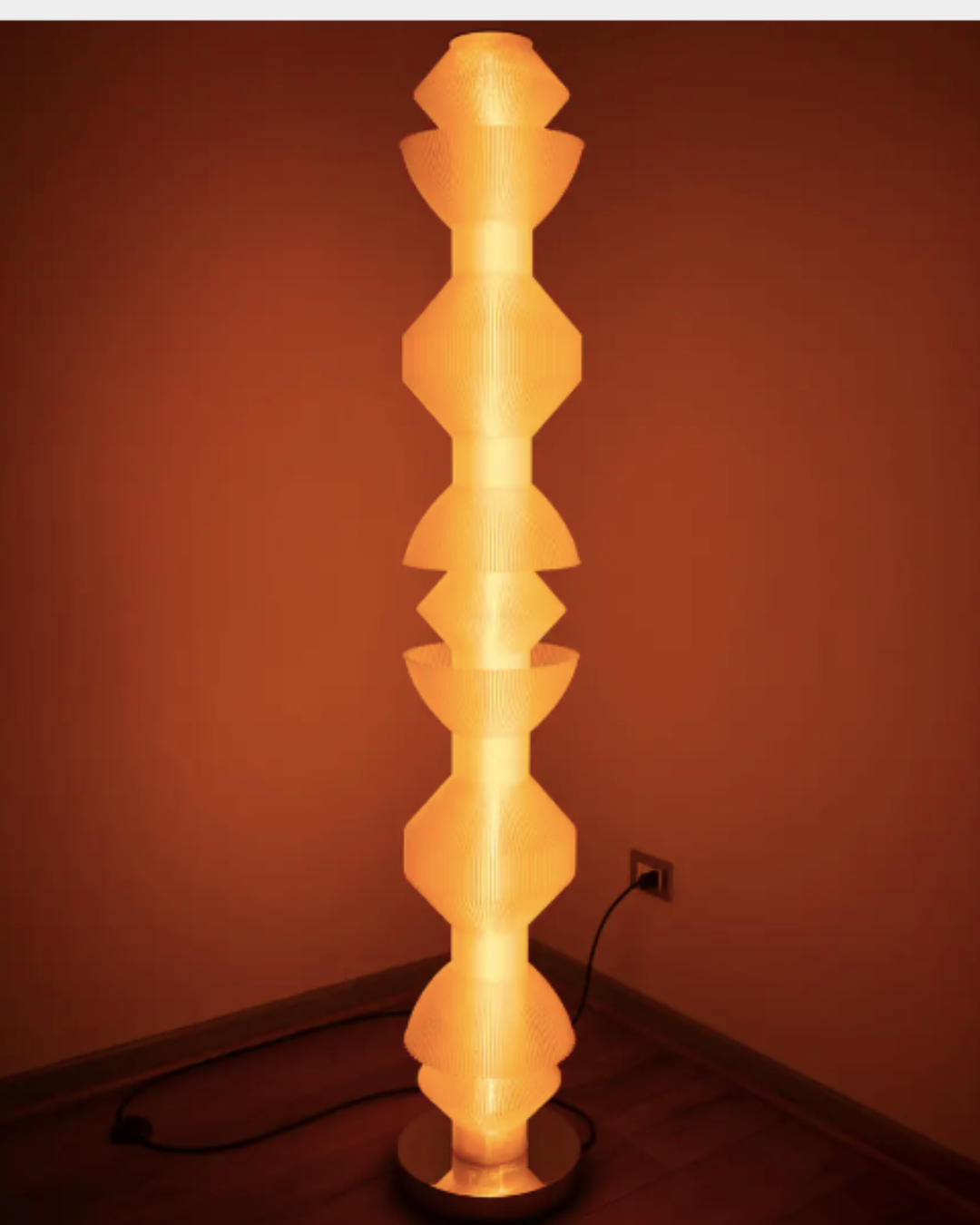
  • Números. Aiko Design, Santiago de Chile. Special Mention, SaloneSatellite Award 2026.

    AIKO DESIGN

    Special Mention

    Base: Santiago, Chile

    Material Position: Ancestral horsehair weaving from Rari combined with 3D-printed structural components.

    Award Reading: Nicolás Romero of Aiko Design received a Special Mention at the SaloneSatellite Award 2026 for Números. The studio draws from the crin tradition of Rari, a village of around 600 people in the Maule region of Chile, in the foothills of the Andes, where horsehair weaving has been practiced for over 200 years and passed from mother to daughter across generations. The technique involves weaving horsehair strand by strand over a frame of ixtle, a plant fibre imported from Mexico, building three-dimensional forms without tools: only hands, scissors and a needle. Números is a floor lamp: a tall totem of stacked geometric wicker and crin modules, each one a different weave pattern from the Rari tradition, the whole column lit from within so that light passes through the interstices of the woven structure and turns the lamp into a luminous catalogue of the hand techniques it carries. The structural components connecting the modules are 3D printed, allowing the handmade forms to be assembled without adhesive.

    Why it matters: The jury recognised Números for the way its symbolic figure holds both industrial production and meticulous craft as simultaneous conditions rather than alternatives. The lamp stands as a record of what the hands in Rari know and what computation makes possible when it works in their service rather than in their place. In the SaloneSatellite reading, Aiko Design represents the Local Soul logic at its most precise: a production philosophy rooted in a specific geography, a specific material and a specific community of makers, brought into the global conversation without losing the specificity that gives it value. Aiko Design received a month-long design residency at the Róng Design Library in Hangzhou, China.

    VIsit

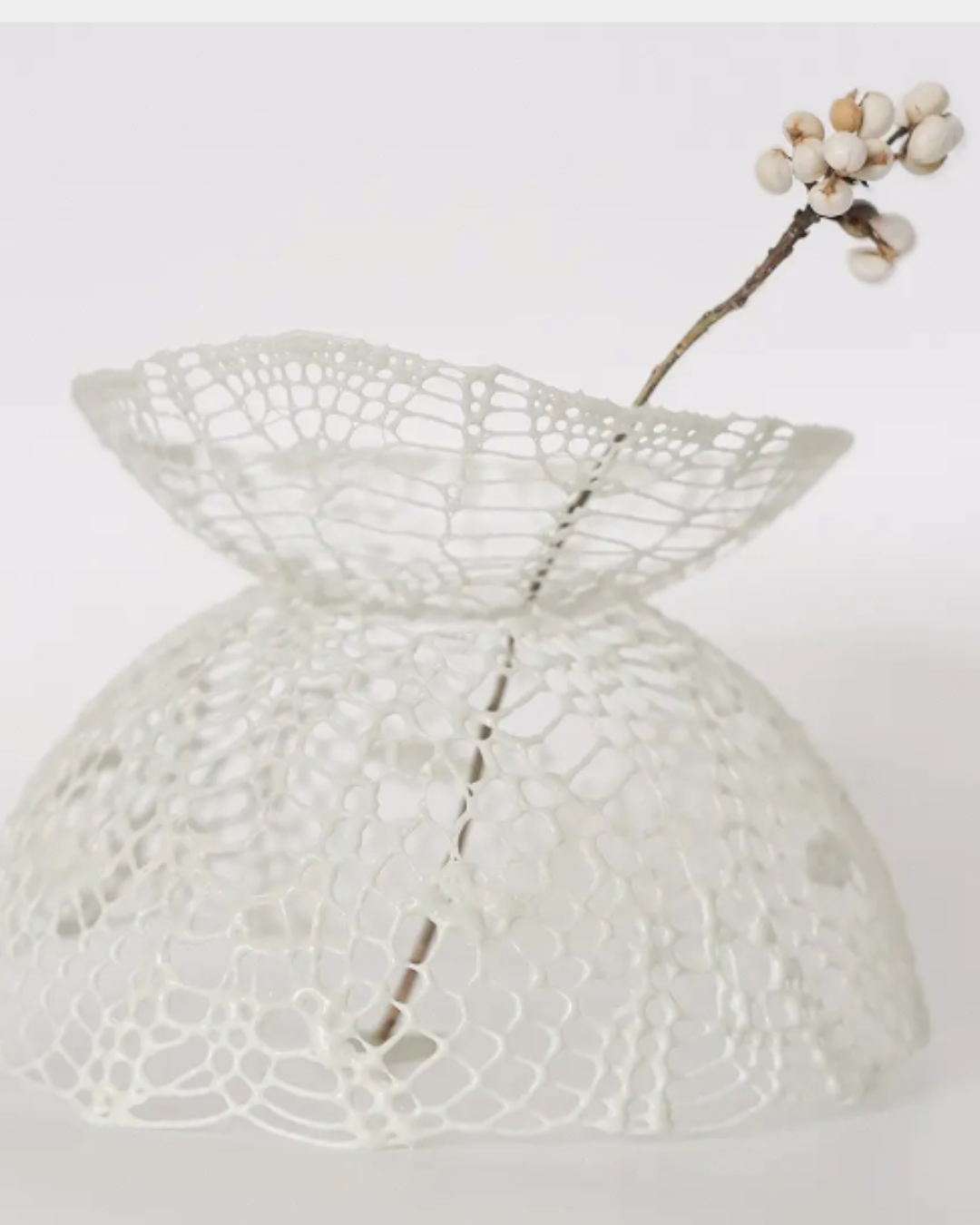
  • Foggy. Yixian Wang, China. Special Mention, SaloneSatellite Award 2026.

    YIXIAN WANG

    Special Mention

    Base: China

    Material Position: Fiberglass arranged in a lace-like mesh structure, fired without resin to preserve translucency and fragility.

    Award Reading: Yixian Wang received a Special Mention at the SaloneSatellite Award 2026 for Foggy. The project investigates fiberglass at the boundary between industrial process and organic form. Wang arranges fiberglass strands into a lace-like mesh structure and fires the vessel without resin, so that the material retains its translucency and fragility rather than hardening into a composite. The result is a dome-shaped vessel that holds its form while remaining visually permeable: light passes through the mesh, the surface reads as fog or as the finest gauze, and the dried botanical placed inside becomes visible through the structure as though the vessel were made of air. The process treats fiberglass as a material with its own grain and behaviour, not as a substrate for other properties.

    Why it matters: The jury recognised Foggy for reinterpreting the visual properties of a material the medium had not previously expressed this way. Fiberglass is an industrial material designed for opacity and structural performance. Wang’s process finds in it a delicacy that its industrial context had never required it to produce. This is the argument that runs through all five winning projects: the knowledge of what a material can do when it is not asked to be something else. Yixian Wang received a month-long design residency at the Róng Design Library in Hangzhou, China.

    VIsit

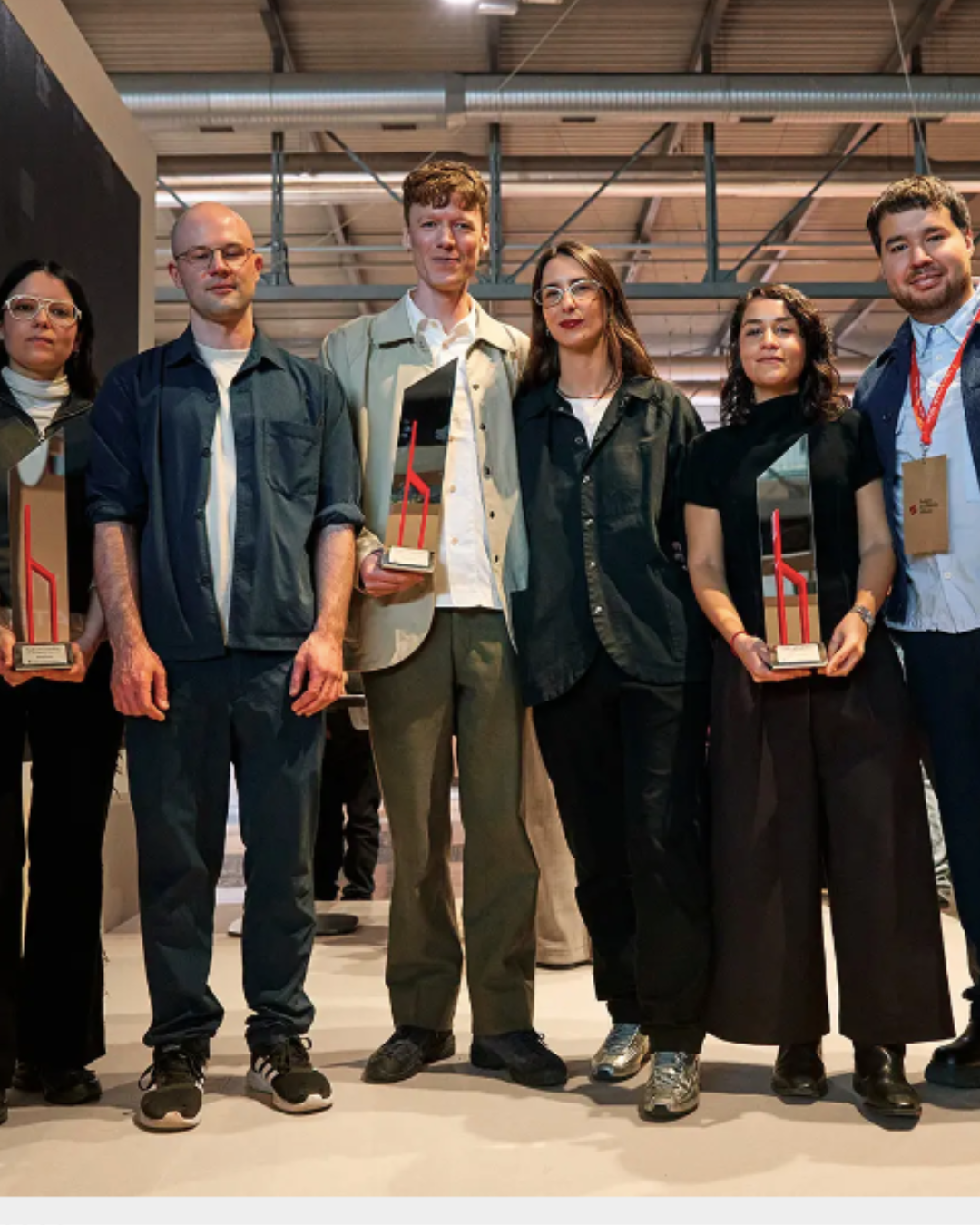
  • SaloneSatellite Award 2026. The winners, 15th edition, Salone del Mobile.Milano, April 2026.

    Award Winners

    Winners of the SaloneSatellite Award 2026, 15th edition, Pavilion 7, Salone del Mobile.Milano, April 2026. From left: Nicolás Romero / Aiko Design (Chile, Special Mention), Agustin Ros / IOUS Studio (Netherlands, 2nd Prize), Russo Betak (Denmark, 1st Prize), Jüngerkühn (Germany, 3rd Prize), Yixian Wang (China, Special Mention). Order to be verified against official Salone del Mobile.Milano press materials. 
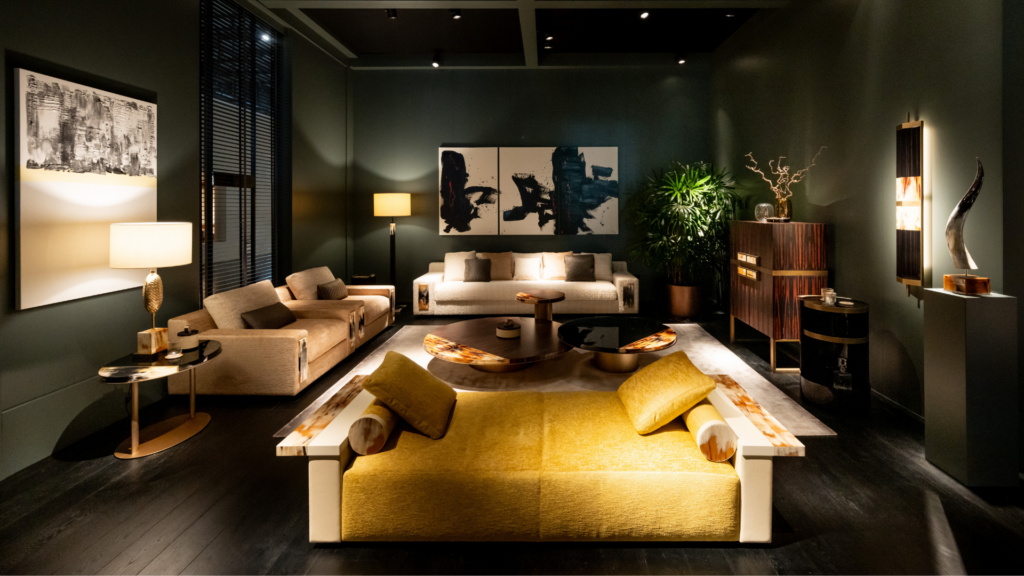
ARCAHORN stand at Salone del Mobile Milano 2026 — dark interior with golden yellow sofa and brass lamps

Continued Reading

New Latitudes. What Milan Design Week 2026 Said About the Future of Design.

Many new centres are emerging simultaneously. The 64th Salone del Mobile, read through the lens of Local Soul.

Read the full editorial →

Questions on the SaloneSatellite Award 2026

Five studios, five projects and the material intelligence shaping the future of design. The following questions address what the 15th edition of the SaloneSatellite Award revealed.

  • Who won the SaloneSatellite Award 2026?

    The SaloneSatellite Award 2026 was presented at the 15th edition of the award, part of the 64th Salone del Mobile.Milano, with a jury chaired by Paola Antonelli, Senior Curator of Architecture and Design at MoMA New York. First prize went to Russo Betak of Denmark for Nippon, a pendant lamp 3D printed from seashells and hand-sculpted. Second prize went to IOUS Studio of the Netherlands, founded by Sol Sanchez Cimarelli and Agustin Ros, for 3DP Ceramic Tiles, a computationally designed ceramic facade system. Third prize went to Jüngerkühn of Germany for Soft Touch, a mechanical device that reads and responds to ceramic surfaces. Special Mentions went to Nicolás Romero of Aiko Design of Chile for Números, combining ancestral horsehair weaving with 3D printing, and to Yixian Wang of China for Foggy, a fiberglass vessel fired without resin. Both Special Mention recipients received a month-long residency at the Róng Design Library in Hangzhou, China.

  • What is the SaloneSatellite Award?

    The SaloneSatellite Award is an international prize dedicated exclusively to designers under 35, presented annually as part of the Salone del Mobile.Milano. It was founded in 2011 by Marva Griffin Wilshire, creator of SaloneSatellite, the platform she established in 1998 to give emerging design talent access to the world’s most important furniture and design fair. The award’s jury, chaired since its founding by Paola Antonelli of MoMA New York, selects projects based on research depth and material intelligence rather than market readiness.

  • What was the theme of SaloneSatellite 2026?

    The theme of SaloneSatellite 2026 was “New Craftsmanship: A New World,” positioning craft knowledge as a technical competence for the coming design cycle rather than a heritage gesture. The five winning projects each demonstrated a specific form of material knowledge applied at the boundary between the hand and computational tools: seashells as 3D printing substrate, clay under robotic extrusion, ceramic surfaces read by a mechanical sensor, ancestral horsehair weaving combined with 3D-printed components, and fiberglass arranged as a lace-like mesh without resin.

  • What is Nippon by Russo Betak?

    Nippon is a pendant lamp from the Ark collection by Danish designer Russo Betak, winner of first prize at the SaloneSatellite Award 2026. The lamp is 3D printed using seashells ground into a printable composite, then hand-sculpted layer by layer to reveal the grain of the material. The result is a tiered pendant in warm cream tones whose stacked horizontal panels hold and diffuse light. The jury recognised its material experimentation and its translation into a refined and luminous form.

  • What is 3DP Ceramic Tiles by IOUS Studio?

    3DP Ceramic Tiles is a ceramic exterior facade system by IOUS Studio, a Rotterdam-based studio founded by Argentinian architects Sol Sanchez Cimarelli and Agustin Ros. The system uses robotic clay extrusion to produce facade tiles whose surface texture is determined by an algorithm responsive to structural requirements. No two tiles are identical. Each tile is the direct output of its material conditions, with the terracotta edge left exposed as a declaration of the clay’s origin. The project won second prize at the SaloneSatellite Award 2026.

  • What is Soft Touch by Jüngerkühn?

    Soft Touch is a mechanical device by German studio Jüngerkühn, winner of third prize at the SaloneSatellite Award 2026. A twin-axis arm mounted over a rotating turntable reads the surface topography of hand-formed porcelain vases and carves that topography back into a second vessel, producing a unique incised relief on every piece. The device uses automation to respond to what the hand has already made rather than to impose a predetermined form.

  • What is Números by Aiko Design?

    Números is a floor lamp by Nicolás Romero of Chilean studio Aiko Design, recognised with a Special Mention at the SaloneSatellite Award 2026. The lamp combines the crin tradition of Rari — a 200-year-old horsehair weaving practice from a village of 600 people in the Maule region of Chile — with 3D-printed structural components in PLA with chrome metal details. Stacked geometric wicker and crin modules, each a different weave pattern, are lit from within so that light passes through the interstices of the woven structure. The lamp is a luminous catalogue of the hand techniques it carries.

  • What is Foggy by Yixian Wang?

    Foggy is a vessel by Chinese designer Yixian Wang, recognised with a Special Mention at the SaloneSatellite Award 2026. Fiberglass strands are arranged in a lace-like mesh structure and fired without resin, so that the material retains its translucency rather than hardening into a composite. Light passes through the mesh and the surface reads as fog or as the finest gauze. The jury recognised Foggy for reinterpreting the visual properties of a material the medium had not previously expressed this way.

Continue reading

Nairobi Fashion Week 2026: Decarbonize and the Material Future of African Fashion

The eighth season of Nairobi Fashion Week placed Decarbonize at the centre of African fashion. Across twelve studios, textile waste, organic cotton, social enterprise and heritage craft became the working conditions of a regenerative design economy.

Nairobi Fashion Week Season 8 was held from 28 to 31 January 2026 at Sarit Expo Centre in Westlands under the editorial title Decarbonize. Founder and Creative Director Brian Kihindas, who opened Nairobi Fashion Week in 2013 inside the Hilton Nairobi, used the eighth season to name the continental position that established Kenyan and East African studios already operate. Angela Wambui carried the season as MC across four nights of runway, two days of editorial conversation under the Thread Talks programme, and a curated launch at Matteo’s Restaurant in Karen.

In Nairobi, Decarbonize read less as a seasonal theme than as a description of an operating system. The strongest studios did not present sustainability as a surface language. They showed how textile waste, organic cotton, handwork, small batch production and social enterprise structures already shape the way fashion is made, trained, sourced and finished across parts of the East African design economy.

The eighth season produced three structural signals for the future of African fashion.

The first signal: regenerative practice in Nairobi was visible as the working condition of established social enterprises and supply-chain organisations, with the editorial title naming what already operates across Kenyan and East African studios. The second signal: upcycled material crossed from salvage narrative into primary material for couture-level finishing, with Rialto’s upcycled denim and Maisha by Nisria’s ASILI collection treating waste streams as the legitimate basis of architectural construction. The third signal: the runway gathered designers from Kenya, Nigeria, Sri Lanka, France, Mali, Germany and the United States in a convergence that registered as continental gravity at scale, with Nairobi positioned as the destination.

Kihindas put the editorial argument to the press in two registers. To TTYBrand Africa ahead of the season, he framed the title in measured language: “Decarbonize challenges designers and audiences to think about how fashion impacts the planet. We want to promote creativity that respects communities, resources, and the future.” Speaking to Africanews on the runway, he sharpened the case in the African register: “When you come down here to Africa, we are very sustainable. We use sustainable fabrics in developing our collections and pieces, but the message that comes out of here, out of home, out of the home of the unit, is for us to decarbonise.” A second sentence to Africanews placed the title inside global accounting: “Fashion is the second emitter of global carbon emissions. We have to think about it critically.”

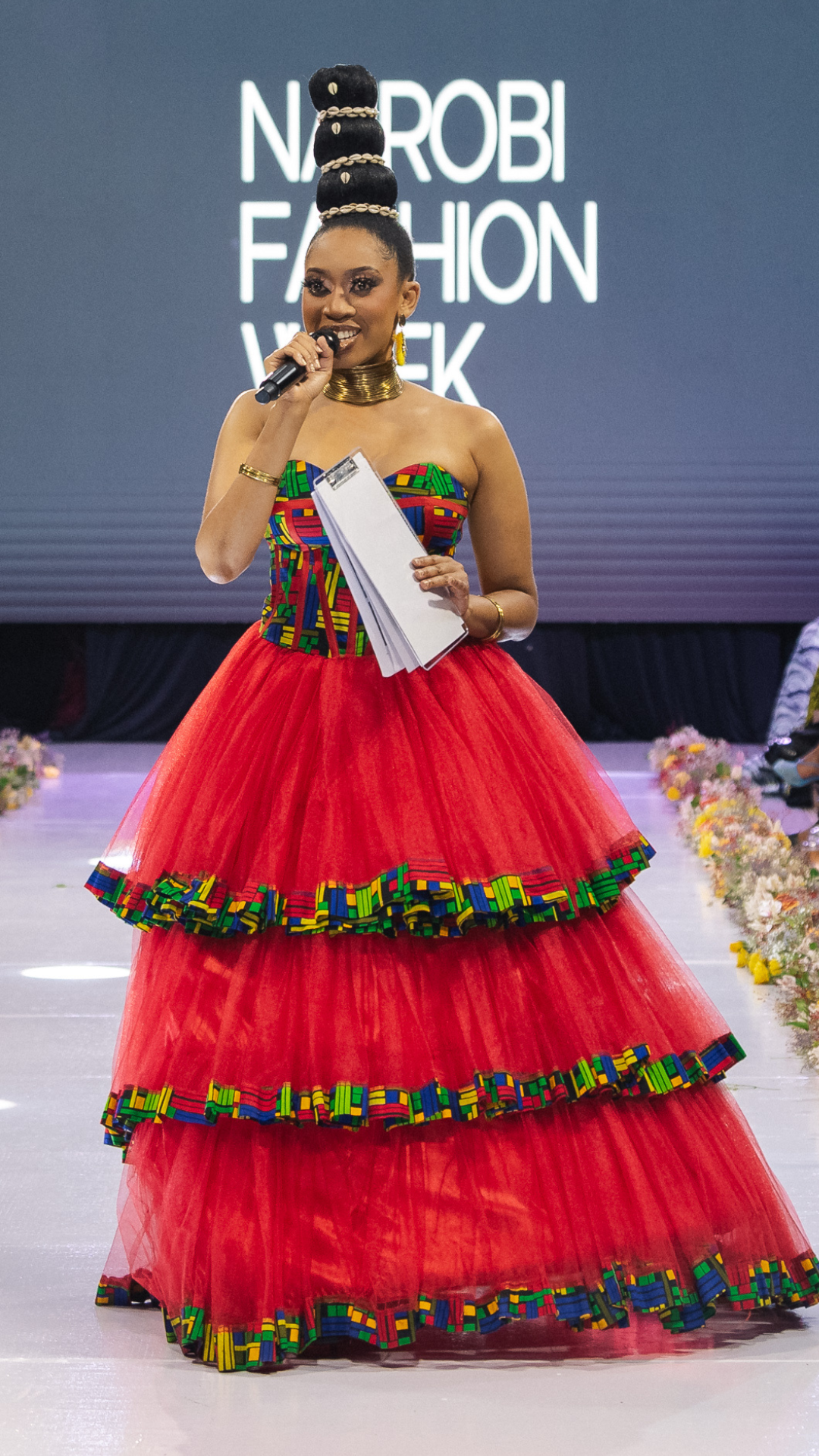
Angela Wambui  Muiruri, known as KQ - the Kenyan Queen - carrying the eighth edition of Nairobi Fashion Week as Master of Ceremonies, Sarit Expo Centre, January 2026.

KQ — the Kenyan Queen

Angela Wambui Muiruri, known as KQ — the Kenyan Queen — carried the eighth edition of Nairobi Fashion Week as Master of Ceremonies. Born in Seattle to Kenyan parents and raised between two cultures, she returned to Nairobi and became a Capital FM radio anchor, MC and humanitarian. She co-founded Heels4Pads Foundation in 2019, a social initiative that has grown from a social media campaign into a movement delivering menstrual health education and dignity kits to girls across Kenyan counties. At Sarit Expo Centre, Wambui anchored Brian Kihindas’s Decarbonize argument across four nights of runway, walking the audience through the rhythm of twelve collections.


Decarbonize as Working Condition

The studios on the Westlands runway operate as continuing social-enterprise and supply-chain organisations, and their daily method produces the regenerative position the title named. Maisha by Nisria, founded by Nur M’Nasria and based in Gilgil, runs as a social enterprise that trains and employs young women from vulnerable communities in the Rift Valley, sourcing discarded textiles from flea markets, wholesalers and recycling factories and finishing them into one-of-a-kind clothing. The studio has been recognised by The Guardian, Vogue Business and Al Jazeera. Tausi Conde, the studio’s Head of Design, summarised the working method to The Guardian in a single sentence: “You can use anything and everything to make something interesting.” The sentence describes how the studio operates from Monday morning through Friday afternoon. The runway version made the operation legible.

Lucy Rao runs the same kind of organisation at industrial scale. She founded Rialto Fashions in 1988, sits as Co-Director of the Kenya Fashion Council and runs the Pamba Mali Organic Cotton Collective, which produces certified organic cotton for Kenyan and East African manufacturers. Her runway position was settled before the lights came up. Speaking to Africanews on the floor, she placed her work inside the wider continental argument: “Fashion is one of the biggest polluters of the planet. What better way to pass the message than using a platform like Nairobi Fashion Week.” A cotton supply collective and a couture house under one principal: that is the structure Decarbonize made visible. The title named what was already operating across three decades of Rao’s working life.


THE LOOKBOOK: Twelve Studios, One Editorial Title

The Lookbook reads Nairobi Fashion Week Season 8 through the working methods of twelve studios. Under Brian Kihindas’s editorial title Decarbonize, each label brought a different material position to the runway: upcycled cotton, organic supply, denim reconstruction, Bogolan textile, linen, leather, beadwork, hand embroidery, streetwear, small batch tailoring and social enterprise practice.

Together, the collections described a fashion system in which material is no longer treated as surface. It becomes evidence of origin, labour, community, reuse and technical discipline.

Photography by Jenkins Kuyoh.


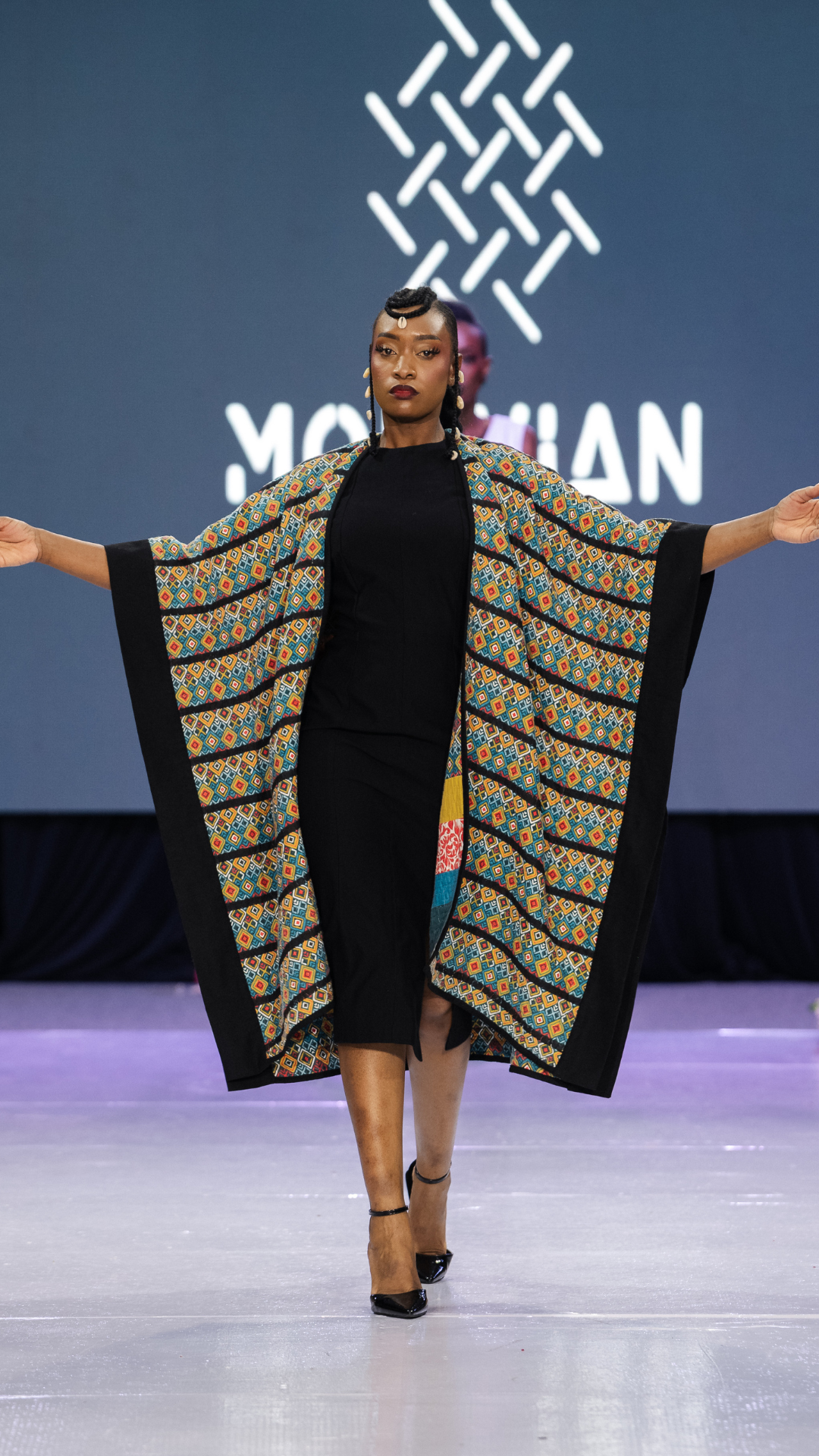
  • Molivian opens its Season 8 walk with a patchwork cape carrying West African geometric textile inside black tailored construction.

    MOLIVIAN

    Base: Nairobi, Kenya
    Material Position: Textile waste, patchwork construction, experimental tailoring
    Season 8 Reading: Molivian placed textile waste at the beginning of the design process. The Season 8 collection worked with patchwork, proportion and texture, translating salvage material into evening pieces and sharper tailored forms.

    Why it matters: The studio shows how waste streams can become primary material when construction, editing and finish are treated with discipline. In the Decarbonize reading, Molivian belongs to the new generation of studios that build design authority from the material already present in the local system.

    VIsit

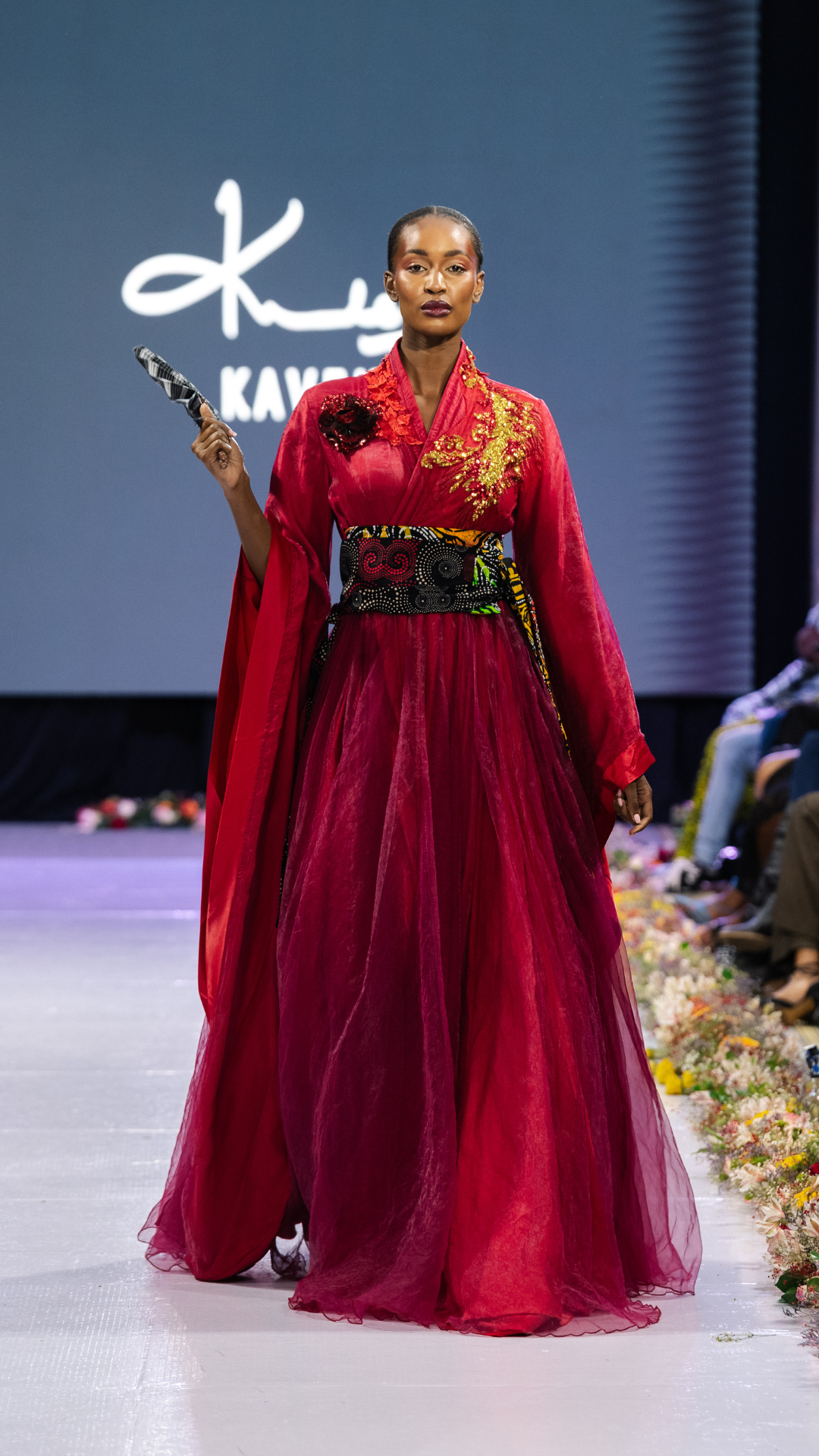
  • John Kaveke at Season 8: twenty-seven years of Kenyan menswear extending into ceremonial gown, with Maasai heritage and Japanese tailoring resolved at the seam.

    JOHN KAVEKE

    Base: Nairobi, Kenya
    Material Position: Menswear, tailoring, cultural reference, international runway experience
    Season 8 Reading: John Kaveke brought a menswear language shaped by long practice and international exposure. His Season 8 collection staged a dialogue between Japanese tailoring precision and East African cultural reference, with Samburu and Maasai codes entering the runway through cut, proportion and surface detail.
    Why it matters: Kaveke’s contribution anchors Decarbonize in an established design career. The collection showed how heritage reference can move through tailoring without becoming decorative. It positioned Nairobi menswear within a broader global conversation on structure, identity and craft.

    Visit

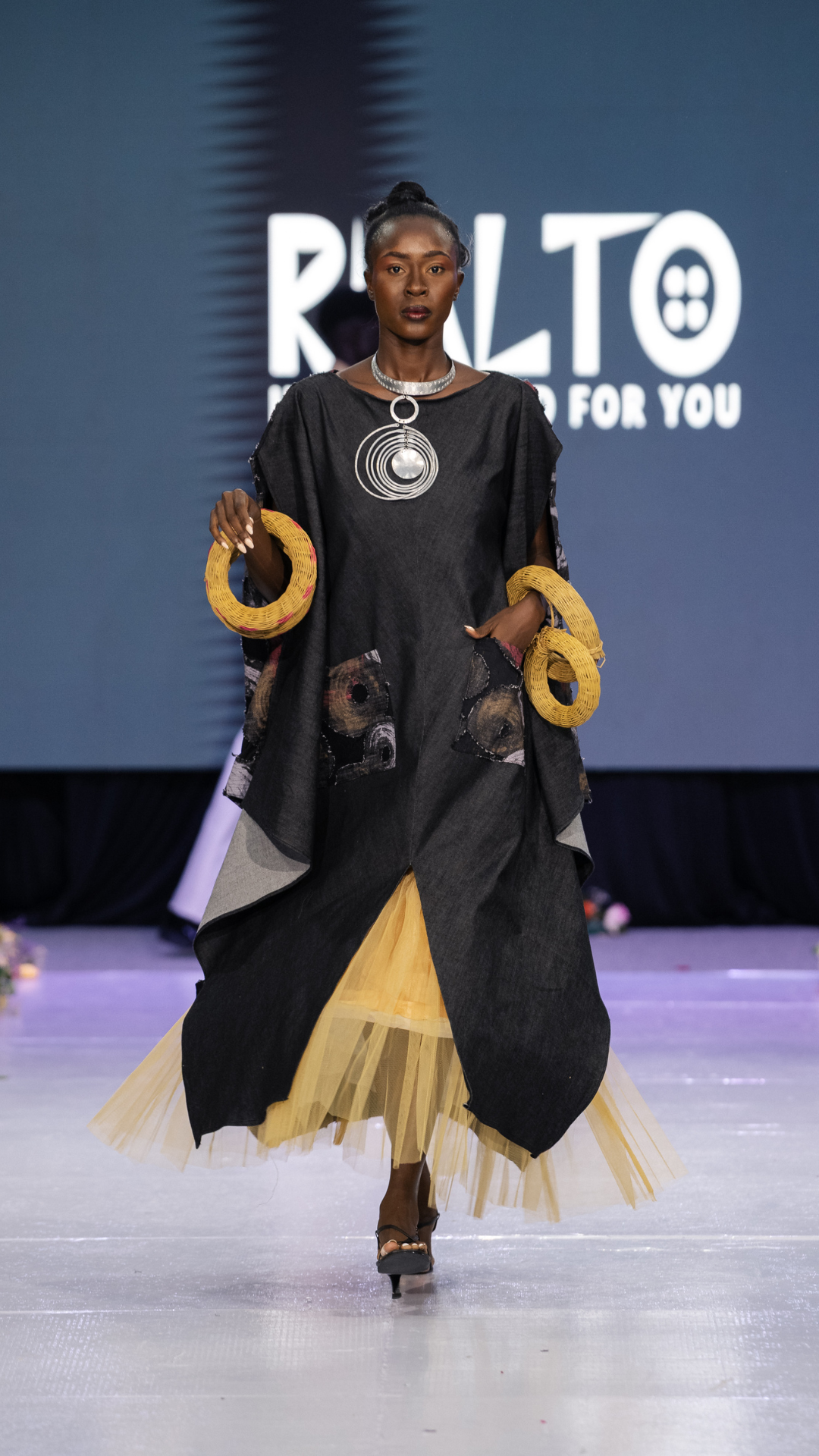
  • Rialto Fashions by Lucy Rao: thirty-eight years of Kenyan pattern-cutting carrying upcycled denim through couture-level finishing.

    Rialto Fashions / Lucy Rao

    Base: Nairobi, Kenya
    Material Position: Couture level denim reconstruction, organic cotton supply, long term Kenyan fashion infrastructure
    Season 8 Reading: Lucy Rao’s Rialto Fashions brought thirty eight years of Kenyan couture practice into the Decarbonize frame. Her Season 8 contribution worked with upcycled denim and sharp architectural tailoring, while her wider role through the Pamba Mali Organic Cotton Collective connects the runway to certified organic cotton supply.
    Why it matters: Rialto is structurally central to the article. Lucy Rao embodies the link between couture house, supply chain work and fashion governance. Her contribution shows that Decarbonize is already operating inside Kenyan fashion infrastructure: in material sourcing, in cotton systems, in pattern cutting and in long term institutional work.


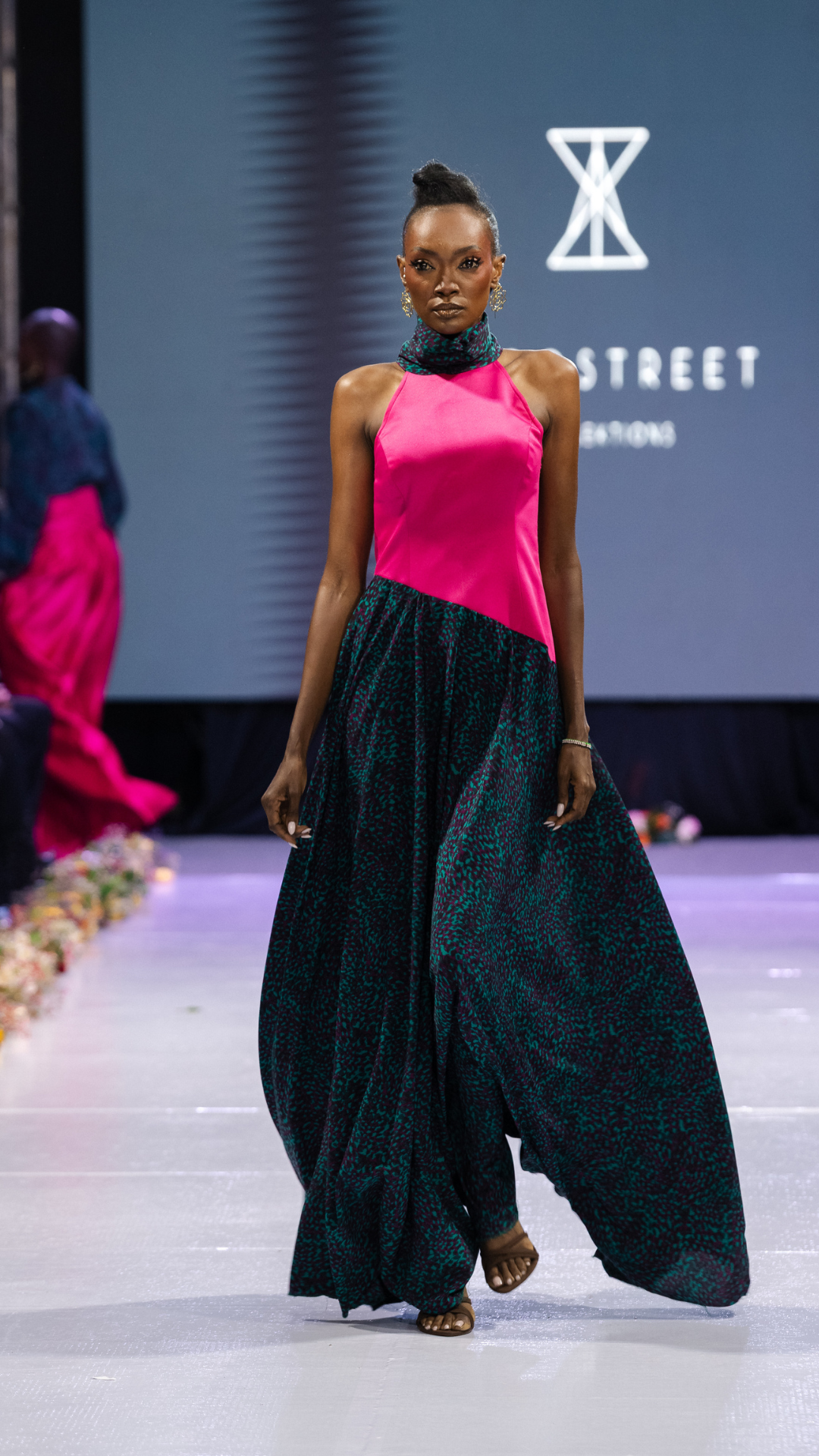
  • AfroStreet Kollections by Yvonne Odhiambo at her third NFW outing: Nairobi urban culture brought into vibrant African-print streetwear.

    AFROSTREET KOLLECTIONS

    Base: Nairobi, Kenya
    Material Position: African print, eveningwear, public cultural visibility
    Season 8 Reading: Founded by Yvonne Odhiambo, AfroStreet Kollections extended its African print signature into refined eveningwear silhouettes. The collection carried colour, print and recognition into a more elevated runway register.
    Why it matters: AfroStreet Kollections represents a design language with strong cultural visibility across Kenya and the wider region. Within the Decarbonize frame, the label shows how recognisable textile identity can be refined through silhouette and occasionwear, giving African print a more formal editorial reading.

    Visit Yvonne Odhiambo

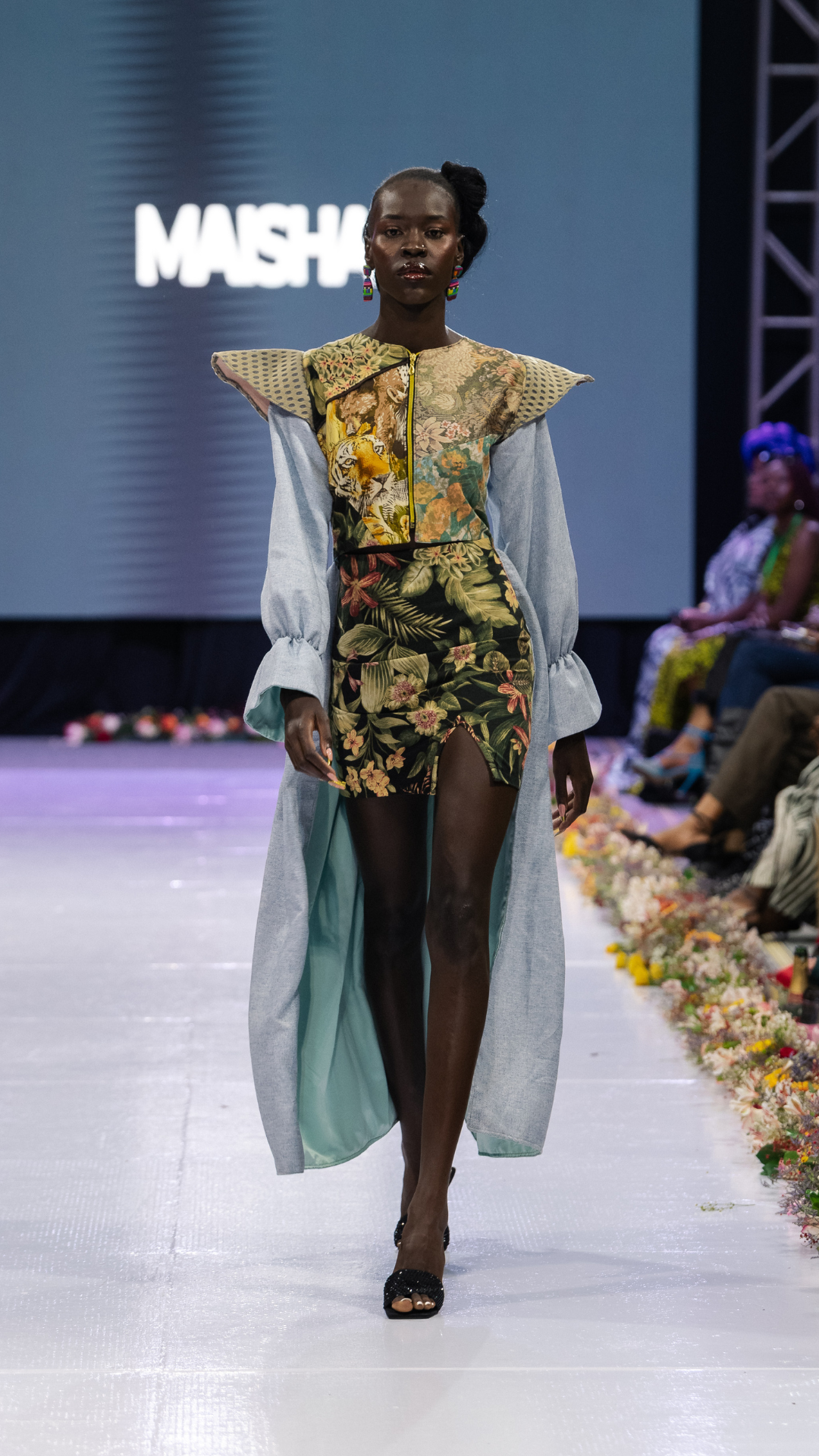
  • Maisha by Nisria's ASILI collection: a Gilgil social-enterprise studio walking salvaged textile as primary couture material on the eighth season's runway.

    MAISHA BY NISRIA

    Base: Gilgil, Kenya
    Material Position: Upcycled cotton, discarded textiles, social enterprise
    Season 8 Reading: Maisha by Nisria walked the ASILI collection with structured garments made from upcycled cotton and discarded textiles. The studio’s work is rooted in a social enterprise model that trains and employs young women from vulnerable communities in the Rift Valley.
    Why it matters: Maisha by Nisria is one of the clearest expressions of Decarbonize as working condition. The studio connects material reuse, employment, training and garment construction in one operating model. This makes its runway contribution important beyond aesthetics. It shows how regenerative fashion can function as production system, social structure and design language at once.

    Visit

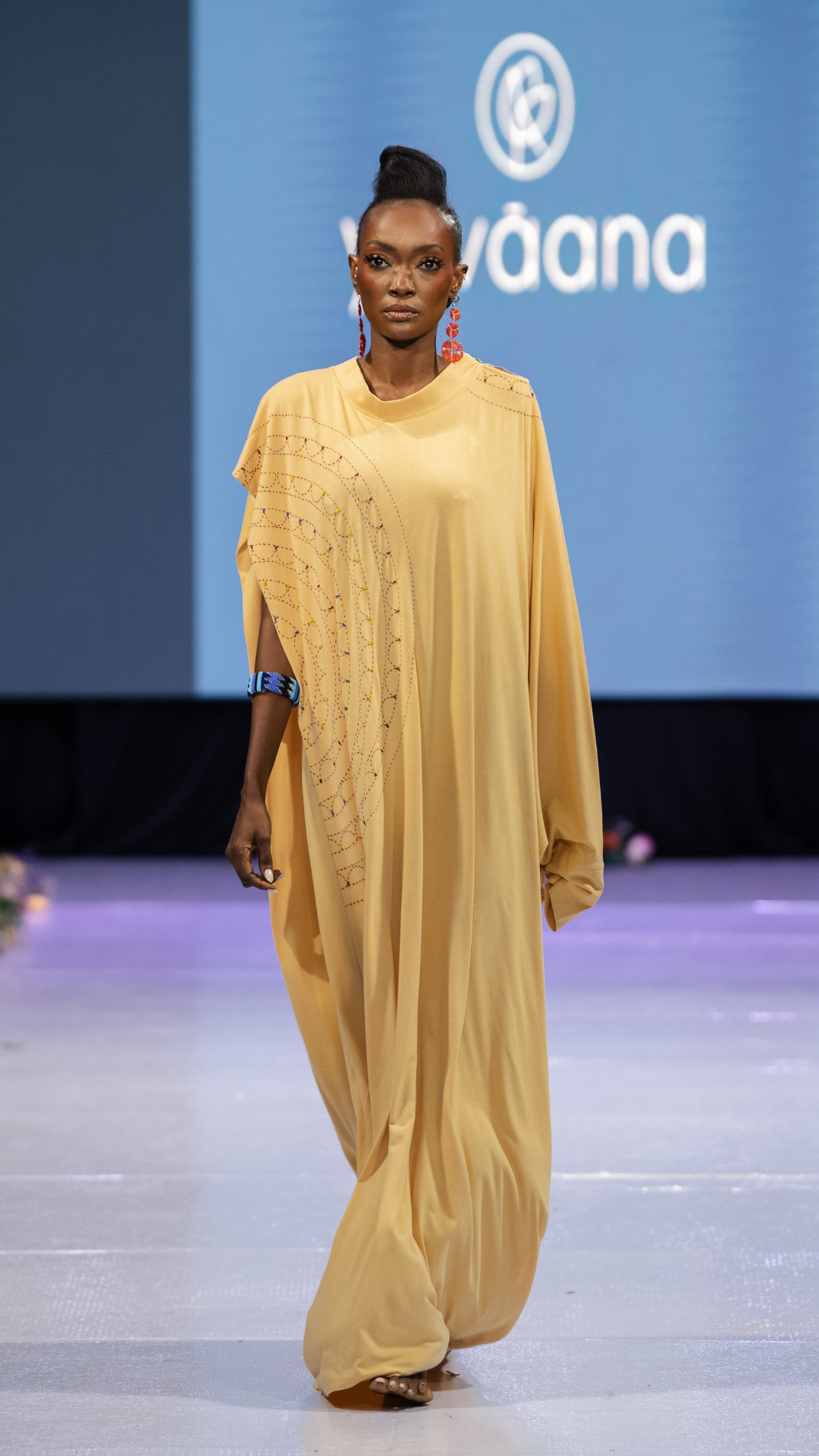
  • Yevaàna at Season 8: Sri Lankan needlework finished by Kenyan hands, two textile cultures travelling in one garment.

    YEVAÀNA

    Base: Sri Lanka and Kenya
    Material Position: Cotton, linen, hemp, hand smocking, hand embroidery, women artisan production
    Season 8 Reading: Yevāana brought a slow craft register to Season 8, working with natural fibres and hand techniques across Sri Lankan and Kenyan artisan communities. The collection placed hand smocking and hand embroidery at the centre of the garment.
    Why it matters: Yevāana expands the Nairobi Fashion Week conversation beyond national geography. The label connects Kenya and Sri Lanka through women led craft production, natural fibres and handwork. In the Decarbonize context, this positions craft as a production method with social and material intelligence, rather than as ornament.

    Visit

  • Naaniya at the eighth edition: a French designer of Malian heritage layering Bogolan and West African ornament into European tailoring.

    NAANIYA

    Base: France, with Malian heritage
    Material Position: Bogolan textile, European tailoring, Malian textile tradition
    Season 8 Reading: Naaniya layered Mali’s Bogolan textile tradition into contemporary European tailoring. The collection brought hand painted mud cloth into refined silhouettes, allowing the textile to travel through cut, proportion and construction.
    Why it matters: Naaniya’s work is important because it treats African textile heritage as living material. In the Season 8 context, Bogolan appears as a contemporary design resource with technical and cultural authority. The collection gives the Decarbonize theme a diasporic reading: material knowledge moves across geographies while retaining its origin.

    Visit

  • Rialto Fashions by Lucy Rao: thirty-eight years of Kenyan pattern-cutting carrying upcycled denim through couture-level finishing.

    ACI NOD

    Base: United States
    Material Position: Streetwear, urban silhouettes, everyday accessibility
    Season 8 Reading: ACI NOD brought a streetwear vocabulary to the Nairobi runway. The collection worked with day to day urban silhouettes and street cut precision, expanding the season beyond couture and heritage craft.
    Why it matters: ACI NOD broadens the Decarbonize conversation by placing everyday garments inside the same runway frame as couture, handwork and textile heritage. The contribution matters because regenerative fashion also needs accessible forms, youth culture and clothing that can circulate through daily life.

    Visit

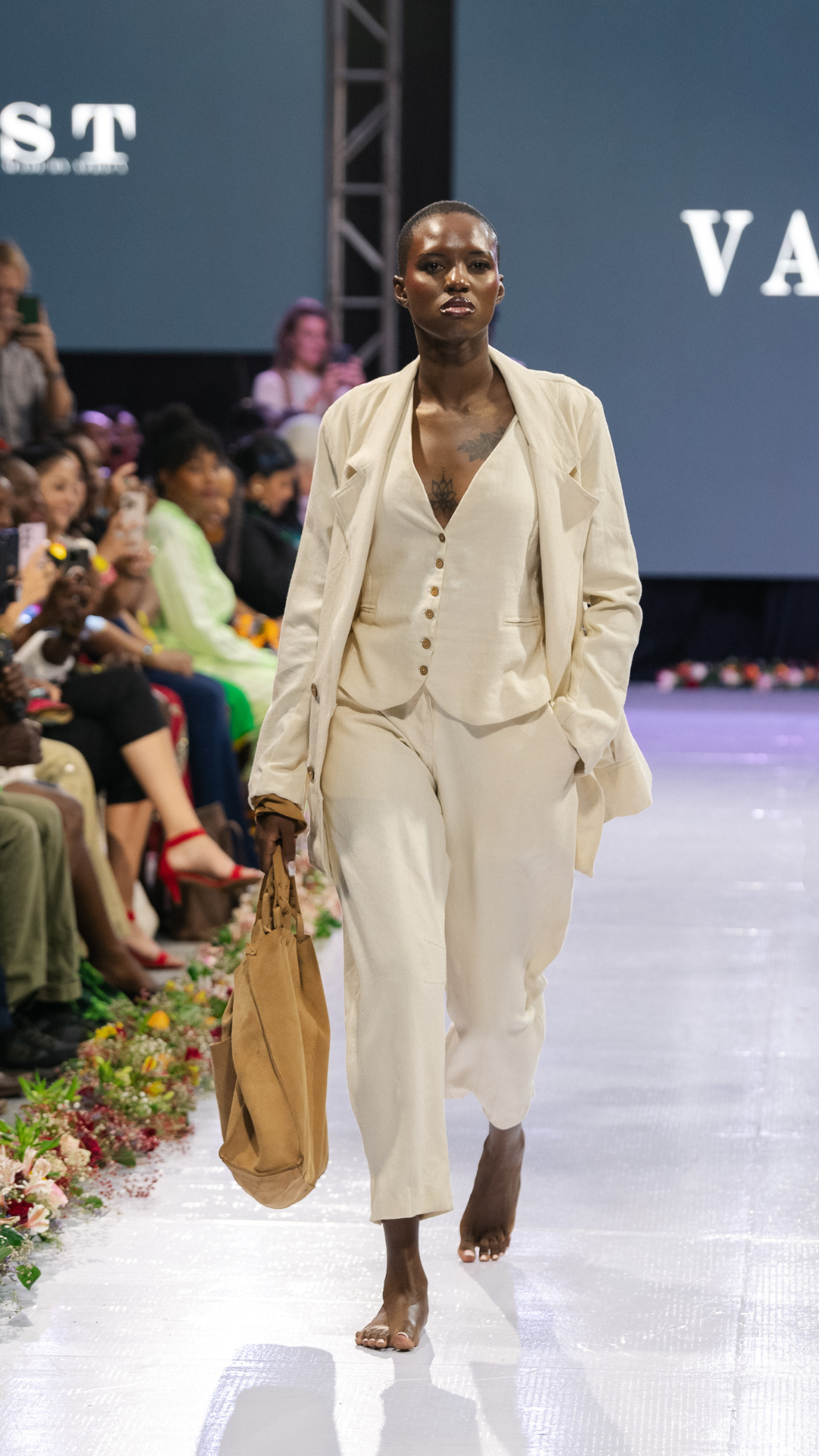
  • VAST Made by Africa: continental optimism walked barefoot, a Nairobi small-batch studio anchored in West African handwoven cloth.

    VAST MADE BY AFRICA

    Base: Nairobi, Kenya
    Material Position: West African handwoven cloth, architectural silhouettes, short run production
    Season 8 Reading: VAST Made by Africa walked structured silhouettes anchored in handcrafted fabrics, natural hides and upcycled materials. The garments carried a strong architectural presence while staying connected to movement, wearability and identity.
    Why it matters: The label gives Decarbonize an architectural fashion language. Its work shows how handwoven cloth and short run production can enter contemporary luxury through proportion and construction. VAST Made by Africa belongs strongly in the Material Intelligence line because the textile is visibly part of the garment’s authority.


    Visit

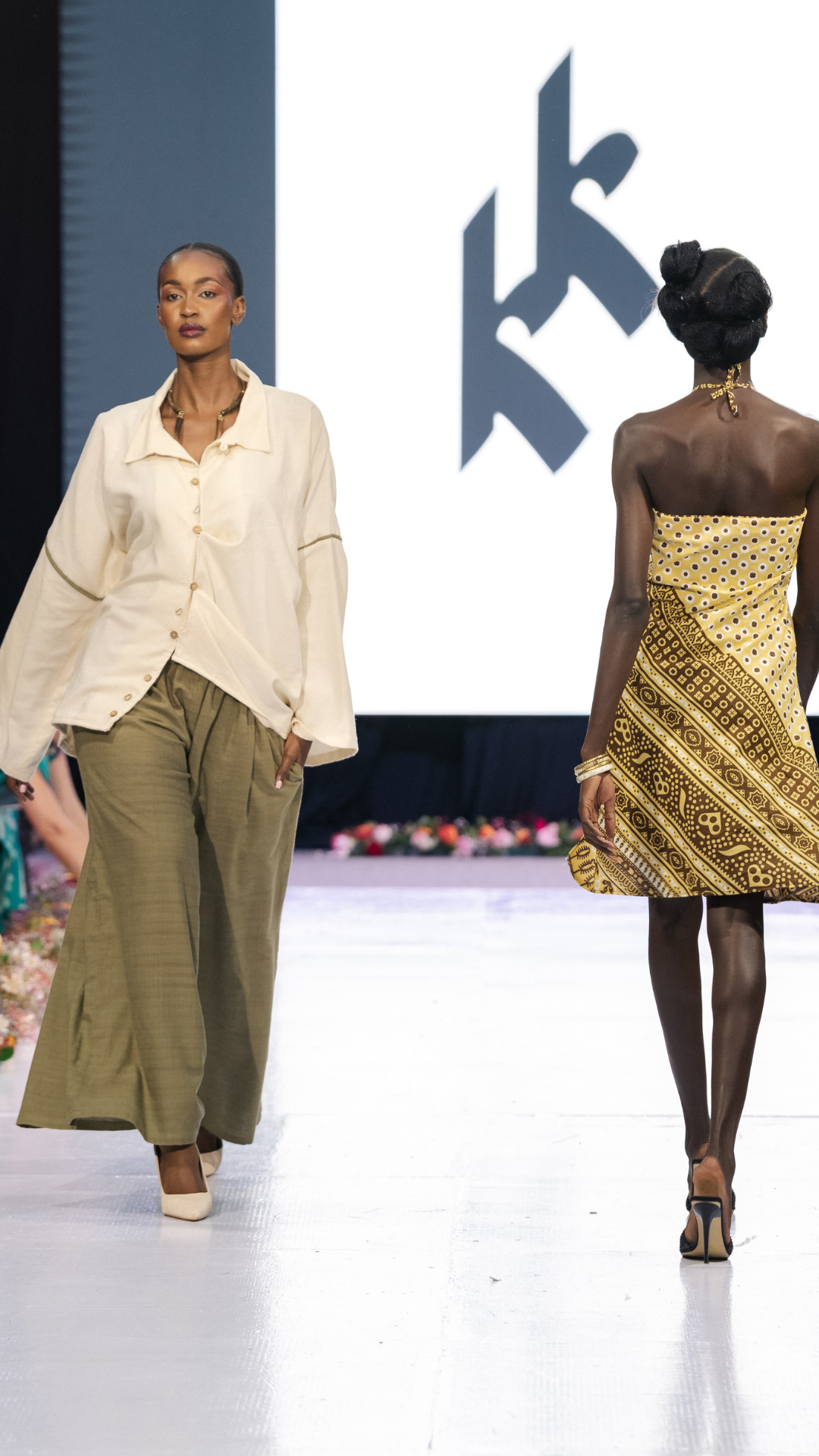
  • Kitu Kidzo at Season 8: a Kilifi studio carrying the textile inheritance of Kenya's Suaheli coast into linen and Ankara construction.

    KITU KIDZO

    Base: Kilifi, Kenya
    Material Position: Linen, coastal textile memory, Suaheli heritage
    Season 8 Reading: Kitu Kidzo brought the textile inheritance of Kenya’s Suaheli coast to the runway. The Season 8 collection worked with fluid linen silhouettes in soft yellow, brown and white, supported by accessories that referenced coastal craft and place.
    Why it matters: Kitu Kidzo is valuable for the article because it gives Decarbonize a geographic and atmospheric register. The work connects material, climate and coastal identity. Linen becomes more than fibre; it becomes a way to translate Kilifi’s movement, heat, air and textile memory into garment form.

    Visit on Instagram

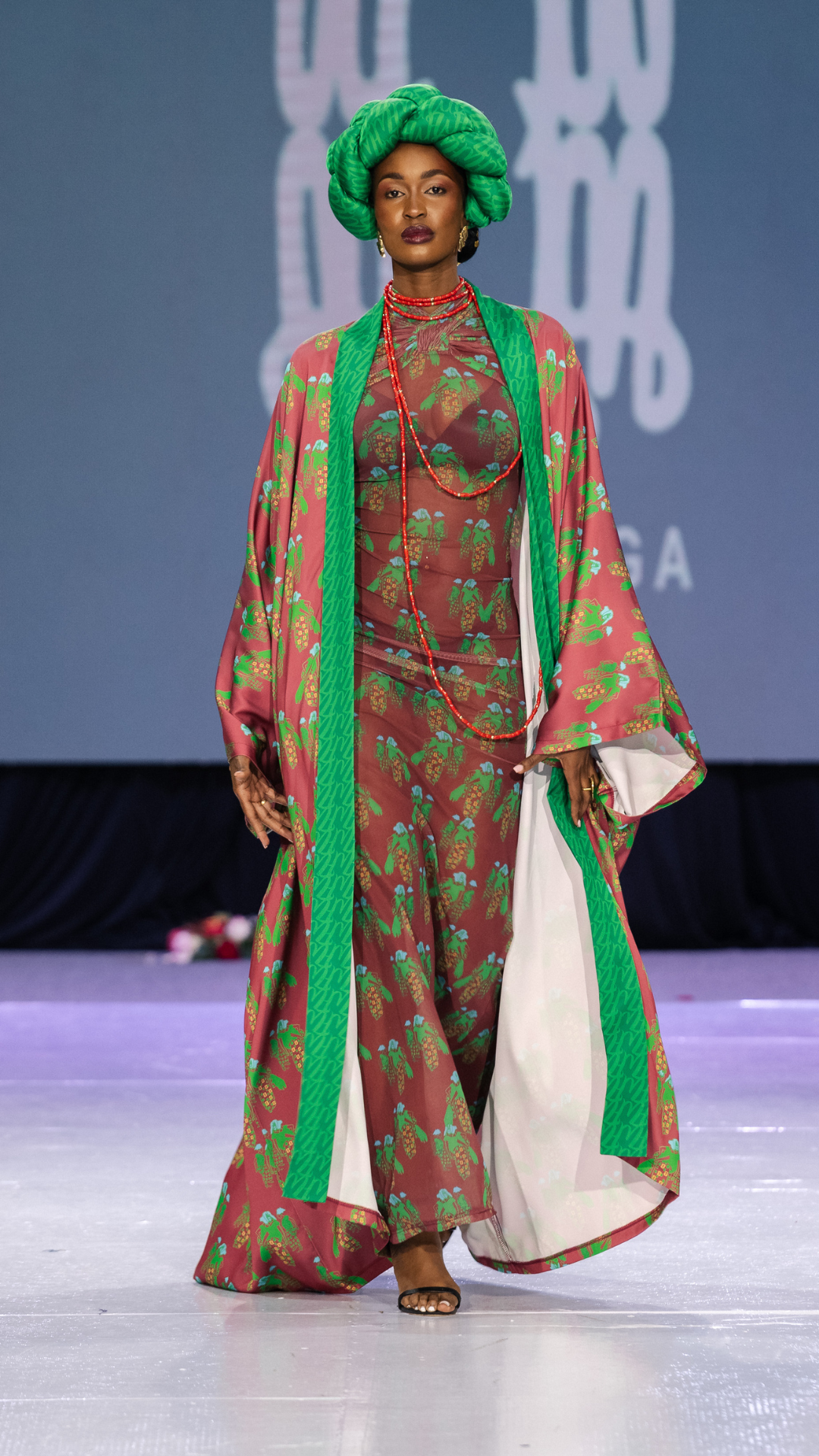
  • Wanni Fuga makes its NFW debut: Toluwani Wabara's Lagos house carrying West African heritage into couture finish.

    WANNI FUGA

    Base: Lagos, Nigeria
    Material Position: Small batch luxury, Nigerian fabric traditions, West African minimalism
    Season 8 Reading: Wanni Fuga made its Nairobi Fashion Week debut with a refined Lagos based luxury language. The label works through small batch production and local artisan partnerships, reading minimalism through West African heritage.
    Why it matters: Wanni Fuga gives Season 8 a strong West African luxury position. In the Decarbonize frame, the label matters because it shows how small batch models, artisan partnerships and controlled production can operate inside a contemporary luxury house. This makes the studio relevant for the larger TSL conversation on new luxury and regional design systems.

    Visit

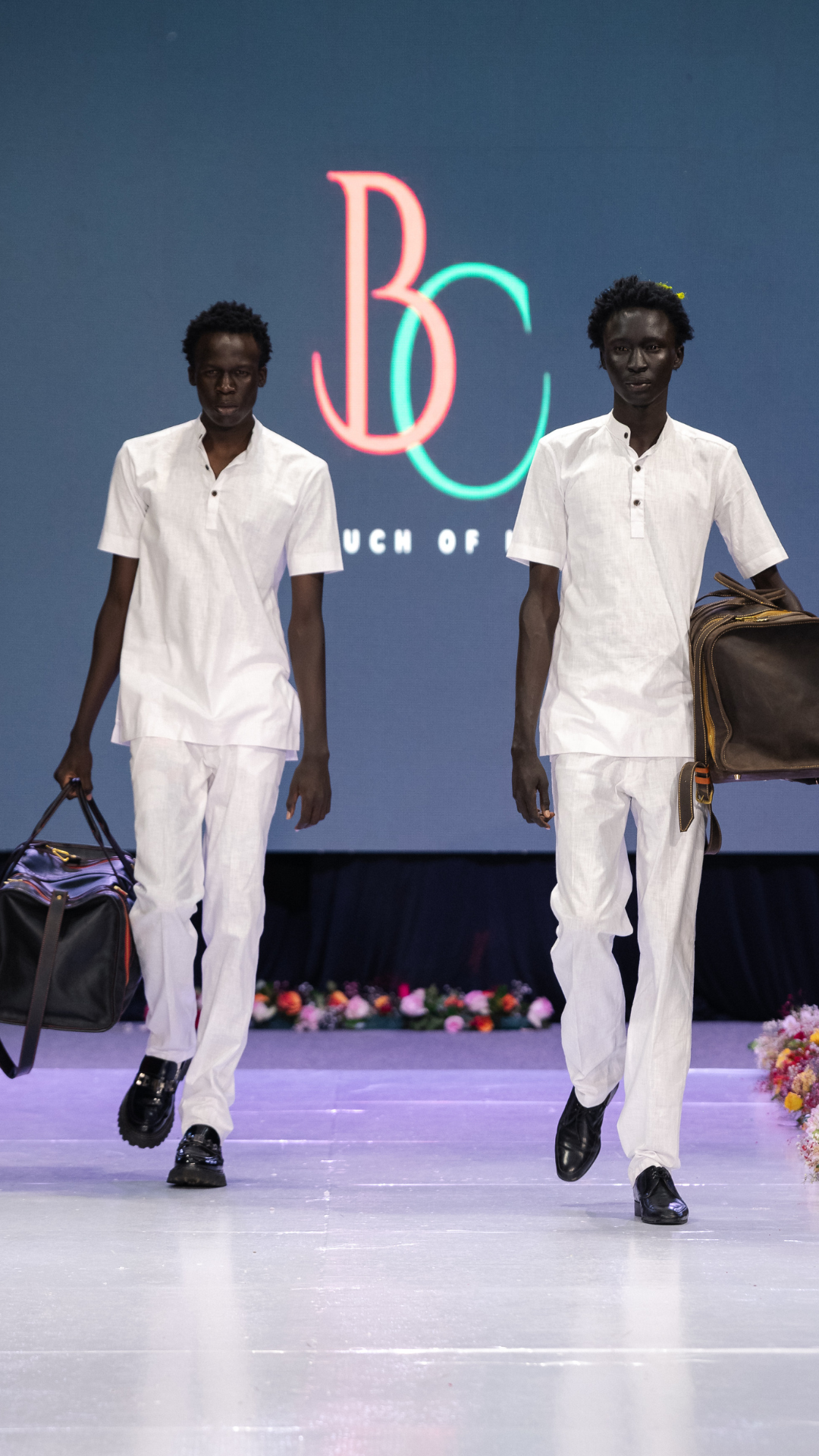
  • A Touch of Kenya: bespoke Kenyan leather and beadwork walked into modern luxury at the eighth season.

    A TOUCH OF KENYA

    Base: Kenya
    Material Position: Bespoke leather, beadwork, heritage craft
    Season 8 Reading: A Touch of Kenya worked at the intersection of bespoke leather and intricate beadwork. The Season 8 collection showed accessory and garment work grounded in Kenyan craft techniques, with detail that requires close reading.
    Why it matters: The label brings the Decarbonize theme into the field of touch, finish and hand skill. Its importance lies in the way ancestral techniques are carried into contemporary luxury objects. This is a natural bridge to Material Intelligence, because the authority of the work is visible in surface, hand, technique and proximity.

    Visit

What the Lookbook makes visible is a system rather than a sequence of shows. Nairobi Fashion Week Season 8 brought together designers working across couture, streetwear, craft, organic cotton, upcycling, leather, beadwork, linen and handwoven cloth. The shared signal was clear: decarbonization in fashion begins where material, labour and origin become part of the garment’s visible intelligence.

Upcycled Material as Couture Primary

Across the four nights, the strongest collections treated waste-stream textile as legitimate primary material for skilled finishing. Maisha by Nisria walked the ASILI collection, with structured upcycled-cotton garments cut from textile remnants the studio sources continuously through its Gilgil supply chain. Bellafricana’s coverage described the collection as exploring “texture and materiality, weaving together denim and unexpected fabrics into cohesive storytelling.” The cotton itself entered the studio carrying the marks of its prior life and left the runway as garments whose pattern discipline read as primary couture. Rialto’s contribution sharpened the same argument. Lucy Rao’s Season 8 collection took upcycled denim through couture-level finishing built up over thirty-eight years of pattern-cutting, with sharp cuts and architectural tailoring resolving familiar material into new construction. This is what Couture Régénérative reads like at industrial scale on the African continent.

Molivian, founded in 2021, walked patchwork constructions assembled from textile waste streams, with the studio’s working process organised around what arrives at the studio door. Studio Lola brought minimalist knitwear made by fair-trade cooperatives across Kenya. VAST Made by Africa walked architectural silhouettes anchored in West African handwoven cloth and produced in short runs. The MOYO Store added garments cut from African prints, upcycled fabrics and organic linens, finished in Nairobi artisan workshops. Each studio carried its own version of one operating principle: that finishing discipline now travels with material whose history is part of the construction.

The lineage runs deeper than upcycling. Kitukizo opened the question of coastal Suaheli memory through fluid linen silhouettes in soft yellow, brown and white drawing on Kilifi’s textile inheritance. John Kaveke, who launched his menswear label in 1999 and has shown at New York and London Fashion Week, presented what FAB L’Style described as “a dialogue between Maasai heritage and Japanese precision.” The continental textile economy that walked across these collections is one in which heritage and waste-stream material both arrive at the studio as primary, with the discipline of cut applied equally.


What readers ask about Nairobi Fashion Week Season 8

Nairobi Fashion Week Season 8, held from 28 to 31 January 2026 at Sarit Expo Centre in Westlands under the editorial title Decarbonize, brought twelve studios from Kenya, Nigeria, Sri Lanka, France and the United States to the runway. Founder and Creative Director Brian Kihindas placed the editorial argument at the head of the platform, with Lucy Rao of Rialto Fashions, Tausi Conde of Maisha by Nisria, John Kaveke, Yvonne Odhiambo of AfroStreet Kollections and Amalie Seneviratne of Yevāana speaking from inside the regenerative practice the title named. Photography by Jenkins Kuyoh.

  • What is Nairobi Fashion Week Season 8?

    Nairobi Fashion Week Season 8 is the eighth edition of the platform founded by Brian Kihindas in 2013 inside the Hilton Nairobi. It took place from 28 to 31 January 2026 at Sarit Expo Centre in Westlands, with Angela Wambui as Master of Ceremonies, under the editorial title Decarbonize.

  • What does Decarbonize mean in the context of Nairobi Fashion Week 2026?

    Decarbonize was the editorial title Brian Kihindas placed at the head of Season 8 to name a regenerative position that established Kenyan and East African studios already operate inside their daily method. It addresses fashion’s role as the second-largest global carbon emitter while framing African studios as leading continental practitioners of upcycling, organic supply and circular construction.

  • What were the Thread Talks at Nairobi Fashion Week 2026?

    Thread Talks were the editorial conversation programme held on 29 and 30 January 2026 at The Social House Nairobi, bringing UNEP, the Gatsby Africa Foundation and the Kenya Fashion Council into open conversation with designers and journalists. The format addressed how Africa decarbonises its fashion supply chain without replicating extractive global models.

  • What is the Fashion Frontier Africa Incubator Programme?

    Fashion Frontier Africa is the incubator programme run alongside Nairobi Fashion Week in partnership with Cultrite, supporting emerging African designers with structured craft and business development. It sits next to the Designer Masterclass powered by Anansi as part of NFW’s broader educational infrastructure.

  • Why does Nairobi Fashion Week matter for the future of fashion?

    Nairobi Fashion Week makes visible an East African fashion economy in which regenerative practice is the working condition of established studios. The Season 8 line-up showed that upcycled and heritage materials carry couture-level finishing, that organic cotton supply collectives sit alongside the couture houses they supply, and that international designers from Lagos to Sri Lanka now travel to Westlands to participate in a continental conversation that has been forming for over a decade.

  • How did Nairobi Fashion Week 2026 approach sustainable fashion?

    Nairobi Fashion Week 2026 approached sustainable fashion through material practice rather than surface aesthetics. Designers worked with upcycled denim, discarded textiles, organic cotton, handwoven cloth, small batch production and social enterprise structures.

  • Why is Nairobi important for regenerative fashion?

    Nairobi is important for regenerative fashion because Season 8 showed a design economy where craft, material reuse, organic sourcing and community based production already operate inside established studios and supply organizations.

Continue reading

Salone Raritas 2026: Inside Salone del Mobile’s First Collectible Design Section

28 galleries from 12 countries, curated by Annalisa Rosso with exhibition design by Formafantasma. Collectible design enters the institutional centre.

Salone Raritas is the new section of Salone del Mobile Milano dedicated to collectible design, limited editions, antiques and high-end craftsmanship. It debuted at the 64th edition of the fair, held from 21 to 26 April 2026 at Fiera Milano Rho, occupied Pavilions 9 through 11 and gathered 28 galleries from 12 countries across roughly 12,900 square feet. The section was curated by Annalisa Rosso, Editorial Director and Cultural Events Advisor of Salone del Mobile, with exhibition design by Formafantasma, who conceived the space as a large architectural lantern.

The launch was the institutional response to a movement that had been building for years outside the fair’s gates. Where collectible design used to live in the city, scattered across Fuorisalone exhibitions and gallery shows in Brera, 5VIE and Tortona, it now had a home inside the fair itself — a shift that reflected how the boundaries between industrial design, collectible design and high craftsmanship have become increasingly porous.

What is Salone Raritas?

Salone Raritas is a curatorial platform designed for an audience of architects, interior designers, hospitality developers and investors who recognise limited edition and rare design as strategic assets. The name derives from Latin and evokes rarity, uniqueness and sought-after exceptionality. The 2026 selection of exhibitors was deliberately restricted: 28 entities including international galleries, antique dealers, excellence manufacturers and companies with custom-made productions.

The brief was specific. As Annalisa Rosso put it: “Salone Raritas builds open channels of communication between realities that until very recently seemed far apart, allowing many of them a chance to meet for the first time. The Salone is thus confirming its status as an institution capable of generating relationships, perspectives and new forms of shared growth.”

The exhibition design spoke the same language as the curatorial brief. Formafantasma’s modular wooden dividers, separating each gallery’s space, were engineered for three years of reuse and required no drilling. The booths sat at three-quarter height, arranged along quiet aisles, walls painted in subtle mineral tones — an antidote to the sprawling acres of contract, office and lighting design that filled the rest of the fair.


Who exhibited at Salone Raritas 2026?

The 28 exhibitors at Salone Raritas 2026 spanned 12 countries and the full spectrum of collectible design — from twentieth-century icons to studios making their first appearance at the fair.

Galleries with established collectible design programmes

Nilufar — the Milanese gallery founded by Nina Yashar, with a programme that has shaped collectible design as a category. Mitterrand Gallery from Paris showed work by Claude and François-Xavier Lalanne, the bipartite practice that bridged sculpture and functional design. Galerie Philia presented How High the Moon, an installation curated by founder Ygaël Attali combining stainless steel, aluminium and silver-toned materials in a register both industrial and ethereal. Side Gallery brought iconic figures of modern Japanese design. Max Radford Gallery showed a solo presentation by Lewis Kemmenoe.

Studios entering through new geographies

Mercado Moderno brought Brazilian tropical modernism. Zaza Maizon by A1Architects showed sculptural pieces for hospitality spaces, including Gem of the Peninsula, a metallic sculpture whose forms drew from the mountains and valleys of the Arabian peninsula. “We are the first Saudi company since the beginning of Salone to participate in the fair,” said architect and designer Abdulaziz Khalid Al Tayyash. The pieces were shown in runs of under six per year.

Designers extending design into art

Sabine Marcelis presented Plume, a nearly ten-foot sculpture in pale-pink polymer resin and silicon oil exploring how air moved through liquid to create soothing, ever-changing shapes. “It’s about collectible design that lives outside of marketing briefs,” Marcelis told Dezeen. Studio Francesco Faccin con Fonderia Artistica Battaglia showed tables and chairs that appeared to be planks of wood and were bronze casts.

Manufacturers and editions

Salviati x Draga & Aurel paired the historic Murano glassmaker with the design-forward duo. Marta Sala Éditions presented work with Herzog & de Meuron. Neutra showed the Erosion collection by Zaha Hadid Architects — undulating, curved marble seats and tables whose amorphous shapes evoked the studio’s buildings. Paradisoterrestre, Hering Berlin, Brun Fine Art, Officine Saffi Lab, Mouromtsev Design Editions, Serafini, Botticelli Antichità & Alessandra Di Castro, Consorzio La Permanente Mobili Cantù, Galerie Zippenfenig, Massimo Lunardon Edizioni, Matera, Parasite 2.0 x Bianco67, 13Desserts, 1182 Ltd., ABI and Xavier Lust completed the line-up.


Why Salone Raritas matters: collectible design enters the institutional centre

The launch of Salone Raritas reflected a structural shift in the design market. Until 2026, collectible design lived outside Salone del Mobile — in Fuorisalone gallery shows, in independent platforms like Alcova, in cross-pollinating events such as Design Miami, Matter and Shape, and Collectible. By bringing 28 galleries and 12 countries into the fair itself, Salone del Mobile signalled that collectible design has moved from outsider category to mainstream venture.

The shift carries economic logic. International hospitality, residential development and experiential retail increasingly incorporate limited edition works as levers of identity and positioning. A hotel commissioning a one-off piece by a Lalanne, an Eames-edition lounge in a private residence, a marble seat by Zaha Hadid Architects in a flagship store — these are not decorative choices, they are positioning decisions. Salone Raritas brought that buyer audience inside the fair gates and gave the galleries serving them a platform with the same institutional weight as the industrial design halls.

This is also where the philosophy of Local Soul — the principle that value derives from a specific place, a specific knowledge and specific people — operates with particular force. A Brazilian studio cannot replicate Saudi material traditions. A Lalanne cannot be made in Murano. The collectible design segment is structurally aligned with what The Silent Luxury has documented as the buyer movement away from over-distributed luxury towards traceable provenance and material specificity.


Three installations that defined the inaugural edition

  • Matta the Collector. Paradisoterrestre at Salone Raritas, Salone del Mobile.Milano 2026. | Photography courtesy Salone del Mobile.Milano 2026

    Matta the Collector by Paradisoterrestre

    A presentation by the gallery known for its custodianship of twentieth-century editions, anchored in the work of Sebastian Matta. The booth held the dialogue Salone Raritas had been designed to enable — between historical authority and a contemporary audience reading collectible design as a strategic asset.

    More about

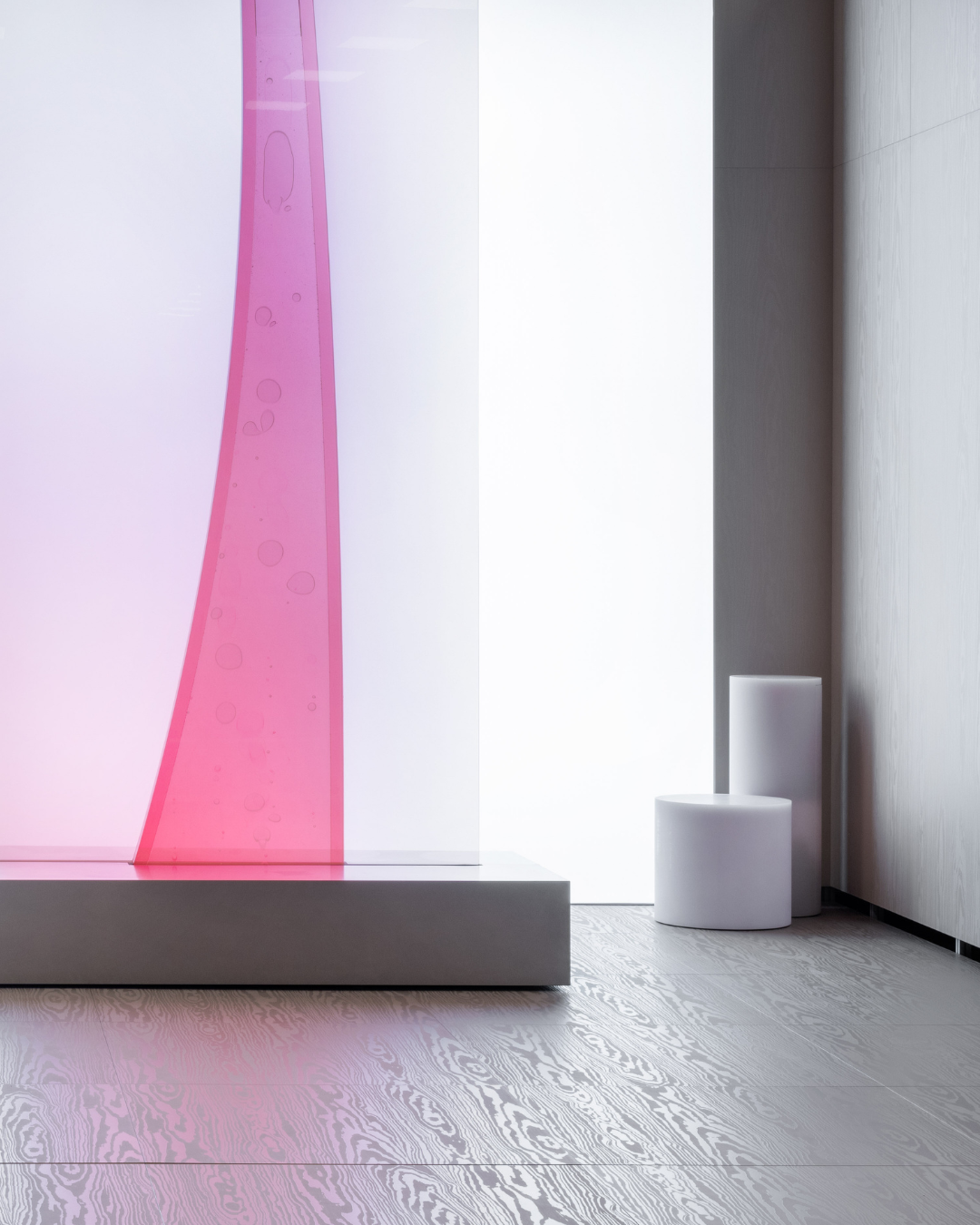
  • Plume. Studio Sabine Marcelis at Salone Raritas, Salone del Mobile.Milano 2026 | isible to the left. Photography courtesy Salone del Mobile.Milano 2026.

    Plume by Sabine Marcelis

    A nearly ten-foot pale-pink sculpture in polymer resin and silicon oil. Air moved through liquid to create soothing, ever-changing shapes. The piece sat at the boundary of design and art — closer to art than most of the section, but unequivocally within Marcelis’s design practice.

    more about

  • Stone as light. SERAFINI at Salone Raritas, Salone del Mobile.Milano 2026. | Photography courtesy Salone del Mobile.Milano 2026.

    Stone as light by Serafini

    Stone-craft pieces that registered light as a material rather than as illumination. Serafini’s work translated the institutional weight of Italian stone tradition into the language of collectible design, demonstrating how craft houses with deep production knowledge belong inside the new section as fully as gallery-led editions.

    More about

What you might ask about Salone Raritas 2026

Salone Raritas debuted at the 64th Salone del Mobile Milano as the first dedicated section for collectible design within the fair itself, gathering 28 galleries from 12 countries across Pavilions 9–11. The following questions address the section’s curatorial brief, the exhibitor line-up and how Salone Raritas situates itself within the wider collectible design market.

  • What is Salone Raritas?

    Salone Raritas is a section of Salone del Mobile Milano dedicated to collectible design, limited editions, antiques and high-end craftsmanship. It debuted at the 64th edition in April 2026 and gathered 28 galleries from 12 countries in Pavilions 9–11 at Fiera Milano Rho. The section is curated by Annalisa Rosso with exhibition design by Formafantasma.

  • When did Salone Raritas debut?

    Salone Raritas debuted at the 64th Salone del Mobile Milano, held from 21 to 26 April 2026. It is intended as a permanent section of the fair, returning at future editions.

  • Who curates Salone Raritas?

    Salone Raritas is curated by Annalisa Rosso, Editorial Director and Cultural Events Advisor of Salone del Mobile Milano. Rosso was previously Editor-in-Chief of Icon Design at Mondadori from 2018 to 2020 and Director of the Domus website from 2017 to 2018. She co-founded the design consulting studio Mr.Lawrence in 2018. For Salone del Mobile she has curated the Library of Light installation by Es Devlin at Pinacoteca di Brera in 2025 and A Thinking Room by David Lynch in 2024.

  • Who designed the Salone Raritas exhibition space?

    The exhibition design for Salone Raritas was created by Formafantasma, the design studio founded by Simone Farresin and Andrea Trimarchi based in Milan and Rotterdam. The duo conceived the space as a large architectural lantern: a porous landscape that prioritised light and rhythm while allowing each gallery to maintain its identity within a unified layout. The modular wooden dividers were engineered for three years of reuse and required no drilling.

  • Which galleries exhibited at Salone Raritas 2026?

    The 28 exhibitors at Salone Raritas 2026 included Nilufar, Mitterrand Gallery, Galerie Philia, Side Gallery, Max Radford Gallery, Mercado Moderno, Zaza Maizon by A1Architects, Studio Sabine Marcelis, Studio Francesco Faccin with Fonderia Artistica Battaglia, Salviati x Draga & Aurel, Marta Sala Éditions, Neutra, Paradisoterrestre, Hering Berlin, Brun Fine Art, Officine Saffi Lab, Mouromtsev Design Editions, Serafini, Botticelli Antichità & Alessandra Di Castro, Consorzio La Permanente Mobili Cantù, Galerie Zippenfenig, Massimo Lunardon Edizioni, Matera, Parasite 2.0 x Bianco67, 13Desserts, 1182 Ltd., ABI and Xavier Lust.

  • How does Salone Raritas relate to other collectible design fairs?

    Salone Raritas joins a growing field of dedicated collectible design platforms including Design Miami (founded 2005), Collectible Brussels (2018), Matter and Shape Paris (2024) and Salon Art + Design New York. What distinguishes Salone Raritas is its location inside the world’s largest furniture fair: the institutional integration brings collectible design into direct dialogue with the industrial design system, addressing the buyers who source for hospitality projects, residential developments and experiential retail at the same venue where they specify production furniture.

  • What is the connection between Salone Raritas and Local Soul?

    Local Soul describes value rooted in a specific place, a specific material knowledge and specific makers — a production philosophy that cannot be replicated at scale. Salone Raritas operates structurally aligned with this principle: limited editions, single-edition pieces and high-craft works are by definition tied to the geography, materials and makers that produce them. The presence of Saudi, Brazilian and Japanese-focused exhibitors at the inaugural edition extended the principle across multiple geographies simultaneously.

Continue reading

Salone del Mobile 2026: What the 64th Milan Design Week Said About the Future of Design

New Latitudes: Many new centres are emerging simultaneously. The 64th Salone del Mobile, read through the lens of Local Soul the full Milan Design Week 2026 recap.

Milan Design Week 2026 – the 64th Salone del Mobile.Milano, held from 21 to 26 April at Fiera Milano Rho and drew 316,342 visitors from 167 countries –   produced three structural signals for the future of design. First: studios from Saudi Arabia, Guatemala, Chile, Brazil and China entered the global design conversation simultaneously, each carrying a production philosophy rooted in its own geography. Second: subtraction was the dominant working method across the most considered work, from Piegatto’s excavated furniture to the SaloneSatellite Award winners’ material transformations. Third: the 5VIE programme and Lina Ghotmeh’s installation at Palazzo Litta expressed a shift in design’s sensory register from the visual toward the full body. 

Something shifted at the 64th Salone del Mobile.Milano, and it was visible in the composition of the fair itself before a single product was assessed. Among 1,900 brands from 32 countries, across 316,342 visitors from 167 nations, the most significant presences were studios that had never stood on this floor before: from Riyadh, from Guatemala City, from São Paulo, from Santiago de Chile. Each arrived with a production philosophy rooted in its own place, its own material knowledge, its own economy of time. Together they made an argument the fair’s official theme was already reaching toward: that design’s authority comes from origin, and that origin is growing in many places at once.

“The Salone does not merely bring the world of design together,” said Maria Porro, President of Salone del Mobile.Milano. “It sets it in motion.” In 2026, the direction it moved was outward: toward new geographies entering the global conversation on their own terms, toward a working method that builds through reduction rather than accumulation, and toward a sensory register that design has long underused.

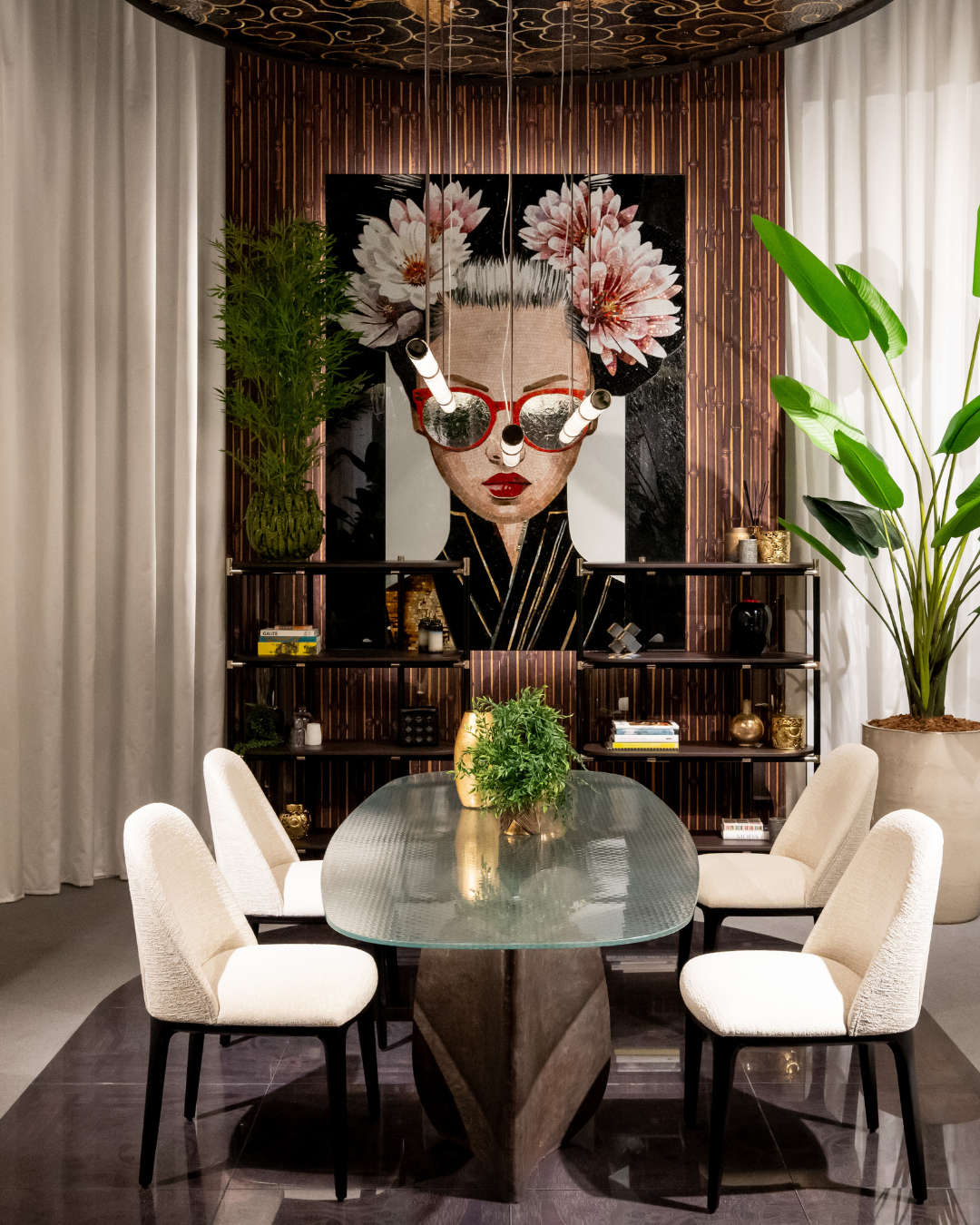
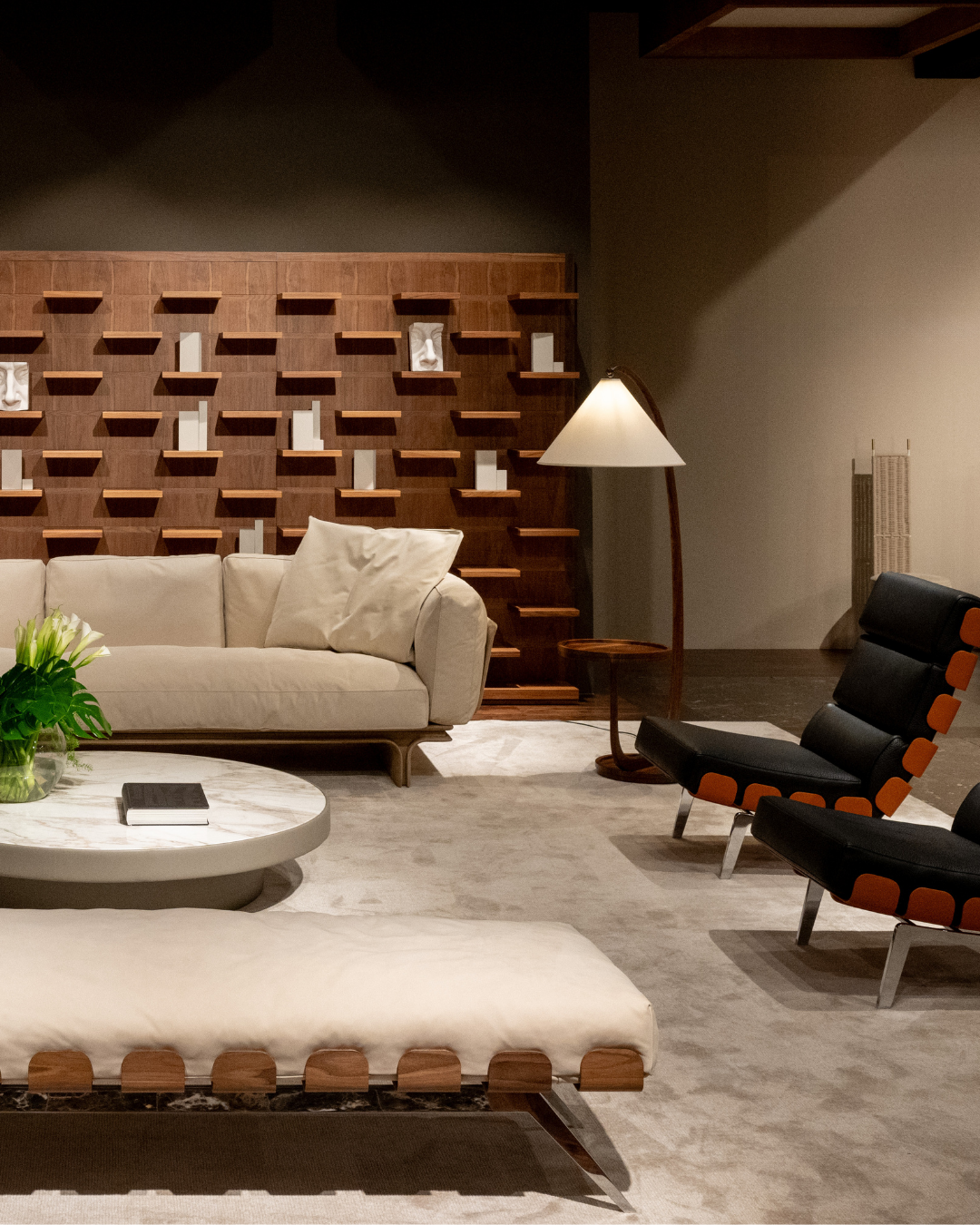
  • Mosaic as material language. SICIS at Salone del Mobile.Milano 2026. | Photography courtesy Salone del Mobile.Milano 2026
    Mosaic as material language: SICIS at Salone del Mobile.Milano 2026.
  • 
Structure and stillness. MASCHERONI at Salone del Mobile.Milano 2026. | Photography courtesy Salone del Mobile.Milano 2026.
    Structure and stillness. MASCHERONI at Salone del Mobile.Milano 2026.

Many New Centres

Salone Raritas, the fair’s newly inaugurated section for collectible design, limited editions and high craftsmanship in Pavilions 9 through 11, was the institutional response to a movement that had been building for years outside the fair’s gates. Curated by Annalisa Rosso and designed by Formafantasma as a large architectural lantern, it gathered 28 galleries from 12 countries around a specific brief: objects whose making can be accounted for, whose origin is part of their meaning. The modular wooden dividers separating each gallery’s space were engineered for three years of reuse, requiring no drilling. The exhibition design argued the same thing its contents argued.

Among the exhibitors was Zaza Maizon by A1 Architects, a Saudi studio showing sculptural pieces for hospitality spaces, among them Gem of the Peninsula, a metallic sculpture whose forms draw from the mountains and valleys of the Arabian peninsula. “We are the first Saudi company since the beginning of Salone to participate in the fair,” said architect and designer Abdulaziz Khalid Al Tayyash. The pieces are produced in runs of under six per year. Saudi Arabia’s presence extended into the city as well: the Architecture and Design Commission presented Jusoor — Arabic for bridges — at the Pinacoteca di Brera, a collaborative exhibition in which five Saudi designers developed work alongside practices from India, Nepal and Spain, the project having passed through studios in Riyadh, New Delhi, Kathmandu and Barcelona before arriving in Milan.

The other new geography arrived from Central America. Fourteen Guatemalan studios, showing across 5VIE and Alcova, the independent exhibition platform that expanded its 2026 programme to Villa Pestarini, the only private Milan residence designed by architect Franco Albini, and the Baggio Military Hospital complex, presented “Guatemala Diseña con las Manos,” anchored by an installation referencing the Temple of the Great Jaguar in Tikal. Among them was Piegatto, a studio whose design philosophy The Silent Luxury has followed, making its first appearance at the Salone with “Carved Landscapes.” The collection treats furniture as inhabitable sculpture, each piece formed through subtraction: shelves appear hollowed, compartments feel excavated, proportions carry the authority of geological strata. The Retiro Sofa is built from a sustainable composite of reclaimed wood residue. “With Carved Landscapes, we are entering the global conversation with clarity,” said Pietro Estrada, founder of Piegatto. “Presenting furniture as architectural presence and material permanence.”

Raritas itself carried the same geographic breadth in concentrated form. Lewis Kemmenoe showed editions of his Patchwork series at Max Radford Gallery, furniture built from wood-yard off-cuts whose material biography is legible in every joint. Mercado Moderno brought Brazilian tropical modernism. Sabine Marcelis presented Plume, a sculpture with air moving through viscose liquid inside a standing polymer wall. Francesco Faccin showed tables and chairs that appeared to be planks of wood and were bronze casts. The visitor data from the six days confirmed what the stands were already showing: China led foreign attendance in absolute terms, Austria grew 15.7 percent, Mexico and Canada posted double-digit increases. The studios and the buyers were moving in the same direction.


Subtraction as the Operating Method

The SaloneSatellite Award, now in its 15th edition, has developed a specific authority over those years. Its jury, chaired since the award’s founding by Paola Antonelli, Senior Curator of Architecture and Design at MoMA New York, looks for work that captures a way of thinking rather than a finished product: insight above market, research above industrial scale. The 2026 winners, selected from 700 designers under 35 representing 39 countries, read as a precise index of where that thinking is going, and in every winning project the operating method was reduction.

First prize went to Russo Betak of Denmark for Nippon, a pendant lamp 3D printed from seashells and then sculpted by hand, material experimentation resolved into a refined and luminous form. Second prize went to IOUS Studio of the Netherlands for 3DP Ceramic Tiles, a ceramic exterior system in which clay is printed under computational control, fusing digital fabrication with material sensitivity. Third prize went to the German studio Jüngerkühn for Soft Touch, a mechanical device that records and responds to object surfaces, emulating the handiwork of a craftsperson and producing porcelain vases in which each piece is carved in layers to reveal a pattern through the inherent qualities of the material. The Special Mentions went to Aiko Design of Chile for Númina Lamp, ancestral wicker and horsehair weaving combined with 3D printing, its symbolic figure embodying both industrial production and meticulous craft in a single object, and to Yixian Wang of China for Foggy, a vessel transforming fibreglass into pure glass without resin, delicate strands capturing light in a material the medium had never previously expressed this way. Both Special Mention recipients received a month-long residency at the Róng Design Library in Hangzhou.
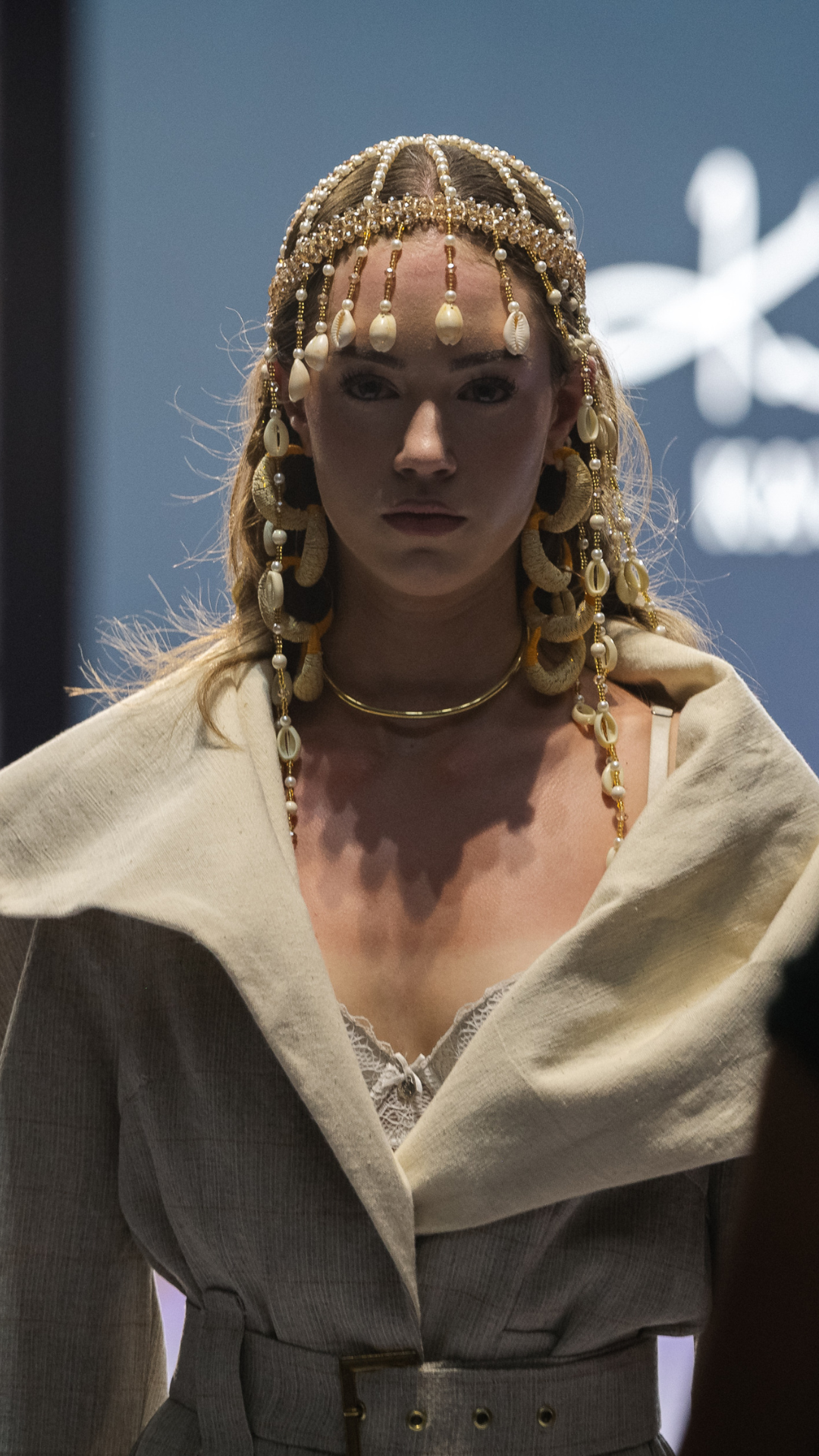
What seashells give a 3D print, what clay does under computational control, what fibreglass becomes without resin: this knowledge is built through years of material practice and it is specific to a studio and a maker. The Salone’s campaign, conceived by Motel409, made the same argument in images: a stone, a laser-cut petal, a piece of wood, a sponge, each presented as origin rather than styling decision.

  • Matta the Collector. Paradisoterrestre at Salone Raritas, Salone del Mobile.Milano 2026. | Photography courtesy Salone del Mobile.Milano 2026
    Matta the Collector. Paradisoterrestre at Salone Raritas, Salone del Mobile.Milano 2026.
  • Plume. Studio Sabine Marcelis at Salone Raritas, Salone del Mobile.Milano 2026 | isible to the left. Photography courtesy Salone del Mobile.Milano 2026.
    Plume. Studio Sabine Marcelis at Salone Raritas, Salone del Mobile.Milano 2026.
  • Stone as light. SERAFINI at Salone Raritas, Salone del Mobile.Milano 2026. | Photography courtesy Salone del Mobile.Milano 2026.

The Sensory Turn

The 5VIE district, one of Milan’s oldest design neighbourhoods and the Fuorisalone’s most curatorially focused quarter, organised its 2026 programme under the theme “QoT: Qualia of Things,” a reference to the philosophical concept of qualia, the subjective felt quality of experience that belongs to the person perceiving rather than to the object perceived. Its exhibitions at Le Cavallerizze at the Museo Nazionale della Scienza e Tecnologia addressed sound, touch, weight and the temperature of materials alongside their visual properties. Marco Guazzini’s “Resonance” connected a landscape of objects through aluminium tubes transmitting vibration between them. Sara Ricciardi Studio’s “ALMA WATER” rendered the quality of the sea through fabric and amplified sound without depicting it. The sensory turn these works described is a response to a buyer who left the logo economy looking for more sensation, encountered at closer range, through materials that change with use.

That reading found its architectural expression at Palazzo Litta, one of Milan’s most significant baroque residences and a recurring venue for the Fuorisalone’s most ambitious spatial programming, where Lina Ghotmeh presented “Metamorphosis in Motion” as part of the MoscaPartners Variations exhibition. Ghotmeh, a Lebanese-French architect whose practice is built on the premise that buildings and objects are living matter carrying biological and cultural histories, extended that argument from the scale of the object to the scale of the room.


The City and What Comes Next

The Fuorisalone is the name for the hundreds of exhibitions, installations and events that take place across Milan’s neighbourhoods in parallel with the fair each April, turning the city into the world’s largest temporary design platform. In 2026 its most concentrated argument came from the same direction the fair itself was pointing: that the object’s meaning begins before it is finished, in the choices made about material, method and maker.

Rem Koolhaas, the Dutch architect and theorist whose studio OMA has shaped some of the past three decades’ most significant cultural buildings, presented the masterplan for Salone Contract 2027 at the Contract Forum together with partner David Gianotten. The initiative, whose full debut is planned for the 65th edition in April 2027, frames the next significant territory of design as the integration of systems rather than the specification of individual objects: hospitality, retail and public space understood as complete fields of spatial intelligence. It is the scale above the object. What the new studios arriving from Guatemala City, Riyadh and Santiago were building from the ground up, Koolhaas named from the top down.

Questions and Answers on the Future of Design After Milan Design Week 2026

Milan Design Week 2026 — the 64th Salone del Mobile.Milano — produced a set of structural signals for the future of design: new creative geographies entering the global conversation simultaneously, subtraction as the dominant working method of the most considered work, and a full-spectrum sensory turn that design has long underused. The following questions address the key developments, studios and ideas that defined the edition.

  • What is Salone del Mobile 2026?

    Salone del Mobile 2026 was the 64th edition of Milan’s international furniture and design fair, held from 21 to 26 April 2026 at Fiera Milano Rho. The edition drew 316,342 visitors from 167 countries and gathered 1,900 brands from 32 countries across more than 169,000 square metres of net exhibition space, with 16 of the pavilions completely sold out. Three structural signals defined the edition: the simultaneous arrival of design studios from Saudi Arabia, Guatemala, Chile, Brazil and China; subtraction as the dominant working method across the most considered work; and a sensory turn led by the 5VIE district’s Qualia of Things programme and Lina Ghotmeh’s installation at Palazzo Litta. The edition also marked the debut of two new platforms: Salone Raritas, dedicated to collectible design, and the Salone Contract 2027 masterplan presented by Rem Koolhaas and David Gianotten of OMA.

  • What were the key signals at Milan Design Week 2026?

    Milan Design Week 2026 produced three structural signals for the future of design. First, studios from Saudi Arabia, Guatemala, Chile, Brazil and China made formal entrances into the global design conversation simultaneously, each carrying a production philosophy rooted in its own geography. Second, subtraction was the dominant working method across the most considered work, from Piegatto’s excavated furniture to the SaloneSatellite Award winners’ material transformations. Third, the 5VIE programme and Lina Ghotmeh’s installation at Palazzo Litta expressed a shift in design’s sensory register from the visual toward the full body.

  • Which new design geographies emerged at Milan Design Week 2026?

    Milan Design Week 2026 saw studios from Saudi Arabia, Guatemala, Brazil, Chile and China make significant entrances into the global design conversation. Saudi Arabia was represented through Zaza Maizon by A1 Architects at Salone Raritas and through the Jusoor exhibition at the Pinacoteca di Brera. Guatemala was represented by fourteen studios at 5VIE and Alcova, including Piegatto at the Salone itself. Brazil appeared through Mercado Moderno at Raritas. SaloneSatellite Special Mentions went to studios from Chile and China, with both recipients receiving a residency at the Róng Design Library in Hangzhou.

  • What is Salone Raritas?

    Salone Raritas is a section of Salone del Mobile.Milano dedicated to collectible design, limited editions, antiques and high craftsmanship, inaugurated at the 64th edition in April 2026 in Pavilions 9 through 11 at Fiera Milano Rho. It gathered 28 galleries from 12 countries, curated by Annalisa Rosso, Editorial Director and Cultural Events Advisor of Salone del Mobile.Milano, and with exhibition design by the studio Formafantasma. Its exhibitors included Nilufar, Salviati x Draga and Aurel, Mercado Moderno, Sabine Marcelis, Max Radford Gallery with Lewis Kemmenoe, and Zaza Maizon by A1 Architects.

  • Who won the SaloneSatellite Award 2026?

    The SaloneSatellite Award 2026 was presented at the 15th edition of the award, with a jury chaired by Paola Antonelli, Senior Curator of Architecture and Design at MoMA New York. First prize went to Russo Betak of Denmark for Nippon, a pendant lamp 3D printed from seashells and hand-sculpted. Second prize went to IOUS Studio of the Netherlands for 3DP Ceramic Tiles. Third prize went to Jüngerkühn of Germany for Soft Touch. Special Mentions went to Aiko Design of Chile for Númina Lamp and to Yixian Wang of China for Foggy. Both Special Mention recipients received a month-long residency at the Róng Design Library in Hangzhou, China.

  • What is Salone Contract 2027?

    Salone Contract is a strategic initiative by Salone del Mobile.Milano focused on the contract design market, estimated at 68 billion euros globally. At the 64th edition in 2026, architect Rem Koolhaas and partner David Gianotten of the studio OMA presented the Salone Contract 2027 masterplan, framing the next significant territory of design as the integration of systems rather than the specification of individual objects: hospitality, retail and public space understood as complete fields of spatial intelligence. The full programme debuts at the 65th edition in April 2027.

  • What is Piegatto and what did the studio show at Salone del Mobile 2026?

    Piegatto is a Guatemalan design studio whose practice treats furniture as inhabitable sculpture. At Salone del Mobile.Milano 2026, the studio made its first fair appearance with “Carved Landscapes,” a collection in which function is revealed through subtraction: shelves appear hollowed, compartments feel excavated, proportions carry the authority of geological strata. The Retiro Sofa is built from a sustainable composite of reclaimed wood residue. Founder Pietro Estrada described the debut as entering the global conversation with clarity, presenting furniture as architectural presence and material permanence.

  • What is Local Soul in the context of design?

    Local Soul describes value rooted in a specific place, a specific material knowledge and specific makers — a production philosophy that cannot be replicated at scale from outside the geography it emerges from. At Milan Design Week 2026, this was visible in the simultaneous arrival of studios from Saudi Arabia, Guatemala, Brazil, Chile and China into the global design conversation, each carrying its own material traditions and economy of time. The SaloneSatellite Award Special Mentions to Aiko Design in Chile and Yixian Wang in China expressed the same pattern at the level of individual emerging practice.

  • What is the Fuorisalone?

    The Fuorisalone is the name for the hundreds of exhibitions, installations and events that take place across Milan’s neighbourhoods in parallel with the Salone del Mobile fair each April, turning the city into the world’s largest temporary design platform. In 2026 it operated under the theme “Be the Project — Essere Progetto,” positioning design as a continuous process rather than a finished object. Its most programmatically concentrated section was the 5VIE district, which organised its programme under the theme “QoT: Qualia of Things.”

Continue reading