Quality Over Quantity: Lech Zürs Answers Climate Change With Quiet Seasons
Lech Zürs is answering climate change in the Alps with quiet seasons. One of the most exclusive ski resorts in the Alps, it keeps winter at the heart of the village. Its summer is built around places where people stop and look, and each season keeps its own pace. Christoph Brunner has run Lech Zürs Tourismus since June 2025. He and Patrick Lüth, partner and managing director of Snøhetta’s Innsbruck studio, explained the plan in interviews with The Silent Luxury.
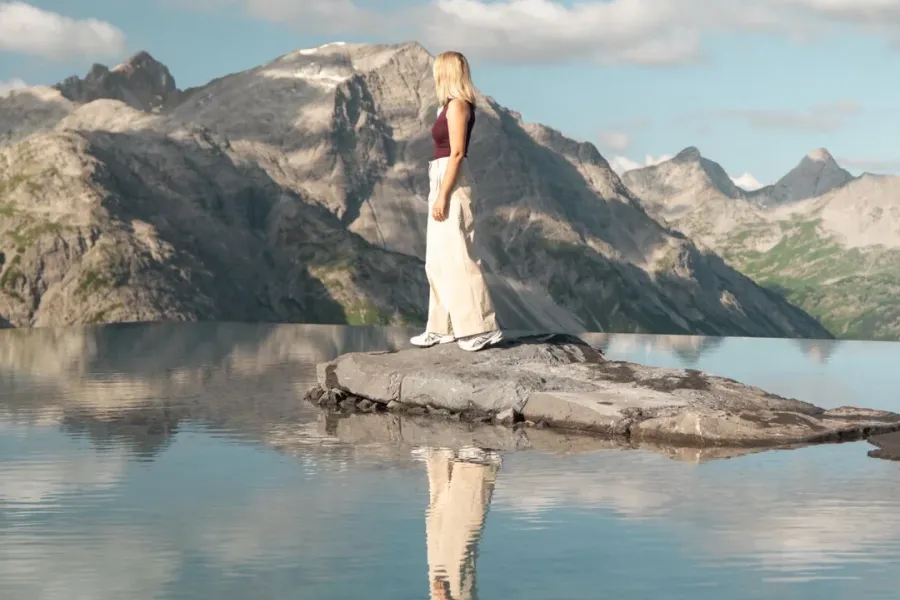
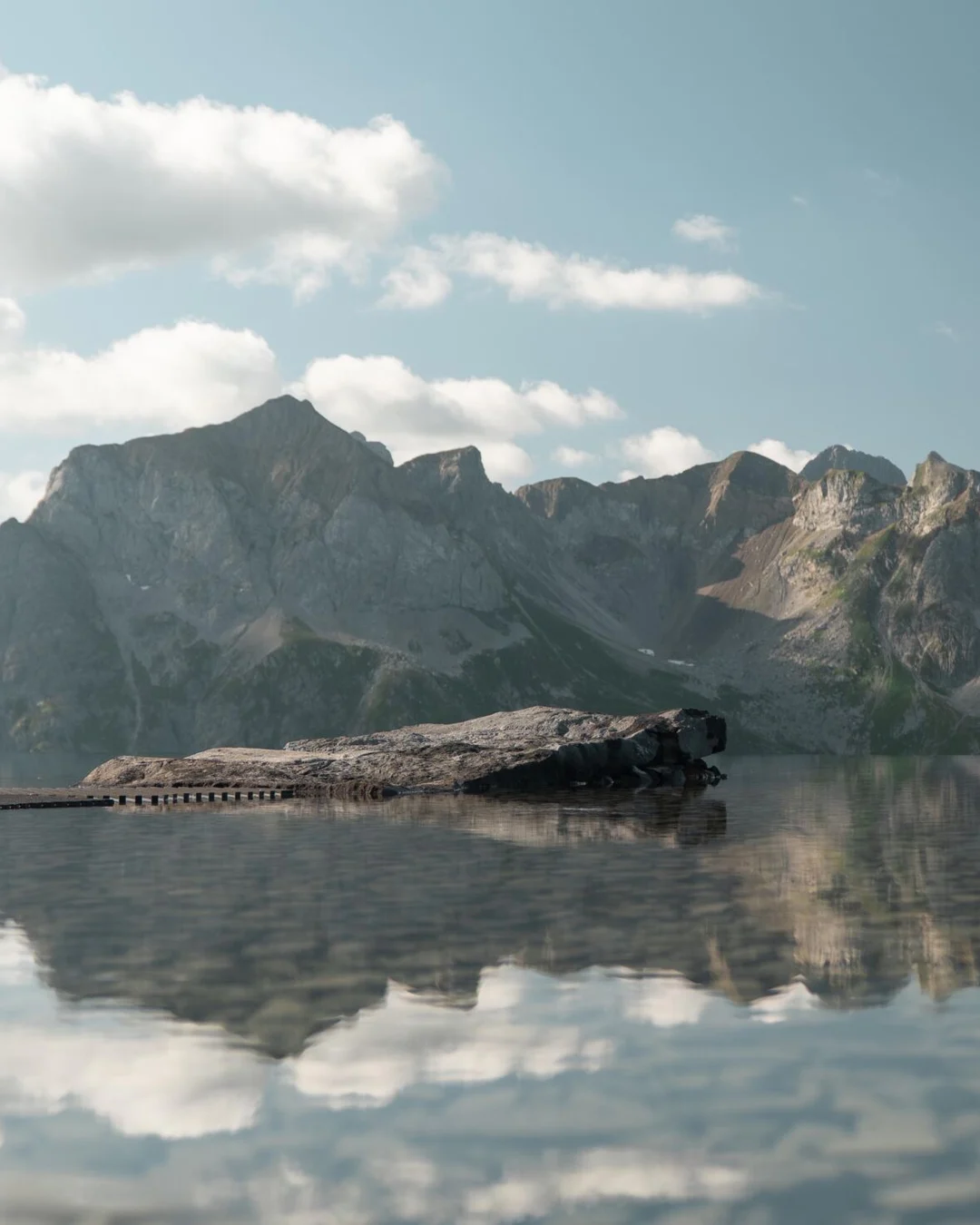
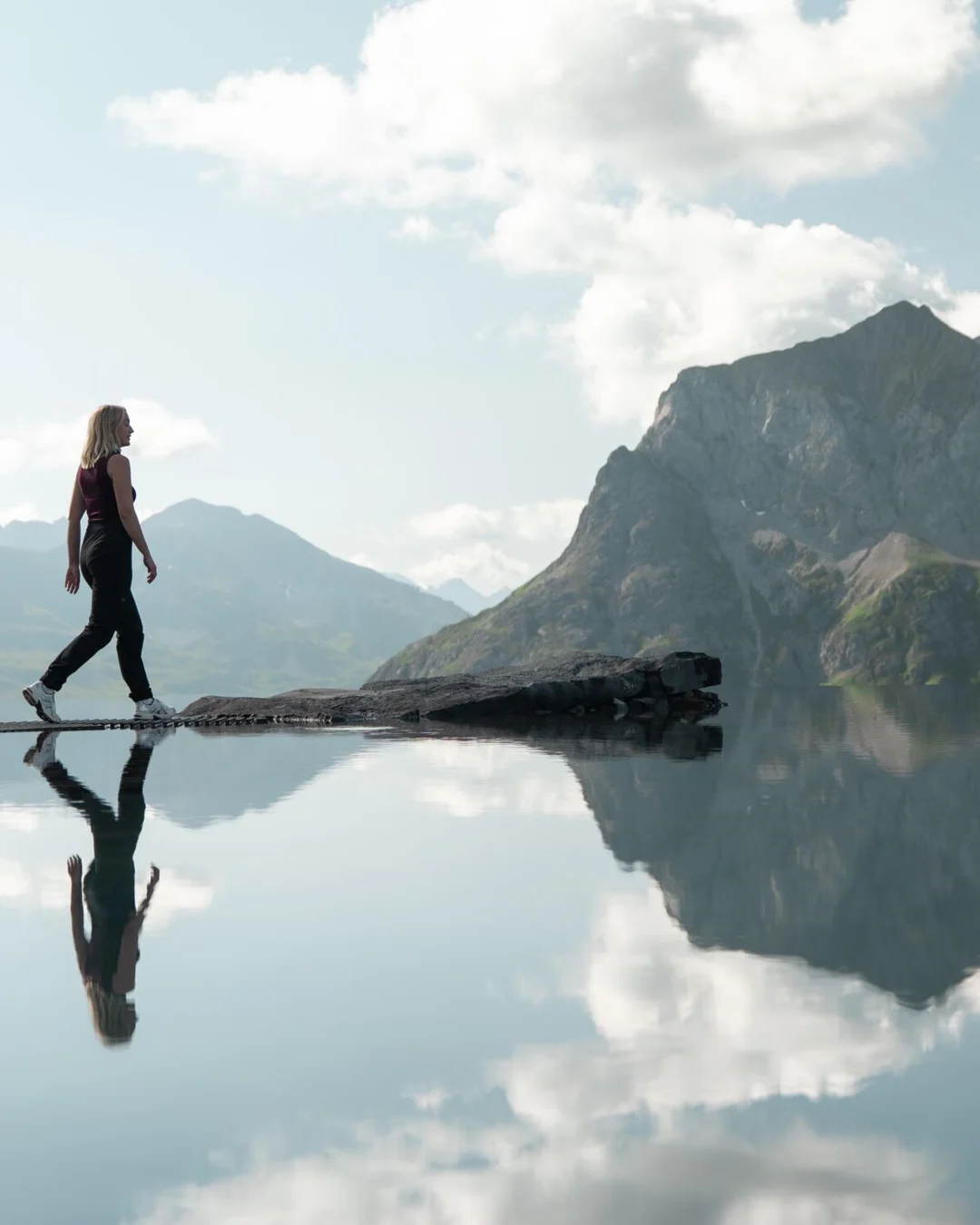
The newest of those places began with a photograph. The lifts above Lech Zürs belong to Lech Bergbahnen, and among the company’s promotional pictures the architects at Snøhetta found one of a lone walker on a lookout, gazing out at the peaks. They thought at once of Caspar David Friedrich’s Wanderer above the Sea of Fog, painted around 1818. This August the picture became the Lech Mountain Mirror. On the roof of the Zugerbergbahn’s top station, 2,100 metres up, a dark pool now mirrors the Arlberg, the sky and whatever weather drifts across it. Visitors walk out to the middle on stepping stones set just below the surface.
A Shorter Winter: Climate Change in the Alps Reaches Lech Zürs at Altitude
Austria has just had its hottest summer on record, and Lech Zürs sits high enough to keep its winter for now. The village lies between roughly 1,450 and 1,700 metres. Its slopes belong to Ski Arlberg, Austria’s largest linked ski area, where more than 300 kilometres of piste climb to about 2,800 metres. Brunner calls it a privileged position. “Winter sport made this village, and it is still a core part of who we are,” he said. For now he sees “no reason to fundamentally question winter as the backbone of what we offer.”
What the 2026 Measurements Show
The measurements of 2026 show how quickly the margin is shrinking across the Austrian Alps.
- The summer of 2026 ran 2.6°C above the 1991–2020 average, GeoSphere Austria reported on 31 August. Rainfall fell by about a third, and Bad Deutsch-Altenburg set a national high of 41.2°C on 5 August.
- In the mountains, winter 2025/26 was the eighth warmest in 175 years of records, 1.9°C above the 1991–2020 average. The Rudolfshütte, at 2,317 metres, received 60 per cent less fresh snow than usual.
- The glaciers show it most starkly. A team led by Lea Hartl of the Austrian Academy of Sciences published a new Austrian Glacier Inventory in The Cryosphere on 14 September. It finds that Austria has lost 31 per cent of its glacier area in two decades, and 95 of its 894 glaciers have gone outright. This summer the surface of the Pasterze, the country’s largest glacier, dropped by 10 metres at 2,500 metres, according to the Alpenverein’s survey. In the Silvretta, south of the Arlberg, the tongue of the Jamtalferner has all but gone, Andrea Fischer, a glaciologist at the Academy, told the APA news agency on 2 October.
Why Lech Keeps Its Winter
Lech came through the winter well all the same. Overnight stays rose by about 3 per cent in 2025/26, Lech Zürs Tourismus reported in May. Brunner sees no cause for comfort in that. “Even high-altitude destinations have to come to terms with a changing climate and plan ahead,” he said. Snow, in his view, was only ever part of the attraction. “You can’t judge a place’s appeal by its snow reliability alone,” he said. He pointed instead to its sporting tradition, its landscape, a lively village and “a culture of hospitality that has grown over generations.” Lech is using the time its altitude buys to build a second season.
A note from The Silent Luxury
Good reading deserves to find you again.
A Second Season: Lech in Summer and the Lech Mountain Mirror
Lech’s second season is built around places to pause, and the Mirror is the newest of them. The brief came from Lech Bergbahnen, which wants a stronger summer, and Snøhetta began with the people who would use it. “Design and appearance came second,” Lüth said. “What mattered first was how we could shape the way visitors behave, and how they might experience the mountains in a new way.” For decades, he added, cable cars and their stations were treated “merely” as infrastructure and seldom as work for architects. As ski areas recast themselves as year-round destinations, that is changing.
The Mirror itself is simple. Dark water reflects the peaks, and wind and light change the picture by the minute. Larch loungers and boulders sit on the grass around it. Entry is free whenever the cable car runs, and the Balmalp restaurant is a few steps away.
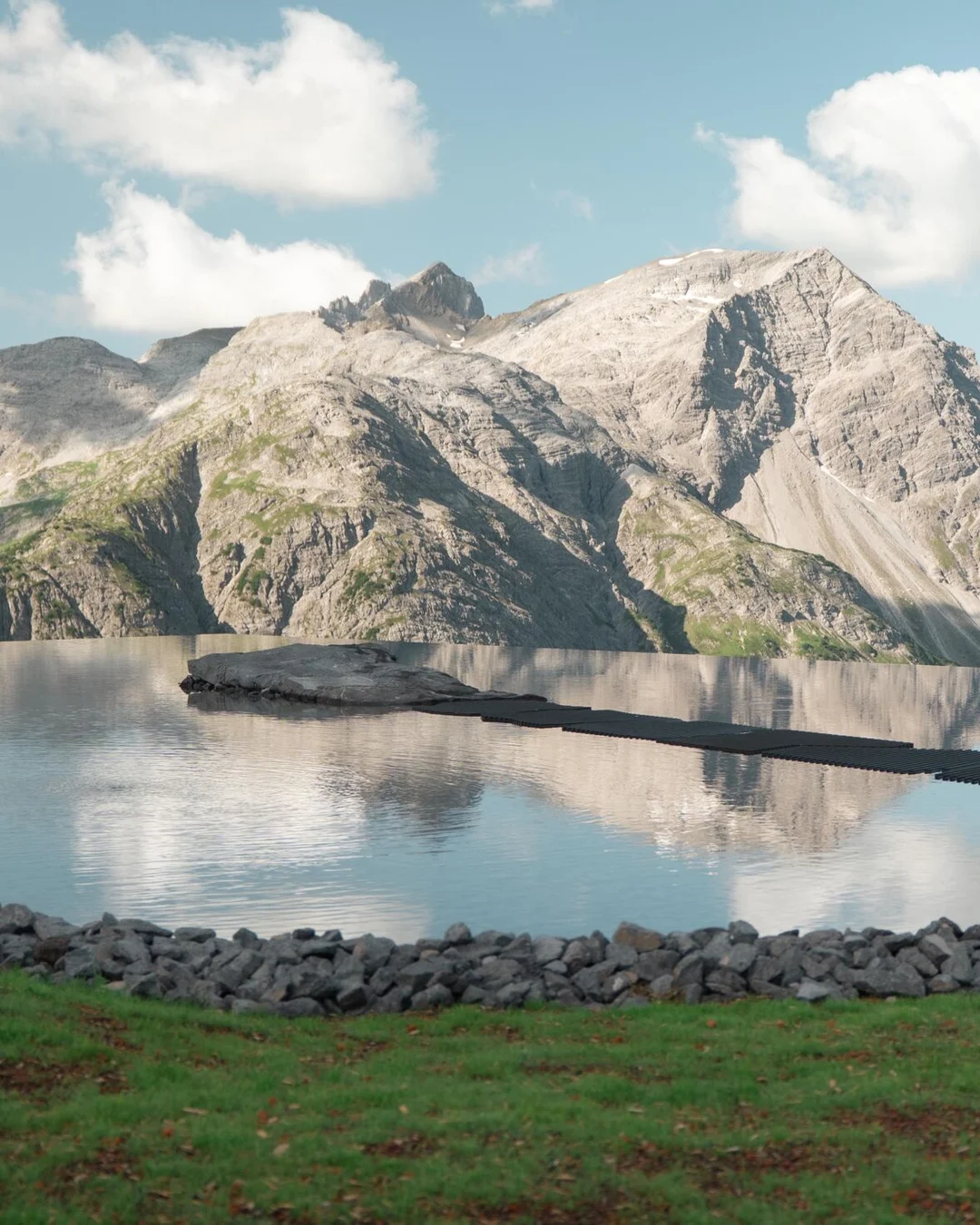
Lech has taught its guests to stand still before. From 2010 to 2012, Antony Gormley’s Horizon Field placed 100 life-size cast-iron figures at exactly 2,039 metres across 150 square kilometres of the Vorarlberg mountains. In 2018 James Turrell’s Skyspace Lech opened on the Tannegg above Oberlech. It is a largely underground oval room with an opening in its ceiling, where visitors watch the sky change colour at dawn and dusk. Lüth designed the Mirror as the next work in that line.
The Quiet Season as Luxury: What Guests Come to Lech Zürs For
Guests come to Lech Zürs for time, and Brunner is convinced that time is the luxury Alpine resorts will offer from now on. “Luxury today is defined less and less by what you can afford and more by what really matters to you,” he said. “It is less about abundance and more about access to experiences that can’t simply be repeated.” Research points the same way. Solon Magrizos of the Birmingham Business Research Institute reviewed 109 studies on luxury and well-being in Psychology and Marketing in April 2026. In May he told The Silent Luxury that hospitality offers the strongest conditions for well-being that lasts. It brings together relationships, time and a place that exists nowhere else.
Lech has put the idea into four words, its brand promise “Mehr Raum. Mehr Zeit.”, or more room, more time. Skiing on the Arlberg, where the sport was born, is part of that promise, Brunner said. So are art at 1,500 metres, a hike through what he calls Europe’s largest ibex colony, and a superb dinner with a warm welcome.
The family hotels hold the promise together, and their standard was never tied to the snow. Ski-in, ski-out is so ordinary in Lech, Brunner said, that many hotels barely bother to mention it. Hotel Almhof Schneider and Severin’s – The Alpine Retreat each hold two MICHELIN Keys, the guide’s award for hotels. Guests repay that standard with loyalty. Lech Zürs has an unusually high share of regulars and, by Austrian standards, an unusually long average stay. Some families are now in their third or fourth generation of visits. “Relationships like that take more than perfect pistes,” Brunner said.
A Season of Rest: Lech Zürs Chooses Quality Over Quantity for 2045
Lech Zürs wants every season to have its rest, and that sets a limit on growth. More than 70 per cent of its guest beds are in four- and five-star hotels, Brunner said. The village calls itself a “world gourmet village” for its density of toques and Michelin stars. Judging tourism by rising visitor numbers alone “falls short for us”, he said. “A longer summer season opens up new prospects, but more guests are not automatically a gain.” He wants existing infrastructure put to good use, the landscape treated with care and tourism kept in step with the people who live there.
The hardest part of a longer year is people. Lech has to find qualified staff and keep them. That means good working conditions, affordable housing and jobs that outlast a single winter. “In the end, it is people who make our hospitality,” Brunner said.
On space, the tourism director and the architect agree. Places like the Mirror, Lüth said, gather visitors where they arrive anyway, at a mountain station at 2,100 metres. Snøhetta has gone further elsewhere. At Trælvikosen, on Norway’s Helgeland coast, the studio laid a path of stepping stones across a shallow bay that disappears at high tide. Lüth says the right answer is sometimes to build nothing at all. “Sometimes the answer is to do nothing, and to keep people away from a place through careful visitor guidance in order to protect it,” he said.
Lech Zürs in 2045
Brunner’s Lech of 2045 follows from that.
- Winter sport remains a central part of Lech’s identity.
- Hikers, long-distance walkers and mountain runners come to Lech Zürs as naturally as skiers do.
- Art, culture and food give reasons to visit all year. Lech is known as the “village of thinkers” for the Philosophicum Lech and Impact Lech, and it adds the Lech Classic Festival, galleries and contemporary art in its hotels.
“What I explicitly don’t want is a place that runs flat out twelve months a year,” Brunner said. “For me, sustainability also means giving the landscape and the people time to rest. The seasons should keep their differences.”
Lüth hopes visitors take something similar home from the Mirror. He wants them to leave with a different view of the mountains and a moment to stop and reflect, with their attention on the peaks and on themselves. On a still day the pool shows the Arlberg twice, once against the sky and once at the visitor’s feet. In a resort that wants its seasons to stay distinct, the picture will change with every one of them.
Send this to someone who loves the Alps most once the snow has gone.
Further Reading
-
Built to Stay: What the places you remember are made of
Slow hospitality hotels are places designed to change how you feel, sleep and move through a day. In 2026 travellers are choosing fewer stays and staying longer, looking for properties where location, architecture and rhythm work together.
-
The Horizon as an Invitation to Think Further
The vigilius mountain resort lies at 1,500 metres on the Vigiljoch in South Tyrol, where 14 healing springs emerge from the mountain. Ulrich Ladurner built it with Matteo Thun from wood, glass and clay, around the principle of “eco not ego”.
-
The Water Keeps Flowing: A Journey Through the Architecture of Well Living
The Hōshi Ryokan in Awazu Onsen has been run by the same family since 718, through forty-seven generations. What it knows about Slow Hospitality, Hospitecture and Well Living gives the idea a working name.
Sources
- Christoph Brunner, Lech Zürs Tourismus, and Patrick Lüth, Snøhetta, interviews with The Silent Luxury, October 2026
- Lech Zürs Tourismus: Lech Mountain Mirror
- Lech Zürs Tourismus: Zugerbergbahn summer operation, July 2024
- Lech Zürs Tourismus: Winter review, 18 May 2026
- Lech Zürs Tourismus: Skyspace Lech
- Antony Gormley: Horizon Field
- Norwegian Scenic Routes: Trælvikosen
- GeoSphere Austria: Hottest summer in Austria’s measurement history, 31 August 2026
- GeoSphere Austria: A relatively mild winter 2025/2026, 27 February 2026
- Hartl et al., New Austrian Glacier Inventory, The Cryosphere, 14 September 2026
- Andrea Fischer, Austrian Academy of Sciences, on the Jamtalferner (APA), 2 October 2026
- Österreichischer Alpenverein: Measurements on the Pasterze, September 2026
Similar Articles

Controlled Imperfection: Sogni di Cristallo and the Hand-Blown Light of Carbone Riviera
The Second Row: Das LOFT and the Architecture of Hospitality in Vienna
The Store Is the New Runway: Gucci and Moncler Turn Shopping Into an Experience