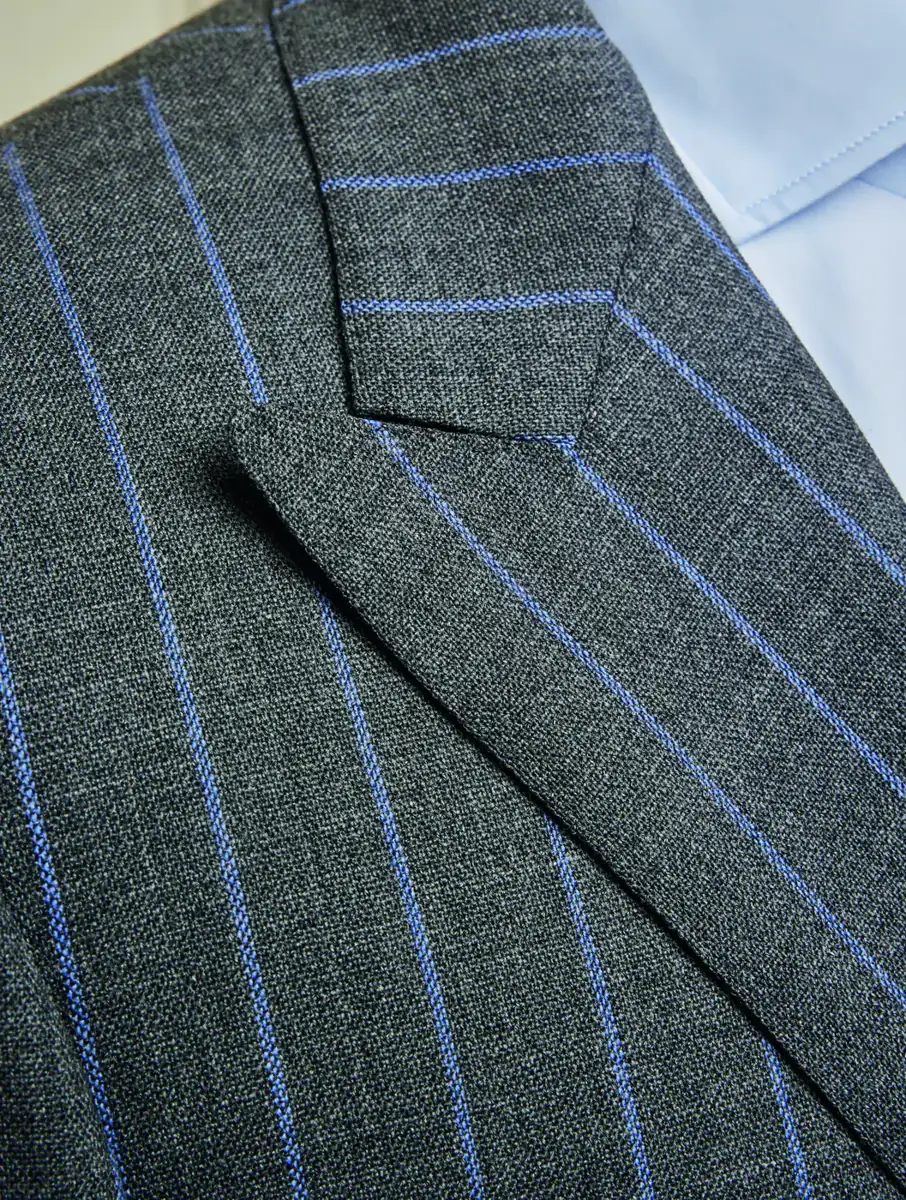
Habsburg Kleidermanufaktur: A Great Name That Never Raises Its Voice
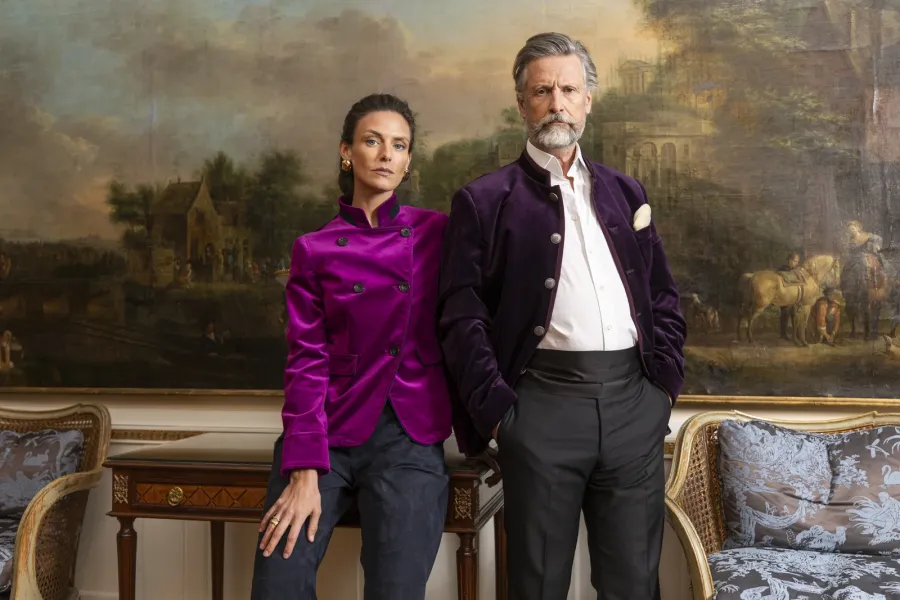
“The piece has to speak its own language,” Markus Meindl said of his clothes. The sentence could stand for the whole house. Habsburg Kleidermanufaktur carries one of the grandest names in European history and never writes it large on anything it makes. Its signature jacket, the Johann Karl, has a collar set off in green loden and ten buttonholes sewn by hand, and it needs no logo.
Meindl and his co-owner, Michael Rumerstorfer, apply the same restraint to everything else, from the buttons on a jacket to the way their new store in Vienna receives a customer.
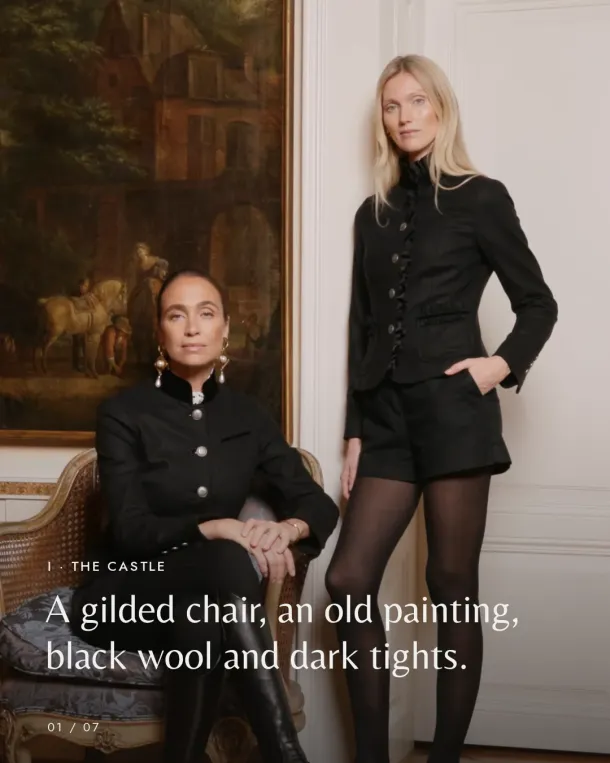
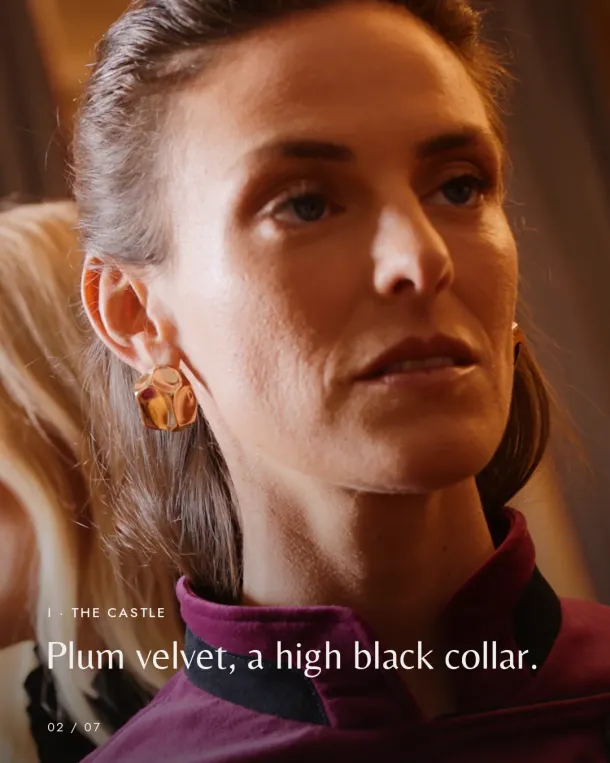
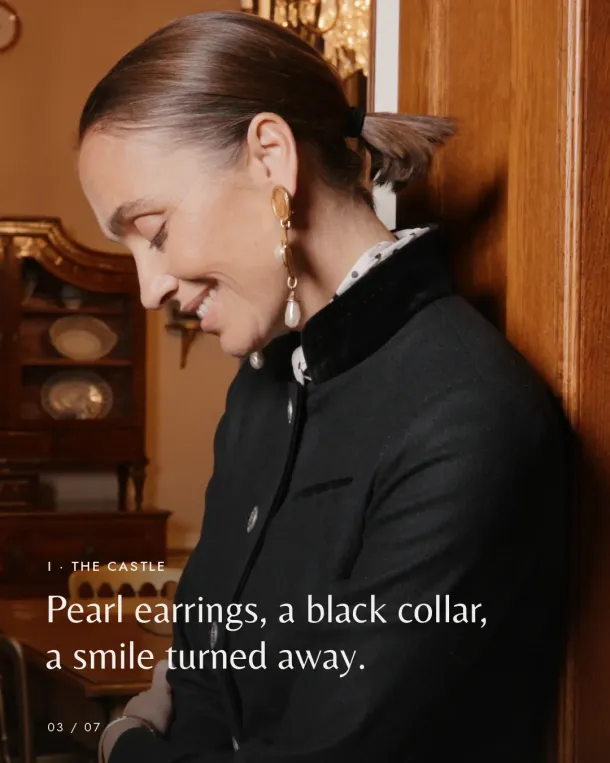
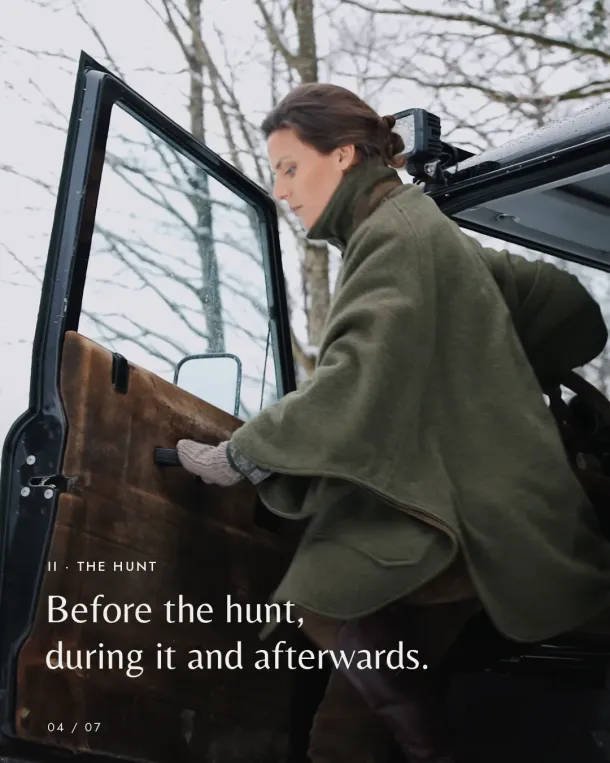
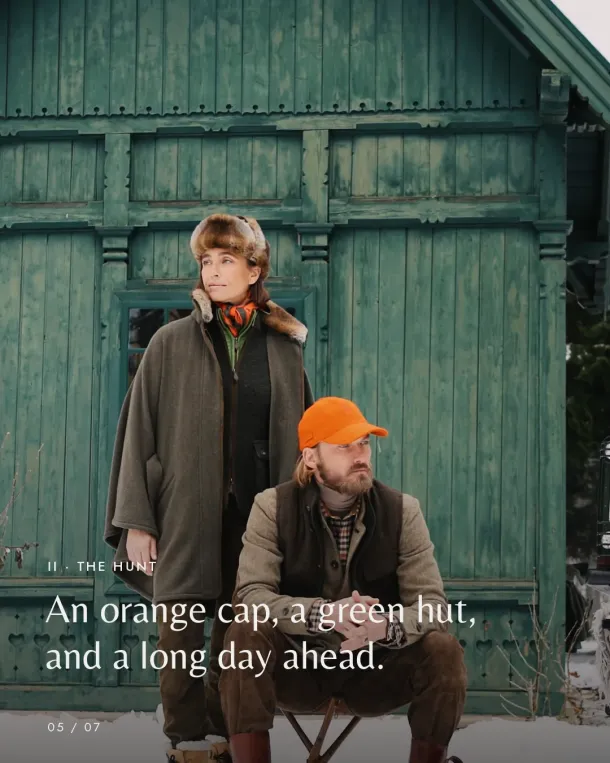

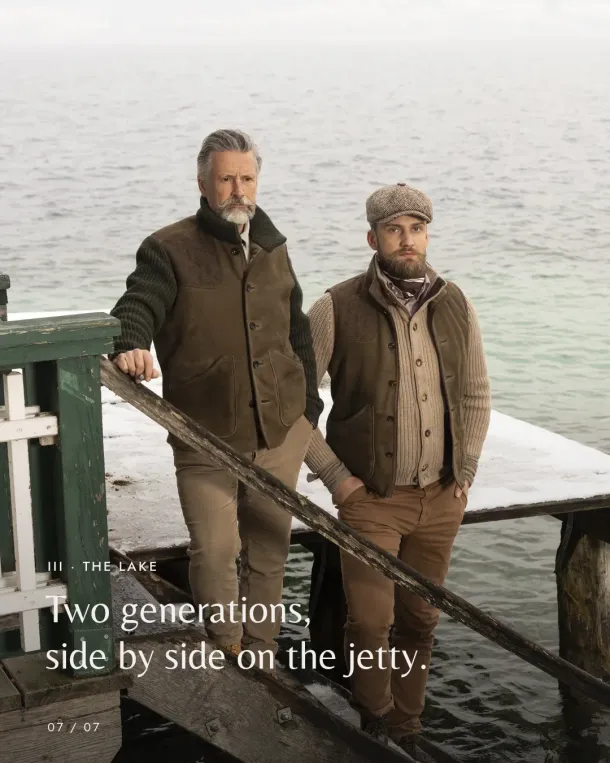
Habsburg lookbook: the castle, the hunt and the lake. Courtesy of Habsburg
A Name That Never Raises Its Voice
At Habsburg Kleidermanufaktur, keeping the name small is a matter of principle.
A piece that speaks its own language, Meindl said, “does not happen overnight. It takes years, decades really, until the informed customer recognises exactly that. And it must never be loud. That is why there will never be a big logo anywhere, in my world or in Habsburg’s.”
Rumerstorfer described what a customer buys instead. “Habsburg is so much more than a product. At the end of the day it is an attitude to life,” he said. Its customers have a very particular idea of how they want to live, “and wearing a piece without a large brand name on it expresses that.”
The house was founded in 1992 at the former hunting lodge of Archduke Franz Ferdinand, and much of what it makes still belongs to that world. There is loden for wind and snow, and there are buttons of staghorn. The clothes are worn before the hunt, during it and afterwards, “when people come together in a fine setting,” as Rumerstorfer put it. Meindl is clear about where that history belongs. “We do not live in the past,” he said. “We just value it very much.”
A note from The Silent Luxury
Good reading deserves to find you again.
A Jacket Refined by the Millimetre
Habsburg changes its signature pieces a millimetre at a time, so that they stay current for years and the customer never notices. The adjustments are tiny: a millimetre at the shoulder, a millimetre at the neckline, the height of the collar, the length of the sleeve. “That is what keeps a product current for years without really changing it,” Meindl said.
The pieces it refines are few. The Johann Karl for men is cut from Italian cashmere with a collar in green loden. The Adrian is a hunting jacket in Erzherzog Johann loden, with the Habsburg coat of arms on its half lining. The Mariella is the signature piece for women. Meindl called the principle behind all three an attempt “to design something that stands above time,” and said it is very difficult. Every detail carries a value and a meaning. A piece built to last draws on years of experience, his own and that of the pattern cutters and designers who work on it.
What has changed is the weight. On a hunt, in storm and snow, “you are tremendously grateful for loden,” Rumerstorfer said, but nobody wants to travel in a heavy loden coat. The house worked hard on a new Fustagno collection, extremely light and still recognisably Habsburg, and adds linen in summer for warmer countries. Meindl said lightness is harder than it looks. “You can take any cloth, however light, and turn it into a board with the wrong interlinings and the wrong finishing.”
Seventeen Minutes per Buttonhole
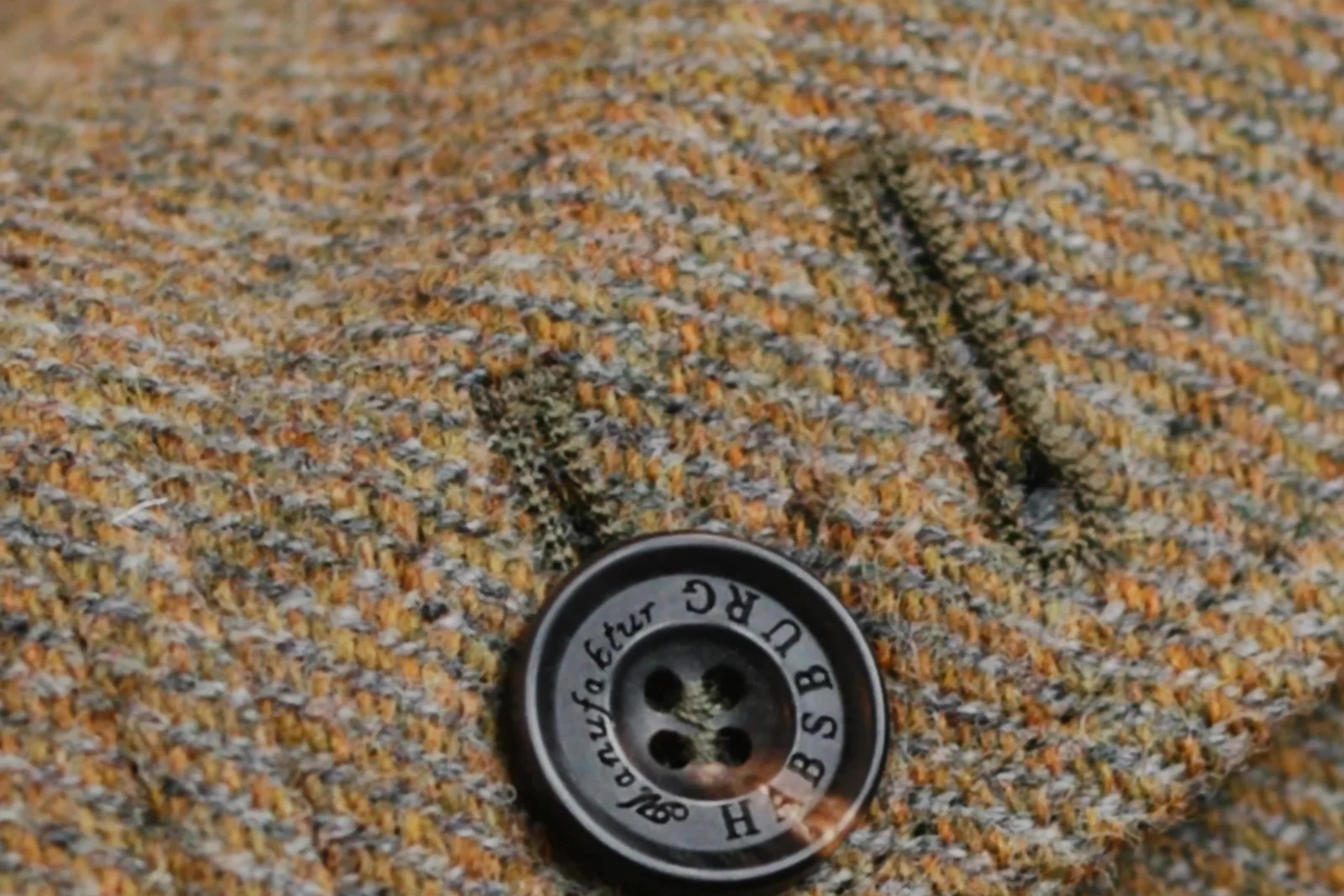
Every buttonhole on the Johann Karl is sewn by hand. “Seventeen minutes per buttonhole, times ten,” Rumerstorfer said. “You can roughly imagine the effort.” The staghorn buttons are matched by hand and come only from the lower part of the antler, “because that is where the colour is beautiful.” The antlers, oe24 reported, are ones the deer have already shed.
Meindl will not hand the cut to a machine. Artificial intelligence has no place in the pattern, he said, and for now none in the design either. “Karl Lagerfeld did not develop his designs in a large industrial plant. He developed them in small ateliers.” A product, in his view, “gains energy when it is made by people.” At Hackett on Savile Row, the same conviction runs to at least a hundred hours of hand work per suit.
Rumerstorfer uses AI where the customer sees it. The online store has a virtual dressing room, where a shopper uploads a photo and gets a rough idea of how a Habsburg coat sits. The house adds such tools “always for a real benefit to the customer,” he said, and never to fake something.
Cloth From Close to Home
Habsburg buys its loden close to home in Austria and has its jackets made in Hungary and Slovakia. “The distances are tremendously short,” Rumerstorfer said. In fast fashion, he said, everyone now wants to claim sustainability. At Habsburg it has been “in its DNA from the very first second,” in the way the house works and where it buys, “without ever wanting to wave the green-marketing flag.”
The materials also set the pace. “Our resources are finite,” Rumerstorfer said. The loden, the cashmere and the other cloths are made by hand. Lead times are long, and very few people can still do the work. Ten collections a year are out of the question, and so, in his words, is “red, yellow, green and purple tomorrow.” The value of a luxury cloth begins with its fibre, and at Habsburg the fibre also sets the calendar.
The Customers Nobody Expected
Habsburg’s customers are younger, more international and more varied than its hunting image suggests. Meindl likes to spend his lunch hour in the shop in Salzburg. One day five young men walked in, all around thirty, with no idea who he was. They were doctors and young entrepreneurs, “people for whom money matters.” They looked at the jackets and said, more or less, that is beautiful, I want that. Before long they were egging each other on. “People in their twenties come to us, people in their eighties come to us,” Meindl said, “and it makes no difference.”
Then there are the women. “Women are very close to our hearts too,” Rumerstorfer said. “People are quick to pigeonhole us as a hunting brand for men, and that is not who we are.” The house works with women who have nothing to do with the hunt and simply love what he calls a country-luxury life.
The third group lives on two continents. Retail partners in New York and Dallas have carried Habsburg for years. Since July 2025 the online store has shipped directly to American customers, according to the house. Those customers, Rumerstorfer has noticed, “love to spend time in Aspen, in St. Moritz, in Kitzbühel, in Vienna.”
Value That Outlasts a Season
Habsburg makes its living from customers who come back for another version of a piece they already own. “You can keep two or three Johann Karls in different colours and qualities for more than ten years,” Rumerstorfer said, and still be delighted by “the new down jacket, or the new shearling paired with knitwear.” Across the luxury market, the second purchase now decides which houses grow.
A jacket worn for years also earns the house recognition, which Meindl called “the best marketing you can have.” He does not mind when two people turn up wearing the same piece. “Nobody says, I won’t buy that any more. It gives you certainty that you chose the right product.” On price, Rumerstorfer was plain. When the same bag, unchanged, costs 40 per cent more a year later, he understands why people ask about value. Habsburg builds its price from the cashmere, the finishing and the buttonholes sewn by hand in Europe. By that measure he thinks the house is “actually too cheap for what we deliver.”
The proof hangs in Rumerstorfer’s office. He bought his first Habsburg jacket in 1998, at eighteen, after scrimping and saving for it. It still fits him, “thank God,” and under a little patina it looks as though it had been made this year. Meindl tells of a young man who inherited five Habsburg jackets from his grandfather. “He only had to have them lengthened a little,” Meindl said, “and otherwise they are terrific.” Luxury is learning to make things for the next generations, and on Savile Row, Hackett builds the suit that outlives its owner.
“We create pieces for generations, for far longer than a season.”
A Stage in Vienna
Habsburg’s store on Weihburggasse in Vienna is a corner space of about 180 square metres with large windows onto the street. Its interior is the work of the costume designer Christoph Birkner, heute.at reported, and Rumerstorfer, fittingly, talks about it in the language of the theatre. He wanted “the perfect stage.” “People used to talk about sales per square metre,” he said. “I think that is obsolete.” Customers now come for atmosphere, for advice, for a coffee and a conversation about cloth. “We are not talking about a litre of milk from the supermarket.”
The largest houses have reached the same conclusion at a very different scale. Kering expects at least 125 net store closures in 2026. Richemont’s chairman, Johann Rupert, wants the group’s stores “better rather than smaller,” and Moncler has opened its largest store in the world on Fifth Avenue. Meindl wants the shop and the website to work as one. They “must match one hundred per cent in quality,” he said.
Rumerstorfer has an invitation for anyone walking down Weihburggasse. Come in, slip something on and tell the house honestly what you think.
About
Habsburg Kleidermanufaktur
Habsburg Kleidermanufaktur is a Salzburg clothing house founded in 1992 at the former hunting lodge of Archduke Franz Ferdinand. It makes loden and cashmere jackets, coats and knitwear for men and women; its signature pieces are the Johann Karl, the Adrian and the Mariella. Its loden comes from Austria, and its jackets are made in Hungary and Slovakia. It is owned by Markus Meindl and Michael Rumerstorfer. Habsburg opened its first Vienna store, at Weihburggasse 7, on 4 November 2026, and has shipped directly to customers in the United States since July 2025. Quotes have been translated from German and condensed.

Send this ↗ to someone who still wears the jacket they bought twenty years ago.
Continue
Listen · Markus Meindl and Michael Rumerstorfer in TSL Conversations, the full conversation (in German)
Read next · Savile Row: One Block of Mayfair, Two Centuries of Bespoke Tailoring
Related · Hackett on Savile Row: Graham Simpkins and the Suit That Outlives Its Owner
Sources
- Markus Meindl and Michael Rumerstorfer, owners of Habsburg Kleidermanufaktur, in conversation with The Silent Luxury, hosted by Eva Winterer
- medianet, Habsburg Kleidermanufaktur opens its first store of its own in Vienna, 5 November 2026
- heute.at, opening of the Habsburg store in Vienna, 6 November 2026
- oe24, Habsburg opens its boutique in Vienna’s city centre, 6 November 2026
- Habsburg Kleidermanufaktur, direct-to-consumer launch in the United States, GlobeNewswire, 3 July 2025
- Springer Vienna, Habsburg Johann Karl jacket, product description
- Dictum, Habsburg Adrian hunting jacket, product description
- Retail Insight Network, Kering third-quarter revenue and store closures, October 2026
- Richemont, FY26 annual results, presentation transcript, 22 May 2026
Similar Articles
Master of Days: Konstantin Chaykin’s Fairy Tale of the Week
The Red Column and the Year of Family: INTIMAA Opens in Abu Dhabi
The Material Era: How Portugal Makes the Shoes Europe Will Buy Next.