
The Material Era: How Portugal Makes the Shoes Europe Will Buy Next.
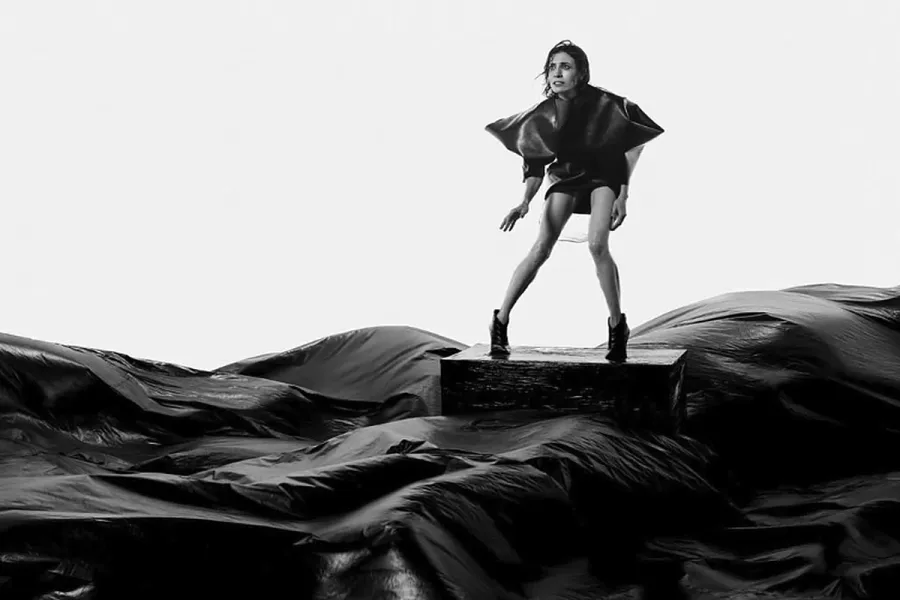
An olive stone is hard, small and, for most of Portugal’s olive presses, waste. In Felgueiras, the shoemaking town north of Porto, it has become part of a shoe. Researchers working with the country’s footwear manufacturers have turned olive stones and chestnut husks into fabric and cork into soles, and the first of those materials are now being used in factories.
The timing follows the customer. On 28 October, Boston Consulting Group and WWD published a survey of 4,000 American consumers, which found that people buying shoes, clothes and luxury goods now rank material and feel above the name on the label. A shoe that can say what it is made of has begun to sell on that alone.
Portugal started preparing for that customer twenty years ago, when its manufacturers stopped chasing volume. “We understood that we could not compete with Asia on volume or price,” Luís Onofre, who has led APICCAPS since 2017 and designs shoes under his own name, said in an interview with The Silent Luxury. “Moving away from price-based competition meant accepting that certain types of production would inevitably leave Portugal.” The industry that stayed is smaller, made up mostly of family firms, and built around complex models in short runs.
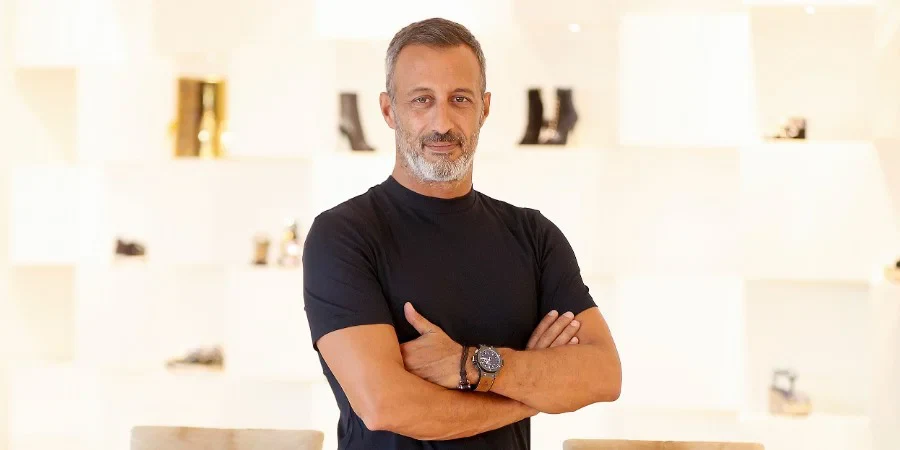
Luís Onofre has led APICCAPS, the association of Portugal’s footwear manufacturers, since 2017. He is the designer of the shoe brand that bears his name, Luís Onofre. Photo: Courtesy of APICCAPS
The Name on the Label: Why Shoe Buyers Choose Material Over Brand
Shoe buyers are starting to judge a pair the way they judge food, by what is in it. Alongside their survey, BCG and WWD analysed nine million social-media posts, and 53 per cent of the consumers they questioned named quality relative to price as their main reason to buy.
The other side of that ledger is volume. APICCAPS counts 24 billion pairs of shoes made worldwide each year, almost nine in ten of them in Asia, and argues that a shoe made with time and skill needs no passing label to sell it. A wardrobe with fewer pairs, each one known and worn for years, is the life that argument describes.
The new label: what makes a purchase worth it
Shoppers increasingly ask what goes into what they buy. Each line is the share of shoppers who named it.
Survey of 4,000 US shoppers
Source: Boston Consulting Group and WWD, 28 October 2026.
A note from The Silent Luxury
Good reading deserves to find you again.
Fewer Pairs, More Skill: Portugal’s Footwear Industry After Volume
The Portuguese footwear industry now earns its place through the work that factories built for volume find hardest. Brands come for technical shoes, short runs, complex styles and quick delivery, and for the ability, as Onofre puts it, “to develop and manufacture complex, high-quality products in Europe, close to the major fashion markets.”
The family firms paid for the change themselves, buying new machines, robotics and materials while their older business moved abroad. Getting smaller was the plan.
Beyond Leather: The New Materials of Portuguese Shoes
Leather is losing its place at the centre of Portuguese shoemaking. Its share of the country’s footwear exports fell from 69 to 58 per cent in three years, as the same factories took on trainers, technical and safety footwear, vegan styles and shoes from recycled and bio-based materials. Onofre calls leather the industry’s deepest expertise. “The Portuguese footwear identity should not be defined by a single material,” he says. “It should be defined by how we make excellent shoes.”
What Portugal holds on to is knowledge. “Technology will become increasingly accessible around the world,” Onofre says, “but decades of accumulated manufacturing knowledge, craftsmanship and an industrial ecosystem capable of developing sophisticated products are much more difficult to replicate.” Any factory can order a robot. Knowing what to do with it took Portugal a generation.
Where the Materials Grow: Cork, Olive Stones and BioShoes4All
The materials in Felgueiras come out of BioShoes4All, a €60 million research programme funded by Portugal’s Recovery and Resilience Plan and coordinated by Maria José Ferreira. Over four years it brought together 69 companies, technology centres and universities. Its results include leather tanned with plant extracts in place of chromium, biopolymers for soles and insoles, composites of cork, farm waste and marine residues, and the fabrics from olive stones and chestnut husks. Twenty-five pilot lines are now running in factories.
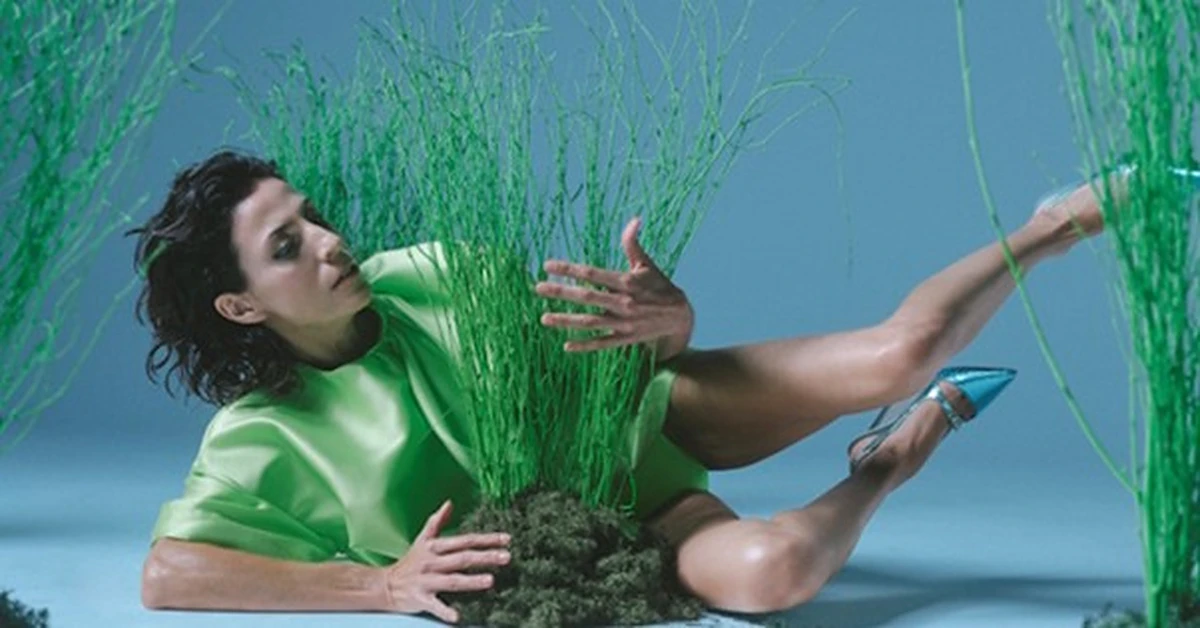
“The Time to Rewrite History”, the international campaign of Portugal’s footwear industry, created within BioShoes4All. Photo: Frederico Martins for Portuguese Shoes / APICCAPS
On 21 October, at the Global Bioeconomy Summit in Dublin, APICCAPS joined the Bio-based Europe Alliance as an observer. The alliance’s member companies have committed to buying €10 billion worth of bio-based materials and products by 2030, and they will help decide what counts as bio-based. Onofre wants the association at that table to “turn research and innovation into concrete market opportunities.”
The Maker Who Signs the Label: Portuguese Footwear’s Next Decade
Over the next ten years, Portugal’s small manufacturers expect to work as development partners for the brands they supply. Onofre sees a strong future for family companies that are “highly specialised, technologically advanced, financially sound and deeply connected to their customers.” Brands, he says, increasingly want partners who can develop products, test new materials, produce small series quickly and account for every step of the supply chain. From 2027, the European Union’s digital product passport is due to make brands disclose what their textiles contain, and the makers who can document a shoe from the cork tree onwards will be the ones who sign the label.
His goal for the decade leaves the counting to others. “Our objective for the next ten years is not to make the largest number of shoes in Europe,” he says. “It is to make some of the best, most innovative and most sustainable shoes in the world.” In a world that makes 24 billion pairs a year, Portugal has decided to count differently.
Send this ↗ to someone who wonders where their next pair of shoes will be made.
 Read next · The ConversationLuís Onofre: Portugal’s Family Shoemakers Are Betting on Skill Over ScaleThe president of APICCAPS on twenty years of choices, what Portuguese shoemaking keeps, and what will decide the next decade.
Further Reading
-
Where Luxury Begins: The Value of Natural Fibre, From the Karoo to Vittorio Veneto
The value of a luxury cloth begins with its fibre, with where it grows, how it is farmed and how it is blended, according to IWTO, Remei, Mohair South Africa and Lanificio Bottoli. Burial trials show a wool jumper taken apart by soil within weeks while a polyester one survives for months.
-
The Return on Repair: What Circular Fashion Pays Back to LVMH, Gucci and Patagonia
Repair is a 500-million-euro business in luxury fashion, with resale approaching 317 billion by 2028. The repair economy begins before the first repair, in the fibre, the seam, the spare part and a brand’s willingness to design an object that can stay in circulation.
-
The Future of Luxury After Q3 2026: The Members’ Club Era
The third-quarter results of LVMH, Hermès, Kering, Prada, Zegna and L’Oréal point in one direction: luxury now grows through the clients who already belong, while the way in has moved to perfume, eyewear and jewellery.
Sources
- Luís Onofre, president of APICCAPS, in an interview with The Silent Luxury, October 2026
- APICCAPS, Portuguese Shoes, “The Time to Rewrite History”, global footwear production
- BioShoes4All, programme results, June 2026
- APICCAPS joins the Bio-based Europe Alliance, World Footwear, 27 October 2026
- Boston Consulting Group and WWD, consumer value study, 28 October 2026
- European Circular Economy Stakeholder Platform, digital product passport timeline
Similar Articles
How a Bespoke Suit Is Made: Hackett’s Head of Tailoring on Cloth, Canvas and Time
Fullord Geneva: Sandrine Thibaud on Building a Jewellery House Around a Woman’s Independence
Cartier’s Owner Eyes De Beers: The Jeweller Returns to the Mine
