Where Luxury Begins: The Value of Natural Fibre, From the Karoo to Vittorio Veneto
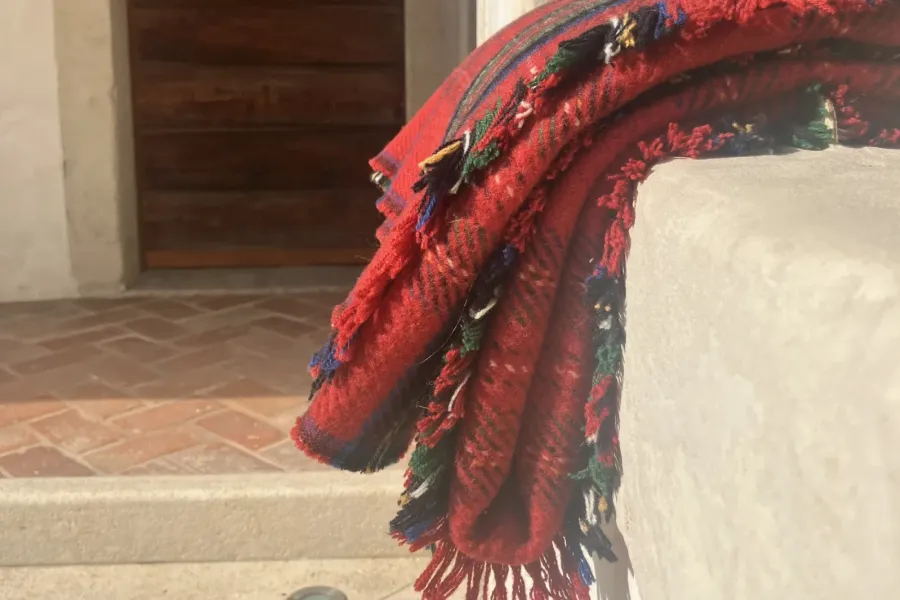
Bury a wool jumper in garden soil, and within weeks fungi and microorganisms have begun to take it apart. Bury a polyester jumper beside it, and you can dig it up months later, put it through the wash and wear it as though nothing had happened. The International Wool Textile Organisation says burial trials have produced that result again and again. Yet the fibre that returns to the soil keeps losing ground to the one that lasts for centuries in it. Polyester’s price ignores what weighs on natural fibre: the cost of proving origin, footprint methods that favour synthetics, and the years a fibre takes to grow.
On 1 October, The Silent Luxury sent the same question to 33 companies and organisations along the chain. They included fibre producers, spinners and recyclers, the fashion groups and resale platforms lobbying for lower taxes on resale and repair, and the European Commission, which writes the rules. How is the balance between natural fibre and polyester shifting, and who pays for it? The fullest answers came from the people furthest upstream.
IWTO, which represents the wool trade from Brussels, wrote back in detail. So did Marion Röttges, co-CEO of Remei, a Swiss company that buys organic cotton directly from some 5,000 smallholders in India and Tanzania. Lauren Moore answered for Mohair South Africa, which speaks for the country that grows more mohair than any other. In mid-October, Ettore Bottoli showed The Silent Luxury round the family mill in Vittorio Veneto that has spun, dyed and woven its own cloth since 1861.
The other end of the chain was quieter. The Ellen MacArthur Foundation, whose report underpins the call for tax relief, declined to comment, H&M Group declined in writing, and Inditex, the owner of Zara, let the deadline pass without a reply. So did the European Commission.
A note from The Silent Luxury
Good reading deserves to find you again.
A Record Year for Polyester
The fibre figures point to the start of a garment’s life as the place where circularity is won or lost. Textile Exchange’s Materials Market Report 2026 counted 139 million tonnes of fibre produced in 2025, roughly 17 kilograms for every person on earth. Polyester accounted for 82.5 million tonnes of it, or 59 percent, and 72.8 million tonnes of that polyester was virgin, made from oil and gas. Of the seven million tonnes the world added in a single year, five were new fossil fibre. On current trends, Textile Exchange expects 172 million tonnes by 2030.
Recycling has grown too, though far more slowly than production. Recycled polyester reached 9.7 million tonnes, still about 12 percent of all polyester, and 97 percent of it began life as a plastic bottle. Fibre made from old clothes accounted for about 0.3 percent of all polyester. A separate Textile Exchange study, published on 6 October, puts the output of textile-to-textile recycling at 1 to 1.5 million tonnes in 2025 and at 3 to 5 million tonnes by 2030, with losses in collection, sorting and processing holding back the rest. Set against 172 million tonnes, that loop stays small.
The small loop
The fibre the world is expected to produce in 2030, set against the fibre recycled from old textiles in the same year.
172 million tonnes
of fibre expected worldwide in 2030, if current trends hold
3 to 5 million tonnes
from textile-to-textile recycling by 2030, up from 1 to 1.5 million in 2025
Areas drawn to scale, upper estimate shown. Sources: Textile Exchange, Materials Market Report 2026; Textile Exchange, textile-to-textile recycled fibre capacity study, October 2026. Graphic: The Silent Luxury.
Natural fibre, meanwhile, is shrinking as a share of what the world wears. Wool held at about a million tonnes, though its share slipped from 0.9 to 0.7 percent. Animal fibres as a group fell by 15.4 percent, and the entire global cashmere harvest came to 28,010 tonnes. Since recycling cannot absorb the volume, the decisive moment comes earlier, when a fibre is chosen. Producers who answered blame three costs that polyester’s price leaves out.
The voices in this deep dive
Four voices from the start of the chain, from the wool trade in Brussels and the cotton fields of India and Tanzania to the Karoo and a mill in Vittorio Veneto.
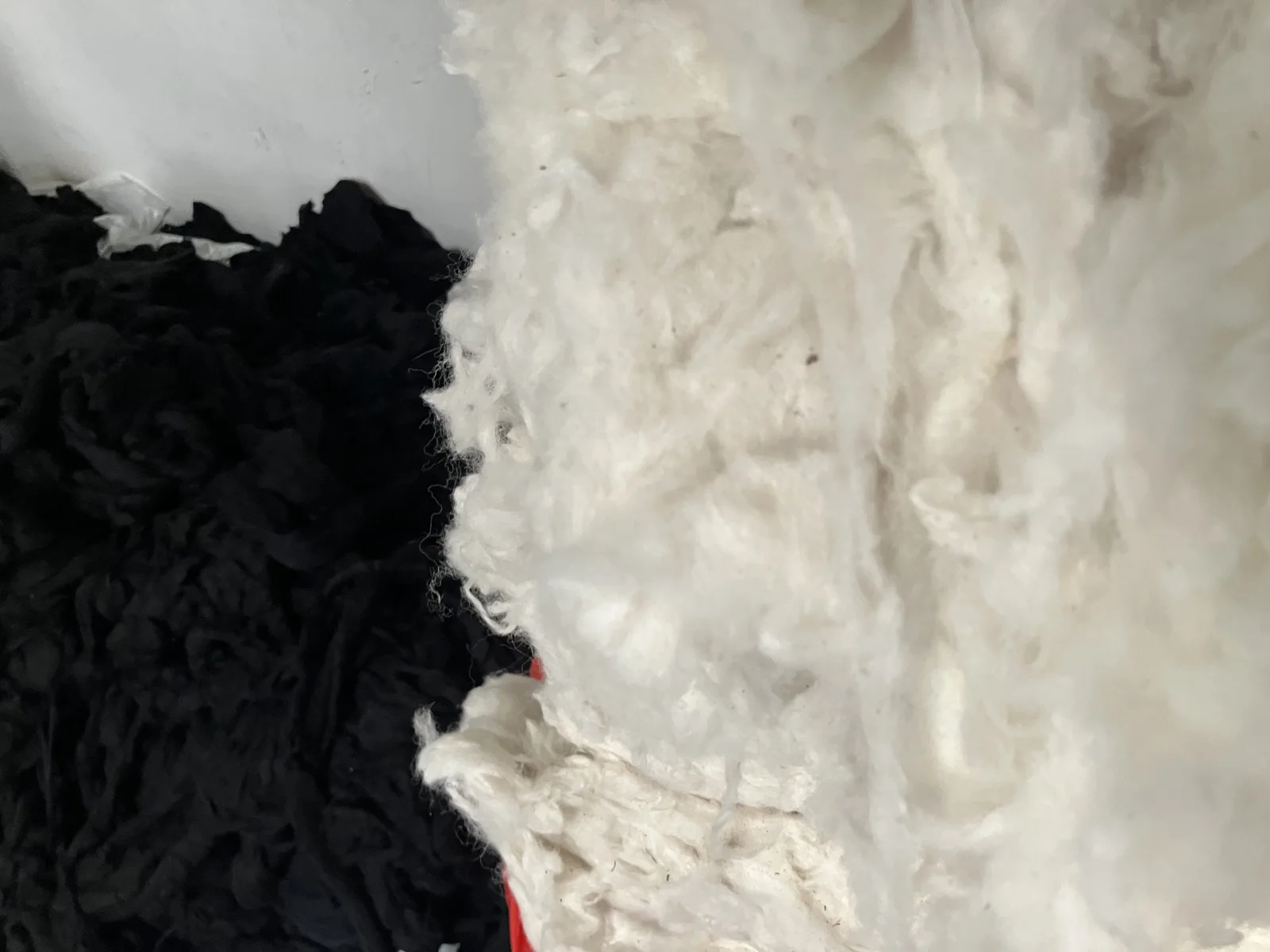
“High sustainability standards, such as traceability to farm, fall on natural fibres. Farmers must meet the requirement of, often, numerous certification schemes in order to access retail markets. The costs are borne here.”
Dalena WhiteSecretary General, International Wool Textile Organisation, Brussels
“Knowing where something comes from matters. It only gets really interesting when we can use that knowledge to improve something together. For me, transparency is not the end goal. It is what makes change possible.”
Marion RöttgesCo-CEO, Remei, Switzerland
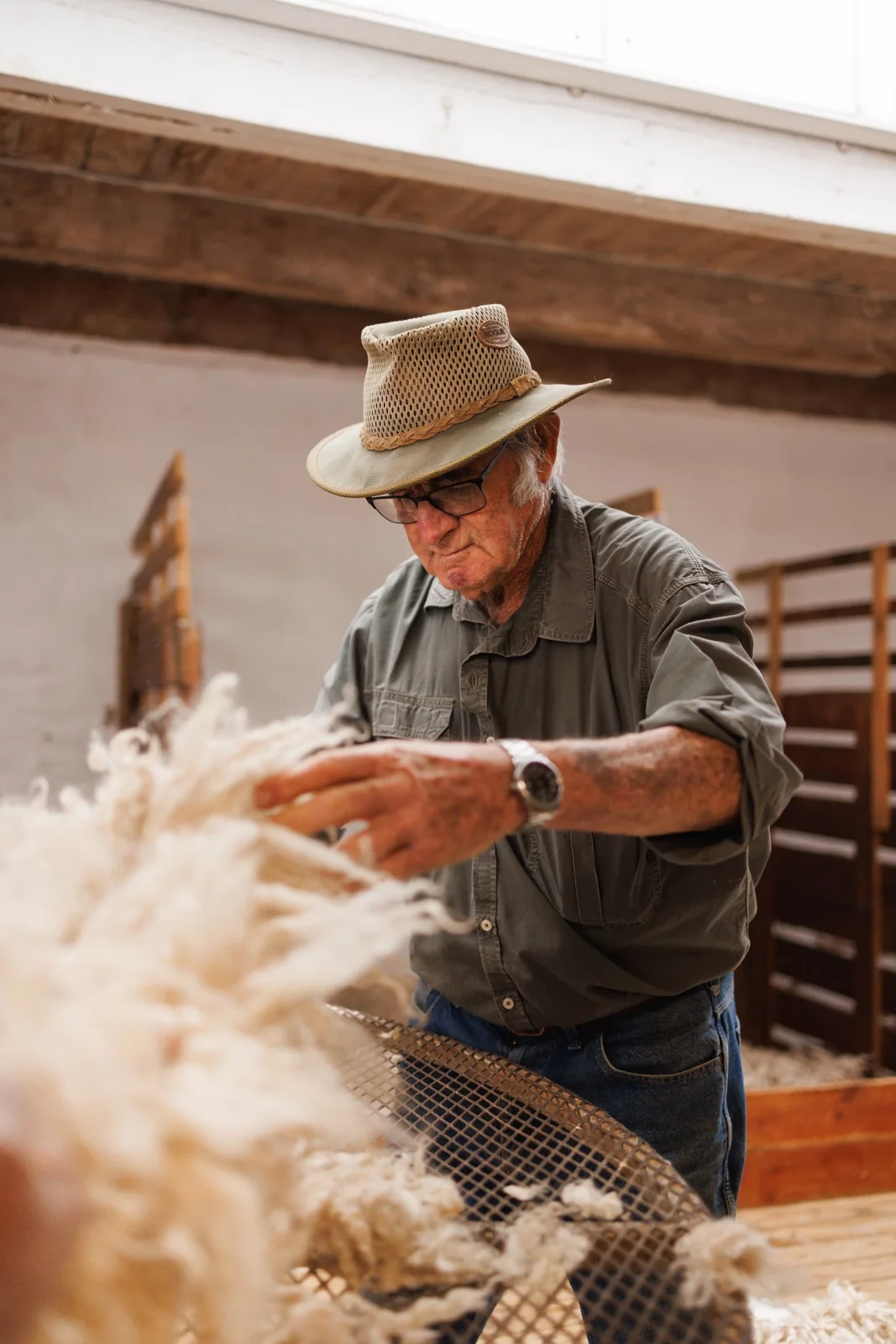
“If a farmer invests in animal welfare, land stewardship, traceability and certification, those investments should not simply become another cost absorbed at farm level. The market needs mechanisms that allow that value to travel back through the supply chain.”
Lauren MooreHead of Communications and Sustainability, Mohair South Africa
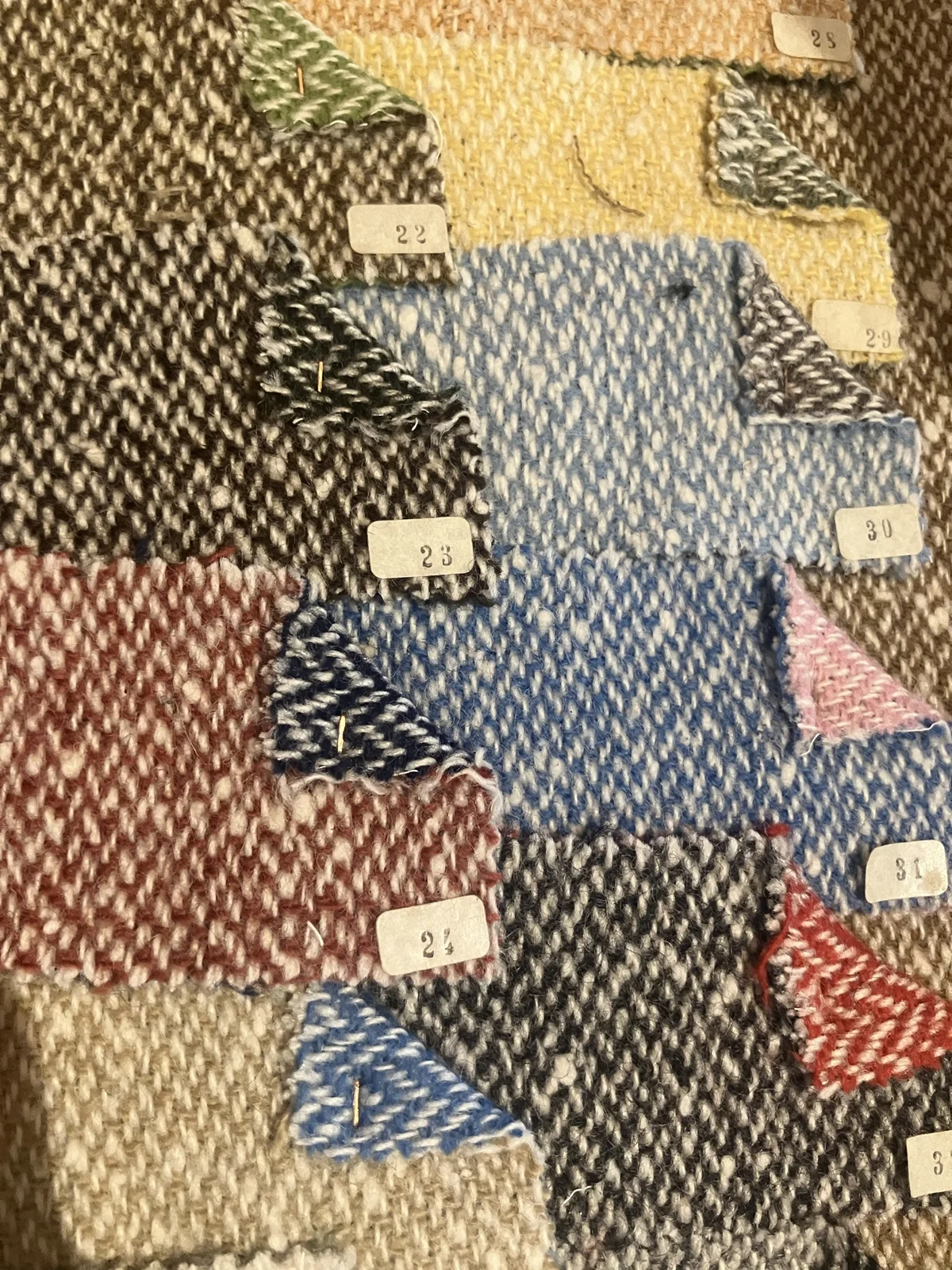
“Creativity begins with the recipe.” A plain camel at the mill blends eight fibres from three continents, and a red can take fifteen or twenty.
Ettore BottoliLanificio Bottoli, Vittorio Veneto, since 1861
The Price of Proof
The first cost is paperwork, and it lands on the farm. “High sustainability standards, such as traceability to farm, fall on natural fibres,” IWTO wrote. A wool grower who wants to sell into retail often has to satisfy several certification schemes at once, and each audit is paid for at the farm gate. Polyester, nylon and acrylic reach the same shelves with the origin of their oil taken on trust. “On this uneven playing field,” IWTO wrote, “the cheapest fibre wins, and less wool is produced.” Cotton researchers make the same argument. In April, the Bremen Cotton Exchange published a study by Veronica Bates Kassatly and Terry Townsend arguing that traceability is demanded of farmed fibres such as cotton and waived for virgin polyester, a double standard they call unjustified.
Mohair growers know that cost well. South Africa’s industry has built the Responsible Mohair Standard, covering animal welfare, land management and social responsibility, and verifies its claims of origin with the forensic tracing firm Oritain. Moore wants buyers to pay for that work. “If a farmer invests in animal welfare, land stewardship, traceability and certification, those investments should not simply become another cost absorbed at farm level,” she said. “The market needs mechanisms that allow that value to travel back through the supply chain.”
Röttges accepts the cost and argues that it buys something. Because Remei deals with its farmers directly, brands’ demands on climate, human rights and security of supply can be settled in the field, and farmers can tell the market what is realistic. “Knowing where something comes from matters,” she said. “It only gets really interesting when we can use that knowledge to improve something together. For me, transparency is not the end goal. It is what makes change possible.”
What the Scales Leave Out
Footprint tools tilt the same way. Both the Higg Materials Sustainability Index and the European Union’s Product Environmental Footprint Category Rules leave out circularity as an indicator, IWTO says, and biodegradability carries too little weight in the EU method to change a fibre’s final score. The upshot, in the organisation’s words, is that “fossil fuel-based fibres appear more favourable”.
Recycled fibres suffer from the same blind spot. They still cost more than virgin ones, IWTO noted, and in a price-driven retail market they struggle to win over textile buyers, because “the costing sheet does not yet reflect the sustainability benefits”. Wool’s own record goes unscored as well. A wool garment tends to be worn for years, then passed on, resold or recycled before it ever reaches the soil, and wool has one of the oldest recycling industries in textiles, as Prato’s mills, which took their case to Brussels this month, have shown for two centuries.
Footprint tools also miss what happens inside a mill. Lanificio Bottoli buys wool in its natural browns and greys and blends it undyed, because a fibre that skips the dye bath keeps more of its softness. Ettore Bottoli compares dyed wool to hair that has been coloured too often. No footprint score records that softness.
A Fibre Measured in Years
Then there is time. “You can’t simply switch farming on and off,” Röttges said. “Change takes years.” Polyester is made from oil, and its output can be adjusted to demand at short notice. A farm works with soil, weather and harvests, and with families who hope to hand it on to their children. Fashion and retail decide season by season. Remei bridges the gap itself: it takes on the risk for raw material and sales, pre-finances its farmers and invests in building both the farming and the textile side of its supply chain. What would help organic cotton grow, she argued, is buyers who commit for years and give farmers the certainty to plan.
Livestock moves even more slowly. Mohair comes from Angora goats in the Karoo, South Africa’s semi-arid interior, where flocks have adapted over generations to the heat and the low scrub. The country produced 56 percent of the world’s mohair in 2024, according to industry figures. “Mohair cannot compete with polyester on volume or price,” Moore said, “and it shouldn’t be expected to.” At Lanificio Bottoli, the same slowness shows up as scarcity. Natural brown is the scarcest colour of all, Bottoli explained, because around nine in ten sheep in a flock are white. Dark fleeces, long a nuisance to shepherds, are prized at the mill.
This summer he skipped his holiday and flew to Australia to persuade growers to breed more brown sheep, but found the idea made little commercial sense to them. The market pays for white, and the few dark fleeces that do appear are quickly bought up by a large Italian luxury house.
A rounding error
10 kg
of polyester for every person on earth in 2025, most of it made from oil and gas
120 g
of wool
11 g
of silk
3.4 g
of cashmere
Each cone is drawn to scale by volume. TSL calculation from Textile Exchange, Materials Market Report 2026 (2025 production), and UN World Population Prospects 2024 (8.2 billion people in 2025). Graphic: The Silent Luxury.
Global wool production is drifting lower year on year, IWTO says. Farmers are leaving, squeezed between poor auction prices and rising costs, and shifting rainfall makes planning almost impossible without a decent return. Skills are thinning in the same way. At Lanificio Bottoli, one machine runs once a year for a single Japanese client, and only one employee, now well into his seventies, still knows how to run it. In the spinning department, Bottoli said, the hardest thing to find is people.
Who Keeps the Value
If a natural fibre cannot win on price, its future depends on who keeps the value it creates. Moore’s answer starts with Africa. South Africa has a well-developed mohair industry with real processing capacity of its own, yet as with many agricultural commodities produced on the continent, most of the value is created further downstream, in design, manufacturing, branding and retail. “The goal shouldn’t be to stop the fibre from travelling,” she said. The aim is to keep more of the economic, creative and intellectual value in the communities and countries where the fibre begins, with African designers and manufacturers taking a bigger share of what is made from African fibre. “A natural fibre does not need to become cheaper to compete with a mass-produced synthetic fibre,” she said. “It needs the distinctive value it brings, both its performance and its origin, to be properly understood and recognised.”
Remei approaches the problem from the other end. “At Remei, we connect what the market often separates, from the origin to the finished product,” Röttges said, which is why she treats the origin of her cotton as a strategic business question.
The stakes are visible in a single colour at Lanificio Bottoli. To make a plain camel shade, the mill blends eight different wools, among them Spanish Merino, wool from Chubut in Argentine Patagonia, Portuguese wool, cashmere and a Mongolian fibre. A red can take fifteen or twenty. “Creativity begins with the recipe,” Bottoli said. Every metre of that cloth draws on farms across three continents and depends on each of them staying in business.
Tax Relief at the Wrong End
As the fibre figures moved one way, the policy debate turned to the end of a garment’s life. On 21 May, 69 businesses and organisations, among them H&M Group, Primark, Zalando, Vinted and Vestiaire Collective, signed a statement urging governments in Europe and North America to cut VAT and sales tax on resale and repair. The signatories also want lower labour taxes for jobs in those trades and extended producer responsibility to pay for collecting and sorting clothes. The statement accompanied The New Bottom Line, a report from the Ellen MacArthur Foundation’s Fashion ReModel project, to which the H&M Foundation, H&M’s non-profit arm, had pledged $15.4 million in February 2025. None of those approached explained how tax relief at the end of a garment’s life fits a year in which most new fibre was fossil.
The producers agree that policy should look upstream, and IWTO goes furthest. Tax relief on resale and repair applies to every garment, whatever it is made of, and so leaves the choice of fibre where it was. “It would take serious policy interventions to curb the production of low-quality textiles and to reward high-value textiles for staying in circulation longer,” IWTO wrote. It wants footprint methods that count microplastic release, and producer responsibility fees based on how long clothes are actually worn. It would even have labels say whether a garment sheds microplastics, “like a health warning on a pack of cigarettes”.
Röttges refuses to choose between the two ends. “The industry needs both,” she said. The vast volume of polyester already in circulation needs better design, more reuse and recycling systems that actually work. For natural fibre the work starts in the field, and she would like to see financial incentives for companies that invest at origin for the long term. Moore would reward certified sourcing and help producers keep more value locally. She asks for policy that is “material-neutral but impact-informed”, and closes: “The producer should not be forgotten in the circular economy.”
The rules already governing luxury’s suppliers leave the same question open. The 46 shared ESG requirements agreed by the French and Italian fashion chambers in May cover governance, safety, labour and environmental compliance in the workshops, and the EU textile rules that came into force this year deal mostly with what happens to products once they exist. The choice of fibre is made upstream of both.
What Luxury Buys With Natural Fibre
For houses that work in wool, mohair, silk and organic cotton, the answers add up to a bill: the audits paid at a sheep farm, and the years a cotton grower in Tanzania needs to change how a field is worked. In return, a garment made from natural fibre starts with its second life built in, because its value rests on qualities that last and an origin someone can name, the principle behind Regenerative Luxury.
Luxury houses can afford to buy on commitments measured in years and to pay prices that let the value of proof travel back up the chain. Its design also keeps cloth in use long enough to make repair worthwhile. “If we want a different material system in the future,” Moore said, “we must ensure an economically viable future for the people producing the materials today.”
In the mill’s archive in Vittorio Veneto lies a length of cloth woven in the 1940s. When Bottoli showed it to the Japanese designer Junya Watanabe, he could hardly believe a fabric had held up for so long. Bottoli is still deciding what to make of it.
Send this ↗ to someone who believes recycling will settle fashion’s fibre question.
Further Reading
-
Global Fibre Production Hits a Record 139 Million Tonnes, and the Growth Is Fossil
Global fibre production reached 139 million tonnes in 2025, according to Textile Exchange’s Materials Market Report 2026. Polyester rose to 82.5 million tonnes, 59 percent of all fibre, while wool slipped to 0.7 percent and recycled polyester stayed at around 12 percent, almost all of it from plastic bottles.
-
What Touches the Skin: Where Luxury Fibres Come From
Luxury fibres begin in very different places, from a Finnish loom in southern Italy to a Galician yarn spun from milk. Dalena White of IWTO, Marion Röttges of Remei, Jessica Tartaglia in Bisaccia and Inés Rodriguez Rodriguez in Galicia describe how the fibre conversation has moved from the end of a garment’s life towards its beginning.
-
Inside the Trophy: Better instead of more
The 2026 European Textile & Craft Award trophy holds a tobacco-toned wool from Lanificio Bottoli in Vittorio Veneto, dyed with coffee grounds and spun and woven in-house. The family business was founded in 1861 and now runs in its fifth generation.
-
Prato Takes Its Recycled Wool to Brussels, and Looks to Portugal and Catalonia for Allies
Prato’s textile district has asked the European Union to recognise mechanical recycling in its coming Circular Economy Act. The district has turned used wool into new fibre since the early nineteenth century and is seeking protected geographical indication for its Cardato Riciclato Pratese.
Sources
- Dalena White, Secretary General, International Wool Textile Organisation, written answers to The Silent Luxury, October 2026
- Marion Röttges, Remei AG, answers to The Silent Luxury, October 2026, translated from German by The Silent Luxury
- Lauren Moore, Mohair South Africa, answers to The Silent Luxury, October 2026
- Ettore Bottoli, Lanificio Bottoli, conversation with The Silent Luxury in Vittorio Veneto, October 2026, translated from Italian by The Silent Luxury
- Textile Exchange, Materials Market Report 2026
- Ecotextile News, Textile recycling growth faces bottlenecks, on Textile Exchange’s recycled fibre capacity study, 6 October 2026
- Veronica Bates Kassatly and Terry Townsend, Fiber Traceability: A Vehicle to Ensure Sustainability or Injustice?, Bremen Cotton Exchange, April 2026
- IWTO, The Green Book
- Africanews, Global mohair supply flourishes in South Africa’s desert, 27 March 2026
- Ellen MacArthur Foundation, Fashion brands urge governments to fix the economics of resale and repair, 21 May 2026
- FashionUnited, H&M Foundation supports Ellen MacArthur’s circular Fashion ReModel with $15 million, February 2025