Cartier’s Owner Eyes De Beers: The Jeweller Returns to the Mine

The sale of De Beers is reversing the oldest arrangement in the diamond trade: the countries that hold the deposits and the houses that sell the finished stone are preparing to own the company that once controlled both. Botswana, Namibia and Angola sit inside the Global Diamond Consortium, Anglo American’s preferred bidder, and Richemont, the owner of Cartier, is in advanced talks to join them.
The first public word that Anglo American had chosen a buyer for De Beers came from Gaborone. In July, a Botswana minister told lawmakers that the London-listed miner had settled on its preferred bidder, a group called the Global Diamond Consortium and led by Gareth Penny, who ran De Beers from 2006 to 2010. Botswana owns 15 percent of De Beers, supplies more than 70 percent of its diamonds and holds a right of first refusal over the sale. It was fitting that the news broke there.
On 15 October, Bloomberg added a name that changes how the sale looks from Geneva. Citing five people familiar with the talks, it reported that Richemont and the American retailer Signet Jewelers were in advanced negotiations to join the consortium, and Reuters confirmed Richemont’s talks through its own source the same day. Both companies have kept silent on the reports, and the consortium has announced no agreement. Richemont’s chairman and controlling shareholder, the South African businessman Johann Rupert, has said in public that his houses remain committed to natural diamonds in their high jewellery.
The direction of travel is what makes the story. In the quarter to 30 June 2026, Richemont’s four jewellery maisons, Cartier, Van Cleef & Arpels, Buccellati and Vhernier, grew 24 percent at constant exchange rates while De Beers was booking losses and pausing a mine, a split in which the value of a diamond left the ground for the houses that set it. Three months later, the group that captured that value is weighing a seat at the company that lost it.
The Diamond Paradox: De Beers Sells More and Earns Less
De Beers is selling far more diamonds for barely more money, and that gap is what the new owners are buying. Its third-quarter report, published on 20 October, gives any buyer the numbers to work with. The company sold 9.8 million carats of rough diamonds in the quarter, against 5.7 million a year earlier, a rise of 71 percent. Consolidated revenue from those sales came to 731 million dollars, up from 700 million. Nearly twice as many stones brought in four percent more money.
The difference lies in the price. In July, De Beers cut prices at its sight, the sales event at which selected manufacturers buy rough by the box, and the buyers came back. The consolidated average selling price fell 45 percent to 84 dollars a carat in the quarter, and the rough price index, which tracks like-for-like goods, dropped 20 percent. Across the first nine months, the average realised price stands at 97 dollars a carat, down 37 percent, a fall the company traces partly to an 18 percent lower price index and partly to a sales mix tilted towards lower-value goods. Lab-grown stones press hardest at that end of the market, where buyers compare carats and price tags.
Production moved the other way. De Beers recovered 6.8 million carats in the quarter, 11 percent fewer than a year earlier, as planned maintenance slowed Orapa in Botswana and Venetia in South Africa wound down ahead of its two-year pause. Botswana’s output alone fell 20 percent to 4.8 million carats. Anglo American, in its own report, describes rough diamond trading as stabilising, with consumer demand improving in the United States and India. The volume has returned. Every prospective owner now has to decide whether the price will follow, and who will pay to make it follow.
A note from The Silent Luxury
Good reading deserves to find you again.
The Consortium: Botswana, Namibia and Angola at the Table
The producer states, led by Botswana, will hold the largest blocks of the new De Beers. The Global Diamond Consortium is built around the countries that hold the deposits. Namibia and Angola, two of the largest diamond producers in the world, are already members, alongside several of the biggest diamond manufacturing companies. Penny, who left De Beers in 2010, now chairs Ninety One, an investment manager listed in London and Johannesburg. Anglo American values the business at about one billion dollars, against a carrying value that three years of write-downs had already cut from 9.2 to 2.3 billion dollars. A rival group led by Nir Livnat of the Diacore Group was reported in July to be still in the running.
Botswana’s claim runs deeper than its shareholding. In 2023, the government and De Beers agreed a ten-year sales contract under which the state-owned Okavango Diamond Company takes 30 percent of the rough produced by Debswana, their joint venture, a share that rises to 50 percent over the life of the contract, and Debswana’s mining licences now run to 2054. In mid-October, Bloomberg reported that the consortium was negotiating with Gaborone to lift the country’s stake in De Beers to around 25 percent. Officials have said they expect the sale to close in the fourth quarter of 2026.
For most of the twentieth century, the rough from Jwaneng and Orapa was sorted and sold in London, and the price was set there. Since 2013, De Beers has held its sights in Gaborone. The consortium would carry that shift from the sorting table into the shareholder register.
The Price of a Seat: What a Small Stake Gives Richemont
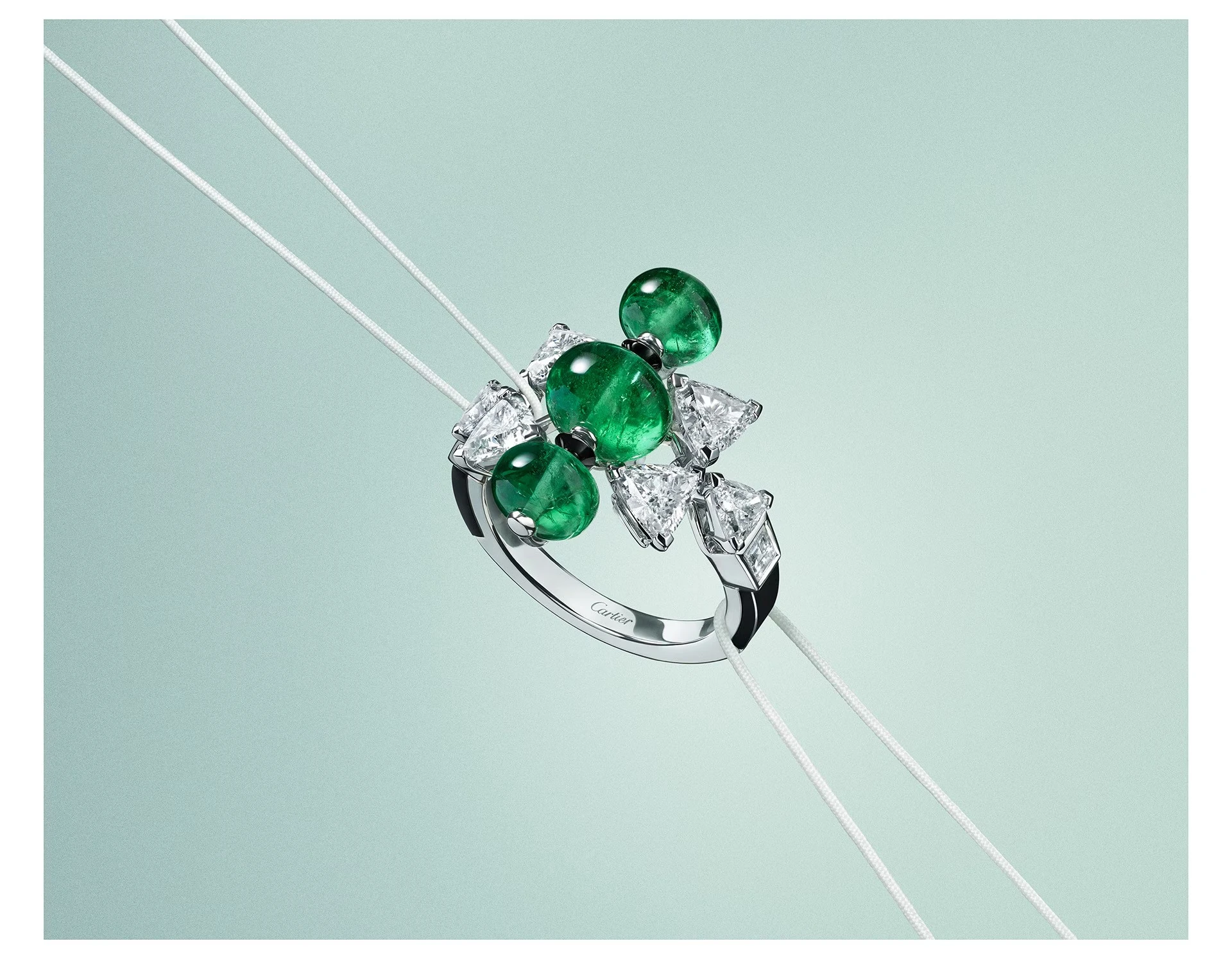
A small stake would give Richemont a voice in the future of natural diamonds for a fraction of its cash. With large blocks reserved for the three states and for the private investors already committed, any holding for Richemont and Signet is expected to be relatively small. Its significance lies elsewhere. Piral Dadhania, an analyst at RBC Capital Markets, wrote that Richemont, as a major end user of De Beers’ stones, would gain an important voice in the future of the natural diamond industry, and that its participation would be more a matter of positioning in natural diamonds than a financial event. He noted that Richemont executives have said in public that they have no wish to use lab-grown diamonds in the group’s products.
The sum is modest for a group of Richemont’s size. It held about nine billion euros in net cash at the end of June, and the whole of De Beers is priced at less than one percent of Richemont’s own market value of roughly 113 billion dollars. The move also has a precedent closer to the cutting table: Graff, the London jeweller, holds 14.9 percent of Gem Diamonds, owner of the Letseng mine in Lesotho, a deposit prized for its large white stones.
The two prospective partners stand at opposite ends of the same trade. Signet, which owns Kay, Jared and Zales, is probably the largest seller of diamonds in the world by volume, according to the diamond analyst Paul Zimnisky, and Richemont is probably the largest seller of fine jewellery. Bloomberg noted that the diamond industry has long wanted more help from jewellers and retailers in promoting natural stones. The wish has a long history. In 1947, De Beers paid an agency in Philadelphia for the line that made the diamond forever, and for decades the miner financed the story that the jewellers sold. With the miner now valued at a billion dollars, the cost of that story is moving towards the houses whose margins depend on it, the same houses that have made jewellery the strongest category in the luxury market. A seat inside the consortium would give Richemont a voice in how natural diamonds are presented to the next generation of buyers.
The Mining Map Changes Before the Handover
The company for sale is shrinking towards Botswana even before the handover. On 16 October, De Beers took full ownership of Gahcho Kué in Canada’s Northwest Territories, under a deal with Mountain Province Diamonds, which held 49 percent and cited a material decline in diamond prices over the past year. Mountain Province had been delisted from the Toronto Stock Exchange in July. Gahcho Kué is the last operating diamond mine in Canada, and with the Tuzo expansion paused, its closure is expected at the end of 2027.
The deal lifted De Beers’ production guidance for 2026 to between 25 and 28 million carats, from 21 to 26 million, and the company points out that a larger reported share adds nothing to global supply. Venetia, South Africa’s only De Beers mine, stays on its two-year pause. A buyer therefore takes on a group anchored ever more firmly in Botswana, with a Canadian mine close to the end of its life and a South African mine at rest.
Who Owns the Value of a Diamond After the De Beers Sale
The sale moves the value of a diamond towards the two ends of the chain, the ground and the shop window. For a century, the diamond trade divided its rewards along clear lines. The miner controlled supply, the jeweller controlled meaning, and the countries that held the deposits collected royalties and taxes. The sale of De Beers redraws all three lines at once. Botswana, Namibia and Angola are moving from royalty to ownership, Richemont and Signet may move from customer to shareholder, and the company that once set the world price becomes one asset inside a coalition of its hosts and its clients.
For the person who buys a ring, the change arrives as a question about origin. A stone traced to a mine in Botswana, sold by a company in which Botswana holds a quarter and the jeweller holds a share, tells a different story about where its value went. That story is becoming part of the price, and it travels with the stone along a jewellery map that now runs from Beijing to Nairobi. The rough will still be sorted in Gaborone, box by box, before each sight. What changes is who sits at the table when the price is set.
Send this to someone who wears, sells or studies diamonds.
Further Reading
-
The Value Left the Ground: Forever Was the Easy Part
Richemont’s four jewellery maisons grew 24 percent in the quarter to 30 June 2026, while Anglo American wrote De Beers down from 9.2 to 2.3 billion dollars in three years and paused its Venetia mine. The analysis follows the margin from the rough stone to the setting.
-
Why Is Jewellery Outperforming Fashion in the Luxury Market?
Jewellery leads the luxury market in 2026 because its value is material, durable and independent of the seasonal cycle. Richemont and Cartier turn that shift away from logo-driven fashion into growth.
-
The New Geography of Jewellery: From Imperial Beijing to Hammered Nairobi
Jewellery’s new map runs through purity, technique and origin, from Laopu Gold’s 24-karat pieces in China to Tanishq in India, where jewellery spending reached a first-quarter record of 10 billion dollars.
-
The Magic Is Spent: The Structural Shift of the Luxury Market 2026
In 2026, the luxury market is moving from availability towards rootedness. Houses built on scarcity, craftsmanship and long-term desirability are gaining the ground that volume-driven brands lose.
Sources: Bloomberg via Swissinfo, Richemont and Signet in talks to join bidder for De Beers, 15 October 2026; Reuters via BusinessDay, Richemont in talks to join bid for De Beers, 15 October 2026; Reuters via The Edge, Botswana’s right of first refusal and expected closing; MINING.COM, RBC on Richemont’s positioning; EWN, Paul Zimnisky on Richemont and Signet; Forbes Romania, Richemont market value; National Jeweler, Anglo selects Gareth Penny’s consortium, July 2026; De Beers Group, production report for the third quarter of 2026; Rapaport, De Beers sales volume jumps after price cut; RetailBoss, De Beers third-quarter production; JewelBuzz, Anglo American on trading conditions; National Jeweler, De Beers to take full ownership of Gahcho Kué; Skillings, Botswana and De Beers ten-year sales agreement; JCK, Richemont and Signet reported in talks; Engineering News, De Beers holds inaugural diamond sight in Botswana, November 2013.
Similar Articles

Controlled Imperfection: Sogni di Cristallo and the Hand-Blown Light of Carbone Riviera

Hackett on Savile Row: Graham Simpkins and the Suit That Outlives Its Owner

McQueen Is Home Now: London Tailoring Shapes the House’s Next Chapter