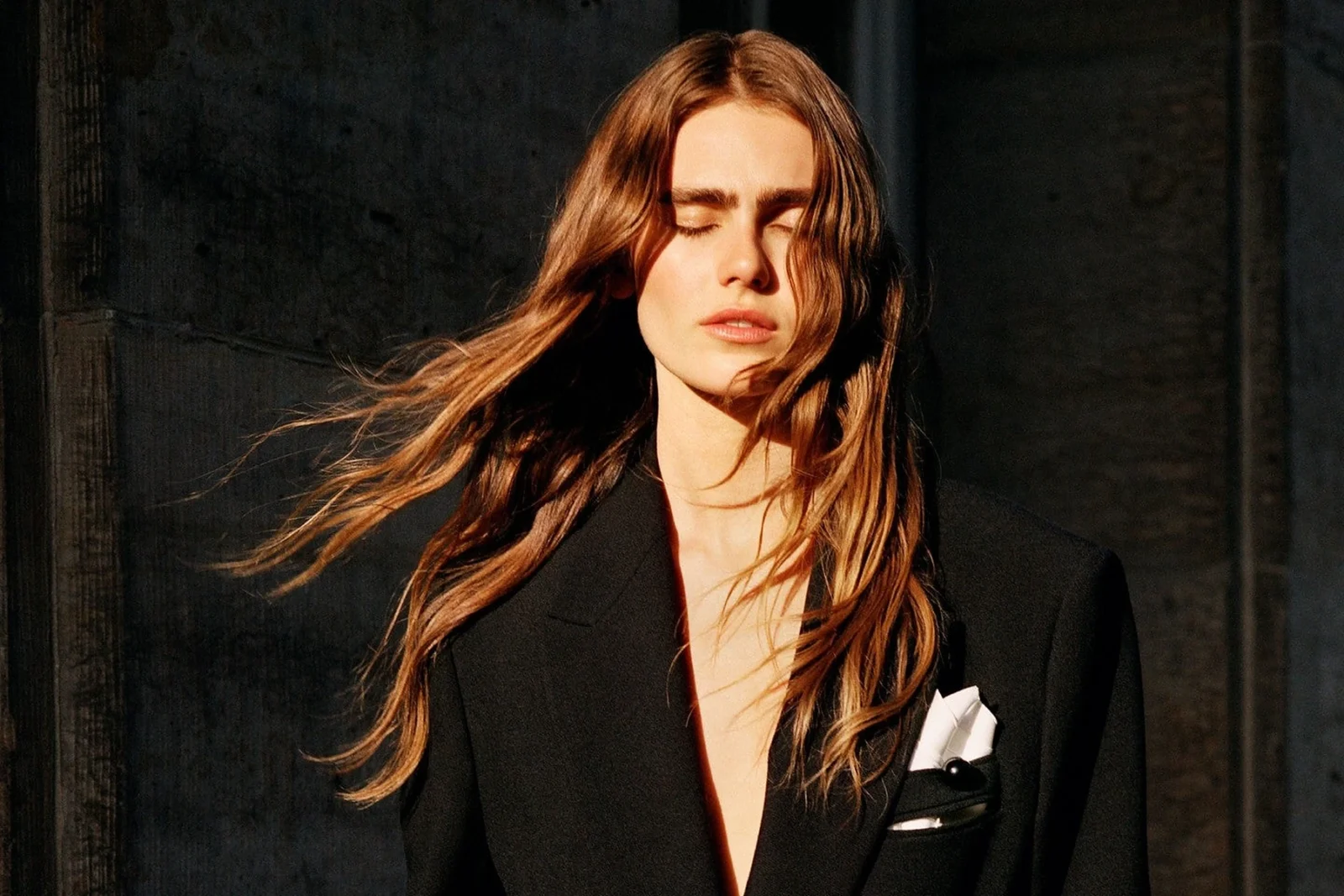
NASA wears Prada: How the heritage brand is defying market gravity
What sounds like a spectacular publicity stunt marks the foundation of a values-based shift in thinking: amidst the reshaping of the global luxury market, the Milan-based group is achieving double-digit growth. As the H1 2026 figures show, Prada is achieving this by combining space exploration, an uncompromising framework of cultural values and the art of saying no.
In Short : The Prada Group increased its net turnover to 3,048 million euros in the first half of 2026, a rise of 16 per cent at constant exchange rates and the twenty-second consecutive quarter of growth. Excluding Versace, growth stood at 5 per cent, accelerating to 7 per cent in the second quarter. This growth stems from like-for-like sales, full pricing and a portfolio of projects ranging from the NASA collaboration with Axiom Space to the Galleria opening in September.
On 14 December 1972, Eugene Cernan climbed the ladder of the lunar module, closed the hatch of the Challenger behind him, and humanity left the Moon. For more than half a century, his footprints in the grey dust of the Taurus-Littrow Valley remained the last evidence of Earth’s presence. When NASA returns to the Moon’s South Pole in spring 2028 as part of the Artemis IV mission to drill for frozen water at temperatures of minus 230 degrees Celsius, the astronauts will be wearing Prada.
Prada and Axiom Space are developing the cooling fabric for Artemis IV: a catwalk on the Moon
On the catwalk, appearance is everything. On the Moon, clothing determines survival. Prada took the step into weightlessness together with the Texan space company Axiom Space. On 7 June this year, the two companies presented the Liquid Cooling and Ventilation Garment at Prada New York: an elastic, skin-tight one-piece suit worn under the spacesuit, interwoven with a fine mesh of capillary tubes through which temperature-controlled fluid circulates. The garment regulates the astronauts’ body temperature in a vacuum and protects them from thermal collapse. Prada develops the specialised fibres, the fabric structure and the cut.
For a luxury group, such a project is fraught with risk. A fashion house that manufactures for NASA subjects its products to the most rigorous quality testing imaginable, thereby building an image that no influencer-driven advertising campaign can match. Seven weeks after the New York presentation, on 30 July 2026 in Milan, the figures for the first half of the
The Prada Group has grown for the twenty-second consecutive quarter: the weightlessness of growth
Andrea Guerra has been at the helm of the Prada Group since early 2023. At the press conference on the half-year results, he attributed the growth to the brand’s position in the market: “It’s now five years that Prada has been growing faster than the market, and again, on a like-for-like basis. So it’s a question of positioning, it’s a question of credibility, and even a little bit of proactivity in the market with ideas, projects and initiatives that enable us to engage different consumer segments.”
What Guerra meant by ‘projects’ was on display throughout the entire half-year. Alongside the space project, Prada Fashion made a guest appearance in New York in June; Prada Frames brought together thought leaders from all disciplines for Milan Design Week; Miu Miu continued its ‘Women’s Tales’ film series with its 27th instalment, founded a Literary Club featuring authors such as Jhumpa Lahiri and Sheila Heti, and announced the continuation of ‘Tales & Tellers’ for Shanghai. On the water, the high-tech yacht Luna Rossa dominated the preliminary regattas off Cagliari.
The results for this network are as follows: the Prada Group generated net turnover of 3,048 million euros in the first half of 2026, an increase of 16 per cent at constant exchange rates and the twenty-second consecutive quarter of organic growth. Excluding the newly consolidated Versace revenue, growth stood at 5 per cent, accelerating to 7 per cent in the second quarter. Exchange rates accounted for around 490 basis points of this figure, with the reported growth rate at 11 per cent. Growth was driven by like-for-like sales and full-price sales. The acceleration was organically driven, originating from existing stores and without the use of discounts.
A look at the brands shows just how high the bar is set. In its own stores, the group generated €2,633 million in revenue, of which €1,834 million in total revenue was attributable to the Prada brand and €875.6 million to Miu Miu. Prada grew by 3.3 per cent in retail, and by 6.3 per cent in the second quarter, compared with a year-on-year figure of ten per cent. Miu Miu recorded growth of 2.5 per cent, compared with a year-on-year figure of forty per cent. Both brands are therefore growing on a basis on which the competition would already have failed. As smaller drivers of growth, wholesale rose by 40 per cent and licence revenues from eyewear and cosmetics by 73 per cent.
The margin tells the Versace story. Operating profit stood at 530 million euros, with the margin falling from 22.6 to 17.4 per cent; two-thirds of this decline was attributable to Versace and one-third to exchange rates; if both factors are factored out, it remained at the previous year’s level. Net profit amounted to €327 million. Regionally, the Americas contributed 17.3 per cent to organic growth; Asia-Pacific grew by 6.5 per cent, Japan by 2.4 per cent, whilst Europe declined by 3.8 per cent. The Middle East fell by 24.1 per cent, and Group CFO Andrea Bonini estimated the impact of the ongoing conflict on the Group’s overall organic retail performance at around 1.5 percentage points. Versace contributed €305.3 million. Pieter Mulier took over as creative director there on 1 July.
The most revealing figure of the day was the one that was missing. When analysts asked for a breakdown of the core brand’s growth between sales volume, pricing and product mix, Guerra’s response was brief: “We were slightly positive on volume and then it was more a mix effect rather than a price effect.” The growth came from volume and from the targeted upscaling of the product range, whilst prices remained largely stable. Guerra emphasised the operational momentum with regard to the key performance indicators: “Since January, we have seen an acceleration across all key KPIs relating to new clients, regional reach and average price. We’ve been dynamic. We’ve launched a number of different projects onto the market that have been well received. We have seen growth across all categories.”
| Indicator | H1 2026 | Change / Note |
|---|---|---|
| Net revenues, Prada Group | €3,048 m | +16% constant FX · +11% reported · +5% organic, Q2 +7% |
| Retail sales | €2,633 m | +12% · +3% organic vs. +10% comps · Q2 +5% organic |
| Prada brand, net revenues | €1,834 m | retail +3.3% · Q2 +6.3%, like-for-like, full price |
| Miu Miu, net revenues | €875.6 m | retail +2.5% · Q2 +2.6% vs. +40% Q2-25 comps |
| Versace, net revenues | €305.3 m | consolidated from H1 2026, in line with expectations |
| Wholesale / Royalties | €299 m / €116 m | +40% / +73% (eyewear, beauty) |
| EBIT Adjusted | €530 m | margin 17.4% vs. 22.6% · steady on organic basis |
| Group net income | €327 m | net debt €693 m after €403 m dividends, €247 m capex |
| Stores | 832 DOS | 14 openings, 25 closures in H1 |
| Regions, organic retail | — | Americas +17.3% · APAC +6.5% · Japan +2.4% · Europe −3.8% · Middle East −24.1% |
Rem Koolhaas has been designing for Prada since 1999: the demystification of consumption
The intellectual foundations of this model date back a quarter of a century. In 1999, Miuccia Prada and Patrizio Bertelli commissioned the Dutch architect Rem Koolhaas to conduct a ruthless study into the future of retail. The result was the Epicenter on New York’s Broadway, which opened in 2001, housed in the former exhibition spaces of the Guggenheim Museum in SoHo. OMA built a monumental ramp there out of zebrano wood, suspended clothes in metal transport cages from motorised ceiling rails, and placed a podium for debates right in the middle of the sales area.
From then on, the connection between avant-garde architecture and commodity production continued to deepen. On the site of a former gin distillery on the southern outskirts of Milan, at Largo Isarco, OMA created a sprawling cultural complex for the Fondazione Prada, whose striking tower was clad in pure gold leaf. This was followed in 2016 by the Osservatorio, situated beneath the arcaded roofs of the Galleria Vittorio Emanuele II and dedicated to 20th- and 21st-century photography. For the 2025 Architecture Biennale, AMO filled the Venetian Palazzo Ca’ Corner della Regina with ‘Diagrams’, an exhibition on the visual organisation of knowledge.
The connection to the Galleria has its own history, dating back to 1913. That year, under the glass roof of Milan’s Galleria Vittorio Emanuele II, two brothers opened a shop specialising in English luggage and exclusive travel accessories. Operating as Fratelli Prada, they sold fine cosmetic cases, jewellery and rare objects to the aristocracy. In 1919, the house rose to become the official supplier to the Italian royal family, which earned it the right to incorporate the coat of arms of the House of Savoy and the distinctive knotted rope into its logo. The Galleria was the place where the elite displayed their status.
Seven decades later, the granddaughter of one of the founders deconstructed precisely this ostentation. Miuccia Prada, who held a PhD in political science, launched a simple rucksack in 1984. The material was Pocono, the water-repellent industrial nylon used by the Italian military to make parachutes and tent canvases. Featuring nothing more than a small enamelled badge, the tent-fabric bag cost more than many of the leather products produced by its Parisian rivals. It was a triumph of concept over raw material.
Today, Lorenzo Bertelli, the founders’ eldest son, is carrying on this legacy; as Chief Marketing Officer and Head of Corporate Social Responsibility, he is steering the brand’s strategic future. At the conference, he spoke about the next step for the material with which it all began in 1984: “We are evaluating how best to recycle both our virgin nylon and Re-Nylon fabric scraps, as well as our shop carpets. This doesn’t mean that we shouldn’t buy, that we shouldn’t do what we’re used to doing, but perhaps we should do it in a different way, from a different perspective.”
Prada is opening seven floors in the Galleria in September: the epicentre of epicentres
When asked about future retail space at the half-yearly conference, Andrea Guerra announced a project that will take the group back to its roots. In Milan’s historic Galleria, exactly where it all began in 1913, the group will open a six- to seven-storey building in mid-September, bringing together retail, art, culture and gastronomy under one roof. Guerra described the project as the group’s greatest milestone:
“We have a huge milestone coming for Prada, which is September, when we are opening this multi-storey cultural, artistic, fashion, art, retail and food experience across six or seven floors in the Galleria Milano in mid-September. I think this will become the epicentre of the epicentres. This will become the place where we can welcome all our friends from around the world, all our clients from around the world, and allow anyone to truly step into a world that is not just about fashion, but about its narrative. It’s cultural. It’s a place where you can truly understand Prada from every angle – from our roots to where we are today and to where we aim to be in the near future.”
Miu Miu · 2020–2026
Ten additional stores.
Four times the revenue.
Company-owned stores
Revenue
No licences. No menswear. Growth from desirability alone.
Store and revenue trajectory as outlined by CEO Andrea Guerra, H1 2026 results presentation, 30 July 2026.
Miu Miu quadruples its turnover with ten additional shops: the political economy of restraint
The subsidiary brand Miu Miu demonstrates how this principle translates into market power. Amidst global consumer reluctance, the fashion house is seeing a level of demand that is fuelling ambitions for rapid expansion. The management is responding to this with a consistent, structural slowdown.
Six years ago, Miu Miu operated 155 company-owned stores; today, there are just 165 locations. Over the same period, turnover climbed from 455 million euros to just under two billion. Management rejected both licensing deals and a move into menswear, and deliberately kept retail space compact. Ten additional locations alongside a fourfold increase in turnover mean that this growth stemmed from the desirability of the premises and a loyal customer base. For the coming years, Guerra forecasts stable growth of five to ten per cent per annum.
Guerra summed up the principle of deliberate scarcity in no uncertain terms during the press conference: “You know how many times people have been asking us to move into menswear, to grant licences, or to get involved in whatever else you can think of. When you’re successful, the only thing you should be able to say is ‘no’ to basically 90 per cent of the proposals put to you.”
This ‘no’ protects the brand from the creeping dilution that buyers increasingly perceive among competitors as a mismatch between price and quality – a phenomenon also described by the International Wool Textile Organisation in relation to the premium market segment.
When, in the spring of 2028, an astronaut takes his first step at the South Pole of the Moon, protected by a Milanese fibre, a circle will be complete that began in 1913 beneath the glass roof of the Galleria. In the weightlessness of space, the same law applies as in the volatility of the markets. You survive if the outer shell withstands the most extreme conditions.
Prada H1 2026: What It Means and Why It Matters
Why is the Prada Group continuing to grow while the luxury market is struggling?
The Prada Group reported net sales of 3,048 million euros for the first half of 2026, an increase of 16 percent at constant exchange rates and 5 percent on an organic basis, with growth accelerating to 7 percent in the second quarter. This marks the twenty-second consecutive quarter of organic growth. CEO Andrea Guerra attributes this resilience to the company’s positioning, credibility, and its own initiative in the market. Growth for the Prada brand came from sales volume and product mix rather than price increases; in retail, it accelerated to 6.3 percent in the second quarter, driven by comparable store sales and full-price sales.
How does Miu Miu maintain its desirability as revenue grows?
Miu Miu follows a policy of deliberate scarcity. According to Andrea Guerra, the store network grew by ten locations over six years—from 155 to 165 boutiques—while revenue climbed from 455 million euros to just under two billion. Management rejects about 90 percent of the proposals submitted to the brand, including licensing deals and expansion into men’s fashion. In the first half of 2026, retail sales rose by 2.5 percent, compared to a 40 percent increase in the second quarter of 2025.
Why does NASA wear Prada, and what does cultural architecture have to do with it?
NASA astronauts wear Prada because the fashion house, in collaboration with Axiom Space, developed the Liquid Cooling and Ventilation Garment—the layer that lies directly against the body in the AxEMU suit and will be worn on the Artemis IV mission to the Moon’s South Pole, scheduled for 2028. Prada contributed technical knitting, pattern development, high-performance materials, and 3D modeling for extravehicular activities lasting up to eight hours. This expertise in materials began in 1984 with a backpack made from Pocono, the industrial nylon used by the Italian military, and finds its intellectual counterpart in a collaboration with Rem Koolhaas and OMA, which began in 1999 with a study on the future of retail and spans from the New York Epicenter to the Fondazione Prada on Largo Isarco.
Further Reading
-
What Touches the Skin: The IWTO Study on Price, Quality and the Mismatch in Premium Fashion
How the International Wool Textile Organisation uncovers the growing disconnect between escalating prices and actual fibre quality across the luxury segment.
-
The Hourglass Economy: How the Luxury Market Separated An investigation into the widening top tier, the thinning middle, and the houses navigating structural market division
-
The Luxury Brand Pyramid: Where Value Replaces Volume A blueprint of brand hierarchy based on material integrity, cultural longevity, and regenerative principles.
-
Hermès H1 2026: Quality Sets the Quantity Axel Dumas on the economic logic of keeping production strictly below market desire.
Similar Articles
Shein Shares Hit a Record Low as LVMH Falls to a 52-Week Low
Rolex Is Closing the Loop

The Gilded Divide: How Luxury Outran the American Consumer in H1 2026