
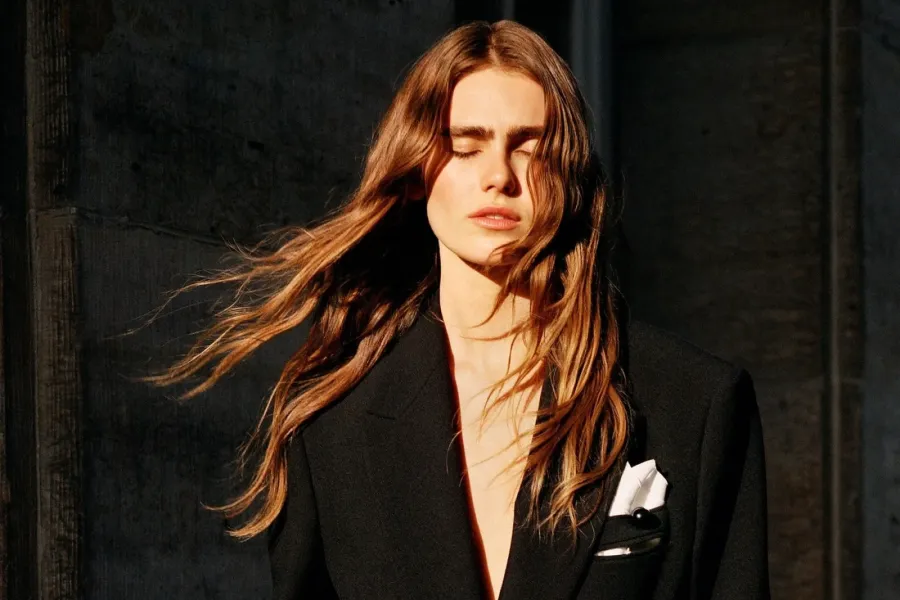
Armani Without Giorgio: The House Opens a New Chapter
A year after Giorgio Armani’s death, Emporio Armani has its first creative director from outside the family, while the house’s jewellery, cotton and fragrances carry his signature forward.
On 16 September 2026, the Armani Group appointed Dario Vitale as creative director of Emporio Armani and Giorgio Armani accessories with immediate effect. The recruitment of the former Versace designer marks a historic shift, representing the first time an individual from outside the Armani family has been trusted with the role. Reuters called the move the group’s most significant design appointment since the founder’s death. It lands exactly twelve days after the window opened for a historic 15 percent stake sale of the company, and just eight days before Emporio Armani unveils its summer 2027 collection in Milan.
The transition arrives one year after Giorgio Armani died on 4 September 2025 at the age of 91, serving until his final days as the sole owner of the fashion empire he founded in 1975. In his final interview, published shortly before his passing, Armani noted that he envisioned an organic succession, “not a moment of rupture”, while candidly admitting that his greatest weakness had been his need to be “in control of everything”. One year later, the house is testing both premises at once, steering his legacy through a corporate structure he meticulously engineered for this exact moment.
Dario Vitale and Emporio Armani: The First Outsider at the Helm
“The appointment of Dario Vitale marks an important milestone for the Armani Group: a decision that strengthens our creative organization and confirms our commitment to looking ahead, consolidating the Group’s path of evolution while remaining faithful to Giorgio Armani’s values and vision,” said Giuseppe Marsocci, CEO and Managing Director of the Armani Group. “Emporio Armani is a brand of strategic relevance for us and our partners around the world. Giorgio Armani accessories represent a great opportunity.”
Vitale answered with gratitude and a sense of scale. “I am honored to take on this dual role across Emporio Armani and Giorgio Armani, and deeply grateful to Silvana and Leo for welcoming me into their world,” he said. “Armani has a powerful legacy and unmistakable design language; a heritage that has spanned decades and shaped the history of fashion. I approach all of this with a deep sense of responsibility and excitement as we build upon that rich foundation, defining a new era together.”
Born near Naples in 1983 and a 2006 graduate of Istituto Marangoni, Vitale brings a sharp, institutional pedigree to the house. He previously rose through the ranks at Miu Miu to become design director of ready-to-wear and head of image. In April 2025, he became the first designer from outside the Versace family to lead that house, showcasing one spring 2026 collection in Milan before departing in December following Prada’s acquisition of the brand.
Vitale’s schooling at Prada’s Miu Miu, where he spent more than a decade shaping both the collections and the image of the brand, gives him long experience at the boundary between a house’s codes and contemporary relevance, a boundary he tested again at Versace. Armani frames his appointment as the start of a dialogue between innovation and identity, and Emporio Armani is the line where that dialogue will play out first.
Vitale now leads Emporio Armani, the line Giorgio Armani created in 1981 as a younger, lower-priced label with an early structural focus on denim. It currently sits strategically just below the flagship brand. Welcoming the appointment, Silvana Armani and Leo Dell’Orco made clear how personal the line is to them: “Emporio Armani is much more than a line for us: it is a reality to which we are deeply connected, having followed and shared its journey since the very beginning. Emporio was born as a space of freedom, experimentation and energy, and we are convinced that Dario’s arrival in our team, as a talent already established on the international stage, will interpret its spirit with respect and authenticity.”
Silvana Armani and Leo Dell’Orco: The Family Keeps the Main Lines
The restructuring pairs outsider energy with continuity at the top, leaving the flagship collections with the two designers who stood closest to the founder. Since his death, creative control has been divided between his niece, Silvana Armani, head of womenswear design, and his longtime partner, Leo Dell’Orco, head of menswear design. Both worked alongside Giorgio Armani for decades, preserving his refined, understated aesthetic while integrating measured touches of innovation. Until this week, their purview also included Emporio Armani.
Under the new structure, the main collections remain firmly in their hands. Silvana Armani now oversees all womenswear across the Armani universe. In June 2026, she and Dell’Orco presented the Giorgio Armani men’s spring/summer 2027 collection together for the first time. Vitale’s arrival draws a clear strategic boundary: Silvana Armani and Dell’Orco retain the flagship brand, while the younger line receives a dedicated designer of its own.
Giuseppe Marsocci and the New Armani Board
The first transitional year was primarily dedicated to governance. In October 2025, the group appointed Giuseppe Marsocci as chief executive, a 23-year veteran of the company who had most recently served as global chief commercial officer. In November, a newly formed board took shape, chaired by Leo Dell’Orco, who holds 40 percent of the voting rights. The board’s roster balances family loyalty with heavy-hitting industry figures, including Silvana Armani, Armani’s nephew Andrea Camerana, Marsocci, former Gucci chief executive Marco Bizzarri, former Armani executive John Hooks, Federico Marchetti and Angelo Moratti.
Marsocci frames the upcoming mandate as a delicate equilibrium between defending the identity that defines the house and embracing the “inevitable evolution” it must pursue. Outside observers view this path with caution: Francesco Fiorese, a partner at Simon-Kucher, told Reuters that while continuity was the correct strategic choice for the first year, it could calcify into inertia if left unaddressed. To signal the momentum ahead, Marsocci highlighted a joint venture to expand Armani Hotels & Resorts, with a third property slated to open in 2027 at Diriyah Gate in Riyadh, joining the existing hotels in Dubai and Milan.
Financial Footing: Holding Ground Amid Rebalancing
The financial data from the first post-founder fiscal year indicates a house stabilising its market position:
- Net revenue (2025): Slipped 2.8 percent at constant exchange rates to 2.19 billion euros.
- EBITDA: Rose 3.2 percent to 152.7 million euros.
- Operating profit: Grew 2.5 percent to 52.6 million euros.
- Channel performance: Retail sales expanded by 2 percent, while wholesale contracted by 7 percent.
- Lifestyle categories: Home, hospitality, and food and beverage delivered double-digit growth.
Net profit at the parent company, Giorgio Armani SpA, more than doubled to roughly 67 million euros, approximately half of which was distributed as dividends. Marsocci characterised the first quarter of 2026 as in line with the previous year. When accounting for licensing partners and their direct turnover, global Armani-branded sales approach 4 billion euros.
ArmaniAfter Giorgio
Economics and strategy in the first year after the founder. Results for 2025, the licence economy behind the brand and the strategic lines of the house.
| Home, hospitality, food and beverageLifestyle categories | double-digit | |
|---|---|---|
| RetailDirectly operated stores | +2% | |
| Armani GroupNet revenue, €2.19bn | −2.8% | |
| WholesaleThird-party distribution | −7% |
| EBITDA€152.7m | +3.2% | |
|---|---|---|
| EBIT€52.6m | +2.5% |
| Armani GroupConsolidated net revenue 2025 | €2.19bn | |
|---|---|---|
| Armani beauty at L’OréalLicence until 2050 | ~€1.5bn | |
| Armani eyewear at EssilorLuxotticaRenewed in 2023 for 15 years | ~€0.5bn |
Licence sales are industry and analyst estimates reported by Reuters. About one-tenth reaches Armani as royalties. Including licensees, Armani-branded sales come close to €4bn.
| Channel | Retail over wholesaleRetail +2%, wholesale −7% in 2025 |
|---|---|
| Lifestyle | Home, hotels, food and beverageThird Armani Hotel planned for 2027 at Diriyah Gate, Riyadh |
| Licences | Long-term partnerships with two of the named buyersL’Oréal until 2050, EssilorLuxottica renewed in 2023 for 15 years |
| Creative organisation | Family on the flagship, a designer for the younger lineDario Vitale at Emporio Armani from 16 September 2026 |
| Material | Traceable Italian cottonFirst products from the 2024 Apulia harvest due in autumn 2026 |
| Ownership | A first 15% stake from September 2026Priority to LVMH, EssilorLuxottica or L’Oréal; the Foundation keeps at least 30.1% |
Sources: Armani Group 2025 results, 29 April 2026, via Bloomberg, The Impression and LaConceria; Reuters, 4 September 2025, 22 July 2026 and 4 September 2026; Fashion Network. Growth bars: 10% = half width. Revenue bars: €2.5bn = full width. Hatched bar = decline. © Silent Communications GmbH. Analyses published by request; backlinking freely permitted; reproduction requires written consent.
Giorgio Armani’s Will: The 15 Percent Sale and the Three Named Buyers
The roadmap for the group’s capital structure is explicitly dictated by Giorgio Armani’s last will and testament. The document stipulates that between 12 and 18 months after its opening, the heirs must sell an initial 15 percent stake in the company. Crucially, the will names the preferred buyers: LVMH, EssilorLuxottica or L’Oréal, or alternatively another luxury group of comparable international standing.
This initial capital opening is built as a partnership. The will gives priority to groups with which the company already works, and two of the three named buyers hold Armani’s most valuable licences: L’Oréal for beauty and fragrance until 2050, EssilorLuxottica for eyewear under a fifteen-year renewal agreed in 2023. The first step leaves control where Giorgio Armani placed it. The Giorgio Armani Foundation keeps at least 30.1 percent of the capital permanently, and any choice of buyer requires Leo Dell’Orco’s approval. Following this initial sale, the will allows a further 30 to 54.9 percent to pass to the same buyer between the third and fifth year, or, alternatively, a stock market listing between the fifth and eighth year, with an Italian venue preferred. The transition is therefore designed as a gradual opening, with the possibility of a majority partner or public shareholders at its end.
Armani Privé Haute Joaillerie: Jewellery Made by Hand in Italy
The house entered high jewellery late and deliberately. In 2019, Giorgio Armani presented his first Armani Privé haute joaillerie at the Madison Avenue boutique in New York: 23 one-of-a-kind pieces priced between 20,000 and 190,000 dollars, made by hand in Italy under his direction. He explained the step with a genuine interest in artisanry and in pieces made to last.
The collection shown in December 2023 at the Palace Hotel in St. Moritz worked in three colours with an invisible setting: sapphires and diamonds on white gold, tsavorites and diamonds on yellow gold, rubies and diamonds on rose gold. Alongside it, a Giorgio Armani fine jewellery line accompanies the ready-to-wear in seven themes, from Gioia and Josephine to Firmamento. One of them, Sì, borrows its petal form from the house’s best-known women’s fragrance. Vitale’s new remit over Giorgio Armani accessories places him beside this world of objects.
The Apulia Regenerative Cotton Project: Armani’s Material Returns This Autumn
“In fashion, everything begins from the material,” Giorgio Armani said in June 2023, when the group presented its Apulia Regenerative Cotton Project on World Environment Day. The pilot, developed with the Sustainable Markets Initiative’s Fashion Task Force and the Circular Bioeconomy Alliance, revives a cotton tradition in Puglia that dates back to the 12th century, on an agroforestry site that began with one hectare and was set to grow to five from 2024. Armani called it a step through which regenerative fashion, “once a utopia”, begins to take tangible form.
In November 2025, the project presented its first results, and Marsocci made his first public appearance as chief executive. He expects products made from the 2024 harvest to reach stores in autumn 2026, each garment carrying a QR code that traces suppliers and production steps. Federico Marchetti, chair of the Fashion Task Force and now an Armani board member, calls it “the first regenerative cotton made in Italy”.
Acqua di Giò and Sì: Armani’s Scent Under the L’Oréal Licence
The most intimate Armani product is also one of the most durable. The beauty business has run under licence with L’Oréal since 1988 and ranks among the jewels of L’Oréal Luxe. Acqua di Giò, created in 1996 by the perfumer Alberto Morillas and inspired by Pantelleria, where Armani spent his holidays, remains one of the best-selling men’s fragrances years after its launch. Sì, introduced in 2013, has grown into a family of its own.
Above them sits Armani/Privé, the house’s haute couture perfumery built on rare ingredients. Since 2010, Acqua for Life has supported communities facing water scarcity, and since 2018 Armani beauty has been the official beauty partner of the Venice International Film Festival. With a licence running to 2050, the fragrances are the part of Armani that will outlast every step of the will. The wider market behind them is traced in The Nature of Beauty.
Emporio Armani on 24 September, Giorgio Armani on 27 September
The next test comes within days. Emporio Armani will unveil its summer 2027 collection on 24 September during Milan Fashion Week, through a presentation rather than the customary runway show, a format Reuters described as unexpected. Three days later, on Sunday 27 September at 11 a.m., Giorgio Armani shows its women’s spring 2027 collection at Via Bergognone 59, the last major show of the week.
A year ago, the last Emporio collection designed by Giorgio Armani closed with no designer’s bow; the models paid tribute to him with long applause on the final walk. This September, the house returns to the same week with his name on both collections and a new designer at the younger line.
Further Reading
-
Giorgio Armani: A Legacy of Elegance and Responsibility
Giorgio Armani redefined fashion over five decades and set an early example of responsibility with his philosophy of slow fashion. The Silent Luxury’s homage follows that conviction to its last chapter, the Apulia regenerative cotton project.
-
Anton Rupert Moves Up at Richemont as the Rupert Succession Takes Shape
Anton Rupert, 39, became non-executive co-deputy chairman of Richemont on 9 September 2026 and oversees the product and communications committee of Cartier, Van Cleef & Arpels and the other Maisons. His family holds 50.6 percent of Richemont’s votes with 10.18 percent of the capital, which makes the appointment the first concrete step in the group’s succession.
-
The Eyewear Split: How a $173 Billion Market Is Dividing Into Two Irreconcilable Logics
The global eyewear market reached 172.92 billion dollars in 2026 and is dividing into two industries: one built around AI platforms and EssilorLuxottica’s smart glasses, the other around decades of manufacturing and 1.8-gram titanium frames. EssilorLuxottica tripled its Meta AI glasses sales to more than seven million pairs in 2025.
-
The Nature of Beauty: From the Mirror to the Cell
The luxury beauty market has become the steadiest trade in luxury, a field of 1,410 billion dollars by 2030 once aesthetics, longevity and well-being enter the count. In 2026, beauty passed leather to become the largest category in personal luxury, and fragrance climbed at every major house.
Sources: Armani Group, press release on the appointment of Dario Vitale, 16 September 2026; Reuters, Dario Vitale appointed creative director of Emporio Armani and Giorgio Armani accessories, 16 September 2026; Reuters via Business Standard, A year after Armani’s death, firm faces challenge of inevitable evolution, 4 September 2026; W Magazine, Dario Vitale named creative director of Emporio Armani, 16 September 2026; AP, 16 September 2026; Bloomberg, Armani posts 2025 profit rise as higher-end lines lift results, 29 April 2026; The Impression, Giorgio Armani Group reports stable 2025 results, 29 April 2026; LaConceria, 30 April 2026; Reuters via Fashion Network, Armani parent company posts 2025 net profit of €67 million, 22 July 2026; Reuters via CPP-Luxury, Armani licences and potential buyers, September 2025; WWD, Armani board and succession, 1 July 2026; Worthbury, Armani ownership, 30 June 2026; Newsweek, Giorgio Armani’s succession, September 2025; Forbes, 7 September 2025; WWD, Armani Privé haute joaillerie, 2019 and December 2023; ESG News, Armani Group announces regenerative cotton project in Italy, June 2023; WWD, Armani Group teams with King Charles on regenerative cotton project, June 2023; WWD via Yahoo Finance, Giorgio Armani Group unveils first regenerative cotton results, November 2025; L’Oréal Luxe and BeautyMatter on Armani beauty; Design Scene and WWD, Milan Fashion Week schedule, September 2026; Malay Mail, Emporio Armani show, 25 September 2025.
Photos: Courtesy of Armani; Dario Vitale portrait by Jeannette Montgomery Barron / Emporio Armani.
© Silent Communications GmbH. Analyses published by request; backlinking freely permitted; reproduction requires written consent.
Similar Articles
Savile Row: One Block of Mayfair, Two Centuries of Bespoke Tailoring
The Caliber of the Deep: Blancpain and the Ocean Photographer of the Year 2026
German Jewellery Market: Jörg Gellner Sells His Pearl House to the Dettinger Group
