There is a number the textile industry rarely says out loud. Every year, around 150 billion dollars in value disappears into discarded material, fibre that was made, sold, worn briefly, and thrown away. The figure describes a habit of mind more than a flaw in the cloth. It treats a thing as finished the moment it leaves the warehouse, and lets value run in one direction until it stops. Two European manufacturers, working in industries that rarely cross paths, have spent the better part of a century building on the opposite belief. One makes workwear in Sweden. The other makes eyewear in Austria. Both describe sustainability as the way the factory already runs, a matter of production long before it becomes a matter of language.
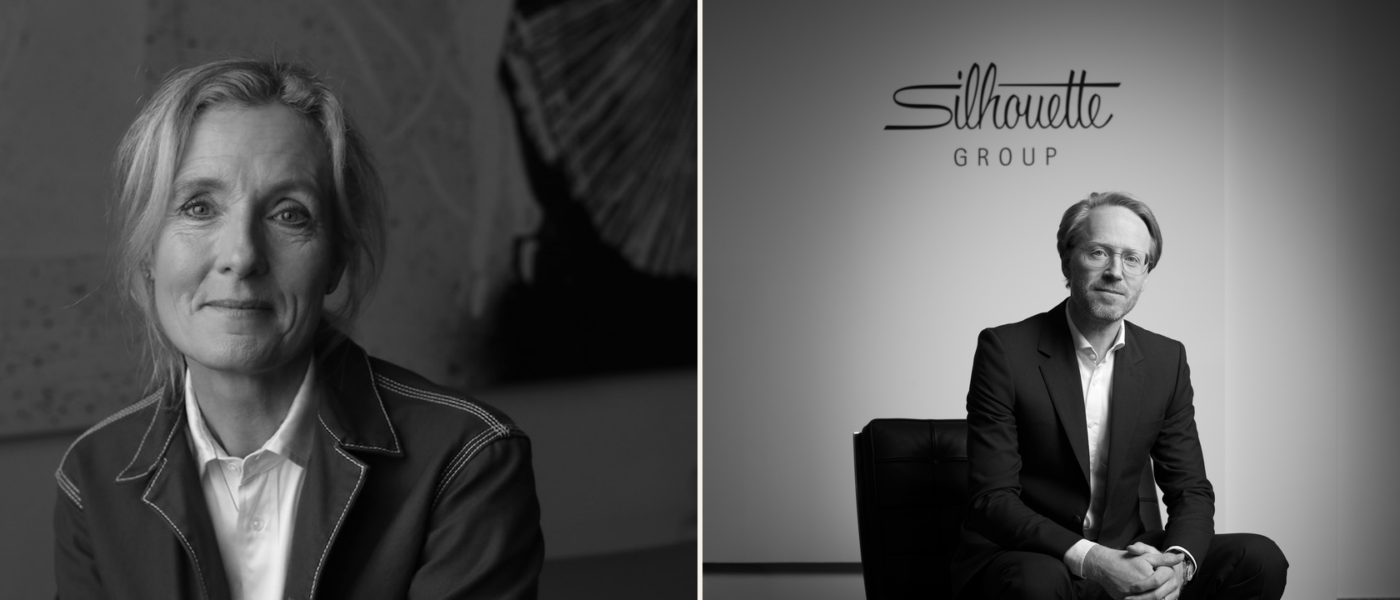
Petra Öberg Gustafsson runs Fristads, founded in Borås in 1925, the year workwear in Scandinavia still meant a garment that had to survive a working life. Christian Bachler took over as CEO of Silhouette in Linz in April 2026, sixty-two years after the company began making spectacles in a city better known for steel than for design. They have different products, different owners, different histories. When each of them describes what holds a brand and its wearer together over decades, they reach for the same word. Trust. And both of them, asked where that trust comes from, point at the same place. The factory floor.
Continued Reading
The Design of Trust: Petra Öberg Gustafsson on Workwear and Circularity at Fristads
The full conversation in Vienna on Sustainability as a Service, the heritage of Borås, and why a mindset outlasts a system.
Read the full interview
A Century of Function, a Future of Meaning
Fristads was born from necessity. A miner, a forester, a welder needed clothing that would not give out before the shift did, and durability was the entire promise. Under Öberg Gustafsson, that promise has moved from the physical to the cultural. “Sustainability is not a department,” she says, in a sunlit salon at the Hotel Altstadt in Vienna, a building that keeps its own quiet principles about how things are made and kept. “It’s a mindset. Everyone in the company, from sourcing to logistics, shares that responsibility.” She pauses before sentences the way someone does who has translated a principle into a process and watched it hold. “You can copy a system, but you can’t copy a mindset. The mindset is what truly changes a company.”
In Linz, Silhouette has been asking a version of the same question since 1964, and Bachler frames it almost as a riddle. How long does something last, and why. The company has made every frame in Austria for sixty years, which means it controls each step from design through engineering and material development to the moment a finished pair leaves the building. “As a family-owned company, we think in generations, not seasons,” Bachler says. “This long-term perspective shapes everything we do.” The Titan Minimal Art, the frame that made the house known, weighs 1.8 grams. He does not call its design minimalism. He calls it purity, the refinement of every detail until only the essential remains.
When Sustainability Becomes the Way the Factory Works
The temptation in both industries is to treat responsibility as a layer applied afterward, a report at the end of the year or a phrase on a hangtag. Fristads built the principle into the business itself. The model it calls Sustainability as a Service began with a single client in the Netherlands who asked how the company could help it meet its climate targets. “We built the system together,” Öberg Gustafsson recalls. “They told us their challenges, we designed the solution. That collaboration became the blueprint.” Now used garments come back to be sorted, repaired, and re-spun into new fibre, and the client receives a dashboard showing the carbon and water it saved, which doubles as proof for an auditor. “We make sustainability manageable,” she says. “Not marketing, but measurable.” In the warehouses, collection bins stand where waste containers once did. Value circulates and stays in motion, and she describes the logic plainly. “Circularity isn’t charity. It’s efficiency with conscience.”
Silhouette arrives at the same destination from the production side. In April 2026 the company completed the phase-out of fossil natural gas at its Linz plant, a structural change carried out as engineering work rather than as a communications event. Bachler treats this as a matter of credibility that precedes ecology. “These two dimensions support each other the moment they move beyond communication and become part of real decisions, investments, and long-term commitments,” he says. “Producing in Austria, investing in material innovation, continuously refining the wear experience are not campaigns. They are part of our long-term philosophy.” His test for whether a claim is honest is whether the customer can feel it on their own. “Today, consumers immediately recognise whether sustainability, innovation, and quality are authentic, or simply marketing.”
The Word Both of Them Use
There is a reason both houses keep returning to trust, and it has to do with a shift the rest of the industry has been slow to name. Bain & Company, in its latest Worldwide Luxury Market Monitor, traced a widening distance between consumers and several of the largest houses, opened by years of price increases that ran ahead of any matching gains in quality or creativity. The romantic image of the atelier has given way to a harder question. Who can actually sustain a relationship over time. The answer turns out to favour the companies with depth in production, material research, and the patience to keep refining the same object for decades.
This is the ground Fristads and Silhouette have stood on all along, and it explains why their language overlaps so precisely. Öberg Gustafsson calls reflective seams, recycled fibre, and breathable membrane “the silent design of trust,” and holds that the garment must stay as strong as it becomes sustainable. “If sustainability weakens the garment, it fails. Real innovation protects both the planet and the person wearing it.” Bachler defines the same idea from the wearer’s side. “True innovation, in our view, is often invisible. It is the precision of the engineering, the lightness of the frame, the flexibility of the material, or a hinge design that enhances comfort without the wearer even noticing it consciously.” One is describing a jacket on a building site, the other a frame on a face for fourteen hours a day. They are describing the same contract.
Heritage as a Working Tool
Both companies own histories long enough to weigh on them, and both treat the archive as a living vocabulary they still speak from. At Silhouette, the Iconic Shades collection returns to the bold design language of the late 1970s and the work of Dora Demmel, then runs it through the company’s own SilhoPure 3D-printing technology. “We do not treat our design history as an archive, but as a foundation to evolve from,” Bachler says. The portfolio holds the tension on purpose, the highly technical Titan Minimal Art at one pole and the expressive heritage collections at the other, which keeps the house current and contemporary while it draws on its past.
Fristads keeps its heritage in the cloth itself. Öberg Gustafsson remembers the day employees received garments made partly from their own retired uniforms. “They recognised the colours, the fibres, and they felt proud,” she says. “That pride is also sustainability.” Each piece carries the trace of an earlier use, an industrial form of continuity that a worker can see and hold. The lesson in both cases is the same. A history is worth keeping only if it still does work in the present.
Continued Reading
We Think in Generations, Not Seasons: Christian Bachler on Silhouette and Purity
The full interview on sixty years of production in Linz, the philosophy of Titan Minimal Art, and what trust between a house and its wearers requires today.
Read the full interview
Profitability as the Condition
Both leaders treat responsibility and money as partners in the same discipline, and both are pointed about it. Fristads belongs to Investment AB Latour, one of Sweden’s most stable industrial owners, the kind of patient capital that lets a company think in decades. “You cannot be sustainable if you are not profitable,” Öberg Gustafsson says. “But you won’t stay profitable if you ignore sustainability.” Circular systems lower waste, reduce cost, and give a client a reason to stay, which is to say they pay for themselves. “Every repaired garment is one less resource wasted, and one more reason for customers to stay.”
Bachler, leading a family-owned house, frames the same balance as a discipline enforced from the top. The work is to keep reduction grounded in real engineering and heritage anchored in real product. The guard for both is consistency. “The key discipline lies in ensuring that product, innovation, sustainability, and communication always speak the same language. That consistency is what creates trust, and ultimately defines modern luxury.”
What the Two Factories Together Make Clear
Stand the two conversations side by side and a pattern emerges that each interview only half reveals on its own. A Swedish workwear maker and an Austrian eyewear maker, separated by industry, geography, and the entire surface appearance of what they sell, have built their futures on the same conviction. That a product is a relationship extended over time, that the proof of responsibility lives in the production as much as in the press release, and that a region with a long memory is an asset worth keeping. Öberg Gustafsson hopes that in ten years the word sustainability will have dissolved into ordinary practice, because it will simply describe how everyone works. Bachler thinks in generations where others think in seasons, because the frame he makes is built to outlast the trend around it.
The market is currently loud with a faster logic. Smart glasses are projected to quadruple in sales this year, eyewear giants are forming platform alliances, and a great deal of luxury moves on scarcity and speed. Two European manufacturers, rooted and traditional and far more innovative than the word traditional usually allows, have chosen the slower position on purpose. They make things that are meant to be kept. And keeping, it turns out, is the most demanding discipline of all.
Petra Öberg Gustafsson is CEO of Fristads, founded in Borås, Sweden, in 1925. Christian Bachler became CEO of Silhouette International, founded in Linz, Austria, in 1964, in April 2026. Both spoke with The Silent Luxury.