Michaela Karl on Schiaparelli: Smart Women Pay for Their Own Clothes
This conversation belongs to our reading of Shocking Pink: How Elsa Schiaparelli Taught the World to See a Woman, the central study of the designer and her language of colour.
Michaela Karl has written biographies of Dorothy Parker, Zelda Fitzgerald and Isadora Duncan. With Kluge Frauen bezahlen ihre Kleider selbst (btb Verlag, 2025), she presents the first comprehensive German-language biography of Elsa Schiaparelli. Her conversation with Eva Winterer, editor of The Silent Luxury, took place against the backdrop of the retrospective Schiaparelli: Fashion Becomes Art, on view at the Victoria and Albert Museum in London until 8 November 2026.
The Silent Luxury (TSL): What kind of woman was Elsa Schiaparelli?
Michaela Karl: A rebel, who refused from the very beginning to live the life that had been mapped out for her. She came from a conservative, well-to-do Roman household, and she broke out of that narrowness. After a failed marriage she arrived in Paris as a single mother and built one of the most influential fashion houses of the twentieth century. What drove her was a deep conviction: that fashion is art, that a woman is allowed to be seen, and that clothing is the most precise instrument for carrying that conviction outward.
TSL: What makes her creativity so singular?
Karl: Schiaparelli possessed enormous self-assurance and a sense of mission, and she had it a hundred years ago, in a fashion world that came long before punk or a Vivienne Westwood. What still holds me to this day is a single question: who is this woman who designs a lobster onto an evening gown and simply takes for granted that it will be worn? And the astonishing thing is that it worked. She became the couturière of her age, in an industry that was then far more male-dominated than it is now.
TSL: Schiaparelli held all her life that fashion is art. What did that mean in practice for her work?
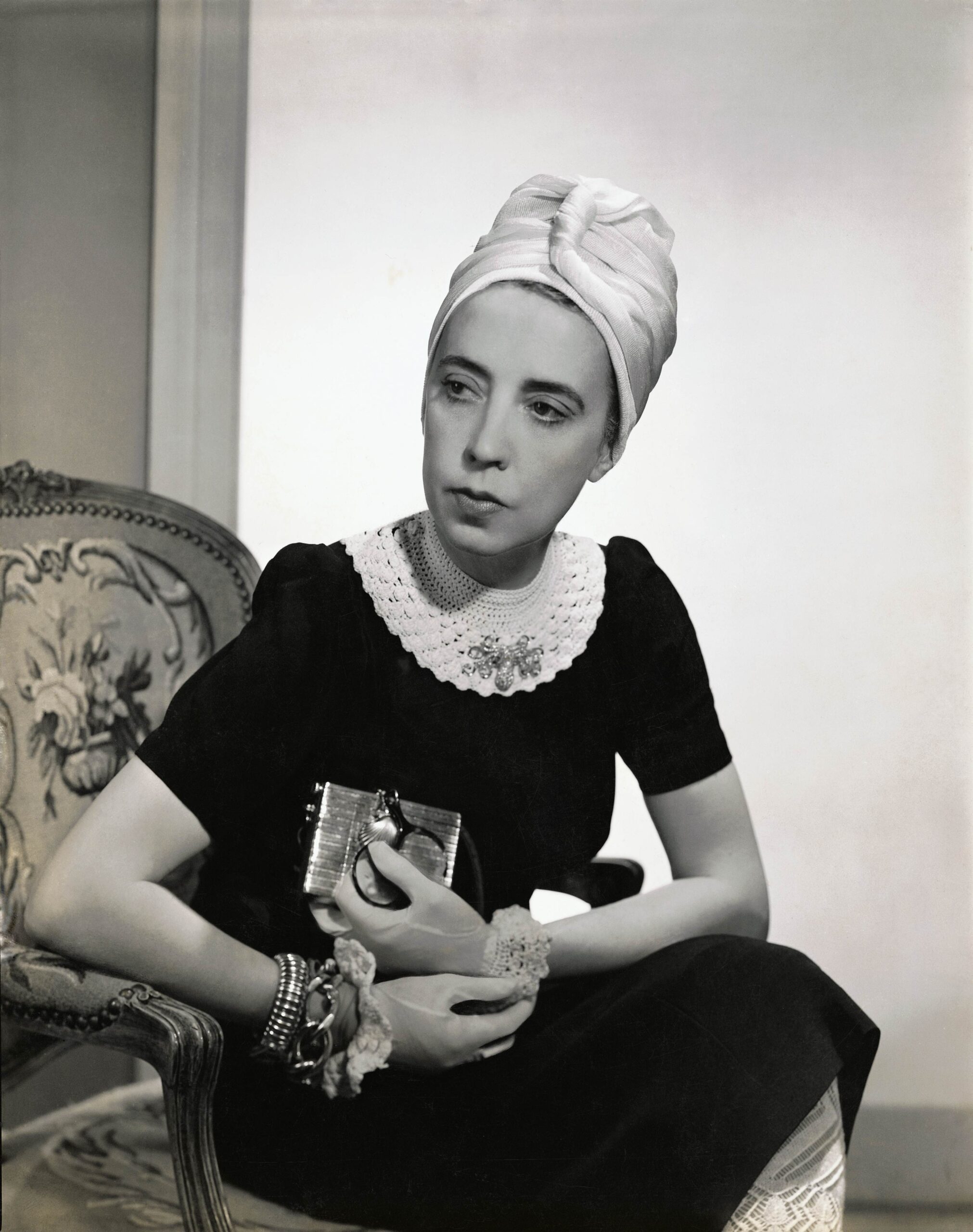
Karl: She always understood herself as an artist rather than an artisan, and that distinction runs through every one of her designs. For Schiaparelli a dress was a conceptual act, something that had to say something, mean something, call something into question. Fashion being recognised as an art form was by no means a given at the time. Fashion is also commercial, and that commercial dimension long kept it out of the museum. It took Diana Vreeland, who built the Costume Institute and founded the Met Gala, to make visible what Schiaparelli had stood for her whole life.
TSL: How did that show itself in her designs?
Karl: In everything. She brought Surrealism and the Dada movement into fashion, first and most consistently. A lobster crawls across the hip of an evening gown. A bow grows out of the neck of a sweater. A shoe sits on the head where a hat should be. These are not whimsies, they are conceptual gestures that change the way we look at the body, at the woman, at the clothing itself. And here is the amusing part: at the start she could not sew at all. When she still made her first models herself, the seams came out so crooked that she had no choice but to set appliqués over them so the flaws would not show. Her art grew out of imperfection. Of Chanel, by contrast, it is said that she always carried a small pair of scissors and would unpick crooked seams even on strangers in the street. The two could not have been more different.
TSL: The title of your book is Schiaparelli’s most famous maxim. Why this sentence in particular?
Karl:Because it reflects her entire philosophy. Financial independence was for her one of the absolute keys to freedom itself. She lived exactly that, paid for her own clothes, and she worked by preference for women who did the same. Independent, self-possessed, financially autonomous women. It took courage to wear her fashion then. A hundred years ago this sentence was highly provocative and, for many, barely comprehensible. Today it is every bit as central.
TSL: In what way?
Karl:A friend of mine puts it very precisely: you walk into the delivery room as a couple from the twenty-first century, and you walk out as a couple from 1950. The care work lands with the women, and their working lives acquire gaps. Schiaparelli was a mother body and soul, and she was a designer body and soul as well. That creative, productive part simply belongs to a fulfilled life as a woman.
For the designer’s life read through this biography, see Schiaparelli Rediscovered: The Designer Who Made Fashion an Act of Independence.
TSL: Your book is the first comprehensive German-language biography. Why was Schiaparelli so little known in the German-speaking world for so long?
Karl: The most practical reason: the house of Schiaparelli closed in 1954, and the fashion afterwards was, for decades, simply no longer present. If you opened Vogue, she no longer appeared, quite unlike Chanel, which carried on without interruption. Only since the revival of the house has she returned to awareness.
TSL: The rivalry between Schiaparelli and Chanel is legendary. What really lay behind it?
Karl: Two entirely different worldviews collided there. Chanel understood fashion as pure craft and flatly refused the idea that fashion should be art. She stood for classical modernism in the Bauhaus spirit: plain, structured, restrained, almost uniform. Any ornament was anathema to her. That came out of her own life, she had still known women in corsets and understood how uncomfortable and unsuited to work they were. Schiaparelli was the answer to that, loud, colourful, surreal, dadaist: here I come.
Their image of woman was just as different. Chanel was a classical beauty and prescribed that ideal to every woman around her: extremely slim, tanned, with a bob. Her employees looked like small copies of her. Schiaparelli measured herself against none of these standards. She was fairly short and she had curves; in Chanel’s clothes she would have felt thoroughly uncomfortable. What she herself first saw as a flaw, she confidently turned into her signature. That is the thing I find most wonderful about her. Classical beauty is rare, and most women find something about themselves they are not so keen on. Schiaparelli said: live it anyway. Where Chanel freed women physically, Schiaparelli freed their individuality, and that was a decisive further step.
TSL: You describe Schiaparelli as a woman who stood out and wanted to stand out. Is that still possible today?
Karl: “Ninety per cent are afraid of standing out. They should dare to be different.” That is one of her strongest lines, and it holds just as well today. Walk through a German or Austrian high street and you can barely tell which city you are in, so closely do the appearances resemble one another. Influencer culture stages itself without pause and is, in doing so, utterly uniform. Everyone dressed alike, everyone seen through the same filters. Schiaparelli’s fashion demands the exact opposite: courage, a genuine showing of oneself, a stepping out.
TSL: In Shocking Life, Schiaparelli set down twelve commandments. Which are the strongest for you?
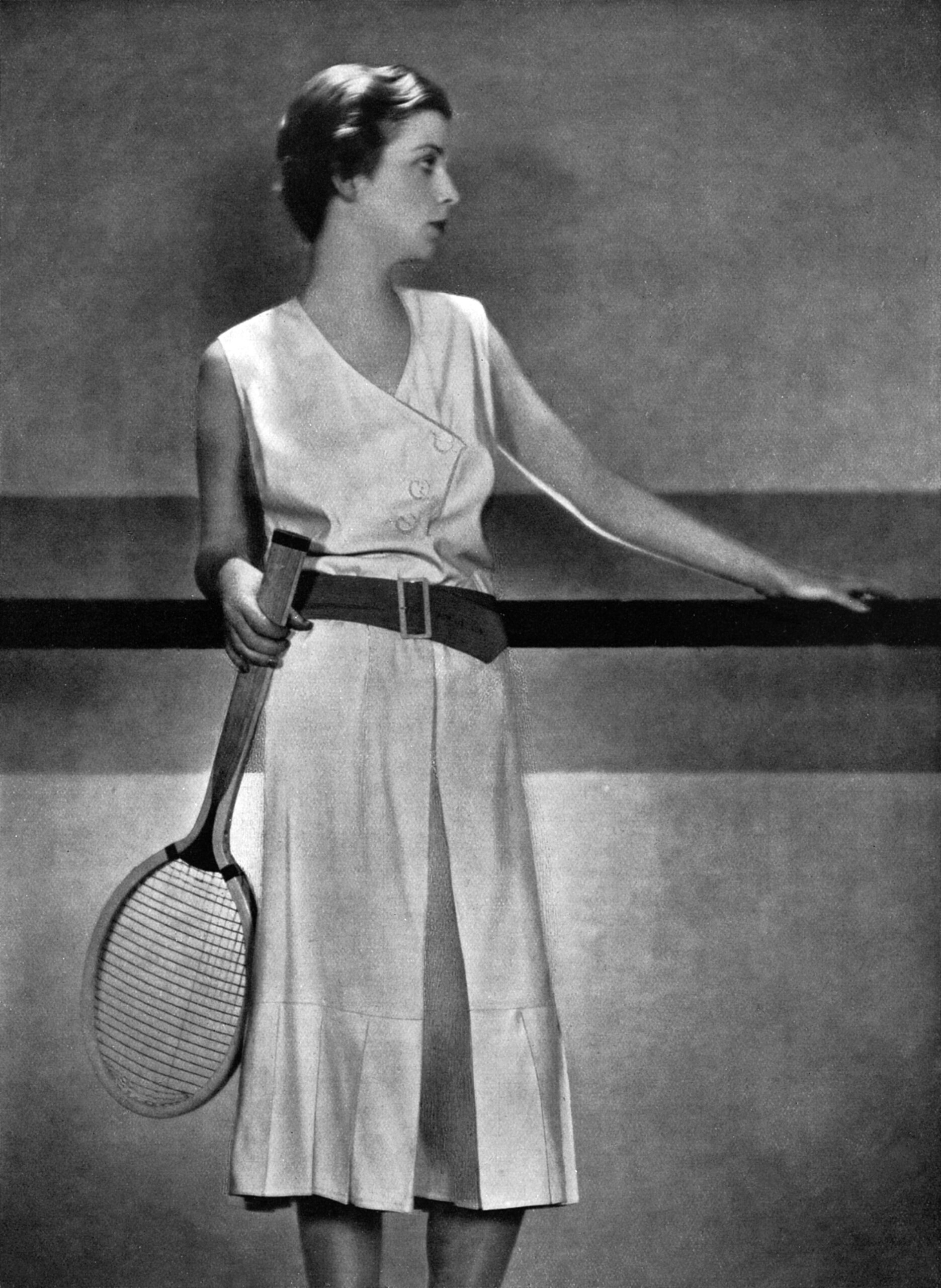
Karl: Alongside the line about standing out, there is the commandment about the psychology of dressing itself. Fashion means standing before the wardrobe in the morning and asking: what does the day want from me, and what do I want from the day? Clothing can work like armour. You put something on and, with it, pull on a confidence you may not, at that moment, yet possess within. Think of the power dressing of the 1980s with its trouser suits for the executive floor, or of Joan Crawford in the 1930s, who wore Schiaparelli’s extremely broad shoulder pads. Those broad shoulders signalled: I can take a good deal, I am fighting my way through here.
TSL: “In difficult times fashion becomes more radical” is another of her maxims. Does it hold today?
Karl: Absolutely. I grew up in the eighties, the era of the punks. That was a radical sartorial statement for the social mood of despair and the famous no future. And on the other side it was also great fun: we would backcomb our hair for two hours and think, let’s have one more party before the world ends. Fashion always mirrors the state of the world, and for that reason it could set something against this bleak political moment today as well. A statement against the rolling back of women’s rights, human rights and the gains made for marginalised groups around the world. It is a wonderful way, beyond demonstrations, to say: I will not go along with this. This does not hold for me.
TSL: Schiaparelli lived this herself?
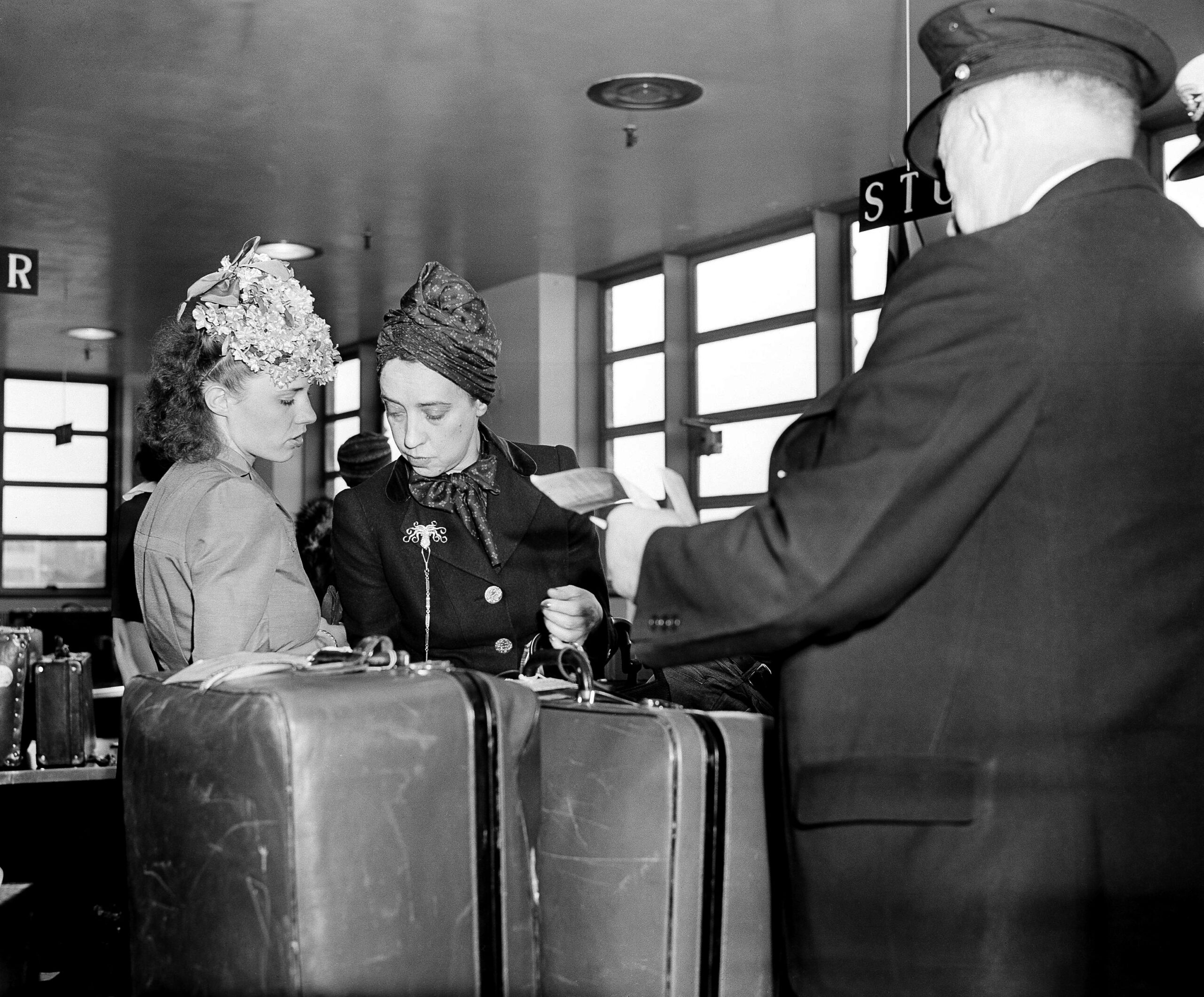
Karl: Entirely. She lived out political demands consistently, which is often far more powerful than any manifesto. Her brilliantly colourful collections in the months before the outbreak of the Second World War were a loud statement for cultural Paris, for culture and for humanity, set directly against the horror that everyone knew was coming. And she refused the fascist dictator Benito Mussolini outright when he tried to enlist her as Italy’s showcase couturière for his propaganda. It led to her being barred from entering her own homeland.
TSL: Can fashion still be a political instrument today?
Karl: Fashion will not end wars, but as a statement it is powerful. Hardly anyone deploys fashion as strategically as Donald Trump. His ill-fitting, oversized suits and the deliberately overlong ties are calculated intent. He wants to signal: I am not one of the establishment, I am one of you. In the same way we could use fashion far more actively to set something against the present social and political gloom.
TSL: The new Maison Schiaparelli under Daniel Roseberry keeps distribution extremely restrictive. Does that reflect Elsa’s stance?
Karl: It is a very, very exclusive brand. This is not a label you will meet on the street. You can essentially only buy the designs at the Paris flagship, not at Galeries Lafayette or anywhere else. There is a shop-in-shop in London and two or three stores in the United States, and that is it. This exclusivity is entirely deliberate. I can well imagine that for Daniel Roseberry it would be a nightmare to have influencers in Dubai holding the designs up to the camera en masse. That was never Elsa’s audience, and it is not the audience of today’s house either.
TSL: What did you personally take from this biography?
Karl: Two things. The first is alarming: through the intensive work on the 1930s, it became painfully clear to me how frighteningly close that epoch is to us again today. Just as then, a great many people today cannot cope with the rapid modernisation and the far-reaching changes of the age. Out of that sense of being overwhelmed, they long for rigid traditions and seek their salvation in right-wing movements. One always had a certain instinct for it, but when you really work your way through the thirties, that instinct becomes a certainty.
The second is a beautiful realisation for me as a woman: life does not, for heaven’s sake, stop when you are no longer twenty-five. This phase around fifty is a marvellous, free stretch of life, one you can draw on fully in creative and sartorial terms. We do not all have to step off the tour bus in the same drab matching outfit. Elsa Schiaparelli showed us the proud celebration of the grown woman.
TSL: And the audience Schiaparelli designed for, does it exist today?
Karl: It exists, and it is becoming more visible. Schiaparelli made fashion for the grown woman, for someone with a store of experience and a settled sense of herself. Back then you were considered older from thirty; today that would be the woman in midlife, around fifty. We had, for a long time, an extreme cult of youth that handed the whole field over to the young. Women around fifty no longer crowd themselves to the margins. The more visible they become, the more we rediscover Schiaparelli. And the fact that Lady Gaga chose Schiaparelli for Joe Biden’s inauguration was no accident. It was a deliberate decision, and it worked.
TSL: Were Schiaparelli alive today, where would we place her?
Karl: She would be absolutely at the pulse of the moment in fashion terms, and she would design highly individual art-fashion for the working, independent woman. But she would probably be deeply surprised and disappointed that the world, in matters of women’s equality and independence, has still not come very much further today.
TSL: Thank you for this inspiring conversation.
A note from The Silent Luxury
Good reading deserves to find you again.
Add The Silent Luxury as a Preferred Source in Google →
Kluge Frauen bezahlen ihre Kleider selbst. Elsa Schiaparelli. btb Verlag, Munich 2025. 448 pages.
Similar Articles
The Silver Heel Tab and the Swoosh: Alexandre Arnault Joins Nike’s Board

Anton Rupert Moves Up at Richemont as the Rupert Succession Takes Shape
Three Women, One City: How Luca de Meo Put Sabina Belli, Charlotte Fournet and Krizia Cucurachi in Charge of Kering in Milan