The Water Keeps Flowing: A Journey Through the Architecture of Well Living
According to legend, in the year 718, a Buddhist monk named Taicho Daishi climbed the sacred mountain Hakusan in the Japanese province of Kaga. A mountain deity appeared to him in a dream and told him to travel twenty kilometres to the village of Awazu, where a hot spring with healing powers lay waiting to be uncovered. Taicho Daishi followed the instruction, unearthed the spring, and commissioned his disciple Garyo Hoshi to build an inn around it. Garyo Hoshi built it, and his family has been running it ever since — through forty-seven generations, for over thirteen hundred years, without interruption. The Hōshi Ryokan in Awazu Onsen holds the Guinness World Record as the oldest continuously operated family business in the world.
What draws people there today is not fundamentally different from what drew them in the eighth century. You come for the water, for the quiet, for the feeling of stepping out of your ordinary rhythm for a while.
Slow Hospitality is not a modern concept. It is a very old experience that is only now acquiring a name — because a growing number of travellers are deliberately looking for it, and the industry has understood that this desire is measurable and economically significant. Virtuoso surveyed travel advisors in fourteen countries in 2026: 55 percent said their clients would spend more per trip this year and visit fewer destinations, choosing instead to go deeper into a single place. Between 37 and 41 percent of all new luxury hotel projects worldwide were planned as extended-stay formats in 2024. The Hōshi Ryokan has never done it any other way.
The Genius Loci: The Place as Starting Point
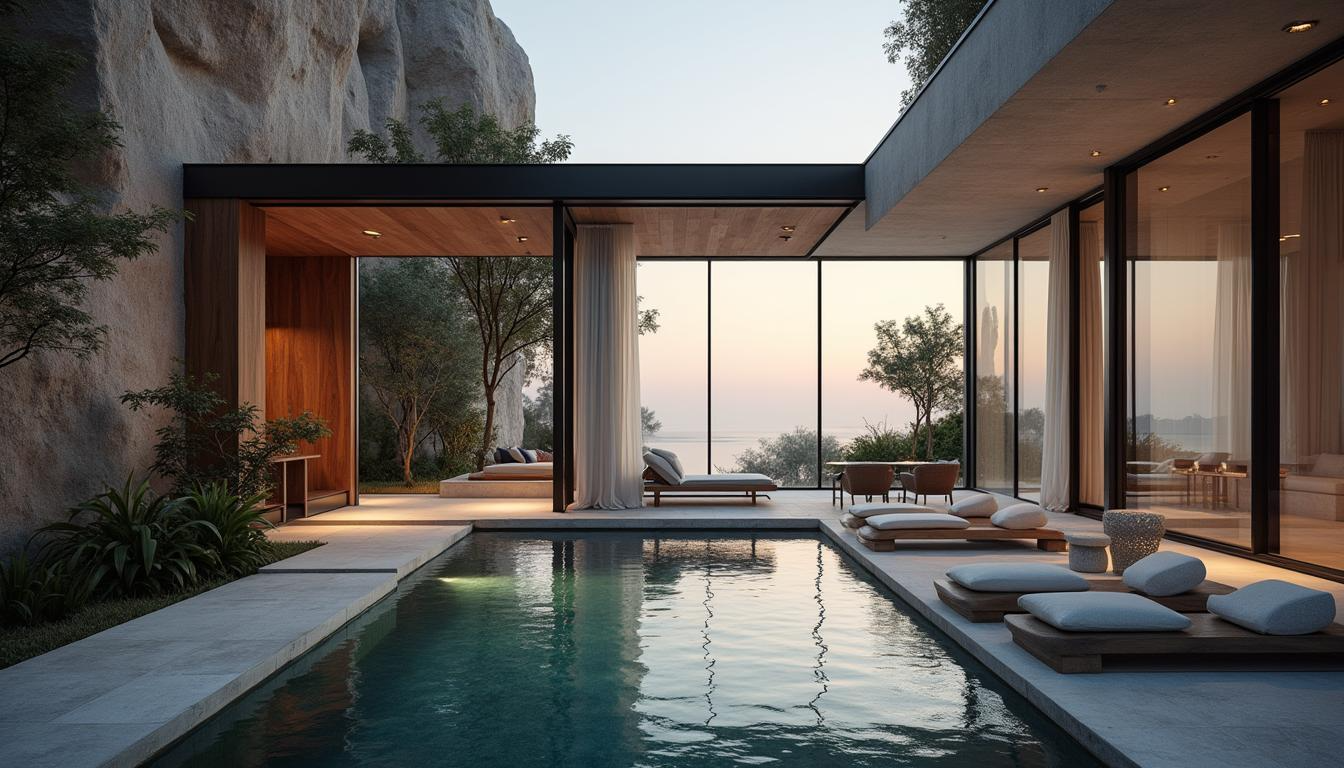
Matteo Thun, architect, begins every project the same way. He travels to the site with watercolours, paper and brushes. Before the first conversation takes place, before the first plan emerges, before anything is decided, comes seeing. “I capture the surroundings and sketch how the building will fit into them,” he said in conversation with The Silent Luxury. “The watercolours are the expression of my emotional perception.”
This approach has shaped Thun’s practice from the beginning. He was one of Oskar Kokoschka’s students, who trained his students to draw from moving models using watercolour specifically because the medium allows no corrections. What you perceive in the moment is what you commit to. Thun has applied that discipline to landscapes and buildings for more than forty years.
“As with all our projects, we start from the Genius Loci,” he says. “The soul of the place plays a central role. Architecture must submit to the surrounding nature. It determines which form and which materials dominate.” At the Vigilius Mountain Resort in South Tyrol, it was larch wood. At the Waldhotel at Bürgenstock, limestone. At the Waldhotel, 500 metres above Lake Lucerne, surrounded by forest, Thun described it simply: “The surrounding nature brings everything needed for healing. You just have to let it in.”
Hospi-tecture: The Guest as Patient
From his experience in hotel construction, Thun developed a concept he calls Hospi-tecture. The term fuses hospital and architecture, and describes a philosophy in which the person inside a building — whether patient or guest — is understood through the same Latin word. Hospes. Guest. “Hospi-tecture connects the aesthetics of hospitality projects with those in healthcare,” he told The Silent Luxury. “Clinics can learn from the hospitality concept how to place the guest at the center. This isn’t a question of luxury, but of attitude.”
In practice, this means concrete decisions. A patient room receives large windows with views of the landscape. Wood goes underfoot, clay on the walls. Daylight falls deep into the room and changes throughout the day — cooler in the morning, warmer in the evening. At the Waldkliniken Eisenberg in Thuringia, a municipal clinic, Thun put a fine-dining restaurant in the building, because healthy, varied cuisine is a prerequisite for the healing process. The brief for a clinic was the same as the one he uses for five-star hotels.
“Materials are not neutral,” he says. “For me, wood is the cement of the 21st century. Wood is high-tech and high-touch. It has a technical and aesthetic sustainability that is unmatched. And it ages beautifully.” The patina that forms over time is not a problem for Thun. It is proof: the building grows together with its surroundings. It becomes more itself the longer it stands.
Zero-Kilometer Design follows the same logic. At the Vigilius Mountain Resort, Thun worked with South Tyrolean carpenters. At the Longen Resort, with Moselle stonemasons. “We believe in the power that traditional know-how brings and the quality associated with it,” he says. When a carpenter who has worked with local larch for decades joins a project, they carry knowledge that industrial production cannot replicate.
What More and More Travellers Are Looking For
The Global Wellness Institute estimates the global wellness travel market at close to one trillion US dollars for 2025. The number is large. What lies behind it is simpler: people are looking for places where their life regains weight.
Virtuoso’s 2026 survey of travel advisors in fourteen countries found that 55 percent of their clients planned to spend more per trip while visiting fewer destinations. Between 37 and 41 percent of all new luxury hotel projects worldwide were planned as extended-stay formats in 2024. The Bain-Altagamma study of 2025 shows why: the number of active luxury travellers has fallen from 60 percent of the addressable market in 2022 to 40 to 45 percent. Those who remain are choosing with more conviction, researching longer, and looking for depth over breadth.
The Springer publication Architectural Therapeutics, published in 2025, confirms what Thun has been building for decades: natural light, air quality and the integration of nature into spaces measurably improve how people recover. The Global Wellness Summit documents for 2026 a growing demand for stays that are medically grounded and genuinely beautiful — from shinrin-yoku in Japan to mineral water circuits in the Alps. And the Royal Danish Academy has been researching since January 2026 the history of healing architecture as an independent field. What began as hospital design has developed into a discipline that understands architecture as part of what makes a stay effective.
A house built on the principles of Slow Hospitality and Hospi-tecture strengthens the people, the craftspeople of the region, the local agriculture and the community in which it stands. It works with local craftsmanship because Thun’s Zero-Kilometer Design imports no stone that can be found on site. It integrates the landscape because the Genius Loci determines the material and the form. And it gives its guests something that cannot be found in the programme.
“The future of construction lies in sustainable resource use and the circular economy,” says Thun. “The goal is to design the entire lifecycle of a building ecologically — from design to dismantling.”
The Family Motto
“Study the water running down a small current.” Observe how it flows and moves every stone out of its path, not through force, but through persistence. That is the Hoshi family motto, passed down from generation to generation. Hisae Hoshi, daughter of the forty-sixth Zengoro, will become the first woman in thirteen hundred years to lead the ryokan. She will keep the springs open, receive the guests and bring to the house what she herself carries. The stream keeps flowing.
Infographic © The Silent Luxury / Silent Communications GmbH, Vienna, 2026. All rights reserved. Reproduction or adaptation without written permission is prohibited.
Further Readings
- Slow Hospitality: Conscious Luxury Travel in 2026
- How Slow Hospitality Is Reshaping the Structure of the Stay
- Albergo Diffuso: The Streets Are the Corridors
- Borgo La Pietraia: A Hotel Built Like a Home
- La Fiermontina Lecce: Three Houses, One Family Story
- Hospi-tecture: When Architecture Becomes Medicine
- The Horizon as an Invitation to Think Further
Similar Articles
The Nature of Beauty 2026: The Market Shift From Claim to Proof
Local Life Systems: How a Port City and a São Paulo Park Took Over the Work Luxury Houses Used to Do
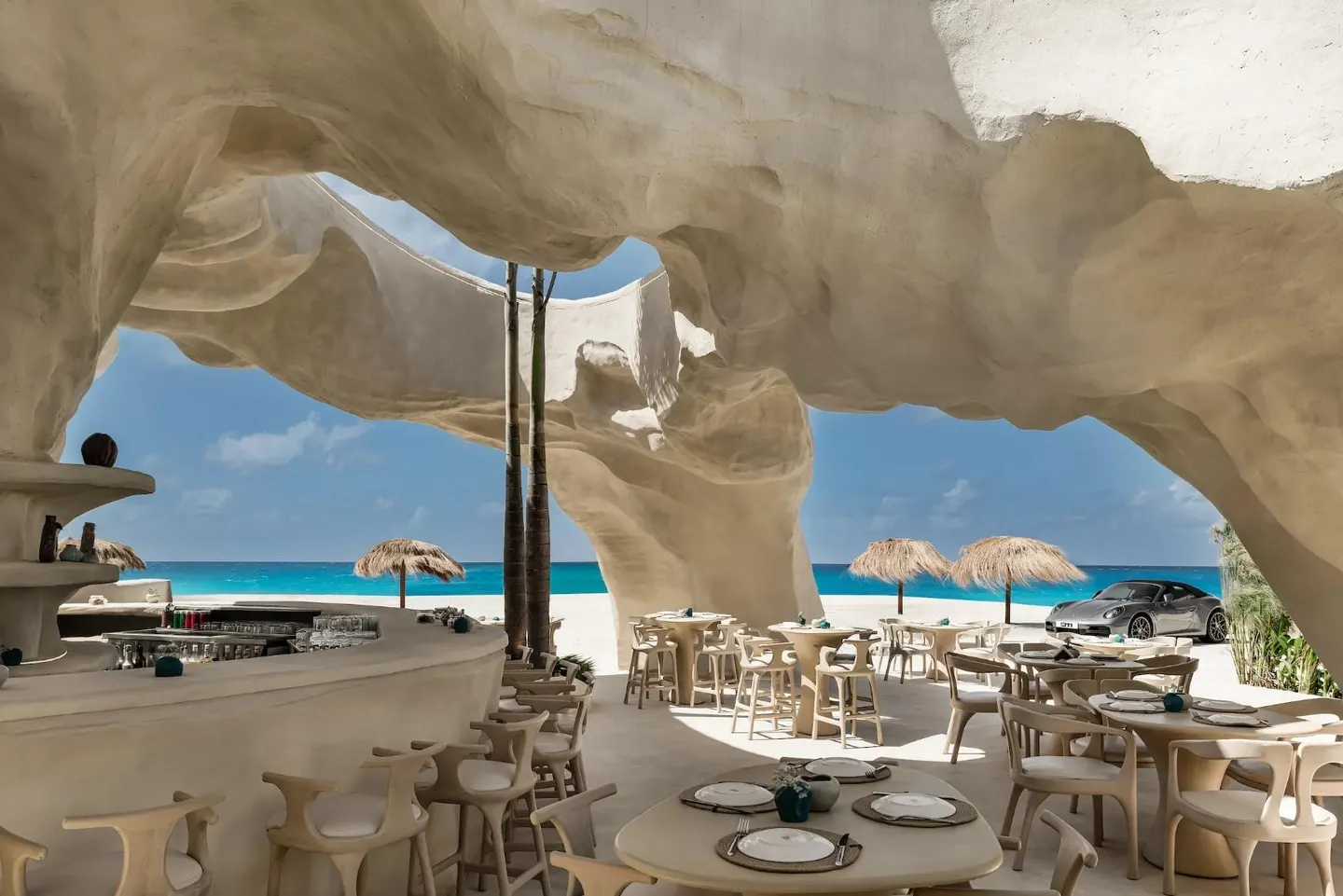
Prix Versailles 2026: The Architecture of Dining