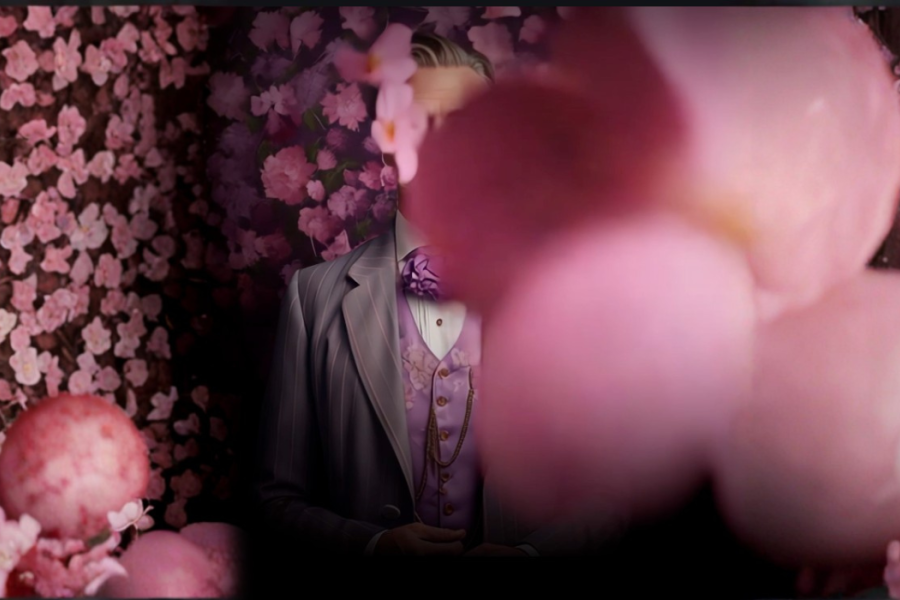
Sensorium Milano: Hypnos
The entrance on Via Crocefisso still carries no sign. Eleven seats face the counter. The room holds the same spare, unhurried quality it has always had — the kind of quiet that begins to work on the senses before the first course arrives. What changes, with the arrival of Hypnos, is the journey Federico Rottigni now places before his guests.
Hypnos is the new multisensory experience at Sensorium Milano. Conceived by Federico Rottigni as a journey through nine acts, it extends the Sensorium’s exploration of perception through the register of dreams.
A Space That Still Prepares the Senses
The Sensorium Milano has always operated as something more precise than a restaurant. From its beginning, Rottigni built the space according to a methodology rooted in neurobiological research. Charles Spence, Professor of Experimental Psychology at the University of Oxford and a long-standing scientific interlocutor of Rottigni’s, describes the underlying principle: our brains process information from all senses simultaneously, constructing perception of the world from the full field of available stimuli. A consciously designed space — in acoustics, light, scent, texture, sound — can direct that construction with considerable precision. Softened acoustics reduce cognitive load. Warm, honey-coloured light builds a feeling of safety. The guest arrives, without noticing, in a state of openness. And it is from that state that the evening becomes possible.
A New Narrative Through Dream States
With Hypnos, this multisensory architecture now serves a new narrative. Where the Ayahuasca Menu guided guests inward through ritual, memory and the direct connection between scent and the limbic system, Hypnos moves through the register of dreams. Nine acts. Nine fragments of something that resists precise focus — images recognised before they were ever seen, feelings that arrive ahead of the words for them. Rottigni describes it as a journey without a fixed destination. What shifts over the course of the evening depends, he says, entirely on how far the guest is willing to travel.
Ingredients, Pairings and Inner Direction
The ingredients come, as always, from small producers Rottigni knows personally — farmers and foragers whose working methods he shares and whose intention, in his understanding, passes into the product itself. “Every element must carry a story and an energy,” he has said. This is not a position he holds loosely. It shapes every selection on the plate, every frequency in the soundscape, every calibration of the light.
Two pairings accompany the experience: a non-alcoholic selection of botanical ferments and kombucha for those who wish to stay grounded, and five glasses from Giorgio Mercandelli’s alchemical, biotic-reserve wine series for those inclined to travel further. Both paths lead through the same nine acts.
What Remains Beyond the Evening
Spence’s research has shown that an intense, consciously designed sensory experience can heighten a guest’s perceptual sensitivity well beyond the evening itself — a form of attention training that Rottigni has described as the deeper purpose of the Sensorium. The aim has never been a single extraordinary night. It has been to give the guest a reference point: a memory of what it feels like to be fully present, fully inhabited, fully alive to the signals the body is already sending.
For anyone visiting Milan this season, the question the Sensorium has always posed remains unchanged. Not where to eat — but how deep you are willing to go.
Sensorium Milano — Via Crocefisso 2, Milano.
Tuesday to Saturday from 20:30.
Booking via sensorium-milano.com
Continue Reading
- Sensorium Milano: A Symphony for the Soul
- No End to Essence: The Sensorium Milano’s Lasting Resonance
- Sensorium Milano: The Alchemy of Perception

Sensorium Milano: A Symphony for the Soul
Nine Courses, One Inner Journey — Federico Rottigni’s Sensory Score and the Science Behind Its Emotional Power.
Federico Rottigni’s Sensorium Milano reveals its secrets like a painting with many layers. The philosophy of the Non-Ristorante on the Via dei Crocefissi, the almost ascetic atmosphere, the authentic and uncompromised ingredients — all of this prepares the stage for the evening’s true centrepiece: the Ayahuasca Menu.

No End to Essence: The Sensorium Milano’s Lasting Resonance
What Remains When the Last Course Has Been Served — On Perceptual Learning, Intuition, and the Quiet Revolution of a Non-Ristorante.
What remains after an evening at the Sensorium Milano? When the last note of the carefully composed soundscape has faded and the final taste still rests on the tongue, the actual effect begins to unfold. The experience at the Non-Ristorante is not a passing memory of a good meal. It is designed to continue working — to plant a subtle but lasting impulse. Federico Rottigni speaks of “a seed that is placed.” That seed is the rediscovered connection to one’s own intuition, to one’s own senses.

Sensorium Milano: The Alchemy of Perception
No Ordinary Origin: How Federico Rottigni’s Non-Ristorante Turns a Quiet Side Street into a Laboratory of the Senses.
Milan has its grand stages and its quiet ones. Away from the performances of La Scala, the runways of Milano Fashion Week and the creative explosions of the Salone del Mobile, a discreet entrance opens onto a side street. No sign. No name. Many guests walk past on their first visit. Sensorium Milano is a multisensory dining concept in Milan created by Federico Rottigni. The Non-Ristorante combines gastronomy, spatial design and perception research in order to shape the guest experience through the senses.
Similar Articles
Where Luxury Begins: The Value of Natural Fibre, From the Karoo to Vittorio Veneto
Sicily in Seven Notes: Spezieria Siciliana and the Perfume of an Island
The Great Small Vintage of 2026: A Season of Concentration