Harris Tweed: The Orb Vivienne Westwood Borrowed Is Now Europe’s Model
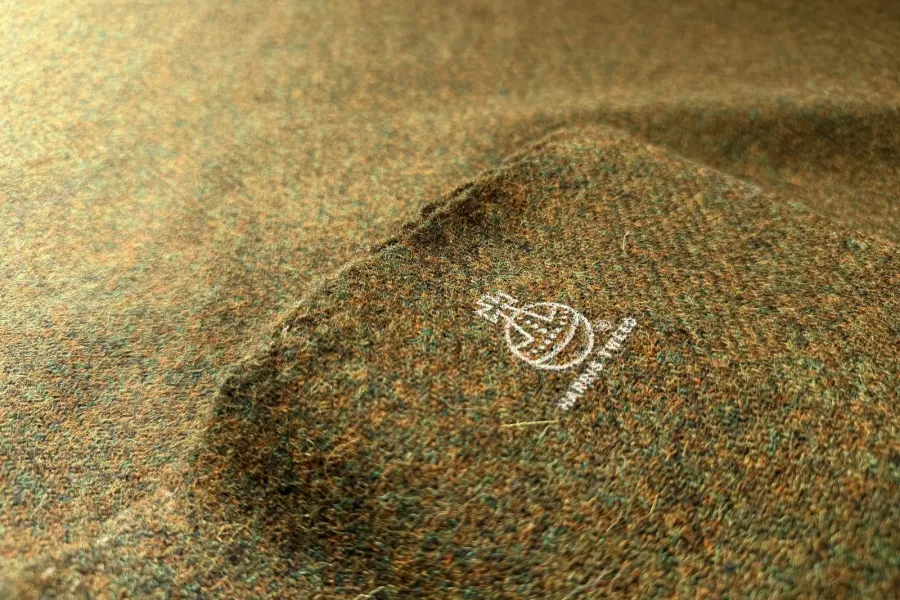
Harris Tweed belongs to no company, and that is the answer to a question the luxury industry is asking again: what proves where something comes from? Since the Harris Tweed Act of 1993, the cloth has been defined not by a brand but by a place. It must be handwoven by islanders at their homes in the Outer Hebrides, finished there, and made from pure virgin wool dyed and spun there. The Orb, pressed onto the cloth, confirms that every metre meets that definition.
“While a trademark identifies where goods or services come from, a certification mark goes a step further,” says Fiona MacKenzie, who became chief executive of the Harris Tweed Authority in March, in an interview with The Silent Luxury. “It confirms not only the origin of a product, but also that it meets specific, legally protected standards.”
That distinction now matters far beyond Lewis and Harris. Since December 2025, the European Union has let glassmakers, potters, embroiderers and weavers register their products as geographical indications for the first time. The islands have been running that experiment for more than a century, and provenance now outranks prestige far beyond them.
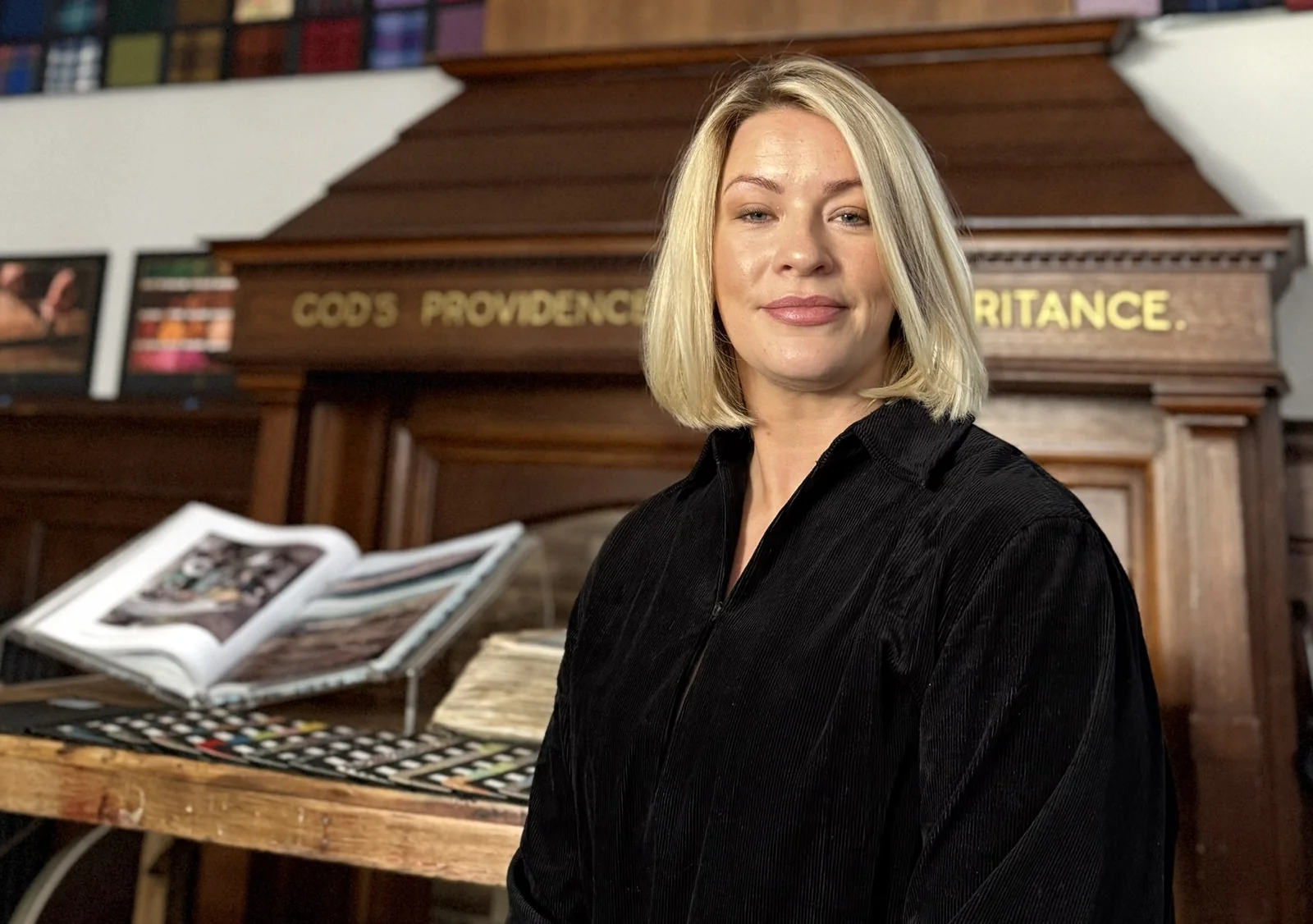
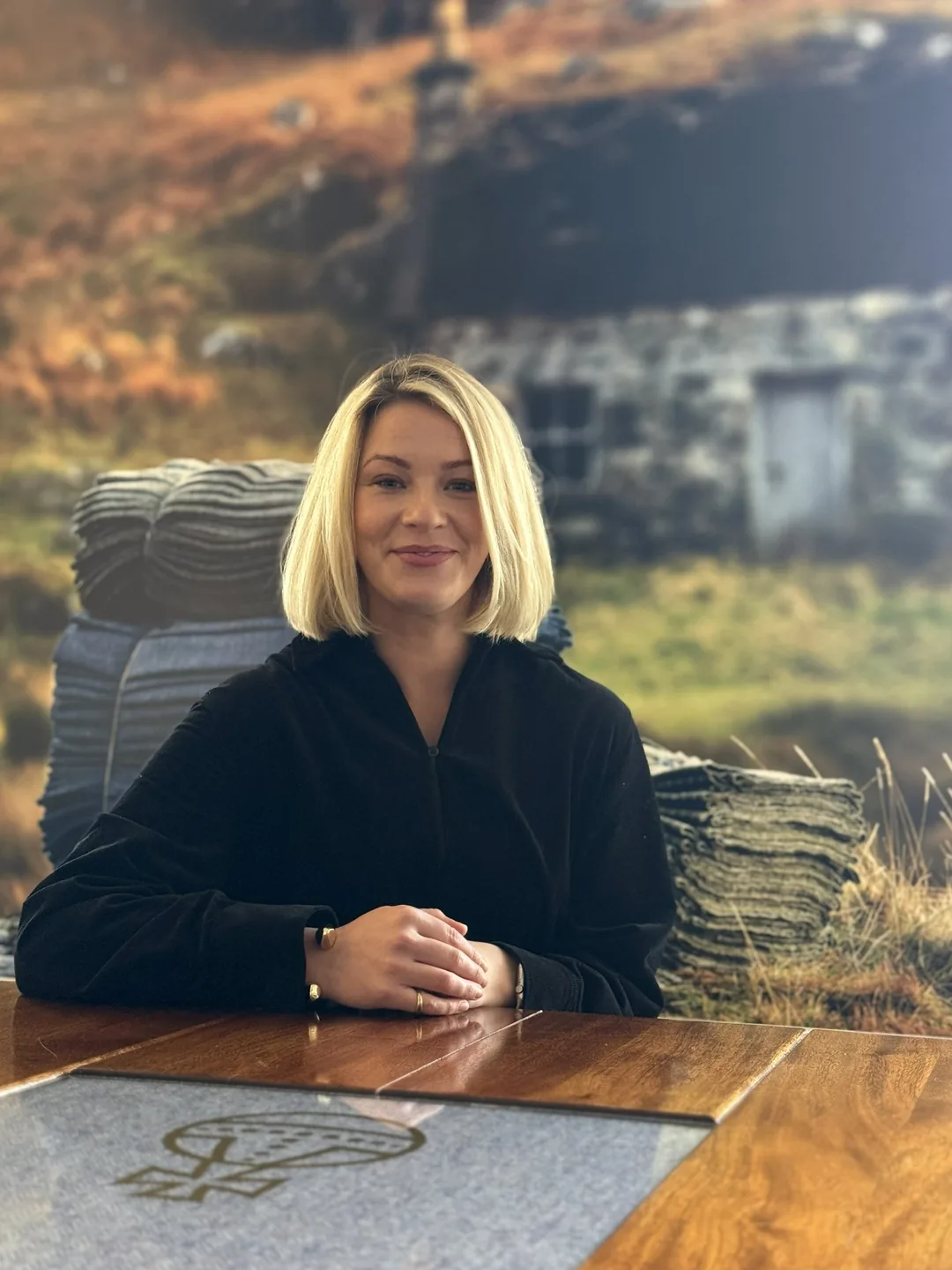 In conversationFiona MacKenzieChief executive of the Harris Tweed Authority. The full interview with The Silent Luxury.
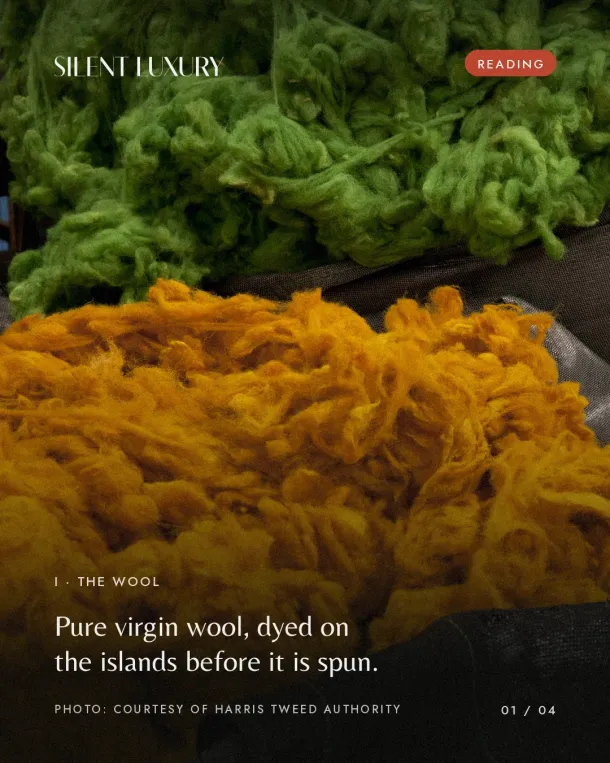
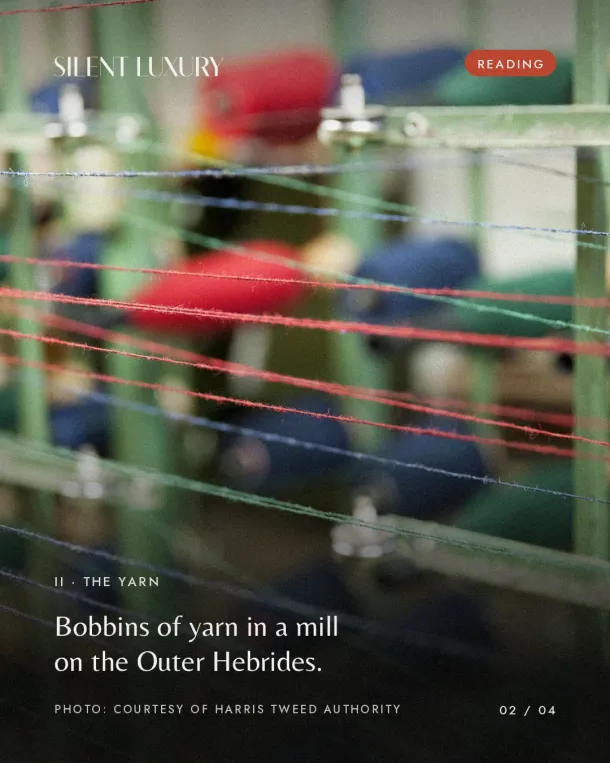
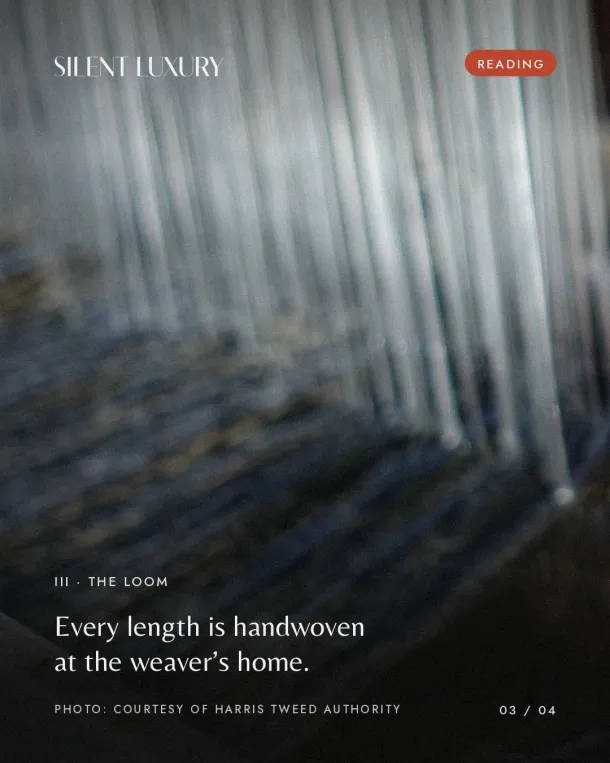
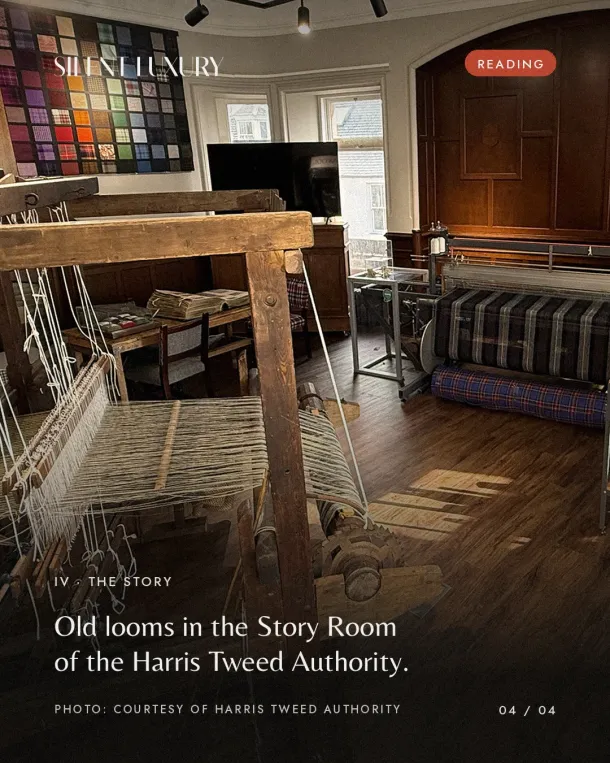
Harris Tweed lookbook: the wool, the yarn, the loom and the story. Courtesy of Harris Tweed Authority
A Mark for a Place: What the Harris Tweed Orb Means
The Harris Tweed Orb means that a length of cloth was made in one place by one method, which is why it carries more weight than a brand name. A label tells a buyer who sold the jacket. The Orb tells them where the wool was dyed, where the yarn was spun, in whose house the cloth was woven and where it was finished. The Harris Tweed Authority, a statutory body, checks that promise “for every single metre of cloth carrying the Orb,” MacKenzie says.
The symbol itself is older than the law that now protects it. “Since 1909, it has represented authenticity, quality and provenance,” MacKenzie says. Most luxury houses spend fortunes building that kind of trust around a name. Harris Tweed built it around an archipelago, and no single company owns it. The mills that spin and finish the cloth, the weavers who make it and the brands that cut it all work under the same mark.
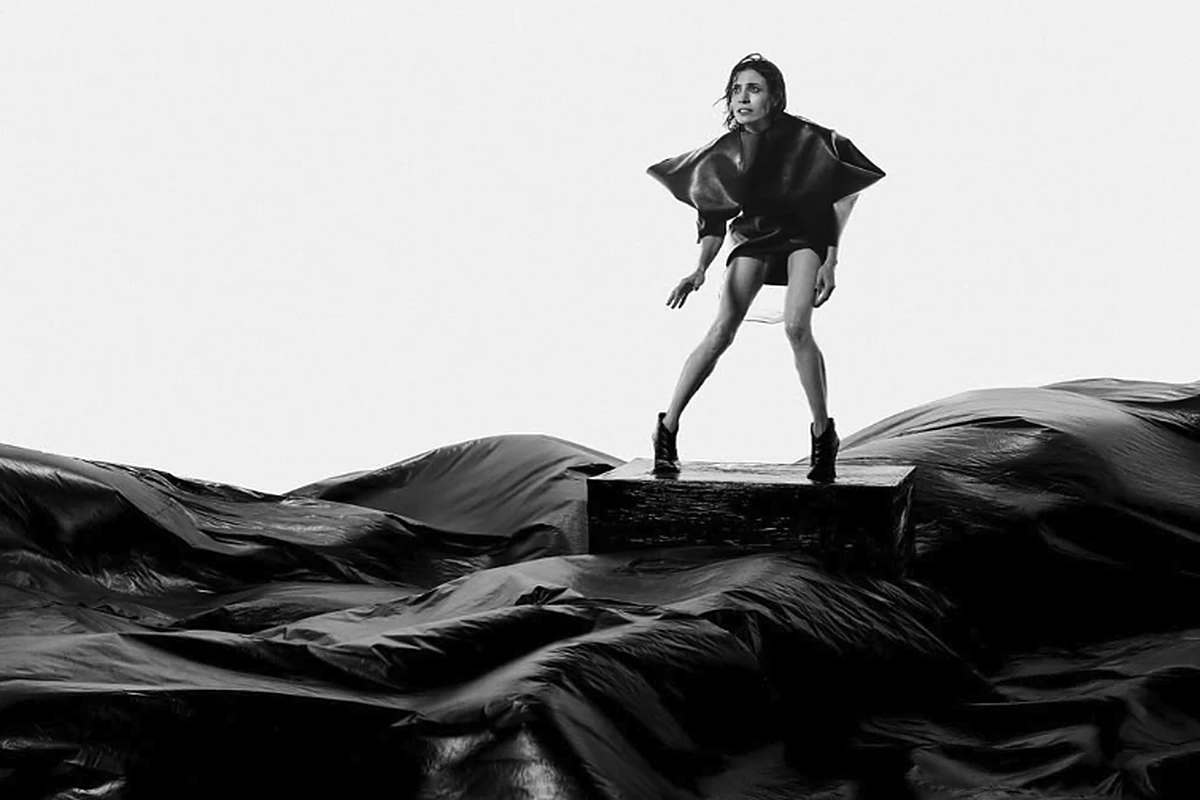
Fashion has borrowed that authority before. When Vivienne Westwood showed her Autumn/Winter 1987 collection, called Harris Tweed, an orb hung from her models’ necks as a pendant. Her own house acknowledges that the royal orb in her logo echoes the emblem of the Harris Tweed Authority, whose cloth she used again and again. A punk designer from London took her signature from a weavers’ mark from the Hebrides.
Woven at Home: Where Harris Tweed Is Made
Harris Tweed is made on the Outer Hebrides, and by law it must be woven in the islanders’ own homes. That clause holds the island economy together. “The legal definition of Harris Tweed has remained unchanged since the passing of the Harris Tweed Act of 1993,” MacKenzie says. The cloth must be woven by islanders in their own homes, not in a factory hall, and every other step must stay on the islands.
The effect shows up in the numbers. A socio-economic assessment by BiGGAR Economics, published in February 2026 for the Authority, Highlands and Islands Enterprise and the islands’ council, Comhairle nan Eilean Siar, found that the industry generated £11.0 million in gross value added and supported 370 jobs in the Outer Hebrides in 2024. Most of that value stays where the cloth is made, with more than half generated by the mills and the rest spread across self-employed weavers, artisans and the Authority itself.
A law that ties a product to a home also ties people to a place. BiGGAR credits the industry with helping to sustain resilient populations on the islands, and a loom in the shed beside the house is a reason to stay.
Who Weaves Next: The Future of Harris Tweed Weavers
Harris Tweed’s future depends on new weavers, and MacKenzie is plain about the challenge. “Historically, Harris Tweed weavers have tended to be slightly older, and this is still the case today,” she says. The BiGGAR report names the ageing workforce as one of the industry’s main risks.
The work suits particular lives. “A crofter may combine weaving with the tending of land and livestock, while a parent may value the opportunity to work from home alongside caring for their children,” MacKenzie says. Many still come to the loom through family. Skills pass from one generation to the next, “alongside a genuine passion and appreciation of the craft.”
Her answer to the succession problem is to tell the story better, which is also where she comes from. Before joining the Authority, MacKenzie was a commissioning editor at MG ALBA, the Gaelic broadcaster. “Bringing the history and character of Harris Tweed to life will be vital in inspiring future generations,” she says. A cloth that the world already recognises still has to persuade the next islander to sit down at the loom.
Real or Fake: How Harris Tweed Fights Counterfeits
Real Harris Tweed carries the Orb, and the Harris Tweed Authority now guards it with the same tools counterfeiters use. It runs AI-assisted monitoring across digital marketplaces to track how the Orb and the Harris Tweed name appear, so that fakes and misuse can be found quickly.
The watch extends to the paperwork of trade. The trademark portfolio covers many countries and product classes, reflecting how far the cloth now travels, from jackets to bags and furniture. Services such as NameGuard and international trademark watches flag misleading company names, unauthorised registrations and marks that come too close to the original. “Ongoing monitoring is therefore important to protect the brand,” MacKenzie says. A promise made on an island has to be defended everywhere it is sold.
Softer Yarn, Same Law: How Harris Tweed Is Made Today
Harris Tweed is still made the way the Act describes it, and the cloth changes only inside those boundaries. “Innovation is encouraged, provided it remains within the boundaries of what makes Harris Tweed authentic,” MacKenzie says. The mills invest in research to improve spinning and finishing and to produce yarns “that are finer, softer and more versatile, while still meeting the requirements of the Act.”
That runs against the way much of fashion has innovated, by moving production to wherever it is cheapest. On the Hebrides, the place stays fixed and the cloth evolves around it, the same principle that makes the value of luxury begin with the fibre. MacKenzie describes the arrangement in three layers: “The Act provides the foundation, the Certification Mark ensures that standards are maintained throughout production, and innovation helps the industry continue to develop and compete in a changing global market.”
What Europe Can Learn: Harris Tweed and the New Craft GIs
Europe is now building the system Harris Tweed has run for generations. Since 1 December 2025, Regulation (EU) 2023/2411 has allowed makers of craft and industrial products to register geographical indications, protection that until then covered only food, wine and spirits. Limoges porcelain, Portuguese embroidery and Brittany granite are among the first names registered. National craft schemes across the EU expire in December 2026, which leaves the single European title as the main route.
MacKenzie’s advice to the new register is that law alone will not be enough. The Orb, she says, “represents the determination and foresight of those who came before us, who understood the importance of protecting their way of life, their livelihoods and the integrity of their craft.” Without that protection, “the very things that make Harris Tweed unique could be diluted, misrepresented or lost.”
“Legislation and legal protection are essential and provide the foundations on which a GI is built,” she says. “But ultimately, its real strength and lasting value come from the people behind it.”
That is the lesson the rest of this dossier follows, from the pashmina workshops of Kashmir to the new names on Europe’s register. A label can be bought. A place, with the people who keep working in it, has to be maintained. Harris Tweed shows that when origin is written into law and carried by a community, it becomes the most durable kind of luxury there is.
The full interview with Fiona MacKenzie appears in Fiona MacKenzie in Conversation with The Silent Luxury.
Send this ↗ to someone who still owns a tweed jacket worth keeping.
 Read next · The ConversationFiona MacKenzie: Law Protects Harris Tweed, People Keep It AliveThe full interview on the Orb, the home loom, counterfeits and what Europe’s new craft register can learn.
Further Reading
Lanificio Bottoli: Ettore Bottoli on Natural Colour and the Recipe Behind Every Cloth
A family wool mill in Vittorio Veneto on undyed wool, scarce brown fleece and the recipe behind every cloth.Hackett on Savile Row: The Suit That Outlives Its Owner
How British tailoring builds a garment to last longer than the person who orders it.Habsburg Kleidermanufaktur: A Great Name That Never Raises Its Voice
An Austrian clothing maker that keeps a famous name deliberately quiet.
Sources
- Fiona MacKenzie, Chief Executive Officer of the Harris Tweed Authority, in conversation with The Silent Luxury, hosted by Eva Winterer, November 2026
- BiGGAR Economics, Socio-Economic Impact Assessment of the Harris Tweed® Industry, February 2026
- Harris Tweed Authority, Harris Tweed Authority appoints new Chief Executive
- Harris Tweed Act 1993
- European Commission, Geographical indications for craft and industrial products
- Vivienne Westwood, The Orb
- Garrigues, Limoges porcelain, Portuguese embroidery and Brittany granite: the first registrations of craft and industrial GIs
Similar Articles
Master of Days: Konstantin Chaykin’s Fairy Tale of the Week
Habsburg Kleidermanufaktur: A Great Name That Never Raises Its Voice
The Red Column and the Year of Family: INTIMAA Opens in Abu Dhabi