Tag: Material Intelligence

Material Intelligence describes the practice-based knowledge of specific materials: how they behave under particular conditions, what they carry from their origin, and what they give over years of use that no fast production cycle can replicate. It is the knowledge built through sustained making — in a workshop, a studio, a field or a manufactory — and it is specific to a maker, a place and a tradition. The Silent Luxury documents Material Intelligence across fashion, design, craft, hospitality and food, wherever the depth of material knowledge becomes the primary carrier of value: in an object built to last decades, a space shaped by local stone, a fabric whose weave carries the biography of its fibre, or a kitchen whose ingredients are chosen for what their origin gives the plate.

The SaloneSatellite Award 2026: Five Projects and the Future of Design

New Craftsmanship, New World. The 15th edition named five studios whose material knowledge points beyond this edition.

The 15th edition of the SaloneSatellite Award was presented on 24 April 2026 in Pavilion 7 at Fiera Milano Rho, under the theme “New Craftsmanship: A New World.” The award, the only international prize dedicated exclusively to designers under 35 at the world’s most important furniture and design fair, was founded in 2011 by Marva Griffin Wilshire, creator of SaloneSatellite, who has built the platform across 28 years into the most significant launchpad for emerging design talent in the world. The 2026 jury was chaired by Paola Antonelli, Senior Curator of Architecture and Design at MoMA New York. Five projects were selected from 700 participants representing 39 countries.

Paola Antonelli has described the award’s method across fifteen years in a single formulation: insight above market, research above industrial scale. A form of collective imagination that reveals what will be structural rather than ephemeral. The five projects selected in 2026 read as a precise index of where that thinking is going. In every winning project, the operating method was the same: sustained knowledge of a specific material, applied at the boundary between the hand and the machine.


THE AWARD: Five Projects, One Direction

The Award reads SaloneSatellite 2026 through the working methods and material intelligence of five studios. Under Paola Antonelli’s jury direction, each project brought a different material position to the prize: seashells and digital fabrication, computational ceramics, mechanical listening, ancestral weaving and fiberglass mesh. Together they form a precise index of where craft knowledge is going when it encounters the tools of the present.

Photography: Salone del Mobile.Milano 2026

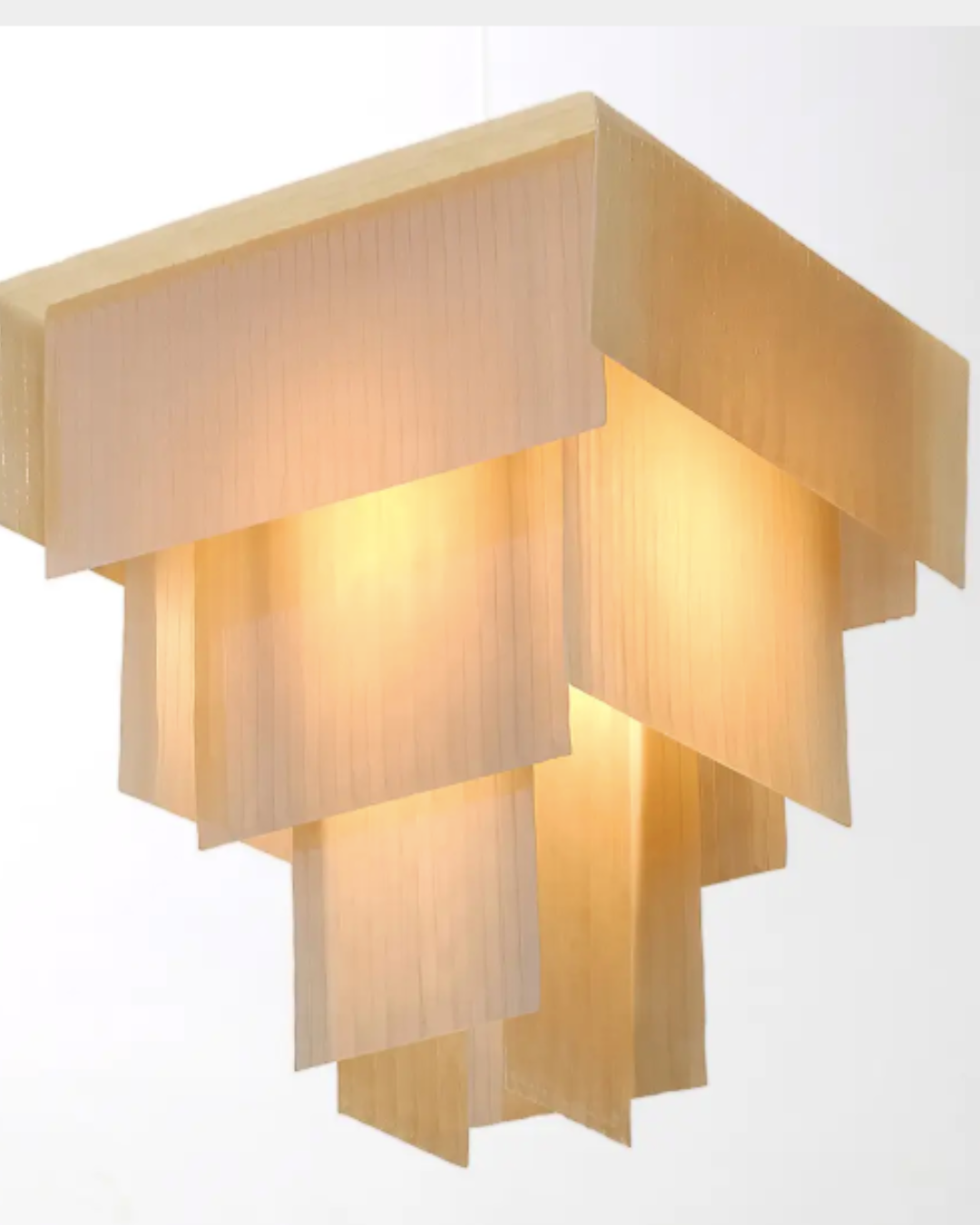
  • Nippon, Ark Collection. Russo Betak, Denmark. First Prize, SaloneSatellite Award 2026.

    RUSSO BETAK

    First Prize

    Base: Copenhagen, Denmark

    Material Position: Biological material as 3D printing substrate, hand-sculpted into final form.

    Award Reading: Russo Betak took first prize at the SaloneSatellite Award 2026 for Nippon, from the Ark collection. The project begins with seashells: ground, mixed into a printable composite and 3D printed into a pendant lamp form, then hand-sculpted layer by layer until the surface reveals the grain of the material and the decisions of the hand that finished it. The result is a tiered pendant lamp in warm cream tones whose stacked horizontal panels read, at distance, as architecture — volumes that hold and diffuse light simultaneously. At close range, the texture tells the full story of its making: the origin in the shell, the pressure of the print, the mark of the hand. The jury recognised its material experimentation and its translation into a refined and luminous form, two things that are usually in tension and are here resolved.

    Why it matters: Nippon demonstrates what becomes possible when a designer treats a biological material not as surface finish but as structural argument. The shell is not decoration. It is the reason the lamp exists in this form and no other. In the SaloneSatellite reading, this is the operating logic of the most serious emerging design: the material sets the terms, and the maker’s knowledge is the capacity to follow them.

    Visit

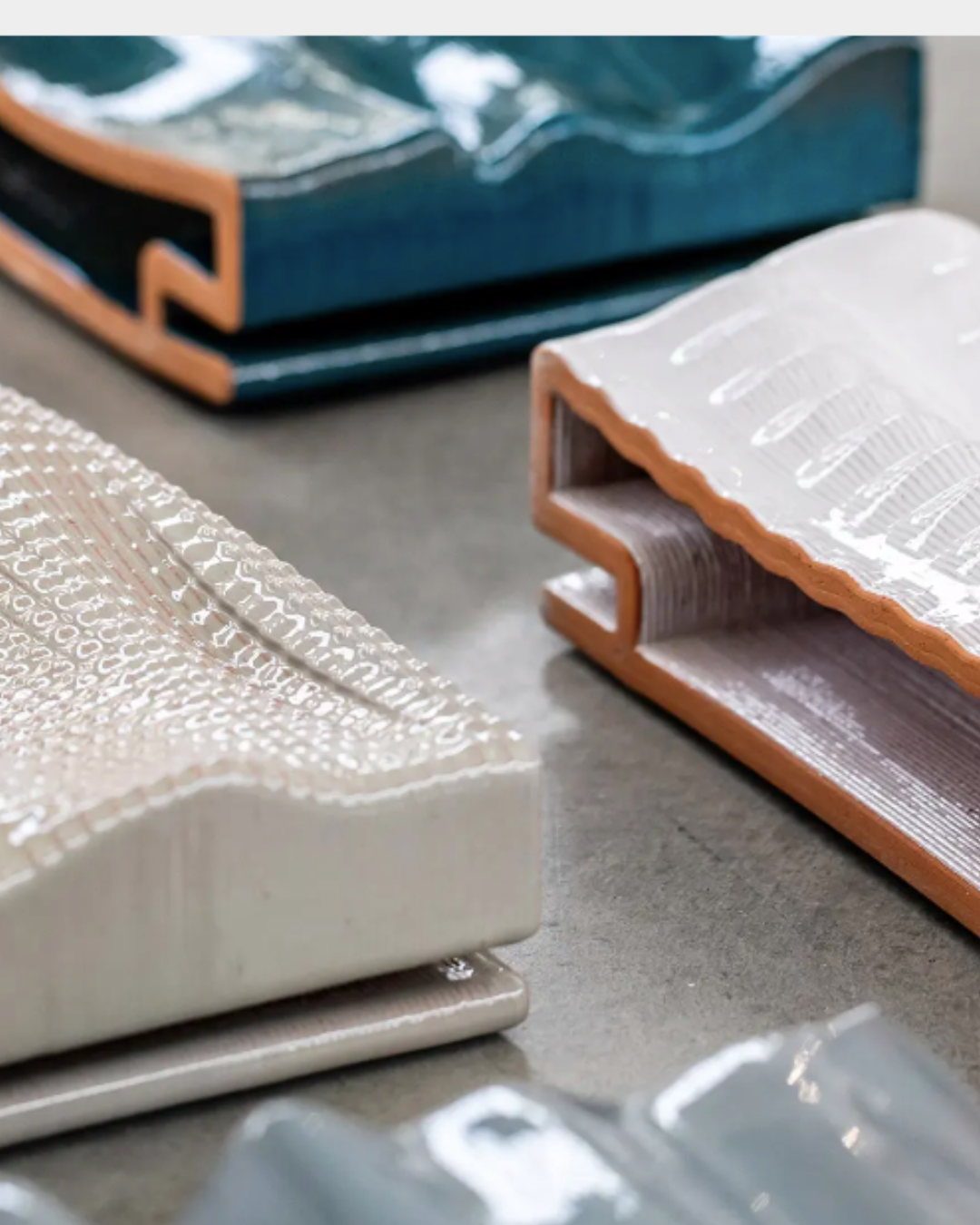
  • 3DP Ceramic Tiles. IOUS Studio, Rotterdam. Second Prize, SaloneSatellite Award 2026.

    IOUS STUDIO

    Second Prize

    Base: Rotterdam, Netherlands

    Material Position: Computational design applied to ceramic extrusion, producing facade tiles in which no two pieces are identical.

    Award Reading: IOUS Studio took second prize at the SaloneSatellite Award 2026 for 3DP Ceramic Tiles. The studio was founded in Rotterdam by Sol Sanchez Cimarelli and Agustin Ros, both Argentinian-born architects who graduated from Universidad Torcuato Di Tella in Buenos Aires before working across offices in Dubai, Rome, Berlin and Rotterdam. Their 3DP Ceramic Tiles system uses robotic clay extrusion to produce exterior facade tiles whose surface texture is determined by an algorithm responsive to structural requirements: the form that emerges is both functionally optimal and visually specific to its position in the facade. The tiles shown at SaloneSatellite 2026 demonstrate the system across three material registers — a dense white interlocking surface, a teal glaze with layered relief, a pale grey with fine horizontal striations — each produced from the same computational logic applied to different clay bodies. The terracotta edge left exposed on each tile is not a detail. It is a declaration: the clay knows what it is.

    Why it matters: What IOUS Studio proposes is a facade architecture in which no two tiles are identical and every tile is the direct output of its material conditions. The studio is currently establishing the first large-scale ceramic and 3D printing lab in Latin America in Buenos Aires, bringing this production logic to a new geography. In the SaloneSatellite reading, 3DP Ceramic Tiles holds both registers simultaneously: the precision of the algorithm and the irreducible variability of the clay. That combination is where the most interesting architecture of the coming decade is forming.

    VIsit

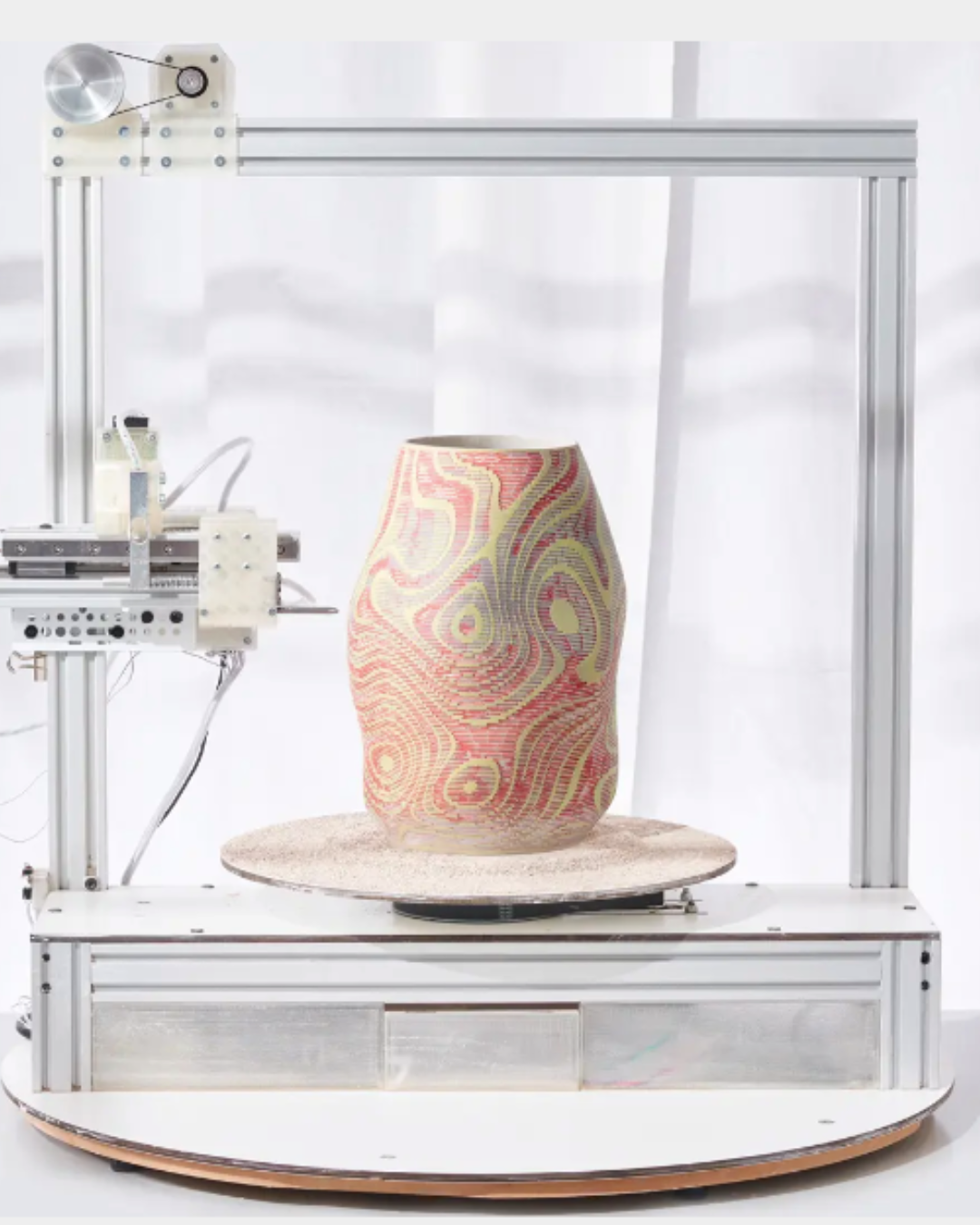
  • Soft Touch. Jüngerkühn, Germany. Third Prize, SaloneSatellite Award 2026.

    JÜNGERKÜHN

    Third Prize

    Base: Germany

    Material Position: A mechanical device that reads object surfaces and carves their topography back into ceramic.

    Award Reading: Jüngerkühn took third prize at the SaloneSatellite Award 2026 for Soft Touch. The project is a device: a twin-axis mechanical arm mounted over a rotating turntable, fitted with a sensor that reads the surface of any object placed beneath it. The arm records the topography of the surface in real time and translates that recording into a cutting path applied to a second object on the same turntable. For the SaloneSatellite presentation, the studio placed hand-formed porcelain vases beneath the arm. The machine read their surfaces and carved the pattern it found back into the clay, each vase receiving a unique incised relief determined entirely by its own form. The result is a series of vessels in which pink, cream and terracotta glazes move in concentric topographic lines, every piece different, none of them possible without the machine listening to what the hand had made first.

    Why it matters: Soft Touch does not automate ceramics. It uses automation to listen to what a ceramic already is. Where most machine-assisted design imposes a form determined before the material is touched, Jüngerkühn’s device responds to the form the material has already taken. Every vase in the series is unique because every hand-formed vessel it read was unique. In the SaloneSatellite reading, this is a precise model for how computation and craft can operate in relation rather than in hierarchy.

    Visit

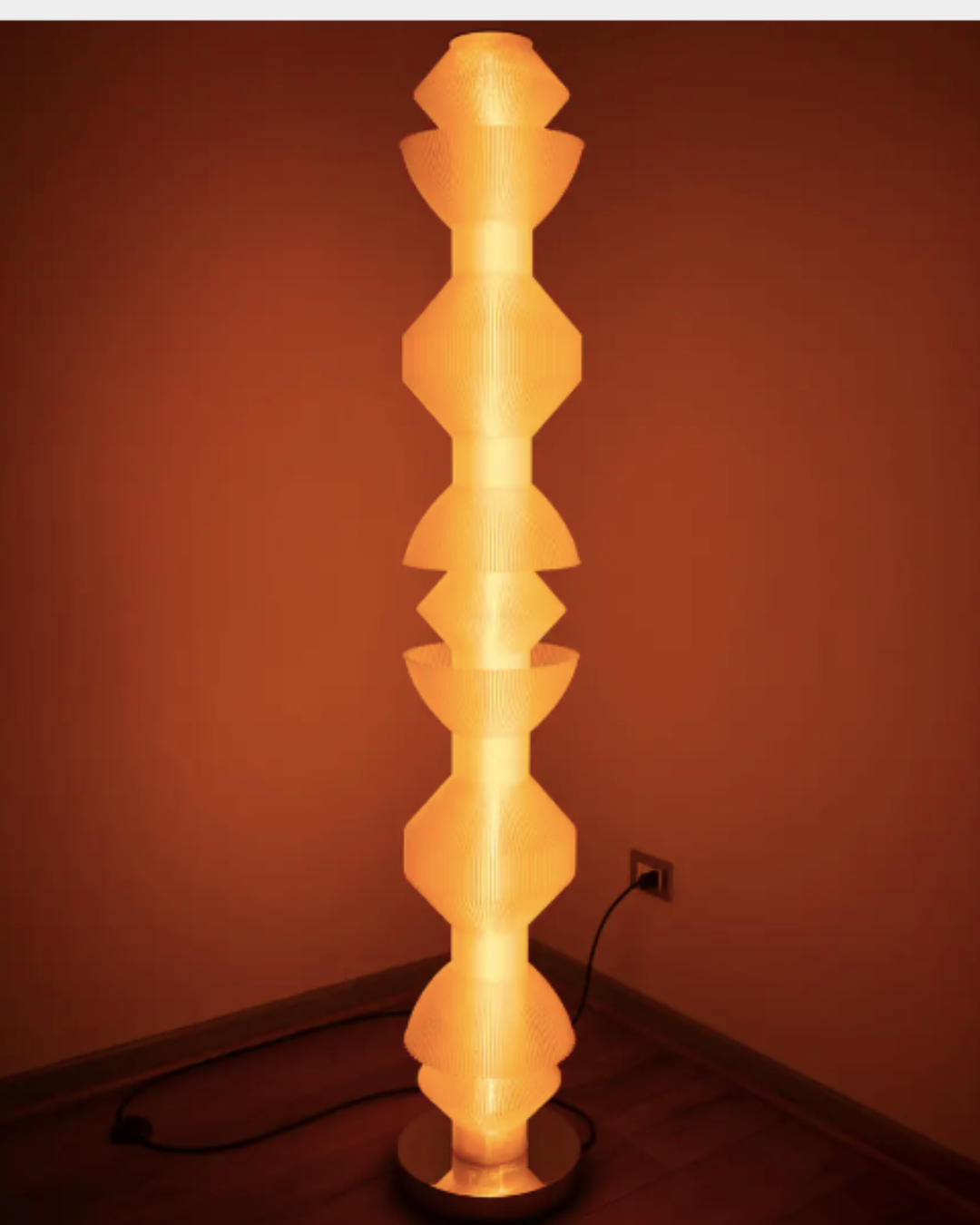
  • Números. Aiko Design, Santiago de Chile. Special Mention, SaloneSatellite Award 2026.

    AIKO DESIGN

    Special Mention

    Base: Santiago, Chile

    Material Position: Ancestral horsehair weaving from Rari combined with 3D-printed structural components.

    Award Reading: Nicolás Romero of Aiko Design received a Special Mention at the SaloneSatellite Award 2026 for Números. The studio draws from the crin tradition of Rari, a village of around 600 people in the Maule region of Chile, in the foothills of the Andes, where horsehair weaving has been practiced for over 200 years and passed from mother to daughter across generations. The technique involves weaving horsehair strand by strand over a frame of ixtle, a plant fibre imported from Mexico, building three-dimensional forms without tools: only hands, scissors and a needle. Números is a floor lamp: a tall totem of stacked geometric wicker and crin modules, each one a different weave pattern from the Rari tradition, the whole column lit from within so that light passes through the interstices of the woven structure and turns the lamp into a luminous catalogue of the hand techniques it carries. The structural components connecting the modules are 3D printed, allowing the handmade forms to be assembled without adhesive.

    Why it matters: The jury recognised Números for the way its symbolic figure holds both industrial production and meticulous craft as simultaneous conditions rather than alternatives. The lamp stands as a record of what the hands in Rari know and what computation makes possible when it works in their service rather than in their place. In the SaloneSatellite reading, Aiko Design represents the Local Soul logic at its most precise: a production philosophy rooted in a specific geography, a specific material and a specific community of makers, brought into the global conversation without losing the specificity that gives it value. Aiko Design received a month-long design residency at the Róng Design Library in Hangzhou, China.

    VIsit

  • Foggy. Yixian Wang, China. Special Mention, SaloneSatellite Award 2026.

    YIXIAN WANG

    Special Mention

    Base: China

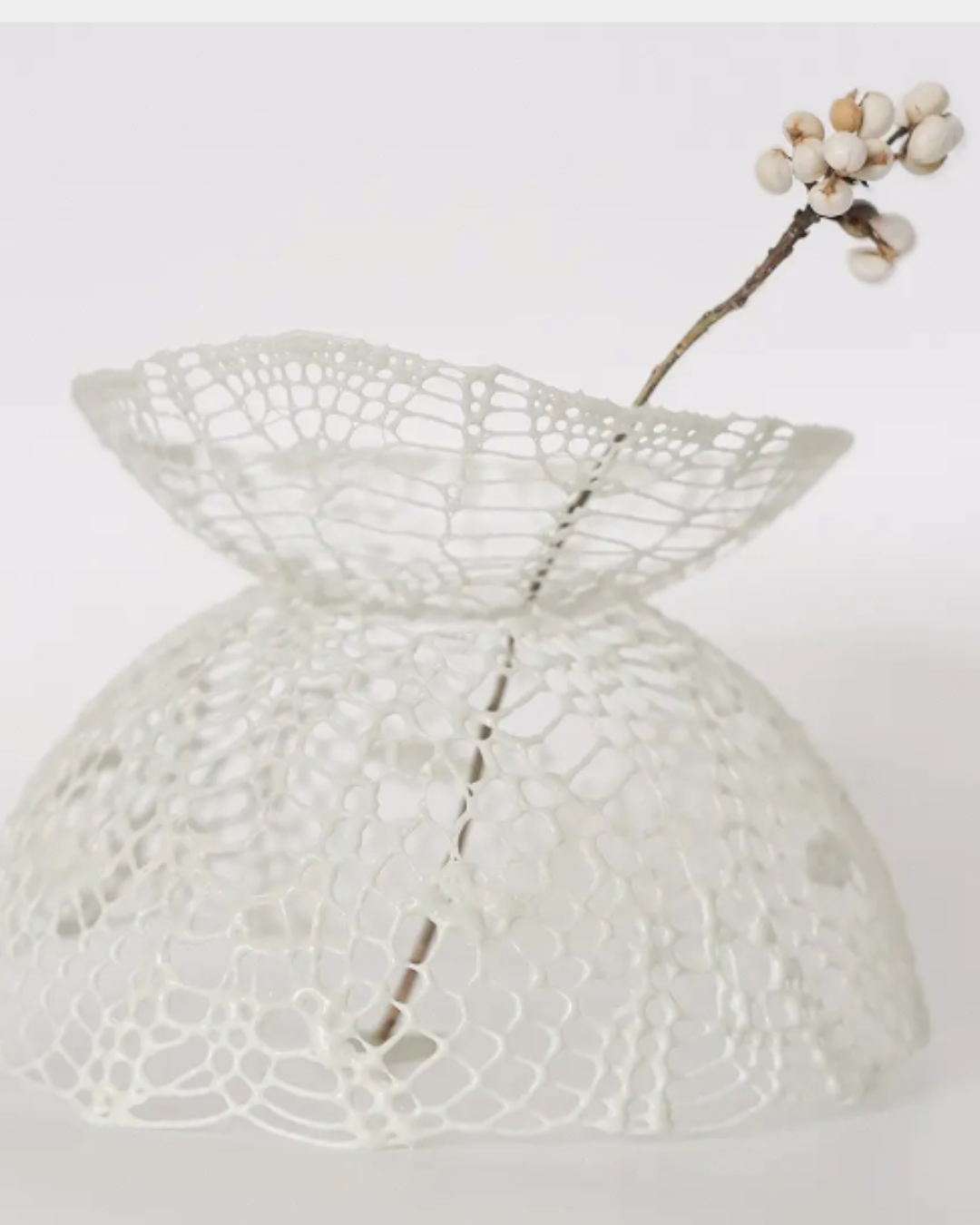
    Material Position: Fiberglass arranged in a lace-like mesh structure, fired without resin to preserve translucency and fragility.

    Award Reading: Yixian Wang received a Special Mention at the SaloneSatellite Award 2026 for Foggy. The project investigates fiberglass at the boundary between industrial process and organic form. Wang arranges fiberglass strands into a lace-like mesh structure and fires the vessel without resin, so that the material retains its translucency and fragility rather than hardening into a composite. The result is a dome-shaped vessel that holds its form while remaining visually permeable: light passes through the mesh, the surface reads as fog or as the finest gauze, and the dried botanical placed inside becomes visible through the structure as though the vessel were made of air. The process treats fiberglass as a material with its own grain and behaviour, not as a substrate for other properties.

    Why it matters: The jury recognised Foggy for reinterpreting the visual properties of a material the medium had not previously expressed this way. Fiberglass is an industrial material designed for opacity and structural performance. Wang’s process finds in it a delicacy that its industrial context had never required it to produce. This is the argument that runs through all five winning projects: the knowledge of what a material can do when it is not asked to be something else. Yixian Wang received a month-long design residency at the Róng Design Library in Hangzhou, China.

    VIsit

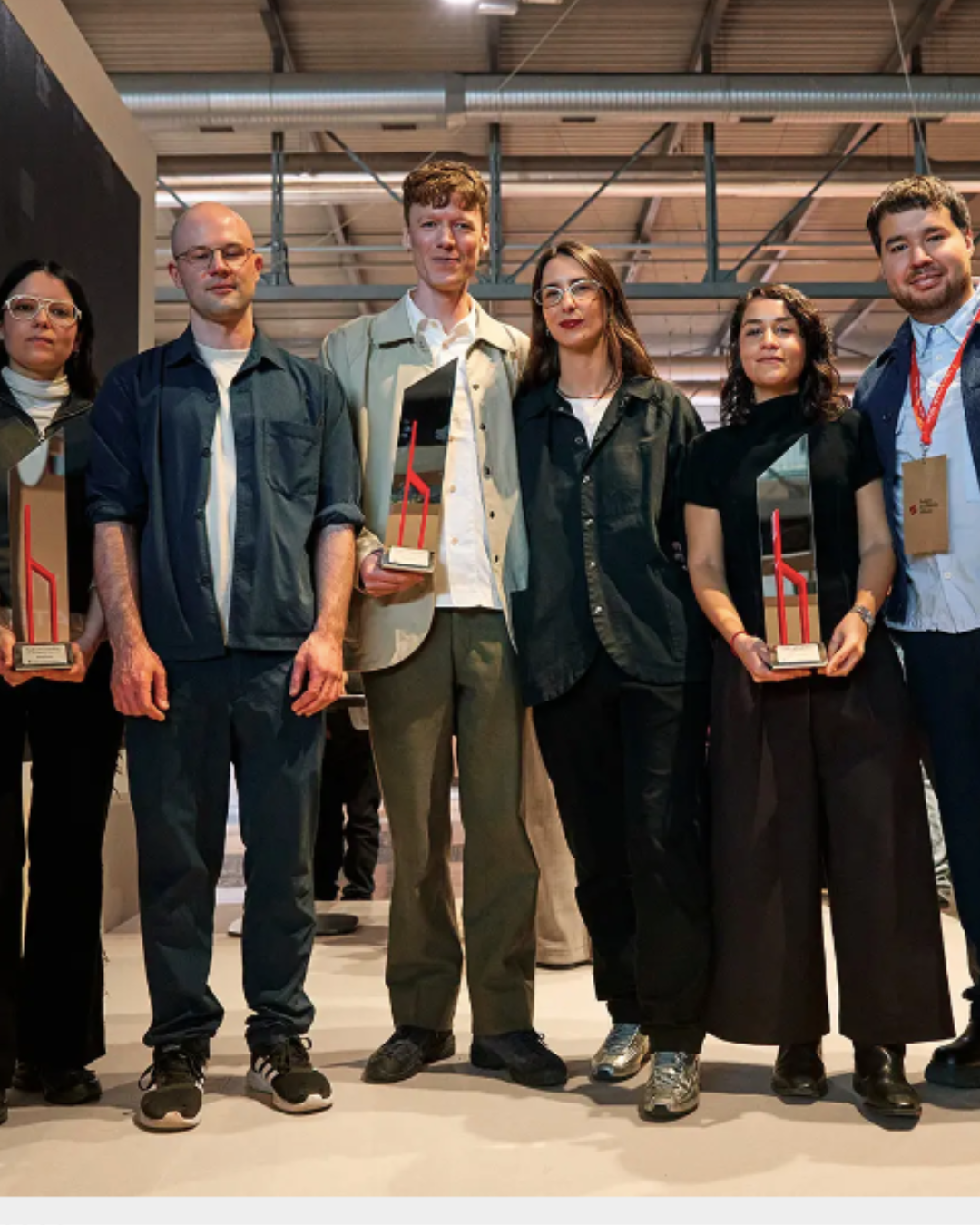
  • SaloneSatellite Award 2026. The winners, 15th edition, Salone del Mobile.Milano, April 2026.

    Award Winners

    Winners of the SaloneSatellite Award 2026, 15th edition, Pavilion 7, Salone del Mobile.Milano, April 2026. From left: Nicolás Romero / Aiko Design (Chile, Special Mention), Agustin Ros / IOUS Studio (Netherlands, 2nd Prize), Russo Betak (Denmark, 1st Prize), Jüngerkühn (Germany, 3rd Prize), Yixian Wang (China, Special Mention). Order to be verified against official Salone del Mobile.Milano press materials. 
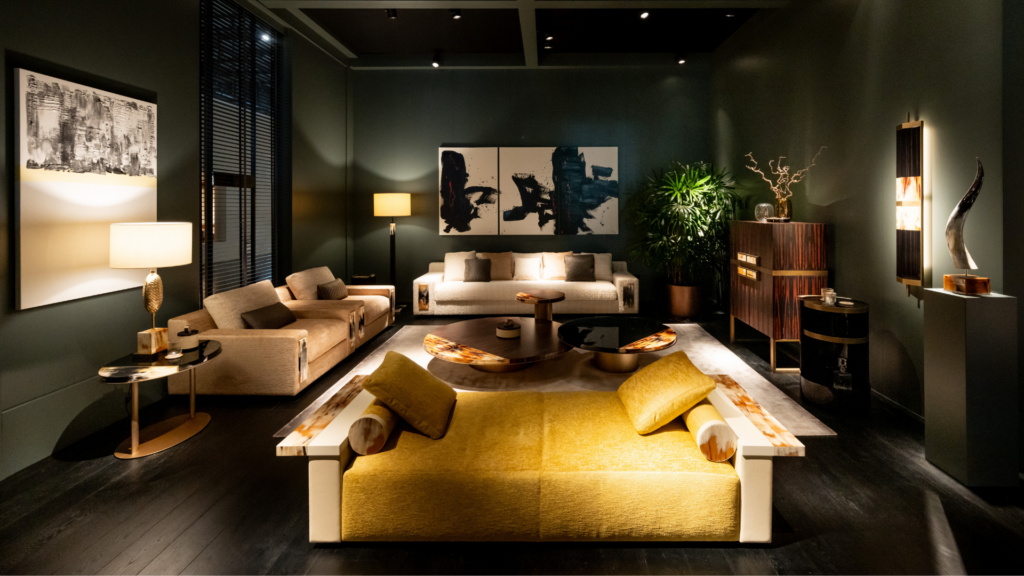
ARCAHORN stand at Salone del Mobile Milano 2026 — dark interior with golden yellow sofa and brass lamps

Continued Reading

New Latitudes. What Milan Design Week 2026 Said About the Future of Design.

Many new centres are emerging simultaneously. The 64th Salone del Mobile, read through the lens of Local Soul.

Read the full editorial →

Questions on the SaloneSatellite Award 2026

Five studios, five projects and the material intelligence shaping the future of design. The following questions address what the 15th edition of the SaloneSatellite Award revealed.

  • Who won the SaloneSatellite Award 2026?

    The SaloneSatellite Award 2026 was presented at the 15th edition of the award, part of the 64th Salone del Mobile.Milano, with a jury chaired by Paola Antonelli, Senior Curator of Architecture and Design at MoMA New York. First prize went to Russo Betak of Denmark for Nippon, a pendant lamp 3D printed from seashells and hand-sculpted. Second prize went to IOUS Studio of the Netherlands, founded by Sol Sanchez Cimarelli and Agustin Ros, for 3DP Ceramic Tiles, a computationally designed ceramic facade system. Third prize went to Jüngerkühn of Germany for Soft Touch, a mechanical device that reads and responds to ceramic surfaces. Special Mentions went to Nicolás Romero of Aiko Design of Chile for Números, combining ancestral horsehair weaving with 3D printing, and to Yixian Wang of China for Foggy, a fiberglass vessel fired without resin. Both Special Mention recipients received a month-long residency at the Róng Design Library in Hangzhou, China.

  • What is the SaloneSatellite Award?

    The SaloneSatellite Award is an international prize dedicated exclusively to designers under 35, presented annually as part of the Salone del Mobile.Milano. It was founded in 2011 by Marva Griffin Wilshire, creator of SaloneSatellite, the platform she established in 1998 to give emerging design talent access to the world’s most important furniture and design fair. The award’s jury, chaired since its founding by Paola Antonelli of MoMA New York, selects projects based on research depth and material intelligence rather than market readiness.

  • What was the theme of SaloneSatellite 2026?

    The theme of SaloneSatellite 2026 was “New Craftsmanship: A New World,” positioning craft knowledge as a technical competence for the coming design cycle rather than a heritage gesture. The five winning projects each demonstrated a specific form of material knowledge applied at the boundary between the hand and computational tools: seashells as 3D printing substrate, clay under robotic extrusion, ceramic surfaces read by a mechanical sensor, ancestral horsehair weaving combined with 3D-printed components, and fiberglass arranged as a lace-like mesh without resin.

  • What is Nippon by Russo Betak?

    Nippon is a pendant lamp from the Ark collection by Danish designer Russo Betak, winner of first prize at the SaloneSatellite Award 2026. The lamp is 3D printed using seashells ground into a printable composite, then hand-sculpted layer by layer to reveal the grain of the material. The result is a tiered pendant in warm cream tones whose stacked horizontal panels hold and diffuse light. The jury recognised its material experimentation and its translation into a refined and luminous form.

  • What is 3DP Ceramic Tiles by IOUS Studio?

    3DP Ceramic Tiles is a ceramic exterior facade system by IOUS Studio, a Rotterdam-based studio founded by Argentinian architects Sol Sanchez Cimarelli and Agustin Ros. The system uses robotic clay extrusion to produce facade tiles whose surface texture is determined by an algorithm responsive to structural requirements. No two tiles are identical. Each tile is the direct output of its material conditions, with the terracotta edge left exposed as a declaration of the clay’s origin. The project won second prize at the SaloneSatellite Award 2026.

  • What is Soft Touch by Jüngerkühn?

    Soft Touch is a mechanical device by German studio Jüngerkühn, winner of third prize at the SaloneSatellite Award 2026. A twin-axis arm mounted over a rotating turntable reads the surface topography of hand-formed porcelain vases and carves that topography back into a second vessel, producing a unique incised relief on every piece. The device uses automation to respond to what the hand has already made rather than to impose a predetermined form.

  • What is Números by Aiko Design?

    Números is a floor lamp by Nicolás Romero of Chilean studio Aiko Design, recognised with a Special Mention at the SaloneSatellite Award 2026. The lamp combines the crin tradition of Rari — a 200-year-old horsehair weaving practice from a village of 600 people in the Maule region of Chile — with 3D-printed structural components in PLA with chrome metal details. Stacked geometric wicker and crin modules, each a different weave pattern, are lit from within so that light passes through the interstices of the woven structure. The lamp is a luminous catalogue of the hand techniques it carries.

  • What is Foggy by Yixian Wang?

    Foggy is a vessel by Chinese designer Yixian Wang, recognised with a Special Mention at the SaloneSatellite Award 2026. Fiberglass strands are arranged in a lace-like mesh structure and fired without resin, so that the material retains its translucency rather than hardening into a composite. Light passes through the mesh and the surface reads as fog or as the finest gauze. The jury recognised Foggy for reinterpreting the visual properties of a material the medium had not previously expressed this way.


Continue reading

What Are Natural Fibres in Luxury Fashion?

From wool to milk fibre, from flax to cashmere: the fibres that carry origin, provenance and the memory of how they were made

Luxury natural fabrics are fibres of plant, animal or mineral origin whose value is shaped by provenance, cultivation method, processing quality and the knowledge embedded in their transformation. In the luxury register, they are never only raw materials. They are the beginning of a wider system — one that connects origin, craft and long-term use in ways that synthetic production cannot replicate.

The distinction matters more now than it did a decade ago. The global textile system produced 132 million tonnes of fibre in 2024, of which polyester alone accounted for 59 percent, according to the Textile Exchange Materials Market Report 2025 — the closest the industry has to an honest mirror of its own material reality. Wool, which has defined the language of tailoring and warmth across human civilisation for several millennia, contributed 0.9 percent of that volume. Linen at 0.3 percent. Hemp at 0.2 percent. Cashmere is measured in tens of thousands of tonnes against a market built on millions.

These figures do not make natural fibres exceptional by virtue of scarcity alone. They make the decision to work with them a specific one — a decision that carries consequences for origin, for the production system behind the cloth and for the body that wears it every day.


The Silent Luxury · Material Analysis · May 2026

The Global Fibre Market 2024

Annual production volume by fibre type · Total 132 million tonnes · Textile Exchange Materials Market Report 2025

Polyester

Synthetic · Petroleum-derived · ~77.9M tonnes

59%

Cotton

Plant fibre · Organic: 2.9% of total cotton · ~25.1M tonnes

~19%

Manmade Cellulosics

Viscose · Lyocell · Modal · Cupro · ~7.9M tonnes

~6%

Premium natural fibres

Wool

Animal fibre · Biodegrades in 3–4 months in soil · ~1.2M tonnes

0.9%

Linen / Flax

Plant fibre · Belgium, France, Ireland · ~0.4M tonnes

0.3%

Hemp

Plant fibre · Low-input cultivation · ~0.3M tonnes

0.2%

Cashmere · Silk · Alpaca

Specialist animal fibres · Combined volume

<0.1%

Source: Textile Exchange Materials Market Report 2025 · Volume figures involve modelling and estimation where direct measurement is unavailable.  © Silent Communications GmbH · the-silent-luxury.com

What defines a luxury natural fabric

A natural fibre grows or is produced by a living organism without petrochemical synthesis. Plant fibres draw their character from the soil, the climate and the cultivation method. Animal fibres carry the biology of the animal that produced them and the geography of the landscape it grazed. Mineral fibres — principally asbestos, now largely absent from textile use — complete the category technically, though they have no place in contemporary luxury application.

The distinction between natural and synthetic does not map cleanly onto quality. A poorly processed linen can feel harsh and wear badly. A well-engineered technical fabric can perform specific functions with precision. What natural fibres offer that synthetic production has not been able to replicate is a different order of properties: biodegradability, moisture management that works with body chemistry rather than against it, thermal responsiveness, and a handle — the way a fabric registers against the skin — that carries the history of how it was grown and processed.

Dalena White, Secretary General of the International Wool Textile Organisation, put the structural condition precisely in conversation with The Silent Luxury Magazine: “The science is catching up, and people are understanding that this is not a cheap fibre that should be used in hundreds and millions of garments every day. It is a very high quality fibre that should be used in high quality applications.”

Plant fibres: cotton, linen, hemp

Cotton is the most widely produced plant fibre in global apparel, at around 19 percent of total fibre production. In luxury, the fibre carries a specific logic: skin proximity, breathability and a handle that changes meaningfully with cultivation method, ginning pressure and spinning quality. Organic cotton — grown without synthetic pesticide application, with soil health and farmer welfare integrated into the production system — represents 2.9 percent of total cotton production. The gap between the market claim and the certified reality remains substantial.

Linen, produced from flax, is a fibre whose character is inseparable from where it grew. The way it creases, the way it softens over years of use, the temperature it holds against the body — these are properties the growing region leaves in the cloth. Belgium, France and Ireland remain the reference geographies for high-quality flax cultivation, where specific soil conditions, water access and retting traditions produce a fibre with a handle that cannot be fully transplanted to other climates.

Hemp follows a related agricultural logic: low inputs, regional rootedness, a coarser fibre that becomes progressively finer with skilled retting and spinning. Current luxury applications are limited but technically serious, with processing methods borrowed from linen traditions producing cloth with genuine handle and durability.


Animal fibres: wool, cashmere, silk, alpaca

Wool defines the material language of serious tailoring. It is biodegradable in three to four months in soil, moisture-regulating, thermally responsive and structurally resilient in ways that synthetic alternatives have not matched. The fibre is produced in small volume relative to the global market — 0.9 percent of all production — and carries a production chain from breed to pasture to spinning mill that makes origin traceable when the system is built to support it. The growing body of scientific research on wool’s performance properties, including NASA’s recent materials testing for astronaut sleep environments, confirms what tailors have known for centuries through accumulated observation.

Cashmere occupies the most exposed position in the natural fibre market: high symbolic weight, constrained supply and a certification gap that makes provenance claims difficult to verify independently. The Textile Exchange report notes strong fluctuations in certified market share, with low demand for certification reaching producers and insufficient price premiums creating systemic pressure on the supply chain. The softness that defines cashmere as a luxury fibre is real. The infrastructure that would make its origin consistently verifiable is still being built.

Silk carries centuries of craft knowledge concentrated in the rearing of Bombyx mori silkworms, the reeling of continuous filaments from cocoons, and the weaving traditions that have developed around those filaments across China, Japan, India and Italy. Production volumes are among the smallest of any fibre in global textile manufacturing. Cultural density is among the highest.

Marion Röttges, Co-CEO of Remei AG — the Swiss organic cotton company with operations across India and Tanzania and a network of around four thousand smallholder farmers — framed the direction of the whole conversation in conversation with The Silent Luxury Magazine: “Transparency is the beginning of everything. The end goal sits elsewhere.” Her point applies across fibres. The question that defines material quality in luxury is not which fibre was used, but whether the production system behind it is one that can be understood, verified and taken seriously.

Why origin and processing determine value

A natural fibre does not become a luxury material through fibre type alone. The breed of sheep, the altitude of the pasture, the retting method applied to flax, the ginning pressure on cotton seed, the reeling process for silk — each decision in the production sequence leaves a mark in the finished cloth. Luxury reads those marks. Material Intelligence, as The Silent Luxury defines it, is the capacity to read a fabric as a record of decisions made before it reached a design table: to understand what the cloth carries, where it came from and what it took to produce it.

The Textile Exchange data gives that capacity a structural frame. Natural fibres are a small part of what the global textile system produces. In luxury, they are the part that makes provenance legible — when the production chain behind them is built to support that legibility from the very beginning.

Continue reading

Salone del Mobile 2026: What the 64th Milan Design Week Said About the Future of Design

New Latitudes: Many new centres are emerging simultaneously. The 64th Salone del Mobile, read through the lens of Local Soul the full Milan Design Week 2026 recap.

Milan Design Week 2026 – the 64th Salone del Mobile.Milano, held from 21 to 26 April at Fiera Milano Rho and drew 316,342 visitors from 167 countries –   produced three structural signals for the future of design. First: studios from Saudi Arabia, Guatemala, Chile, Brazil and China entered the global design conversation simultaneously, each carrying a production philosophy rooted in its own geography. Second: subtraction was the dominant working method across the most considered work, from Piegatto’s excavated furniture to the SaloneSatellite Award winners’ material transformations. Third: the 5VIE programme and Lina Ghotmeh’s installation at Palazzo Litta expressed a shift in design’s sensory register from the visual toward the full body. 

Something shifted at the 64th Salone del Mobile.Milano, and it was visible in the composition of the fair itself before a single product was assessed. Among 1,900 brands from 32 countries, across 316,342 visitors from 167 nations, the most significant presences were studios that had never stood on this floor before: from Riyadh, from Guatemala City, from São Paulo, from Santiago de Chile. Each arrived with a production philosophy rooted in its own place, its own material knowledge, its own economy of time. Together they made an argument the fair’s official theme was already reaching toward: that design’s authority comes from origin, and that origin is growing in many places at once.

“The Salone does not merely bring the world of design together,” said Maria Porro, President of Salone del Mobile.Milano. “It sets it in motion.” In 2026, the direction it moved was outward: toward new geographies entering the global conversation on their own terms, toward a working method that builds through reduction rather than accumulation, and toward a sensory register that design has long underused.

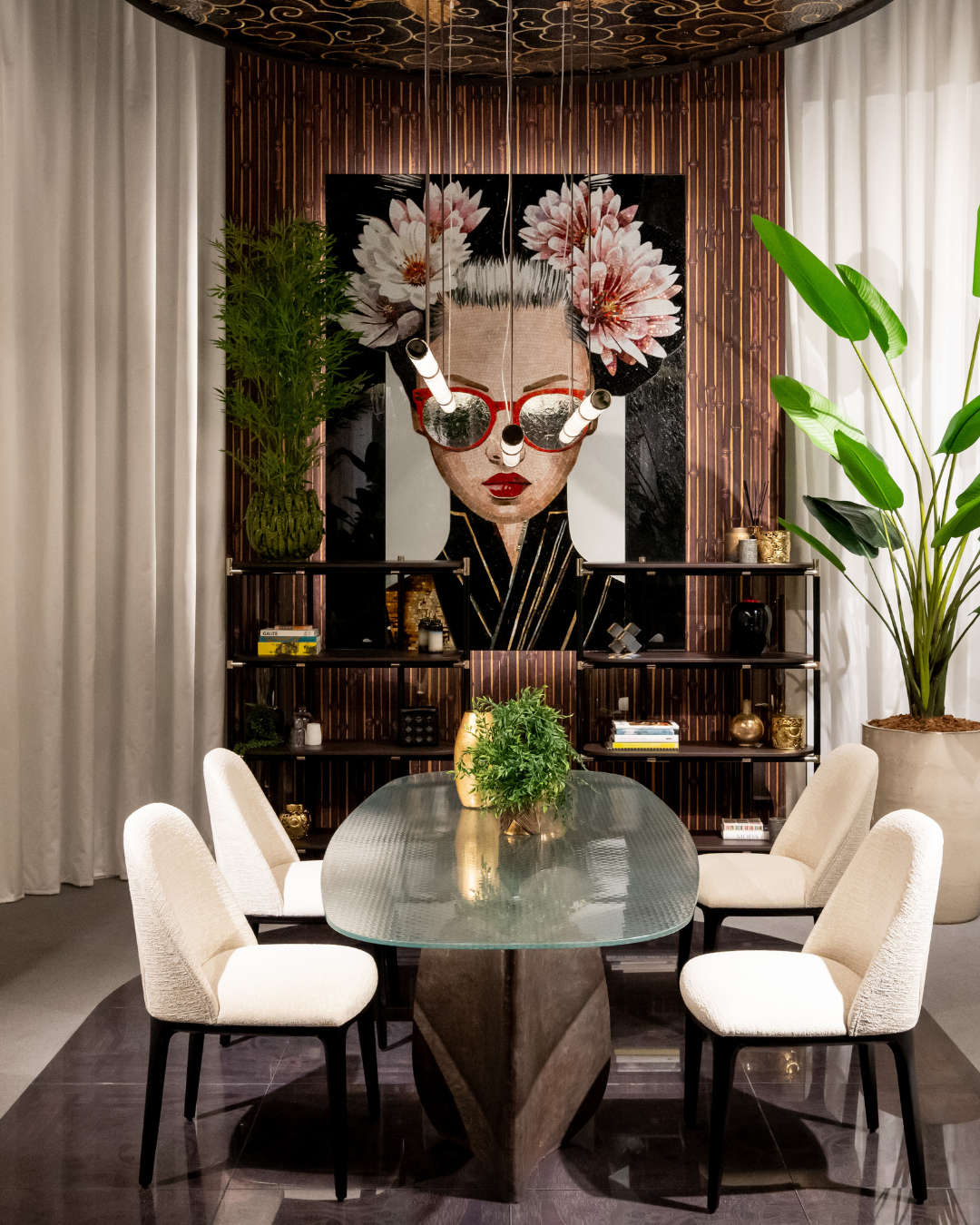
  • Mosaic as material language. SICIS at Salone del Mobile.Milano 2026. | Photography courtesy Salone del Mobile.Milano 2026
    Mosaic as material language: SICIS at Salone del Mobile.Milano 2026.
  • 
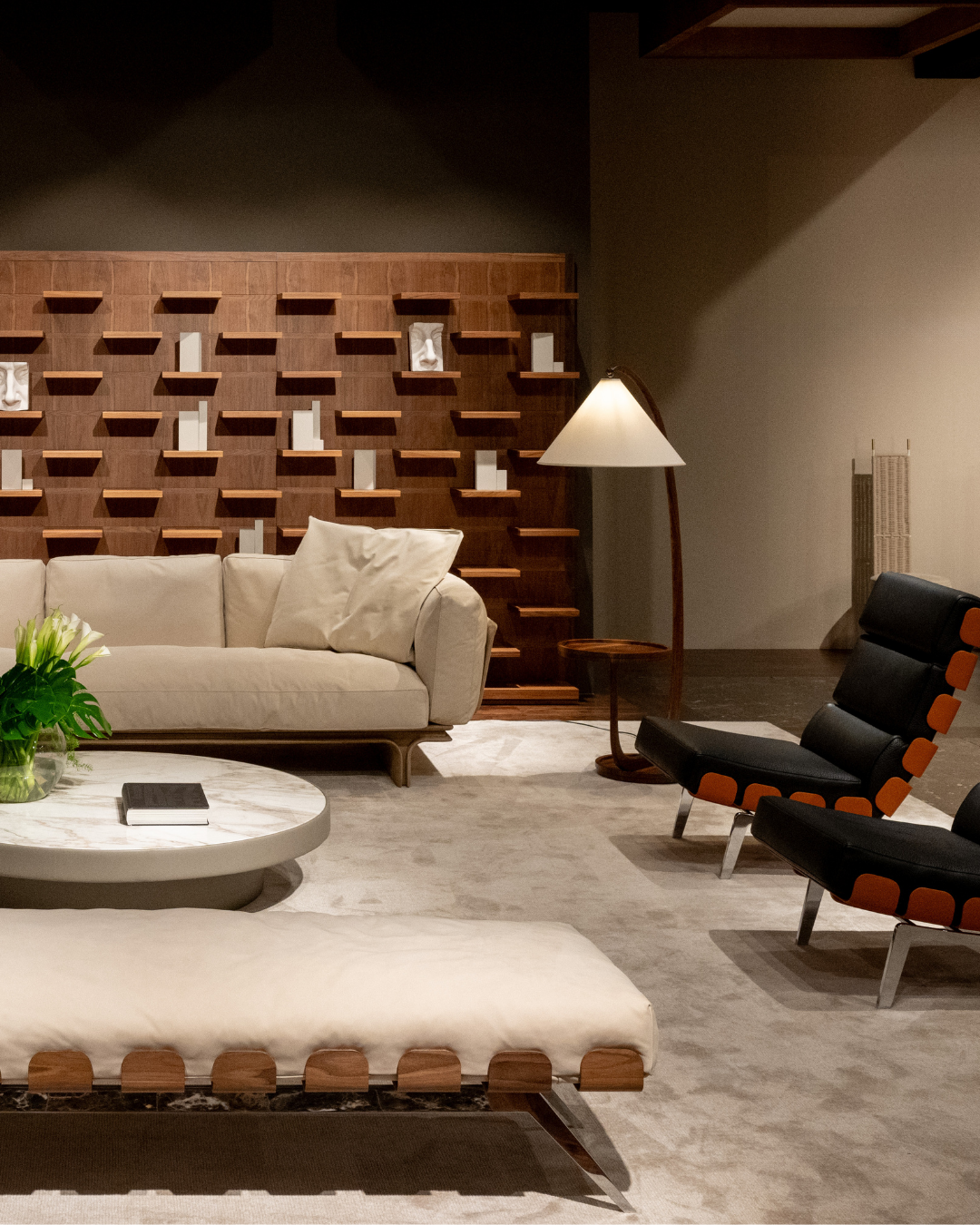
Structure and stillness. MASCHERONI at Salone del Mobile.Milano 2026. | Photography courtesy Salone del Mobile.Milano 2026.
    Structure and stillness. MASCHERONI at Salone del Mobile.Milano 2026.

Many New Centres

Salone Raritas, the fair’s newly inaugurated section for collectible design, limited editions and high craftsmanship in Pavilions 9 through 11, was the institutional response to a movement that had been building for years outside the fair’s gates. Curated by Annalisa Rosso and designed by Formafantasma as a large architectural lantern, it gathered 28 galleries from 12 countries around a specific brief: objects whose making can be accounted for, whose origin is part of their meaning. The modular wooden dividers separating each gallery’s space were engineered for three years of reuse, requiring no drilling. The exhibition design argued the same thing its contents argued.

Among the exhibitors was Zaza Maizon by A1 Architects, a Saudi studio showing sculptural pieces for hospitality spaces, among them Gem of the Peninsula, a metallic sculpture whose forms draw from the mountains and valleys of the Arabian peninsula. “We are the first Saudi company since the beginning of Salone to participate in the fair,” said architect and designer Abdulaziz Khalid Al Tayyash. The pieces are produced in runs of under six per year. Saudi Arabia’s presence extended into the city as well: the Architecture and Design Commission presented Jusoor — Arabic for bridges — at the Pinacoteca di Brera, a collaborative exhibition in which five Saudi designers developed work alongside practices from India, Nepal and Spain, the project having passed through studios in Riyadh, New Delhi, Kathmandu and Barcelona before arriving in Milan.

The other new geography arrived from Central America. Fourteen Guatemalan studios, showing across 5VIE and Alcova, the independent exhibition platform that expanded its 2026 programme to Villa Pestarini, the only private Milan residence designed by architect Franco Albini, and the Baggio Military Hospital complex, presented “Guatemala Diseña con las Manos,” anchored by an installation referencing the Temple of the Great Jaguar in Tikal. Among them was Piegatto, a studio whose design philosophy The Silent Luxury has followed, making its first appearance at the Salone with “Carved Landscapes.” The collection treats furniture as inhabitable sculpture, each piece formed through subtraction: shelves appear hollowed, compartments feel excavated, proportions carry the authority of geological strata. The Retiro Sofa is built from a sustainable composite of reclaimed wood residue. “With Carved Landscapes, we are entering the global conversation with clarity,” said Pietro Estrada, founder of Piegatto. “Presenting furniture as architectural presence and material permanence.”

Raritas itself carried the same geographic breadth in concentrated form. Lewis Kemmenoe showed editions of his Patchwork series at Max Radford Gallery, furniture built from wood-yard off-cuts whose material biography is legible in every joint. Mercado Moderno brought Brazilian tropical modernism. Sabine Marcelis presented Plume, a sculpture with air moving through viscose liquid inside a standing polymer wall. Francesco Faccin showed tables and chairs that appeared to be planks of wood and were bronze casts. The visitor data from the six days confirmed what the stands were already showing: China led foreign attendance in absolute terms, Austria grew 15.7 percent, Mexico and Canada posted double-digit increases. The studios and the buyers were moving in the same direction.


Subtraction as the Operating Method

The SaloneSatellite Award, now in its 15th edition, has developed a specific authority over those years. Its jury, chaired since the award’s founding by Paola Antonelli, Senior Curator of Architecture and Design at MoMA New York, looks for work that captures a way of thinking rather than a finished product: insight above market, research above industrial scale. The 2026 winners, selected from 700 designers under 35 representing 39 countries, read as a precise index of where that thinking is going, and in every winning project the operating method was reduction.

First prize went to Russo Betak of Denmark for Nippon, a pendant lamp 3D printed from seashells and then sculpted by hand, material experimentation resolved into a refined and luminous form. Second prize went to IOUS Studio of the Netherlands for 3DP Ceramic Tiles, a ceramic exterior system in which clay is printed under computational control, fusing digital fabrication with material sensitivity. Third prize went to the German studio Jüngerkühn for Soft Touch, a mechanical device that records and responds to object surfaces, emulating the handiwork of a craftsperson and producing porcelain vases in which each piece is carved in layers to reveal a pattern through the inherent qualities of the material. The Special Mentions went to Aiko Design of Chile for Númina Lamp, ancestral wicker and horsehair weaving combined with 3D printing, its symbolic figure embodying both industrial production and meticulous craft in a single object, and to Yixian Wang of China for Foggy, a vessel transforming fibreglass into pure glass without resin, delicate strands capturing light in a material the medium had never previously expressed this way. Both Special Mention recipients received a month-long residency at the Róng Design Library in Hangzhou.

What seashells give a 3D print, what clay does under computational control, what fibreglass becomes without resin: this knowledge is built through years of material practice and it is specific to a studio and a maker. The Salone’s campaign, conceived by Motel409, made the same argument in images: a stone, a laser-cut petal, a piece of wood, a sponge, each presented as origin rather than styling decision.

  • Matta the Collector. Paradisoterrestre at Salone Raritas, Salone del Mobile.Milano 2026. | Photography courtesy Salone del Mobile.Milano 2026
    Matta the Collector. Paradisoterrestre at Salone Raritas, Salone del Mobile.Milano 2026.
  • Plume. Studio Sabine Marcelis at Salone Raritas, Salone del Mobile.Milano 2026 | isible to the left. Photography courtesy Salone del Mobile.Milano 2026.
    Plume. Studio Sabine Marcelis at Salone Raritas, Salone del Mobile.Milano 2026.
  • Stone as light. SERAFINI at Salone Raritas, Salone del Mobile.Milano 2026. | Photography courtesy Salone del Mobile.Milano 2026.

The Sensory Turn

The 5VIE district, one of Milan’s oldest design neighbourhoods and the Fuorisalone’s most curatorially focused quarter, organised its 2026 programme under the theme “QoT: Qualia of Things,” a reference to the philosophical concept of qualia, the subjective felt quality of experience that belongs to the person perceiving rather than to the object perceived. Its exhibitions at Le Cavallerizze at the Museo Nazionale della Scienza e Tecnologia addressed sound, touch, weight and the temperature of materials alongside their visual properties. Marco Guazzini’s “Resonance” connected a landscape of objects through aluminium tubes transmitting vibration between them. Sara Ricciardi Studio’s “ALMA WATER” rendered the quality of the sea through fabric and amplified sound without depicting it. The sensory turn these works described is a response to a buyer who left the logo economy looking for more sensation, encountered at closer range, through materials that change with use.

That reading found its architectural expression at Palazzo Litta, one of Milan’s most significant baroque residences and a recurring venue for the Fuorisalone’s most ambitious spatial programming, where Lina Ghotmeh presented “Metamorphosis in Motion” as part of the MoscaPartners Variations exhibition. Ghotmeh, a Lebanese-French architect whose practice is built on the premise that buildings and objects are living matter carrying biological and cultural histories, extended that argument from the scale of the object to the scale of the room.


The City and What Comes Next

The Fuorisalone is the name for the hundreds of exhibitions, installations and events that take place across Milan’s neighbourhoods in parallel with the fair each April, turning the city into the world’s largest temporary design platform. In 2026 its most concentrated argument came from the same direction the fair itself was pointing: that the object’s meaning begins before it is finished, in the choices made about material, method and maker.

Rem Koolhaas, the Dutch architect and theorist whose studio OMA has shaped some of the past three decades’ most significant cultural buildings, presented the masterplan for Salone Contract 2027 at the Contract Forum together with partner David Gianotten. The initiative, whose full debut is planned for the 65th edition in April 2027, frames the next significant territory of design as the integration of systems rather than the specification of individual objects: hospitality, retail and public space understood as complete fields of spatial intelligence. It is the scale above the object. What the new studios arriving from Guatemala City, Riyadh and Santiago were building from the ground up, Koolhaas named from the top down.

Questions and Answers on the Future of Design After Milan Design Week 2026

Milan Design Week 2026 — the 64th Salone del Mobile.Milano — produced a set of structural signals for the future of design: new creative geographies entering the global conversation simultaneously, subtraction as the dominant working method of the most considered work, and a full-spectrum sensory turn that design has long underused. The following questions address the key developments, studios and ideas that defined the edition.

  • What is Salone del Mobile 2026?

    Salone del Mobile 2026 was the 64th edition of Milan’s international furniture and design fair, held from 21 to 26 April 2026 at Fiera Milano Rho. The edition drew 316,342 visitors from 167 countries and gathered 1,900 brands from 32 countries across more than 169,000 square metres of net exhibition space, with 16 of the pavilions completely sold out. Three structural signals defined the edition: the simultaneous arrival of design studios from Saudi Arabia, Guatemala, Chile, Brazil and China; subtraction as the dominant working method across the most considered work; and a sensory turn led by the 5VIE district’s Qualia of Things programme and Lina Ghotmeh’s installation at Palazzo Litta. The edition also marked the debut of two new platforms: Salone Raritas, dedicated to collectible design, and the Salone Contract 2027 masterplan presented by Rem Koolhaas and David Gianotten of OMA.

  • What were the key signals at Milan Design Week 2026?

    Milan Design Week 2026 produced three structural signals for the future of design. First, studios from Saudi Arabia, Guatemala, Chile, Brazil and China made formal entrances into the global design conversation simultaneously, each carrying a production philosophy rooted in its own geography. Second, subtraction was the dominant working method across the most considered work, from Piegatto’s excavated furniture to the SaloneSatellite Award winners’ material transformations. Third, the 5VIE programme and Lina Ghotmeh’s installation at Palazzo Litta expressed a shift in design’s sensory register from the visual toward the full body.

  • Which new design geographies emerged at Milan Design Week 2026?

    Milan Design Week 2026 saw studios from Saudi Arabia, Guatemala, Brazil, Chile and China make significant entrances into the global design conversation. Saudi Arabia was represented through Zaza Maizon by A1 Architects at Salone Raritas and through the Jusoor exhibition at the Pinacoteca di Brera. Guatemala was represented by fourteen studios at 5VIE and Alcova, including Piegatto at the Salone itself. Brazil appeared through Mercado Moderno at Raritas. SaloneSatellite Special Mentions went to studios from Chile and China, with both recipients receiving a residency at the Róng Design Library in Hangzhou.

  • What is Salone Raritas?

    Salone Raritas is a section of Salone del Mobile.Milano dedicated to collectible design, limited editions, antiques and high craftsmanship, inaugurated at the 64th edition in April 2026 in Pavilions 9 through 11 at Fiera Milano Rho. It gathered 28 galleries from 12 countries, curated by Annalisa Rosso, Editorial Director and Cultural Events Advisor of Salone del Mobile.Milano, and with exhibition design by the studio Formafantasma. Its exhibitors included Nilufar, Salviati x Draga and Aurel, Mercado Moderno, Sabine Marcelis, Max Radford Gallery with Lewis Kemmenoe, and Zaza Maizon by A1 Architects.

  • Who won the SaloneSatellite Award 2026?

    The SaloneSatellite Award 2026 was presented at the 15th edition of the award, with a jury chaired by Paola Antonelli, Senior Curator of Architecture and Design at MoMA New York. First prize went to Russo Betak of Denmark for Nippon, a pendant lamp 3D printed from seashells and hand-sculpted. Second prize went to IOUS Studio of the Netherlands for 3DP Ceramic Tiles. Third prize went to Jüngerkühn of Germany for Soft Touch. Special Mentions went to Aiko Design of Chile for Númina Lamp and to Yixian Wang of China for Foggy. Both Special Mention recipients received a month-long residency at the Róng Design Library in Hangzhou, China.

  • What is Salone Contract 2027?

    Salone Contract is a strategic initiative by Salone del Mobile.Milano focused on the contract design market, estimated at 68 billion euros globally. At the 64th edition in 2026, architect Rem Koolhaas and partner David Gianotten of the studio OMA presented the Salone Contract 2027 masterplan, framing the next significant territory of design as the integration of systems rather than the specification of individual objects: hospitality, retail and public space understood as complete fields of spatial intelligence. The full programme debuts at the 65th edition in April 2027.

  • What is Piegatto and what did the studio show at Salone del Mobile 2026?

    Piegatto is a Guatemalan design studio whose practice treats furniture as inhabitable sculpture. At Salone del Mobile.Milano 2026, the studio made its first fair appearance with “Carved Landscapes,” a collection in which function is revealed through subtraction: shelves appear hollowed, compartments feel excavated, proportions carry the authority of geological strata. The Retiro Sofa is built from a sustainable composite of reclaimed wood residue. Founder Pietro Estrada described the debut as entering the global conversation with clarity, presenting furniture as architectural presence and material permanence.

  • What is Local Soul in the context of design?

    Local Soul describes value rooted in a specific place, a specific material knowledge and specific makers — a production philosophy that cannot be replicated at scale from outside the geography it emerges from. At Milan Design Week 2026, this was visible in the simultaneous arrival of studios from Saudi Arabia, Guatemala, Brazil, Chile and China into the global design conversation, each carrying its own material traditions and economy of time. The SaloneSatellite Award Special Mentions to Aiko Design in Chile and Yixian Wang in China expressed the same pattern at the level of individual emerging practice.

  • What is the Fuorisalone?

    The Fuorisalone is the name for the hundreds of exhibitions, installations and events that take place across Milan’s neighbourhoods in parallel with the Salone del Mobile fair each April, turning the city into the world’s largest temporary design platform. In 2026 it operated under the theme “Be the Project — Essere Progetto,” positioning design as a continuous process rather than a finished object. Its most programmatically concentrated section was the 5VIE district, which organised its programme under the theme “QoT: Qualia of Things.”

Continue reading