The international luxury landscape is currently experiencing one of its most beautiful revolutions in recent decades. Far from traditional fashion capitals, new centers are emerging, defined by exceptional material quality, centuries-old craftsmanship techniques, and cultural regional roots that set new standards on the runways. It’s a rethinking understood as Couture Régénérative: fashion that unites the highest artisanal precision with the principles of regenerative resource use and longevity. Fashion that is beautiful and simultaneously healing.
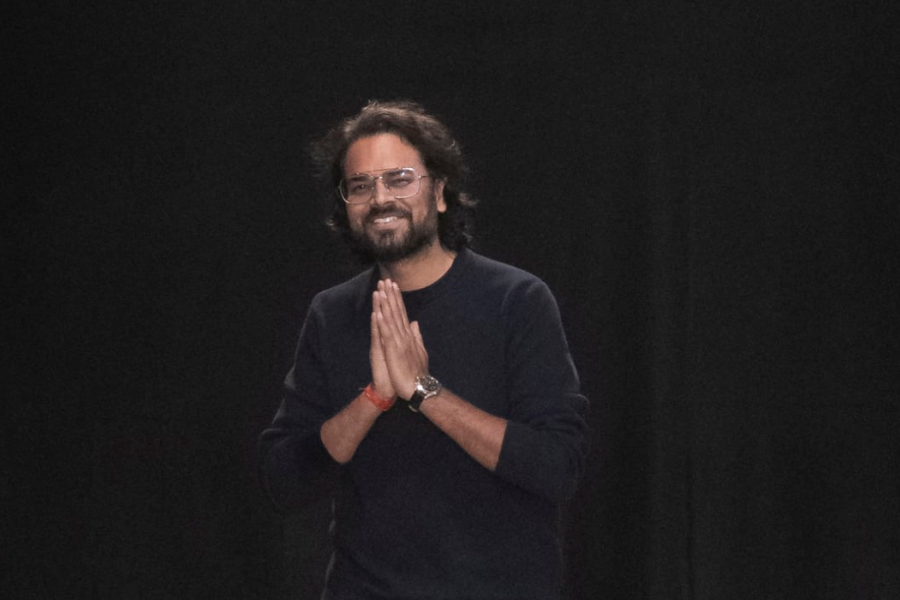
This new form of haute couture rests on three fundamental pillars: materials that strengthen natural cycles rather than destroy them, craftsmanship that creates sustainable value for generations, and design that reinterprets existing resources. One designer who embodies and masterfully represents this philosophy is Rahul Mishra. He possesses the ability to create magical moments where tradition meets vision.
The Physicist Becomes a Poet of Fashion
Rahul Mishra’s life story reads like a modern fairy tale. Born in 1979 in Malhausi, Uttar Pradesh, he found his way to fashion through an unusual path. His trajectory seemed predetermined when he began studying physics. But fate had other plans. After completing his physics degree, he transferred to the National Institute of Design in Ahmedabad and later to Istituto Marangoni in Milan. Then came the breakthrough in 2014: he became the first Indian designer to win the prestigious International Woolmark Prize. A milestone that established Mishra’s international recognition and fame.
Today, from New Delhi, Mishra orchestrates an impressive network: over 2,000 artisans in rural India, primarily in Uttar Pradesh and West Bengal, create couture dreams under his direction. His philosophy of the three “E’s”—Environment, Employment, and Empowerment—forms the foundation for his creations and positions his label as a counterpoint to the fast-paced nature of the modern fashion industry.
Regenerative Materials: When Fabrics Tell Stories
Fabric selection for Mishra’s creations follows strict sustainability criteria. The cotton fabrics used come from regenerative farming, where crop rotation and organic fertilization revitalize the soil.
The silk fabrics are produced in small family businesses that work with rainwater, and predominantly natural pigments from plants and minerals are used for dyeing.
Many materials are produced in close collaboration with local weavers who still use hand spindles and traditional hand looms today. This deliberately slow working method enables sustainable livelihoods for hundreds of families.
“Becoming Love”: Sufi Philosophy on the Runway
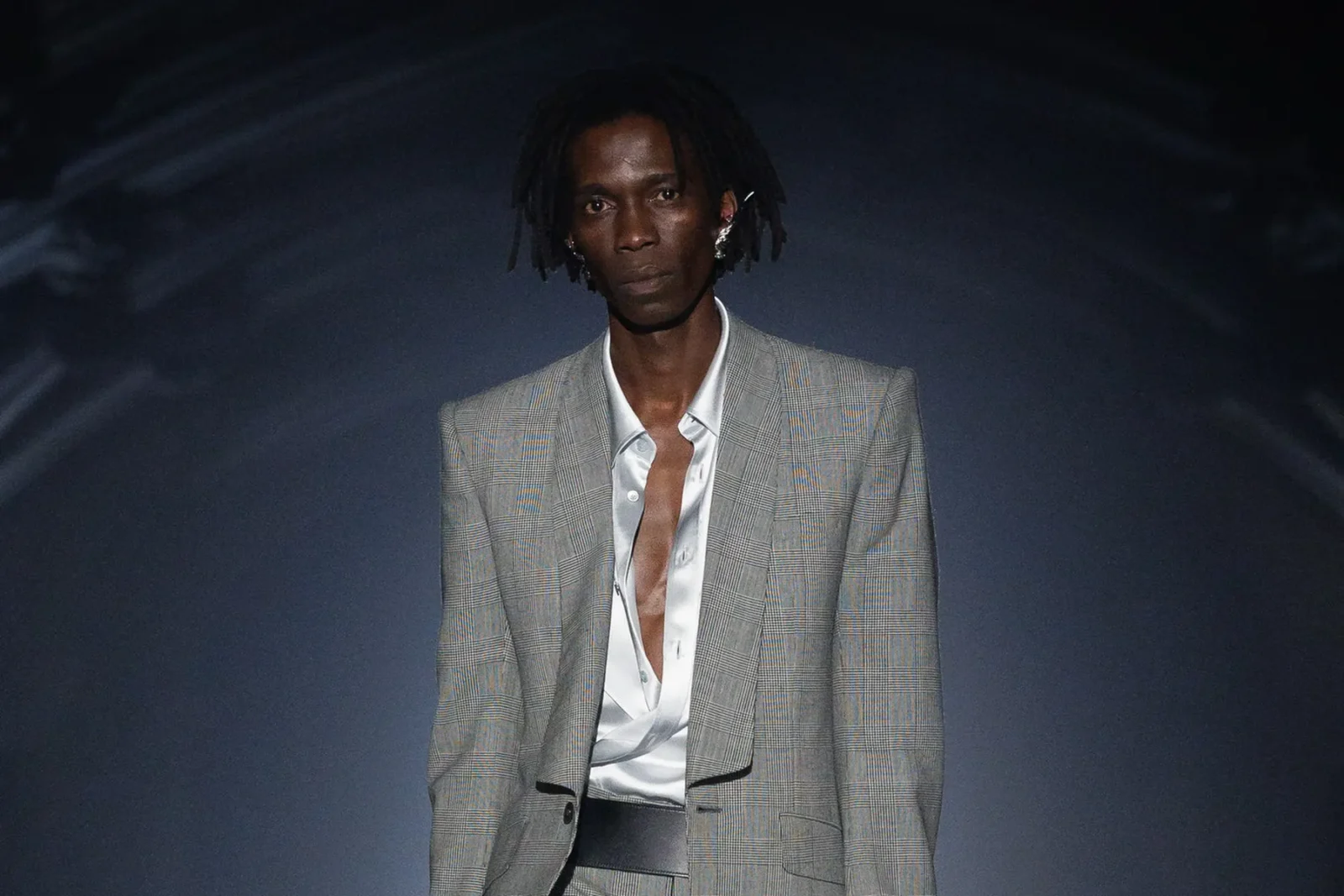
Each of Mishra’s collections is based on a consistently and relatably narrated storytelling approach. For instance, with his current couture collection for Fall/Winter 2025, “Becoming Love,” the designer invites the audience on a profound emotional and sensual journey.
The collection, presented at Paris Fashion Week and India Couture Week, is a poetic interpretation of the Sufi teaching of the seven stages of love:
- Attraction – delicate, flowing silhouettes
- Infatuation – ornamental, playful details
- Devotion – richer textures and embroidery
- Reverence – defining, devoted craftsmanship
- Devotion – complex layering
- Obsession – spectacular Klimt-inspired golden creations
- Death – the final dissolution into quiet elegance
Mishra’s signature is unmistakable: embroidery also forms the heart of his work in this current collection. In Aari, Zardozi, and Naqshi techniques, narrative compositions emerge, complemented by Kundan and sequin work. The spectacular quintet of golden dresses and suits quotes Gustav Klimt’s characteristic swirl patterns and golden tones. Floral motifs, particularly large lotus flowers, symbolize the blossoming of love.
For this collection, Mishra entered collaborations for the first time with renowned milliner Stephen Jones and the Indian heritage house Tanishq, making the creations appear as holistic works of art.
“The Pale Blue Dot”: A Meditation on Planetary Future
With his Spring/Summer 2025 collection “The Pale Blue Dot,” Mishra turned to existential questions about humanity and planet Earth. The designs reflect a future where nature reclaims urban structures. A cape in deep black velvet shows a skyline embroidered in sequins, while a floor-length skirt bears three-dimensional lotus blossoms in sculptural embroidery.
Yet Mishra doesn’t paint dystopian visions of the future. “We are the guardians of life’s meaning,” the designer explains, emphasizing his conviction that beauty and responsibility are inseparably connected.
Rahul Mishra’s work embodies a new generation of couture designers who create beautiful clothes and weave dreams of a different future. His creations are cultural bridges, from the Indian village to the Parisian runways. With each stitch and embroidery, Mishra shows what the fashion world often forgets today: beauty lies in the hands that create something with love. In the stories that develop from the meeting of tradition and vision and together allow us to rethink the future.
The Essence: A Dialogue Between Tradition and Vision
Mishra views the designer not as a mere creator, but as a guardian of meaning. By weaving ancient wisdom into golden embroidery, he creates a vision where nature reclaims urban structures and fashion becomes an act of planetary hope.
How does Sufi philosophy shape the “Becoming Love” collection?
Mishra interprets the seven stages of love from Sufi teaching through his designs. From the flowing silhouettes of ‘Attraction’ to the spectacular Klimt-inspired gold creations of ‘Obsession,’ each piece represents a spiritual step. This narrative makes the couture emotionally resonant, moving beyond aesthetic appeal to a deeper human experience.
What defines the concept of ‘Couture Régénérative’?
It is a shift where highest craftsmanship meets regenerative resources. It relies on materials that strengthen natural cycles and handiwork that creates value for generations. This understated form of quiet luxury proves that fashion can adorn the body while regenerating communities and ecosystems at the same time.
What is the message behind “The Pale Blue Dot”?
Inspired by the fragility of Earth, this collection envisions a future where nature and architecture merge. Three-dimensional embroidered lotus flowers grow alongside urban skylines, symbolizing a world reclaimed by the natural world. It asserts that our role as designers and consumers is to act as ‘guardians of life.’