The Fifth Dimension: How Elsa Schiaparelli Turned Fashion into an Argument for Women’s Independence
Elsa Schiaparelli in one sentence: Elsa Schiaparelli (1890–1973) was an Italian-born couturière who brought Surrealism into haute couture, invented Shocking Pink, and treated every garment as an argument for a woman’s right to be seen on her own terms.
Anyone who wants to understand what fashion truly means has to engage with a woman who cut clothes like arguments, for a world that still preferred to see women neatly dressed rather than clearly positioned. Elsa Schiaparelli, born in Rome in 1890 and died in Paris in 1973, was the designer who brought Surrealism into haute couture, invented Shocking Pink, and in 1934 became the first fashion designer to appear on the cover of Time magazine. The fact that in the German-speaking world she was pushed for decades into the shadow of her rival Coco Chanel has tangible reasons, and those reasons say almost more about society than about the woman herself.
Michaela Karl, political scientist and author of works on Dorothy Parker, Zelda Fitzgerald, and Isadora Duncan, came upon her by pure chance. “I was in New York in 2012 and walked past the Metropolitan Museum, where an exhibition on Schiaparelli and Prada was on at the time,” she recalls in conversation with The Silent Luxury. “Of course I knew Prada. But Schiaparelli meant nothing to me then.” Because she has an eye for fashion, she went in all the same. What she found at the Costume Institute would not let her go. The result is Kluge Frauen bezahlen ihre Kleider selbst (Clever Women Pay for Their Own Clothes, btb Verlag, 2025), the first comprehensive German-language biography of this figure of the century
A note from The Silent Luxury
Good reading deserves to find you again.
The Artist Among the Couturières
“That it was the Costume Institute of all places is of course very fitting,” says Karl. “Schiaparelli held that fashion is art. She was the artist among the couturières.” That this conviction had to be hard-won historically lies in the nature of fashion itself: it is commercial, it carries a price, and that price long prevented its recognition as an art form. It was Diana Vreeland, who built the Costume Institute and founded the Gala, who saw to it that fashion was at last recognised as art. “With that, she made visible to everyone the very thing Elsa had always stood for,” says Karl.
The Art of the Entrance
One question has stayed with Karl ever since that first sight of the original pieces at the Costume Institute: what kind of woman designs a lobster onto an evening gown and assumes, entirely as a matter of course, that it will be worn? In 1927 Schiaparelli appeared at a dinner party of the Paris fashion world in a hand-knitted black sweater from which a white bow seemed to grow at the neck. Trompe-l’œil. The guests caught their breath and ordered on the spot. Joan Crawford. Gloria Swanson. Greta Garbo. Mae West. With that single evening, one of the most remarkable careers in the history of fashion began, and it began in an industry then dominated by men even more heavily than it is today.
The self-assurance behind that entrance drew on a life that had taught Schiaparelli that dependence is a danger and that work is the only reliable answer to it.
Chanel and Schiaparelli: Two Answers to One Question
The duel between Schiaparelli and Chanel was the collision of two irreconcilable worldviews, and it still rewards a reading of value through relationship and depth rather than hierarchy. Chanel stood for classical modernism: plain, structured, restrained. Craftsmanship was so sacred to her that she would unpick a crooked seam even on a stranger in the street. Schiaparelli was the answer to that, loud, colourful, surrealist, Dadaist: “here I come.” And here is the amusing part: in the beginning she could not sew at all. When she made her first models herself, the seams ran so crooked that she had no choice but to set appliqués over them, so that the flaws would not show. Her art grew out of imperfection.
Chanel was a classical beauty and prescribed that ideal to every woman around her: slim, tanned, bobbed hair, uniform. Her employees looked like small copies of herself. Schiaparelli measured herself against none of these standards. She was short, she had curves, and what she had at first felt to be a flaw she turned into her signature. “Classical beauty is rare, and most women find something about themselves they are not so happy with,” says Karl. “Schiaparelli said: you should live it all the same.” Chanel freed the woman’s body. Schiaparelli freed her individuality, and that was a decisive further step.
A Fashion Manifesto of Empowerment
Schiaparelli set down this conviction in Shocking Life in twelve principles, which Karl describes as the heart of the biography. “Ninety per cent are afraid to stand out,” Karl quotes from Schiaparelli’s autobiography. “They should dare to be different.” A sentence written almost a hundred years ago that has scarcely lost any of its edge today.
“Fashion means standing before the wardrobe in the morning and asking: what does the day want from me? What do I want from the day?” Clothing changes posture, mood, and inner bearing. You put something on and slip into a confidence you may not yet possess on the inside in that moment. Joan Crawford understood this when she wore Schiaparelli’s extremely broad shoulder pads in the 1930s: I can take a great deal, I will fight my way through here.
“In difficult times, fashion turns more radical” was another of her principles, and it means no passing sartorial whim but an economic and social reality. Karl recalls the punk movement of the 1980s, the social mood of no future. “At the same time it was also great fun,” she says. “We would backcomb our hair for two hours and think, now we’ll have one more party before the end of the world.” Fashion mirrors the state of the world, and Schiaparelli lived this principle when she refused to work with Mussolini and lost the right to enter her own homeland for it.
Plate I · 1930
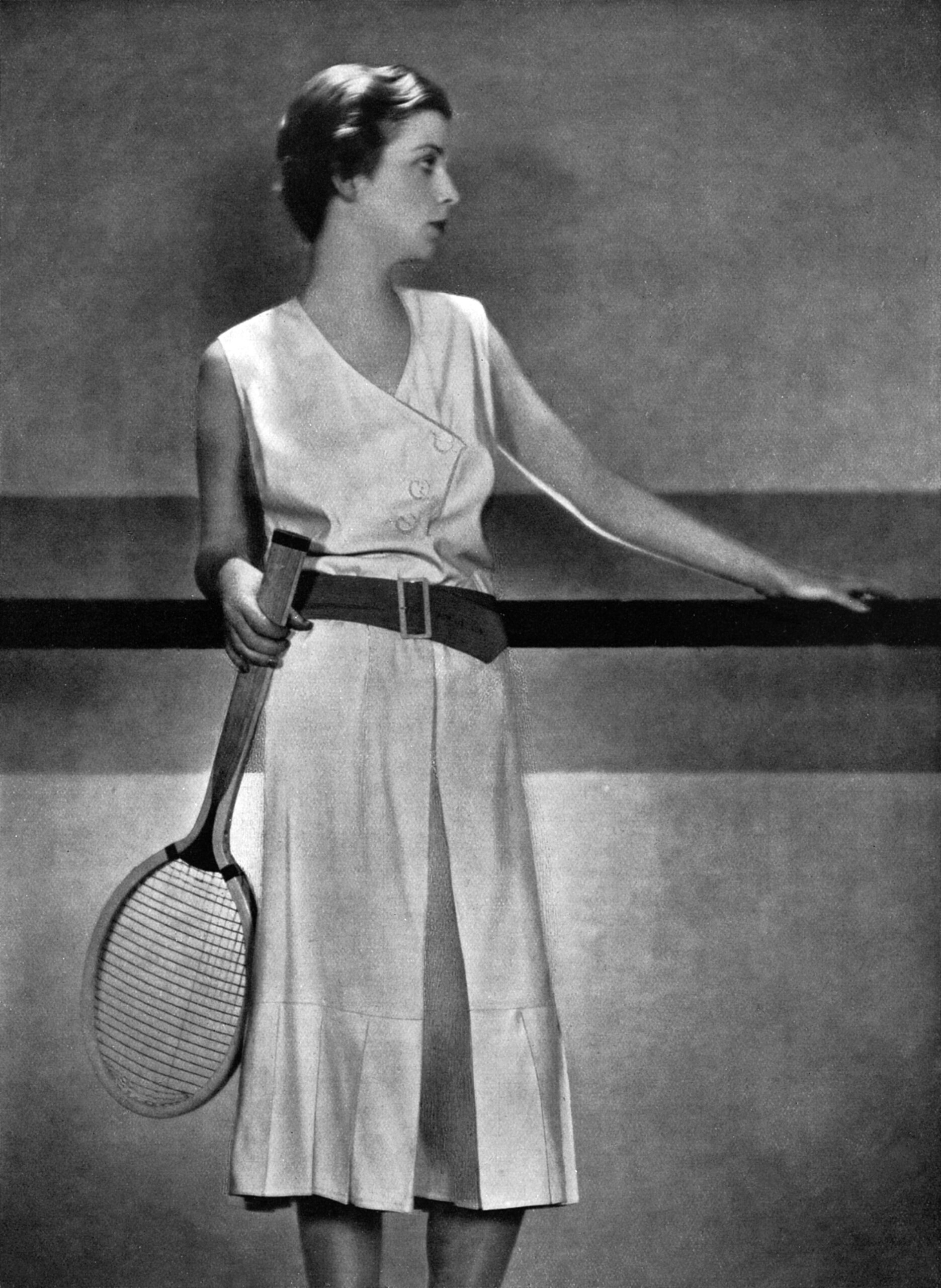
The jupe-pantalon tennis dress in light white wool with an orange tussore belt. Its divided skirt reached the public when the Spanish champion Lili de Álvarez wore Schiaparelli at Wimbledon in 1931, to considerable scandal.
APA-Images / Mary Evans / Illustrated London News Ltd
Plate II · 1936
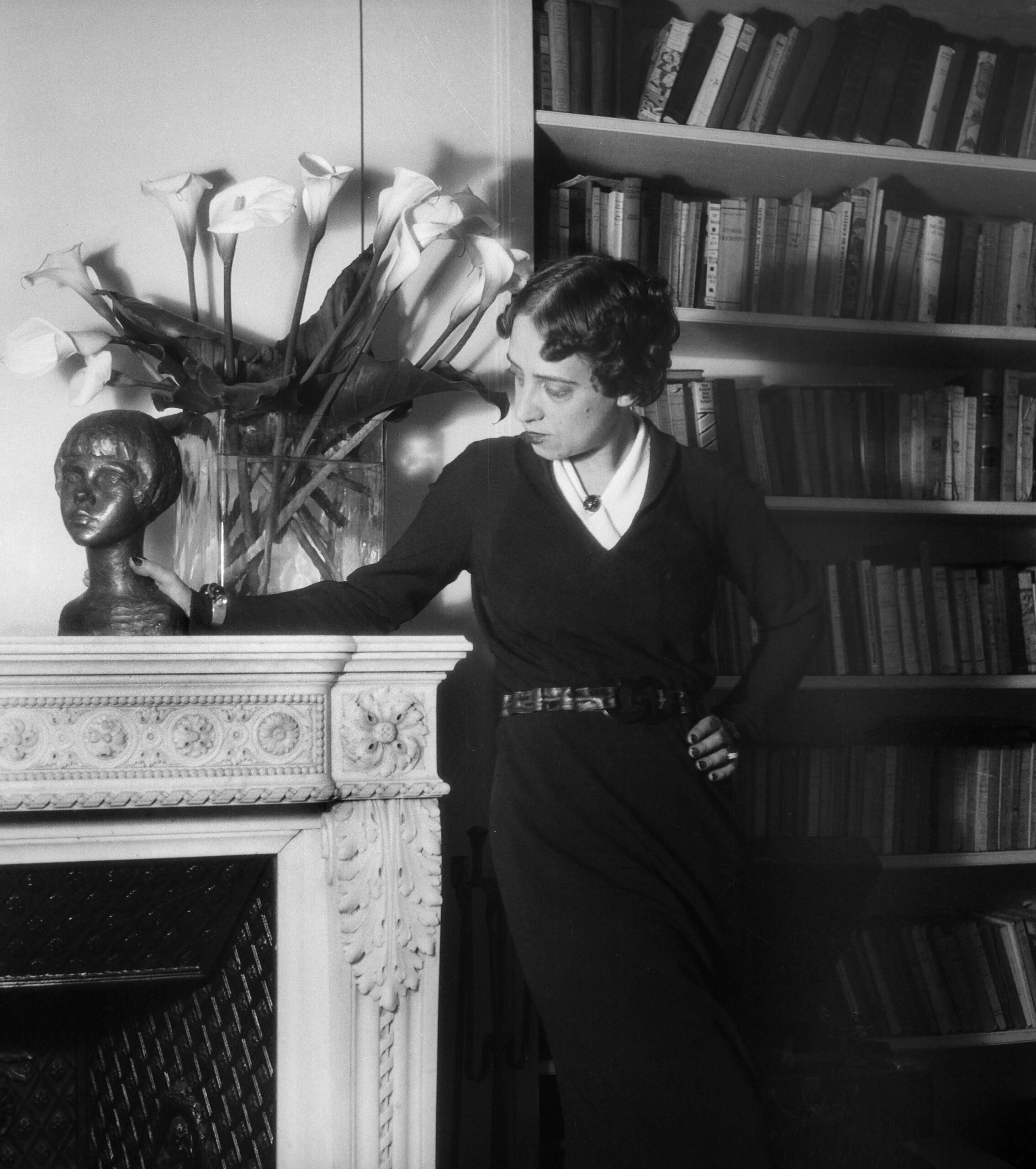
Elsa Schiaparelli at home, among books and arum lilies. Photograph by Boris Lipnitzki.
APA-Images / Roger Viollet / Boris Lipnitzki
Plate III · 1939
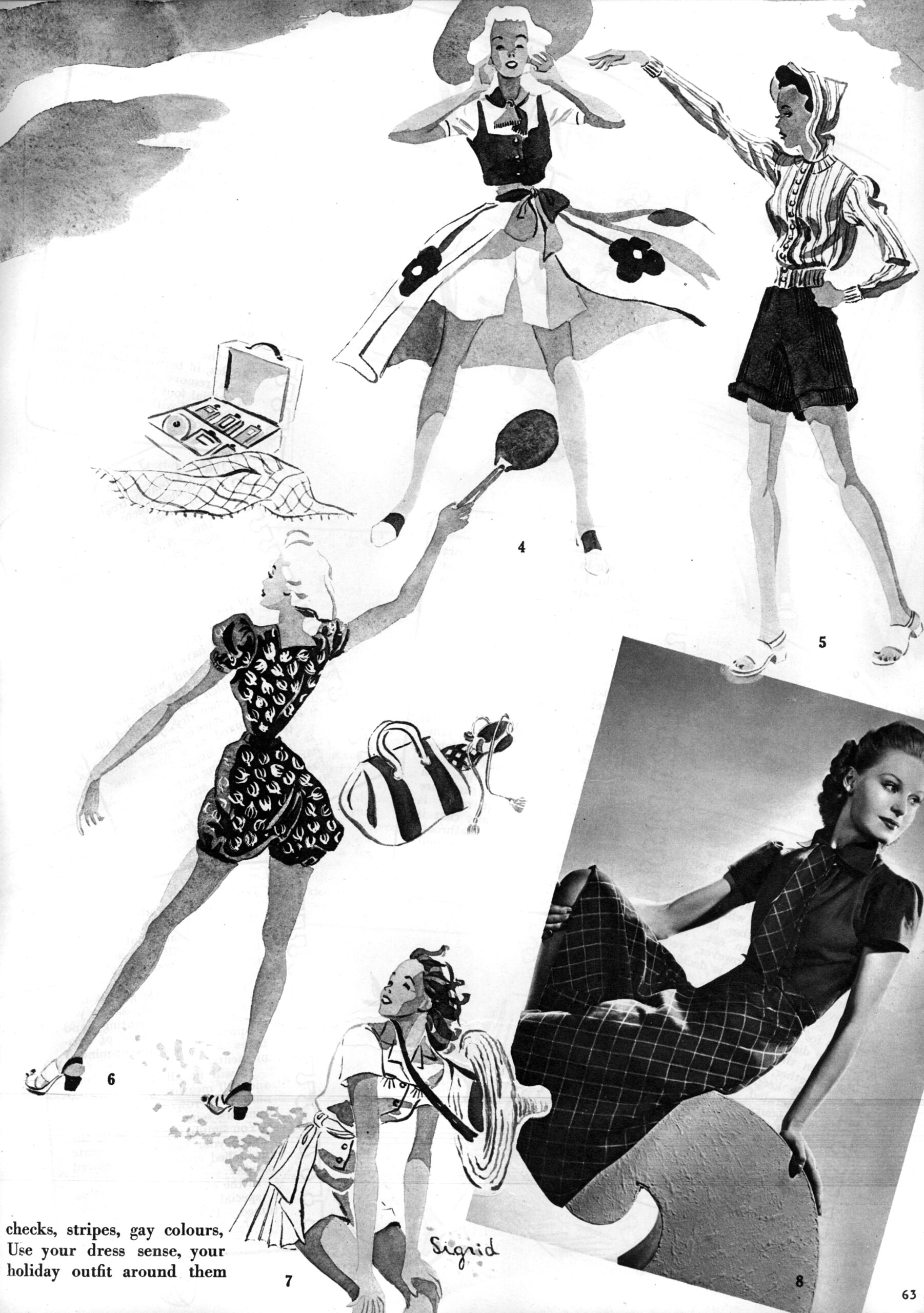
A summer culotte suit in plain and checked Viyella, as the work reached the page and the season.
APA-Images / Mary Evans / Illustrated London News Ltd
Plate IV · 1941

Schiaparelli, right, clears customs at the New York seaplane base on arrival aboard the Dixie Clipper, 25 May 1941, met by her daughter Gogo.
APA-Images / AP
Fashion and Politics
In the present, Schiaparelli’s legacy stings all the more because true individuality has grown so rare. “Walking through a German or Austrian pedestrian zone, you no longer even know where you are; everyone is wearing the same clothes,” Karl observes. In the evening the little black dress dominates, the one Chanel invented more than a hundred years ago. Influencer culture stages itself without pause and is entirely uniform in the process. The new Maison Schiaparelli under Daniel Roseberry maintains the tradition of exclusivity by design. You buy the pieces only at the Paris flagship, at a shop-in-shop in London, or in a handful of stores in the United States. “I can imagine it would be a nightmare for Daniel Roseberry to have hordes of influencers in Dubai holding the designs up to the camera,” says Karl. “That was never Elsa’s audience.”
Karl draws a surprising parallel to the present. “Few people know how to deploy fashion as strategically as Donald Trump,” she says. His deliberately ill-fitting suits and overlong ties are calculated intent: I am not from the establishment, I am one of you.
The Dove on the Place Vendôme
“My highlight is still Lady Gaga at Joe Biden’s inauguration in that incredible dress,” says Karl. “To stand out, you wear Schiaparelli even today.” Lady Gaga had chosen the house deliberately. The luminous red silk skirt. The gilded dove of peace at the breast. The symbolism spoke for itself: in 1939, before leaving France for the United States, Schiaparelli hung doves of peace in her salon on the Place Vendôme.
The Fifth Dimension
The woman for whom Karl wrote this biography belongs to a present that is learning once more to celebrate midlife. Schiaparelli designed for the grown woman, for someone with a wealth of experience and a settled sense of herself. “Life does not damn well stop when you are no longer twenty-five,” says Karl. “This phase around fifty is a wonderful chapter of life, one you can fully exploit in sartorial and creative terms. We do not all have to become the wearers of functional textiles who step off the tour bus in dreary matching couples’ outfits.” And if Schiaparelli were to look upon our world today? “She would be right at the pulse of current themes in fashion,” says Karl. “But she would be deeply surprised and disappointed that, in matters of women’s independence, we still have not advanced very far.”
In Shocking Life, Elsa Schiaparelli described herself as someone she knew only by hearsay. I know Schiap only at second hand. I have seen her only in the mirror. To me she is a kind of fifth dimension. It is a sentence that lingers after 448 pages. Michaela Karl has found the mirrors. The fifth dimension is another question.
The conversation continues in the full interview with Michaela Karl, on Schiaparelli, Chanel, and the politics of dressing.
Elsa Schiaparelli: What She Means and Where to See Her in 2026
Elsa Schiaparelli is read today through her rivalry with Chanel, her Surrealist designs, and a biography that frames her life as a case for women’s independence. The questions below answer what readers most often ask when they encounter her work for the first time.
Who was Elsa Schiaparelli? Elsa Schiaparelli (1890–1973) was an Italian-born couturière who brought Surrealism into haute couture, collaborated with Salvador Dalí, and invented Shocking Pink. She built one of the most influential Paris fashion houses of the interwar period and, in 1934, became the first fashion designer on the cover of Time.
What is Schiaparelli best known for? She is known for the trompe-l’œil bow sweater of 1927, the lobster dress and shoe hat created with Dalí, the colour Shocking Pink, and a rivalry with Coco Chanel that defined interwar Paris fashion. Her house operated from 1927 to 1954 and was revived in 2012.
What does “clever women pay for their own clothes” mean? It is Schiaparelli’s most quoted line, drawn from her autobiography Shocking Life. For her, financial independence was the precondition of freedom, so the sentence works as an economic argument before it works as a style maxim.
What is Michaela Karl’s biography about? Clever Women Pay for Their Own Clothes (Kluge Frauen bezahlen ihre Kleider selbst, btb Verlag, 2025) is the first comprehensive German-language biography of Schiaparelli. Political scientist and author Michaela Karl reads the designer’s life as a case for financial self-determination.
Where can I see Schiaparelli’s work in 2026? The retrospective Schiaparelli: Fashion Becomes Art runs at the Victoria and Albert Museum in London from 28 March to 8 November 2026, in the Sainsbury Gallery.
Similar Articles

The SaloneSatellite Award 2026: Five Projects and the Future of Design

The Return on Repair: How a 500-Million-Euro Figure Is Reshaping the Economics of the Fashion Industry
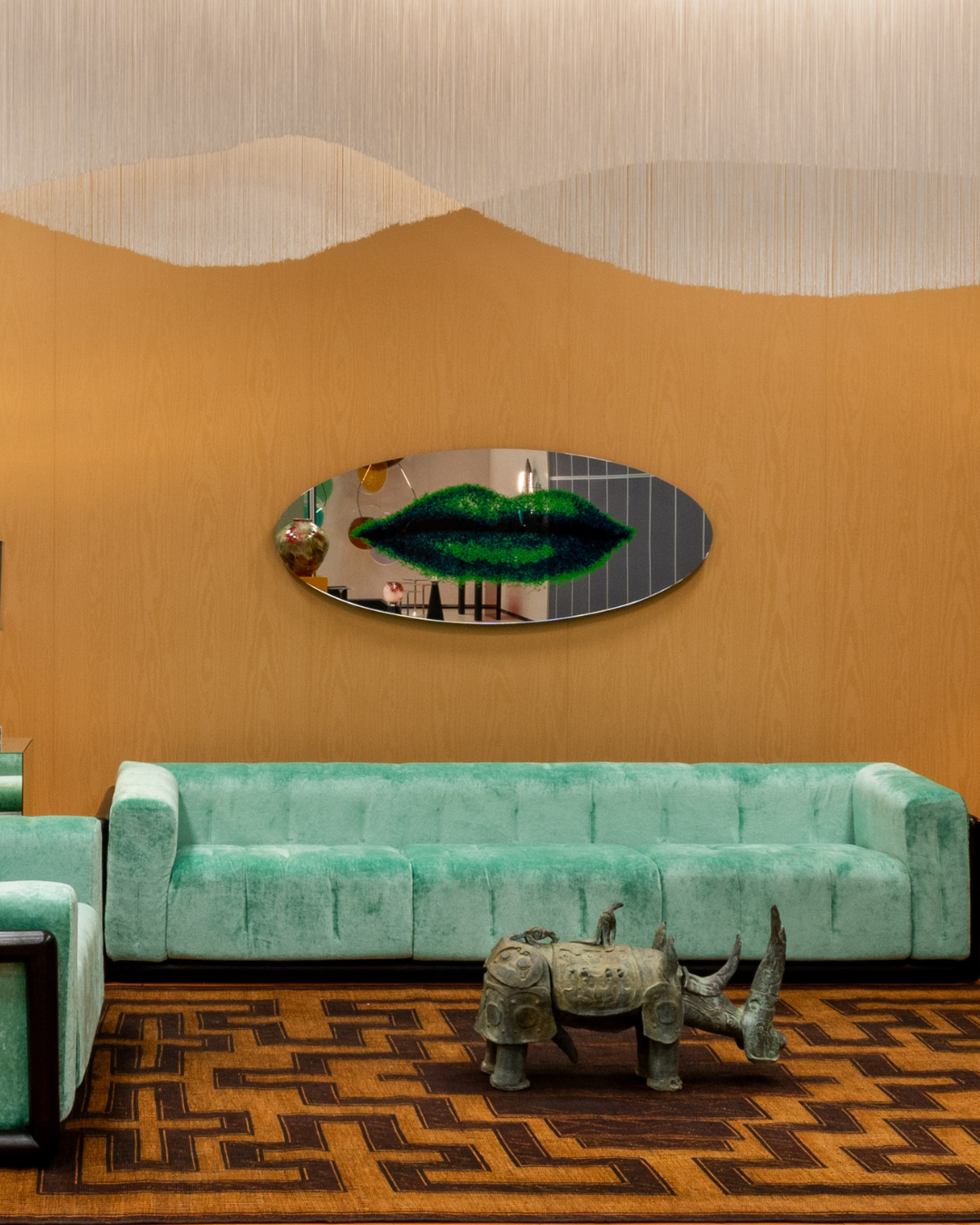
Salone Raritas 2026: Inside Salone del Mobile’s First Collectible Design Section