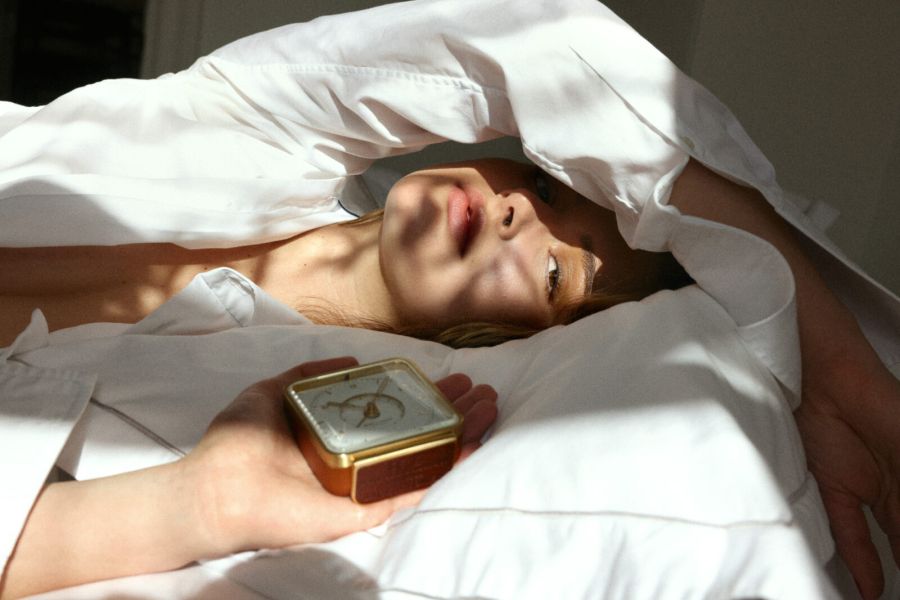
A Manifesto for Decelerated Awakening: The Return of the Analog Morning
We all know that moment: the diffuse, blue shimmer in the darkness. Even before consciousness greets the new day, fingers are already in motion. Messages, emails, the algorithmic flood of social media. We no longer seem to wake up but rather boot up—into a state of permanent readiness, long before the first coffee reaches our system. The bedroom, once a protected oasis of calm, has mutated into a digital waiting room.
While millions of us practice this sleepwalking surrender to the virtual world, a small workshop in Stockholm is developing into an unexpected detox spa. Here, in the heart of minimalist design, a newly founded manufactory crafts something that seems almost anachronistic in our hyperconnected age: an analog alarm clock in retro design. Bold? Certainly. But this product illuminates the preciousness of time and tranquility. And the story behind this courageous step is as personal as it is inspiring.
The Genealogy of an Idea: From Paris 1911 to Stockholm 2023
The calendar shows 2023. Lisen Båge is searching for an alarm clock for the slow, analog glide into the day. An alarm clock that meets her quality standards in terms of craftsmanship, materials, and design. The search proves sobering: a parade of plastic, uninspired designs, and the omnipresent digital bedside companion.
Yet the search was certainly connected with familial nostalgia. The founder loves to tell of her source of inspiration: her grandmother Suzanne Brunner. Born in Paris in 1911, Suzanne became an icon of stylish elegance in her time. In all her homes from Paris to Southern France, an elegant alarm clock always stood on her nightstand. Anecdotally, Båge links this memory of her mentally alert grandmother with the analog alarm clock. Thus she translates the alarm clock search into a manifesto that attempts to reclaim space from the digital environment and recover precious time.




The Biological Self-Sabotage of Wellbeing
Today, according to current studies, 71 percent of people sleep with their smartphone beside the bed, and 95.1 percent have smartphones in the bedroom generally. The first glance belongs to the display, even before consciousness has fully awakened. Yes, the analog generation will object: waking up with alarm clocks wasn’t gentle either, the ringing was penetrating, stretching out one’s arm was laborious to uncontrollable.
But the effects of smartphones in the bedroom begin already at bedtime. A kind of biological self-sabotage of wellbeing takes place. Dr. Charles Czeisler and his team from Harvard demonstrated in the study “Blue Light’s Dark Side” that exposure to blue light from screens suppresses melatonin production by up to 80 percent for up to three hours after last use. The conclusion: anyone who goes to bed with their smartphone systematically sabotages the quality of their sleep and the start of the next day.
The Return to the Artisanal Era
Back to Båge and the fulfillment of her wish. She found the solution not in the next app, but in a bygone era, a world where quality craftsmanship still determined the tempo. In the small workshop in the capital of minimalism, she has been crafting analog precision alarm clocks since 2023.
Every step, from the finishing of Swedish brass to the assembly of the clockwork, is handwork. The leather for the housing comes from the traditional Tärnsjö tannery, where it is tanned using traditional, vegetable methods. Each alarm clock goes through 73 finely tuned work steps. The focus is not on speed, but on the quality of precision.
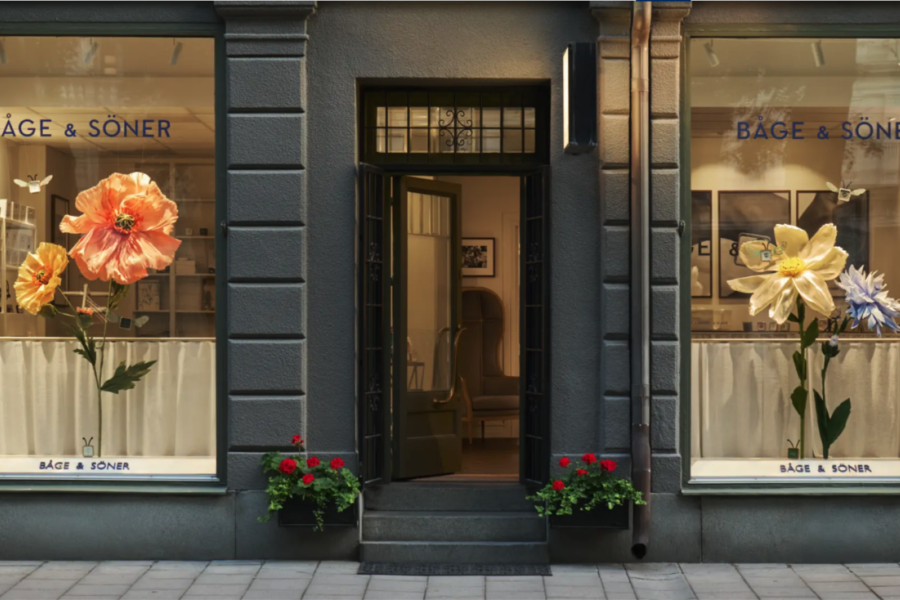
Båge & Söner Showroom in the heart of Stockholm: Furnished according to the Lagom principle, the just-right principle. | Photo: Båge & Söner
Three Båge & Söner Models – and What They Reveal About You
The models of the new generation of analog alarm clocks from Båge & Söner tell their own stories. What they have in common is that they work like archetypes of conscious living, each suited to a particular personality type. Which type are you?
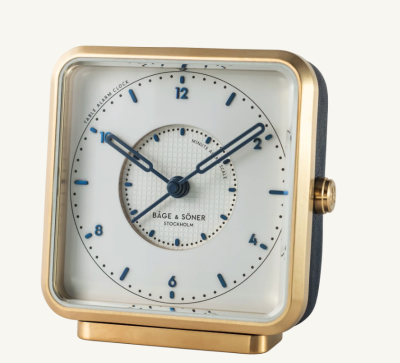
Type 1: Deceleration as Life Art
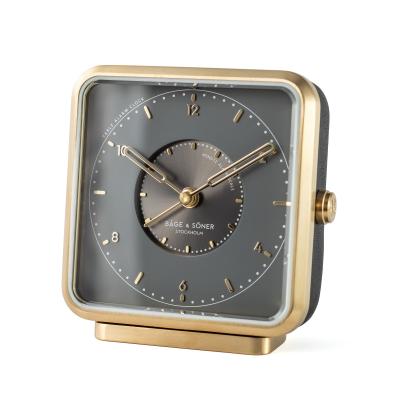
Sea Breeze: Gentle curves, warm brass reminiscent of Scandinavian morning sun. The vegetable-tanned leather from the Swedish Tärnsjö tannery, the soft lines, and the calming quiet ticking convey the daily spa visit.
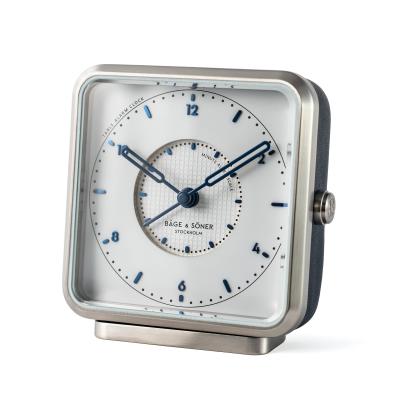
Type 2: Urban Thinker with a Very Personal Oasis of Calm
Afternoon Delight: Clear lines, timeless elegance, precise geometry as a modern interpretation of the Art Deco era.
Type 3: Nordic Nature
Sleepy Rock: Robust, earth-connected, like Swedish granite. For the bold realists and detox pioneers who have banished the smartphone and are rediscovering what silence sounds like. Built to outlast generations. While smartphones become obsolete in two-year cycles, this alarm clock becomes a family heirloom.
The Båge & Söner Bedroom Ritual: The Art of Conscious Transition
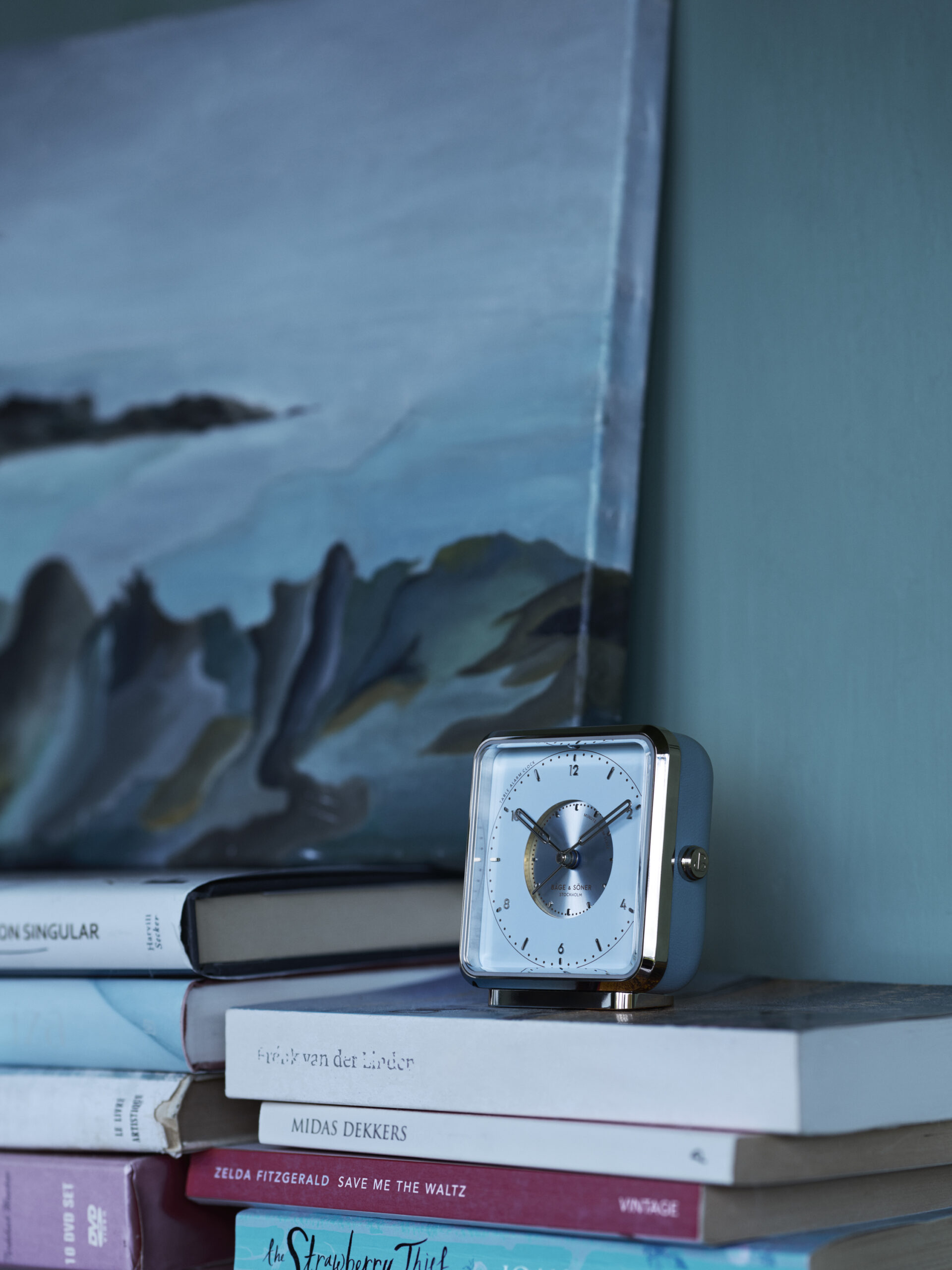
Having a Båge & Söner alarm clock standing on the nightstand carries a touch of nostalgia. It means relearning the forgotten choreography of sleep, that ritual sequence that grandparents of the 45-plus generation still knew.
Two Phases of Temporal Recalibration: A Development Program
Phase I: Digital Renunciation (Days 1-7)
The radical break. The smartphone leaves the nightstand, the Båge & Söner enters the stage. Two hours before bedtime begins the “Digital Sunset,” that moment of conscious renunciation of blue light. The last touch of the evening belongs to the warm Swedish brass and not the cold display. A tactile meditation that programs the body for rest.
Phase II: Sensory Recalibration (Days 8-14)
The Stockholm feeling establishes itself. Not jumping up immediately in the morning, but spending five conscious minutes with the alarm clock: listening to the mechanical heartbeat. Lagom becomes a morning practice—not more, not less, simply exactly the right amount of time for oneself.
The result after two weeks: you have acquired an alarm clock, internalized detox, and cultivated a new life philosophy. And perhaps the realization emerges that the most valuable technology is sometimes the one we don’t use.
Nordic Wisdom: A Life According to Lagom
In Stockholm, where winters are long and nights endless, people know the importance of conscious handling of light and time. This Nordic wisdom flows into the concept of lagom, that Swedish principle of “just right.” The alarm clocks are not too loud, not too quiet, not too much and not too little. They are exactly right. Båge summarizes this philosophy concisely: “Having time is real luxury. Time for oneself, time with family, time to make conscious decisions.”
Reclaiming Time
With a limited production of a maximum of 50 alarm clocks per month, Båge & Söner sets a manifesto for deceleration and time recovery.
Båge always keeps in mind the function and place of the alarm clock in the home: “We want to create a sleeping space where one can rest and gather strength, undisturbed by digital influences. Because real luxury today is the time one reclaims.”
A final self-realization from the author: I often write sitting on the bed, in a relaxed posture, legs stretched out. So too when writing these lines. The mobile phone naturally lying beside me. And suddenly the ringtone breaks through the calm and concentration. The shock was great. It almost seems like part of a larger plan.
The Essence: The Weight of Time
The mechanical bell provides a different rhythm for waking up. These clocks are built to last for decades, intended to become heirlooms through daily use. In a room meant for rest, the clock acts as a steady presence. It relies on a century-old mechanism that remains effective today. Choosing such an honest object reflects a preference for permanence over restless technology.
Similar Articles

Where Luxury Begins: The Value of Natural Fibre, From the Karoo to Vittorio Veneto

Sicily in Seven Notes: Spezieria Siciliana and the Perfume of an Island

The Great Small Vintage of 2026: A Season of Concentration