Nine Seconds in the Feed or Nine Days in the North Sea.
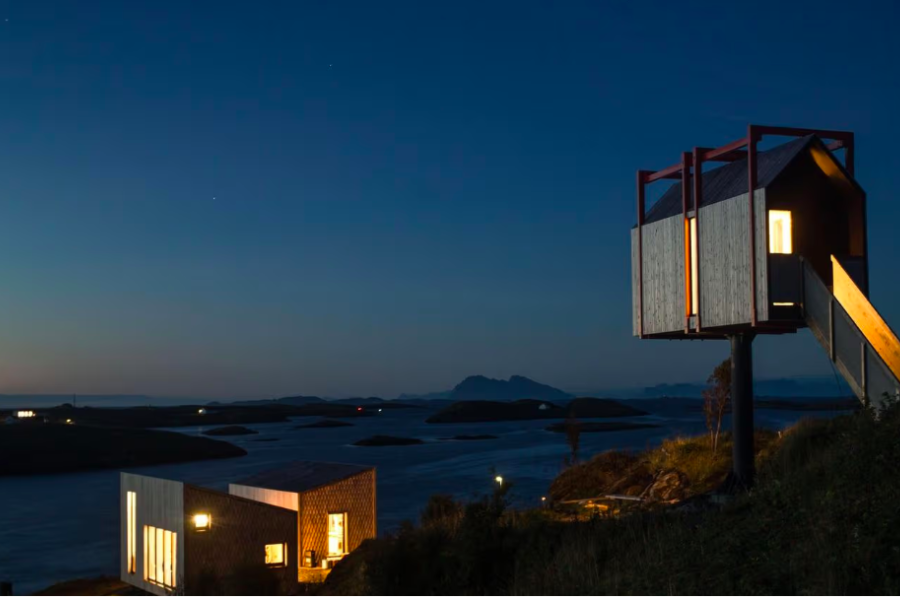
The boat leaves the harbor of Bodø and slowly the mainland disappears. It’s a journey through the Fleinvær archipelago, exposed in the Norwegian Sea, between cold Arctic air and milder Atlantic currents. After about an hour’s journey comes the call “Next stop: Sørvær.” An island with flat-ground rocks, covered with resilient moss and grasses and otherwise barely any vegetation.
Nine people live here year-round in the entire archipelago. No paved roads, no supply infrastructure, no mechanical sounds except wind and waves. The sea eagles have one of the densest populations in Norway here and they are, alongside an otter population, the actual inhabitants of the island.
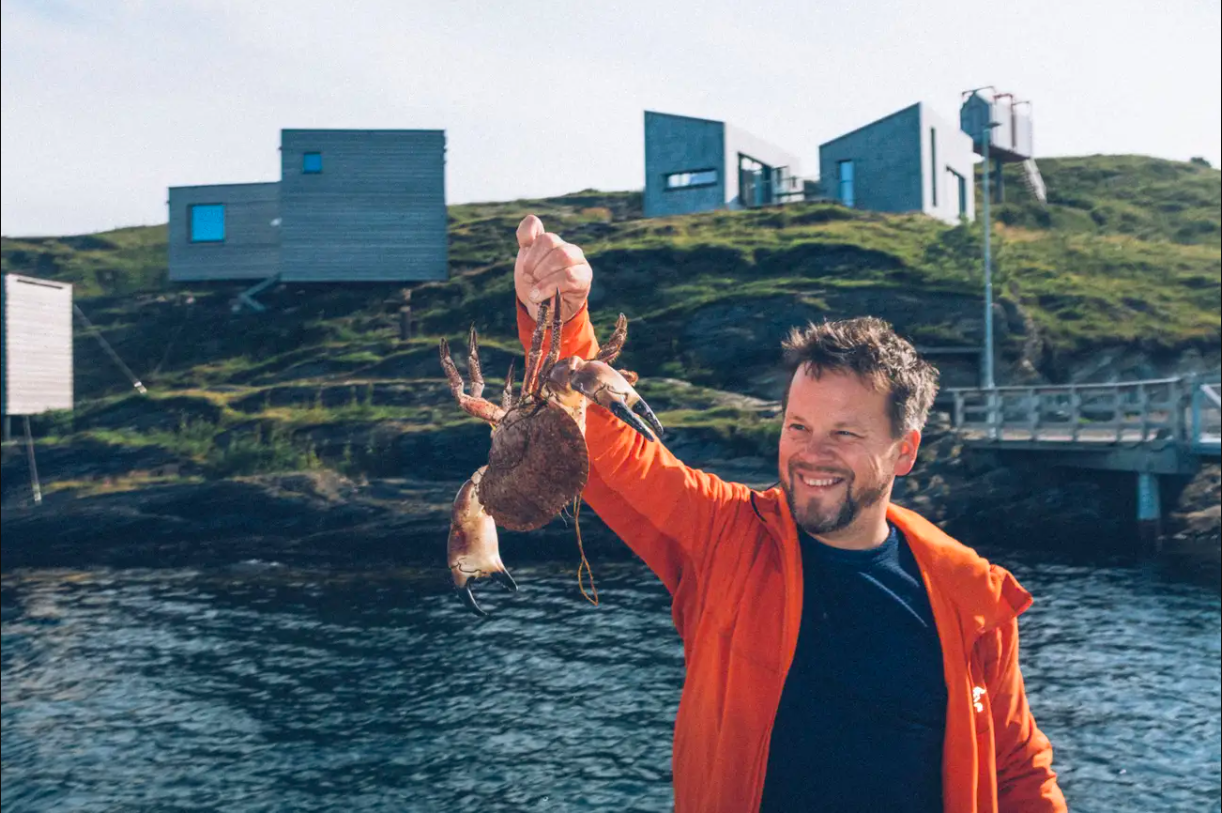
Ten years ago Harvard Lund came here and began working with Finnish architect Sami Rintala on thirteen monofunctional buildings. In his interview with The Silent Luxury, Lund describes his role with a metaphor from music: “I’m not a hotelier. I’m a bandleader.”
In winter the northern lights dance over the structures, in summer the sun doesn’t set for weeks. The average length of stay is nine days – possibly a Norwegian record. The vastness of the landscape changes perception, and precisely this change is the actual program.
The Bandleader and Improvisation
A band improvises within fixed structures, Lund explains. The basic principles apply, but the performance responds to respective conditions. That’s exactly how The Arctic Hideaway works. The structures are fixed – thirteen monofunctional buildings, six sleeping cabins, shared kitchens, bathrooms and workspaces – but the experience varies with weather, season, the composition of guests and the conditions of the place.
Lund is a musician, worked in various fields, searched for a form of project that would unite his vision of community and reduction. Sørvær offered exactly that: a place where conditions are set, but where each day sounds different.
The Encounter with Sami Rintala
Finnish architect and professor Sami Rintala fundamentally shaped the development of The Arctic Hideaway. “Make a ritual, make a very beautiful ritual out of the few drops of water you have,” Lund says about Rintala’s approach. This philosophy became the foundation of what happens here.
The buildings age with the landscape, the wood weathers, the patina tells time.
When Meters Become Kilometers
And this place without distraction and pure nature does something to the guests, Lund tells.
From Lund’s property you can see an island twelve kilometers away as the crow flies. The Arctic air makes it appear tangibly close. Guests from Berlin tell Lund how their eyes slowly recover, from the city gaze that often reaches only a few meters to now exploring the horizon. It does something to perception and leads to relaxation.
Some suddenly discover a tinnitus they had previously overheard in everyday life. The city with its sounds had covered it up, the silence made it audible. It shows, Lund says, how the body recalibrates itself due to the exposure of the environment to silence, darkness and vastness.
The silence of Sørvær has a special quality. Lund speaks carefully about transformation because he doesn’t want to use the word lightly. He describes crying couples, important life decisions made during the stay, and a form of insight that emerges through the duration of exposure. Those who come for fourteen days arrive with a different energy, says Lund. You are more settled from the first second because you know that time is there.
These are not dramatic moments, but quiet insights. A relationship that seemed functional in the city shows its cracks here. A career decision that was postponed suddenly becomes urgent. You cannot hide from this nature, Lund explains, because outer nature corresponds to inner nature. When everything outside is reduced – sky, water, horizon – reduction also becomes possible inside. The vastness, the silence, the uninterrupted confrontation with the elements over days – that is the exposure that works. The distinction Lund makes is very precise. Emotions have become increasingly cosmetic, he says, they ignite, evaporate again and are gone. But when you breathe things in deeply with heart, love and one, then you can speak of transforming experiences, says Lund.
The Monofunctional Architecture
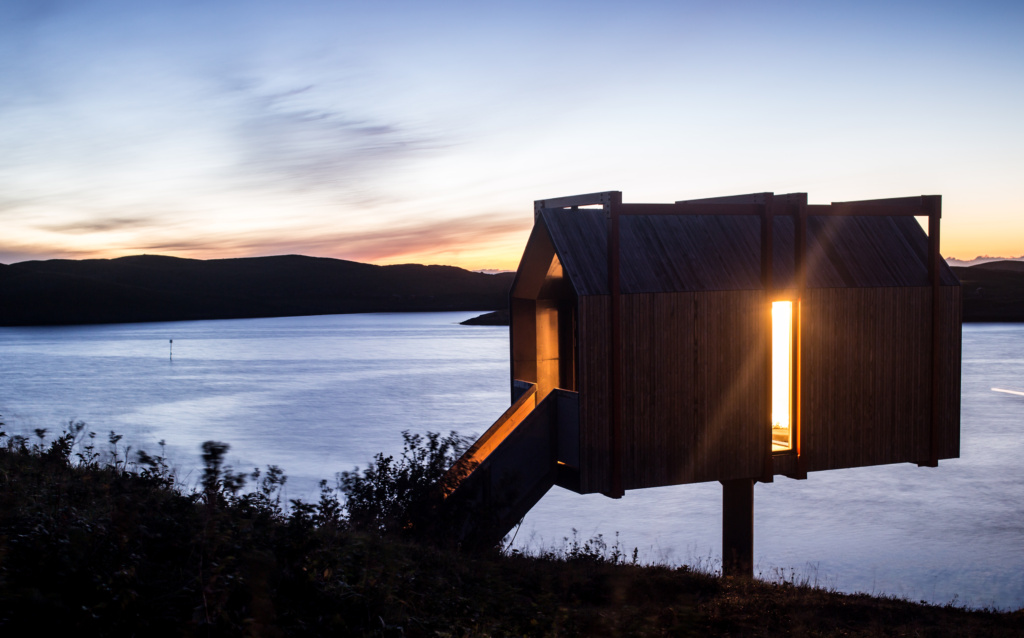
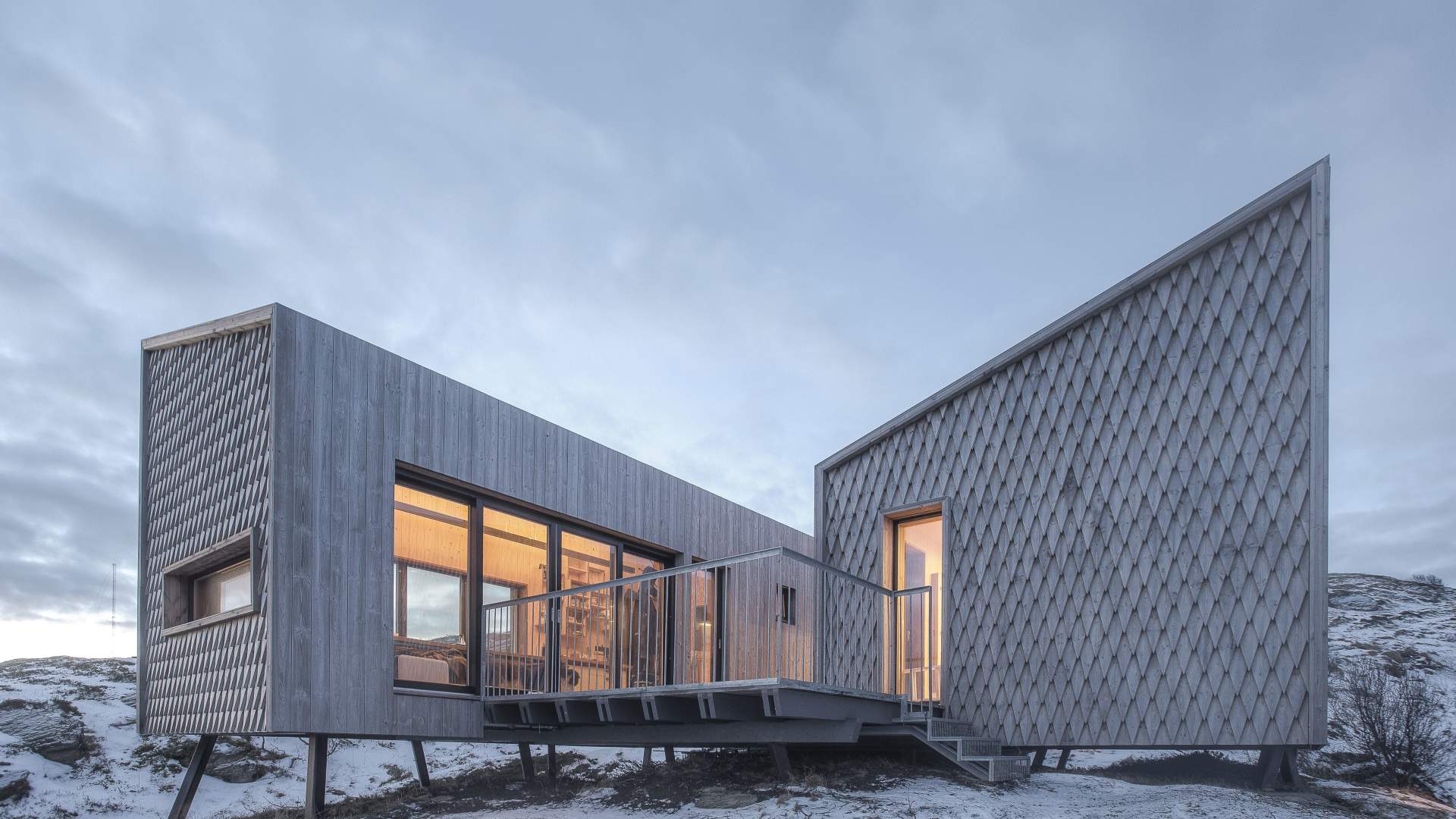
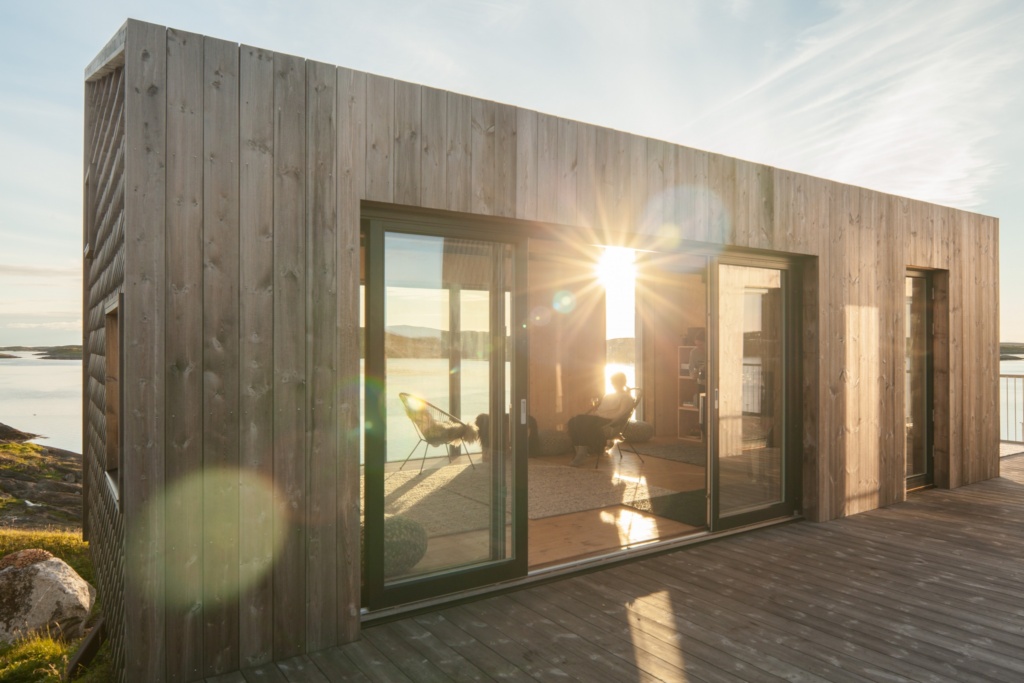
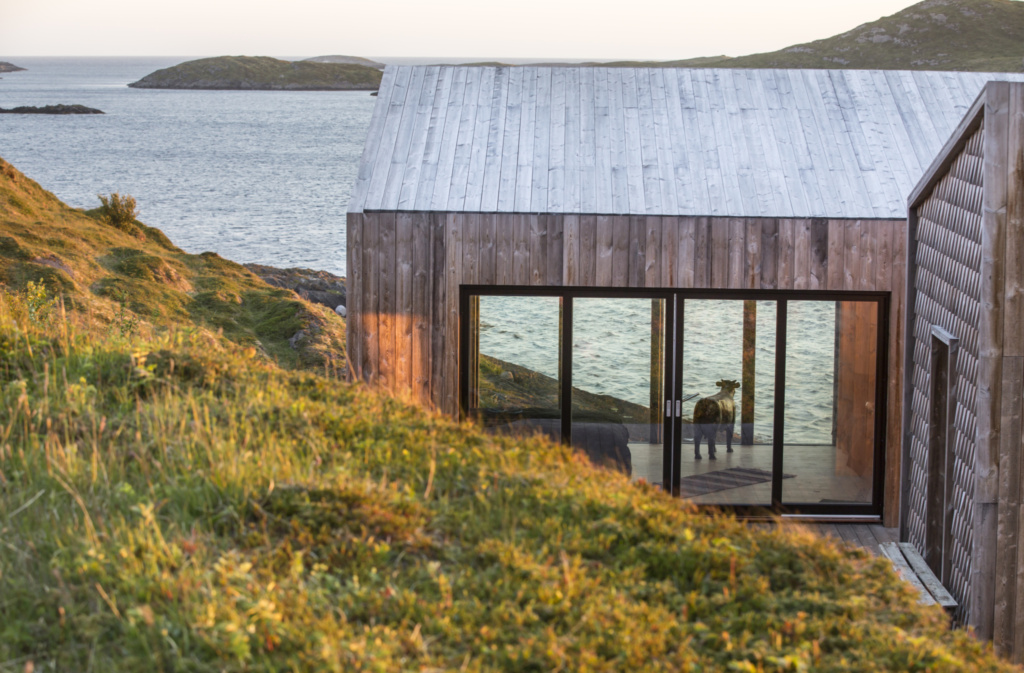
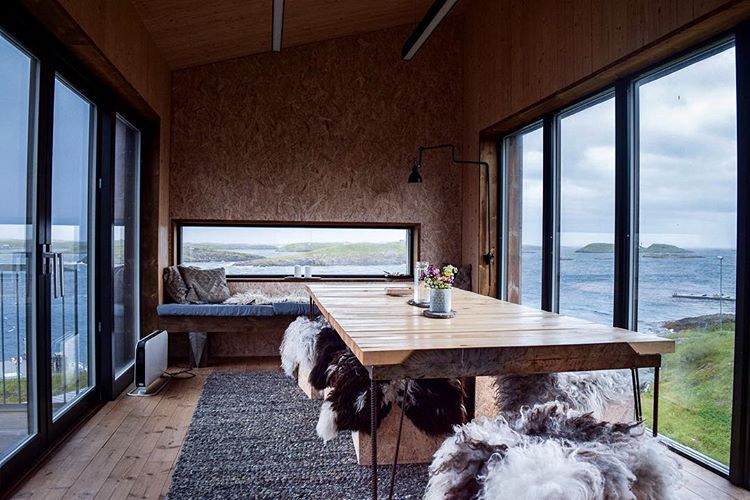
The thirteen buildings are all monofunctional. One building serves for sleeping, another houses the kitchens, yet another is for working. The architectural imperative reads: Go outside. Above certain building sizes, Norwegian building regulations require ventilation systems. The solution was division: Each function gets its own building, the structures remain small, and the air remains real. What began as a pragmatic solution became philosophy. Whoever goes from the sleeping cabin to the kitchen walks through the night. At three in the morning, when the bladder presses, you suddenly stand under dancing northern lights. The buildings stand on angled steel pillars drilled into the rock. They are clad with Kebony wood, which ages silver-gray through the salt water and wind.
The Cookbook of Adaptation
The cookbook in the communal kitchen contains no recipes, but discussions. “Can you bake without sugar?” is written there, and below follows the instruction: “Use chocolate. Or marzipan. Use what you have.”
Lund calls these sentences friendly imperatives. They describe an attitude that goes beyond baking. The Arctic Hideaway works with what is there. The water system uses boat desalination technology because fresh water is finite and must be used consciously.
Take a Piece of Sørvær With You
“You come as a resource,” says Lund about the ideal relationship with his guests, and he means a fundamental reversal of the usual hotel logic. “Don’t just ask what’s in it for me. Share. When you return to Vienna or New York, you take a piece of this island with you.”
The Spirit of Sørvær
Slow Travel is more than just a pace; it is a profound shift in how we engage with our surroundings and ourselves
True change requires time for the body to settle into the environment
It is the process where the exposure to silence, darkness, and vastness allows the body to find its natural balance again
The buildings are monofunctional, meaning you must physically step outside to move between sleeping, cooking, and working
Not at all. Håvard Lund views himself as a “bandleader” rather than a hotelier, creating a space where the experience is an improvisation between the guest, the community, and the ever-changing weather
www.thearctichotel.com
The uninterrupted confrontation with sky, water, and horizon for several days allows for a reduction inside, where quiet insights and important life decisions finally have room to emerge
Zitat Lorem ipsum dolor sit amet, consectetur adipiscing elit, sed do eiusmod tempor incididunt ut labore et dolore magna aliqua. Ut enim ad minim veniam, quis nostrud exercitation ullamco laboris nisi ut aliquip ex ea commodo consequat.
Similar Articles
The Water Keeps Flowing: A Journey Through the Architecture of Well Living
Borgo La Pietraia: A Hotel Built Like a Home

Carved into the Rock: Saudi Arabia’s New Desert Resorts