Built to Stay: What the places you remember are made of
Slow hospitality hotels are places designed to change how you feel, sleep and move through a day. In 2026, travellers are choosing fewer stays and staying longer, looking for properties where location, architecture and rhythm work together.
The hand rests on the clay wall. Still warm from the night. Three barefoot steps to the glass front, the door opens, and the valley lies below in half-darkness, the Dolomites sharpening against the brightening sky. The air carries the scent of larch and something the nose recognises before the mind names it: the night-soaked alpine meadow, the particular mineral cold of a mountain at 1,500 metres before the sun reaches it.. A bergdohle calls somewhere below the ridge.
Standing in the doorway between the warmth of the wood behind and the mountain morning ahead, with the shadow of the exterior lamelles beginning its slow traverse across the floor, something becomes clear that resists the language of hospitality entirely. The room is participating in the day. The material of the walls, the proportion of the windows, the particular quality of the light at this hour — all of it doing something that goes beyond what any programme could produce, because every decision about this building, from the larch Matteo Thun chose because it belongs to the surrounding forest, to the clay wall heated internally through the night, was made in service of a single understanding: that the place itself is the experience, and the task of architecture is to make that available.
What are slow hospitality hotels?
Slow Hospitality hotels are places designed around their location, their architecture and the time a guest spends there. They focus on how a stay feels and what remains after it ends, beyond the services or programmes that conventional hospitality builds around.
Most writing about hospitality describes what a property offers. The three pillars of Slow Hospitality describe what a property is. The set of decisions, held consistently from the material up, that determines whether a stay produces the quality of time that conscious luxury travellers are seeking in 2026 with increasing precision and willingness to spend. The Zeitgeist is shifting in a very precise direction: away from collected experiences, toward stays that change something.
Place Intelligence: The Unrepeatable Character of a Location
Every place carries knowledge that belongs to it alone. The afternoon light on Lecce’s pietra leccese, the golden baroque limestone from which the city’s churches are cut, enters La Fiermontina’s rooms differently in October than in July, differently on the east-facing terrace than on the courtyard. The mineral profile of the springs at Vigiljoch belongs to the specific volcanic geology of that mountain above the Adige valley. The rhythm of the Cilento coast, the proportion of silence to sound at a table looking out over the Tyrrhenian, carries the accumulated habit of generations who organised their days around what the land produced and what the heat allowed.
Place Intelligence determines whether a hotel simply exists in a location or truly belongs to it. It is the degree to which a property has read that knowledge and built its hospitality around it. It measures how deeply a hotel understands the specific intelligence of its location and transmits it through every operational decision: what the kitchen sources and from whom, how guides are trained, which hour of the day a walk is scheduled, what the building is made of and why. A hotel that stands in a landscape and a hotel that belongs to it make different choices at every one of those points, and a guest who has stayed in both feels the difference without necessarily being able to name it.
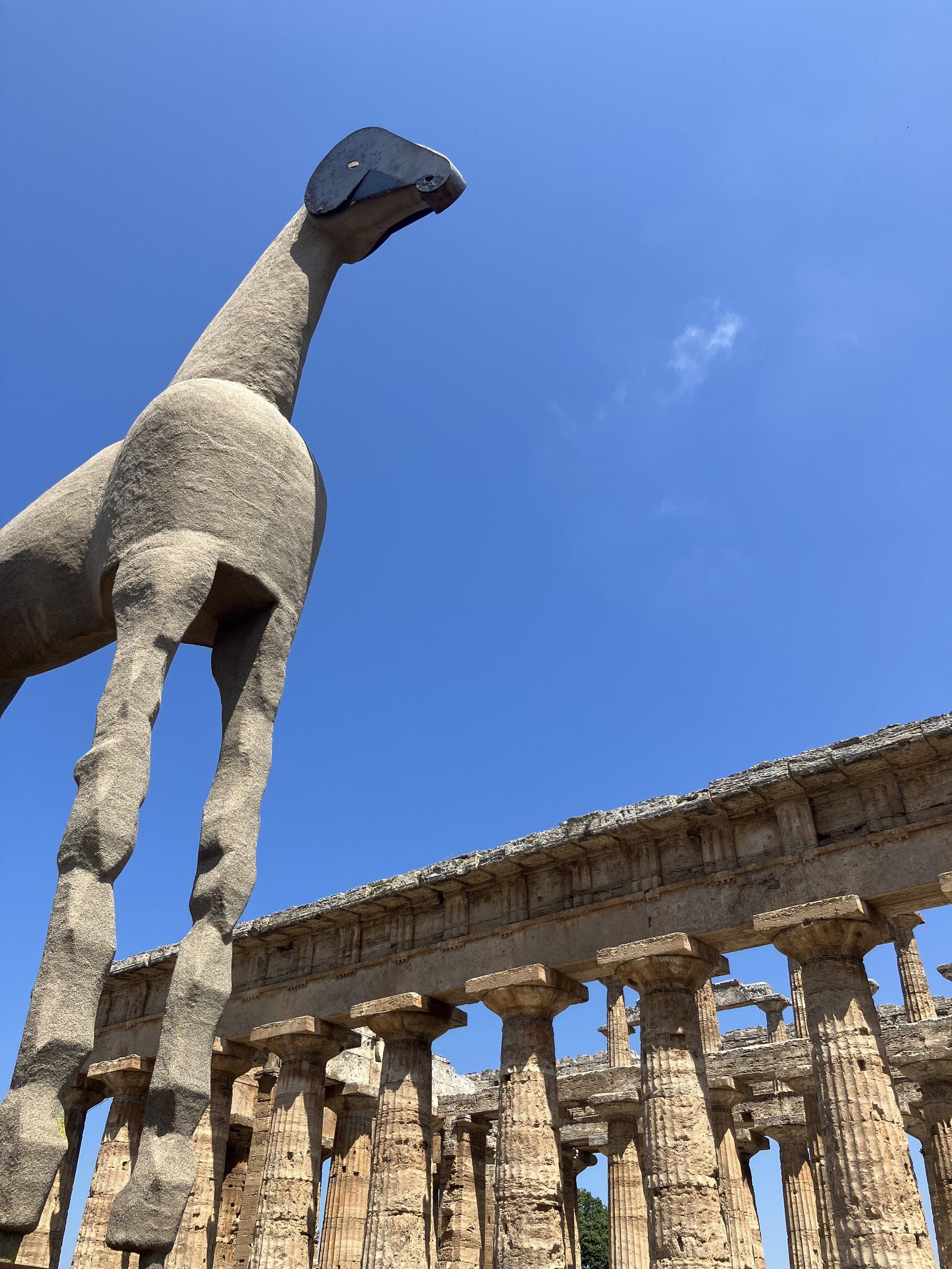
At Borgo La Pietraia in Cilento, the Scariati family built something in 2007 that the landscape had been preparing for much longer. Architect Nicola Pagliara set twelve terraces of local sandstone into the hillside above the plain of Paestum so that they curve into the slope the way the geology itself curves. Each room opens onto a private terrace facing the Tyrrhenian Sea, with Capri visible on clear mornings and the temples of Paestum marking the ancient distance below. The olive grove trail around the property asks for a pace the slope and the shade suggest. In the Ristorante Pietre, Chef Mario Stellato cooks with what the season offers and what the property’s own garden carries out to the kitchen that morning: a cuisine built from this specific stretch of southern Italian coastline, deeply seasonal, and held within the culinary traditions of a region that has been feeding people well for a very long time. The Cilento is the original Blue Zone, the territory where researchers first documented the Mediterranean diet as a longevity practice. It grew from the particular combination of altitude, sea air and the unhurried pace of days organised around what the land gives. After a week here, the appetite has reorganised itself around what the land offers, and the body finds it has been eating, walking, and sleeping in a rhythm that predates every wellness trend by several centuries.
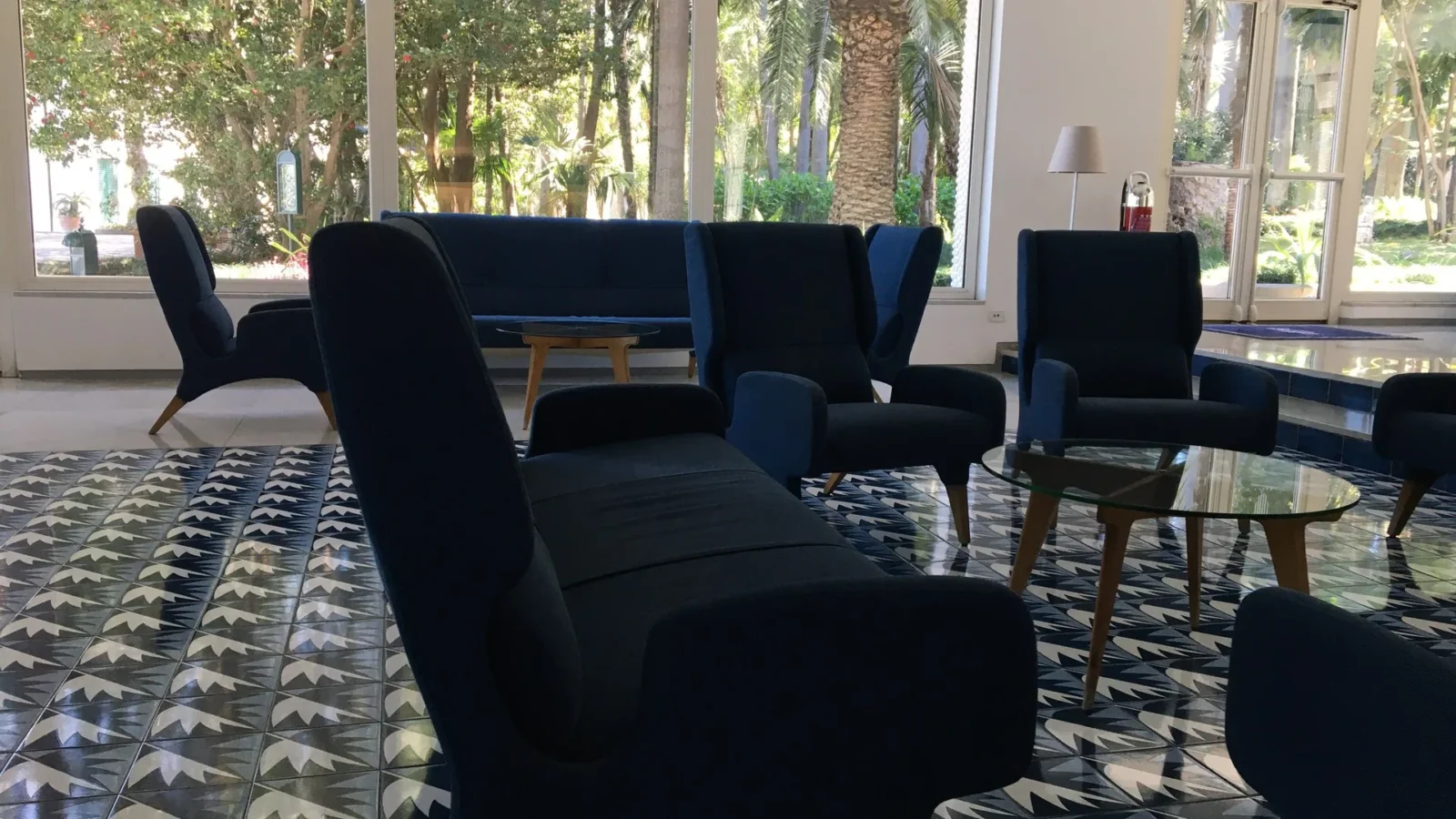
At La Fiermontina in Lecce, the contemporary art collection shapes how a guest moves through the 16th-century palazzo — where they slow down, which corridor they take twice, what surfaces their hand reaches for in passing. The Salentine light, the stone, the relationship between interior and the city outside: these are the content of the stay. The hosting follows from the understanding that the building itself carries the experience, and every operational decision deepens what the building has already begun.
Matteo Thun describes his architectural approach as beginning always with the Genius Loci: “The soul of the place plays a central role.” He travels to every site before drawing anything, brings watercolours and paper, spends time understanding what the landscape already knows before the building changes it. “Architecture must submit to the surrounding nature,” he says. “It determines which form and which materials dominate.” At Vigilius, that submission is total: the larch is the tree of this altitude, the clay comes from the ground beneath the building, the water served at breakfast flows from fourteen healing springs on Vigiljoch. Ulrich Ladurner understood the same principle from the moment he first saw the mountain. “I must look beyond the horizon and sense what will or could be behind it,” he says. “From this comes inspiration. Through thinking, the future then emerges, and through conversation, quality.” Place Intelligence in its most complete form is precisely this looking beyond what is visible, and the building of what the place has been waiting for. Across Europe, Slow Hospitality hotels appear in very different landscapes.
In Southern Italy, places like Borgo La Pietraia or La Fiermontina are shaped by light, stone and seasonal rhythm, while alpine retreats such as Vigilius Mountain Resort are defined by altitude, climate and silence.


Restoration Environments: What Architecture Does to the Quality of Time
Research conducted at the University of Waterloo’s Urban Realities Laboratory has measured what happens to the human nervous system when the surrounding environment asks the body to receive rather than respond. Heart rate steadies. Cortisol levels fall. The prefrontal cortex, the region responsible for directed attention, decision-making and the continuous management of competing demands, begins to recover the capacity it spends across every hour of city life. The effect arrives through specific properties: natural materials that the eye reads as familiar at a cellular level, diffuse light that follows the rhythm of the day, spatial sequences that invite movement at the guest’s own pace, views that carry attention gently outward. Colin Ellard, whose research maps the relationship between environment and human physiology, has identified the governing principle: restoration is something an environment makes available through what it offers, and a well-designed place offers it continuously, from the material of the walls to the quality of the morning light.
This is what a Restoration Environment does. The term belongs to Slow Hospitality specifically because it describes a design condition, one that a property either creates through its material decisions or produces only partially. A property with a full wellness menu serves a guest differently from one whose architecture aligns with the human nervous system from the material up, and the difference is structural. Slow Hospitality and wellness tourism part ways precisely here: wellness tourism delivers restoration as a purchased service. Restoration Environments produce it as a structural consequence of how the building is made, which means the guest receives it continuously, through the quality of the light and the temperature of the wall and the sound the floor makes underfoot.
Matteo Thun coined the term Hospi-tecture to describe the convergence of hotel and hospital logic into a single design discipline. The word connects hospes — the Latin for guest — with architecture, because hospitality and hospital share exactly the same root and, as he argues, the same task: to place the human being at the centre and surround them with what the body needs to recover. “We are part of nature,” Thun says. “When architecture reflects nature and brings it inside, it brings us back into proper balance.” His further clarification is precise: “Materials are not neutral.” A room made of wood feels different from a room made of concrete. The body reacts to this before consciousness registers why. At Vigilius, Thun’s architecture uses larch, stone, and glass in proportions drawn from the mountain itself. The larch walls absorb sound as the forest does. The stone floors hold warmth from the afternoon sun and return it through the evening. The clay wall in each room is heated internally, functioning as both spatial divider and source of radiant warmth, present through the night and still warm under the hand at six in the morning. The shadow of the exterior lamelles moves slowly across the floor as the day moves, giving the room a rhythm that requires nothing of the guest. The architecture creates the condition. The restoration follows.
Integration and Continuity: What a Stay Leaves Behind
The guest who stays long enough at a well-designed property returns to their ordinary life changed in ways that hold. Sleep patterns have reorganised. The relationship to pace has recalibrated. Something about how attention moves through a day has shifted, and the shift persists. The third pillar addresses exactly this quality: the capacity of a stay to produce outcomes that travel home with the guest, because the time available was sufficient for them to take root.
The research on lasting change is consistent across disciplines. Meaningful physiological change in sleep quality, in cortisol regulation and in the capacity for sustained attention requires sustained exposure to conditions that support it. Extended stays, the formats now representing 37 to 41% of new luxury hotel construction, create the structural conditions for that change to happen. The conscious luxury traveller who restructures their entire travel year around fewer and longer stays has understood this, whether or not they have read the research.
Integration and Continuity takes different forms in different properties. At Kástu by Pajta in Hungary’s Őrség Nature Reserve, the same quality arrives through a different material simplicity. Seven cabins built almost entirely of wood stand in a meadow in the sparsely populated countryside of western Hungary. The Michelin-starred Pajta restaurant nearby works with the produce of this specific landscape. From the bed, the guest sees the starry sky. From the shower, the meadow. After a week here, the question of what a room needs in order to be enough has a different answer than it did on arrival, and that answer travels home.
Ulrich Ladurner speaks of the philosophy behind Vigilius in a way that holds across all three pillars. “Silence is the prerequisite for thinking,” he says, standing on Vigiljoch where fourteen healing springs emerge from the mountain. “And vastness is a model for thinking.” Every person in the orbit of the hotel matters equally and specifically: guest, employee, producer, supplier. ‘You are important to me,’ Du bist mir wichtig, is how he has expressed it, a sentence that guided both his work in food and his work on the mountain, and that the quality of breakfast sourced from regional farmers and water drawn from the mountain’s own springs makes tangible every morning.
The guest who has genuinely integrated a Slow Hospitality stay returns to it with the specificity of someone who knows exactly what they are coming back for. They recommend it with the precision of someone who has understood it from the inside. Across the post-materialist audience that The Silent Luxury addresses, that quality of recommendation is the most durable form of credibility a property can build, and it begins with the three decisions made from the material up, held consistently across every hour of every stay. These places are found across Southern and Alpine Europe, where landscape, material and time shape how hospitality is experienced.
Similar Articles
Villa Nava: The Spaceship That Became a Home
The Yellow Oil: How Saudi Arabia Turns Its Landscape into Wealth
Casa all’Italiana: Gio Ponti’s Houses, Where the Soul Finds Peace