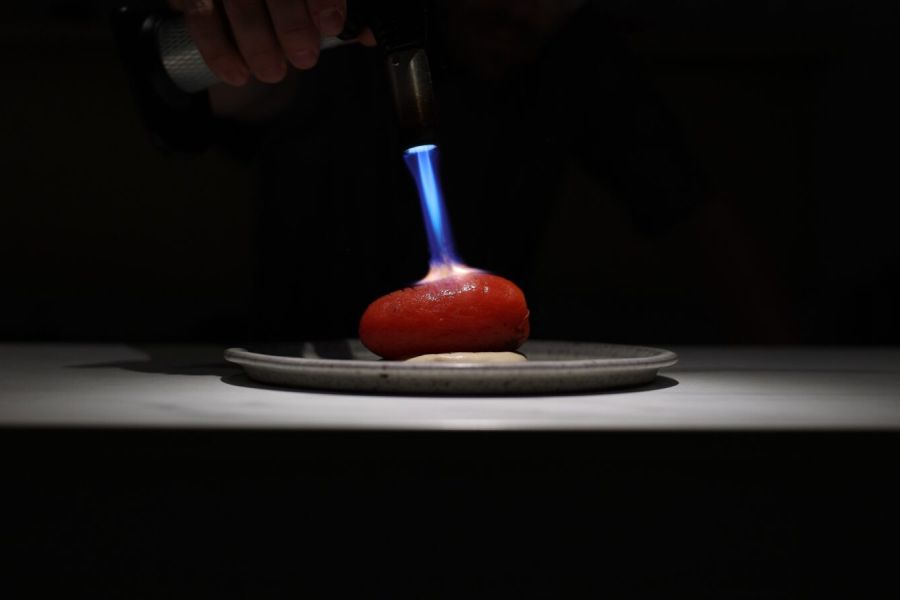
There is a street in central Milan that gives nothing away. A glass door. A curtain behind it. The kind of entrance one passes without pausing. Inside, eleven seats face an illuminated wall. Two hours begin.
Federico Rottigni has spent five years thinking about what happens in those two hours, and increasingly about what happens long after they end. When The Silent Luxury met him in Milan ahead of the HYPNOS season, he was precise about where his thinking now rests. The question that drives him is no longer what people eat. It is how.
“How it is served,” he told The Silent Luxury. “How you sit, how you hear it, how you smell it, how you are touched, by a light, a sound, a word.”
The word food, in that sentence, has already been left behind.
The Intuition Behind the Form
Rottigni arrived at this position gradually. Sensorium began as a creative restaurant, dishes served across a counter, a degree of curation in the presentation. The transformation happened the way he describes all of his creative decisions: through intuition, through feel, through the accumulation of one small decision upon another.
“There was no specific moment,” he told The Silent Luxury. “I thought it would be beautiful to play a particular song with a particular dish. Or to have the lights high when people enter, and dim them through the evening.” Over five years, that accumulation became a form. What Rottigni now calls a Non-Ristorante is the result of precisely this kind of patient, unplanned development.
What he had to learn alongside the form was the gap between an idea as it lives in the creator and an idea as it reaches another person. He spoke about this at length with The Silent Luxury, with a candour that is rare in the context of culinary reputation. “When the ego is too present, you say: I express myself this way, whoever likes it, good. I had to learn that creativity wants to build bridges. If you become incomprehensible, the message does not arrive.” The ambition did not diminish. The language became more precise, and the results became more powerful as it did.
That precision extends to how each season is constructed. When The Silent Luxury asked about the process behind HYPNOS, Rottigni described it the way a film director might describe the choice of a particular shot. “I feel that something must be made in a certain way, and then we make it that way. Maybe it works, maybe it does not.” The themes he gravitates toward share a particular quality: they sit at the edge of the familiar and the vertiginous, where comprehension and mystery coexist. HYPNOS, the Greek deity of the threshold between waking and sleep, names the state the evening is designed to produce, without describing the mechanism.
Food as Medium
The most consequential shift in Rottigni’s thinking was one that took years to name. He described it to The Silent Luxury with unusual directness.
“I am interested in people,” he said. “Taste is a medium, like light, like sound.”
This is the logical conclusion of watching, over five years at the Sensorium counter, what actually moves people in a room. The dishes themselves are, by his own account, unremarkable in isolation. A bowl of rice pudding. A taco. A ceviche made from cellulose. What transforms them is the architecture of everything surrounding them, and the science behind that architecture is one that Prof. Charles Spence has spent three decades building.
Spence, speaking with The Silent Luxury from Oxford, describes the underlying mechanism as crossmodal influence: the capacity of one sensory channel to alter the experience of another without the two needing to be consciously integrated. “If the music Federico selects is emotionally charged,” he told The Silent Luxury, “it can influence my emotional response to the food. That is a form of sensory transference.” The mechanism is measurable and reproducible. In what has become a foundational experiment in sensory science, subjects chewing mint gum who had lost awareness of the flavour regained it sharply when a sweet, odourless substance was added. The sweetness and the mint converged into something richer than either element contained alone. Spence calls this the superadditive effect, and it operates across every sensory pairing that Rottigni constructs at the counter in Milan.
The implications reach further than a dinner. Spence described to The Silent Luxury an experiment he conducted with five hundred participants, a bottle of Singleton whisky, and three rooms differentiated only by their colour, sound and scent. The same whisky tasted measurably different in each room. Every participant was informed of the conditions. The transparency deepened the effect rather than diminishing it. “Knowing what is happening does not reduce the experience,” Spence told The Silent Luxury. “It changes the relationship to it.”
Eva Winterer, founder of The Silent Luxury, at Sensorium Milano during the Ayahuasca multisensory dining experience. The red atmospheric light, the precisely plated course and the mirror in which the diner becomes part of the composition — all three are deliberate instruments of Federico Rottigni’s sensory architecture. This evening was the beginning of The Silent Luxury’s editorial series on multisensory dining, documented in conversation with Prof. Charles Spence of Oxford University. sensorium-milano.com
The Body That Listens
Sensorium’s sonic system is central to what makes it site-specific in a sense that extends beyond geography. Rottigni trained originally in film, and the loudspeakers he installed were calibrated to the precise acoustics of the room by a sound engineer. The result, as Spence described to The Silent Luxury, is one of the very few spaces in the world capable of producing sustained low-frequency sounds below twenty hertz.
“You do not hear them in the conventional sense,” Spence said. “You feel them in the body.” These sub-bass frequencies draw attention inward, toward a heightened somatic awareness, a consciousness of having a body and being inside it. Spence had been searching for loudspeakers capable of producing these frequencies for years before visiting Sensorium. When he experienced them in the room, he told The Silent Luxury, the effect was unlike anything he had previously encountered in a dining context. “That was something I had not expected,” he said. “To actually feel it.”
When this physical presence coincides with nostalgic storytelling, the voice of an old woman heard over the speakers, the sound of a school bell, the texture and warmth of a comfort food served at the precise trough of the evening’s emotional arc, the conditions for an extraordinary response accumulate. Between ten and twenty per cent of diners at Sensorium have been moved to tears by a single dish, a figure documented by Rottigni and Spence in a joint paper published in the International Journal of Gastronomy and Food Science in 2024. The dish is Serendipity. The seventh course on the Ayahuasca menu. A bowl of rice pudding.
Rottigni was surprised. Spence confirmed this to The Silent Luxury: “He was genuinely surprised when people began to cry. There was no intention to engineer that response.” The response emerged from a convergence that was designed for coherence, and the catharsis arrived as a consequence of that coherence being felt rather than understood.
Why Memory Holds
Spence has spent considerable time thinking about why certain foods, sounds and combinations produce nostalgic responses while others leave no trace. He described this to The Silent Luxury in terms that illuminate both the appeal of Sensorium specifically and the broader territory it inhabits.
Nostalgia is culturally encoded. Rice pudding activates something specific in people raised in the United Kingdom. Pumpkin pie carries a different weight in North America. In Taiwan, it is pineapple cake. In Greece, bubble gum. The scent or taste with the strongest autobiographical charge depends entirely on where and when someone grew up. Sensorium’s clientele is predominantly international, drawn from Switzerland, the United Kingdom and North America, and Rottigni’s choice of rice pudding is, in this sense, a considered one.
And yet Spence told The Silent Luxury that when he and Rottigni collected data from actual guests, no significant cultural differences in response emerged. He offered an explanation: some of Sensorium’s sonic and visual references are genuinely universal. A school bell. Children running. An old woman remembering. “You do not need to understand the language,” Spence said. “The reference is almost physiological.” The body recognises something before the mind has categorised it, and in that gap, the extraordinary becomes possible.
Spence also raised, in conversation with The Silent Luxury, a dimension of this work that he described as underexplored. Extraordinary emotional responses, tears, awe, the physical shiver of aesthetic recognition, may function as reset mechanisms for the conscious mind. “If you can produce an experience of awe,” he told The Silent Luxury, “people come away from it differently. Their relationship to what they eat, to how they live, shifts.” He was careful to call this a hypothesis rather than a conclusion. The research is ongoing. The question is alive.
Curation and Its Other Side
The principles that produce these responses are the same principles that operate in fast food restaurants, supermarkets and retail environments around the world. The Silent Luxury put this directly to both Rottigni and Spence.
Spence was unflinching. McDonald’s, he told The Silent Luxury, uses sensory design with considerable sophistication: music tempo calibrated to table turnover, colour choices that influence appetite, the deliberate absence of windows or clocks. “The goal is to influence behaviour without drawing attention to the mechanism,” he said. “That is what I would call sensory marketing.” The distinction he draws between that practice and what Rottigni does at Sensorium is one of transparency and intention. Rottigni names the forces at work. The full playlist for the Ayahuasca experience is publicly available on Spotify. The seasonal concept is explained to guests. “When you draw attention to what is happening,” Spence told The Silent Luxury, “you are inviting a different kind of participation. The guest is no longer a subject of the design. They become part of it.”
Rottigni arrived at this position through creative conviction rather than ethical calculation. “Creativity should build bridges,” he told The Silent Luxury. “When you move too far from people, the communication fails. The message does not arrive.” His seasons are constructed to meet the guest where they are, to lead them through a carefully modulated arc from apprehension to openness, and to leave them somewhere they arrive at through the experience alone.
The Provenance of a Single Ingredient
The same attentiveness that Rottigni brings to sound and light, he brings to the ingredients themselves. He described his sourcing practice to The Silent Luxury in terms that have little in common with conventional gastronomy.
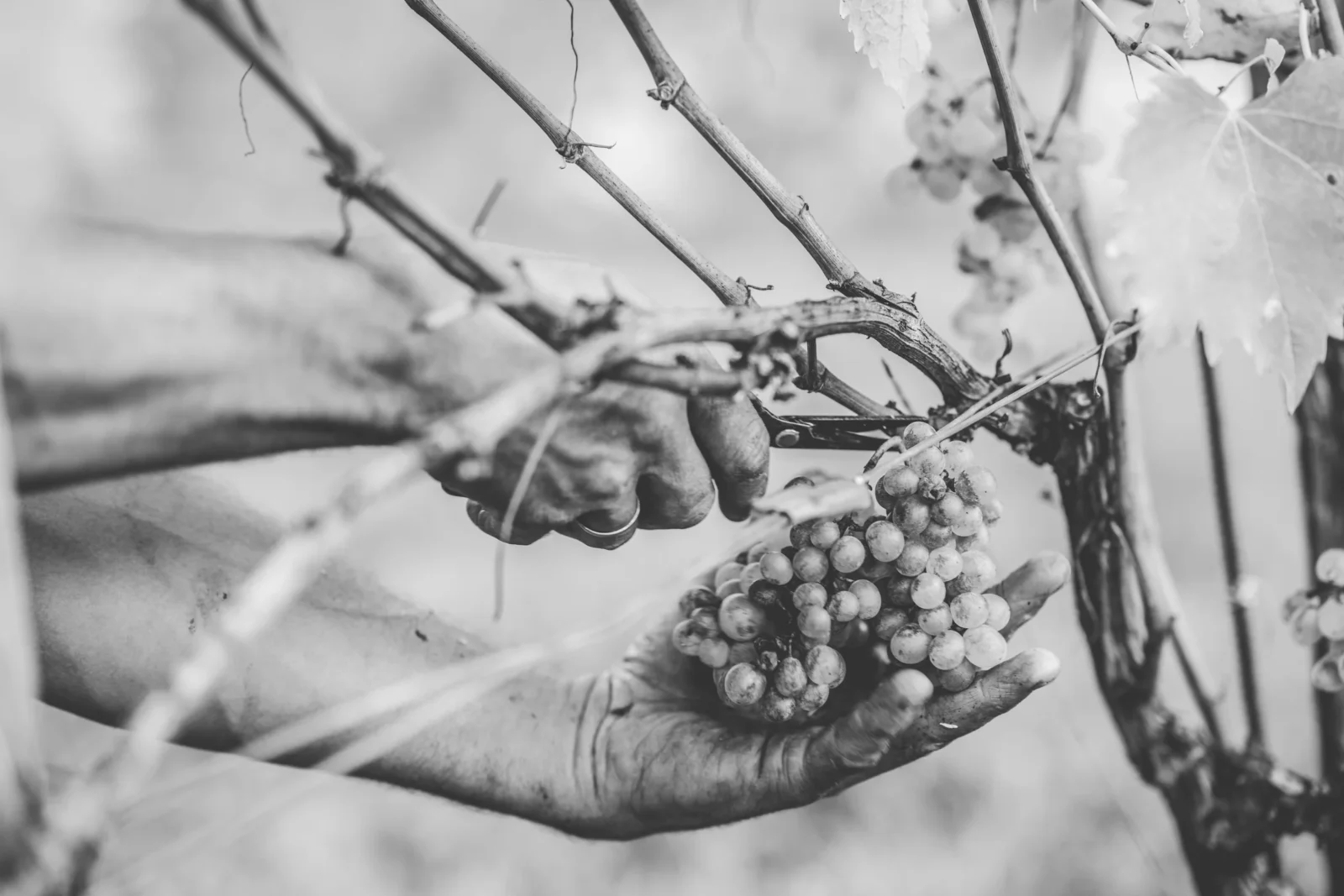
He visits producers personally. He asks about process, about conditions, about the life of an animal or a plant before it reaches the kitchen. Organic certification, he told The Silent Luxury, is a category he finds insufficient. “It is a certificate,” he said. “It says almost nothing about what actually happened.” What he looks for is coherence with life, the quality of an ingredient that has existed in conditions consonant with its nature. A dairy farm in South Tyrol whose butter appears on the Sensorium menu. A supplier in Reggio Emilia who raises twelve pigs a year in open pasture and produces cured meats that carry the full weight of that life in their flavour. A baker whose relationship to fermentation is, in Rottigni’s words, a practice of love and knowledge rather than production.
“I want products that carry life inside them,” he told The Silent Luxury. “Everything the animal or the plant experienced before it arrives here is still present in it. The quality I am looking for goes beyond taste. It is felt.”
What the Evening Leaves
The question that Charles Spence posed in conversation with The Silent Luxury is the one that gives the HYPNOS season its fullest resonance. Are the diners who cry at Sensorium really crying over food? Or are they responding to a total multisensory encounter that happens to involve food as one of its instruments?
Spence believes the answer is the latter, and that the implications reach well beyond gastronomy. The response emerges when the combined weight of sound, taste, texture, memory and physical sensation crosses a threshold that the rational mind cannot immediately process. The tears are, in his reading, a form of insight: the emotional release that accompanies the resolution of an experience that has made new sense of something previously unresolved.
Rottigni arrived at a similar understanding from the other side of the counter. He described to The Silent Luxury the evening that changed his sense of what he was building. He was watching the room during a service, looking down the eleven seats, and he saw a guest at the far end with tears on his face. He did not know what had caused it. The music, perhaps. The light. A flavour that had coincided with a memory he had no access to from where he stood.
“In that moment,” he told The Silent Luxury, “I understood that I was creating spaces in which something could happen. Something real. Something that arises from what I have built, and then moves beyond it.”
Some evenings change the way you experience all the ones that follow.
Federico Rottigni and Prof. Charles Spence spoke with The Silent Luxury in conjunction with the AYAHUASCA season at Sensorium Milano. The full editorial series — Hypnos, Ayahuasca, Alchemy of Perception, and Lasting Resonance — is available at the-silent-luxury.com.
Rottigni, F. & Spence, C. (2024). Crying over food: An extraordinary response to a multisensory eating experience. International Journal of Gastronomy and Food Science, 36, 100943. https://doi.org/10.1016/j.ijgfs.2024.100943