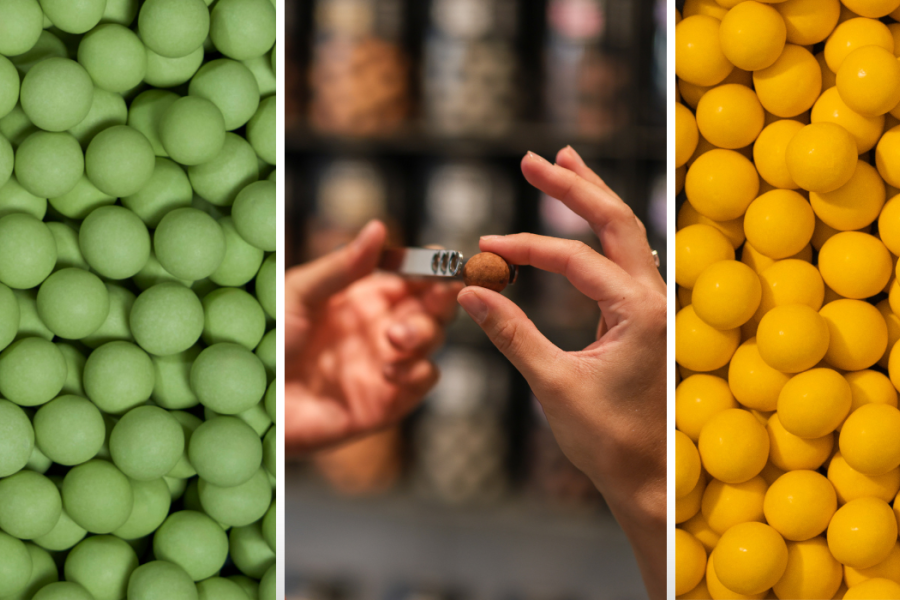
Bülow Lakrids: From Black Provocation to Global Luxury
Few flavors split people as uncompromisingly as liquorice. Some surrender to it with a devotion that borders on addiction. Others spit it out as if they’d been served motor oil. In between: nothing. This polarization makes liquorice perhaps the boldest choice in the premium confectionery segment – a sweet that leaves no one indifferent. In Scandinavia, this taste is childhood, home, cultural identity. There, memory smells of salmiak and anise, there the black confection belongs to life as naturally as midsummer festivals and long winters.
Liquorice begins as botany. The root of the Glycyrrhiza glabra plant, originally from the Middle East and Asia, arrived in Europe in the 13th century. For centuries, it served as medicine, treating coughs and digestive problems. Only in the late 18th and early 19th centuries did the transformation from remedy to sweet occur. Denmark became a pioneer of liquorice production. Then, at some point in this evolution, someone had an idea: add ammonium chloride – salmiak.
The result wasn’t an improvement in the classical sense. It was a provocation. Salty liquorice smells sweet but tastes of ammonia, tar, resin, sea. Those who didn’t grow up with it spit reflexively. The Nordic countries – Norway, Sweden, Denmark, Finland, Iceland – collectively consume 80 to 90 percent of global liquorice production. The rest of the world watches with a mixture of fascination and horror.
“In Scandinavia, liquorice is simply part of life – the majority of people love it,” says Fredrik Nilsson, CEO of Lakrids by Bülow, in conversation with Genusspunkt. He sits in the company’s offices in Hvidovre, before him a selection of what his brand has built into a global phenomenon over the past 18 years. Every tin, every box carries its creator’s signature. Not metaphorically – the name of the person who hand-crafted these specific liquorice pieces actually appears on each product. A gesture that feels radical in industrial confectionery production.
The Island, the Scent, the Revolution
2007: The Danish island of Bornholm. A young man named Johan Bülow stands in his mother’s kitchen, cooking liquorice. He had visited his uncle, who ran a small sweet shop in Svaneke. Bülow observed how tourists were drawn by the aroma, how they entered curiously, tasted, bought. This interaction between scent, curiosity, and taste fascinated him.
Bülow loved liquorice. But he also saw that this love could become something greater. He experimented for a year. Then, on 07.07.07, the first Lakrids by Johan Bülow shop opened in Svaneke. The concept: cook the liquorice in the shop so you could smell it within a 100-meter radius. It worked. Within two hours, everything sold out. The last customer even bought the sample bowl from the counter.
“As a child, I grew up in what you could call an entrepreneur community,” Bülow tells The Capturist. “Close to my childhood home was a micro-brewery, a chocolate factory, an ice cream factory, a sweet factory, and a glass-blowing workshop. My mother was one of the most entrepreneurial people I know. At just 16, she borrowed money from her father to start a grill bar in Aarhus.”
What Bülow learned from his mother: “If it feels like work, you are doing it wrong.” This philosophy still runs through every decision at Lakrids. Bülow is now Founder and Creative Director, though his role was always differently defined. In 2014, when he was still CEO and named “Leader of the Year” in Denmark, he described his leadership philosophy to ManageMagazine: “I’m a very product-focused CEO. I’m not the man who runs through the figures in the greatest detail. I’m the man who runs about all the time and gets involved in everything that’s happening in the company.” His lawyer said at the time that Bülow always had “shining eyes” when they met – that inner fire that infects people.
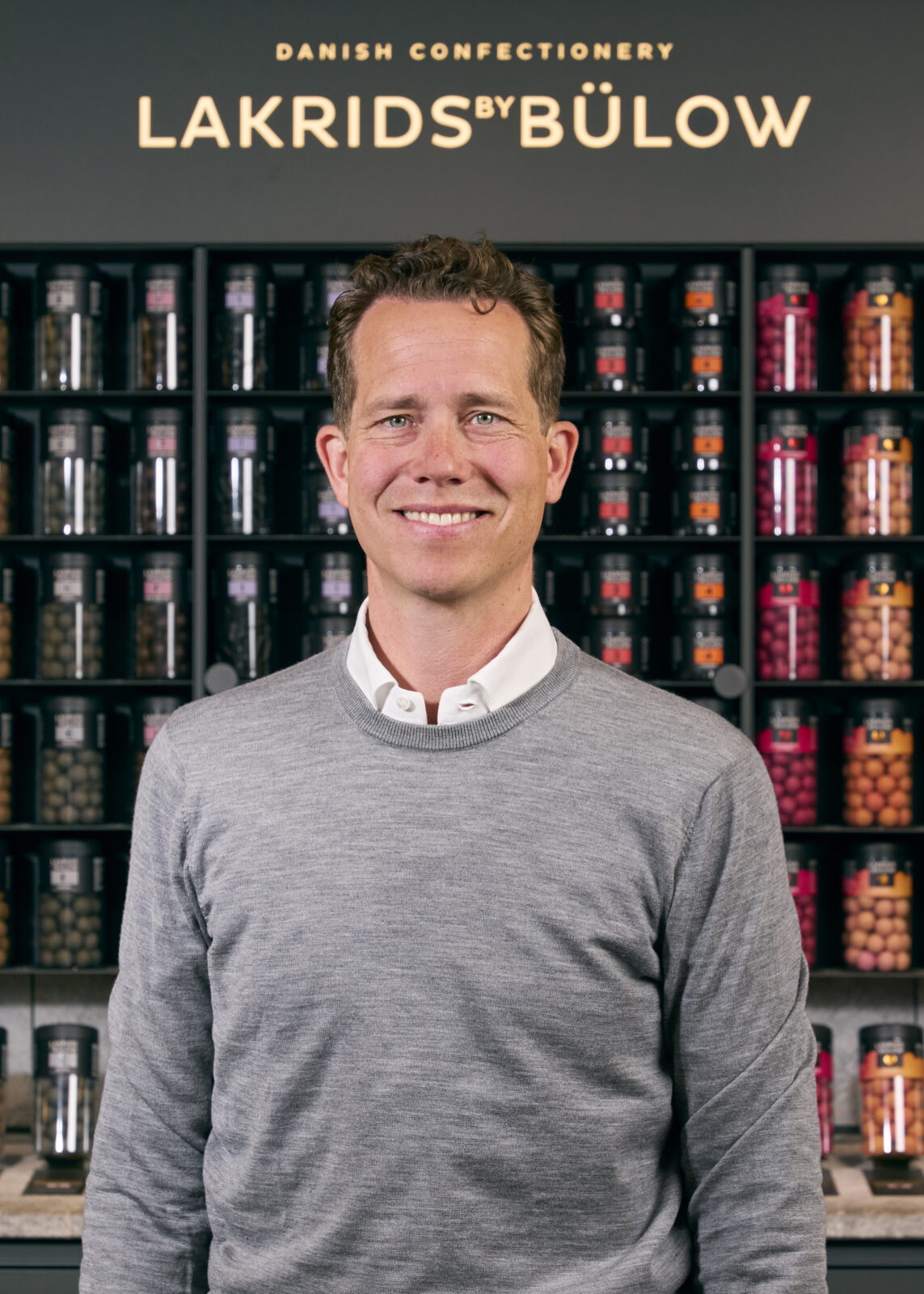
“The big breakthrough came when we combined liquorice with chocolate. This allowed us to create a whole new category. It’s no longer just about ‘loving or hating liquorice,’ but about the taste experience of this unique combination.”
Fredrik Nielson, CEO Lakrids by Bülow
The Breakthrough: From Bornholm to Harrods
The major breakthrough came with a simple idea: combine liquorice with chocolate. In 2007, this was revolutionary in Denmark. This combination created an entirely new category in the confectionery segment. “The big breakthrough came when we combined liquorice with chocolate,” explains CEO Fredrik Nilsson. “This allowed us to create a whole new category. It’s no longer just about ‘loving or hating liquorice,’ but about the taste experience of this unique combination.”
The first creation – Lakrids A, the Original – paired sweet liquorice with premium milk chocolate and fine liquorice powder. What followed was a taste library: Dark & Sea Salt, where delicate salt flakes meet dark chocolate. Crunchy Toffee, a liaison of butter caramel and salty liquorice. Each creation its own flavor architecture.
The company expanded strategically. In 2008, production began in Taastrup, where today work happens in a factory running entirely on green energy. Lakrids by Bülow is the only manufacturer worldwide producing hand-cooked liquorice. Each piece is cooked for hours until it reaches a caramel-like texture. Then comes the coating – chocolate in layers, sometimes fruit powder, always bearing the handwriting of an individual producer whose name appears on the packaging.
Nilsson speaks clearly about the company’s values in conversation with The Silent Luxury: “For us, sustainability is no marketing trend, it’s part of our DNA. Our bags are made from 100% recycled plastic, we have been B Corp certified for almost three years, and we consistently focus on reducing energy and water consumption in production. Employees can charge their electric cars on site, and we encourage as many as possible to cycle to work. What we do tomorrow should be better than what we do today.
The Mission: Premium Without Compromise
The journey from Bornholm to global recognition happened through unwavering focus on quality. Each piece of liquorice begins with fresh root, cooked for hours until it reaches that precise caramel-like texture. The chocolate coating follows – premium dark chocolate for some varieties, silky milk chocolate for others. Then come the finishing touches: sea salt flakes hand-selected for their mineral complexity, fruit powders crafted from real juice, caramel made from butter and cream.
Dark & Sea Salt represents this philosophy in its purest form. Sweet liquorice meets smooth dark chocolate, finished with delicate salt crystals. The interplay creates layers – first the chocolate, then the liquorice core, finally the salt burst. Three distinct moments in a single bite. Crunchy Toffee takes a different approach. Butter caramel provides textural contrast against soft liquorice, all wrapped in milk chocolate. The crunch comes from actual toffee pieces, not manufactured texture.
Passion Fruit emerged from the Creative Lab as an experiment. Could tropical fruit work with Nordic liquorice? The answer surprised everyone. White chocolate provides a neutral canvas, allowing both the passion fruit’s acidity and the liquorice’s depth to shine. Today it’s the bestseller – proof that traditional boundaries exist to be crossed.
The Winter Selection Box demonstrates this range. Eight distinct flavor architectures, each with its own logic. The Original – Lakrids A – remains closest to Johan Bülow’s 2007 vision: sweet liquorice, premium milk chocolate, fine liquorice powder. Salt & Caramel pushes further, introducing dulce chocolate and crunchy salt flakes. Cherry Sour, the newest addition, brings real cherry juice granules into the equation – sweet and sour dancing in every bite.
Today, these creations appear at Harrods in London, the Met Museum Shop in New York, Selfridges, Harvey Nichols, John Lewis. The company has a presence in 20 countries, with over 1,500 retail partners. Yet the core mission remains unchanged: to offer every person on the planet a free sample. They’ve calculated it will take 412 years and 292 days. The longest waiting list in history – a statement about how Lakrids by Bülow defines success. Sustainable persuasion over rapid expansion.
Speaking with The Silent Luxury, Fredrik Nilsson articulates the approach: “Many of our customers outside Scandinavia have never eaten liquorice before. For them, our collections become a journey of discovery. They suddenly understand why we Nordics connect so deeply with this taste. That discovery moment – when someone who thought they hated liquorice tries Passion Fruit or Dark & Sea Salt and realizes they’ve been missing something – that’s what drives us.”
The Creative Lab: Premium as Dialogue
In the Creative Lab at Lakrids, Francisca works as Head of Product Development. Every day brings new experiments. Taste, color, texture – everything gets tested, adjusted, perfected. Johan Bülow, now Founder and Creative Director, described his role in 2014 to ManageMagazine: “I’m a very product-focused CEO. I’m not the man who runs through the figures in the greatest detail. I’m the man who runs about all the time and gets involved in everything that’s happening in the company.”
Francisca brings him new creations daily. “We experiment with everything from taste, colours, shades, crunch, texture, bite and so on,” Bülow tells The Capturist. “My aim has always been to focus on uncovering what our customers want, before they even know it. We always try to push the boundaries of what is possible with liquorice.”
The LAKRIDS LOVERS program forms the heart of this philosophy. Over 130,000 members receive exclusive flavor samples from the Creative Lab with every purchase. Each sample includes a QR code for direct feedback on taste, color, consistency, or name. “This ensures that we are not just a monologue brand, but a dialogue brand,” Nilsson explains to Genusspunkt. “We work closely with our community. When we develop new products, we send test batches to our customers.”
This co-creation has produced remarkable results. Passion Fruit – today’s bestseller – emerged through intensive community feedback. The combination of fruity passion fruit, white chocolate, and sweet liquorice creates a unique taste experience that would never have existed without this dialogue.
The Signature of Craft
Every package bears a name. The name of the person who crafted these specific liquorice pieces. In an industry that has made anonymity the norm, this stands as a radical gesture. When your name appears on a product, you ensure it’s perfect. This represents craft culture.
Lakrids by Bülow is the only manufacturer worldwide producing hand-cooked liquorice. The process begins with fresh liquorice root, cooked for hours until it achieves a caramel-like texture. Then each piece is dipped in multiple chocolate layers. Creations emerge like Dark & Sea Salt – where delicate salt flakes meet dark chocolate and sweet liquorice. Or Crunchy Toffee, where butter caramel combines with salty liquorice, enveloped in milk chocolate. Crispy Caramel pairs dulce chocolate with soft liquorice and tiny sea salt flakes.
The salty No.2 – the absolute favorite in Nordic countries – is purist. “When your lips close around a bite of this strong, salty liquorice, the potent Nordic taste explodes on your tongue, bringing up associations of the sea, tar, bonfire smoke and the scent of resin,” founder Johan Bülow describes the taste in interviews.
Newer creations go further. Passion Fruit – currently the bestseller – unites fruity passion fruit with white chocolate and sweet liquorice. A combination that surprised even the team. Sour Strawberry brings green strawberries together with red liquorice, wrapped in white chocolate and a crunchy green sugar shell for an extra sour twist. Cherry Sour, the latest creation from the Creative Lab, starts with a sweet liquorice core, covered with white chocolate and cherry granules made from real cherry juice – sweet and sour in every bite.
For whiskey connoisseurs, an unexpected pairing has emerged: the salty No.2 pairs excellently with well-aged bourbon or Scotch. The flavors of sea, tar, and resin complement the smoky, peaty notes in surprising ways.
The Vision: Premium Without Arrogance
Johan Bülow shaped Lakrids by Bülow from the beginning with a distinctive leadership philosophy. In a 2014 interview with ManageMagazine – when he was still CEO and named “Leader of the Year” in Denmark – he described his approach: “Our lawyer likes to say that every time he meets me I’m running around all fired up and he can see that in my eyes. SHINING EYES is what he calls it. And being all fired up is something that infects my employees.”
This passion showed itself in concrete actions. When the production site on Bornholm once had problems getting a liquorice pot to boil, Bülow took a plane to the island that same morning to help. “There’s no doubt that a CEO who’s immediately involved in the details of his company also gains some ‘street credit,'” he reflected at the time.
His mother shaped this attitude. “At 16 she borrowed money from her father to start a grill bar in Aarhus. Then she threw her interest onto glass-blowing, and right now she is involved in bead production in Ghana,” Bülow tells The Capturist. “From a young age, my mother always told me: ‘If it feels like work, you are doing it wrong.’ She has inspired the love of entrepreneurship as a way to live out one’s childhood play and dreams.”
Today, Johan Bülow is Founder and Creative Director, while Fredrik Nilsson has been driving international expansion as CEO since 2019. When Nilsson assumed the position, the company faced the challenge of expanding internationally without losing its Danish soul.
Speaking with The Silent Luxury, Nilsson reflects on the company’s approach: “Sustainability remains core to everything we do. Our bags are made from 100% recycled plastic, we have been B Corp certified for almost three years. We consistently focus on reducing energy and water consumption in production. What we do tomorrow should be better than what we do today. This philosophy guides every decision we make.”
Epilogue: The Future Tastes of Craft
Lakrids by Bülow has redefined liquorice. What was once a polarizing Scandinavian specialty has become a global premium category. Products appear at Harrods, in the Met Museum Shop, at Selfridges – alongside the world’s most renowned confiseries.
The brand’s retail spaces function as sensory experience environments where you can smell liquorice before entering. Where you can taste, understand, discover. The Original with its milk chocolate and liquorice powder. The intense No.2 with its associations of sea and tar. The surprising Passion Fruit creation. The new Cherry Sour with its sweet-sour interplay.
Insight
To truly appreciate the complexity of a global delicacy, one must look beyond the surface of taste. In the following Insight section, we explore the meticulous details that define the evolution of Bülow Lakrids luxury liquorice. From the chemistry of the ingredients to the philosophy of ‘Slow Craft,’ these curated details provide a deeper understanding of how uncompromising standards translate into exceptional lifequality.
Bülow Lakrids transcends the traditional candy market by treating liquorice as a medium for sensory exploration. By replacing wheat flour with slow-cooked rice flour and sourcing premium ingredients like Iranian liquorice root, the brand shifts the focus toward conscious indulgence. For the discerning individual, this represents a commitment to Lifequality: choosing products where the craftsmanship is palpable and the flavor profile is complex enough to demand a moment of presence.
The “Black Provocation” refers to the intense nature of liquorice root, a flavor that historically polarized the palate. Johan Bülow utilized this intensity to challenge global taste standards. By pairing earthy liquorice notes with sophisticated textures like crispy sugar shells and sea salt, he created a gastronomic bridge, transforming a divisive ingredient into a sophisticated delicacy that invites culinary debate.
Maintaining production in Copenhagen allows for absolute control over the small-batch crystallization and infusion process. This localized “Slow Craft” approach is vital for brand integrity, ensuring the volatile aromas of the liquorice remain intact. For the reader, this transparency and dedication to origin are the silent markers of true quality—knowing that the soul of the product is never compromised for the sake of industrial scaling.
Similar Articles
The Great Small Vintage of 2026: A Season of Concentration
The Taste of El Niño: How Drought and Heat Are Rewriting the Chemistry of Wine, Oil and Linen

A Sale That Ends in a Memo: The 2010s Stay at Estée Lauder