San Salvatore 1988: A Working Circular Economy in the Cilento
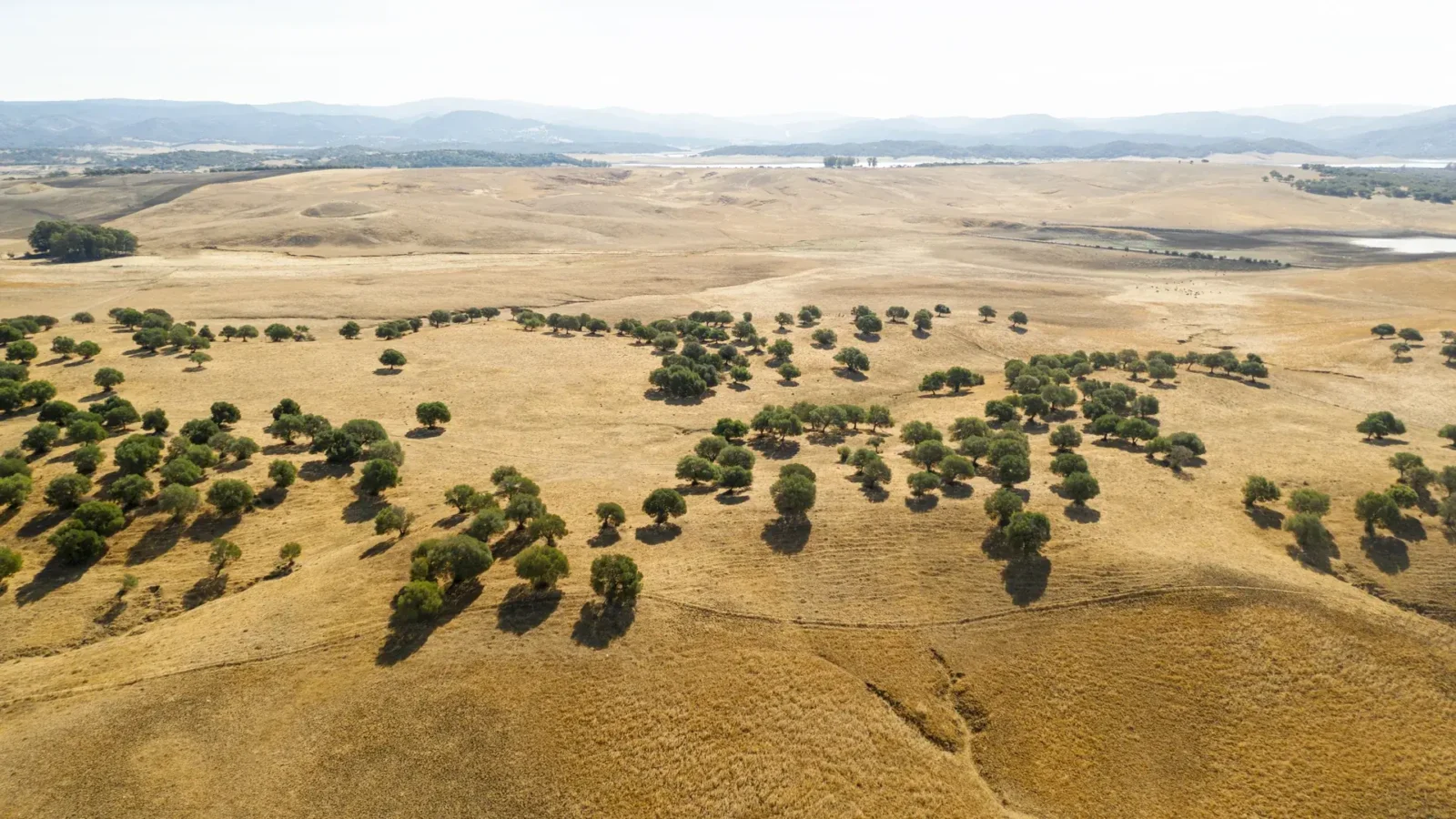
In the heart of the Cilento, where time follows the rhythm of the sun and the soil, San Salvatore 1988 proves that true significance lies in the detail. It is a place where 750 buffaloes, ancient Greek history, and biodynamic viticulture converge. It is the living feeling of a Slow Region that doesn’t rush toward the harvest but waits for the perfect moment. Here, every wine is a testament to the belief that beauty is found in the integrity of the small things.
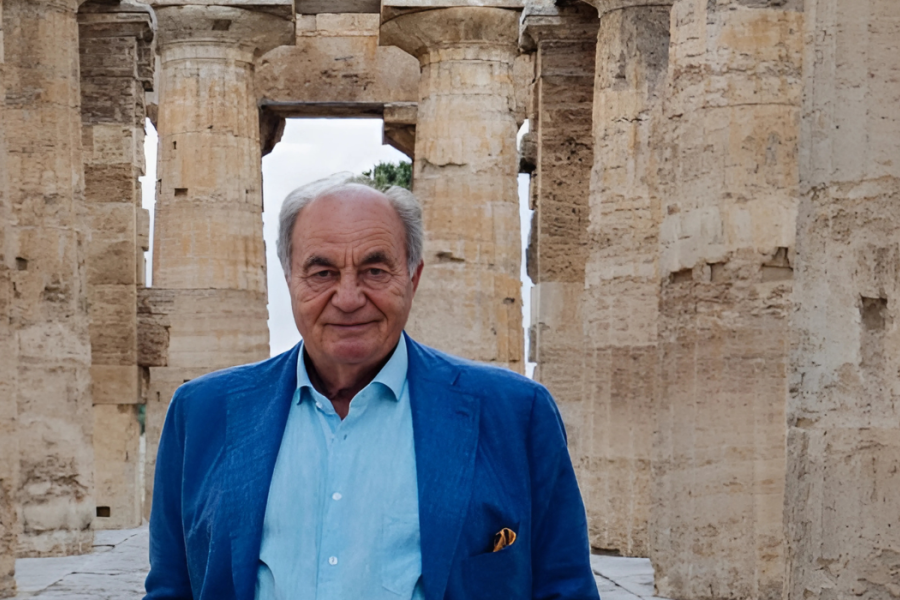
You must be able to hear the silence to understand Giuseppe Pagano. It’s not an empty silence that lies over the steep vineyards of his San Salvatore 1988 estate. It’s a silence filled with the hum of bees, rustling lizards, the calls of circling buzzards, the quiet rumination of 750 buffalo, and the almost imperceptible yet ever-present whisper of a 2,500-year-old history.
Here, in Cilento, south of the Amalfi Coast, time seems to follow a different rhythm. It’s a rhythm that Giuseppe Pagano, founder and owner of the San Salvatore 1988 winery, embodies. A man with alert eyes who speaks about the land where his vision became reality.
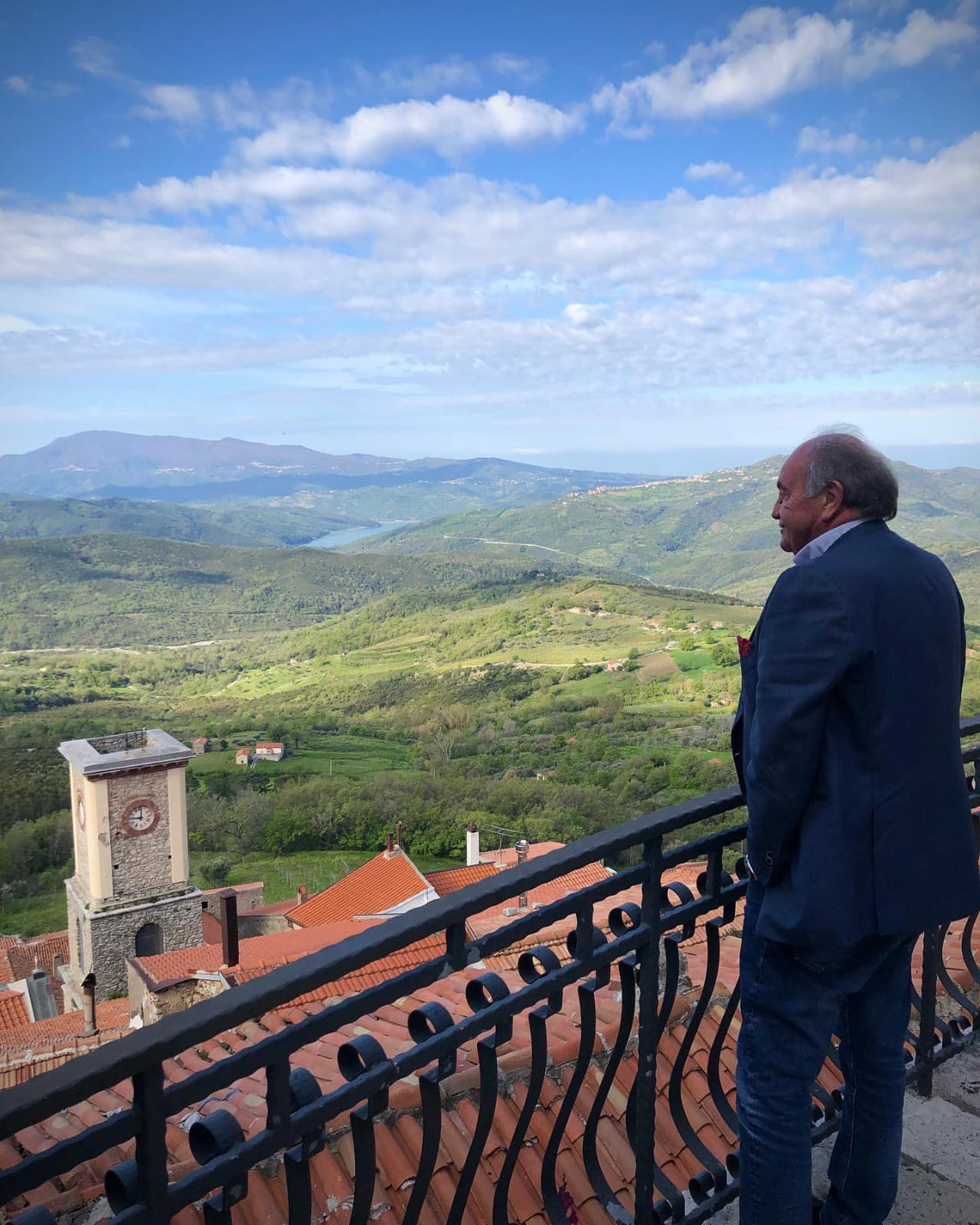
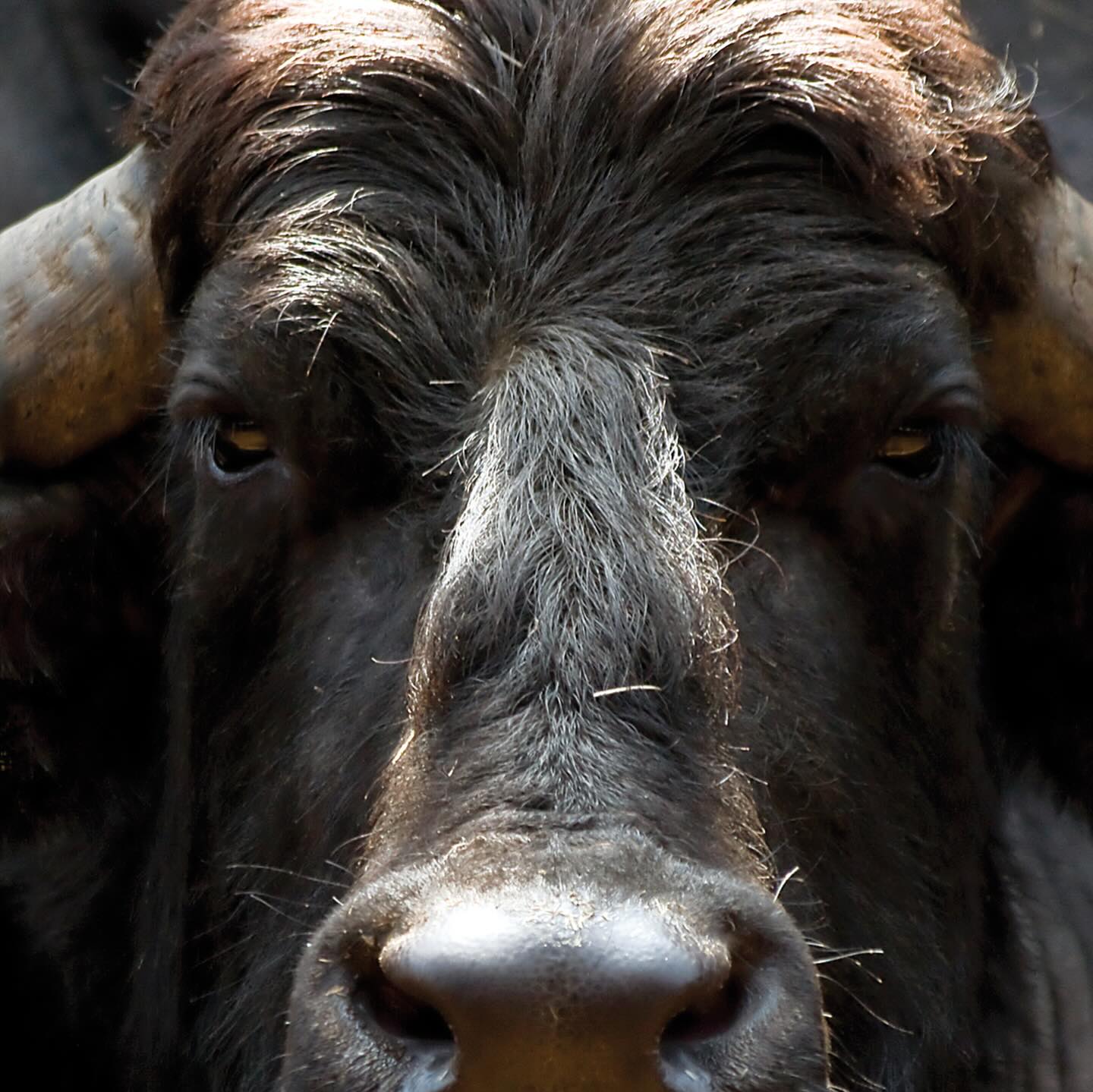
“Do you see that?” he asks as we stand on the first floor of San Salvatore 1988’s headquarters in Giungano before a large glass wall, looking toward Monte Calpazio. “Everything here is a cycle,” he begins, and his hand describes a wide arc. “There’s the biogas plant, next to it the silos. And the stables where our 750 buffalo live. They give us not only the milk for the best mozzarella but also the manure for our energy.”
Respect as Future Vision: 2.4 Million Kilowatt-Hours from 750 Buffalo
What Pagano describes here isn’t idyllic country life but a perfectly closed cycle. The biogas plant, combined with photovoltaic roofs, produces 2.4 million kilowatt-hours per year. “That’s exactly double what we consume as an entire company—winery, dairy, hotels,” he explains. “Even if we add the energy needs of our suppliers for corks, bottles, and labels, we remain in surplus.”
This demonstrates the lived philosophy of a place Pagano conceives as an “ethical system.” Respect is the word that falls again and again in conversation: “Respect is the foundation of everything. Respect for the environment that nourishes us. Respect for the animals. Respect for the people who work with us. Respect for those who enjoy our products—for their wellbeing and health.”
Yet it’s the many small details that make the difference for Pagano. He says: “Whoever does all these things must have an absolutely positive vision of the future. But to do things well, we must pay attention to details, without rushing yet quickly.” But how does this fit with slow hospitality?
How Slopes Shape Slowness and Soul: Parmenides, Zeno and the Fishermen of Elea
To understand the place, it helps to know the slow region of the Cilento around it.
“They say time passes more slowly in Cilento,” Pagano begins, leaning back slightly as if pulling ancient wisdom from the ground. “Many think we Cilentani are simply slow. But that’s only half the truth.” He describes a land that has always been impassable—imperivo. Steep ascents, dangerous descents. “Only those who adapted their pace to the terrain could survive here. Anyone who tried to take these mountains at a sprint long-term would literally have had their heart torn apart sooner or later.”
This forced deceleration created space for something else. The impassability and poverty kept conquerors away, thus preserving an ancient heritage: the Greek. “Cilento was poor,” says Pagano. “There were no riches to take here. So people preserved the traditions. It’s no coincidence that we still feel the DNA of Greek philosophy today.”
Philosophy as Child of Necessity: Paestum, Elea and the Two Greek Colonies
Pagano tells the story of the two Greek colonies. There were the settlers of Paestum, farmers who cultivated fertile land at the mouth of the Sele River and built their magnificent temple complexes from local limestone—which endured all historical storms. And there were the founders of Elea, today’s Ascea. They were fishermen seeking rocky coasts and fish-rich waters.
“What did these fishermen do when winter storms raged and they couldn’t go out to sea for weeks?” Pagano asks rhetorically. “They ate their fish, rich in phosphorus, walked along the sea, and began to philosophize.” From these walks emerged the teachings of Parmenides and Zeno, the Pre-Socratics. A philosophy born as a child of necessity, leisure, and good nutrition. A DNA that, according to Pagano, still exists in Cilentani today: the ability to create something essential from the little they have. Giuseppe Pagano himself may be the best proof of his theory.
Green Emblem: Robert Parker’s 2023 Award and the Biodynamic Life Cycle
Rallenta. Cura. Memoria. Three simple words that are central principles in Giuseppe Pagano’s thinking. They stand for deceleration, for care, and for memory—not backward-looking but as awareness of time, cycles, and origin. From these three concepts unfolds the company’s self-understanding. Without time pressure, everything follows cycles: the rhythm of nature, growth, and responsibility.
This system was awarded the Green Emblem by Robert Parker in 2023. An international recognition for a small number of wineries taking a pioneering role in biodiversity, biodynamics, and ecological responsibility. But Pagano doesn’t speak about awards. He speaks about responsibility and about Kalokagathia.
The winery operates under the designation “Conduzione: Biologica.” 100% natural fertilizers are used, combined with a clear focus on organic farming. These principles apply throughout—from vineyard to livestock and dairy operations to fruit and olive cultivation.
The numbers speak for themselves:
- 165 hectares of own land in Cilento and Vallo di Diano National Park, distributed across the municipalities of Capaccio-Paestum and Giungano
- 42 hectares of vineyards at elevations between 200 and 750 meters
- 4 hectares of fruit, 15 hectares of olive trees
- 80 hectares of arable land for buffalo feed—cultivation of wheat, corn, hay, vegetables
- 400,000 bottles of wine produced annually
- 2,400,000 kilowatt-hours of energy, 50% fed into the public grid
- 100% organic farming, certified
Kalokagathia: Don Carlo and the Search for a Word for Good and Beautiful
Kalokagathia runs as a central motif through the conversation: the search for one word that unites the beautiful and the good. Pagano tells how for years he searched for a term that could express this unity. Neither friends nor guests, neither dialects nor foreign languages offered him a solution. Until one day he sat in church and Don Carlo spoke of “il pastore bello e il pastore buono”—the beautiful and good shepherd.
After mass, he asked if there was a word for both in ancient Greek. Don Carlo answered: “Kalokagathia.” A concept that in ancient thought signifies the complete unity of aesthetics and ethics. Beauty that is simultaneously goodness. And goodness that cannot exist without beauty. Pagano was overwhelmed, he says. For him it was more than a linguistic discovery—it was a confirmation of his inner compass.
He carried the word with him. And it wouldn’t let him go. When he later stood before the Neptune Temple in Paestum at sunset, the concept became clear to him: “Beauty lies in proportion, in balance. That’s the outer form. But true goodness lies in duration. These temples have stood for 2,500 years. That’s substance.” Kalokagathia became the key for him—for personal action, for entrepreneurial thinking, for an approach to the world that connects duration and attitude.
A Name That Carries Stories: Salvatore, 1988 and the Two Eights
The name “San Salvatore 1988” is more than a brand. It’s a biography. Salvatore—that was his father. From him, Pagano learned love for wine. Until age 18, they worked together in viticulture, but then his father had to stop for health reasons. Giuseppe and his brothers began working in tourism. “You don’t always have to do what you like,” says Pagano. “Sometimes you have to do what’s possible—and learn to like it.”
The addition “1988” is also doubly significant: It’s the year Pagano married. And the year his son Salvatore was born. The two eights in the logo lie like the infinity symbol. A symbol for continuity, for future, and for responsibility across generations.
Buffalo Discussions and Plant Signs: How Pagano Reads the Vines
For Pagano, dealing with animals isn’t a technical task. Every morning he talks to his young buffalo. He explains what will be done, why it will be done, and how. Sometimes a young buffalo cow doesn’t agree—then they discuss. This may sound playful, but it’s an expression of an attitude: communication, respect, participation. Even with animals.
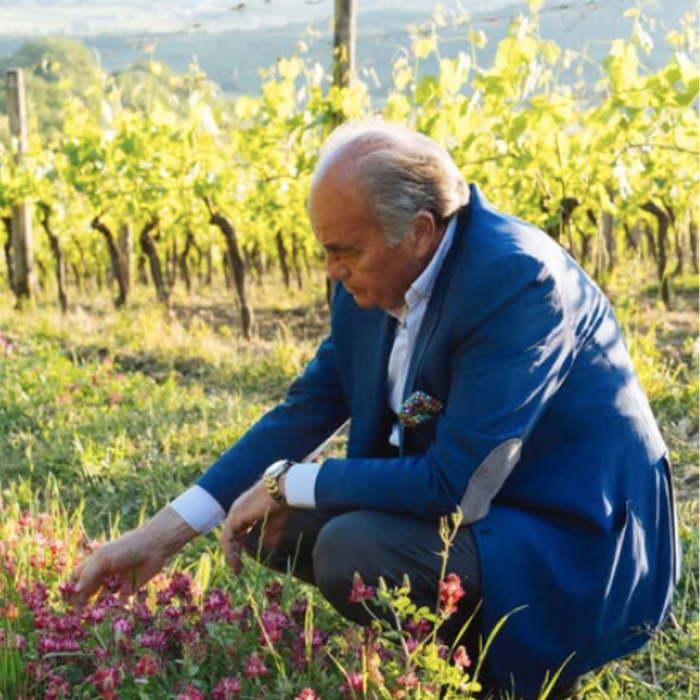
A similar approach shapes his relationship with the landscape. Often he goes to the vineyards in the evening. Fifteen minutes, alone, at sunset. Afterward he knows what needs to be done. Not because someone told him—but because the plants showed him. “The vines communicate,” he says. “Not with words, but with signs. You just have to learn to see them.”
Kalokagathia – What If…
At the conclusion of our conversation, Giuseppe Pagano’s philosophical DNA emerges again: “I often ask myself why modern languages haven’t adopted a word for Kalokagathia. If this word existed—if we had a single word that unites the beautiful and the good—we would be forced to think differently. We would learn that both are possible. Simultaneously. And I believe the world would be a bit better.”
Similar Articles
Where Luxury Begins: The Value of Natural Fibre, From the Karoo to Vittorio Veneto

Sicily in Seven Notes: Spezieria Siciliana and the Perfume of an Island
The Great Small Vintage of 2026: A Season of Concentration