CICONIIDAE: Swiss Craftsmanship as a Counterpoint to Mass Production
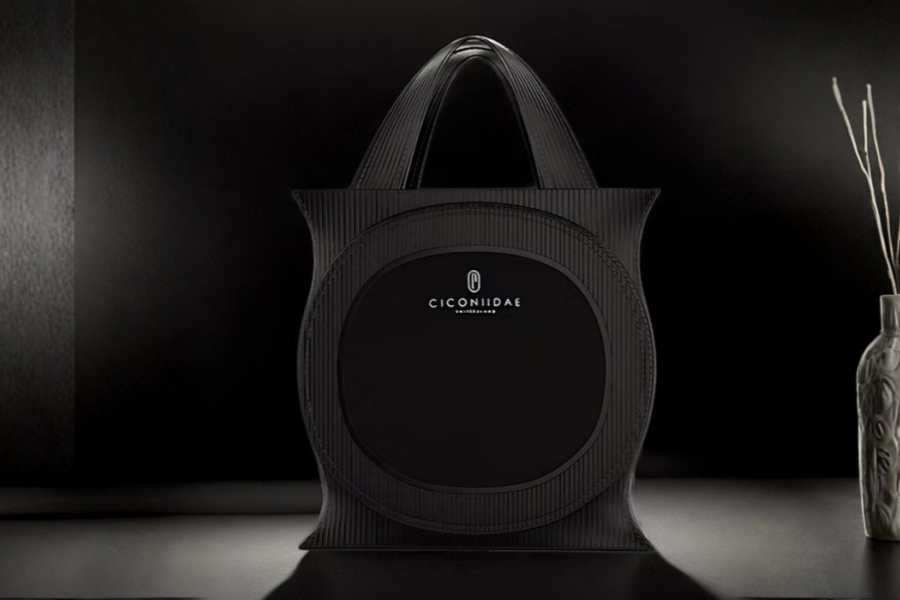
The luxury industry is in the midst of a quiet reckoning. For decades, logomania and aggressive brand spectacle dominated haute maroquinerie, and for decades, that worked. CICONIIDAE Swiss luxury handbags enter a different conversation: one about provenance, longevity, and objects that accumulate meaning rather than depreciate it.
What Does Swiss DNA Mean for a Luxury Handbag?
CICONIIDAE’s Swiss provenance adds a dimension that resonates beyond geography. Störchli draws the comparison directly: “Switzerland is part of who I am — and of my bags. That encompasses the landscape, a rigorous education, precision, clean lines, fine detail.” She measures this against the Swiss watch industry. In it, she says, Swissness — that particular Swiss DNA — comes fully into play.
The parallel is precise rather than convenient: both industries share a devotion to precision, a respect for inherited craft techniques, and the understanding that genuine quality requires time. As with a watch movement, every element in a CICONIIDAE bag must function perfectly and exist in harmony with every other component.
A Name That Carries Weight
Founded by Tanja Störchli, a designer with twenty years of international fashion experience, CICONIIDAE embodies a deliberate departure from the restlessness of global fashion capitals. The name is not incidental. As the scientific designation for the family of storks, CICONIIDAE quietly echoes the founder’s surname and simultaneously invokes the themes of migration, homecoming, and permanence — motifs woven throughout the brand’s philosophy.
The company is based in Kastanienbaum on the shores of Lake Lucerne. The stillness of that landscape in the canton of Lucerne is more than a backdrop; it is a structural condition. Störchli has described the deliberately chosen distance from the frenetic rhythms of international fashion cycles as enabling a design process oriented above all by internal standards of quality.
Materials as Ambassadors of Authenticity
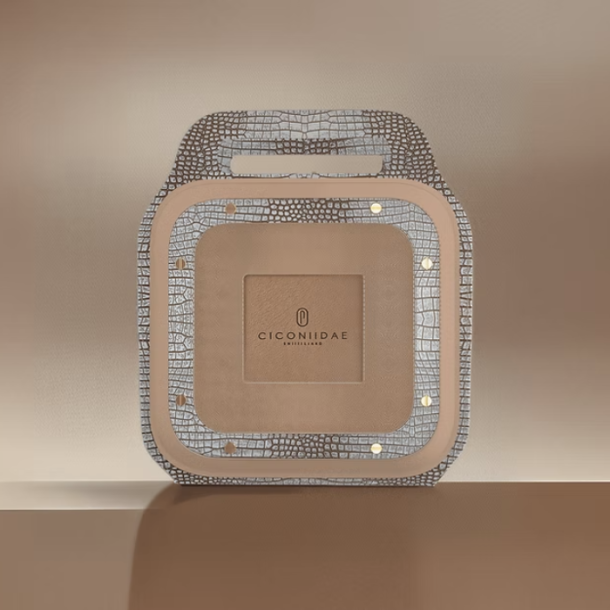
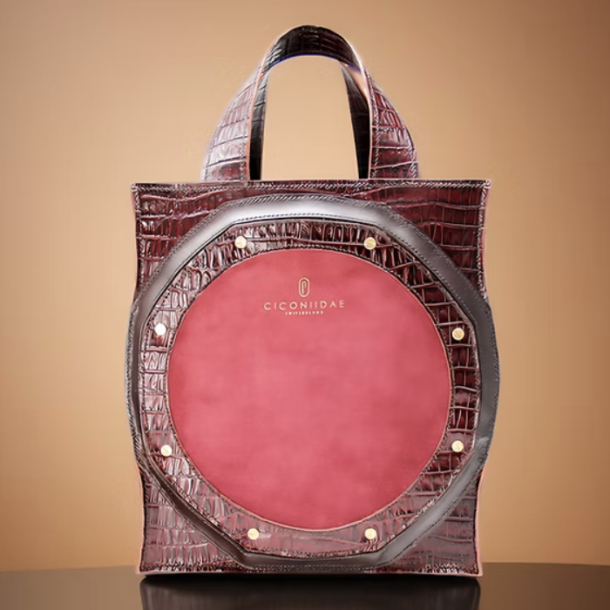
Material selection at CICONIIDAE follows principles that extend well beyond aesthetic considerations. The leathers chosen stand for longevity and naturalness, developing a patina in use that makes each bag an individual piece. Störchli works deliberately with surplus stocks of premium-tanned calfskin, goat suede, or cowhide — smooth or embossed — and for the Lamelligerus model, with vegetable-tanned leather.
What matters, she explains, is the tanning method, the traceability of the hides, reduced chemical loading, and resource-conscious manufacturing processes. The decision to work with surplus materials is strategic: what exists is used; nothing is wasted.
The metal elements, produced in Switzerland, function as precise accents — reinforcement of the concept of durability and symbolic anchoring, not decoration serving its own ends. Gemstones come from certified sources and are selected by Störchli personally.
The Timeless Collection: Archetypes Instead of Seasons
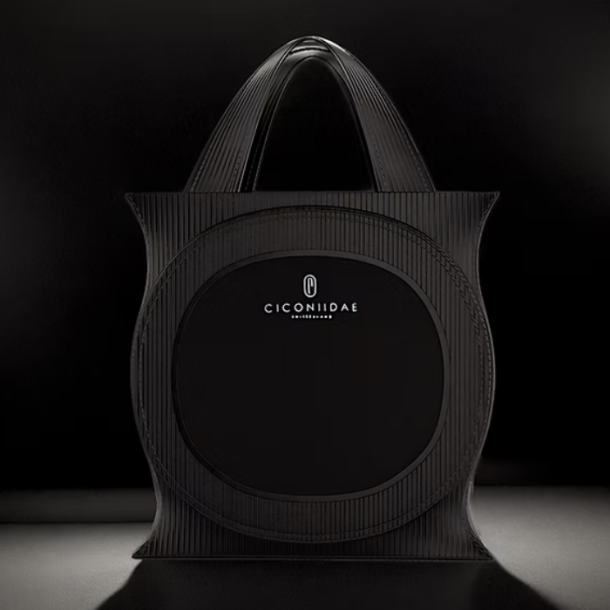
The Timeless Collection is not a collection in the conventional sense, with its semi-annual and quarterly cycles of reinvention. It exists independently of market fluctuations and mass movements. These are bags that welcome patina, interpret the ageing of material as positive development, and are designed to be carried for years and passed from one generation to the next.
“Each bag is a one-of-a-kind piece,” Störchli says. This way of thinking in long time cycles reflects a culture of respectful engagement with resources — and a deep understanding of how objects embed themselves in the lived reality of those who carry them.
What Is Happening in the Haute Maroquinerie Market?
The global luxury leather goods market continues to grow, but its dynamics are shifting. Particularly in Europe and North America, interest in smaller manufactories and independent brands is rising measurably: those that produce regionally, work with premium materials, and commit to long-lasting design.
At the same time, the logic of price as a pure status signal is reaching its limits. The Veblen-goods model — in which price itself drives demand — is losing momentum. Consumers are returning to legible provenance and artisanal quality. Brands that carry a story and anchor themselves naturally in the everyday lives of their customers are earning disproportionate attention.
The Bain & Company Luxury Study 2024 projects a market volume of over 85 billion euros by 2025, with durable classics carrying high functional value gaining particular significance.

What Trade Fairs Are Telling the Industry
The leading material and fashion fairs — Lineapelle, Première Vision, Pitti Immagine — confirm the trajectory toward vegetable-tanned leathers, regenerative raw material cycles from small European tanneries, and innovative natural materials. Circular Craftsmanship, the concept of closed material cycles with minimal environmental impact, has become a strategic priority in industry discourse.
At Lineapelle 2024 in Milan, attention returned to traditional tanning methods and supply chain traceability, while experimental surface treatments lost ground. At Première Vision in Paris, slow fashion established itself as a strategic main direction: no longer a niche consideration, but a framework for business models built around long-lasting products and reduced collection cycles. At Pitti Immagine in Florence, small independent manufacturers with authentic stories and transparent production processes gained measurable visibility.
Classic silhouettes in timeless interpretation, fewer seasonal modulations, and archetypal forms — saddle bags, totes, crossbody models — are in increasing demand alongside traditional craft techniques: saddle stitching, natural dyes, unbleached interior linings.
Circular Craftsmanship: The Longevity Cycle as a Future Model
Circular Craftsmanship is emerging as one of the most consequential currents in the luxury goods industry — and it describes more than closed material cycles. It represents a fundamental reorientation in the relationship to resources and manufacturing processes, connecting ecological responsibility with economic coherence.
Premium materials that would otherwise remain unused are transformed into pieces of individual character. Environmental impact is reduced; resources are used more efficiently; the resulting products are distinguished precisely by their individual material structure.
CICONIIDAE supports this long-term perspective with a professional repair service: bags can be sent in for restoration and returned carefully renewed. Störchli frames this as an expression of the same underlying attitude: “It is not a cycle in the strict sense, but it is an expression of longevity, care, and respect for the object.”
Use as the Mark of a Personal Icon
The future of haute maroquinerie will be shaped by developments that brands like CICONIIDAE are already anticipating. Störchli states it directly: “What I am creating are not luxury objects. They are lifelong companions — pieces that absorb the traces of use and grow in character over time. Like a deeply personal icon.”
That thinking in long cycles — the connection between artisanal excellence, resource-conscious practice, and cultural rootedness — holds the potential to set new standards in the field.
CICONIIDAE Swiss Luxury Handbags — What You Need to Know
What buyers, collectors, and conscious luxury consumers ask most about CICONIIDAE — answered directly.
CICONIIDAE is a Swiss Haute Maroquinerie brand that works with certified surplus leathers, produces each bag as a one-of-a-kind piece, and offers a professional repair service designed to extend a bag’s life across generations. Founded by Tanja Störchli in Kastanienbaum on Lake Lucerne, the brand draws its design philosophy directly from the precision and craft culture of the Swiss watch industry — prioritising longevity over seasonal relevance.
External Resources:
- BCG: Spinning Textile Waste into Value – Comprehensive study on textile waste and circular economy potential
- Regenerative Organic Alliance – Standards and certification for regenerative agriculture
Vegetable tanning is a traditional process that uses plant-based tannins rather than synthetic chemicals, resulting in leather with lower environmental impact, greater durability, and a natural ageing quality. CICONIIDAE uses vegetable-tanned leather for its Lamelligerus model because the material develops a distinctive patina over time — deepening in character with use rather than deteriorating.
Yes. CICONIIDAE offers a professional restoration service: bags can be sent in, carefully refurbished, and returned to their owner. Founder Tanja Störchli describes this as an expression of the brand’s core attitude — one of longevity, care, and respect for the object rather than planned obsolescence.
Circular Craftsmanship describes a design and production philosophy based on closed material cycles, minimal waste, and long-term product value. In luxury fashion, it means working with surplus or traceable heritage materials, using traditional techniques that allow repair, and designing objects meant to outlast their first owner. CICONIIDAE applies this principle by sourcing premium surplus leathers and building bags intended to be passed down across generations.
CICONIIDAE is designed and produced in Kastanienbaum, canton of Lucerne, Switzerland. For Störchli, Swiss provenance is not a marketing label but a lived design condition: precision in construction, clean line definition, fine detail, and the discipline to measure quality against internal standards rather than market cycles — the same values that define Swiss watchmaking at its best.
Similar Articles
Fullord Geneva: Sandrine Thibaud on Building a Jewellery House Around a Woman’s Independence
Cartier’s Owner Eyes De Beers: The Jeweller Returns to the Mine

Controlled Imperfection: Sogni di Cristallo and the Hand-Blown Light of Carbone Riviera