
Borgo Egnazia: An LHW Award Goes to Its Seed House
Borgo Egnazia’s Change-Makers Award from The Leading Hotels of the World rewards a seed house that feeds the resort’s own kitchens. At the Casa delle Sementi, endangered Apulian varieties are collected, sown in the regenerative gardens and cooked for guests. The seed house was launched in late 2024 and is run by Angelo Giordano, an agronomist and seed saver. In spring 2026, 500 seeds went into the ground, including up to 230 varieties of tomato, Il Sole 24 Ore reported. The resort describes the seed house as a place where seeds “are shared, becoming collective heritage”.
● In Brief: Borgo Egnazia at The Leading Hotels of the World
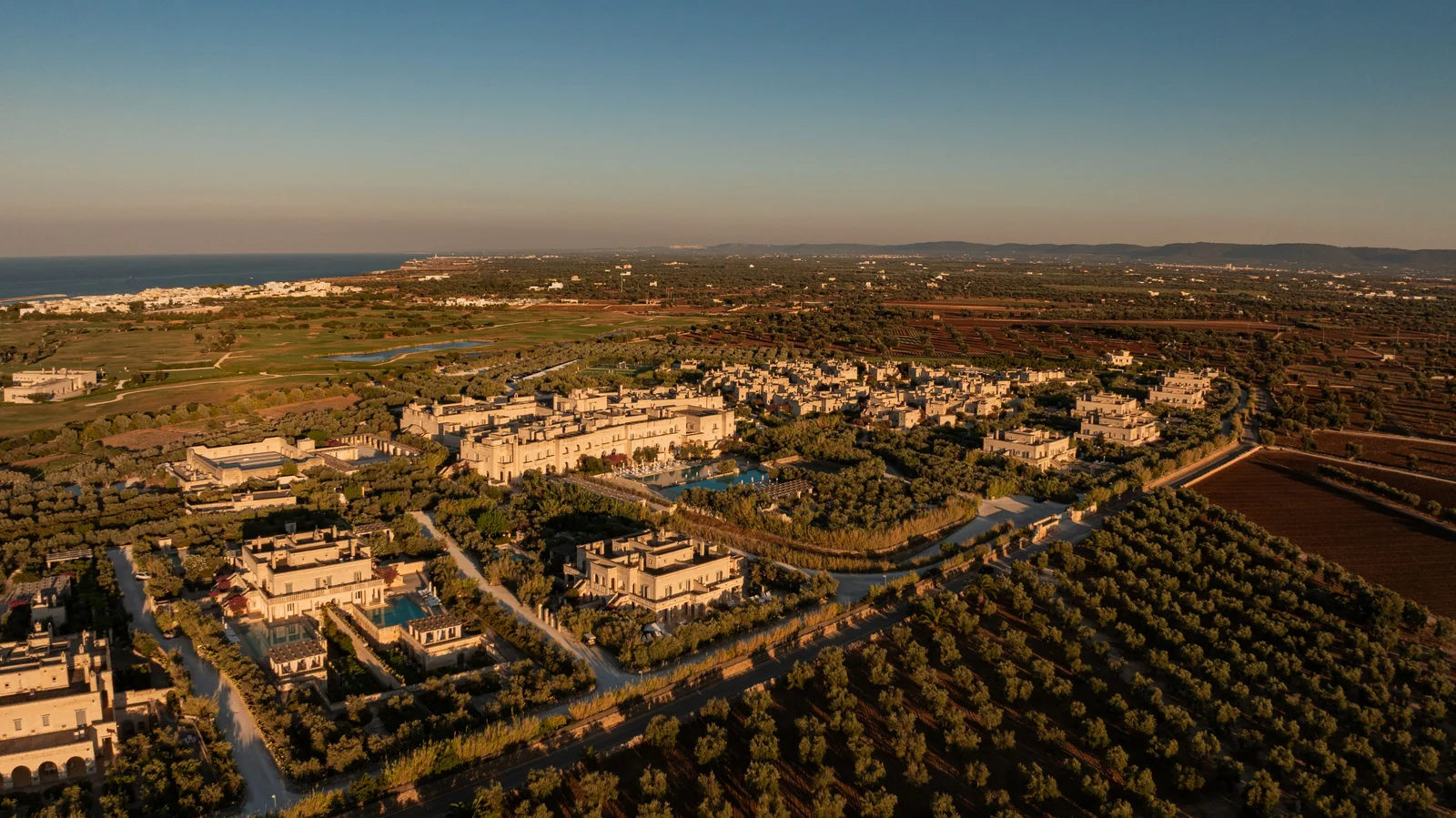
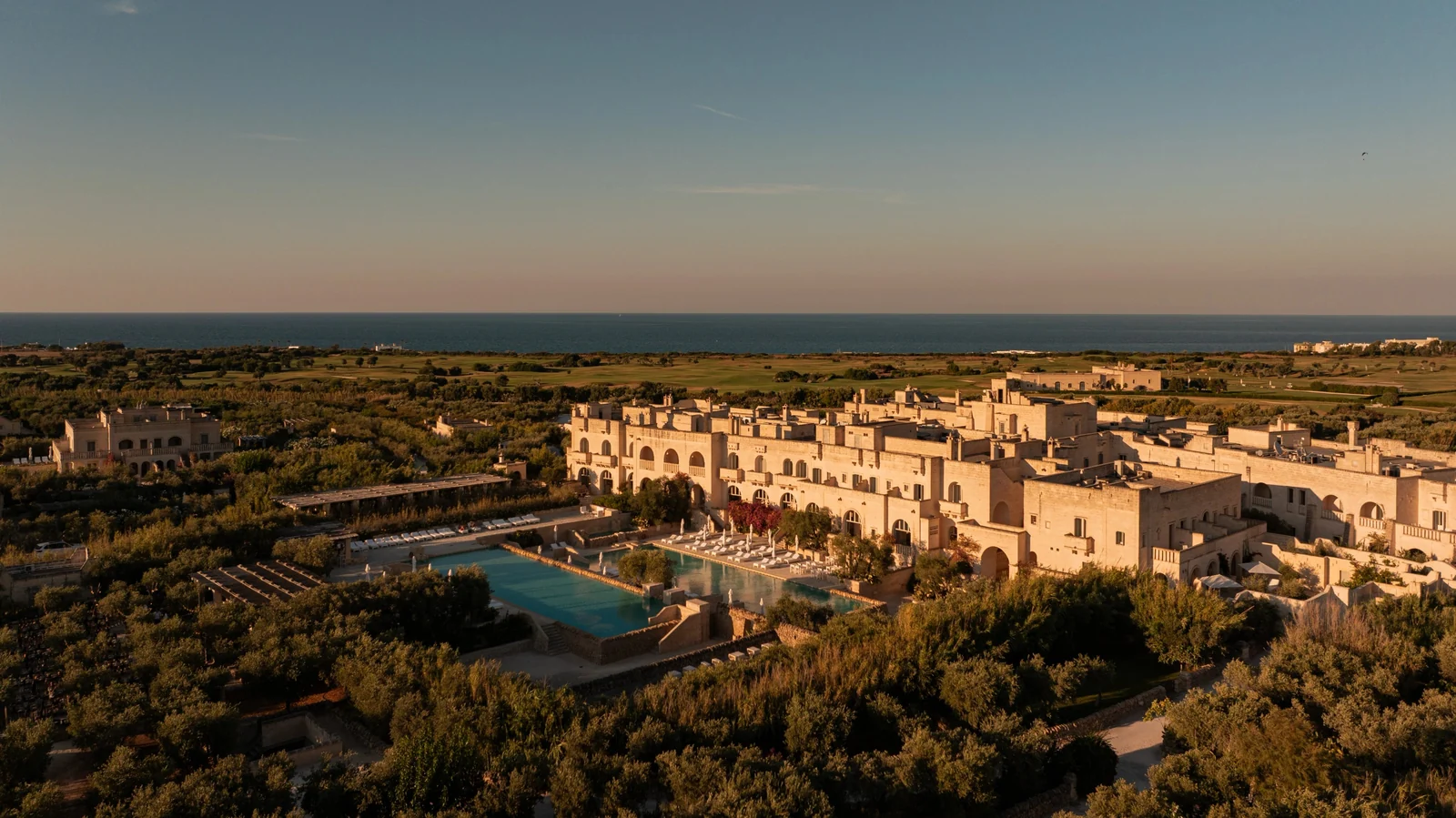
The award. Borgo Egnazia, in Savelletri di Fasano, received the award at LHW’s 60th annual convention. The meeting ran in Rome from 19 to 21 November under the theme “The Art of Independence”. LHW cited the resort’s Regenerative Gardens and Casa delle Sementi for “preserving more than 1,000 seed varieties while supporting biodiversity”. Last year the prize went to Hotel AWA in Puerto Varas, Chile.
The seed house. The Casa delle Sementi collects, preserves and grows traditional varieties at risk of disappearing. It also brings back species suited to arid soils and hosts exchanges of knowledge among farmers. “With this model, the air we breathe and the food we eat improve,” Angelo Giordano told Il Sole 24 Ore, in the paper’s English translation.
The kitchen. A large share of the dishes at Borgo Egnazia comes from these gardens, the resort says. Many are made with old local varieties recovered through the seed house. Due Camini, the resort’s restaurant under the chef Domingo Schingaro since 2016, turned fully vegetarian in 2025. It holds one star in the Michelin Guide Italy 2027. “The decision to become 100% vegetarian was a natural evolution,” Schingaro said.
The water. Drip irrigation, mulch and drought-resistant crops have cut water use in the gardens by 20 to 30 per cent, the resort says. Its long-term target is 50 to 60 per cent.
The other winners. Hôtel Royal in Évian was named Member of the Year. The Silo Hotel in Cape Town took New Member of the Year, and Nayara Tented Camp in Costa Rica was named Sustainability Leader. Marcel P. van Aelst, vice chairman of Okura Nikko Hotel Management, was named Leading Legend. Peter MacCann of The Merrion in Dublin, Argos in Cappadocia and Acqualina in Florida took the remaining prizes.
Swipe for more →
● Why It Matters: Borgo Egnazia as a Regenerative Hotel
LHW’s citation frames Borgo Egnazia as a regenerative hotel, and the grounds bear that out. Seeds are saved on site, and two composting units process 80 kilos of organic waste a day.
LHW counts more than 450 hotels in over 80 countries. Announcing the awards, its president and chief executive, Shannon Knapp, said that “independence has become one of luxury’s greatest differentiators”. At Borgo Egnazia, that independence takes a practical form: a seed collection drawn from a single region. It places the resort among the hotels that build hospitality around their own place.
Aldo Melpignano, co-owner of Borgo Egnazia, is building beyond Puglia. His company, Egnazia Ospitalità Italiana, managed nine properties in December 2025 and was aiming for around 20 by 2030, Il Sole 24 Ore reported. Castel Badia, near Bruneck in South Tyrol, reopened that month as a collaboration between Melpignano, the Kronplatz Group and the Gasser and Knötig families. La Tiara di Cervo, Alfonso Dolce’s project on the Costa Smeralda, was developed with Melpignano. Hotel Diana in Milan was among the projects listed at the time.
LHW’s members meet again in Amsterdam in November 2027. Whether a seed house follows Melpignano to South Tyrol, Sardinia and Milan is the question Borgo Egnazia leaves open.
Send this to someone who still thinks a hotel garden is decoration.
 Continue · The readingAlbergo Diffuso: The Streets Are the CorridorsAn albergo diffuso spreads one hotel across the houses of a village. How the model began in Carnia in 1982 and reached Japan.Read on →
Sources
- Hospitality Net (LHW release): The Leading Hotels of the World unites more than 400 independent hoteliers in Rome for its 60th annual convention
- Travel PR News: Leading Hotels of the World celebrates independent luxury and eight award winners in Rome
- Leading Hoteliers: The Leading Hotels of the World unites more than 400 independent hoteliers in Rome
- The Leading Hotels of the World: 2025 annual convention awards
- Borgo Egnazia: Sustainability Report 2024 (PDF)
- Borgo Egnazia: Sustainability
- Egnazia Press Room: Borgo Egnazia factsheet
- Il Sole 24 Ore: Cutting-edge hospitality revitalises people and regions
- Il Sole 24 Ore: Egnazia: Italian hospitality growth plan
- Reporter Gourmet: Borgo Egnazia’s golden moment
- Guide Michelin: Due Camini
- Falstaff: Living in the castle: Castel Badia comes to life again
- Luxury Travel Magazine: La Tiara di Cervo debuts in Porto Cervo