Controlled Imperfection: Sogni di Cristallo and the Hand-Blown Light of Carbone Riviera
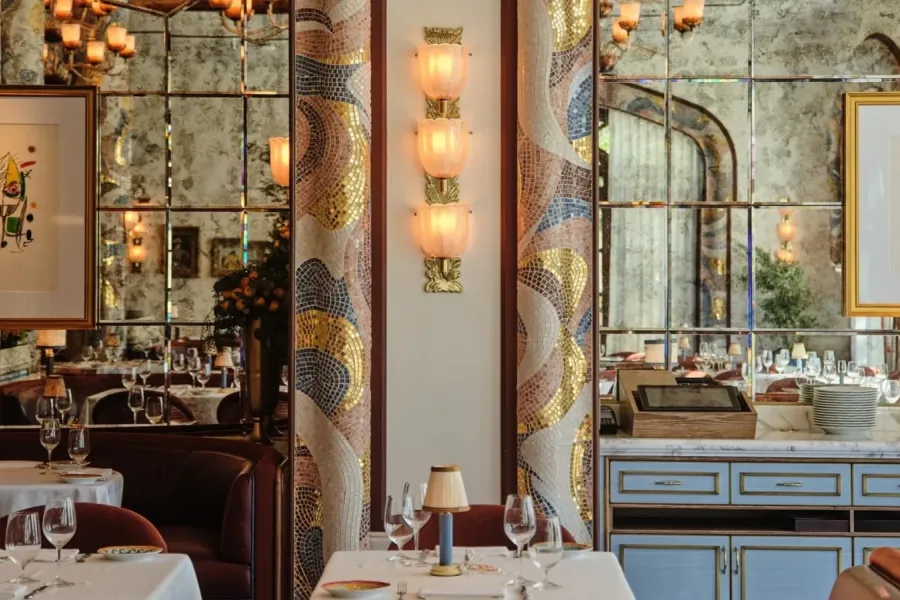
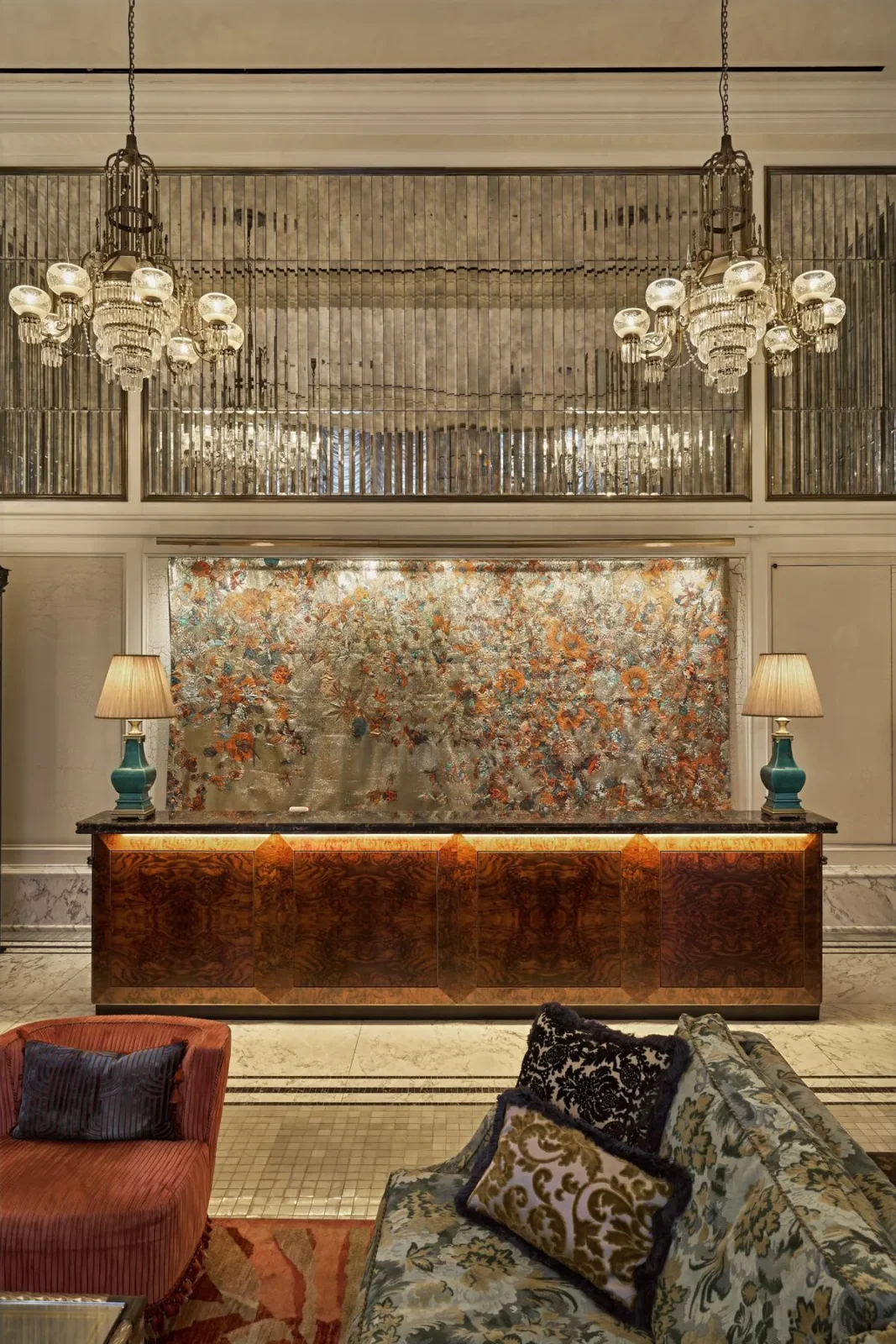
MIRANO/LAS VEGAS — On the Strip, where the casinos compete in neon, the light inside Carbone Riviera arrives softened. Between arches of gold and sea-blue mosaic at the restaurant in the Bellagio hang small sconces of ribbed glass, three cups to a brass stem, and no two of those cups are exactly the same. Each was blown by hand for Sogni di Cristallo, a glass manufacture in Mirano, on the Venetian mainland, and each carries the slight irregularities of the breath and the tools that shaped it. In October, the Restaurant & Bar Design Awards named Carbone Riviera the best restaurant in the world. “In a context like this, true luxury is measure,” Marco Borile, the founder of Sogni di Cristallo, said in an interview with The Silent Luxury.
Venetian Glass: Seven Centuries of Light Made by Hand
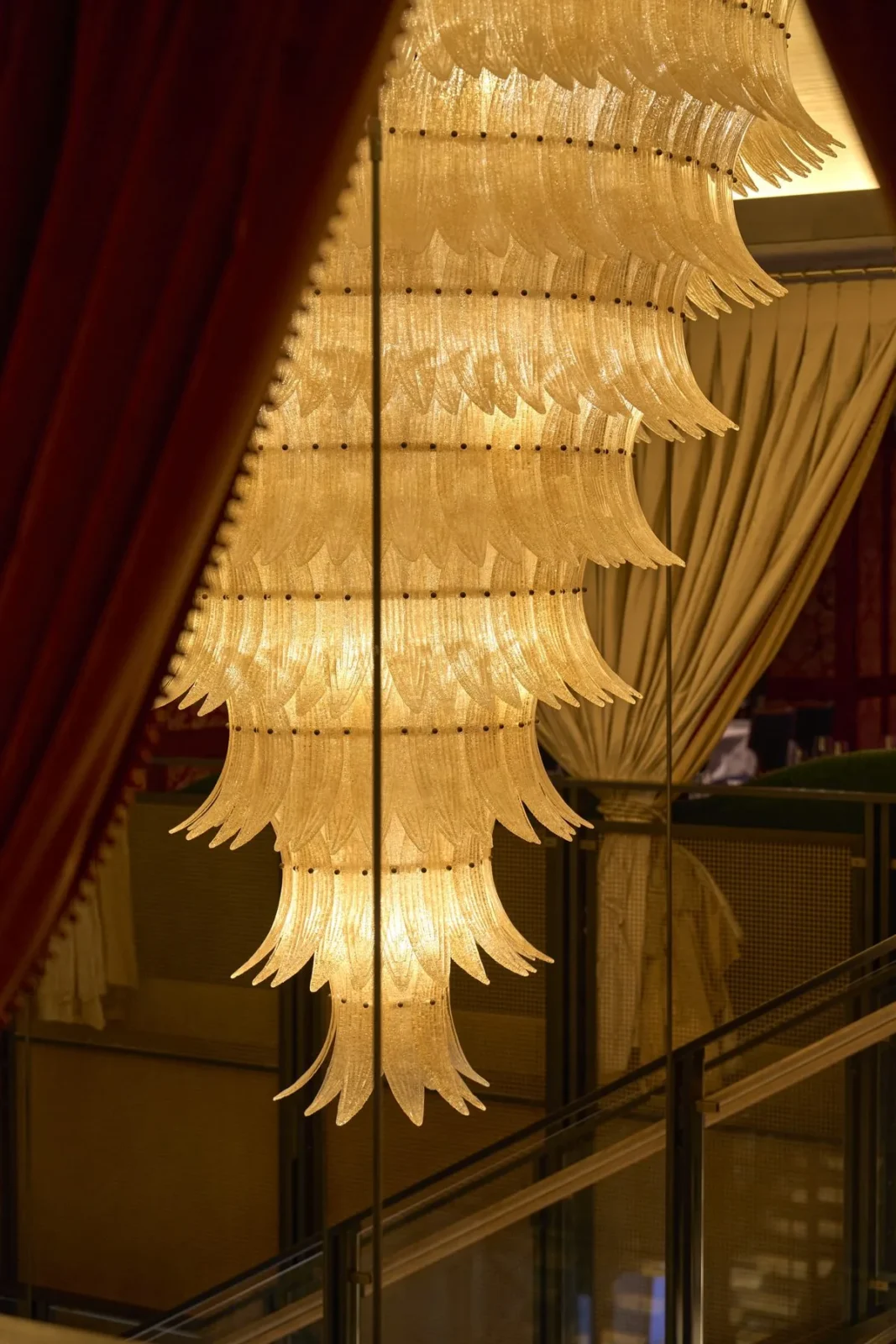
Venetian glass has been made by hand under the eye of the state since 1291. In November of that year the Venetian Republic ordered most of the city’s glass furnaces out to the island of Murano, partly to keep fire away from a city built of wood and partly to keep the glassmakers’ secrets in one place. A glassmaker who left without permission could be ordered home, and his family imprisoned if he refused. Around 1450 Angelo Barovier perfected cristallo, a glass so clear that it took its name from rock crystal.
In the eighteenth century Giuseppe Briati filled Venetian palaces with ciocche, chandeliers dressed in bouquets of coloured glass flowers, and his work stirred such jealousy among rivals that in 1739 the Council of Ten allowed him to move his furnace from Murano into Venice for his own safety. One of his chandeliers, with forty candle-holders on two tiers, still hangs in the Brustolon Room at Ca’ Rezzonico, where the museum calls it the most extraordinary example of its kind to have survived intact. The craft nearly disappeared after Napoleon ended the Republic in 1797, and the glassmakers spent much of the nineteenth century recovering what had been lost. By the Paris Exposition of 1867 most of the old techniques had returned. What they brought back, free-blowing at the furnace with heat, gravity and a handful of hand tools, is what Borile today calls “a technique born in Venice”.
A note from The Silent Luxury
Good reading deserves to find you again.
Restaurant Lighting at Carbone Riviera: Light as Part of the Composition
The lighting at Carbone Riviera is designed to stay in the background, and Borile treats that as the first rule of the job. “The first principle is understanding that light, in a space of this level, does not necessarily have to be the protagonist,” he said. “It has to be part of the composition.”
The room is full of claims on the eye. Carbone Riviera, which Major Food Group opened at the Bellagio in November 2025, seats 240 guests among ceramics by Picasso and works by Miró and Renoir, with terraces above the Bellagio fountains. Its palette runs from terracotta, gold and clay to deep Mediterranean blue, and glass appears wherever there is light: in the chandeliers, in the archways of the main dining room, in the lamps on every table and in the sconces between the mosaics. “Light that is too assertive risks turning into an object that demands attention,” Borile said. “Well-designed light builds the atmosphere and lets the architecture, the art and the people take the centre of the stage.” In a room hung with Picasso, a showy chandelier would be a costly mistake.
From Drawing to Glass: Glassmakers Adapt Martin Brudnizki’s Designs at the Furnace
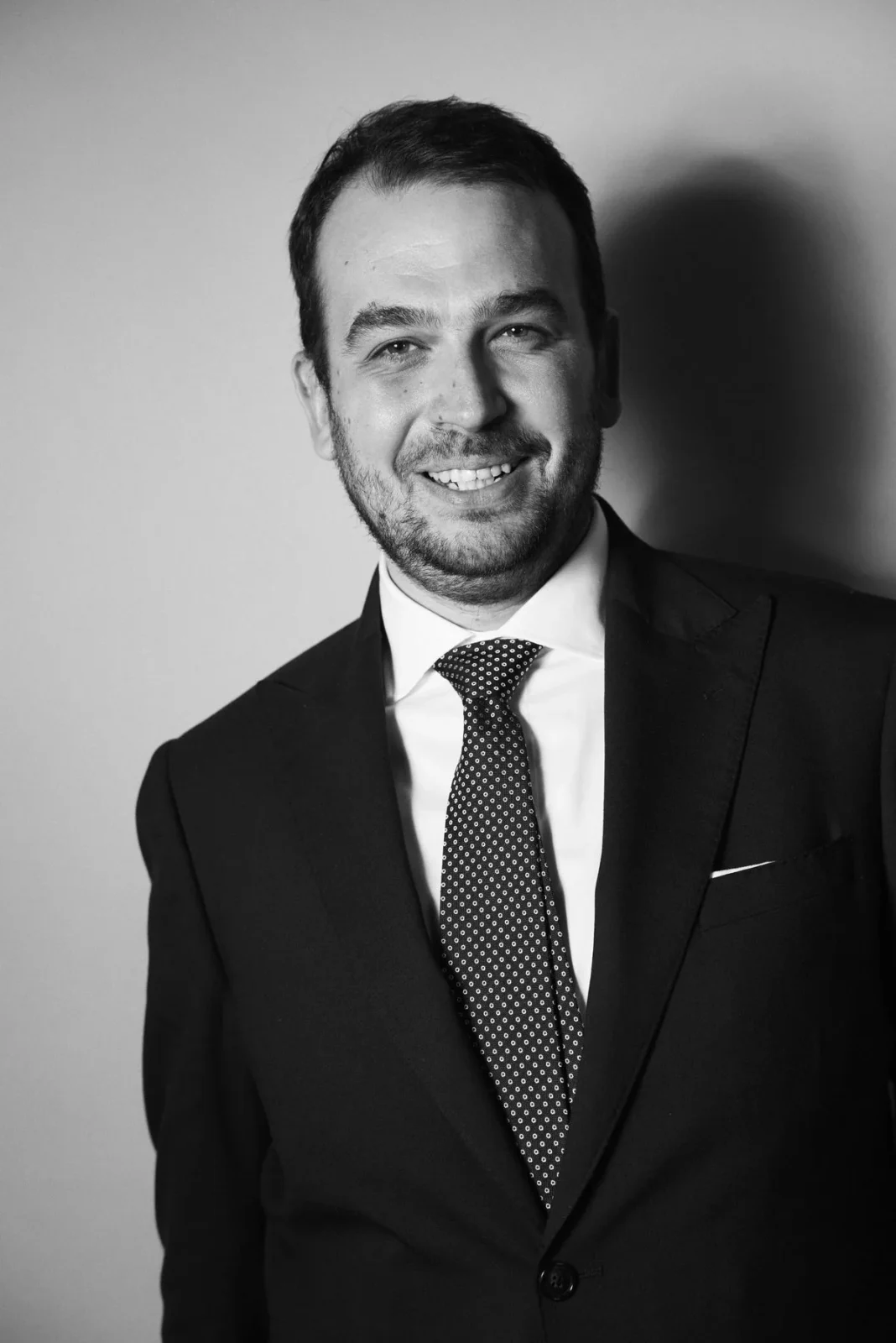
Every lamp at Carbone Riviera began as a drawing in Martin Brudnizki’s studio and was adapted by glassmakers at the furnace. Brudnizki modelled the restaurant on the Italian and French Rivieras of the mid-twentieth century and took a cue from Picasso’s years in Vallauris, the pottery town above Cannes where, from 1947, the painter worked in clay alongside the potters of the Madoura workshop. Such a drawing, Borile said, specifies “proportion, rhythm, the relationship with the architecture, materials, colour, atmosphere.” His company’s task is “to understand that vision and bring it into the material.”
Then the drawing goes to the furnace. “The manufacture does sometimes say no, but it is rarely a definitive no,” Borile said. “More often it is a ‘not this way’.” The glassmakers alter a proportion, a section, the way the parts are joined or the way the glass is held, until the piece can be made and the designer’s idea survives in it. “The result is born precisely from their interaction,” he said. For Carbone Riviera, Sogni di Cristallo developed every chandelier, sconce and table lamp for this one room, along with the brass elements and architectural components, each sized to the proportions, distances and materials around it.
Hand-Blown Glass: Controlled Imperfection Gives the Light Its Depth
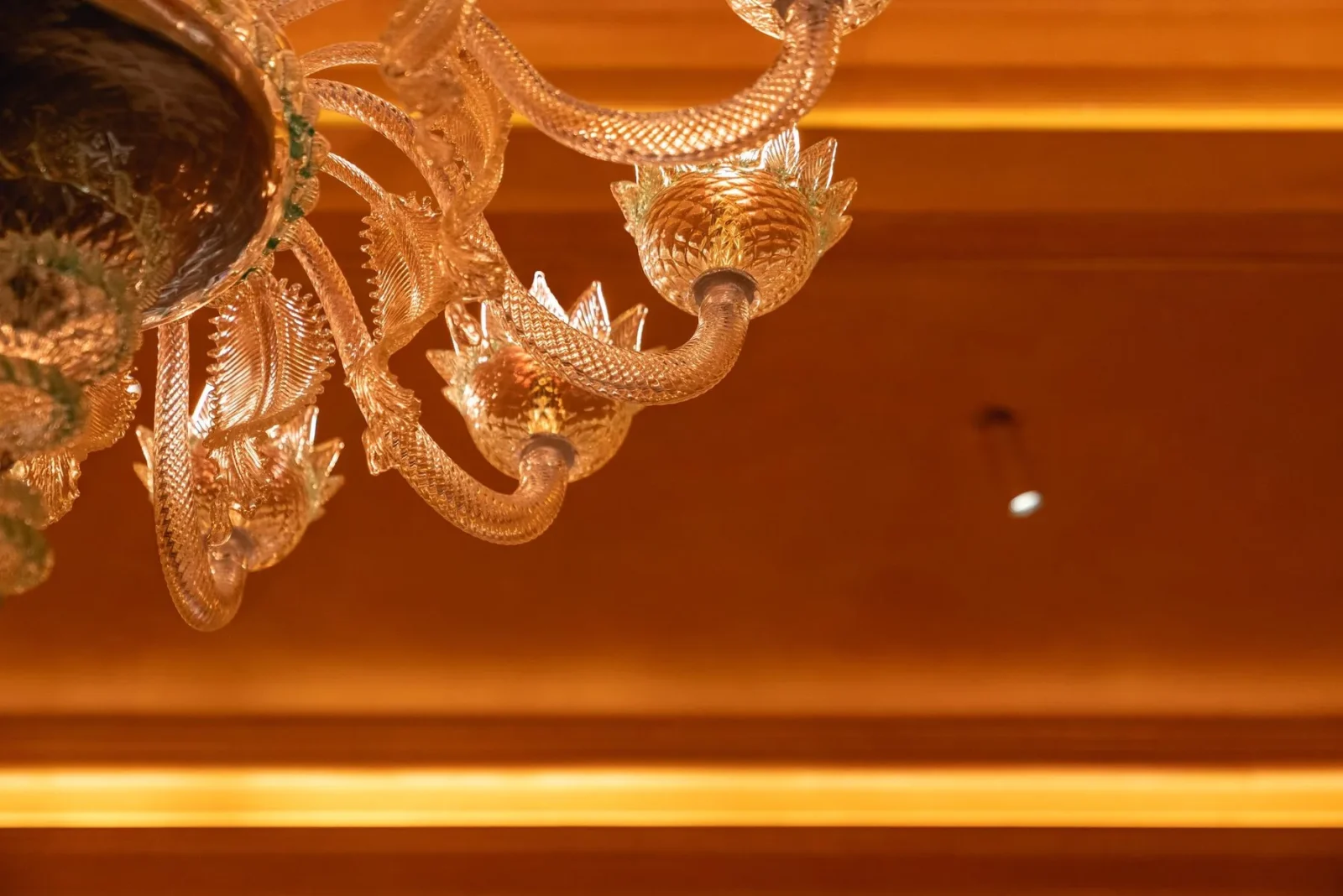
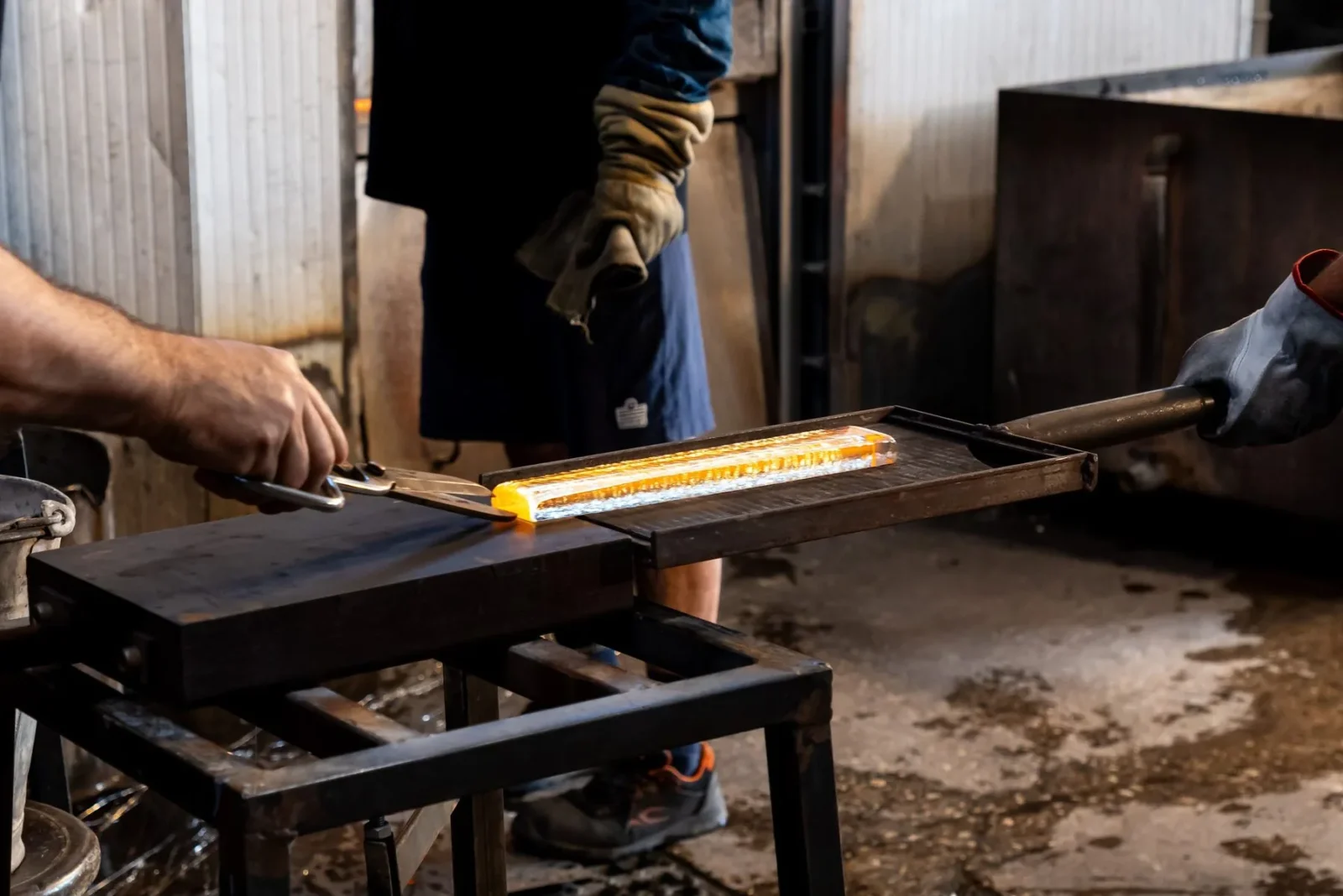
Hand-blown glass softens light because no two pieces have exactly the same walls. Each cup starts as a gather of molten glass on the end of a hollow blowpipe. The glassmaker blows, turns the pipe so that the soft glass stays centred, and shapes it with wooden blocks, jacks and shears, sending it back into the furnace whenever it begins to stiffen. Moved onto an iron rod called the punty, the cup has its rim opened and finished, then cools slowly for hours so that the glass settles without cracking. Its walls end up a fraction thicker in one place and a fraction thinner in another, and the light passing through them changes accordingly.
“Blown glass does not return a flat or uniform light,” Borile said. “It has depth, a vibration, a capacity to filter and refract light that changes with the form and the thickness. It is a living material. And it is precisely this controlled imperfection that allows the light to be present without becoming intrusive.” On the walls of Carbone Riviera, the ribs of each cup break the light into fine lines before it reaches the mosaic, and the guests at the tables sit in a warm, even glow that few of them will think to look for.
Tradition as Technology: Sogni di Cristallo Keeps the Furnace at the Centre
Most factories spend their energy eliminating variation. Sogni di Cristallo, which Borile founded in 2012, has grown, in his words, “without industrialising what must not be industrialised.” Hand-blown glass, he said, is a design tool in its own right, yielding forms, variations, surfaces and details beyond the reach of standardised production. “The starting point always remains the furnace,” he said. Asked what the company would never change, he pointed to “our relationship with the material and with the hand of the craftsman, because tradition is our most sophisticated technology.”
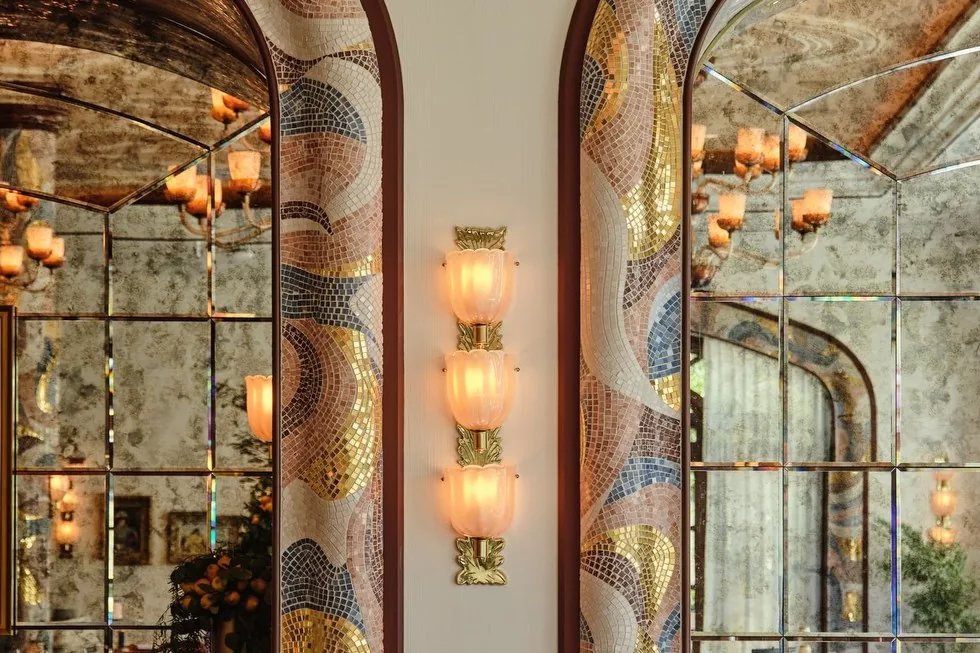
In Las Vegas, where almost everything is built to be noticed, the lamps at Carbone Riviera go on working unnoticed: three ribbed cups to a stem, each one slightly different from the cup beside it.
Send this to someone who notices the light before the menu.
Sources
- Marco Borile, interview with The Silent Luxury, October 2026 (translated from Italian)
- Restaurant & Bar Design Awards 2026
- Bellagio Las Vegas: Carbone Riviera
- Sogni di Cristallo
- Ca’ Rezzonico: the Brustolon Room chandelier by Giuseppe Briati
- Save Venice: Giuseppe Briati
- Corning Museum of Glass: The Techniques of Renaissance Venetian Glassblowing
- Wikipedia: Murano glass
Similar Articles
Hackett on Savile Row: Graham Simpkins and the Suit That Outlives Its Owner

McQueen Is Home Now: London Tailoring Shapes the House’s Next Chapter

Rolls-Royce Ghost Savile Row: Ieuan Hatherall on Designing From the Inside Out