Marion Röttges of Remei: Transparency Is Where Change Begins

Remei AG has built its business on organic cotton for more than 30 years, although it remains a small share of a fibre that is itself losing ground to polyester. The Swiss company, based in Rotkreuz, buys directly from some 5,000 smallholder farmers in India and Tanzania and carries their cotton all the way to the finished textile, a chain the rest of the industry tends to split among strangers. Marion Röttges, its co-CEO for apparel and communication, argues that knowing where a fibre comes from is only the start. What counts is what a company is prepared to change, and to pay for, once it knows. She answered The Silent Luxury’s questions in German for the deep dive Where Luxury Begins: The Value of Natural Fibre, From the Karoo to Vittorio Veneto. The interview appears here in full, in our translation. Röttges first spoke to The Silent Luxury in May 2026, about Remei’s Start of Life cotton, in The Pyjama That Starts in the Field.
On 22 October 2026, the alliance of Remei, the Swiss retailer Coop and the bioRe Foundation won the Fair Fashion Award 2026 in the Established category. The award recognises more than 30 years of working together, combining direct work with smallholder farmers, organic farming and transparent supply chains. Remei has set up subsidiaries in India and Tanzania, guarantees to buy the farmers’ organic cotton and pays a premium of 15 percent above the average cotton price. From that cotton it develops and makes finished textiles for Coop’s own label Naturaline, which can be traced back to the seed with Remei’s my-trace technology. The bioRe Foundation adds projects in education, health, women’s empowerment and ecology in the farming communities. “The Fair Fashion Award confirms what we have been building together for more than 30 years,” Röttges said when the award was announced. “For us, the people at the origin and the business model in the market are inseparable. We connect these two worlds, from the cotton field to the finished product.”
“For me, transparency is not the end goal. It is what makes change possible.”
Why Organic Cotton: Remei AG and 5,000 Smallholder Farmers
Organic cotton remains a small share of a fibre that is itself losing ground. What keeps you committed to it?
For us, organic cotton is not simply a fibre or a raw material for the statistics. Behind it is an agricultural, social and economic system, and above all there are people. For many years we have worked directly with around 5,000 smallholder farmers in India and Tanzania. To us they are not just suppliers of raw material. They are the beginning and an essential part of our textile value chain, all the way to finished textiles.
Growing organic cotton can open up economic prospects for their farms and families. And we develop the farming together with them, from organic to Regenerative Organic to biodynamic approaches. That is about the availability of raw materials, about soil, water and biodiversity. But just as much it is about the people who live from this farming and want to build a future for themselves and their children.
Many brands treat origin as a sustainability topic. How does Remei see it?
At Remei, we connect what the market often separates, from the origin to the finished product. That is why, for us, the origin of our cotton is not a sustainability story but a strategic business question.
What would it take for organic cotton to grow beyond a niche?
Long-term purchasing commitments, the certainty to plan, direct relationships and investment at origin, together with the smallholder farmers. Farming cannot be built up and wound down from one season to the next. Anyone planning future-proof sourcing strategies for natural fibres has to invest today in the people and the farming systems behind them. So for me the decisive question is less why regenerative organic cotton is not growing faster, and more how we can develop sourcing models together with brands that make such long-term prospects possible.
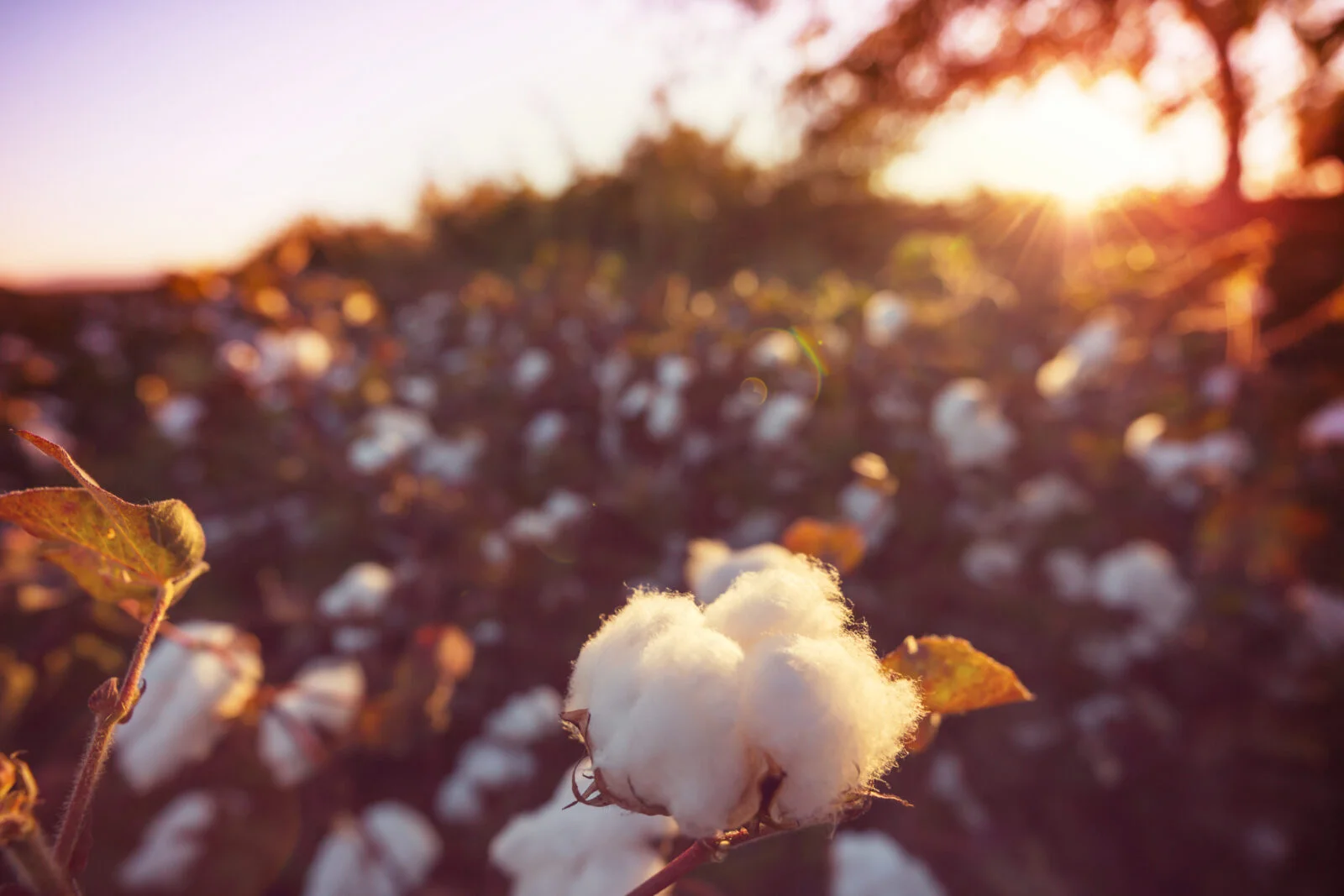
Close to the Farm: Where Remei AG’s Organic Cotton Comes From
What does your closeness to the farmers make possible that an anonymous supply chain cannot?
It allows us not only to communicate and check requirements, but to develop them together.
Many of the goals that companies and brands set themselves, on climate, human rights, traceability or security of supply, have to be put into practice at origin. That is why we link our direct relationships with the farming families to the entire textile value chain, all the way to the finished textile. The connection works in both directions: the requirements of our B2B partners reach the field, and the reality and the possibilities of farming and of the value chain flow back into the market.
Where does traceability end and a relationship begin?
The result is more than transparency: joint development, concrete change and, in the long run, security of supply. For me, that is exactly the difference between traceability and a relationship. Knowing where something comes from matters. It only gets really interesting when we can use that knowledge to improve something together. For me, transparency is not the end goal. It is what makes change possible.
A note from The Silent Luxury
Good reading deserves to find you again.
Both Ends of the Chain: What Makes Organic Cotton Sustainable
The large fashion groups are asking for tax relief on resale and repair. What would help those who grow natural fibre at the very start of the chain instead?
I wouldn’t say “instead”. The industry needs both.
For the enormous volume of polyester textiles already on the market and still being produced, these business models need better design, better resource management, reuse and cycles that actually work.
With natural fibres, though, the task starts much earlier, in the field.
Why can’t a natural fibre respond to demand the way polyester does?
Polyester is made from fossil raw materials, from crude oil. Its production can be adjusted to demand at relatively short notice.
Farming works differently. It works with soil, climate and harvest cycles, and within communities. You can’t simply switch farming on and off. Change takes years.
What do smallholder farmers need from the brands that buy their cotton?
What smallholder farmers need above all is long-term purchasing, reliable access to markets and the certainty to plan. And this is where a business conflict lies: farming needs long-term stamina and investment, while fashion and retail often decide in much shorter cycles.
Who should carry the risk of building such a system, and where should policy step in?
At Remei, we take on the risks for raw materials and sales, pre-finance and invest in building both the agricultural and the textile value chain. If we want to scale systems like these, long-term commitment, costs and risks have to be shared along the value chain. That is also why I would like to see economic incentives for companies that invest at origin for the long term.
The interview was conducted in writing in German in October 2026 and translated by The Silent Luxury. Some questions have been added for this version.
Send this ↗ to someone who wants to know where their cotton grows.


Sources
- Marion Röttges, Co-CEO, Remei AG, written answers to The Silent Luxury, October 2026, translated from German by The Silent Luxury
- Remei AG, Fair Fashion Award 2026 geht an die Allianz Remei, Coop und bioRe Stiftung, media release, Rotkreuz, 22 October 2026
- Fair Fashion Award
- Remei AG
Similar Articles

IWTO’s Dalena White: Fibre Choice Decides How a Garment Ends

Lanificio Bottoli: Ettore Bottoli on Natural Colour and the Recipe Behind Every Cloth

H&M, Inditex and the Circular Economy Act: Who Pays for Fashion’s Waste