Nörre Nordic: The Season Decides, the Wild Delivers
This article is part of the dossier on the luxury beauty market, The Nature of Beauty.
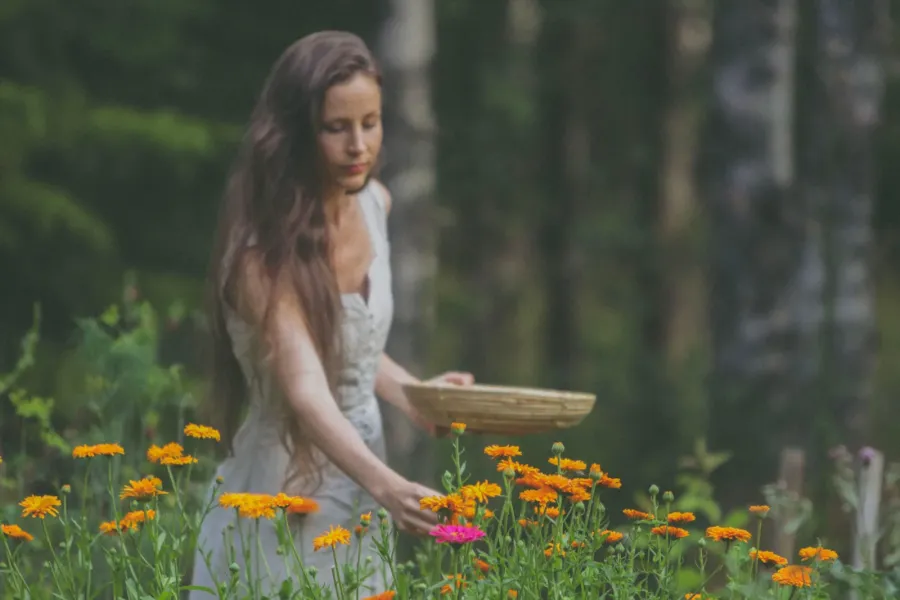
When Laura Heikkilä gathers fireweed or meadowsweet in a Finnish meadow, she leaves plenty of blossoms on every plant, for the pollinators and for the plant itself to complete its cycle. The stand as a whole she judges before she touches it, looking at how many plants have come up this year, how the weather has treated them and whether the patch looks strong enough to share. “Sometimes the right decision is simply not to harvest at all,” the founder and formulator of Nörre Nordic said in conversation with The Silent Luxury.
Nörre Nordic makes face oil serums and herbal face masks by hand in its own workshop, from wild herbs Heikkilä gathers herself and from plants she grows in her organic herb garden, and its volume follows the summer. “We only take what nature can comfortably sustain, and if a season offers less, we simply harvest less,” she said. “Nature sets the pace, not our production plans.” That rhythm shapes the company, and it shapes the plants as well, because everything Heikkilä harvests has grown through cool nights and light that barely fades at midsummer, conditions under which wild plants build up the very compounds that skincare looks for.
The Season Sets the Volume: How Nörre Nordic Harvests in Finland
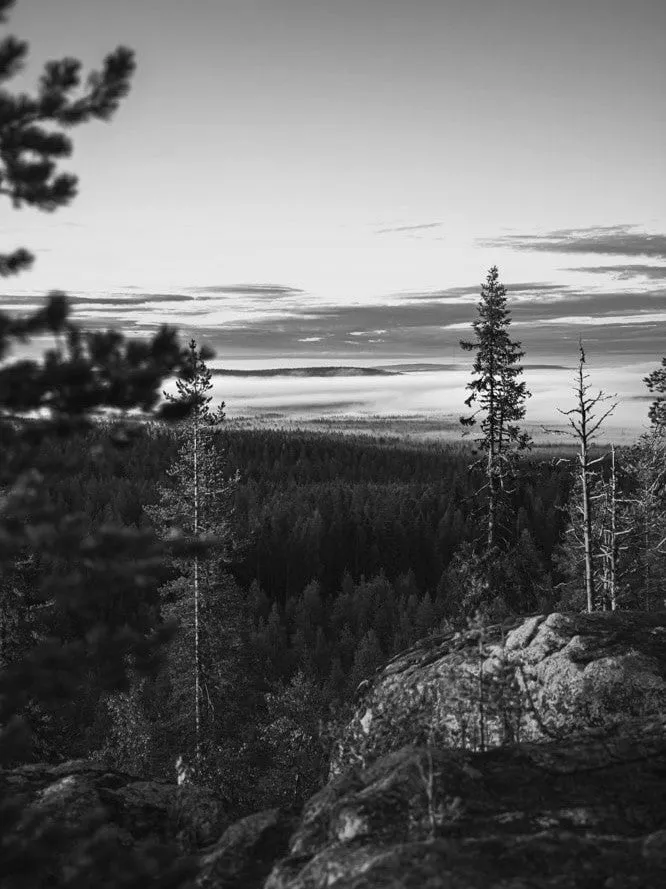
Nörre Nordic harvests within a growing season that is short and intense. In southern Finland, midsummer brings around 19 hours of daylight, and above the Arctic Circle the sun stays up through the night, so plants flower, set seed and fade within a few weeks, each in its own window. Heikkilä has worked with these plants since she was fifteen, long before the company existed. “Respecting nature was never something I introduced as a business principle,” she said. “It was simply the way I had always approached working with plants.”
A few rules apply to every harvest before anyone reaches a meadow, and Heikkilä describes them plainly:
- Plants come from clean, unpolluted sites.
- Each one is gathered by hand at its best stage of growth.
- The harvest takes only what a population can comfortably sustain.
Everything beyond those rules is decided in front of the plant. “Nature doesn’t follow a production schedule, and no two seasons are ever the same,” she said. Finnish law draws the outer edge of that work. Everyman’s right allows anyone to pick wild berries, mushrooms and unprotected flowers on land owned by others, while leaves, branches, bark, moss and lichen require the landowner’s permission. Heikkilä follows that line exactly: “For species that fall outside Finland’s Right of Public Access, such as birch leaves, I harvest only from my own land.”
A note from The Silent Luxury
Good reading deserves to find you again.
Stress Makes the Plant: Why Wildcrafted Beauty Can Be Stronger
Wild plants build their defences under pressure, and those defences are what skincare is after. Polyphenols, flavonoids and terpenes protect a plant from ultraviolet light, cold, insects and neighbouring plants, and on human skin many of the same molecules act as antioxidants. The Food and Agriculture Organization of the United Nations has observed that slow-growing wild populations, often older than cultivated stock, can hold markedly higher levels of active ingredients. A 2024 comparison of wild and cultivated Rhodiola sachalinensis, a close relative of roseroot from north-east Asia, found stronger antioxidant properties and more of the key compounds in the wild roots, while the cultivated plants, raised in rich soil, held more sugars and amino acids.
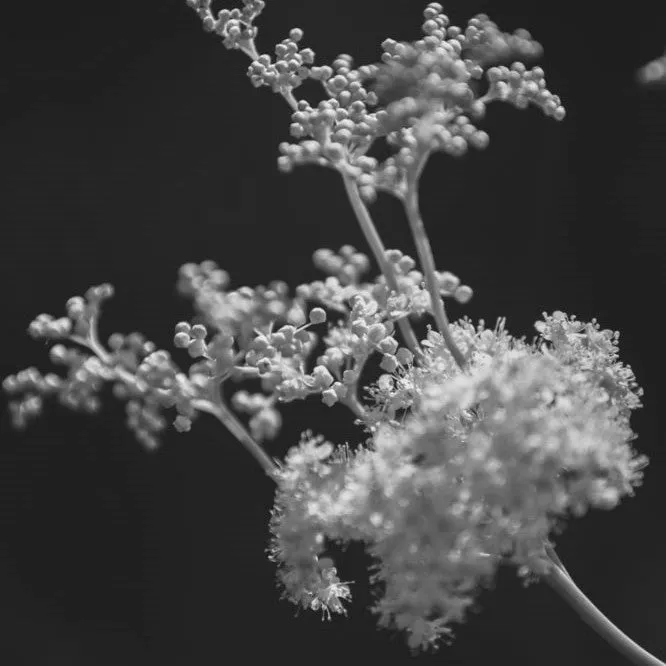
Roseroot itself grows wild in Finland, and Heikkilä has chosen to leave it there. “It is a slow-growing perennial that takes several years to reach maturity in the wild, and I didn’t feel it aligned with my approach to wildcrafting,” she said. She works instead with plants that return from the root every season, meadowsweet, fireweed, yarrow and nettle among them, so that a careful harvest of flowers and leaves keeps the plant in place for the following summer.
Cultivation can also come out ahead. A 2025 study of Mediterranean herbs found more polyphenols and flavonoids in cultivated plants than in wild ones, a sign that genetics, soil and timing shape a harvest as much as its origin does. What the wild offers reliably is a plant formed by conditions found only in the wild, and a harvester who weighs every stand on its own merits.
Northern Light and Cold: The Finnish Plants Behind Nörre Nordic
Finland adds its own pressure in the form of long days and cool nights, and Finnish researchers have measured what it does. In a controlled experiment with bilberry plants from the north and south of the country, the northern clones produced significantly more anthocyanins and total phenolics, the pigments and antioxidants that give the berry its colour. Work at the Natural Resources Institute Finland adds that bilberries ripening at lower temperatures develop higher phenolic concentrations, and that Arctic bilberries contain three to five times the anthocyanins of cultivated blueberries. The pattern shows most clearly in native species, while cultivated blackcurrants grown near the Arctic Circle came out lower than the same varieties grown further south.
The studies concern berries, and they describe the same conditions in which Nörre Nordic’s meadow herbs grow. Heikkilä knows those conditions from the ground. She returns to the same wild sites year after year, alongside the plants on her own land, and checks each location before every harvest. “Every season is different, and I let the landscape guide my decisions,” she said. “The knowledge doesn’t come from a database; it comes from spending time in these landscapes, returning to them season after season.”
Skin and Vitality: What Wildcrafted Botanicals Do for the Body
For the skin, research on plant polyphenols points in a promising direction and remains at an early stage. A review of fifteen studies in the International Journal of Molecular Sciences found that polyphenols, applied to the skin or taken orally, may help protect against ultraviolet damage and sunburn, and one of the plants tested was heather, Calluna vulgaris, which covers much of the Nordic heathland. The authors called for further research, and a separate review in the International Journal of Cosmetic Science found that most evidence on anti-ageing effects still comes from laboratory studies on skin cells. Daily sun protection remains a task of its own.
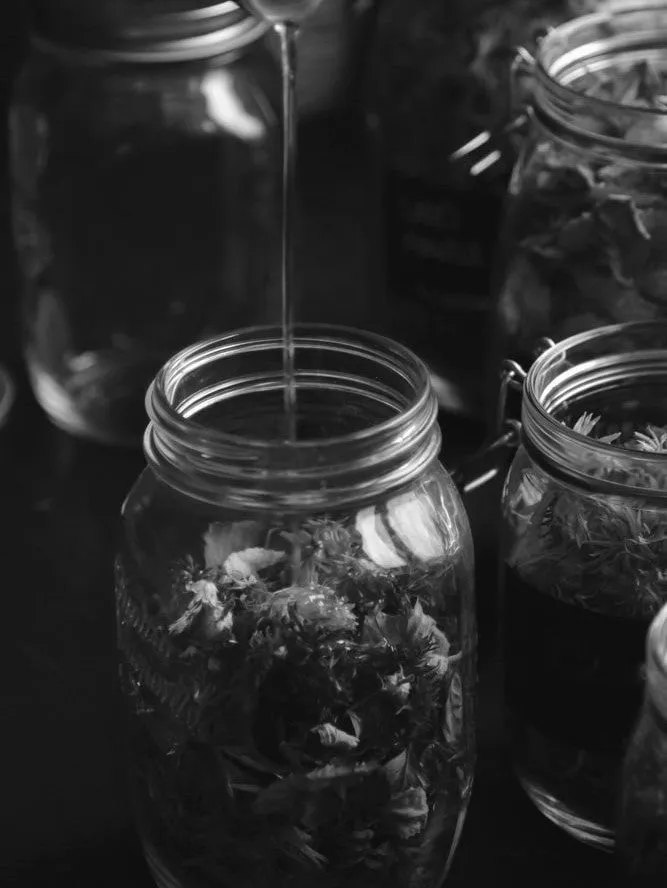
Whatever a plant has built in the wild has to reach the oil intact, which is why Nörre Nordic steeps its dried herbs in oil at room temperature for six weeks, a process that heat could shorten to a few hours. “Heat can affect delicate plant compounds and accelerate the oxidation of botanical oils, whereas a slow room-temperature infusion allows the oil-soluble compounds to be released gradually into the oil,” Heikkilä said. “To me, time is one of the most valuable ingredients in botanical formulation.”
Vitality has a second dimension, and it has to do with contact. In 2020, researchers from the Natural Resources Institute Finland and the University of Helsinki laid patches of real forest floor, with heather, blueberry, crowberry and moss, into the yards of urban daycare centres. Within 28 days, the children who played there had a more diverse community of bacteria on their skin, led by gammaproteobacteria that strengthen the skin’s immune defence, along with more regulatory T cells in their blood. The study looked at children and landscapes, and it shows how directly human skin responds to the living ground that wildcrafted beauty comes from, the same heath and forest floor a harvester walks every summer.
What Must Be Left Behind: Nörre Nordic and the Limits of the Wild
The strength of wild plants is also the reason they need protecting. The wildlife-trade monitor TRAFFIC estimates that 60 to 90 percent of the medicinal and aromatic plants in trade are collected from the wild, and certification schemes such as FairWild have grown up to keep that harvest within what wild populations can bear.
Working with wild plants has taught me that patience is part of the process.
Heikkilä measures her own harvest by what remains in the meadow. “A successful harvest isn’t measured by the amount I gather, but by knowing the plants and the landscape will continue to thrive long after I’ve left,” she said. She takes only the part of a plant she needs, leaves the roots in the ground, spreads her picking across scattered stands and rotates between sites, and when a stand looks weaker than the year before, she takes very little or leaves it for another summer. The result is a company whose size follows the land, made from plants that grew through a northern summer by a founder who answers to the places she gathers from. “For me, wildcrafting is a relationship rather than an act of collecting,” she said.
In Conversation: Laura Heikkilä of Nörre Nordic
The full conversation with Laura Heikkilä follows in The Silent Luxury Conversations. In it she talks about what Nörre Nordic owes the landscape, the decisions that belong to the person standing in front of the plant, the six weeks of cold infusion and the Nordic herbal tradition from which her own formulations grew.
For anyone who wants to know what a summer in the north puts into skincare.
Further Reading
-
Sicily in Seven Notes: Spezieria Siciliana and the Perfume of an Island
Spezieria Siciliana, a new perfume house in Palermo, makes natural perfumes from Sicilian plants and dates each one by its harvest, like wine.
-
The Luxury Skincare Market After Q3 2026: The New Powers Gain Ground
The luxury skincare market grew where houses build their own science, while the large groups bought their way into natural skincare.
-
Beauty Outgrows the Core: The Market the Houses Are Redrawing
In October 2025 the consultancies moved the boundary of the beauty market and set aesthetic medicine, longevity and well-being beside the classic segments.
Sources
- Laura Heikkilä, founder and formulator of Nörre Nordic, in conversation with The Silent Luxury, November 2026
- Natural Resources Institute Finland (Luke): Berries
- Natural Resources Institute Finland (Luke): Arctic bilberries
- Luontoon: Everyman’s rights
- Metsähallitus: Natural products permit
- FAO: Medicinal plants, wild and cultivated
- Plants (2024): Wild and cultivated Rhodiola sachalinensis
- Wild and cultivated Mediterranean herbs, comparative analysis (2025)
- Journal of Agricultural and Food Chemistry (2012): Climate and bilberry quality
- Luke: Forest structure and bilberry phenolics
- Journal of Agricultural and Food Chemistry (2012): Black currant phenolics and latitude
- International Journal of Molecular Sciences (2016): Polyphenols and Sunburn
- International Journal of Cosmetic Science (2015): Polyphenols as active ingredients for cosmetic products
- Science Advances (2020): Biodiversity intervention enhances immune regulation
- TRAFFIC: Wild at Home
Similar Articles

Beauty M&A in 2026: Record Deals, Smaller Bets and the Funds Holding the Door

The Luxury Skincare Market After Q3 2026: The New Powers Gain Ground

Puig Bets on Fragrance as the Middle of the Luxury Market Gives Way