Alexander McQueen returns to London Fashion Week for spring 2027, with creative director Seán McGirr’s first London show set for 20 September 2026, womenswear and menswear together, ending twenty-five years in Paris. The move follows his fall 2026 collection, the first in which McGirr cut serious tailoring, and a noir campaign shot by Glen Luchford with Karen Elson. It arrives as new chief executive Gianfranco D’Attis, in from Prada, steers the Kering-owned house towards British precision tailoring and occasionwear.
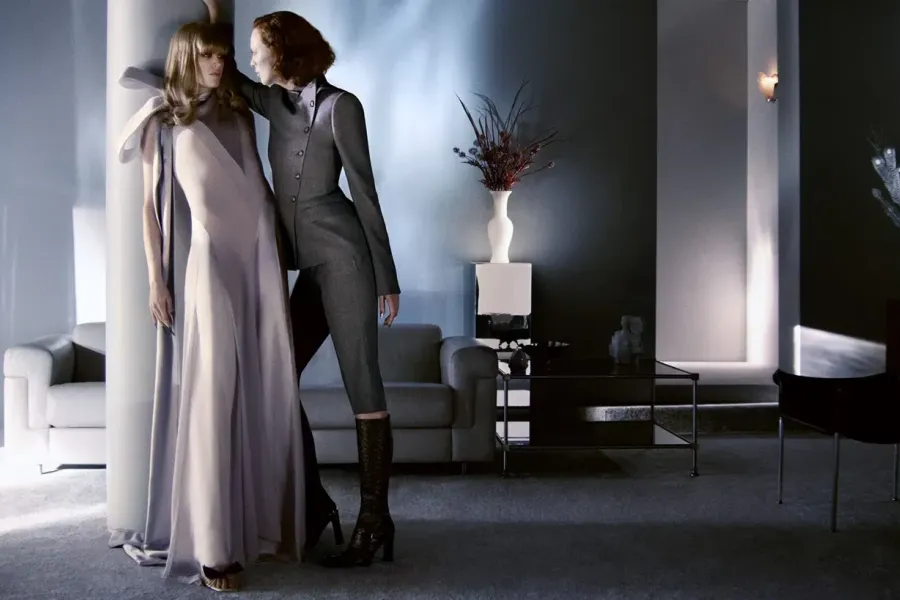
Look at the fall 2026 campaign, out in early August, and you could be watching a Hitchcock film that was never released. Glen Luchford shoots Karen Elson in a hard grey suit, leaning into a second woman in a pale silk gown, both of them stranded in a cold, plush drawing room lit for dread. Paloma Elsesser, Jacqui Hooper and Xiao Wen fill out the cast. Dark romance, the house calls it, and every frame says a brand mid-change. Two weeks later McQueen made the change official.
Alexander McQueen last showed in London in 2022, under Sarah Burton, and McGirr’s return to London Fashion Week on 20 September 2026 ends the twenty-five years the house spent showing in Paris.
The campaign and the announcement landed inside a fortnight of each other. Both were the visible edge of a decision McGirr had already made in March, on a runway in Paris, and to understand it you have to start with a single strange thing he did to some flowers.
The flowers McGirr froze and smashed
“We got all these flowers, trapped them in blocks of ice, and we started smashing them and then we took photos,” McGirr told W Magazine after the March show. The photographs became the floral jacquards that ran through the collection. A living thing, sealed in a perfect casing, broken open on purpose. Almost everything he sent out did a version of the same trick.
Tom Scutt built the set as a white labyrinth cut through with gauzy curtains, and A.G. Cook wrote a score that would not let you settle. Models carried masks, or wore them. McGirr had cinema on the brain, one film in particular. “I was thinking about the Todd Haynes film Safe, with Julianne Moore,” he said, “and this idea of perfectionism and toxicity and domesticity.” Moore plays a woman who slowly turns allergic to her own immaculate life, and the collection ran on that nerve. Lace came trapped between layers of organza, short of air, skirts were moulded hard to the body with no room to spare, and peplum coats were cropped past the point of being coats. The claustrophobia lived in the construction itself, sewn into every seam.
The suit McGirr waited two years to cut
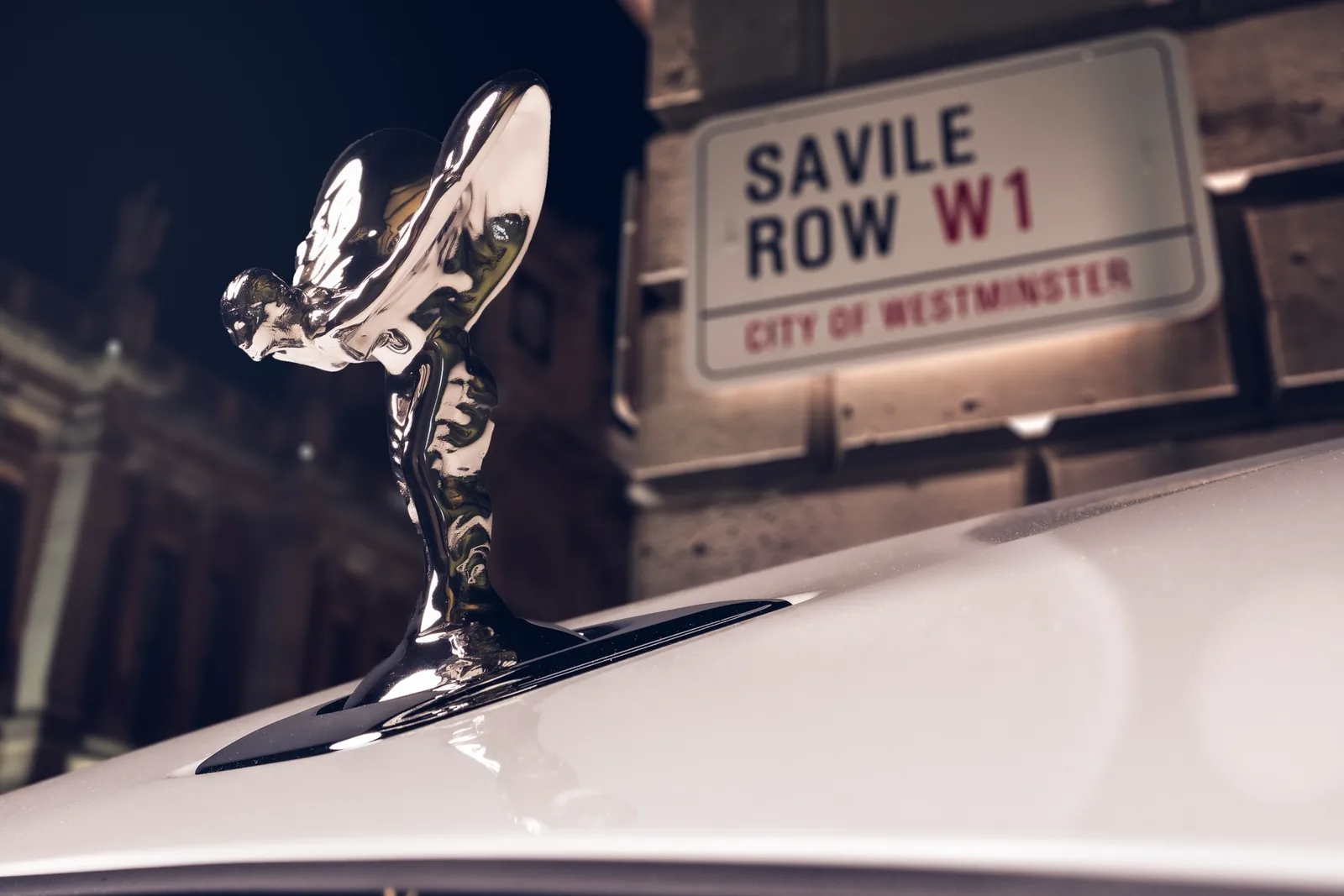
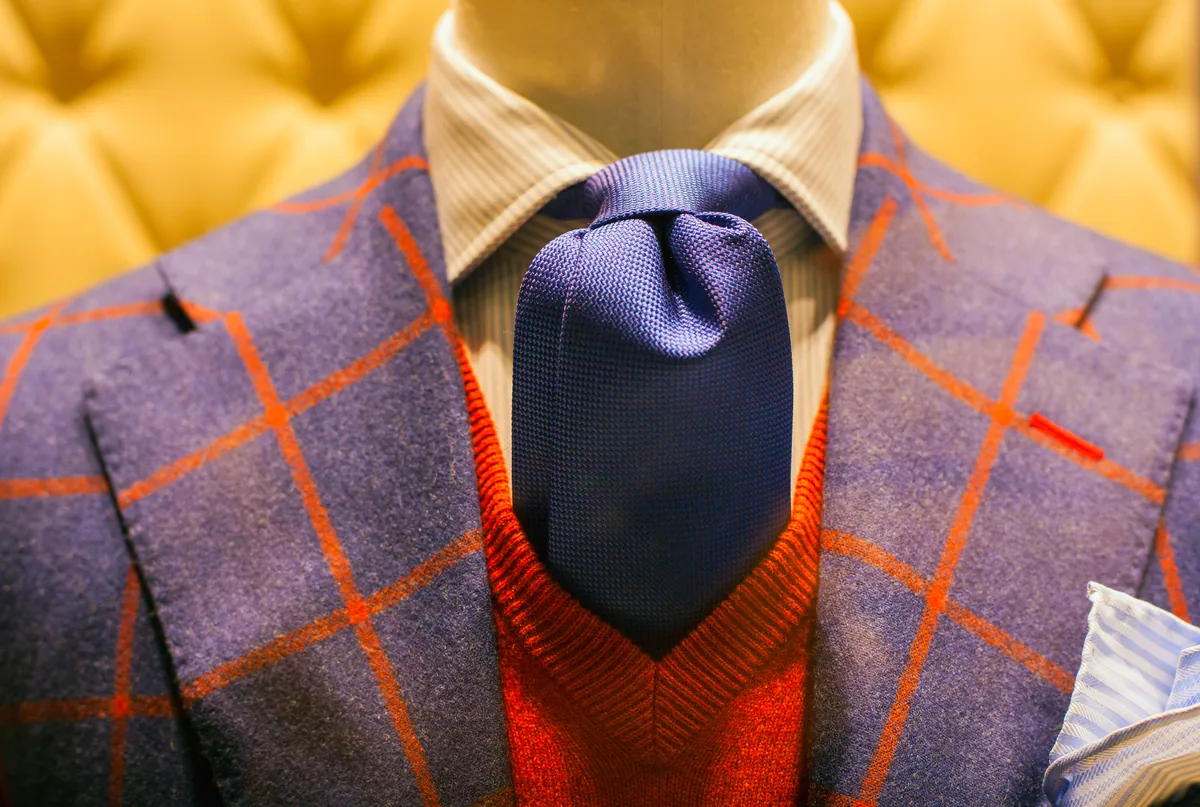
For two years McGirr had circled the one thing McQueen is built on, and this season he finally cut it. Tailoring is the deep water here, the discipline Lee learned as a teenage apprentice on Savile Row and never put down, the frock coats, the bumsters, the cutting that always sat under the spectacle. A new designer who reaches for it too early invites the one comparison he cannot win, so McGirr took his time, and when he finally reached he went straight through the archive.
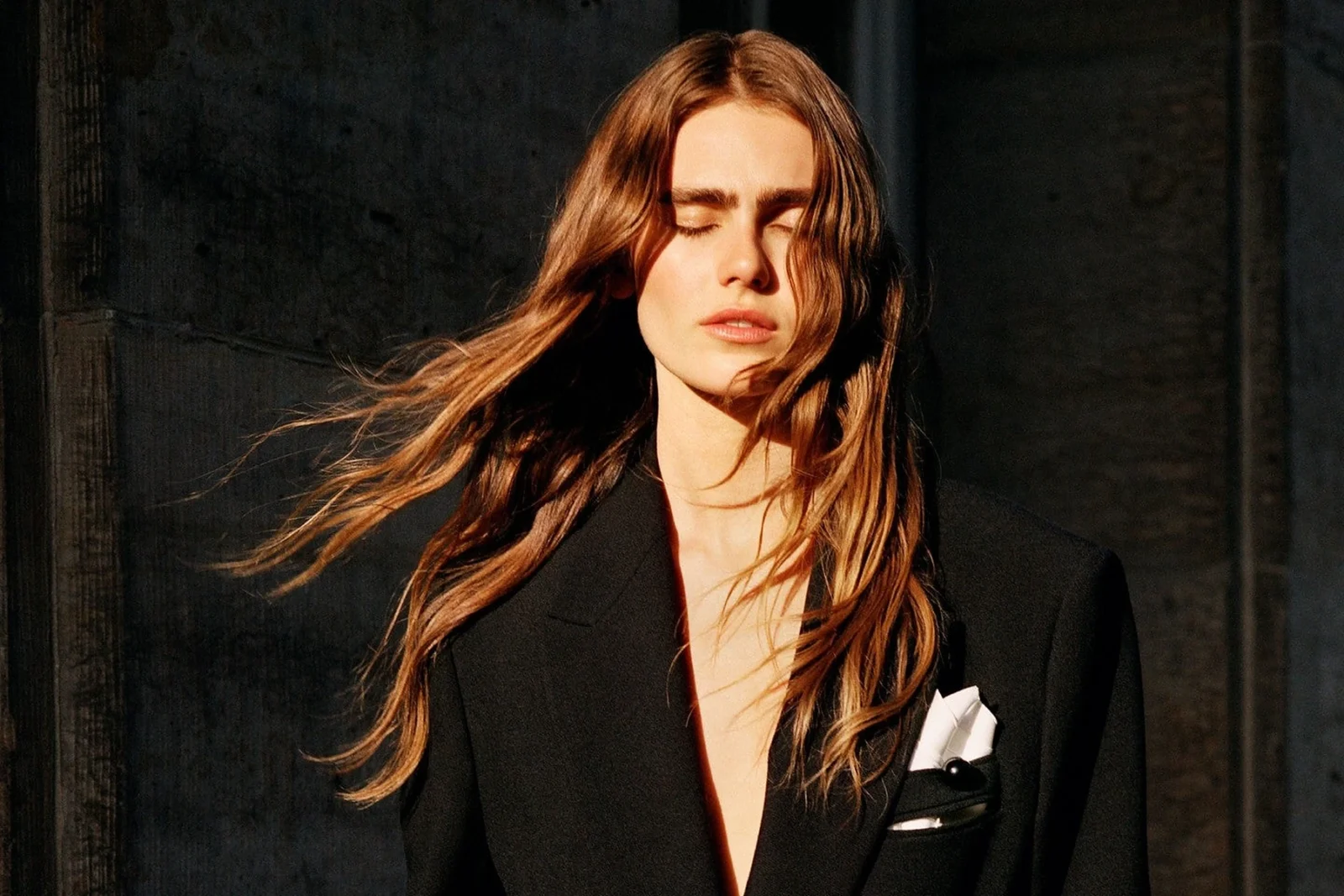
The fall 2026 collection was the first in which Seán McGirr cut serious tailoring at McQueen, and the single-hook jackets in icy grey Mikado silk and crushed jacquard borrowed their line from La Poupée, the collection Lee McQueen showed for spring 1997.
The embroideries came out of Widows of Culloden, from 2006, and the skull returned on scarves and a blouse, a revival McGirr has taken to leading with a certain glee. The joke holds because the clothes are strong enough to take it. He worked this season straight onto the body, draping and pinning on the form rather than sketching, and the result has the ease of a hand that has stopped asking permission. The tuxedos in high-shine cloth, the mace-shaped bag swinging from its chain, the knuckle clutch, the manta stitched with metal flowers, all of it reads as his own rather than an audition for a dead man’s job. He found his voice by going home to the archive and refusing to stay there.
Away from the sneaker, back to the suit
His timing was uncanny. Gianfranco D’Attis became chief executive of Alexander McQueen on 3 June 2026, in from Prada, based in London and reporting to the Kering chief executive Luca de Meo, tasked with steering the house towards British precision tailoring and occasionwear.
Kering wants a leaner house, with fewer stores and tighter collections, and de Meo has said more than half of McQueen’s shops could close. What sits underneath that is a bigger correction. For years McQueen ran on sneakers, at one point up to eighty percent of its turnover, the brand Lee built on the body reduced to a sneaker company with a couture runway attached. De Meo put it in his own image at the results presentation. When the sneaker trend ebbs, he said, the water drops and you find the rocks. His answer was to send the house back to what it was built on, its historic tailoring, and that is exactly where McGirr had just taken the collection.
So the runway and the boardroom were saying the same thing in the same season. Tailoring and eveningwear are the categories de Meo and D’Attis want McQueen selling, the pieces with real margin in them, and McGirr delivered them without letting go of the strangeness that makes them McQueen. Across Kering this season Gucci and Balenciaga edged towards the commercial too. At McQueen the commercial turn arrived dressed as a study of entrapment, which is a stranger and better thing than a commercial turn usually is.
Home, where the fit is tightest
So the house follows the clothes home. The atelier never left London, and neither did the myth, which was an East End story long before it was a Paris one. “London has always been at the heart of McQueen,” McGirr said when the return was announced, and sending the house back to the ground Lee built on is the same instinct that sent him back into Lee’s archive, a designer and a brand both pressing in towards their own centre, because that is where the next thing gets made.
And for all the dread, McGirr ended on light. The final look, a hooded gown buried in white flowers, was meant to feel like stepping out into a garden. “In the end, it’s hopeful,” he said. “Even though it’s super dark and the future of the world is broken right now, that last look made you feel like she’s just free, in the garden.” In September he takes that freedom back to London, to the crowd that made the founder, and finds out how much room a tighter house leaves a designer who has only just found his voice.