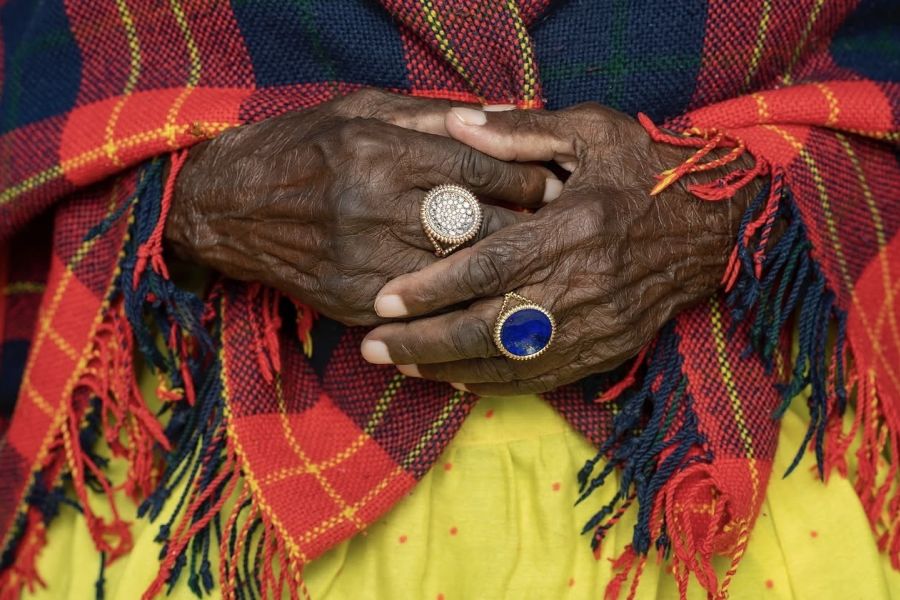
The hands that hold the knowledge. For Lulu Shabell, the greatest repositories of African design intelligence are the elders, the artisans and the communities who carry it. Rings by Lola Fenhirst. | Photo: Courtesy of Lola Fenhirst
The Architecture of Sovereignty: Lulu Shabell on Cultural Intelligence
In an exclusive interview with The Silent Luxury, ÀLKÉ founder Lulu Shabell explains why true creative value requires permanent institutional foundations, legal sovereignty, and economic ownership, moving the paradigm from temporary market exposure to deep-rooted structural architecture.
Eva Winterer
In an exclusive interview with The Silent Luxury, ÀLKÉ founder Lulu Shabell explains why true creative value requires permanent institutional foundations, legal sovereignty, and economic ownership, moving the paradigm from temporary market exposure to deep-rooted structural architecture. While this conversation dives into her personal philosophy, you can explore the economic data and the definitive framework of this movement in our full analysis on Cultural Intelligence & Luxury Value.
For more than two decades, the global creative industry followed a predictable script. Brilliant designers from Lagos, Dakar, or Addis Ababa were flown into the fashion capitals of Europe and the Middle East to showcase their work. They received standing ovations and extensive press coverage. But when the lights went down and the applause faded, a sobering reality remained: the creators returned home to find the same absent infrastructure, the same lack of patient capital, and no legal instruments protecting their knowledge. The spotlight was bright, but entirely temporary.
Lulu Shabell spent a large part of her life opening these very pathways, orchestrating international showcases from Paris to Tokyo. Today, in this deep dive with The Silent Luxury, her perspective has fundamentally shifted. Sitting down for this conversation, there is no room for superficial marketing phrases or romanticized narratives of discovering talent. The tone is self-confident, clear, and focused entirely on the systemic reality of value.
“For a long time, I asked myself the wrong question,” Lulu Shabell states, her voice carrying the calm authority of someone who has looked behind the curtain of mass luxury. “I thought if we can create these opportunities for African designers to participate in these shows… then success would naturally follow. But I also realized that that also was not enough. The press coverage doesn’t become equity that we thought it would be. And obviously the applause that you get from being in the world stages also doesn’t become ownership.”
This realization is the genesis of ÀLKÉ, a pan-African cultural institution launching this November under Shabell’s leadership. Inspired by the oldest name for Africa, the institution connects Arts, Legacy, Knowledge, and Enterprise. It marks a deliberate structural framework designed to ensure that creative wealth is legally protected, properly valued, and kept in African hands across generations.
“Instead of asking myself whether African designers can get into rooms that other people built and governed and profited from,” Lulu Shabell notes, tracing the unseen intelligence behind the craft, “maybe there was even a simpler question to ask. Who in the end builds the house? Is access a corridor through which somebody else’s architecture enters or is access the infrastructure that we need to create for ourselves? ÀLKÉ became the decision to stop negotiating for corridors rather but to build the architecture ourselves.”
“
Instead of asking myself whether African designers can get into rooms that other people built and governed and profited from, maybe there was even a simpler question to ask. Who in the end builds the house? Is access a corridor through which somebody else’s architecture enters, or is access the infrastructure that we need to create for ourselves? ÀLKÉ became the decision to stop negotiating for corridors and to build the architecture ourselves.
Lulu Shabell, Founder of ÀLKÉ
The Living System Embedded in People
To understand the depth of ÀLKÉ, one must step away from the Western dictionary of luxury, which often prioritizes outward aesthetics, rarity, and price tags. True luxury, in Lulu Shabell’s world, resides in Cultural Intelligence. It is a living system wrapped up in people, lineage, and the daily rhythm of communities.
“From a Western view, luxury on a superficial level is about aesthetics,” Lulu Shabell explains to The Silent Luxury. “But for us, luxury is in the cultural intelligence of that product. And therefore, for us, it resides in systems and the systems live in people.”
Shabell’s argument shifts the conversation from a sentimental defense of culture to a fierce legal and economic claim. Long before Europe drafted its first intellectual property frameworks, these sophisticated systems of authorship and cultural ownership were actively in practice.
“It is the dye chemistry held in a family in Kano. It is the loom mathematics of a kente weaver from the Asante region. It is the geometric grammar of Kuba textiles,” she points out. “It’s lineage that is wrapped up in the textile that is passed down from grandfather to father to son. It’s also very much encoded in cosmology and tradition and ceremony. Inspiration will look at something for what it is, and then cultural intelligence as we know it will ask why it exists, what it means, and who it belongs to.”
The historical depth of this creative civilization is a documented fact. In her written work, Lulu Shabell references the archaeological discoveries at Blombos Cave on the southern coast of Africa. The 41 perforated shell beads found there date back approximately 75,000 years and bear traces of red ochre, making them among the earliest known evidence of human communication through personal adornment. This history places the continent as an original author with full standing in global luxury history. Reclaiming authorship changes the negotiation completely. Knowing the source allows creators to stop acting as suppliers and start standing as custodians of foundational knowledge.
Visual Analysis
Cultural Intelligence: Africa’s New Measure of Luxury Value
Seventy-five thousand years of design intelligence, the techniques that still carry it, and the houses redefining where luxury value is created. A visual analysis with a lookbook.
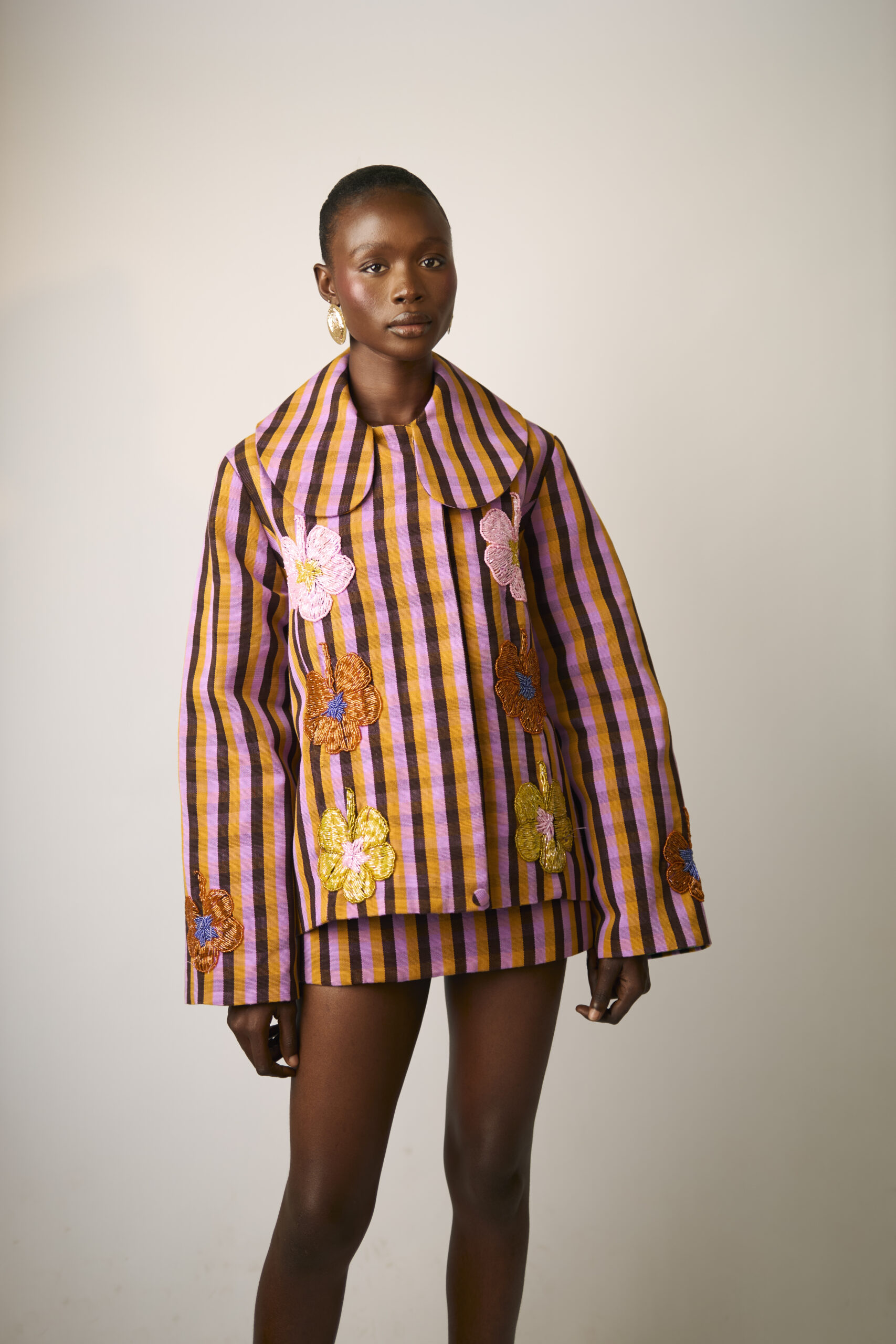
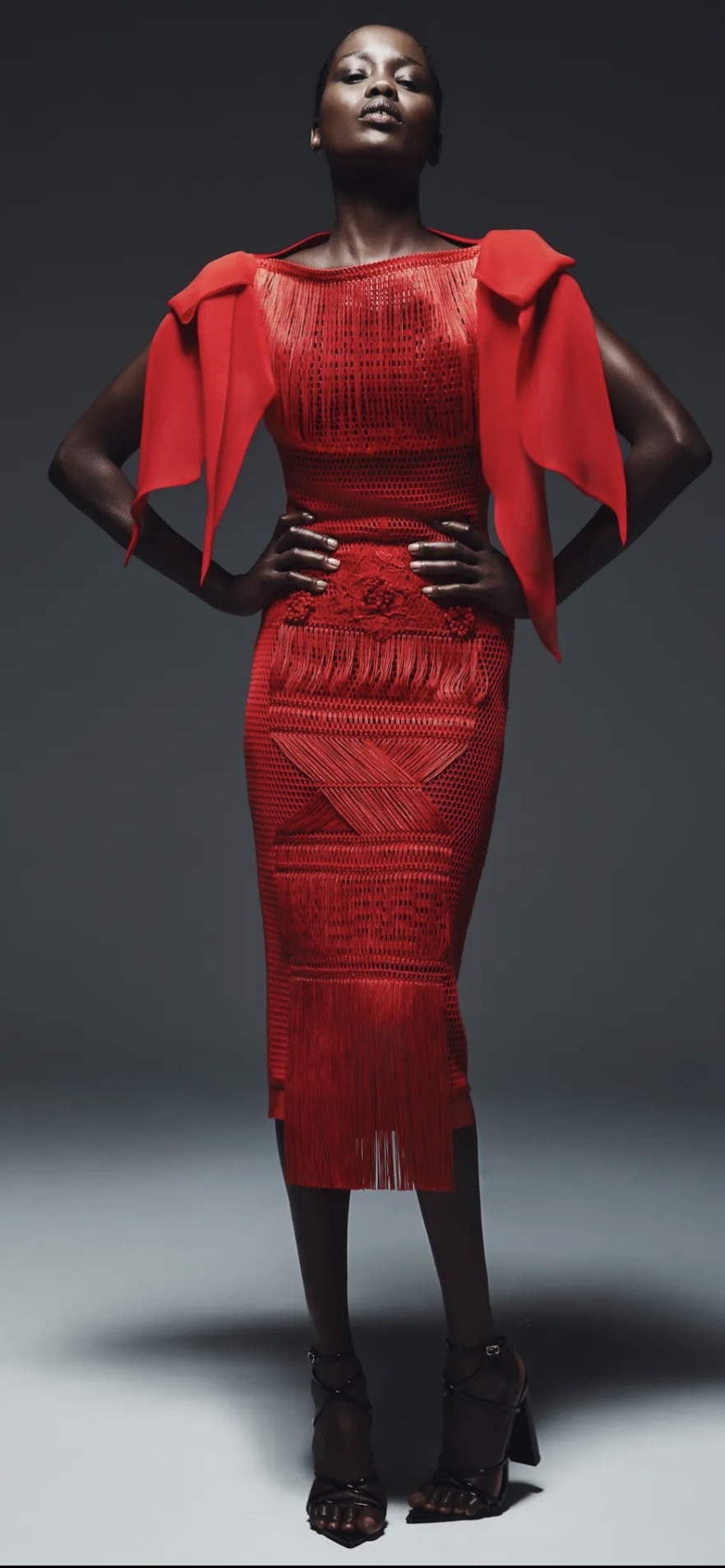
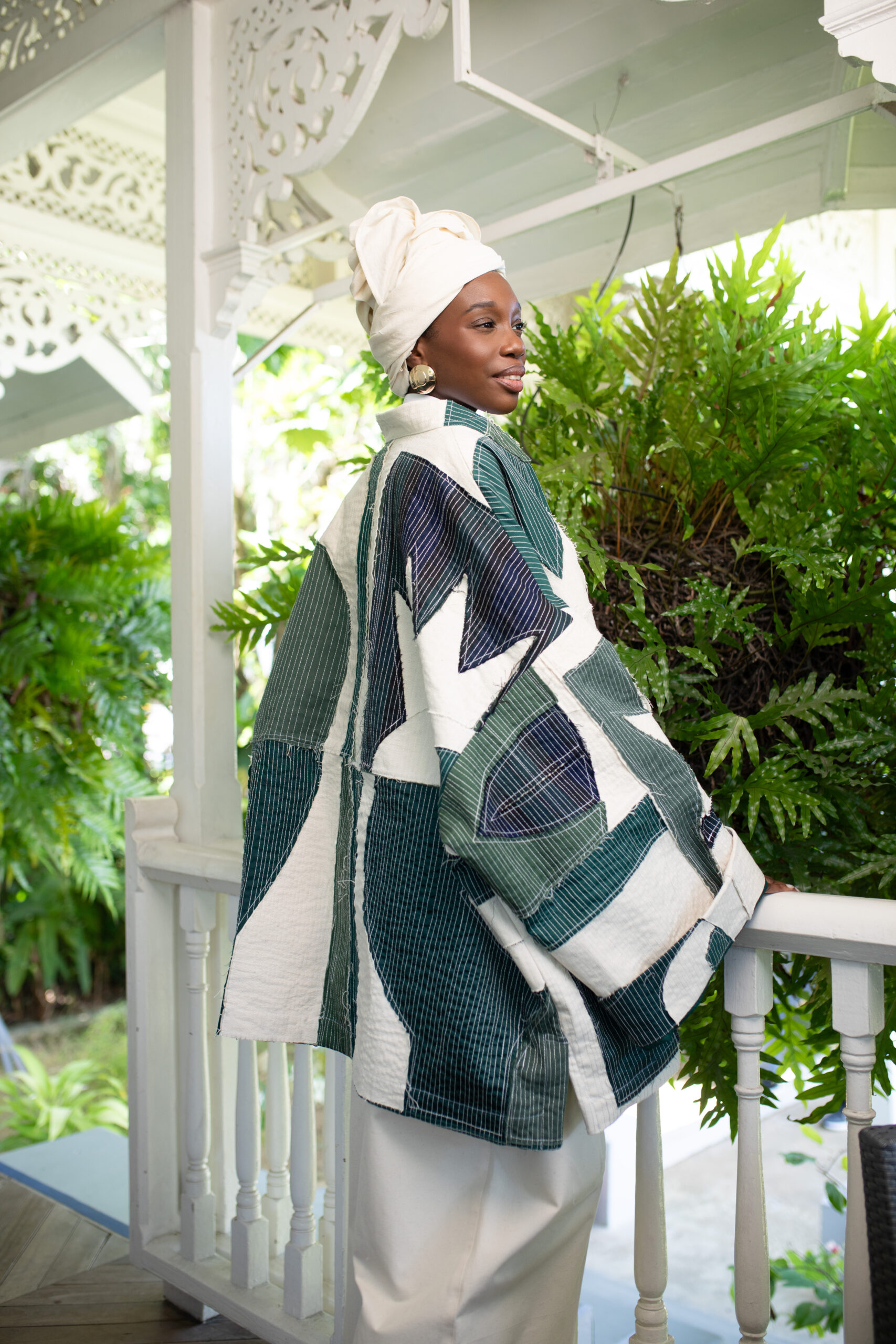
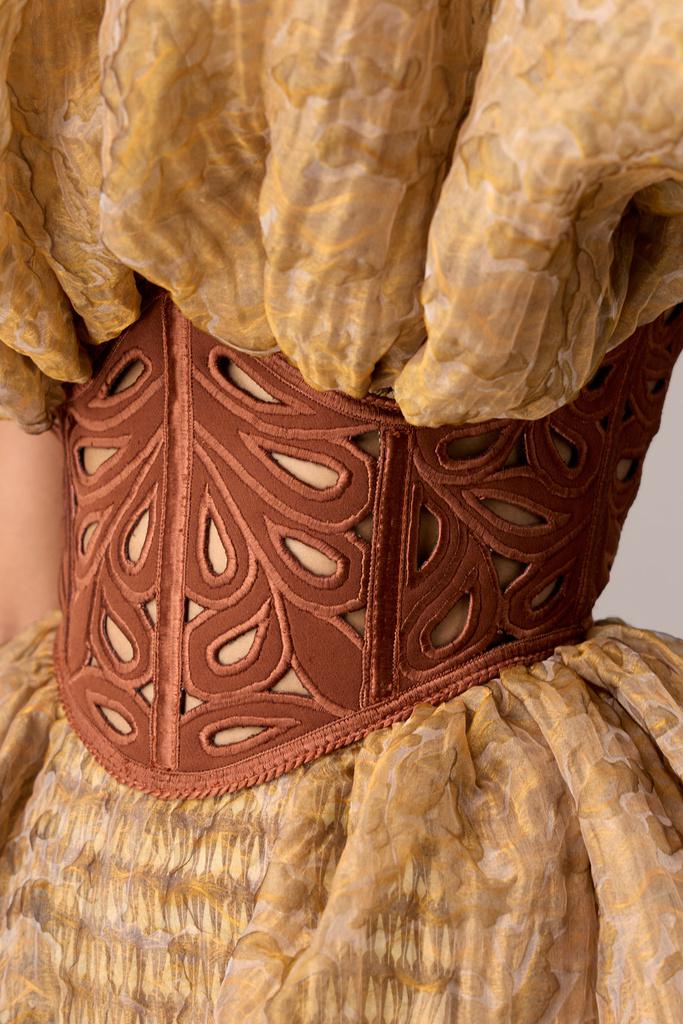
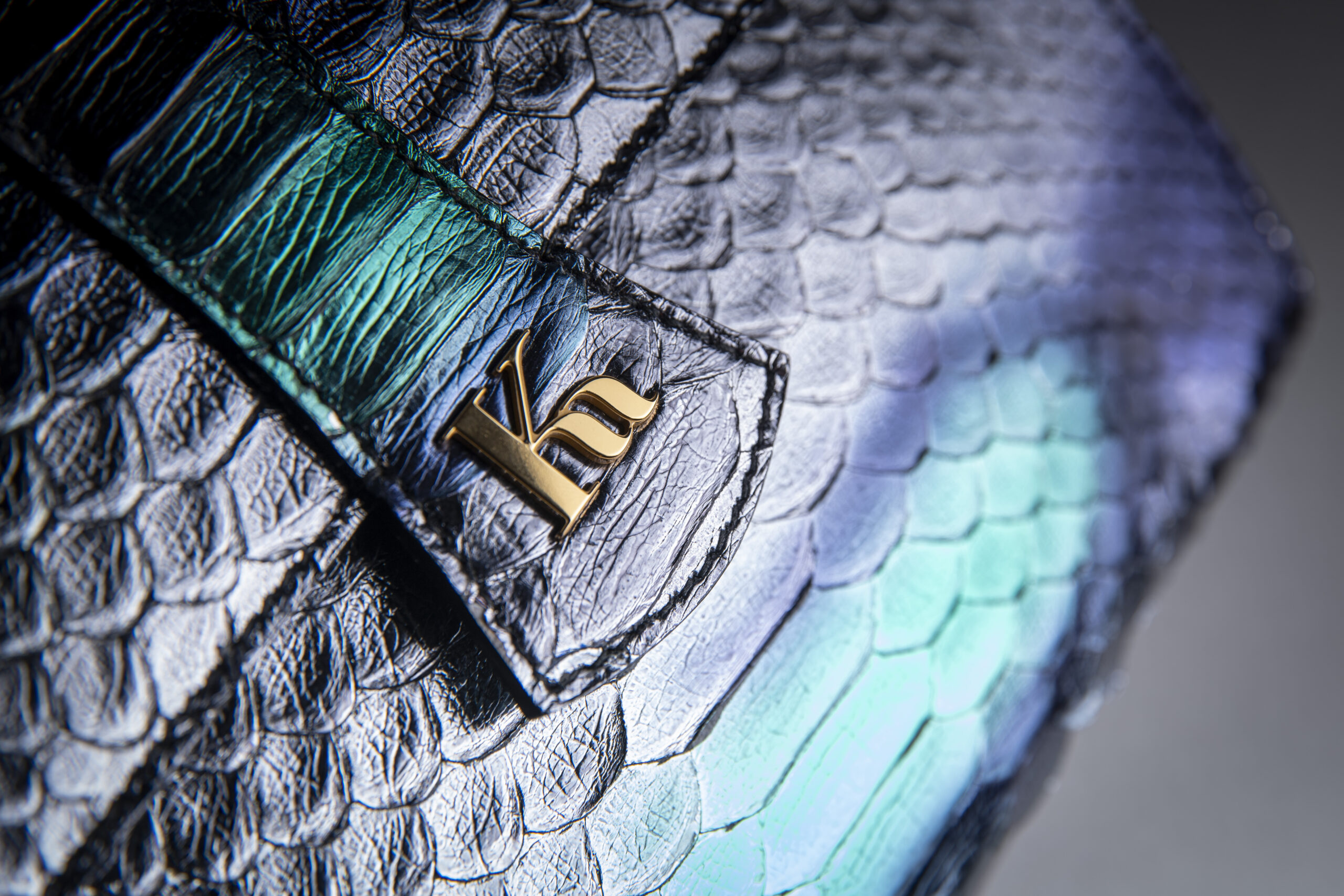
The argument has faces and garments. These houses work across the continent and its diaspora, from Nairobi and Lagos to Dakar, Accra, Port of Spain and beyond, each carrying the dye chemistry, loom mathematics and lineage that Lulu Shabell describes. Their work reads as cultural intelligence made visible.
Studio Namnyak
Nairobi, Kenya
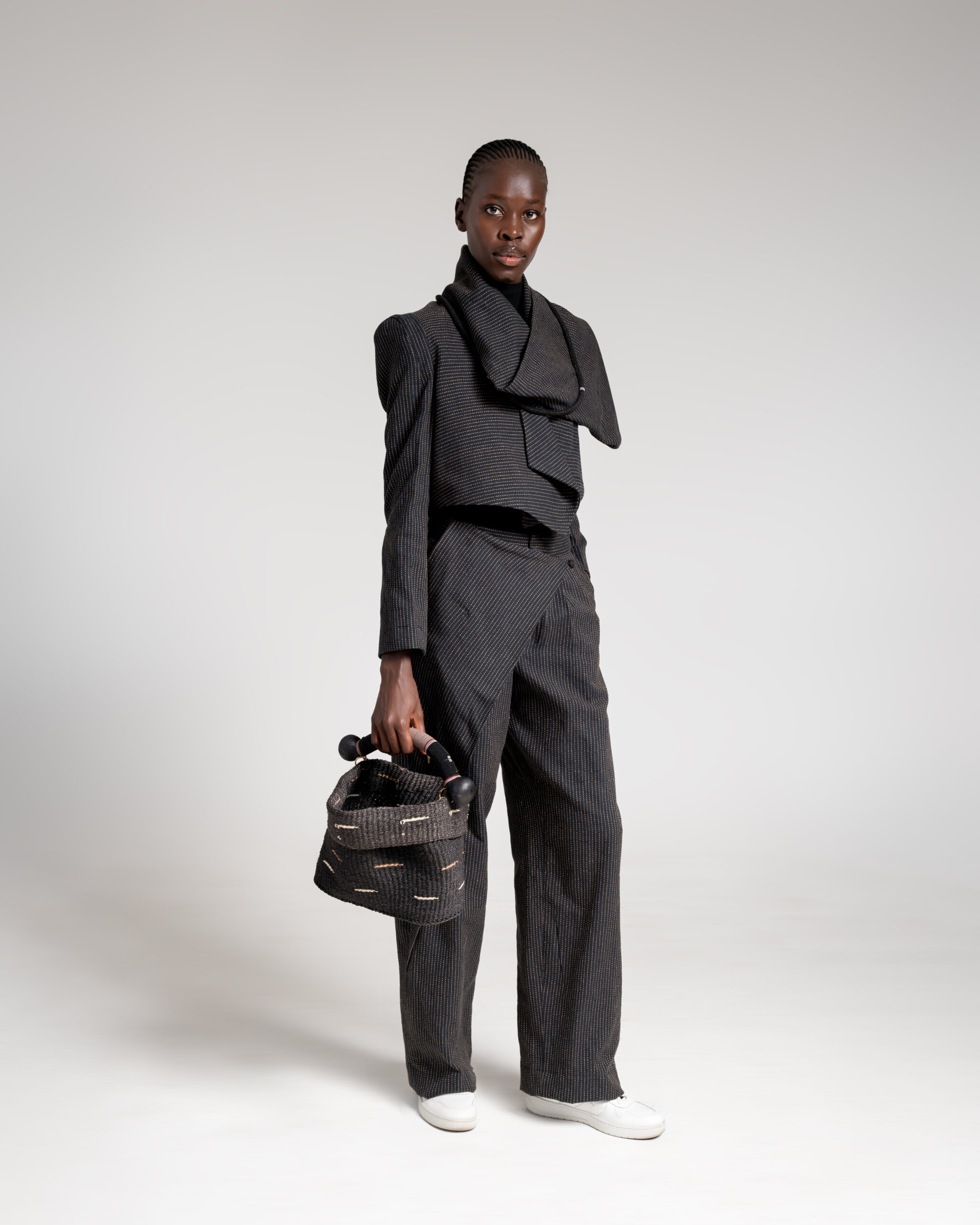
Namnyak Odupoy handlooms each piece in her Nairobi atelier using traditional techniques and natural fibres. This look was worn by Lulu Shabell.
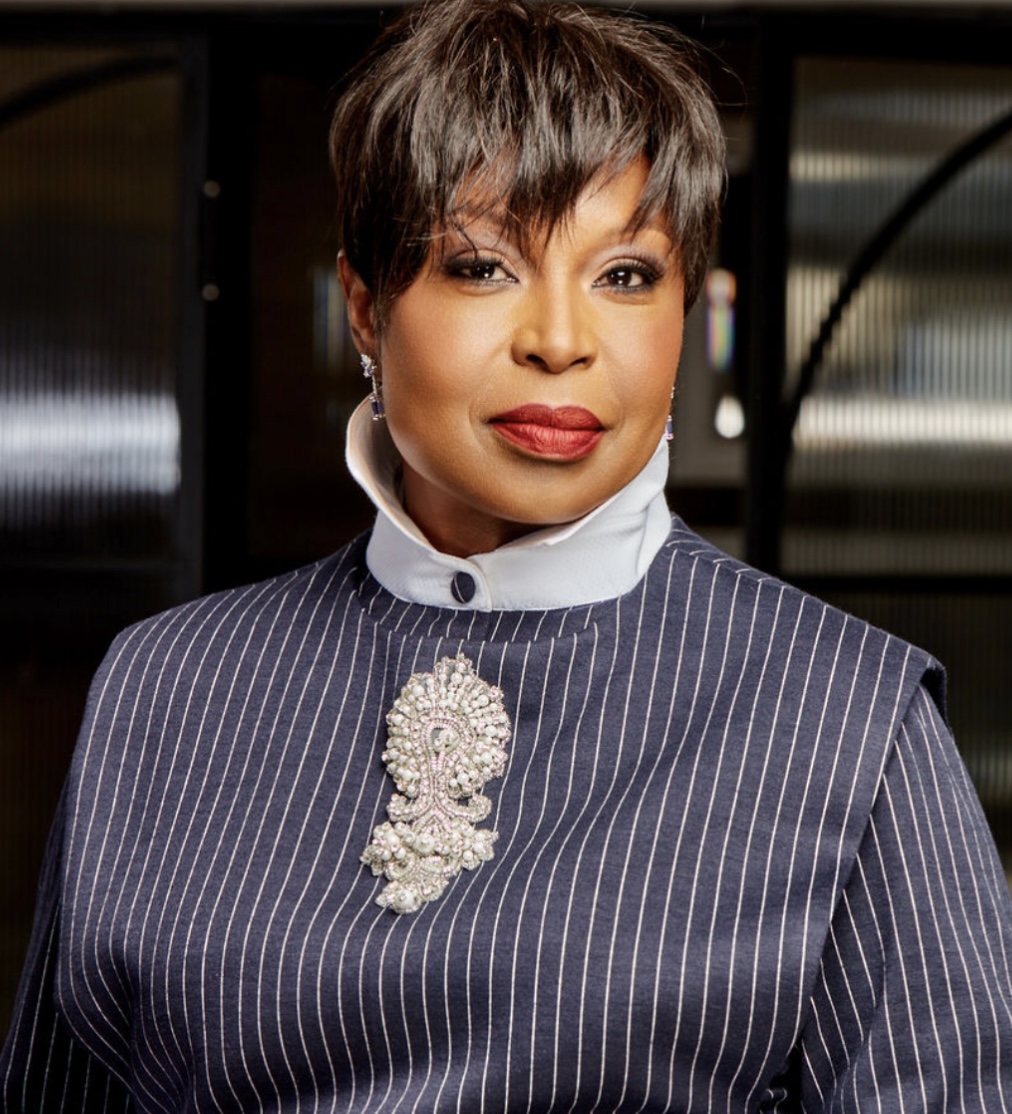
Robert Young pieces panels of pinstripe and natural cloth into the appliqué patchwork that has been the house signature since 1986. Worn by Eva Winterer at the London debut.
Founded by Betu Kumesu, the house works exotic leathers into the Kito clutch, named with the Swahili word for gem, on a mission to set made in Africa as a benchmark for luxury.
This cultural intelligence is inherently bound to the land. The plants used for organic indigo dyes are the very plants the communities live alongside. The cultivation of cotton follows the precise breathing of the seasons, maintaining a strict time to cultivate and a time to harvest. Production and life revolve around these natural cycles in a harmonious unity with nature.
Globalization continuously forces local creators out of this balanced, original system into industrial, rapid-fire frameworks that disregard regional ecosystems. Reclaiming these original, simple techniques is a direct response to this disruption, preserving both environment and community well-being. It is a movement that shares a deep kinship with local, regional revivals across the globe, from small-scale agricultural techniques to ancient fishery systems in the micro-regions of Italy.
But for this living feeling to survive, it must be protected economically. Markets and investors reward what they can verify. In Europe, specific regions have legally guarded their heritage for centuries: sparkling wine cannot be called Champagne unless it comes from Champagne; cured ham is only Parma ham if it originates in Parma. Provenance is their most valuable intangible asset, protecting their pricing power.
“Consider European luxury today,” Lulu Shabell says, focusing on the hard facts of brand valuation. “For them, provenance or heritage is the most valuable intangible asset in the way they do business. The bag is leather and labour, but the provenance itself is what defines the margin. When you say made in Italy, made in France, that’s what protects the price.”
ÀLKÉ exists to attach that exact system of verification to African heritage. By fully documenting a textile technique, tracing it to a specific community, and establishing an archival record, the skill moves from a loose commodity to a compounding cultural asset.
“Once you’ve documented it, you can protect and license it,” Lulu Shabell notes. “When that pattern system has been documented and is held by an institution, anybody who wishes to use it has a counterparty to negotiate with rather than a vacuum to extract from. Inspiration becomes a licence, and a licence carries royalties, attribution and term. Inherently, the African houses that carry this heritage stop being referenced and start being negotiated with, and the value of what they hold rises accordingly.”
Direct Q&A
The Debates: African Heritage & Luxury Sovereignty
Is utilizing African design cultural appropriation? How do we protect traditional techniques? Read our direct, unfiltered FAQ framework with Lulu Shabell.
Projected creative-economy potential by 2030USD 150–160bn
Africans working in creative industries, 20235 million
Documented human adornment, Blombos Cave75,000 years
Sources: International Trade Centre (2023); UNCTAD Creative Economy Outlook (2024); Boston Consulting Group, scenario modelling; African Development Bank (2024); Henshilwood et al., Science (2004). BCG figures are directional.
Reclaiming the Future: Education, Venture and Endowment
This monumental shift is driven by a profound responsibility toward the future. Africa possesses the youngest population in the world entering the workforce. The critical question is whether the continent can build sovereign economic drivers that protect their future while preserving their identity. For Lulu Shabell, this responsibility is deeply personal, rooted in her relationship with her teenage son.
“I have a young son. He’s 15, and I don’t want him to come of age still questioning his value and his identity,” she reflects. “If he does, we will have failed. We need to build systems now so that his generation can inherit confidence: so that they know African design history is canon, that our techniques are intellectual property, and that the institutions they are handed belong at the highest level of global influence.”
To achieve this, ÀLKÉ’s architecture is built on three interlocking pillars: decolonizing education by co-authoring the creative curriculum; a Venture Studio that brings global operational, marketing, and manufacturing experts to underwrite and build stable business operations around African brands; and a physical Center of Craft in partnership to aggregate continental skills and host global artisan residencies.
The inaugural launch will take place this November via the ÀLKÉ Ball in Cape Town, linking back to the coast where human adornment first began. Far from being a mere gala or fleeting spectacle, the Ball serves as the opening instrument to launch the ÀLKÉ Endowment, the permanent financial engine that ensures returns compound across generations. It is a long-term, deliberate institutional shift.
Success, for Lulu Shabell, means a world where these structures are so deeply woven into society that future generations take their creative sovereignty for granted, as unremarkable as gravity, and their energy goes into creation rather than justification.